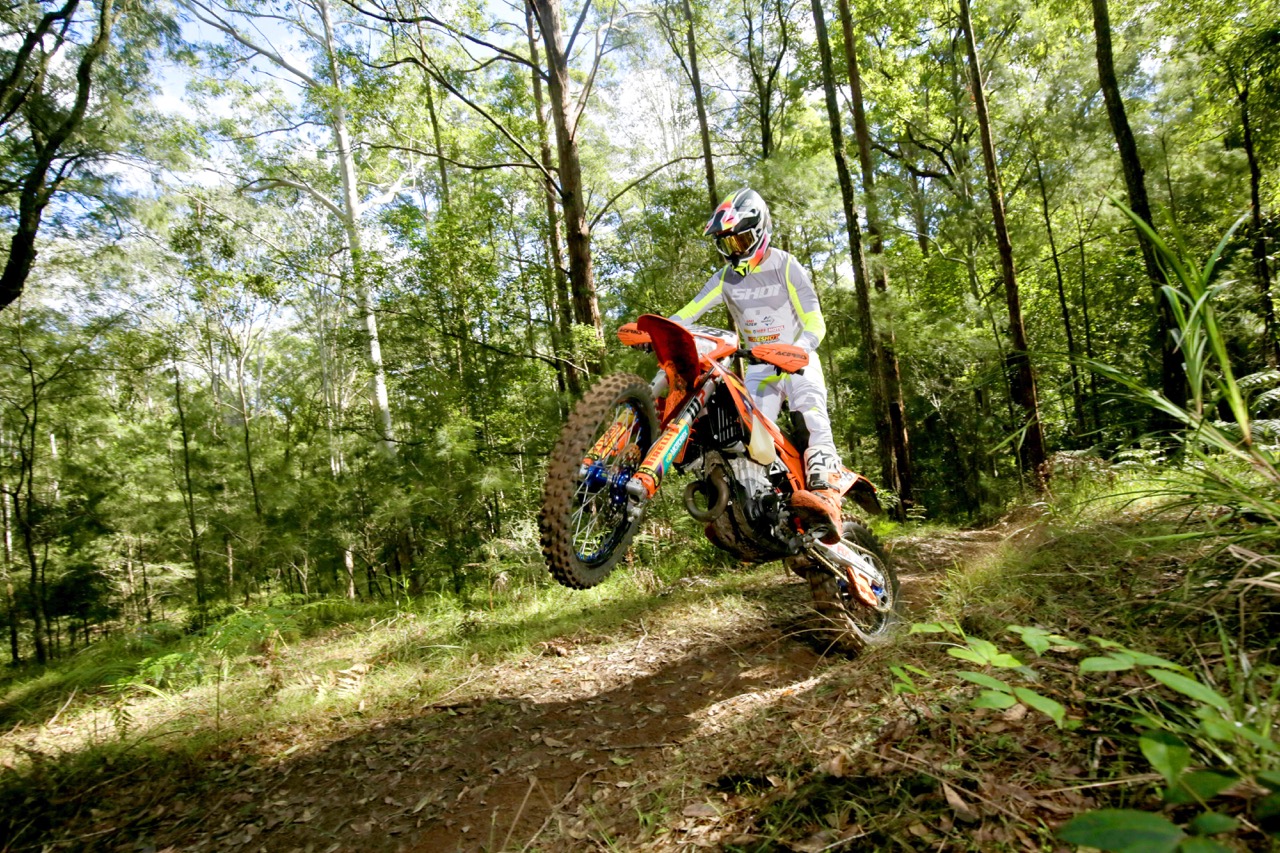
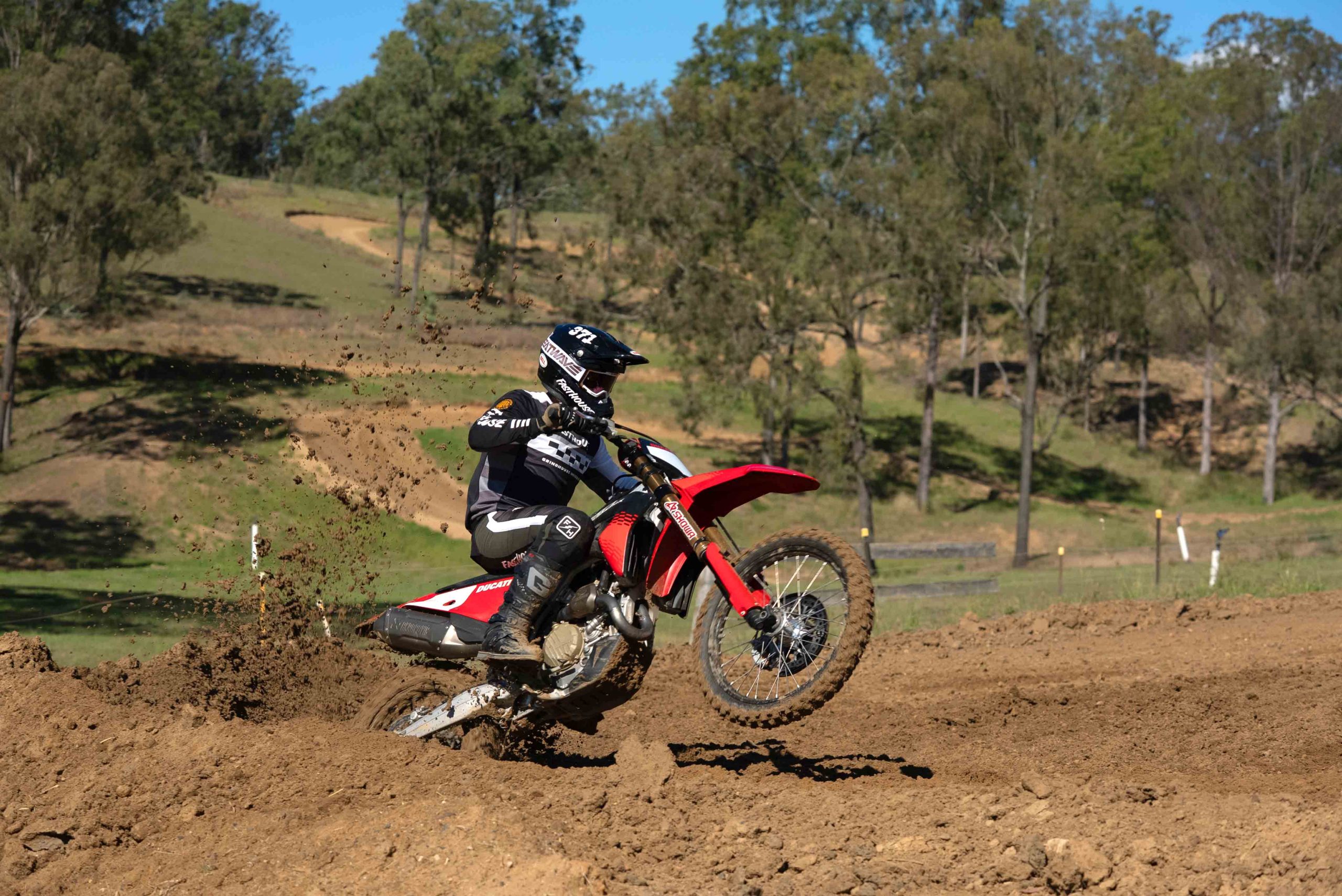
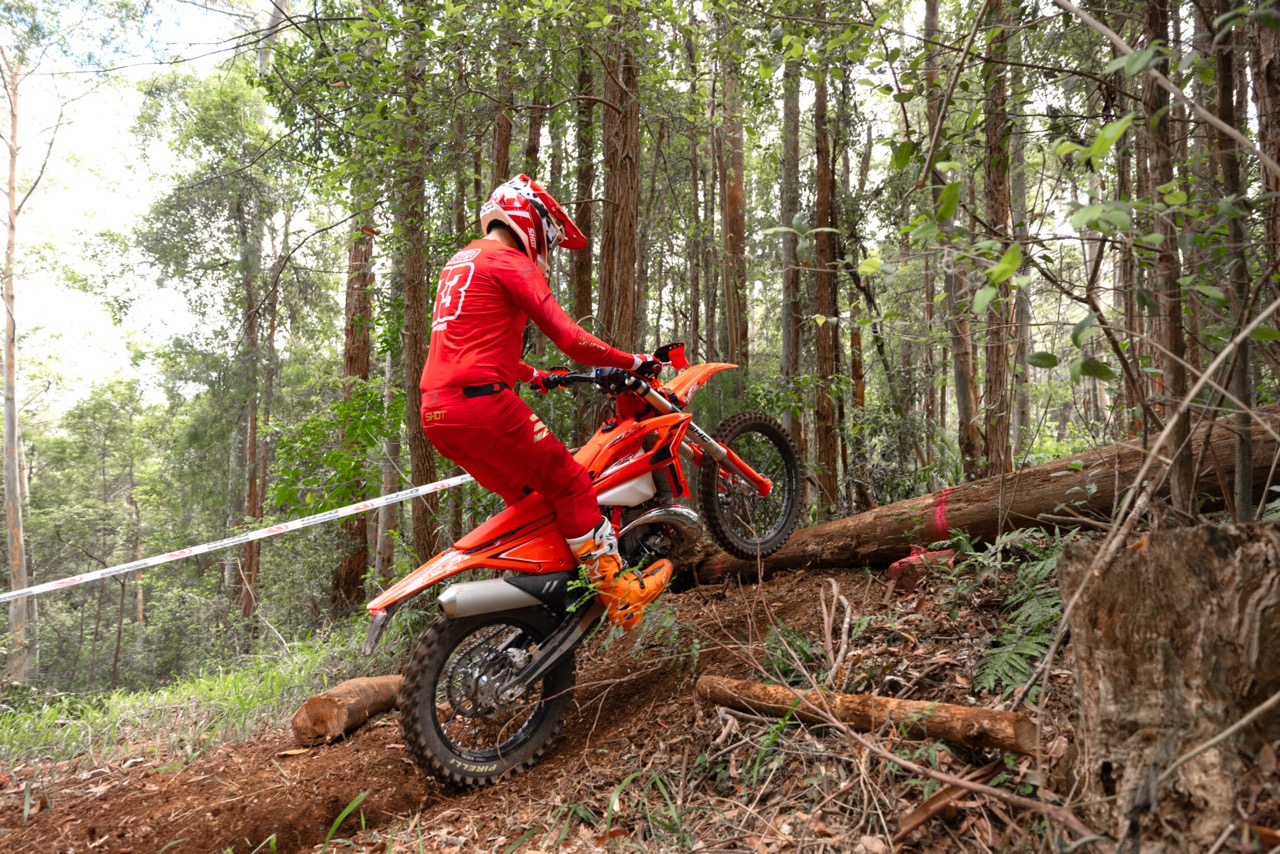
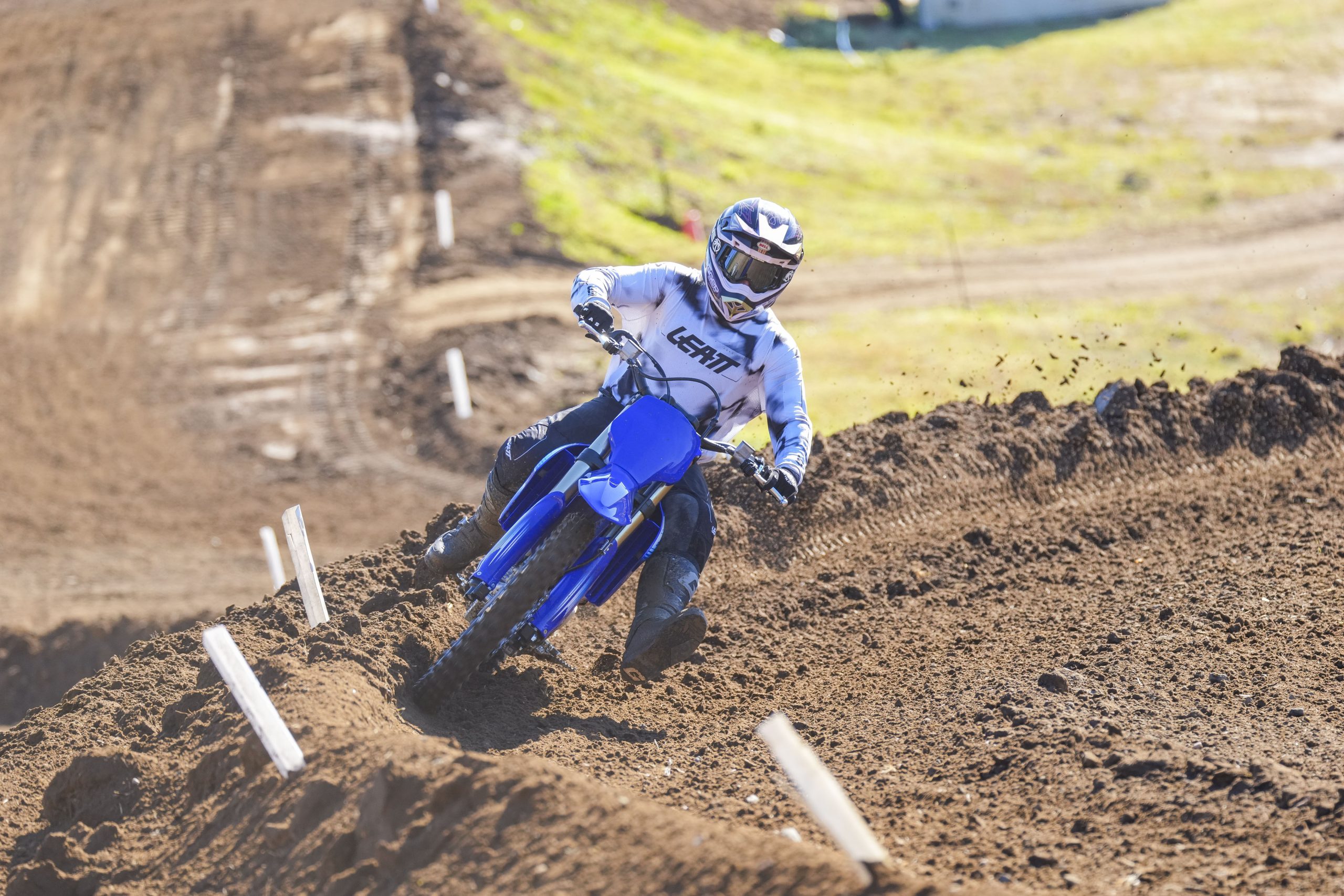
The world of small-bore four-stroke enduro weapons has been bolstered with the introduction of the brand-new 2025 Triumph TF 250-E. After decades of building high-quality road bikes, the British manufacturer has stepped out of its comfort zone and thrown itself deep into the dirt bike world, producing 250 and 450 motocross machines for 2025 and now adding 250 and 450 enduro models for 2026. From concept to production, it’s been a relatively quick process for the Brits, and it’s an impressive entrance into the dirt bike world, that’s for sure.
For me, the biggest thing that interests me about these bikes is the fact that Triumph seems to have gone down a route of meshing the best bits of the Japanese and Euro manufacturers and making it their own. At a glance, the Triumph bikes appear to have a Japanese-style alloy frame and suspension package with a Euro-style engine package. It’s no secret that the alloy frame and KYB suspension combination is a very successful one that offers great rider feedback, as does the smooth and usable engine platform of the Euro machines. On paper, it’s a great concept for the new brand and its bikes, and by all accounts, the feedback from riders here and overseas is quite positive.
Now, as far as the enduro-specific TF-E models go, Triumph has gone to great lengths to make these bikes truly ‘enduro-specific.’ Both models are much more than just the motocross bike with a headlight. I naively thought they had simply slapped on a headlight, an 18-inch wheel, and a bigger tank, but I was quickly put in my place once the presentation started. Impressively, the engineers at Triumph have gone to great lengths to give the enduro models their own identity, and the list of differences between the MX and off-road bikes is actually quite substantial.
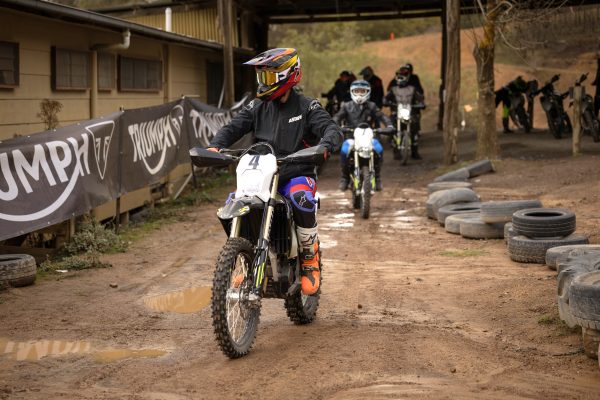
The DNA
At 114.3 kg, the TF250E is quite the compact machine, and Triumph are claiming it to have a ‘class-leading power-to-weight ratio.’ As far as the main differences between the MX bikes and this one, the 250E features a 34% heavier crankshaft than the MX250 for increased inertia and smoother power delivery. They are also claiming 90-hour service intervals, which is solid for a 250F weapon. The motors are all machined in-house at Triumph HQ, with enduro-specific camshaft profiles, a 6-speed gearbox, a stronger clutch with a lighter pull, a GET ECU package with multiple map settings, tool-less air filter access, a thermofan, and a longer exhaust to keep the noise down. All up, the engine of the 250E is built for pure enduro fun, suited to all kinds of riders.
Chassis-wise, the hand-welded alloy frame-equipped machine shares its frame with the MX bikes, but with the addition of a side stand. The swingarm is longer on the enduro models, giving a more rider-friendly geometry, while the 48 mm KYB forks—already a favourite in the off-road world—are used here in a shorter version. On the TF250E, the forks are 10 mm shorter than on the MX model and feature softer spring rates and valving. Brembo brakes, Galfer discs, ProTaper bars, Michelin tyres, a larger 8.3 L clear tank, LED headlight, and in-mould graphics on the black plastics really set this bike apart. As mentioned earlier, there’s also a map switch on the bars, offering two power maps, traction control, launch control, and quick shift. Lots going on!
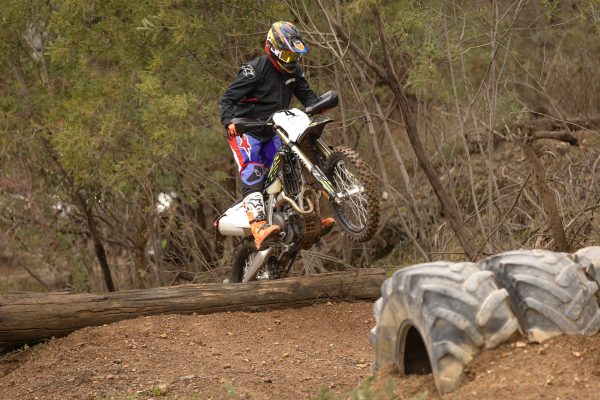
A feel for it
Enough of the technical stuff, how did it ride? Well, I was extremely eager to get on this bike and within a few minutes of firing it up, I had a big smile on my face. I was hoping for a comfortable feel, as I like the smaller, more compact Euro chassis this bike is based on, and I’m also a fan of KYB suspension on any bike. Just as I had hoped, I gelled with this machine right away. The ergos are comfortable, and the rider triangle is very manageable. I didn’t feel cramped or out of sorts at all. We set the sag to 108 mm, and I left it like that all day.
The tracks we were riding were super greasy from the deluge of rain the night before, but that didn’t faze the little 250. It was happier than a pig in mud out there—and so was I. I found myself pushing along the slippery trails and really enjoying the ride. The bike is incredibly easy to handle and doesn’t require a whole lot of effort to get working in its sweet spot. The motor is impressive too, producing a strong, torquey feel off the bottom that then revs to the moon. It’s quite a broad power curve for a little quarter-litre machine, and I’d say it’s one of the more competitive stock 250F enduro engine packages I’ve experienced.
The feel of the motor is confidence-inspiring, and I found myself wanting to push the bike more and more, attacking the tracks. Possibly because the bike is quieter than an MX machine, you feel like you need more noise—so you end up riding it harder to achieve that. If it’s not being revved out like a 250F should be, you’re not going fast enough, right? Wrong. This thing is deceptively quick, and I found myself getting a little throttle-happy a few times—and boy, those corners came up fast. It’s an engine package that packs a punch yet remains super manageable, especially with the adjustments available via the map switch. Is it as fast as the new Yamaha WR250F? Maybe not right off the bottom, but overall, I think the motor is very, very close. That’s a big call, because it’s no secret how strong those Yamaha engines are.
As far as the mapping goes, I did play around a little with it, and after going through the maps, traction control, and quick-shift settings, I found myself happy with the aggressive map with no traction control—mainly because I really enjoy revving out a 250F. I was equally impressed with the traction the bike delivered under hard acceleration. Even during super slippery sections with gnarly uphill pinches, roots, and rocks, I never once felt like I was getting loose or in danger of getting stuck on a hill. I found myself riding the bike in the upper low revs, and it would just tractor out.
The 6-speed gearbox is also a welcome addition to the enduro machines because it brings the gears closer together, and the TF250E is more than happy to be laboured in 3rd gear once the trails start getting tough. The gear ratios felt spot-on for the type of riding we were doing, and overall, it’s an incredibly friendly and strong motor package. I also created a small test loop on the property and did some lap times. I was only 0.06 seconds slower on the 250E compared to the 450E. I was quite happy with that margin, considering I rode the 450 all afternoon and then hopped back on the 250 for the timed lap without even looking at the clock. If that doesn’t prove the 250E motor is fast enough, then I’m not sure what will.
So, does the KYB suspension work in with the motor, or is there a disconnect? Well, thankfully for Triumph and everyone involved, I feel they’ve nailed it. The way the power is delivered is boosted by the way the KYB reacts on the track. Sure, the bike is a tad firm for most riders, but for me—the 36-year-old washed-up pro—the suspension is almost race-ready. It’s that nice. The forks are excellent, offering great feel and rider feedback. I never got sore hands throughout the day, which tells you they’re plenty plush, and for me, that’s an important aspect of the ride I’ve started to notice more as I get older and because I don’t ride as much anymore. The KYB rear end of the TF250E is fantastic as well, producing excellent traction on the greasy trails with zero issues.
The combination of gravelly soil and recent rain had us scratching for grip, yet when I gave the bike a handful, it remained predictable and—most importantly—straight. I believe the longer swingarm on these enduro models plays a big part in keeping the rear end so planted.
The balance of the bike is about spot on for me as well, and I found myself pushing harder and harder around the small test loop with every lap I did. There was a bit of elevation around the loop too, with some sharp up and down sections, a few drop-offs, and fast G-outs that I would usually have a little hesitation attacking on a stock standard enduro setup. But the TF250E and its KYB counterparts were more than up for the challenge. I was really impressed with the chassis capability of the bike in the special test setting and, just as importantly, I was more than comfortable with it on a trail ride. It was pretty nice to have that all-round feel right out of the crate, especially on a brand-new, first attempt motorcycle.
As for the rest of the bike, the Brembo brakes are as good as we’ve all become accustomed to, with amazing power and feel. I found the gripper seat to be a welcome addition, the Pro Taper bars and ODI grips were nice, and the overall fit and finish of the bike is second to none. The only small issue I had with the bike was that Triumph has gone down the path of using star/torx bolts everywhere rather than the traditional metric bolt heads. That might seem small and insignificant, but if they filled up with mud or stripped out for whatever reason, they could be tricky to deal with. Other than that, the bike is a very impressive bit of gear.
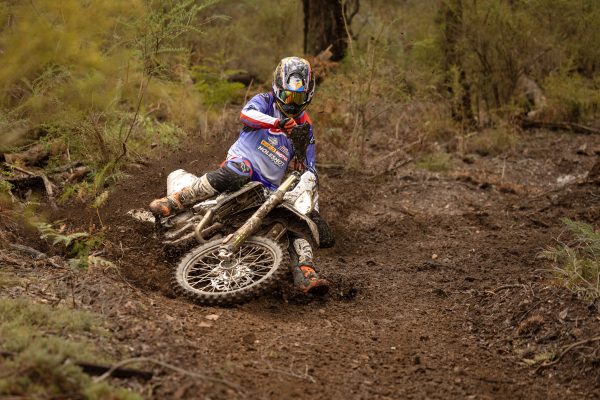
Where does it sit
I like this bike a lot. When I first saw the bikes being released, I was very curious as to how they would feel on the track. The Euro-style motor combined with the Japanese-inspired chassis is a really impressive combination. The motor produces useable and friendly power, yet it’s grunty and strong enough to be more than capable as a competitive race machine. The KYB suspension package is about as good as a stock bike can get, with excellent feel and a predictable ride that gives you the confidence to push along at a good pace.
There isn’t much else to say about this bike other than, for a first attempt at an enduro 250F, the Triumph crew has produced what I feel could be the most well-rounded off-road 250F I’ve ridden in recent years. I had so much fun on this bike, and it’s exciting to see another manufacturer enter the picture. I’m looking forward to seeing what they can do in the years to come once they get more of these bikes out on the track—because for a first attempt, this thing is damn good.
Triumph TF 250-E
Engine
Type: Single-cylinder, four-stroke DOHC
Capacity: 249.9 cc
Bore & Stroke: 78 mm x 52.3 mm
Compression Ratio: 14.4:1
Fuel System: Dell’Orto 44 mm cable throttle, EFI
Clutch: Aluminium separate basket, wet multi-disc, hydraulic
Gearbox: 6-speed
Dimensions & Weights
Seat Height: 955 mm
Wheelbase: 1488 mm
Fuel Tank Capacity: 8.3 L
Wet Weight: 114.2 kg
Suspension
Front Suspension: KYB 48 mm coil spring fork, compression/rebound adjustment, 300 mm travel
Rear Suspension: KYB coil, compression adjustment (high and low speed), rebound adjustment, 313 mm travel
Brakes
Front Brakes: Single Ø260 mm Galfer disc, Brembo, 2xØ24 pistons, floating caliper
Rear Brakes: Single Ø220 mm Galfer disc, Brembo, 1xØ26 piston, floating caliper
Running Gear
Frame: Aluminium spine & double cradle
Front Tyre: 90/90-21
Rear Tyre: 140/80
Price & Contacts
RRP: $17,590 Ride Away
Browser: triumphmotorcycles.com.au
//sidebar//
Standard Equipment – TF 250-E
- Traction Control
- Launch Control
- Quick Shifter
- Dual Engine Maps
- I.D. DirtStar Aluminium Wheels
- Michelin Enduro 2 Tyres
- Pyramid Non-Slip Seat Cover
- Galfer Discs
- Neken Triple Clamps
- ProTaper Evo Bars
- ODI Grips