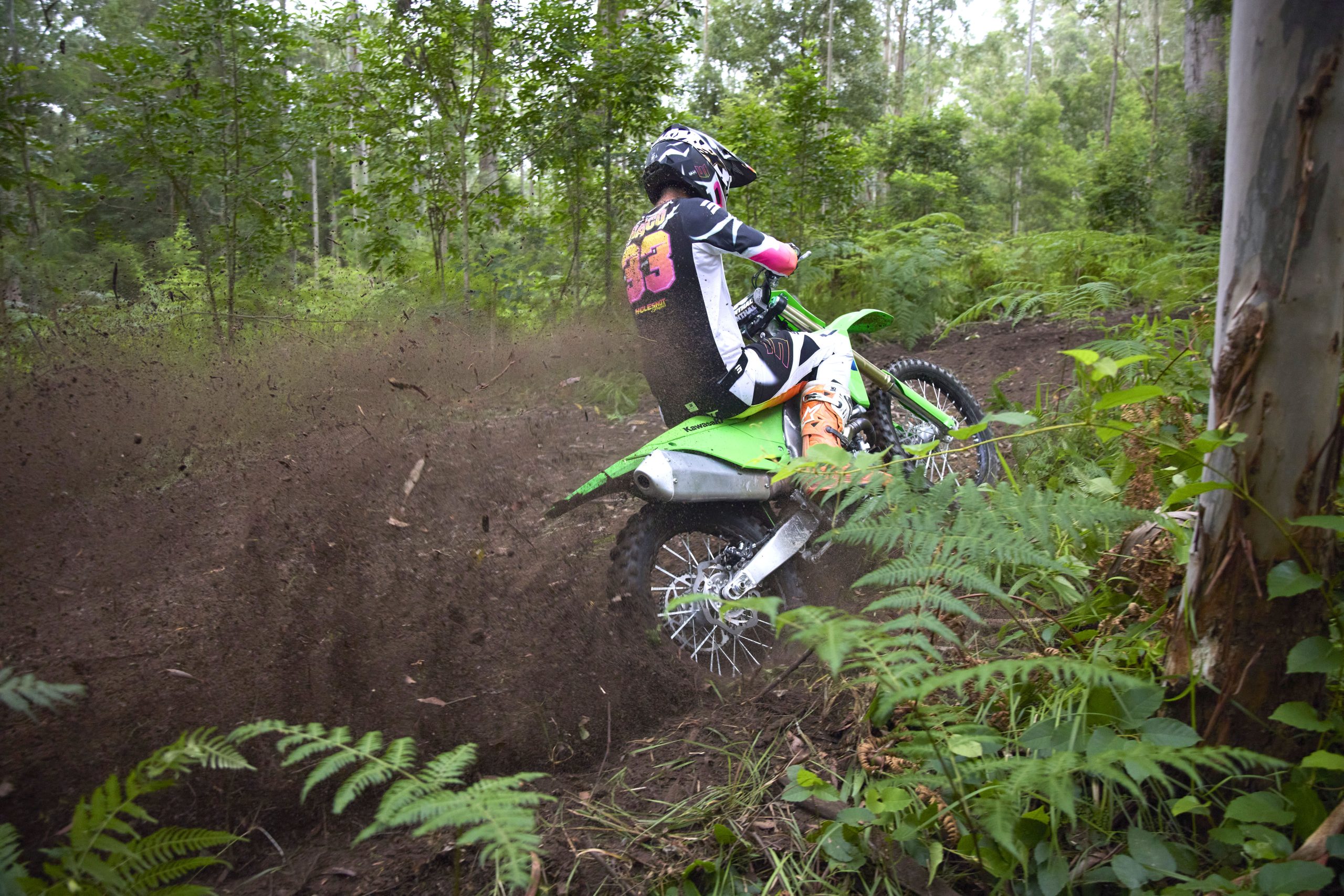
Husqvarnas often get brushed off as nothing more than white KTMs, but if you’re looking at a 2014 – 2017 Husqvarna FE350, you’ll quickly find they have their own quirks. Yes, they share engines and frames with their Austrian cousins, but the Husky’s carbon polyamide subframe – complete with an integrated airbox – changes the power delivery entirely. It produces a smoother, less abrupt curve than the KTM, and when paired with a linkage-equipped rear-end, it gives the bike a very different feel.
The linkage setup provides a more progressive action compared to KTM’s PDS system. It does mean more moving parts, which need greasing and occasional bearing replacement, and it leaves the linkage exposed to rocks and logs. While outright breakages are rare, poorly maintained linkage bearings can seize up, so a history of regular servicing is a plus.
The FE350 engine is generally reliable, but dust is its kryptonite. After extremely dry rides, many owners report dust ingress. While the top-quality Del West valves hold up fine, dust can stick to piston ring grooves, causing the rings to seize. Symptoms show up as a gradual loss of power leading to compression failure. On the positive side, the Pankl conrods and slipper bearings in the crankshaft are tough and have a very long service life.
The FE350 came with WP 4CS forks during these years, and they’ve drawn criticism. Riders often describe them as soft and spongey, yet still prone to blowing through the stroke and bottoming on big hits. The adjusters don’t help much either – compression is only on the left leg, rebound on the right, and both are fairly limited. Cartridge kits are available to transform the performance, but they aren’t cheap. A lower-cost alternative is a valve kit, which updates the pistons and allows compression adjusters on both fork legs and rebound on the tops.
When buying one of these second-hand, the first thing to do is make sure it starts easily with the electric button and idles without any rattles. Take the bike for a ride and check that it selects all gears smoothly, and pay close attention to whether the clutch is slipping under load.
It’s also worth removing the air filter and inspecting both the foam and the inside of the airbox. A clean filter and airbox usually indicate good maintenance habits, whereas a filthy one can be a sign the bike has been neglected. At the same time, check the oil condition. Oil that looks fresh and clean is a positive, while dark or contaminated oil should raise questions about servicing.
Next, run through the bearings. Inspect the wheel bearings, steering head bearings, swingarm bearings and linkage bearings to make sure there’s no play or seizure. Replacing all of these at once can quickly add up to several hundred dollars, so it’s worth catching before you hand over the cash. Fork seals are another item to look at carefully on these bikes – any leaking seals will need immediate replacement.
Finally, ask about the bike’s service history and see if the seller can provide records. A well-documented service history is one of the best assurances that the bike has been properly cared for.
A 2014–2017 Husqvarna FE350 can be a fantastic buy if it’s been well looked after. They’re smooth, capable, and reliable machines when serviced properly. Just keep an eye out for dust-related engine wear, neglected linkage bearings, and suspension quirks, and you’ll know exactly what you’re getting into.
Technical Editor Mat Boyd
New
2014 $12,995
2015 $13,795
2016 $13,995
2017 $14,695
Second Hand
2014 $7850 – $9300
2015 $8300 – $9900
2016 $8800 – $10,450
2017 $9850 – $11,700
Market Equivalent
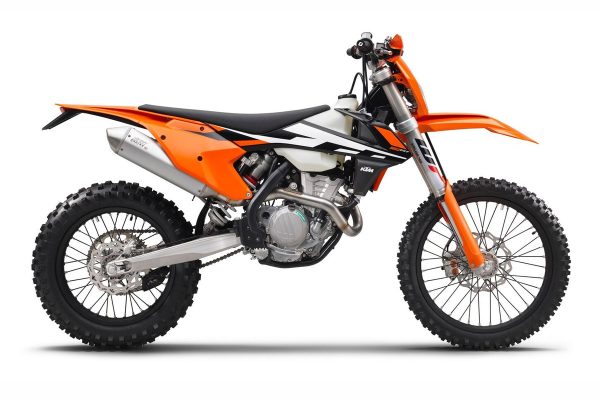
14-17 KTM 350EXC-F
$7450 – $11,500
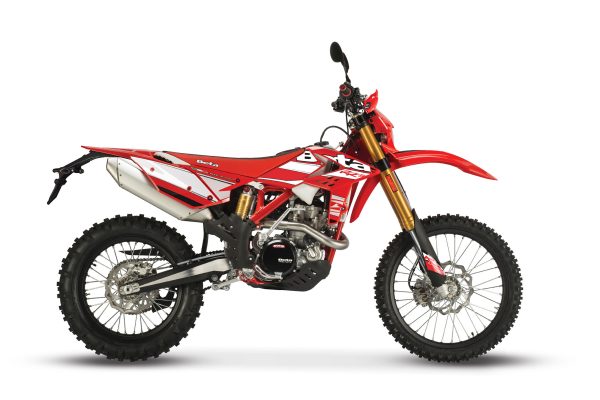
14-17 Beta RR350
$7500 – $11,100
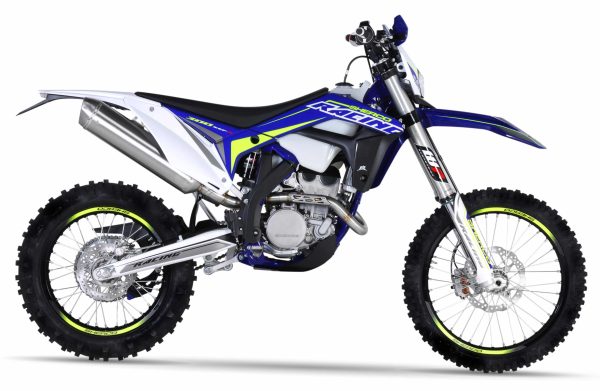
14-17 Sherco 300SEF-R
$8000 – $11,350
15-17 Yamaha WR 250F
$7,650 – $10,450