When it comes to conquering Australia’s bush, the Yamaha WR450F has long worn the crown and the 2026 Yamaha WR450F is still that bike. Since its lineage began with the WR400F in 1998, it’s been one of the longest-running big-bore enduro bikes in continuous production. Through each evolutionary step – 400 to 426 to 450 – the WR has endured because it does what so many trail bikes promise but few deliver: raw capability matched with unshakable reliability. In Aussie paddocks, creek beds, and singletrack, it’s earned the title “King of the Bush” – the 450 that just keeps on going when others falter.
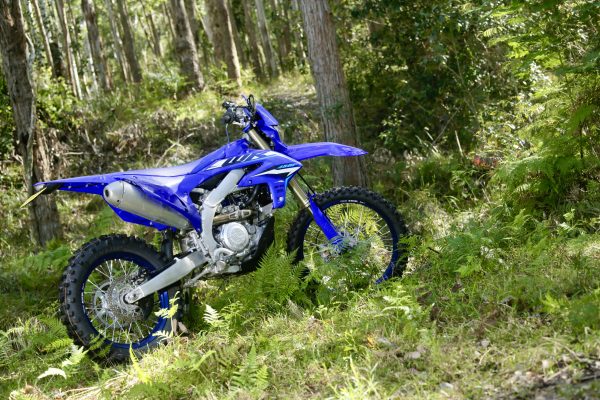
Back in the early days, the WR (in its 400cc and 426cc forms) was celebrated for one thing above all else – power. It had more grunt than most riders knew what to do with, and that was exactly the appeal. If you had the skill and the stamina, the WR rewarded you tenfold. Gear it right and you could climb anything, hammer through open scrub, or thunder down fire trails with that distinctive Yamaha induction noise echoing through the trees.
But times have changed. The modern enduro scene has shifted toward lighter, mid-capacity 350s – bikes that promise easier handling, less fatigue, and a sweet spot between performance and control. Riders now value agility over brute strength, questioning whether a 450 is too much bike for today’s tighter, more technical riding. The WR450F, once admired for its excess, suddenly finds itself competing with bikes half its size and weight for the same patch of trail.
So, does that make the WR450F redundant? Not quite. If anything, the 450’s survival in this mid-capacity age proves its adaptability. It’s evolved into a machine that blends torque with precision – still fast and formidable, but more refined than ever. With Yamaha continuing to fine-tune the chassis, electronics, and usability, the WR450F remains not just relevant, but iconic. In a world obsessed with downsizing, it’s still the bike that defines what an Aussie enduro should be: powerful, bulletproof, and built to take on the bush.
Any Changes?
For 2026, Yamaha hasn’t swung for the fences with the WR450F – and that’s not a bad thing. When a bike’s been this good for this long, evolution beats revolution. The big news this year is the addition of a new ECU lock system, integrated through Yamaha’s Power Tuner app. It’s a small but smart update designed for security rather than performance – allowing owners to lock out the ignition digitally so no one can start the bike without entering the correct password. For trail riders who park up at the pub or leave the garage door unlocked, that’s peace of mind worth having.
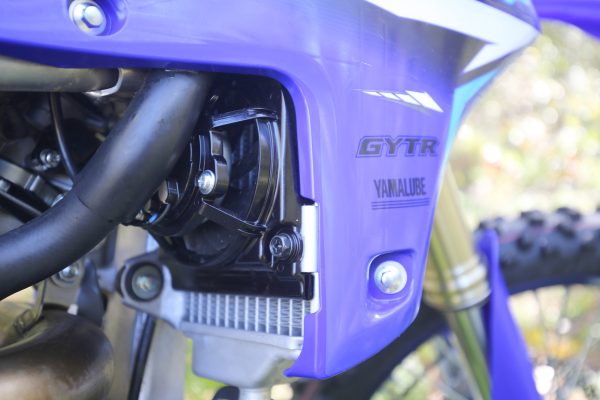
Aside from that, the changes are purely cosmetic. The fork guards now come in a lighter shade of blue, and the radiator shroud graphics have been freshened up to match Yamaha’s latest off-road styling. That’s it. No new engine, no revised frame geometry, no suspension overhaul – and truthfully, it didn’t need any of those things. The 2026 WR450F continues to roll out of the factory with the same core package that’s made it one of the most dependable and versatile 450s in Australia.
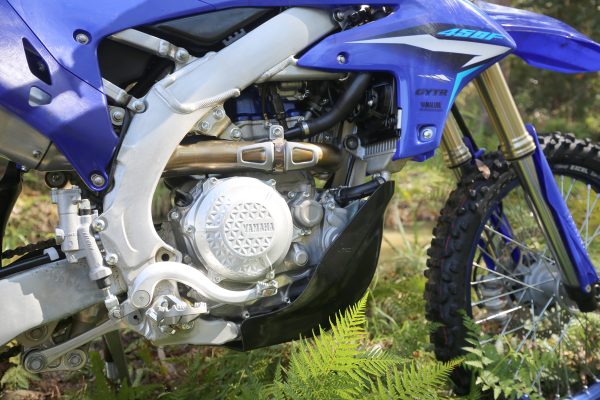
Under the seat, it’s still the same 499cc liquid-cooled, DOHC four-valve engine producing a mountain of torque and a meaty spread of power. The CVT-style five-speed gearbox remains perfectly matched to the motor’s delivery. And the bilateral beam aluminium frame, a direct descendant of Yamaha’s motocross platform, gives the WR its unmistakable rigid feel.
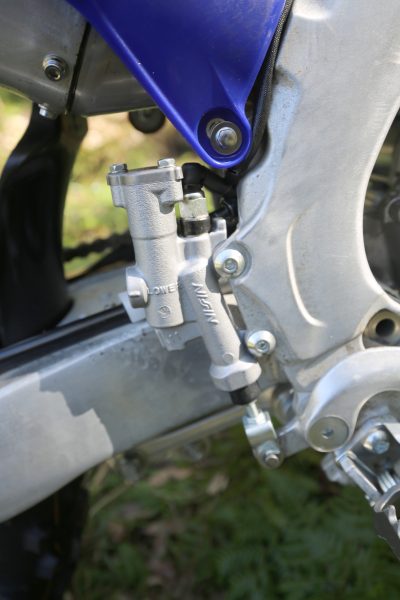
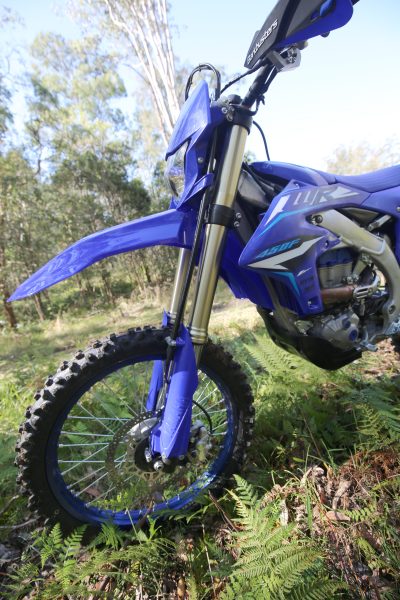
The KYB suspension is unchanged, and that’s good news for riders who like Yamaha’s signature feel. With 300mm of travel up front and 306mm at the rear, it’s tuned for enduro. The WR’s braking setup also stays familiar: a 270mm disc at the front, 240mm at the rear. Even the dimensions are untouched with a 955mm seat height, 330mm ground clearance, and a 1470mm wheelbase.
In short, Yamaha hasn’t reinvented the WR450F for 2026 – it’s simply polished a proven formula. While other manufacturers shuffle specs or chase trends, the WR stays true to what Aussie riders actually want: a reliable, torque-rich, enduro bike that doesn’t quit. Sometimes the best update is knowing when not to mess with success.
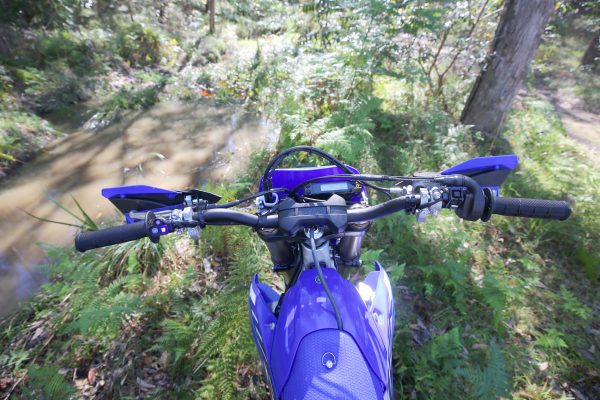
Three’s a crowd
To test this beast we did something a little different this time. We got three very different testers to ride it and sit down and tell us their raw feedback. Mitch Lees is Editor and owner of ADB and has been testing bikes for 15 years, Wes Mills is a 125cc motocross aficionado with two kids and a very stressful life as a plumber while Briggsy is a retired off-road racer with three girls and job in a mine.
We spent a long day in the bush taking it in turns to ride the WR450F in the bush and when the dust settled, we all agreed on one thing: this bike is still a weapon. But how much of that power is too much for modern Aussie conditions? Here’s how the conversation unfolded.
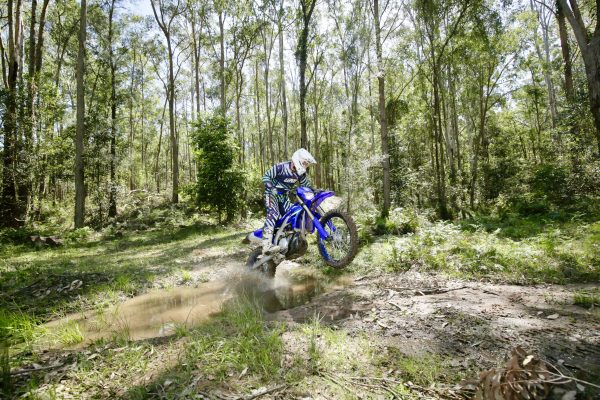
Mitch Lees:
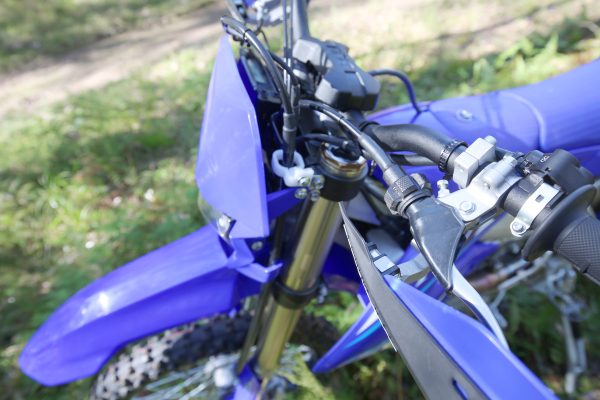
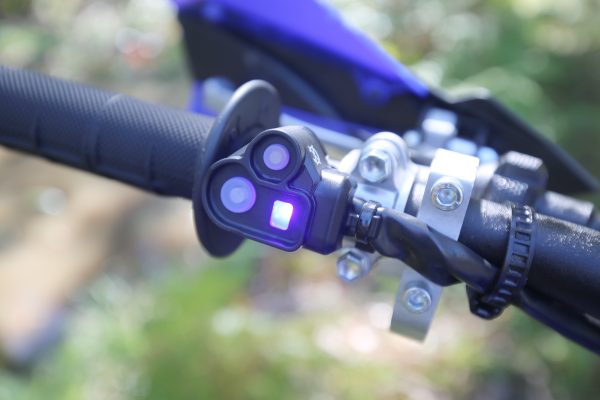
They’ve always nailed the – ergonomics. I love the YZ-style cockpit – it feels right the moment you swing a leg over. But once you get it into the bush, it’s an animal. That motor has serious punch. There are two map modes on the handlebar, plus you can custom tune through the Power Tuner app. I tried both, and the mellow map was far smoother and more linear. Switch to the aggressive map and it’s wild.
Jeff Briggs:
Yeah, same here. It’s powerful – no question – but also versatile. It’ll handle open terrain beautifully, yet still thread through tight stuff without too much argument. The only thing I noticed in the singletrack was that the clutch pick-up feels like it wants to push on a bit. It doesn’t stall easily, but it does like to keep rolling.
Wes Mills:
I felt that too. Coming off 125s and 250 two-strokes, the WR450F is a handful in comparison. But the throttle response is so smooth that it’s still controllable. If you’re patient with it – roll it into corners a gear high instead of trying to muscle it – it rewards you. I preferred the mellow map for that reason. The motor’s got big inertia, so you do feel the weight tipping it into turns, but when you open it up, it’s unbelievably strong.
Mitch:
It’s a monster. Even when you try to lug it, it just keeps driving – there’s no “chug and recover” like some other 450s. I reckon it suits riders out west or anyone riding faster, more open four-wheel-drive trails rather than tight coastal singletrack.
Briggs:
Definitely. It’s ideal for big, confident riders – guys 90 kilos and up who can use that power. It’s firm, planted, and out of the box it feels race-ready. I’d call it the all-rounder of the class: sand, fire roads, even a motocross track – it’ll do the lot. Tight enduro? It’ll get through it, but not with the same agility as a six-speed Euro bike.
Mitch:
Let’s talk about the clutch. The WR450F’s one of the last 450s still running a cable clutch, and people love to bag that. But honestly, it’s light – lighter than some hydraulics. I was working the clutch through hills all day and didn’t get any fade.
Briggs:
Totally agree. It’s every bit as good as a hydraulic system. You’ve got better lever adjustability too, and it’s simple. I don’t use the clutch a lot, but when I did, it felt spot-on.
Wes:
I’m the same – I’ve converted almost every Japanese bike I’ve owned to hydraulic, but never the Yamahas. Their cable feel is just that good. On this WR, I barely touched it all day, which says a lot.
Mitch:
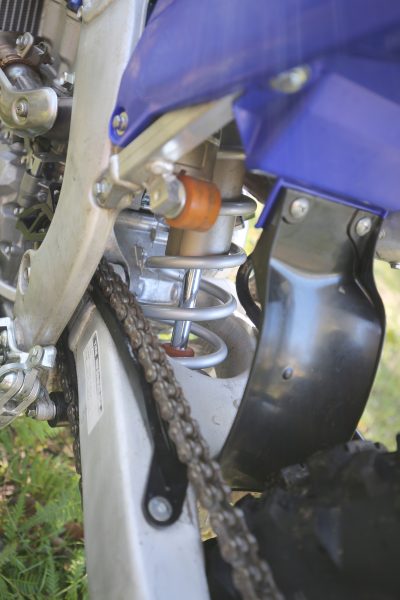
At around 100 kilos in gear, I expected to get beaten up by firm suspension, but it surprised me. It’s got that motocross-style stiffness without the harshness – it never blew through or deflected, even in chopped-up singletrack. The chassis is rigid though.
Wes:
For me, being the lightest of the three, it felt firm but comfortable – very much like a traditional motocrosser. A few clickers softer and it would’ve been perfect. Nothing harsh, nothing deflecting, just solid KYB feel.
Briggs:
I hit everything from whoops to rocks to a motocross section, and it handled it all. The chassis is balanced – the YZ refinement really shows through. It tracks straight, doesn’t dive under brakes, and feels more settled than older WRs ever did. For racing, I’d go one spring rate firmer, but honestly, you could take it straight from the crate to an enduro and be fine.
Mitch:
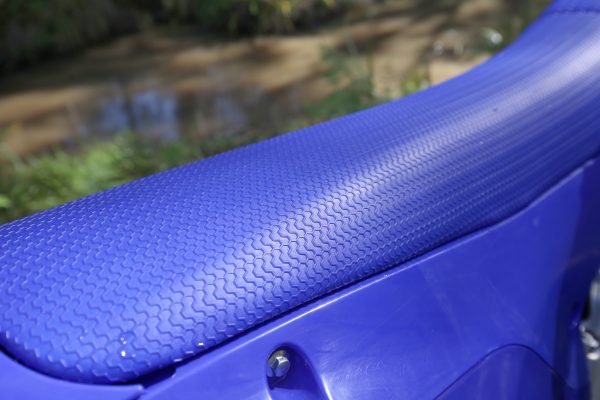
The seat’s grippier now, but what stands out is how much slimmer and more modern the bike feels compared to older WRs. Gone are the bulky headlights and agricultural feel. The new bike’s edging toward Euro sleekness, but it still feels like a Yamaha – that familiar scoop in the seat and slightly higher bar bend. Personally, I prefer a flatter seat and bar setup, but it’s comfortable either way.
Wes:
I agree. It’s a neutral layout that suits a wide range of riders. Nothing awkward, nothing forcing you to adjust. It’s not ultra-flat like a Beta or KTM, but it still lets you move around easily.
Briggs:
Yeah, it feels trail-friendly without losing that YZ sharpness. The tank area’s slimmer now – no more sitting “in” the bike like the old 2012-era WRs. It’s a nice compromise between a trail and race posture.
Mitch:
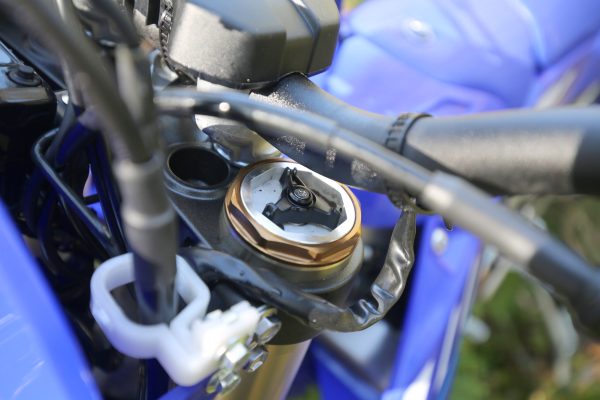
If I owned one, I’d push the fork legs through the clamps a few millimetres. That’d sharpen the steering just enough to stay in ruts better on corner exits.
Briggs:
Rear tyre swap would be my first move. The stock 140 FIM-spec Dunlop feels too rounded – it slides more than it drives. I’d go to something with a proper edge, like a Dunlop MX34.
Wes:
Agree. The standard tyre’s fine for mixed terrain, but it’s a bit vague on drive. Drop a few PSI or just replace it – problem solved.
Mitch:
This isn’t a beginner’s bike. You’ll want some experience – solid B-grade level or someone riding weekly. It’s best suited to riders over 90 kilos who like open trails, faster terrain, and a powerful, planted feel.
Briggs:
Exactly. It’s for riders who want a race-ready, reliable, high-power bike they can trust – the kind of rider who wants to line up for a round of the AEC.
Wes:
Or someone in a midlife crisis who wants to scare themselves a little! Jokes aside, it’s the Corvette of the enduro world – all the fire-breathing power you want, but still tameable if you ride smart.
Still king
After a full day flogging it through tight singletrack, open fire trails, and a few impromptu motocross sections, we all landed in the same place – the 2026 Yamaha WR450F is still the benchmark for big four-fiddys in Australia. It’s raw, powerful, and unapologetically Yamaha. The new ECU lock is handy, but the real story here is how little else needed changing. Especially with the Yamaha Power Tuner app.
In an era where the mid-capacity 350s are stealing hearts with their agility, the WR450F proves there’s still a place for muscle. It’s a serious tool for serious riders – not a mellow trail toy. The power is immense but usable, the chassis is balanced, and the KYB suspension remains class-leading. The clutch might still be cable-operated, but it’s feather-light and full of feel, while the ergos are finally catching up with the Europeans in slimness and comfort.
2026 Yamaha WR450F
ENGINE
Type: Liquid-cooled, 4-stroke, DOHC, 4-valve
Displacement: 450cc
Bore x Stroke: 97.0 x 60.8mm
Compression Ratio: 13.0:1
Fuel System: Electronic Fuel Injection
Ignition: TCI
Lubrication: Dry sump
Starter: Electric start
Transmission: 5-speed, constant mesh
Final Drive: Chain
CHASSIS
Frame: Bilateral beam aluminium
Front Suspension: KYB telescopic fork, 300mm travel
Rear Suspension: KYB linkage-type, 306mm travel
Front Brake: Hydraulic disc, 270mm
Rear Brake: Hydraulic disc, 240mm
DIMENSIONS
Length: 2170mm
Width: 825mm
Height: 1265mm
Seat Height: 955mm
Wheelbase: 1470mm
Ground Clearance: 330mm
Fuel Capacity: 7.4L
Weight: 119kg (approx., wet)