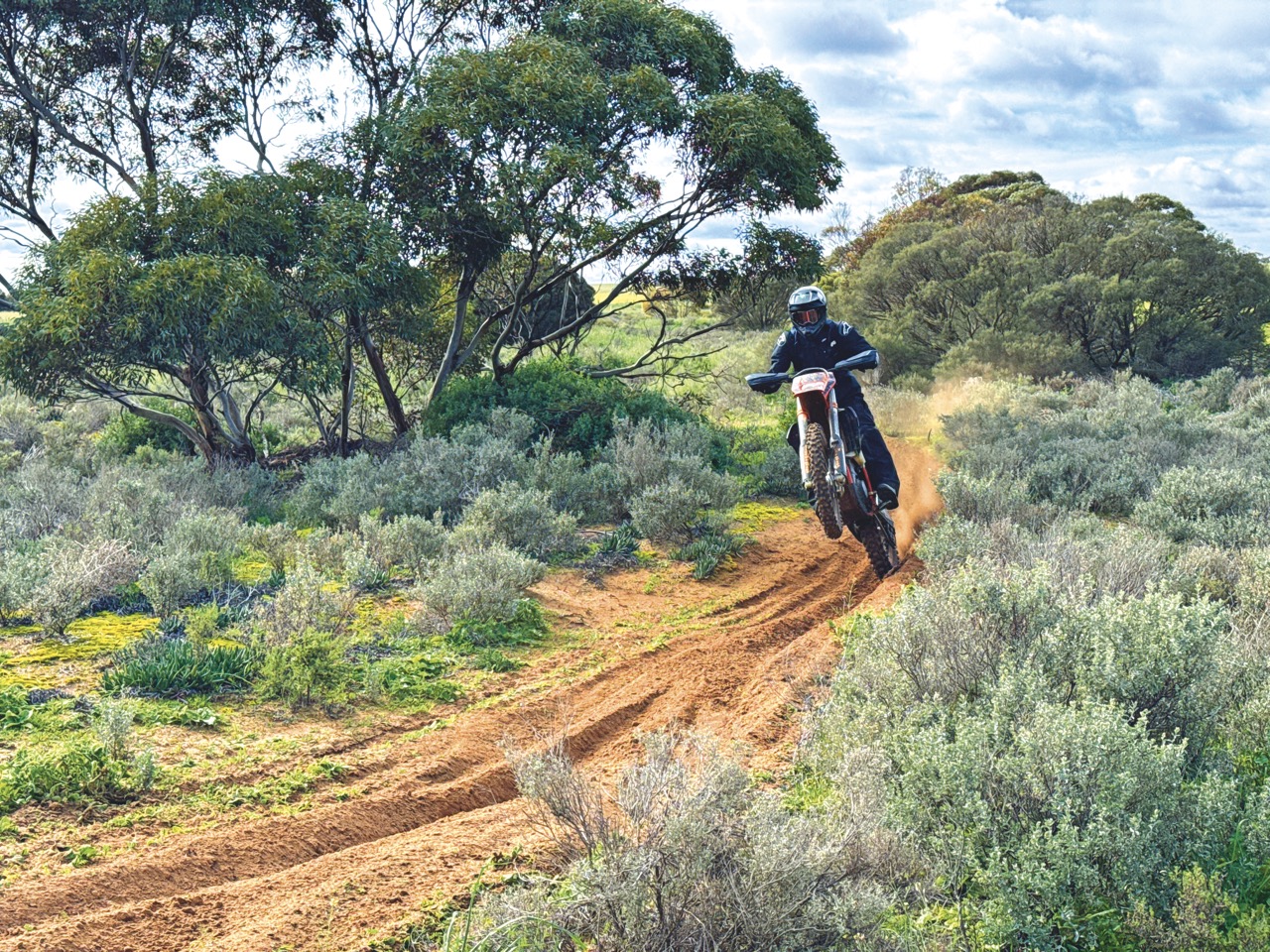
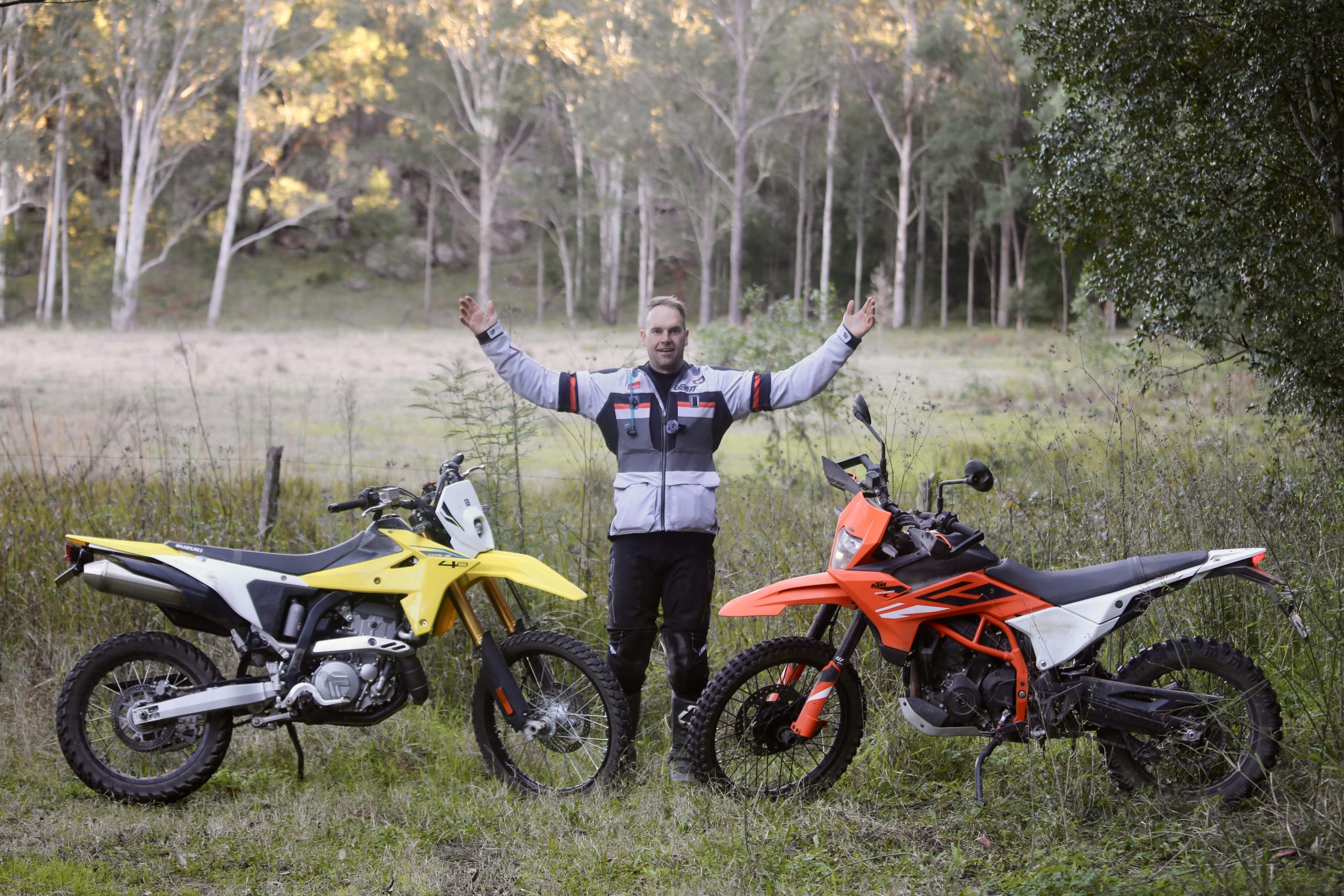
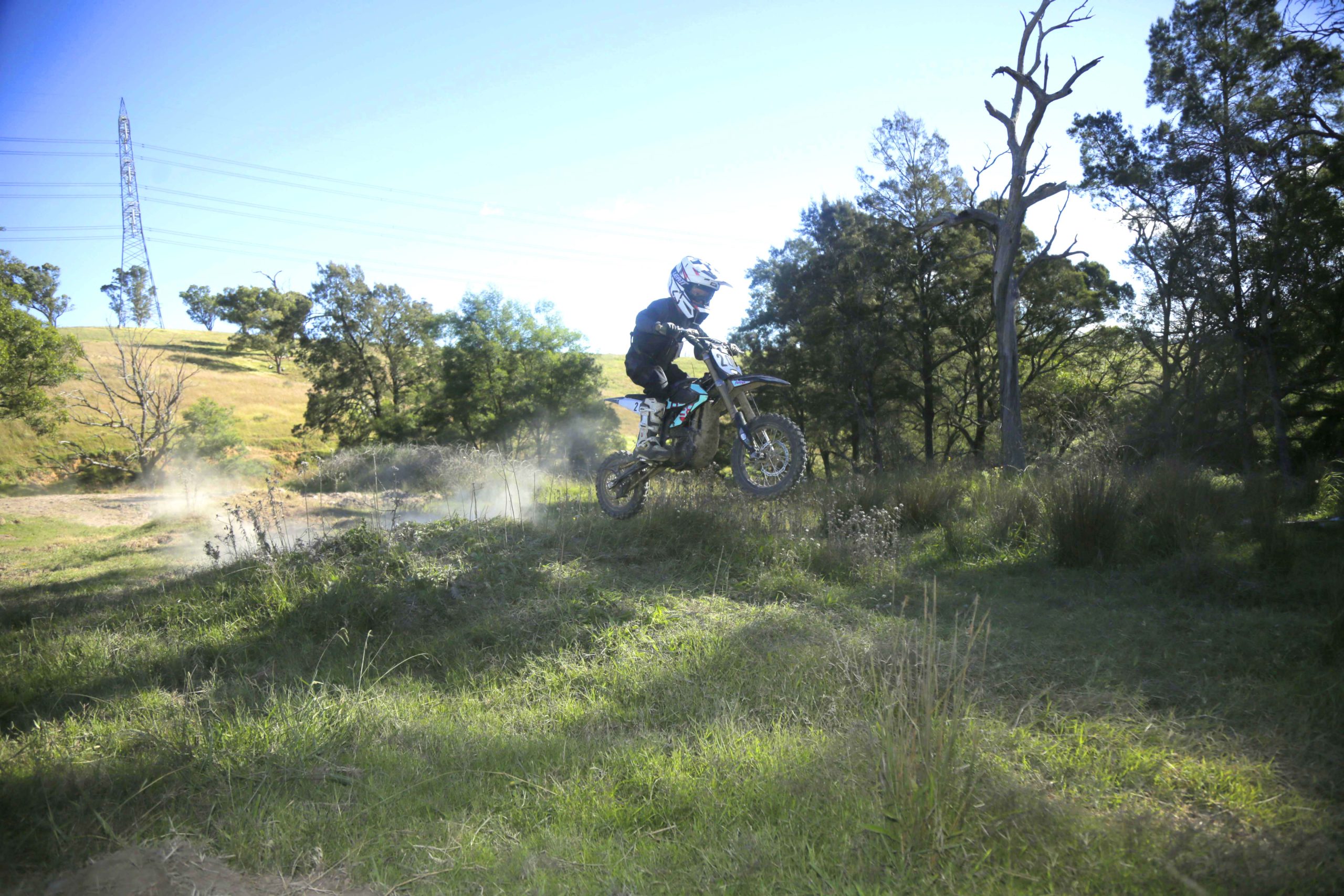
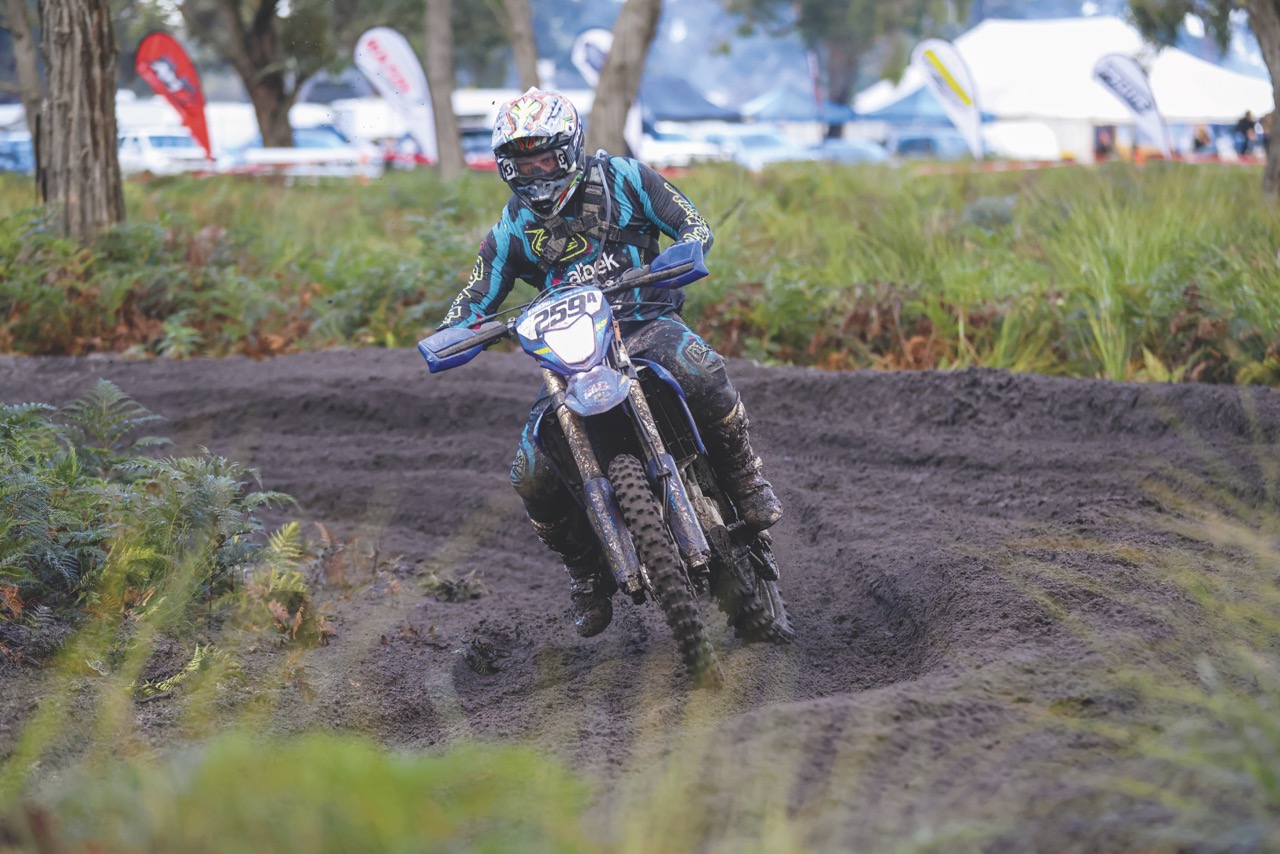
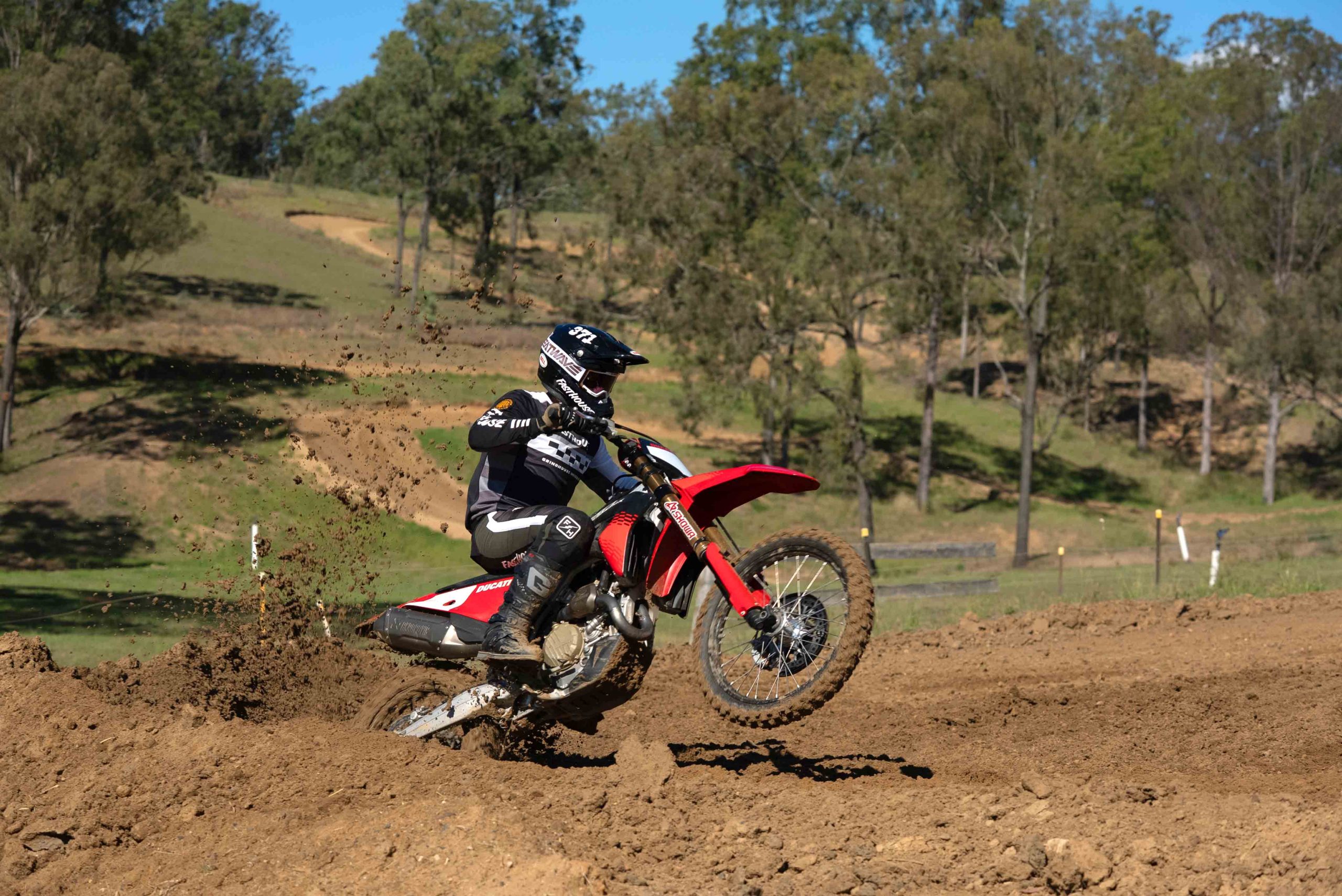
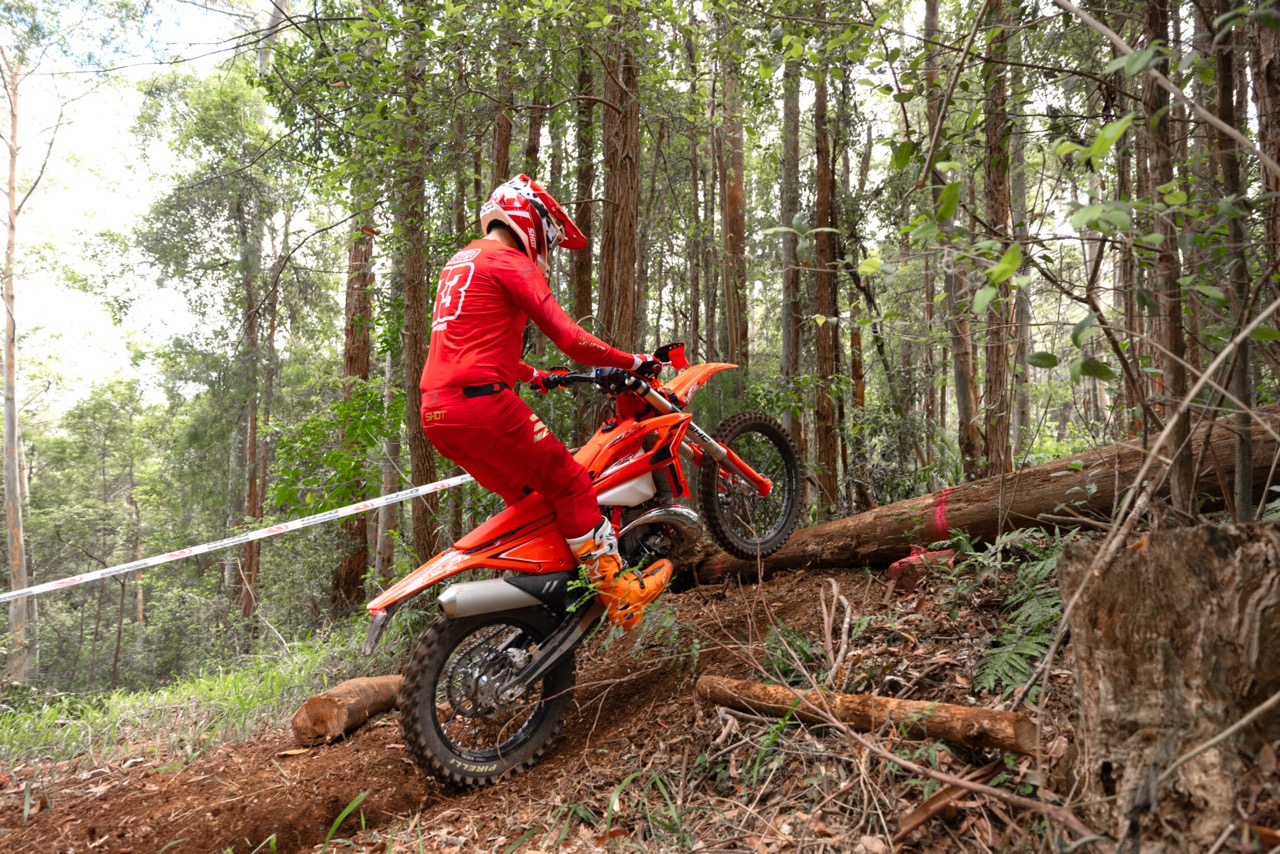
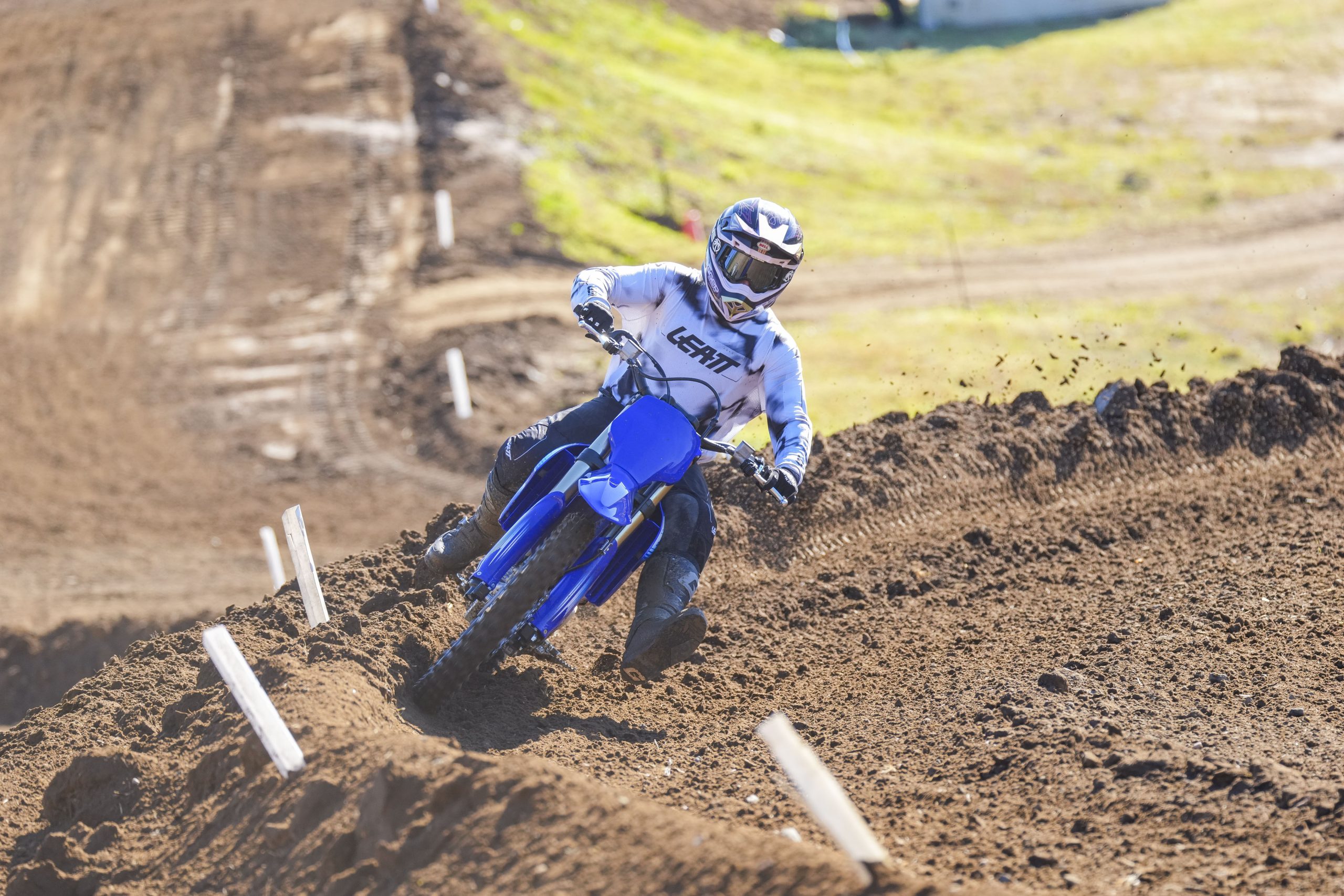
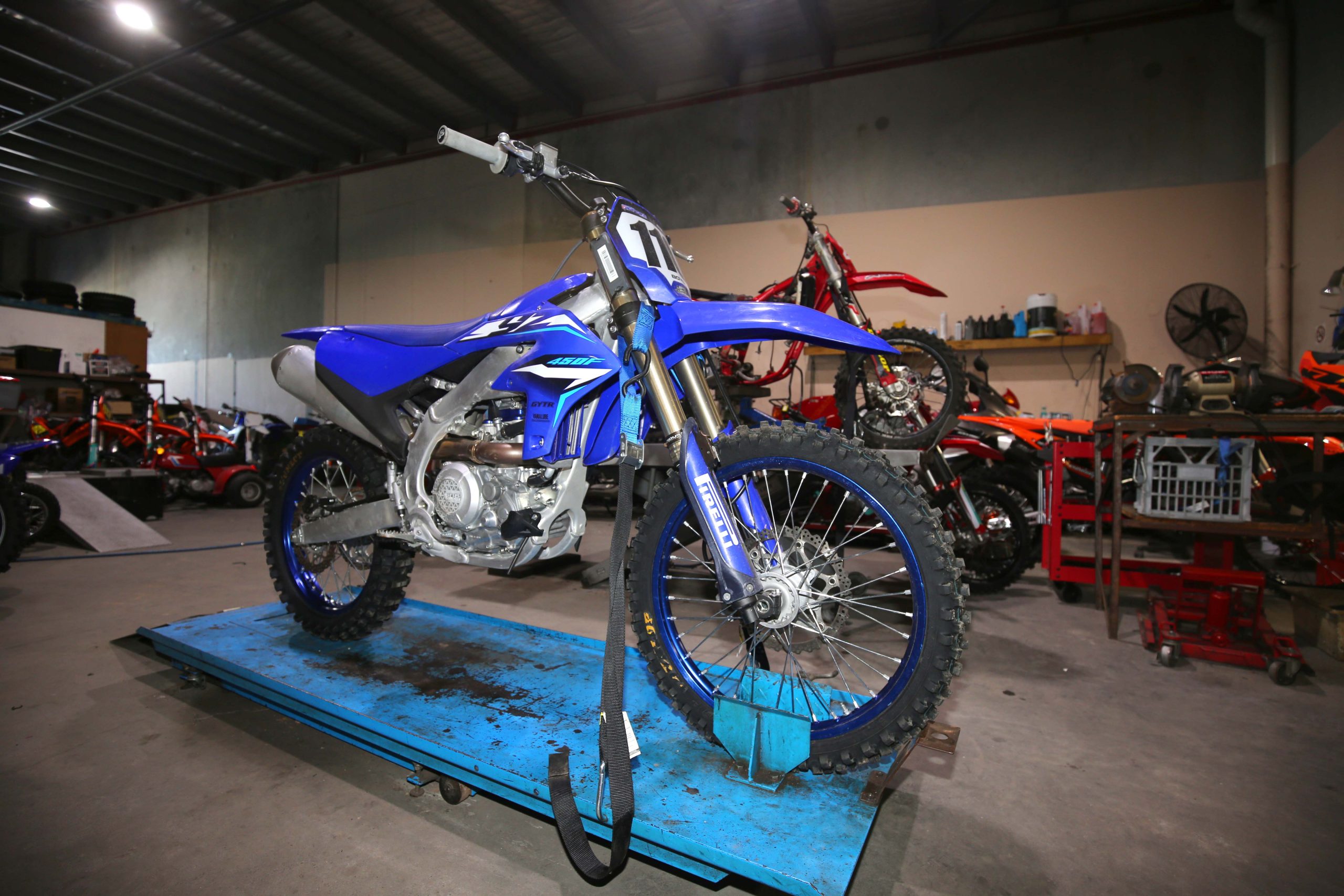
There are some pretty red-hot deals going around at the moment on 300cc two-strokes. While we wait for the MY26 models to arrive on dealer’s floors, we’ve noticed MY24 and MY25 machines still for sale and at a significantly reduced price. This means there are bargains to be had! We thought we’d take two 300s at opposite ends of the bling scale and price and see how they compare in case your shopping around. And while the price we’ve quoted below is for the 2025 models, we’ve seen some dealers offering these bikes in MY24 spec for even less than that.
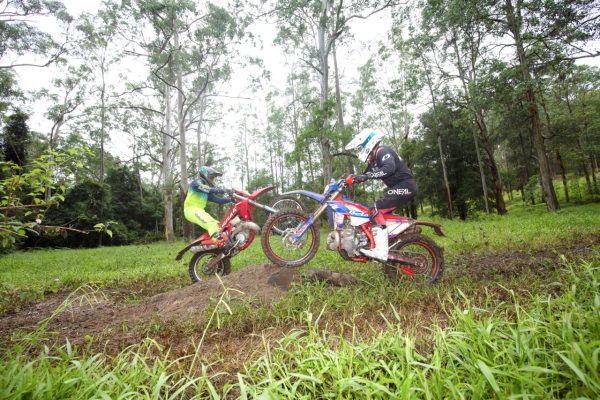
But before we get into testing we have an admission to make. We’ve always been the bloke who says, “It’s not about the bike.” When it comes to going fast. I mean Toby Price could probably win Dakar on a Honda CT110, right? But when you had bikes as different as these, maybe it is about the bike. You can preach all you want about skill, fitness, and throttle control – but we all know you’d sell your nan’s caravan for a set of KYB forks and some shiny red anodised preload caps.
The GASGAS EC 300 is about as basic as 300s come – no map switch, no fancy fork, no flashy bits. It’s your blue-collar bush-basher: reliable, capable, and dead simple. Meanwhile, the Beta 300 Racing rolls up looking like it’s just stepped off a factory truck – KYB suspension, billet bits, dual-map ignition, quick throttle, and enough red anodising to make Santa jealous. The price difference between them? Around three grand. The question: does that three grand make you faster, smoother, or just smugger?
We did what any self-respecting dirtbike tragic would do – we flogged them both. Same track, same riders, same conditions. We wanted to see if the Beta’s extra spec really translates into performance, or if it’s all just marketing sparkle for riders who love to justify their spending to their mates. You know the type – “Yeah mate, it’s worth it for the KYBs alone.”
So, does spending more mean you’ll roost harder, brake later, and clear that log jump like Graham Jarvis on espresso shots? Or does the cheaper GASGAS deliver 95% of the fun for way less coin and way fewer arguments with your accountant? Time to find out if dollars really buy dirtbike happiness – or just shinier footpegs.
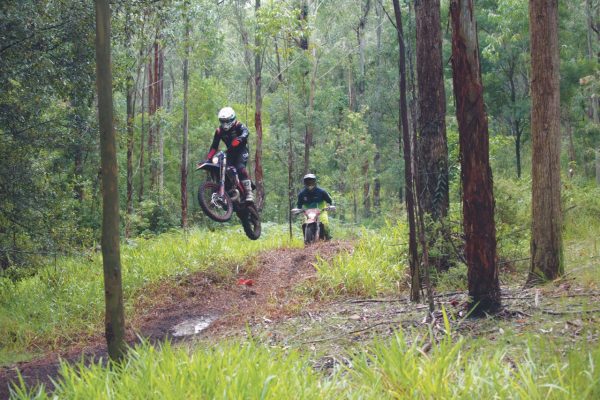
Spec Showdown: Beta 300 Racing vs GASGAS EC 300
You couldn’t find two 300s further apart in the bling spectrum if you tried. One’s got anodised bits, KYB suspenders and Italian swagger – the other looks like it just clocked off from a day on the farm and doesn’t care who’s watching. But on paper, here’s how the dollars and details stack up.
ENGINE & PERFORMANCE
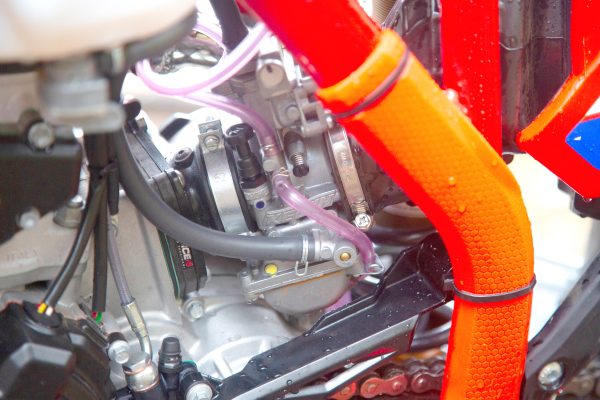
Both bikes swing 293cc-ish two-stroke singles, but that’s where similarities end. The Beta 300 Race runs an old-school Keihin PWK 36 carburettor and oil injection via an electric pump. Meanwhile, the GASGAS EC 300 goes full 21st century with Keihin EFI through a 39 mm throttle body and a Vitesco ECU managing the fuel mix.
Beta’s got a slightly shorter stroke (69.9 mm v 72 mm) and higher compression, so it’s a touch more lively off the bottom. The GASGAS might edge it in smoothness and attitude compensation thanks to EFI, but when it comes to sheer simplicity, the Beta’s still the backyard tuner’s dream.
CHASSIS & WEIGHT
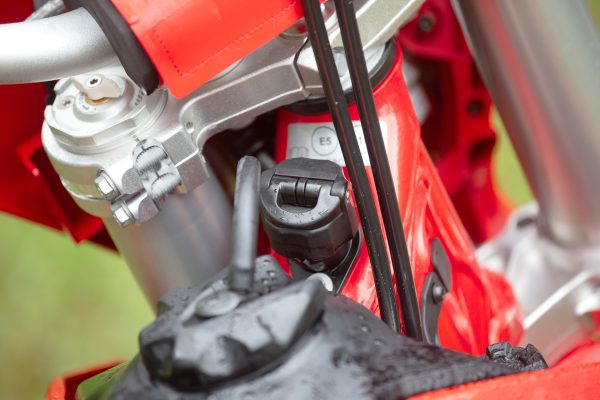
Both run a steel frame which gives them that classic, planted European feel, but the KTM has a longer wheelbase (1489 mm v 1482 mm). The Italian’s slightly shorter and feels tighter between the knees, while the Spaniard (errr Austrian) sits a bit taller (seat height 956 mm v 950 mm) and has more ground clearance (354 mm v 340 mm).
Weight-wise, the Beta’s lighter at 103.5 kg dry, versus 107.6 kg for the GASGAS – around a four-kilo difference.
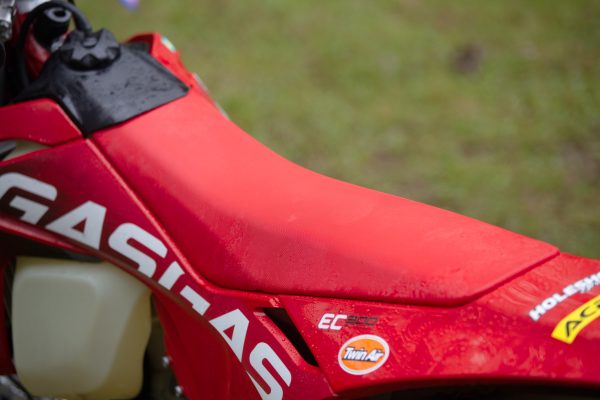
SUSPENSION
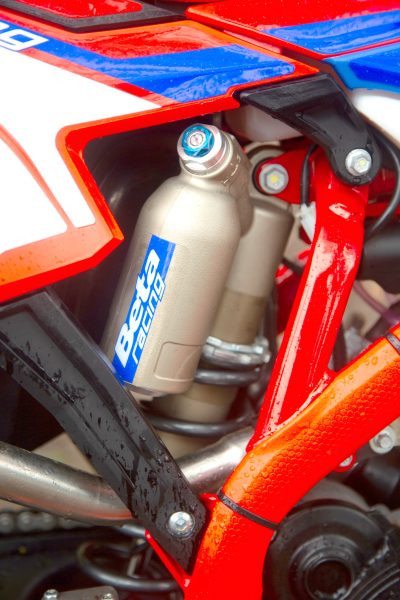
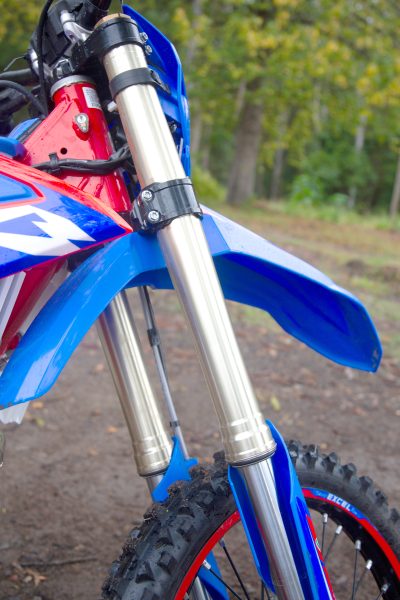
Here’s where the Beta earns its “Race” name – it runs a KYB 48 mm USD fork and KYB shock with linkage. Fully adjustable and considered the benchmark for high-end enduro bikes. The GASGAS fights back with WP XPLOR 48 mm fork and WP XACT shock on linkage – softer out of the box, aimed at trail comfort more than race-pace aggression.
Both offer 300 mm front travel, but the Beta’s slightly shorter rear stroke (287 mm v 300 mm) keeps it feeling tauter in the turns.
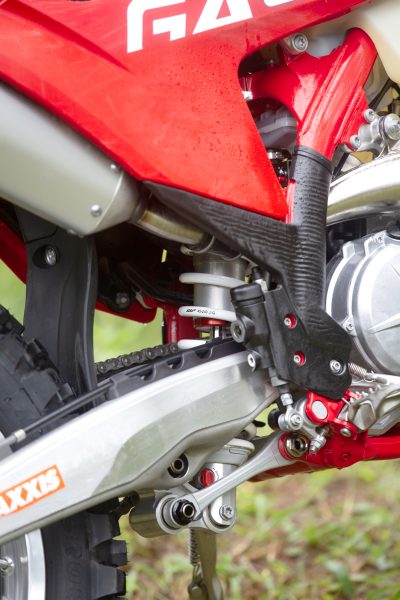
BRAKES & WHEELS
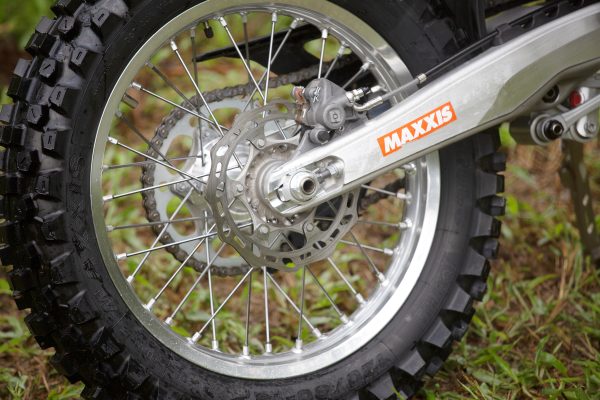
Front discs are identical at 260 mm, but Beta wins out back with a beefier 240 mm rear wave disc, compared to GASGAS’s 220 mm. Beta run a pair of Nissin brakes and GASGAS utilise Braktec brakes. Both solid options. Both bikes run 21/18-inch wheels and 90/90 – 140/80 tyres, though the Beta’s run a slightly narrower rear rim. Both come with Maxxis tyres.
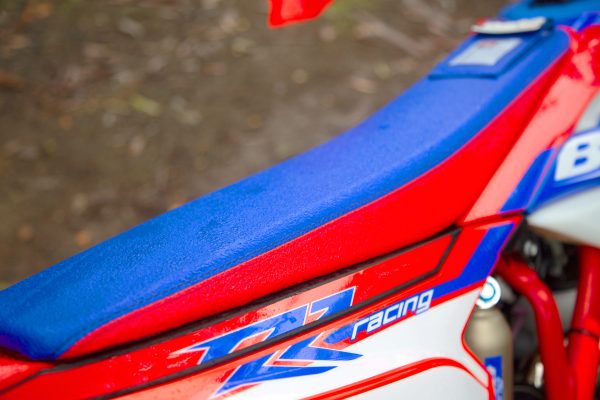
FUEL & RANGE
The Beta carries a 9.5-litre tank, while the GASGAS packs 9 litres flat. Not a big gap, but expect the EFI-fed GASGAS to stretch that bit further. The Beta’s carb will guzzle if you’re heavy-handed – and let’s be honest, you probably are.
Is bling, king?
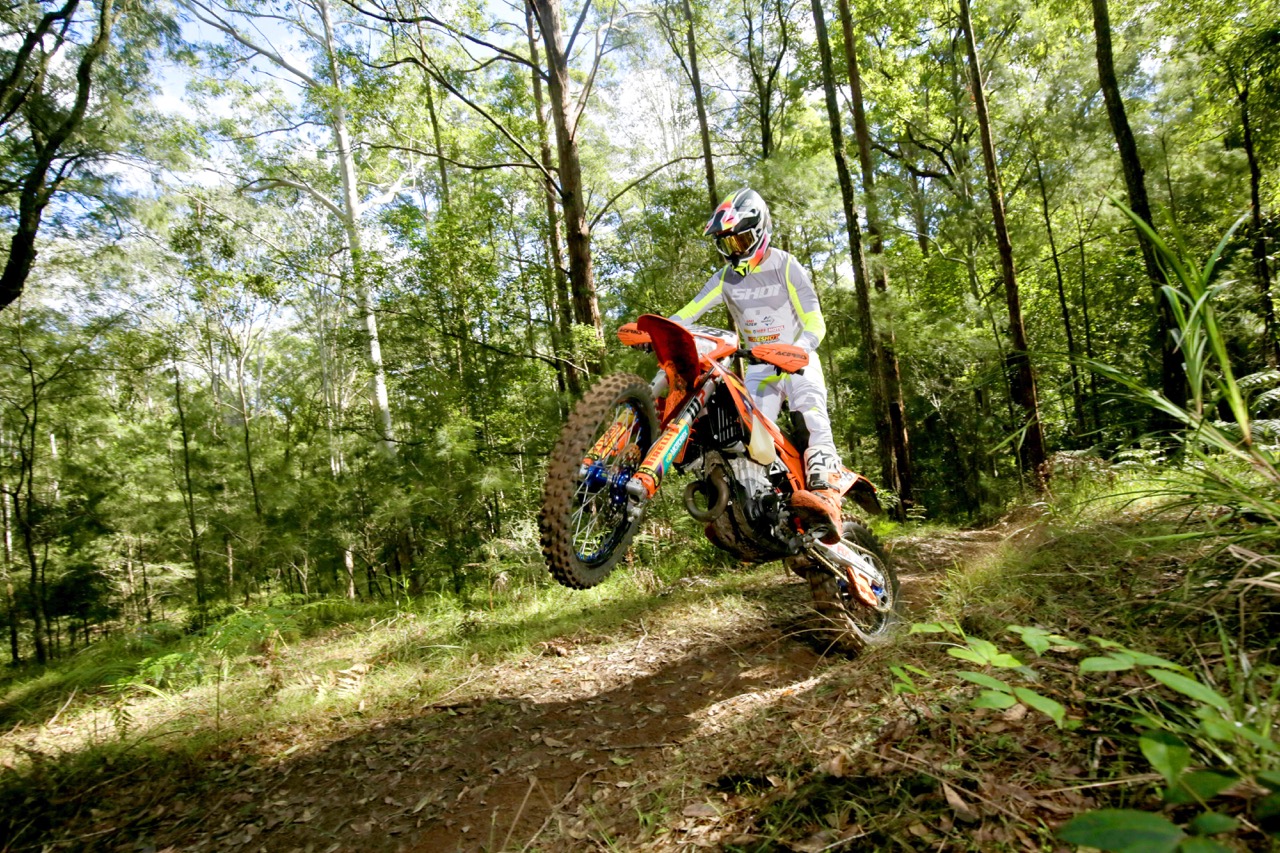
The Beta 300 Racing isn’t mucking around. It’s the full-fat version of Beta’s two-stroke line-up – firmer suspension, sharper geometry, all the go-fast bits.
From the first hit of throttle, the Beta makes its intentions clear. That Keihin carb-fed 292.6cc motor is old-school in all the right ways. It’s crisp and torquey and delivers a feeling you just don’t get from injected bikes. You can lug it down to nothing, short-shift through the gearbox, and it’ll pull like a tractor, or you can ring it out until the trees blur. It’s lively without being uncontrollable – the twin-spark head smooths the delivery beautifully, and you can feel that counter-balancer doing its job when you’re hanging on for dear life.
The KYB suspension is classic race-bike spec – stiff, precise, and begging to be pushed. At trail pace it might feel a little firm, but get on the gas and it transforms. Suddenly every rock, log and erosion mound becomes a launch ramp. The fork has that perfect blend of hold-up and feedback when you’re charging, while the shock finds traction so incredibly well.
Handling-wise, the Beta feels tight and compact and the new seat has made long rides a little more comfortable. The frame gives clear feedback through the pegs, and that molybdenum steel chassis keeps everything feeling calm even when you’re belting through chopped-out single.
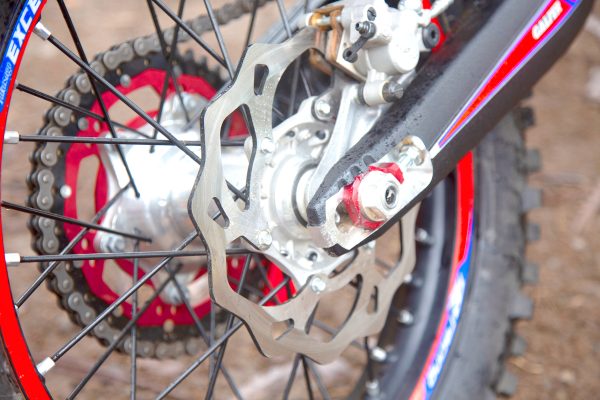
It’s not all race-bike brutality, though. Beta’s softened the seat foam (praise be), and while it’s still tall at 950mm, it’s more forgiving after a long day. The brakes are strong – Nissin front and rear – with the front in particular offering face-plant levels of strength until you learn to respect it. But once you adapt, it’s all precision and confidence.
The only downside? It’s firm, intense, and a bit much for lazy Sunday trail rides. But that’s not what it’s built for. This thing’s designed to be ridden hard, fast, and with intent. It rewards aggression, and if you’ve got the skill to use it, it’s easily one of the best 300s on the market. And yes, in the case of the Beta 300 Racing and Race, the bling and extra features like the KYB suspension make it a more serious bike that’s more aggressive to ride.
The Larrikin
Then there’s the GASGAS EC 300. The “budget” 300 in the KTM group – if you can call anything over ten grand “budget” anymore – it’s the softer, more easy-going cousin to the KTM EXC and Husky TE. But don’t think that means it’s half-baked.
The heart of the GASGAS is the new TBI (Throttle Body Injection) engine, a huge step forward from the old TPI system. Fuel mixes with air in the throttle body, not the cylinder, which means cleaner running, better atomisation, and smoother power delivery. The result? It’s easily the best fuel-injected two-stroke we’ve ridden. It might not have that snappy carb hit like the Beta Race, but it’s silky-smooth, perfectly fuelled and near impossible to stall.
The motor’s super forgiving – you can crawl it through technical junk at almost idle, and it just keeps chugging. The electronic power valve and refined mapping make it feel predictable everywhere. Sure, it doesn’t have the Beta’s punch, but that’s kind of the point. It’s the bike that lets you relax and focus on the trail rather than wrestling for control.
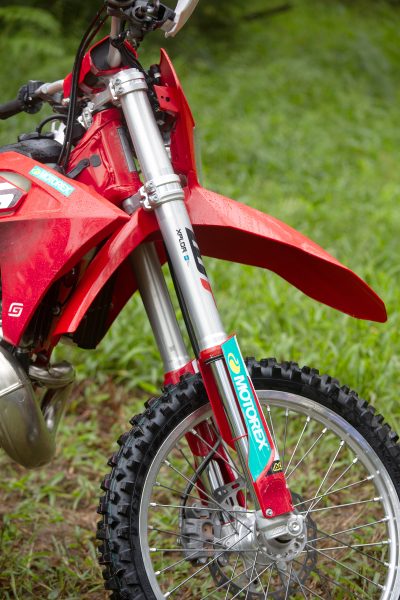
The WP XPLOR open-cartridge fork and XACT shock match that easy-going personality. It’s soft, plush, and loves slow-speed trail work. But it’s easily the firmest open-cartridge system we’ve tested. On nasty rocky climbs or slippery roots, it just floats. Push it to race pace, though, and it quickly runs out of ideas – blowing through the stroke and getting nervous when you’re really hammering. But if you’re honest with yourself and most of your riding’s trail pace, it’s hard to fault.
The ergos are roomy and comfortable, the Neken ‘bars feel neutral, and despite having a slightly higher seat (956mm) the softer feel and softer rear shock absolutely mean it feels lower to sit on making it friendly for a wide range of riders. The Braktec brakes and clutch – once the butt of every test rider’s joke – have come good, too. They’re not Brembo-sharp, but they’re consistent and predictable.
The EC 300’s biggest charm is how little it asks of you. No pre-mix, no jetting, no adjusting a clicker every time the weather changes. Just start it, ride it, and enjoy it. It’s the kind of bike you can lend to a mate and not have to worry about whether they’ll bin it or stall it every ten metres.
The Bling Factor – Does It Matter?
So, does spending the extra cash on the Beta actually buy you performance? Yes – but only if you’re using it. The Beta’s sharper, faster and more explosive everywhere. It feels lighter, hits harder, and its KYB suspension absolutely schools the GASGAS once you’re pushing hard.
But that performance comes at a cost: you’ve got to ride it properly. You can’t just plod around at half pace. It needs aggression to shine. The GASGAS, meanwhile, is the total opposite – softer, friendlier, easier to live with. It doesn’t care if you’re riding like a hero or a hungover plumber.
If you want a 300 that makes you grin every time you twist the throttle and you’ve got the skill (and forearms) to hang on, the Beta 300 Racing is your bike. It’s everything you probably remember from days of old for two-strokes: angry, alive, and absurdly fun.
If you just want to ride, explore, and not think too hard about clickers or jetting, the GASGAS EC 300 makes a strong case. It’s not the flashiest or fastest, but it will save you over $1000 (you’ll need to buy handguards and skid plate though) and it’s the one that’ll keep you out on the trail all day without wearing you out.
Side-by-side: Beta 300 Racing vs GASGAS EC 300
| Category | Beta 300 Racing | GASGAS EC 300 |
| Engine Type | Single-cylinder, 2-stroke, liquid-cooled | Single-cylinder, 2-stroke, liquid-cooled |
| Displacement | 292.6 cc | 293.15 cc |
| Bore x Stroke | 73 mm x 69.9 mm | 72 mm x 72 mm |
| Compression Ratio | 11.6:1 | Not specified |
| Fuel System | Keihin PWK 36 carburettor | Keihin EFI (39 mm throttle body) |
| Lubrication | Oil injection (electrical pump) | Pre-mix (EFI controlled) |
| Ignition / ECU | AC Kokusan digital CDI | Vitesco Technologies EMS |
| Starter | Electric | Electric |
| Transmission | 6-speed | 6-speed |
| Clutch | Wet multi-disc, mechanical | DDS wet multi-disc, Braktec hydraulic |
| Frame | Molybdenum steel double cradle | 25CrMo4 steel double cradle |
| Subframe | Steel | Aluminium |
| Wheelbase | 1482 mm | 1489 mm |
| Seat Height | 950 mm | 956 mm |
| Ground Clearance | 340 mm | 354 mm |
| Dry Weight | 103.5 kg | 107.6 kg |
| Fuel Capacity | 9.5 L (2.3 L reserve) | 9 L |
| Front Suspension | KYB 48 mm USD fork | WP XPLOR 48 mm USD fork |
| Rear Suspension | KYB monoshock with linkage | WP XACT monoshock with linkage |
| Front Wheel Travel | 300 mm | 300 mm |
| Rear Wheel Travel | 287 mm | 300 mm |
| Front Brake | 260 mm wave disc, twin-piston | 260 mm disc |
| Rear Brake | 240 mm wave disc, single-piston | 220 mm disc |
| Front Tyre / Rim | 90/90–21 / 21 x 1.6 | 90/90–21 / 21 x 1.6 |
| Rear Tyre / Rim | 140/80–18 / 18 x 1.85 | 140/80–18 / 18 x 2.15 |
| Handlebar | N/A | Neken aluminium Ø28/22 mm |
| Cooling System | 1.3 L capacity | Liquid cooled |
| RRP Ride Away | $17,720 | $16,615 |