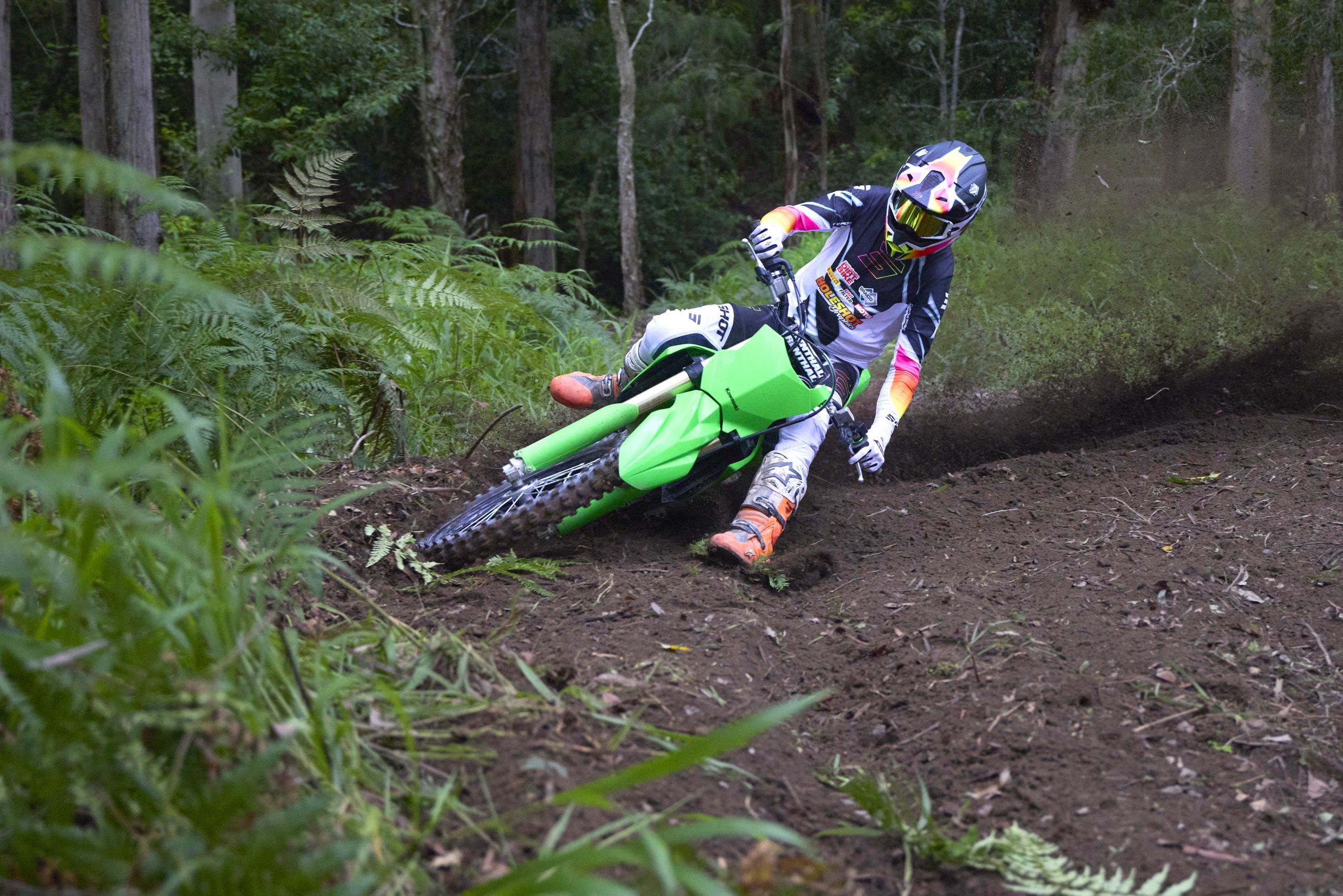
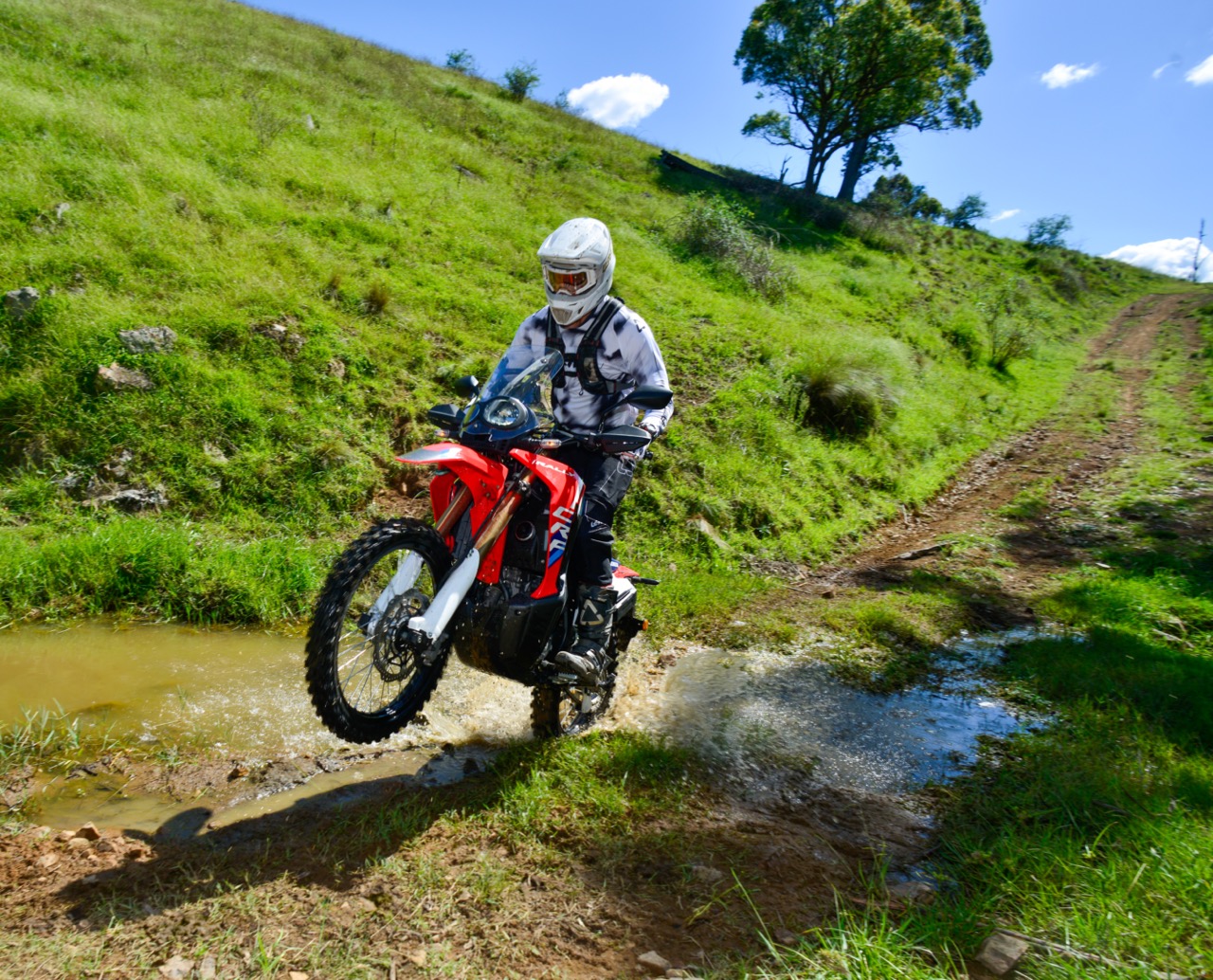
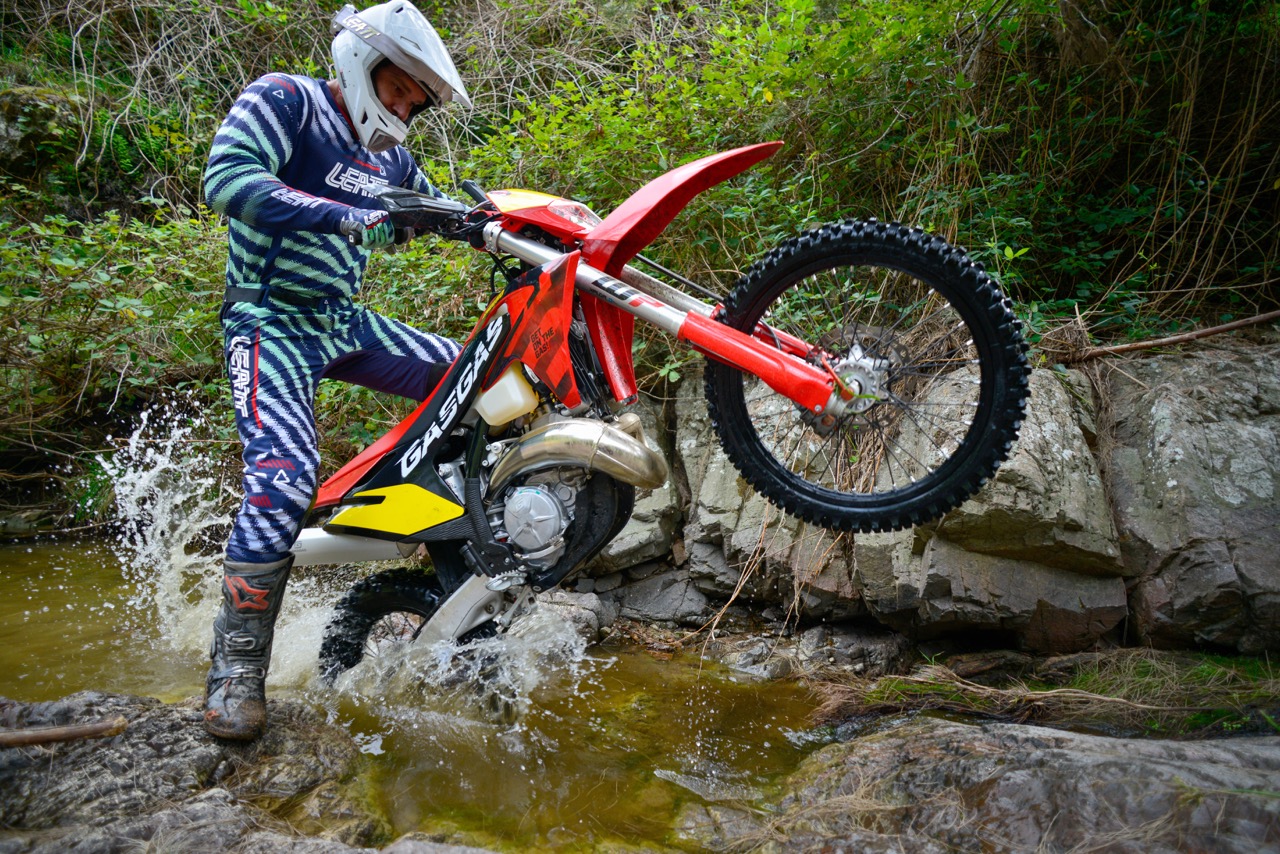
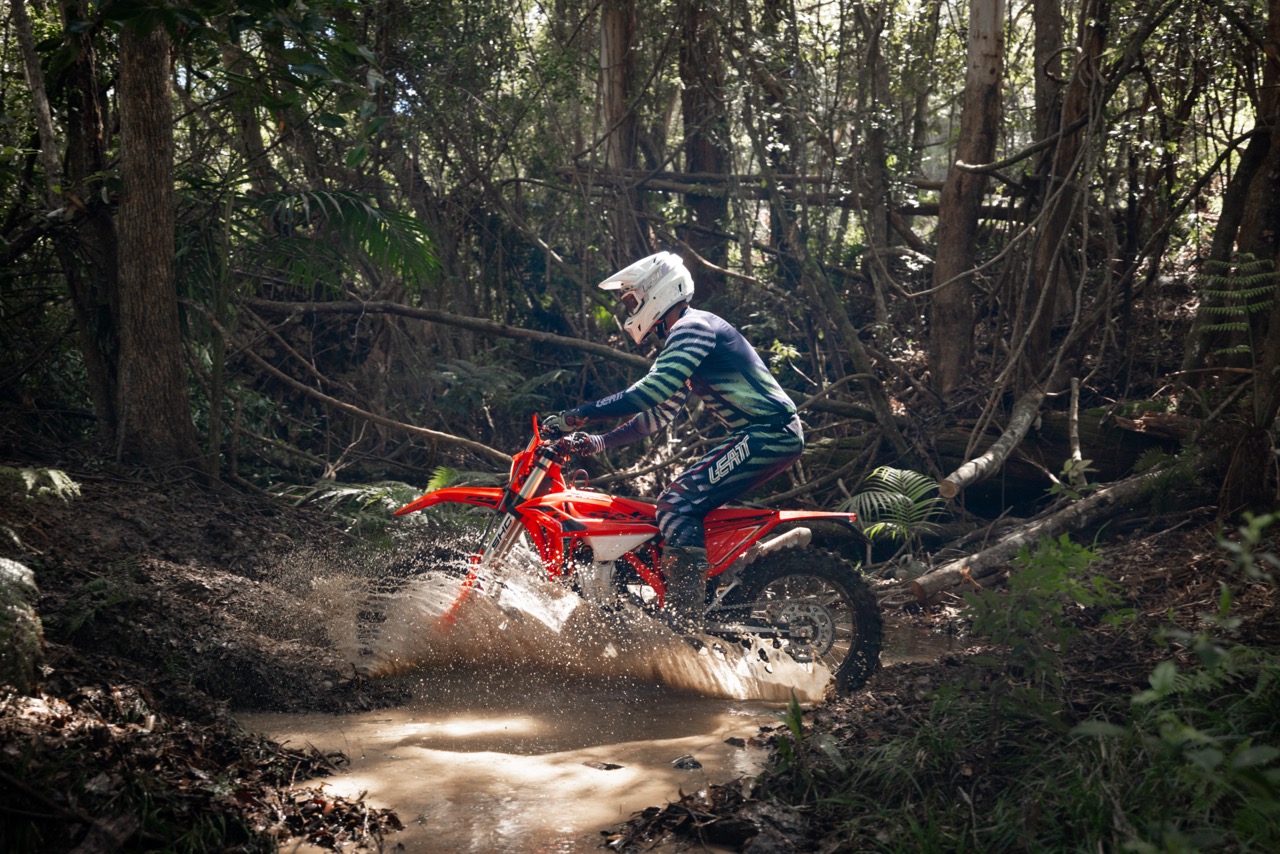
We love to talk about racing – whether it’s motocross, supercross, enduro or hard enduro – but at the end of the day here in Australia the majority of bikes sold aren’t headed straight for the start gate. Most Aussie riders are trail-riding: clearing fire-trails, bush loops, lunch rides, and big days out in the scrub. That shift matters, because while the hardcore testing rigour we’ve focused on has been about engine power, suspension travel and lap times in the controlled loop, that doesn’t always translate to the kind of all-day trails where the terrain, seat comfort, fuel range and ease of use matter just as much. So we thought we’d go trail riding not he Triumph enduros and put the TF 250-E v 450-E up against each other.
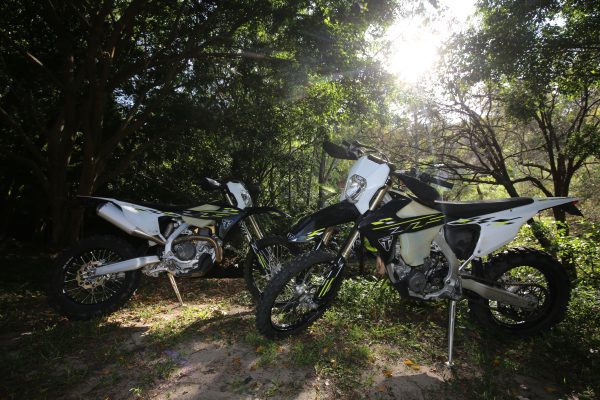
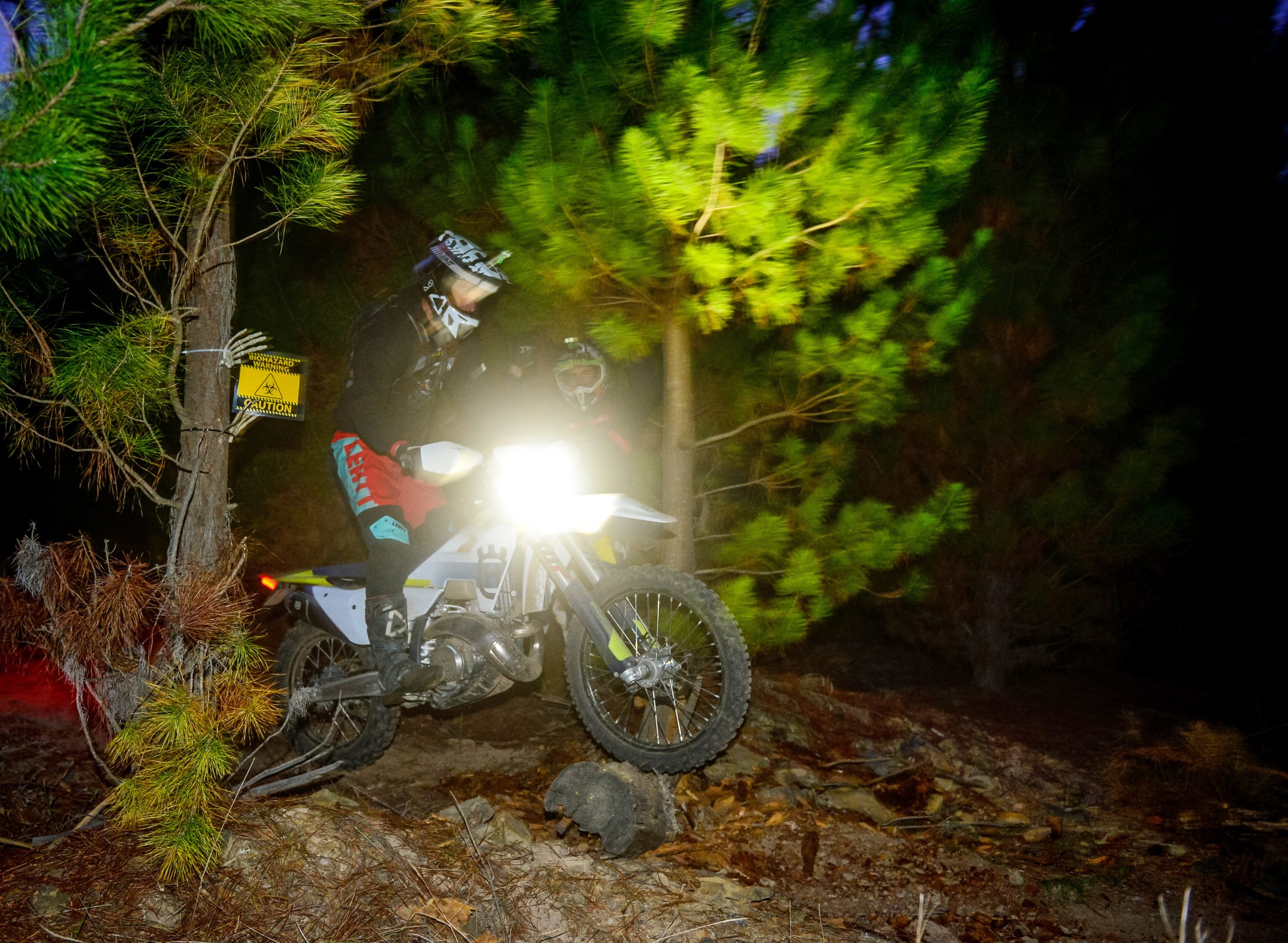
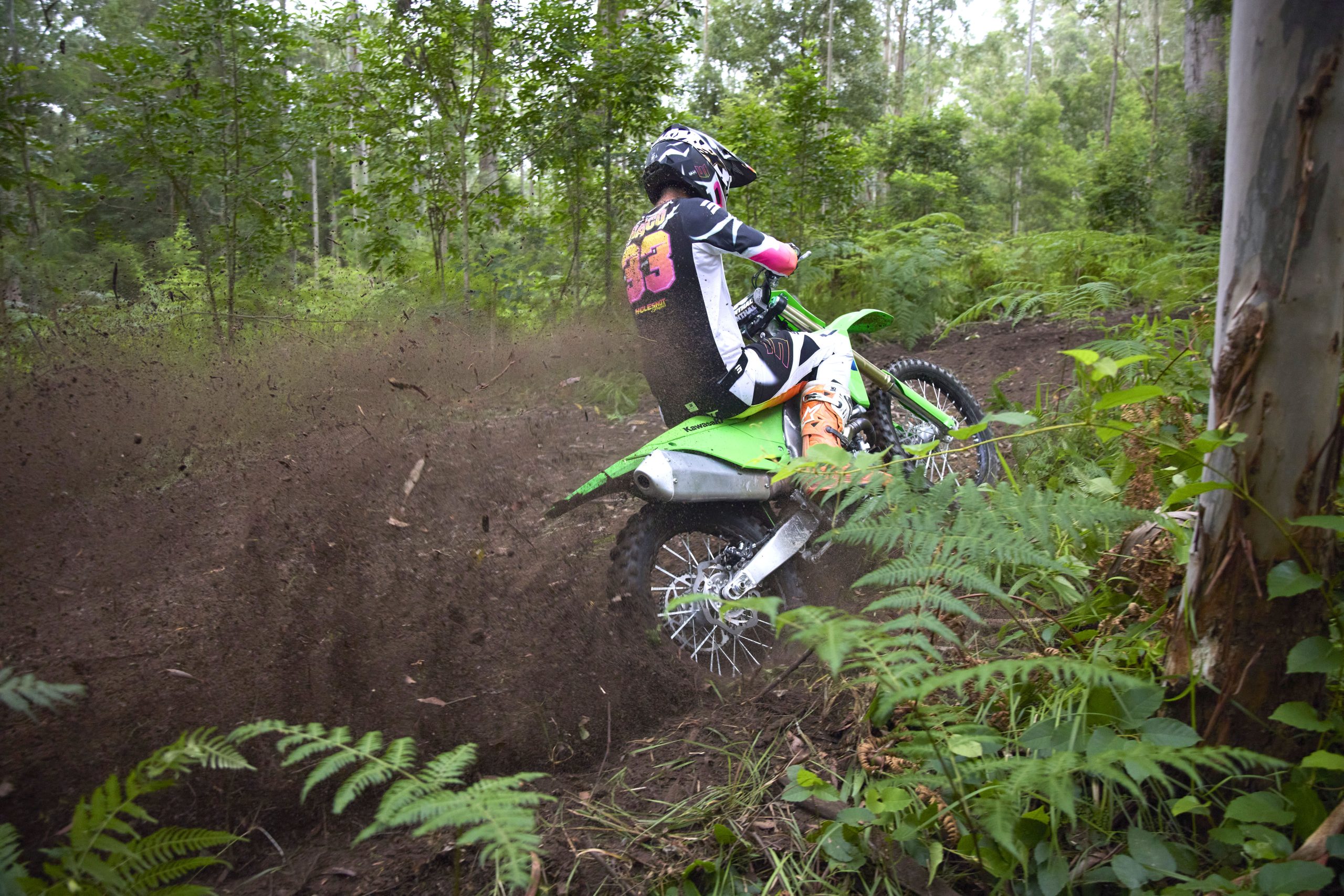
So when the opportunity came up to compare the Triumph TF 250‑E and the Triumph TF 450‑E in proper trail-riding mode, Jeff Briggs and I jumped on it. We left behind the stopwatch and the test-bench and instead loaded up two bikes, packed spare fuel and lunch, and aimed to ride from Mandalong to Wollombi Tavern for lunch and back – the kind of ride where range, ergonomics, ease of use, hand-fatigue, gearing and comfort count just as much as peak horsepower.
Our test wasn’t about seeing which bike went fastest or clipped the best laptime in the lab – it was about asking which of these two machines is better suited to a full day in the bush. Can the 250-E stretch out, stay cool, keep you comfortable, and still get out of trouble if the track gets gnarly? Does the 450-E carry the extra punch without shouting “race-bike” all day, or does it become tiring? How do the handguards hold up, do the buttons on the handlebar feel superfluous or genuinely useful, and is the seat something you’re still happy to be in after five hours? We set the stopwatch aside, opened the throttle, and the real question was: would we make it to lunch and back without running out of fuel, overheating, or regretting our choices? Let’s find out!
How’d they stack up?
We clocked just under 130 kilometres all up, but the real story was that both bikes made it 117 kilometres before the fuel light came on – not bad at all for a pair of high-performance four-strokes. The 450-E drank a little more, as expected, but we also gave it more of a flogging. The 250-E sipped fuel and probably could’ve stretched to 130–140 km if we’d kept things mellow. That’s solid range for a trail ride, especially when you consider how often we stopped to muck around on loops and hill climbs.
Both bikes sat happily at 90–100 km/h on the tar sections, which is something most motocross-based bikes hate. The 250-E only has a five-speed box, but it didn’t matter – the ratios are well-spaced. It pulled cleanly and never felt frantic. The 450-E, with its broader torque curve, cruised along at trailpace so well! We never once found ourselves hunting for an extra gear or clutching to keep the revs alive.
Controls & Ergonomics
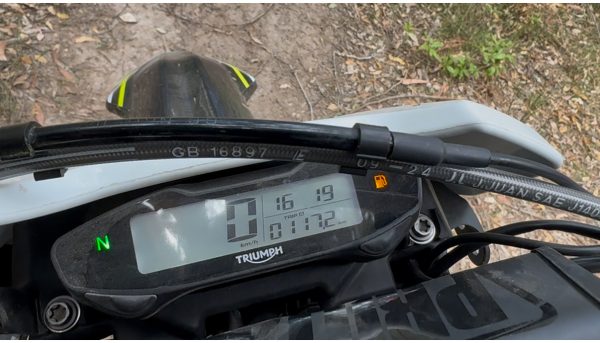
From the cockpit, everything felt well laid out for trail riding. The bar position was spot-on – upright and natural when standing, but relaxed when sitting down for long stretches. The speedo is easy to read at a glance, even on the road, and the switchgear feels solid.
The only small annoyance was the starter button, which sits a bit flush with the housing. You’ve got to give it a deliberate push, and when you’re wearing gloves or in a hurry, it’s not as intuitive as we’d like. We both prefer a more prominent button you can hit without thinking. Still, it worked every time – so no real complaints.
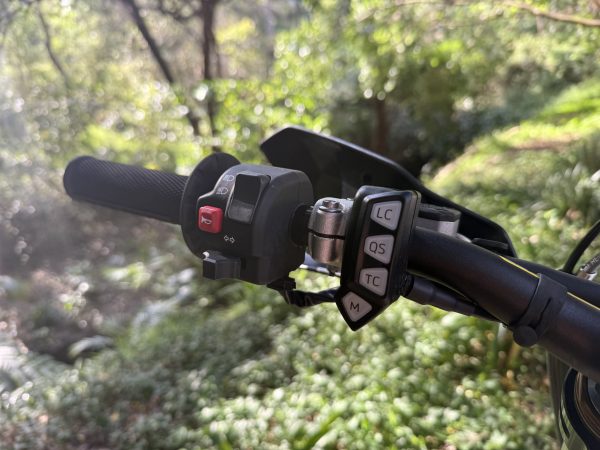
Then there’s the button cluster on the left bar – traction control, launch control, quickshifter, and mapping. For racing, sure, it’s nice to have. For trail riding? You’ll use one map and forget the rest. We ran both bikes in the aggressive map with traction control on, and that setup worked perfectly. There’s a small difference between maps, but both remain smooth and manageable. Even the 450 isn’t intimidating; it’s surprisingly mellow when you want it to be.
Comfort & Contact Points
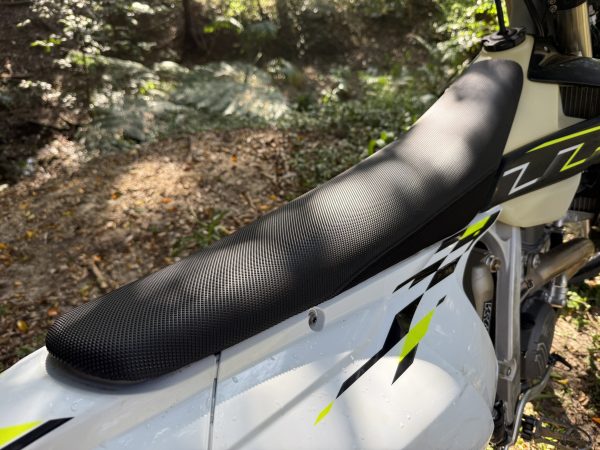
You spend a lot of time in the saddle on a trail ride, and the seat on both bikes was a standout. Soft, grippy and genuinely comfortable – not something you can say about most race-bred bikes. After a full day, neither of us had sore backsides or the feeling we’d been sitting on a fence post. If anything, the seat’s grip might be a bit too much when you’re tall and like to move around, but for average-sized riders, it’s spot-on.
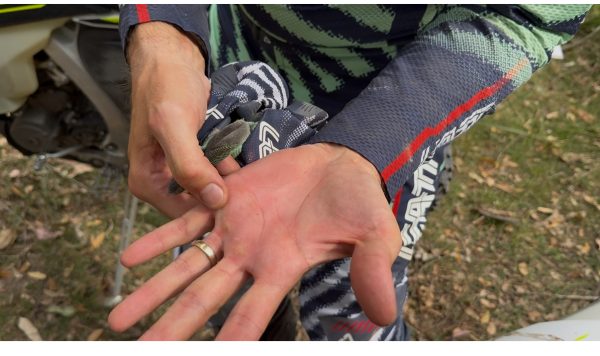
The grips also deserve praise. They’re soft, absorb vibration well, and don’t tear your hands to bits. We both finished the day without blisters – even though we’d been riding hard. A lot of stock grips from Japan still have that old-school waffle pattern that feels like hanging onto PVC pipe. These feel more like what you’d find on a Euro enduro bike – soft, forgiving, and comfortable for long days.
Even little things impressed us: the fuel cap is simple and easy to remove – none of those silly press-button caps that jam or leak. The side stand has a big foot, doesn’t sink into soft dirt, and flicks up easily. It leans at a sensible angle too – no balancing acts required when you pull up for a chat.
Cooling & Reliability
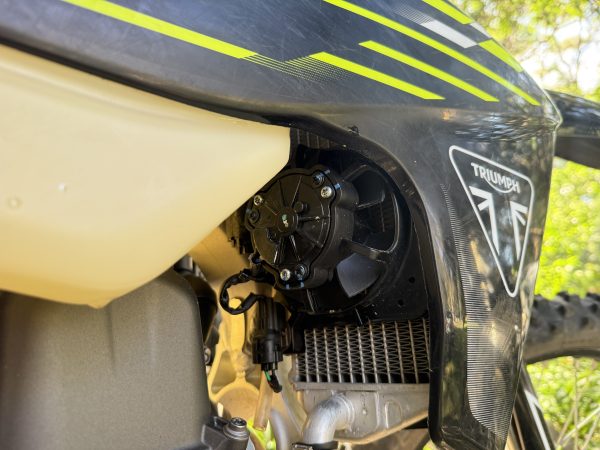
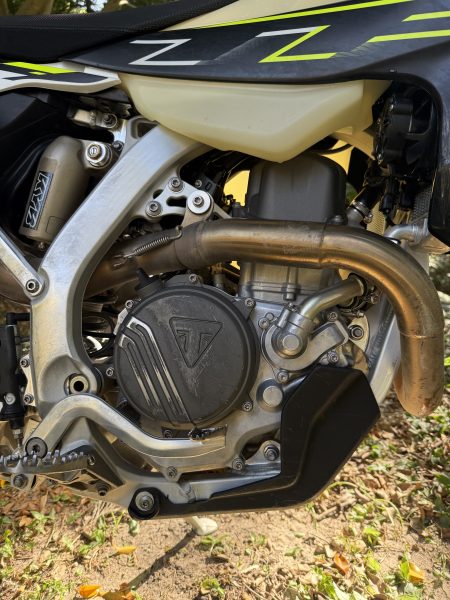
We expected some heat on a 27-degree day crawling through slow, rocky trails, but both bikes held their own. The 450’s thermo fan kicked in fairly often in the tight, snotty stuff, but the bike never overheated or felt hot between the legs. The 250 ran cooler overall, but the important part is both kept their composure. Having a thermo fan fitted from the factory is a huge win – plenty of MX-based bikes still don’t come with one.
Engines & Power Delivery
The real highlight of both bikes is the engine character. They’re smooth, linear and almost impossible to stall. We tried. You can crawl along at walking pace in second gear and roll on the throttle without a single cough or flame-out. For trail riding, that’s gold. IT’s also rare on a modern fuel-injected four-stroke.
The 450-E is one of the most user-friendly big-bores we’ve ridden. It’s got plenty of grunt when you need it, but it doesn’t bark or surge – it just pulls cleanly and predictably. You can lug it through tight trees all day and never feel like it’s about to get away from you.
The 250-E surprised us even more. It feels like a 350 in the way it makes torque – meaty through the mid-range and endlessly tractable. Triumph’s longer gearing helps too; it doesn’t rev out quickly like some 250Fs. Instead, it keeps building and pulling, giving it a broader spread of usable power.
Suspension & Handling
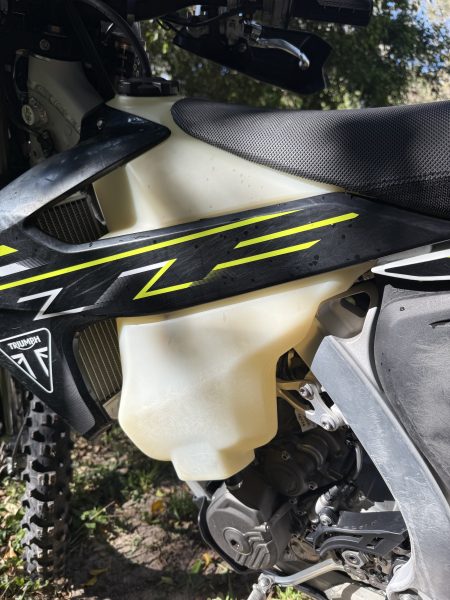
Before this ride, all our testing had been in controlled environments – moto tracks, test loops, and enduro courses – so we weren’t sure how the KYB suspension would feel in the real world. A lot of riders reckon KYB can be firm out of the box. On the trails, though, both bikes were impressive.
The 450-E felt firmer overall, which heavier or faster riders will appreciate, while the 250-E sat a little softer in the front. I’d personally push the fork legs up a few millimetres to sharpen the steering a bit, but that’s splitting hairs. Both ends soaked up chop, roots and rocks nicely while still holding up on bigger hits and erosion mounds.
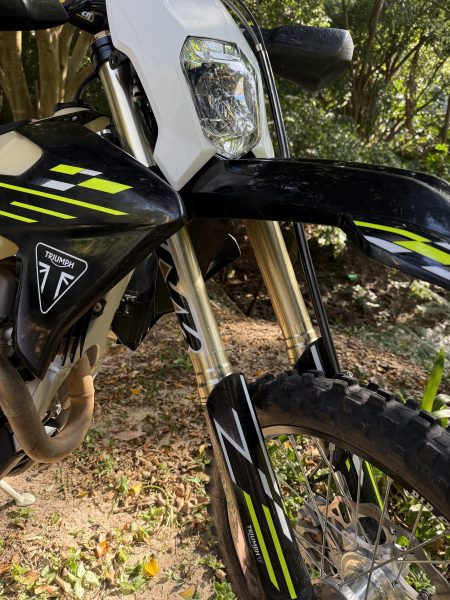
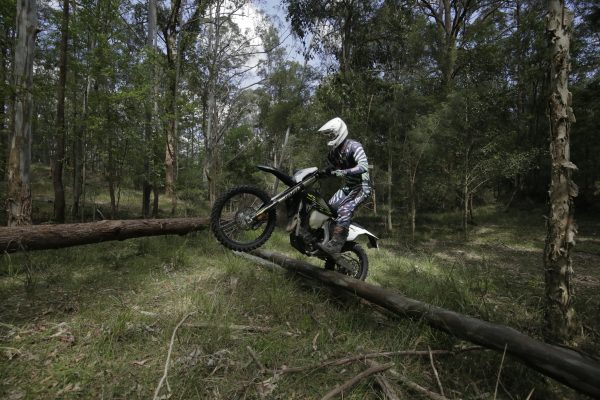
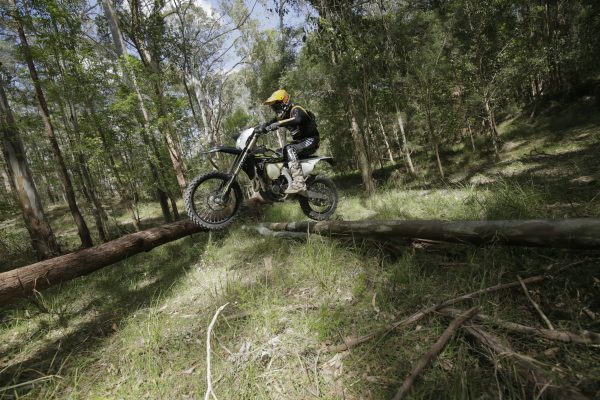
We bottomed a few times when we got over-excited, but never harshly. The shock tracked straight, never bucked, and always felt composed. The chassis geometry is spot-on – light, balanced, and nimble. Through singletrack, both bikes carved clean lines like scalpels. The 250-E reminded us of the Sherco 300 SEF four-stroke with how easily it flicked through trees, while the 450-E stayed surprisingly agile for a big capacity.
They both inspire confidence – predictable, stable, and easy to trust. Nothing twitchy, nothing nervous. Just solid, dependable handling that lets you relax and enjoy the ride.
Protection & Trail-Readiness
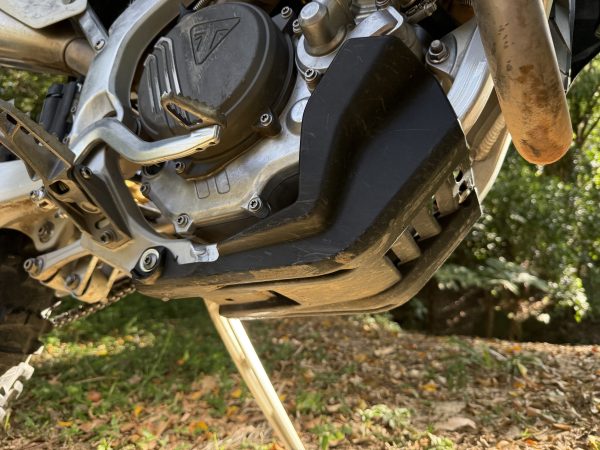
Trail riders will be happy to know both bikes come with motocrss-style handguards and a skid plate straight from the factory. It sounds minor, but plenty of brands still leave those out. We smashed through vines, bounced off rocks and didn’t bend a single lever. The handguards are scuffed to hell now, but they did their job. The skid plate is a neat plastic design – quiet, light, and effective without trapping mud like big alloy ones do.
Tyres were the only part we’d consider changing. The stock Michelins were fine – better than expected, actually – but like most OME tyres, they’re a compromise. They’ll do the job until they’re worn out, then you can swap to whatever rubber suits your terrain.
The Verdict
After a full day of trail riding, we both walked away impressed. The TF 250-E and TF 450-E are genuinely enjoyable trail bikes straight out of the crate. They’re smooth, quiet, cool-running, comfortable and incredibly easy to ride fast or slow. There’s nothing about them that feels out of place in Aussie bush conditions.
If you’re a lighter or newer rider, the 250-E is probably the pick – it’s strong, forgiving, and feels lighter through tight trees. If you’re heavier or want more torque on hills, the 450-E gives you grunt without attitude.
Either way, Triumph’s first crack at proper dirt bikes aren’t just race-worthy – They’re trail-ready. And that’s what most of us need.
While these bikes rip in the bush, the TF 250-E has had an incredible year in the race scene. Here’s the Triumph TF 250-E debut season dominance:
EnduroGP World Championship
- 15 podiums in the Enduro1 class across 7 rounds
- 3rd, 4th & 5th overall in Enduro1 (Lesiardo, McCanney, Persson)
- 7th & 8th overall in EnduroGP (Persson & Lesiardo)
- 4× Top-10 finishes at the opening round in Portugal
- 1× Class win & EnduroGP podium for Lesiardo in Italy — Triumph’s first
ISDE (International Six Days Enduro)
- 1st place: Team Italy (Morgan Lesiardo)
- 2nd place: Team Sweden (Mikael Persson) — Sweden’s first podium in 17 years
- 0 mechanical DNFs — every TF 250-E finished all 6 days
National Championships
- 2 British titles for Jamie McCanney (Enduro & Sprint)
- 2nd overall in British Enduro Championship (Mikael Persson)
- 1st in Italian Enduro1 Championship (Morgan Lesiardo)
Extreme & Indoor
- 2nd overall in 2025 FIM SuperEnduro World Championship (Jonny Walker)
- 6th place at ErzbergRodeo — first 4-stroke in the top 10
- 1st overall at AMA EnduroCross Round 1 with the TF 450-E debut (3-1-1 motos)
In total:
9 podium-finishing riders across world, indoor & national series
5 championship titles in one season
0 mechanical failures reported
100 % finish rate at world level