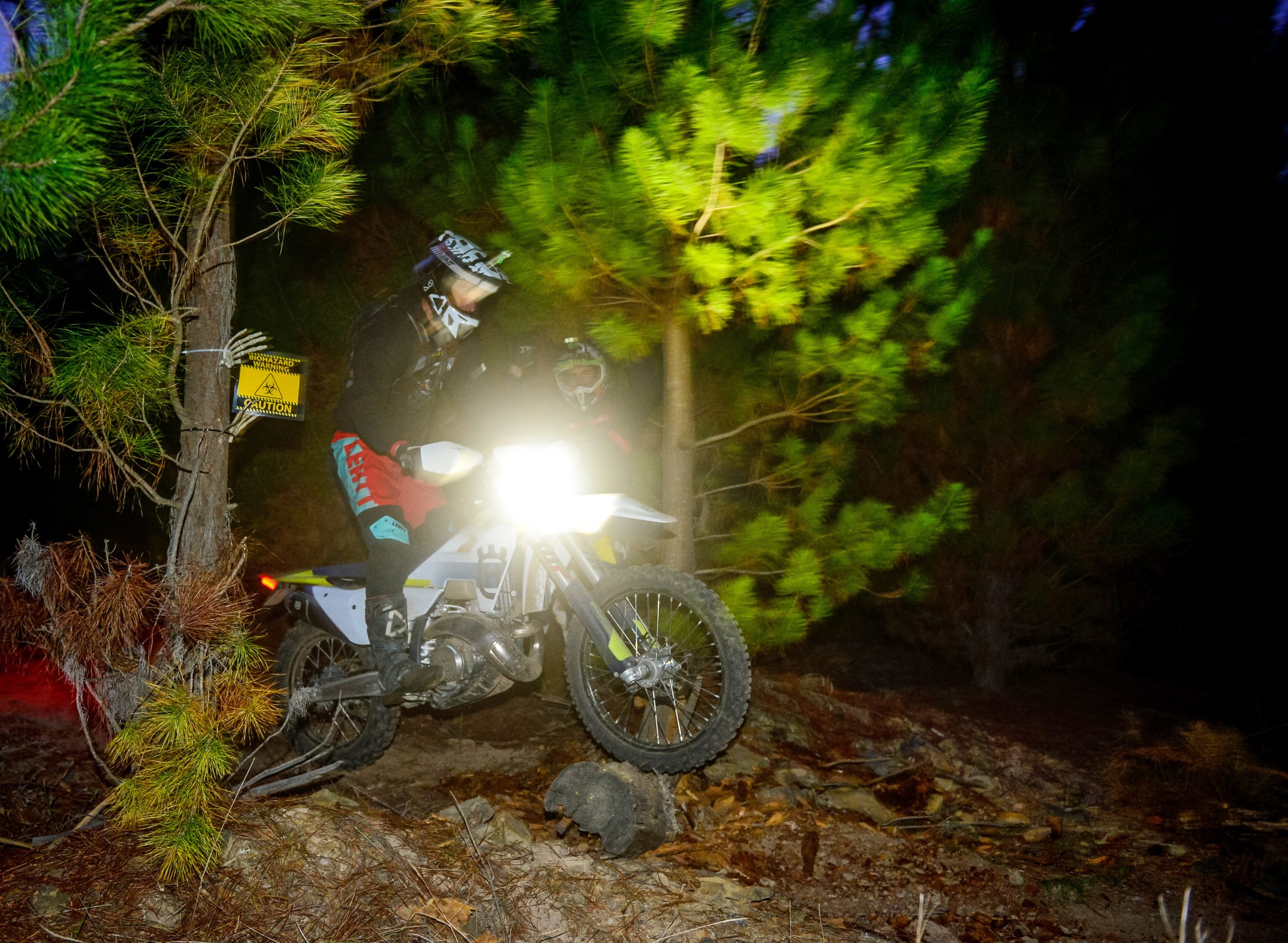
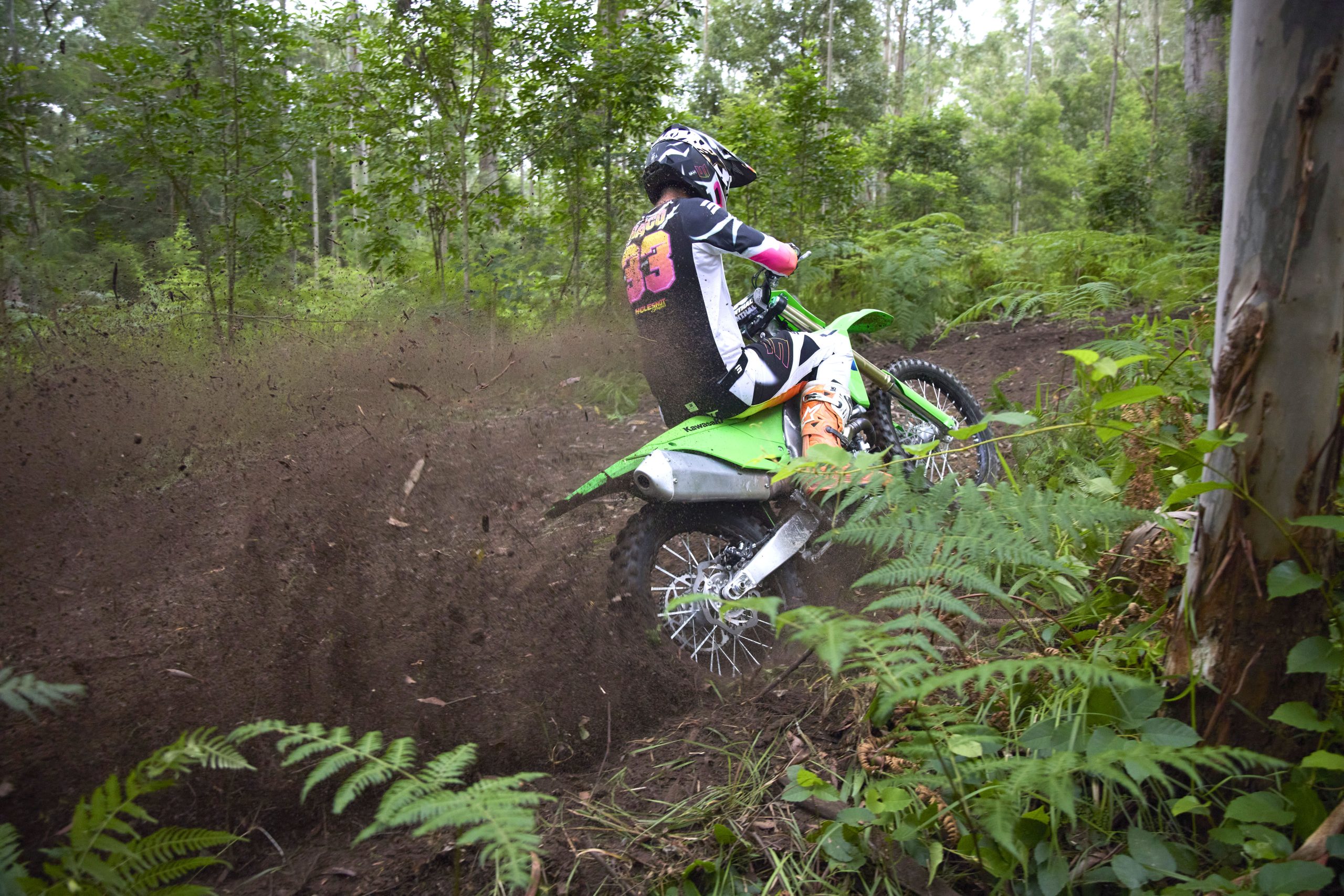
Triumph’s motocross story has been a slightly strange one so far, but in a good way. More than a year ago, we were in the USA riding the Ricky Carmichael–inspired TF 450-RC, a bike that arrived before a “standard” production model even existed. It was a bold move from a brand entering the motocross world for the first time, and stranger still, it worked. The RC version wasn’t just a limited-edition sticker kit; it was a fully realised, high-end 450 that immediately felt like a bike from a manufacturer that genuinely knew what it was doing.
That Stateside test left a strong impression. The TF 450-RC was polished, powerful, well balanced and, perhaps most impressively, easy to ride for a modern 450. Triumph’s attention to engine character, chassis balance and build quality stood out, and it set the bar high. So when word finally came that the long-awaited stock TF 450-X was landing in Australia, expectations were already baked in. This wasn’t a clean-sheet first test, this was a follow-up to a bike we already knew and liked.
The timing, however, was classic Australia. The TF 450-X’s first local test coincided with a brutally hot summer day, the mercury nudging 42 degrees, the kind of heat that exposes weaknesses fast, in engines, cooling systems and riders alike. If there was ever a day to find out whether Triumph’s 450 platform could handle real-world punishment, this was it. No manicured US red clay, no mild conditions, just full-blown Aussie heat and hard work.
With memories of the RC edition still fresh, we rolled out on the TF 450-X with high hopes and a fair bit of curiosity. Would the stock version live up to the Ricky Carmichael special? Had anything been softened, simplified or compromised? And most importantly, could Triumph translate that impressive first impression into a bike built for everyday racers and riders here at home? Time to find out.
Ricky’s Rocket
So what did we think of the TF 450-RC when we rode it a year ago? On track, the TF 450-RC impressed immediately with its engine character. It delivers strong bottom-to-midrange power that’s smooth, usable and confidence-inspiring, making it easy to ride quickly without feeling like it’s trying to rip your arms off. It doesn’t chase big top-end revs like some rivals, it signs off earlier, but that trade-off works in its favour for most riders. The power is responsive, tractable and friendly, with enough punch to satisfy aggressive riders while remaining manageable for everyday racers and social riders. The mapping system, while limited to preset options only, is well thought-out, with clearly defined maps for different conditions and riding styles, including an RC map developed by Carmichael himself.
The chassis and suspension package was another strong point. Sharing its frame architecture with the 250, the TF 450-RC feels well balanced and predictable, with a wide setup window that responds positively to changes in sag, fork height and clickers. The KYB suspension offers good hold-up and stability, especially once dialled in, and the bike tracks straight and turns accurately without feeling harsh. That said, ideal launch conditions made it harder to fully stress the chassis, and the deep, high-grip track masked some real-world harshness that Aussie riders might experience on baked hardpack. Ergonomically, the bike feels neutral and central, though some riders may want to tweak bar position, and the stock 110 rear tyre choice raised questions for Australian conditions, where many riders will likely opt for a wider 120.
Build quality and components were a clear highlight. Triumph didn’t cut corners: Brembo brakes and hydraulics, KYB suspension, DID rims, Galfer discs, quality machining and smart features like tool-free air filter access, traction control, launch control, quickshifter and WiFi mapping all reinforce the premium feel. On the downside, the mapping system’s lack of user adjustability may frustrate riders who like fine control over fuelling and ignition, and while the engine is extremely rideable, riders chasing maximum top-end hit may find it slightly subdued compared to class benchmarks. Overall though, the TF 450-RC felt remarkably complete for a first-generation motocross bike, refined, easy to live with and clearly built with long-term development in mind.
How they differ
At their core, the TF 450-RC Ricky Carmichael Edition and the standard TF 450-X are mechanically very similar. Both share the same 449.5cc SOHC single-cylinder engine with identical bore and stroke (95 x 63.4mm), the same 13.1:1 compression ratio, Dell’Orto throttle body with Athena engine management, five-speed gearbox and hydraulic Belleville-spring clutch. Chassis geometry is also identical, with the same aluminium spine and double cradle frame, wheelbase, rake, trail, seat height, fuel capacity and claimed wet weight of 108.6kg. In short, the foundation, engine architecture, frame, suspension travel and dimensions, is shared across both models.
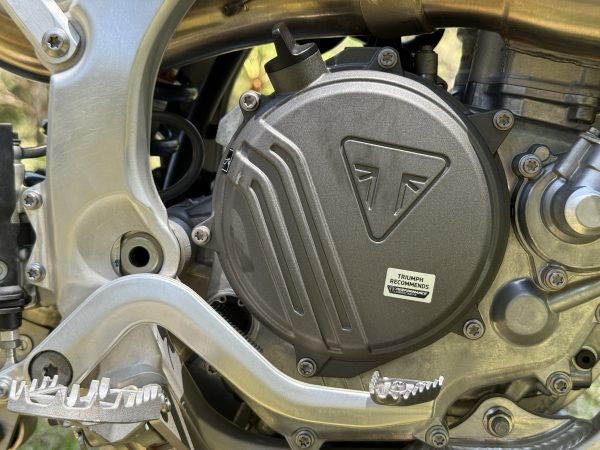
Where the TF 450-RC separates itself is in its race-focused standard equipment and setup. The RC edition rolls on a 110/90-19 rear tyre, compared to the TF 450-X’s narrower 100/90-19, and comes fitted with ODI Podium Flight RC4 signature handlebars, a gripper seat cover, XTrig holeshot device, Hinson clutch cover, and a Ricky Carmichael–specific engine tune as standard. The RC also includes the Wi-Fi communication module out of the box for mapping access via the MX Tune Pro app, reinforcing its intent as a premium, ready-to-race package straight from the crate.
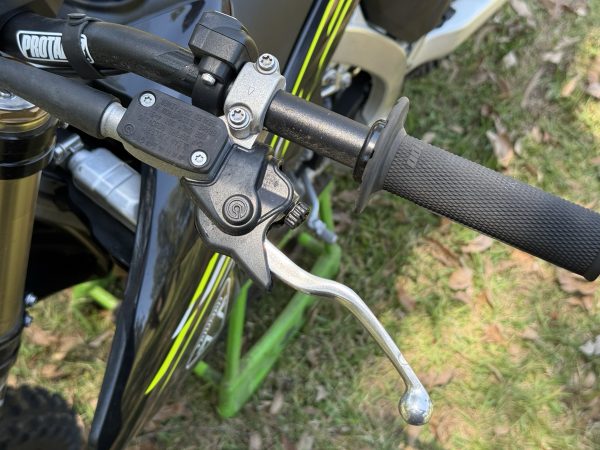
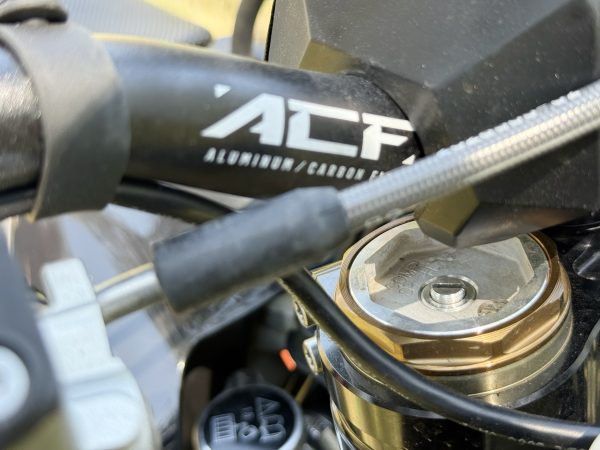
The TF 450-X, on the other hand, takes a more neutral approach aimed at a broader rider base. It swaps the RC bars for ProTaper ACF Carbon Core bars mounted in Neken yokes, runs Pirelli MX32 tyres, and uses a 13/49 final drive ratio instead of the RC’s 13/48. While it still includes high-end electronics like traction control, launch control, quickshifter and dual engine maps, it does not carry the RC-specific tune or signature components. Effectively, the TF 450-X is the same high-quality platform with fewer race-prepped extras, leaving riders to tailor it themselves rather than paying upfront for Carmichael’s preferred setup.
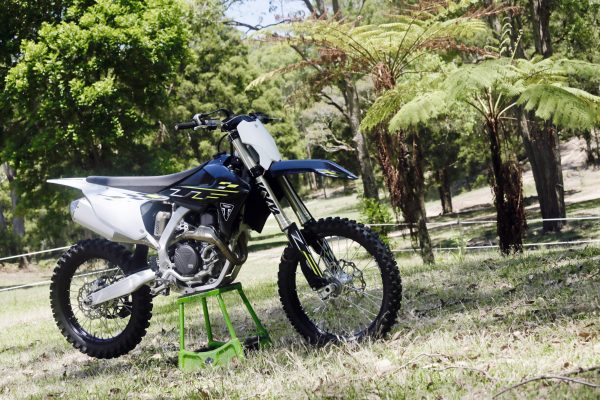
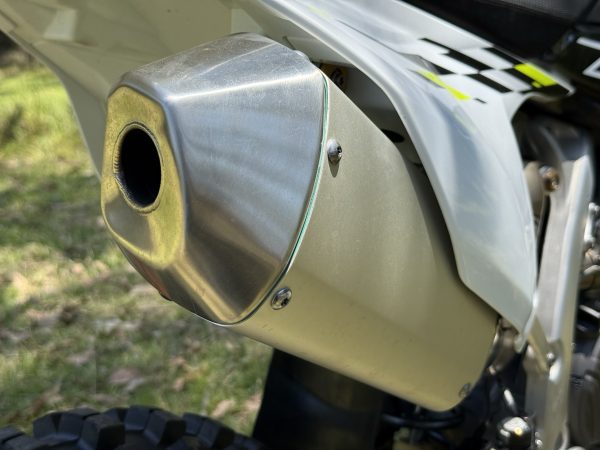
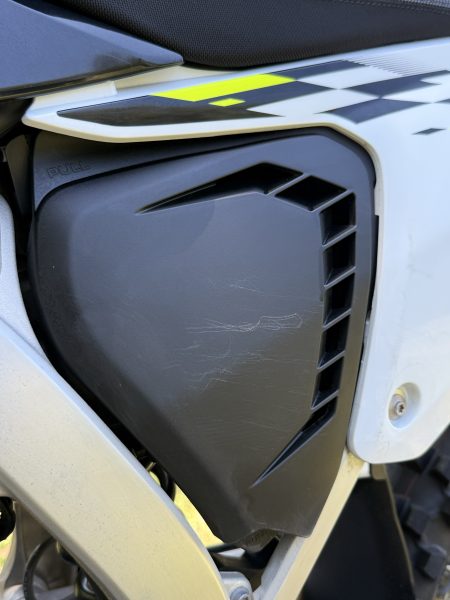
The first impression of the TF 450-X starts before you even throw a leg over it. Visually, Triumph has nailed the look. The combination of yellow, black and white works exceptionally well, and it stands out without looking over-styled or gimmicky. It’s one of those bikes you keep glancing back at in the pits. The proportions are right, the finish looks premium, and once you start noticing the components, Brembo brakes, KYB suspension front and rear, you immediately get the sense that this isn’t a budget effort or a half-step into the class. It’s fitted with proper gear, the kind of parts riders usually spend money upgrading to.
That feeling continues when you start thinking about where the TF 450-X sits in the market. Pricing-wise, it’s slightly above the Japanese offerings, but it’s very much in line with the European bikes, and when you look at what comes standard, that makes sense. It doesn’t feel like you’re paying extra just for a badge. The bike arrives well specced, properly finished and clearly aimed at riders who want something competitive straight out of the crate.
First Ride Impressions
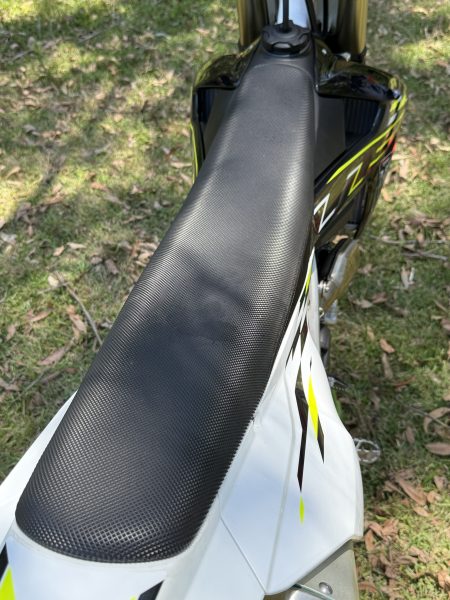
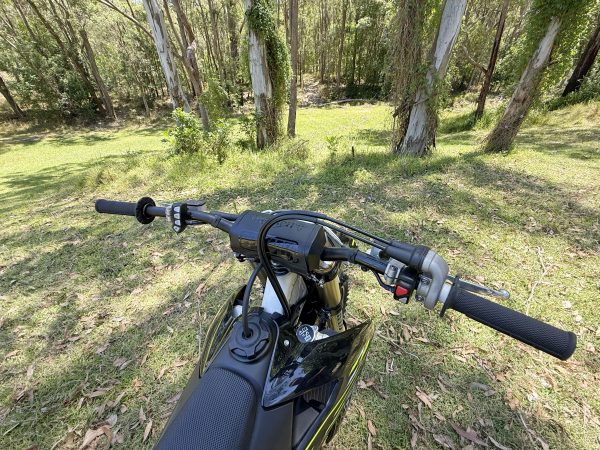
Hopping on the TF 450-X for the first time, the immediate takeaway is how comfortable and natural it feels. The ergonomics stand out straight away. The bar position feels flatter and neutral, the Brembo brakes and clutch have a really nice feel at the lever, and the seat itself is a highlight. It’s comfortable, well-shaped and contributes to how easy it is to move around on the bike. The overall layout feels slim and compact without being cramped, which makes it easy to get forward in corners and still move back when needed.
What’s interesting is that while the bike has its own distinct feel, there are familiar elements there too. In some ways, it gives off a feel similar to an aluminium-framed KTM in terms of rider position and general layout, but it definitely doesn’t ride like one. This is something that comes up a lot when people talk about the Triumph, is it a Yamaha? Is it a KTM? Is it some kind of hybrid? After riding plenty of both, the answer is pretty clear: the TF 450-X is its own thing.
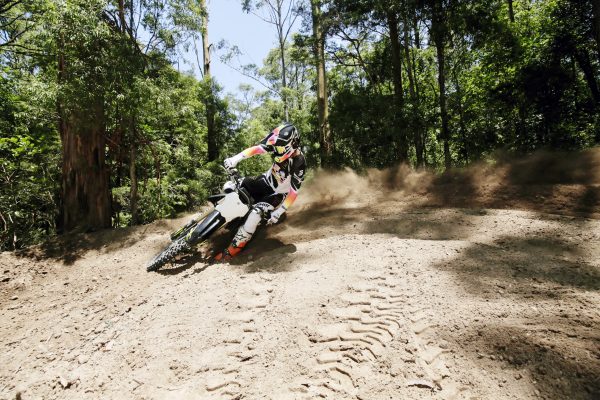
The handling in particular is where that becomes obvious. The chassis is very compliant and forgiving, but it doesn’t steer like a Honda. At the same time, it turns better than a KTM. It sits somewhere in between, and that’s actually a really good thing. It gives you something different without feeling strange or unfamiliar. Even without touching sag or fork height, it already felt good, which suggests there’s plenty of room to tune it either way depending on rider preference.
Suspension & Chassis Feel
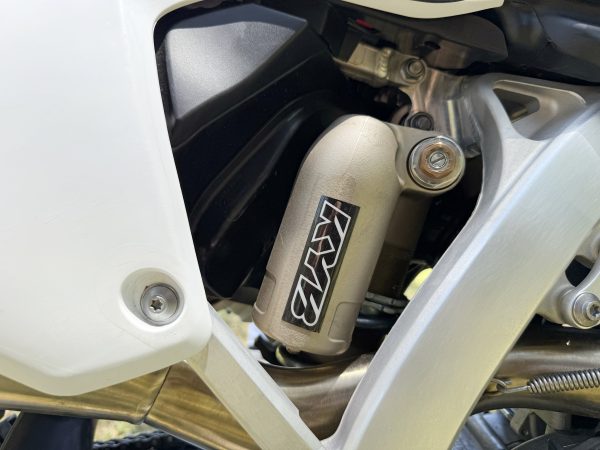
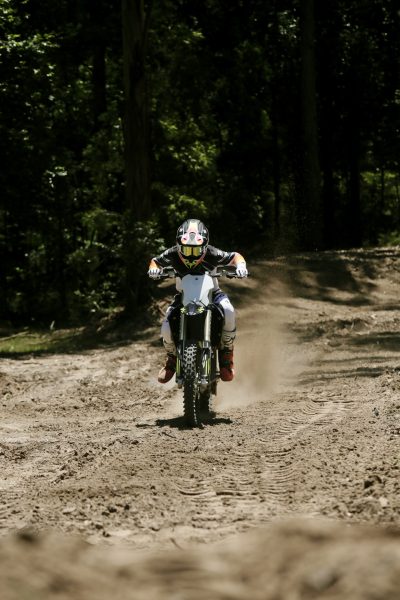
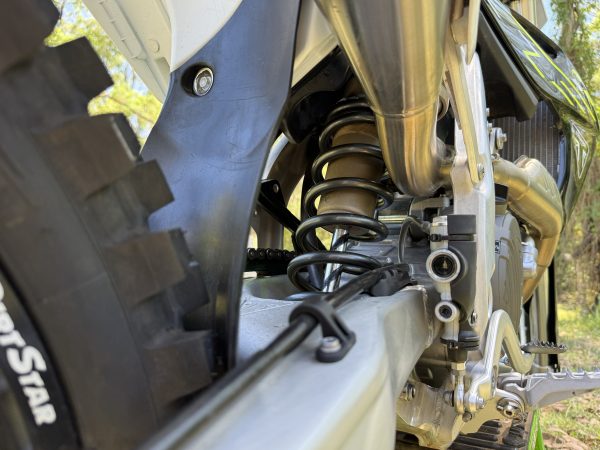
The suspension package is one of the strongest aspects of the TF 450-X. KYB components front and rear work extremely well straight out of the box. The fork held up nicely, especially under braking, and the shock never did anything unexpected or out of place. The whole bike felt balanced through the chassis, predictable and easy to ride. There were no surprises, no strange reactions, and no moments where the bike felt unsettled.
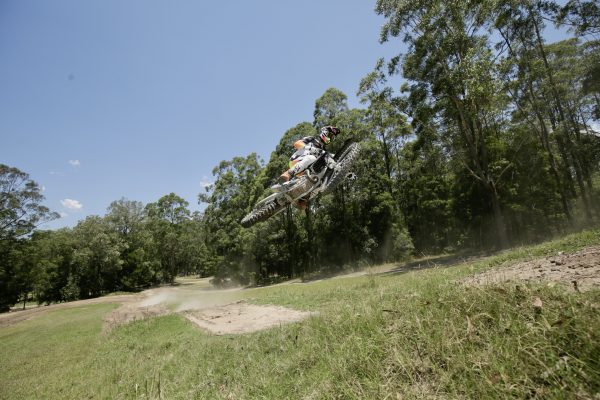
What stands out most is how refined the setup feels for a first-generation bike. Triumph has clearly put a lot of work into the baseline settings to make the bike compliant and user friendly. It’s not harsh, it doesn’t deflect, and it doesn’t feel nervous. Instead, it feels planted and confidence inspiring, which is exactly what most riders want when they jump on a modern 450.
The balance between the frame, linkage, shock and fork works really well. The bike doesn’t feel like it’s pivoting or seesawing through corners or braking zones, which used to be a common issue with older designs. Everything feels like it’s working together, and that’s impressive given this is Triumph’s first real crack at a full-production 450 motocross bike.
Engine Character & Gearing
The engine is strong, there’s no question about that, but the standout talking point from the test was the gearing. Not because it’s bad, but because it feels very clearly set up for American-style motocross tracks. With the stock 13/48 gearing, the bike feels a little tall for typical Australian tracks, which tend to be tighter and more technical.
On wide-open, flowing circuits with long corners where you can hold second or third gear for extended periods, the stock gearing works really well. The engine pulls cleanly and keeps driving through the rev range, and in that environment, it feels excellent. On tighter Aussie tracks, though, places like Maitland, it can feel tall, and you find yourself spending more time in second gear than you’d ideally want.
A simple gearing change would completely transform the bike. Going two teeth up on the rear to something like a 13/50 setup would bring it back into line with what most Australian riders are used to on a 450. That change alone would liven the bike up significantly and give it a different feel without touching the engine itself.
At the moment, with the stock gearing, the TF 450-X has a feel closer to a Kawasaki, not slow, but not explosive either. It’s actually a really good entry-level 450 engine in that sense. It’s linear, tractable and forgiving, but it still has more torque than something like a KX, and it keeps pulling through the gear rather than signing off abruptly.
On faster, more open tracks, this setup would be ideal. On tighter tracks, the gearing just needs to be tailored to suit local conditions, which is an easy and inexpensive fix.
Versatility & Who It Suits
One of the biggest takeaways from the test is just how versatile the TF 450-X is. Out of the crate, with a simple gearing change, it would comfortably suit riders from C grade right through to A-grade.
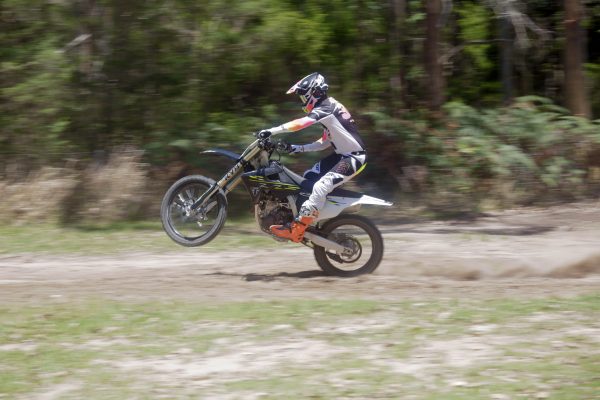
For A-grade or Pro-level riders, there’s plenty of headroom too. Add a pipe, ignition and tweak the gearing, and the bike would come alive even more. With those changes, it would move closer to a YZ450F-style feel while still retaining its own character. The engine clearly has more to give, and the platform is strong enough to support that kind of development.
First-Generation, But Fully Competitive
What’s perhaps most impressive is that nothing about the TF 450-X feels unfinished or experimental. This is Triumph’s first real production 450 motocross bike, yet it feels solid, refined and fully competitive. Nothing broke, nothing felt fragile, and nothing behaved unpredictably. It does exactly what you ask it to do, lap after lap.
Standard Equipment & Finish
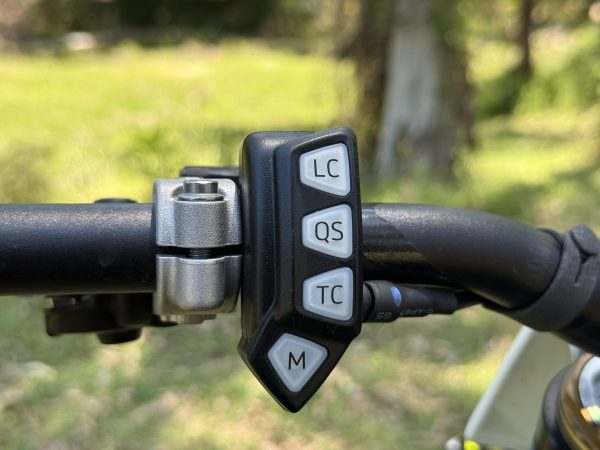
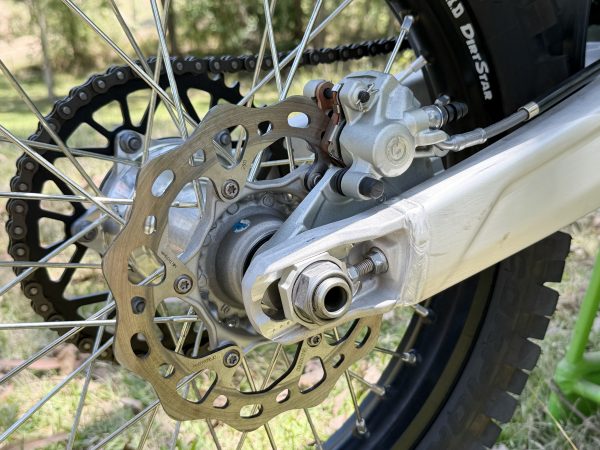
The TF 450-X also scores highly when it comes to standard equipment. Features that riders often have to pay extra for on other bikes, launch control, traction control, quickshifter, mapping modes, all come standard here, just as they do on the RC edition.
Really, the only thing missing to go racing straight away is a holeshot device. Everything else is there.
Final Thoughts
Overall, the Triumph TF 450-X left a very strong impression. It’s comfortable, well-balanced, forgiving, and highly adaptable. The engine is strong and usable, the chassis is compliant and predictable, and the suspension works exceptionally well straight out of the box. With a simple gearing change, it would be even better suited to Australian tracks, and from there it can be built into whatever you want it to be, from a friendly club bike to a serious race weapon.
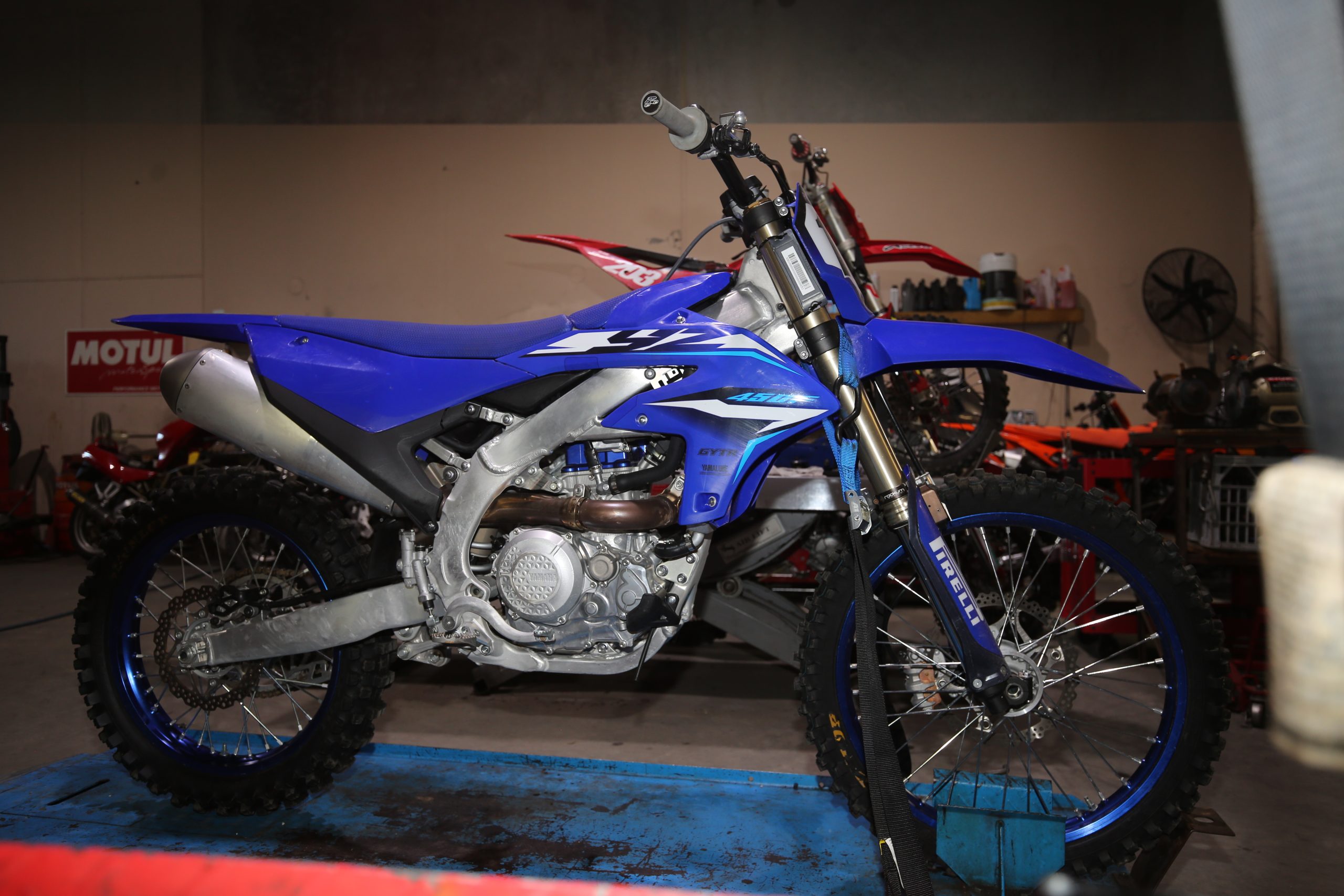
But the testing doesn’t stop here. Next up, the TF 450-X goes head-to-head with the benchmark, the 2026 Yamaha YZ450F. That bike dominated our motocross shootout last year and has been winning shootouts worldwide. Putting these two bikes back to back is going to be a serious test, and it’s one we’re looking forward to. Stay tuned, that comparison is coming.
Why Briggsy?
Jeff Briggs has been testing with ADB for a decade and was one of our main testers at the 2025 450cc motocross shootout. That was our biggest shootout ever with the KTM, Husqvarna, GASGAS, Yamaha, Honda, Kawasaki, Fantic, Beta and TM all showing up.
TRIUMPH TF 450-X – SPECIFICATIONS
Engine & Transmission
Type: Single-cylinder, 4-stroke, SOHC
Capacity: 449.5 cc
Bore x Stroke: 95 mm x 63.4 mm
Compression Ratio: 13.1:1
Fuel System: Dell’Orto throttle body, Athena EMS
Clutch: Steel wet multi-plate (Belleville spring), hydraulic actuation
Gearbox: 5-speed
Chassis & Suspension
Frame: Aluminium spine and double cradle
Front Suspension: KYB 48 mm coil-spring fork, compression and rebound adjustable, 310 mm travel
Rear Suspension: KYB coil shock, high- and low-speed compression and rebound adjustment, 305 mm travel
Dimensions & Weights
Seat Height: 960 mm
Wheelbase: 1492 mm
Wet Weight: 108.6 kg
Fuel Capacity: 7 L
Brakes & Tyres
Front Brakes: Brembo twin-piston floating caliper (2 x 24 mm), 260 mm disc
Rear Brakes: Brembo twin-piston caliper (2 x 26 mm), 220 mm disc, OCABS
Front Tyre: Pirelli MX32 80/100-21
Rear Tyre: Pirelli MX32 00/90-19
RRP & Contacts
RRP: $15,790
Warranty: N/A
Browser: www.triumphmotorcycles.com.au
Standard Equipment
D.I.D. DirtStar aluminium wheels, dual engine maps, Exedy clutch with Brembo hydraulic actuation, handlebar-mounted control switch, KYB AOS suspension (front and rear), launch control, Neken yokes with ProTaper ACF Carbon Core handlebars, ODI grips, Pirelli MX32 tyres, quickshifter, sensor dashboard with hour meter, traction control, Athena ECU engine management system