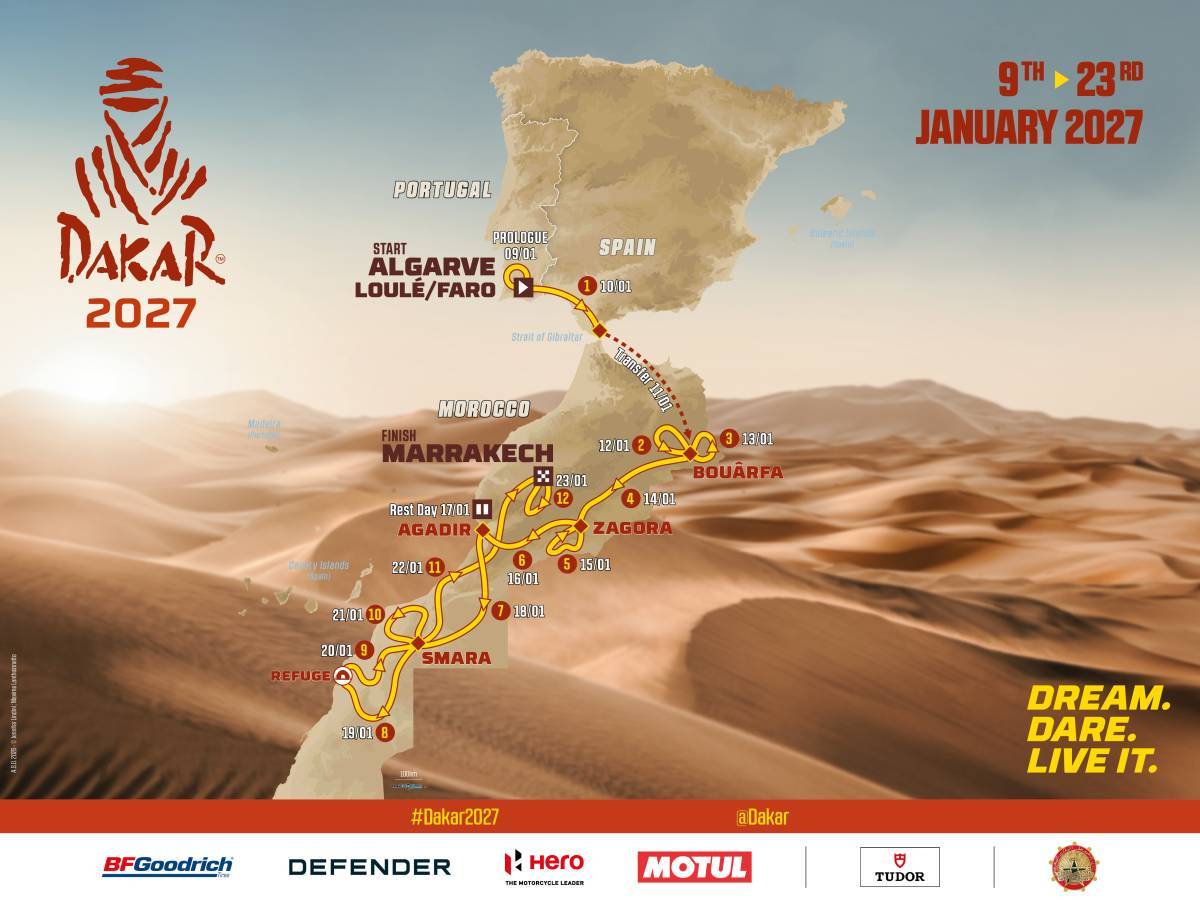
The 49th edition will run from 9–23 January 2027, covering 7824km, including 4341km of timed special stages. Despite the relocation and limited preparation time, organisers insist the event will retain the difficulty and scale that have defined the Dakar.
The decision follows what organisers describe as recent events in Saudi Arabia, although the announcement does not provide further details about the circumstances behind the relocation. The move is being described as exceptional, with the Dakar scheduled to return to Saudi Arabia in 2028 for its 50th edition.
The 2027 event will open the FIA and FIM World Rally-Raid Championships, featuring a prologue and 12 stages across Portugal and Morocco. The Algarve region will host the opening prologue and first special stage before competitors cross the Mediterranean into North Africa for the remaining 11 stages.
The rally will begin at the 30,000-seat Algarve Stadium in Loulé-Faro, Portugal, where the service park opens on 5 January. Administrative and technical checks will follow from 6–8 January before the prologue on 9 January and the opening stage on 10 January.
Competitors will then travel to the port for an overnight Mediterranean crossing to Nador, Morocco, arriving on 11 January before transferring to the first Moroccan bivouac at Bouarfa.
From there, the route heads south along the Atlas Mountains through Zagora and Agadir, where competitors will take their only rest day.
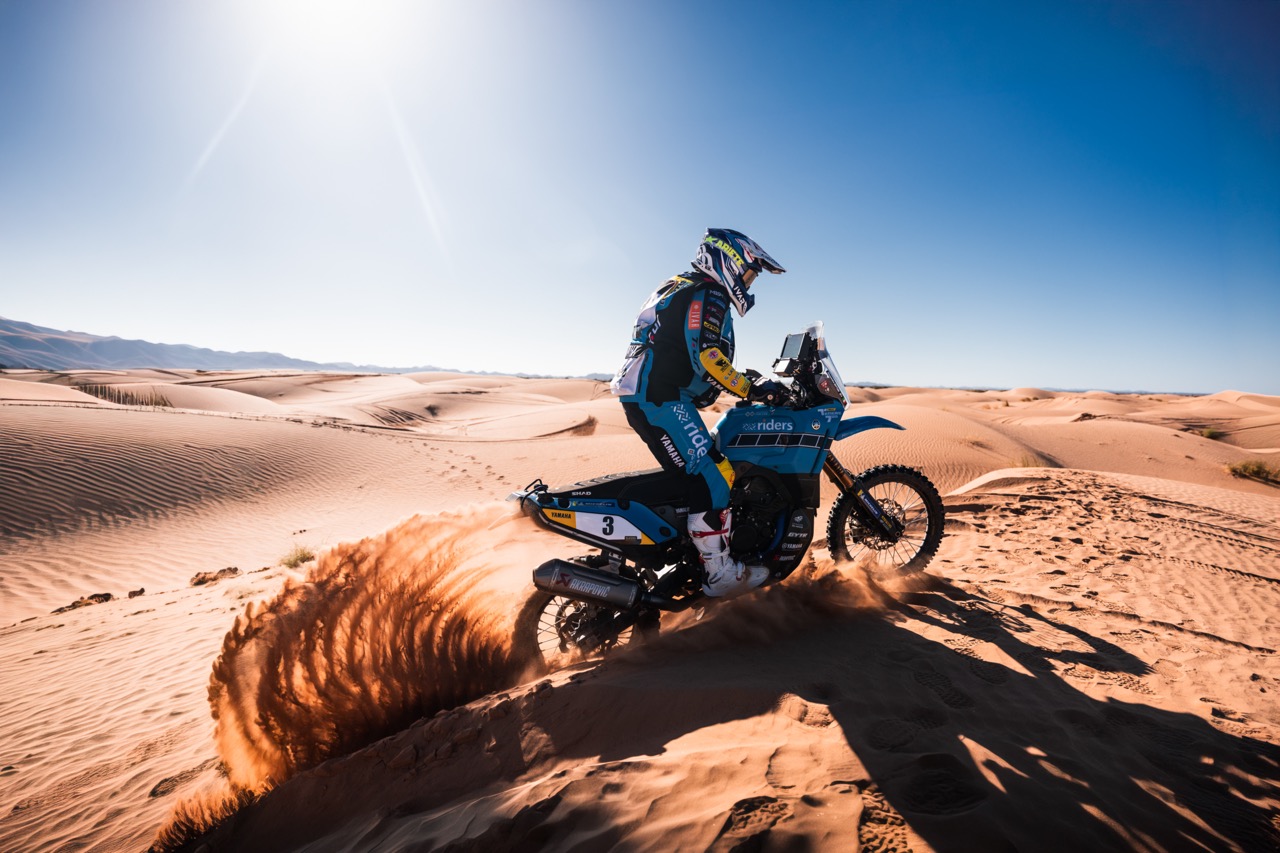
The second week will push further south into Morocco’s remote desert regions, travelling through Smara and almost as far as Dakhla before turning north along the Atlantic coast towards the finish in Marrakech.
Six bivouacs will accommodate the rally throughout the event, with most timed stages covering between 350km and 500km. Organisers say the route will explore significantly more of Morocco than previous rally-raid events held in the country.
Dakar Race Director David Castera has promised competitors an uncompromising event despite the extraordinary circumstances surrounding its organisation.
“The relocated 49th edition of the Dakar will meet the sporting standards that have always made it the most demanding rally-raid event. Despite the short timeframe we have had to work with, we have designed a true Dakar,” Castera said.
Castera credited the Automóvel Club de Portugal and Moroccan authorities for helping organisers assemble the event at short notice. Portugal has hosted a round of the World Rally-Raid Championship since 2024, while Morocco has extensive experience staging major international rally-raid competitions.
The move also applies to the Dakar Classic, Dakar Future Mission 1000 and Dakar Saudi Next Gen programme, all of which will relocate alongside the main competition.
Despite the upheaval, organisers say 350 competitors have already registered for the 2027 edition, with media and commercial partners reaffirming their commitments. The event is expected to be broadcast in more than 190 countries.
For competitors accustomed to Saudi Arabia’s deserts, the relocation presents a significant change in terrain and navigation, with Morocco’s rocky tracks, mountain regions and vast southern deserts replacing the familiar Saudi stages.
The logistical challenge is equally substantial, with organisers having only a few months to finalise a two-continent event involving a Mediterranean crossing, six bivouacs and more than 7800km of racing and transport.
However, Castera remains confident the new route will deliver the challenge expected of the Dakar.
“We will explore all its distinctive features through a route of unprecedented scale,” he said.
The rally is scheduled to return to Saudi Arabia in 2028 for its 50th edition, with organisers confirming that preparations for the anniversary event are continuing.
The 2027 dates remain subject to approval by the FIA World Motor Sport Council.