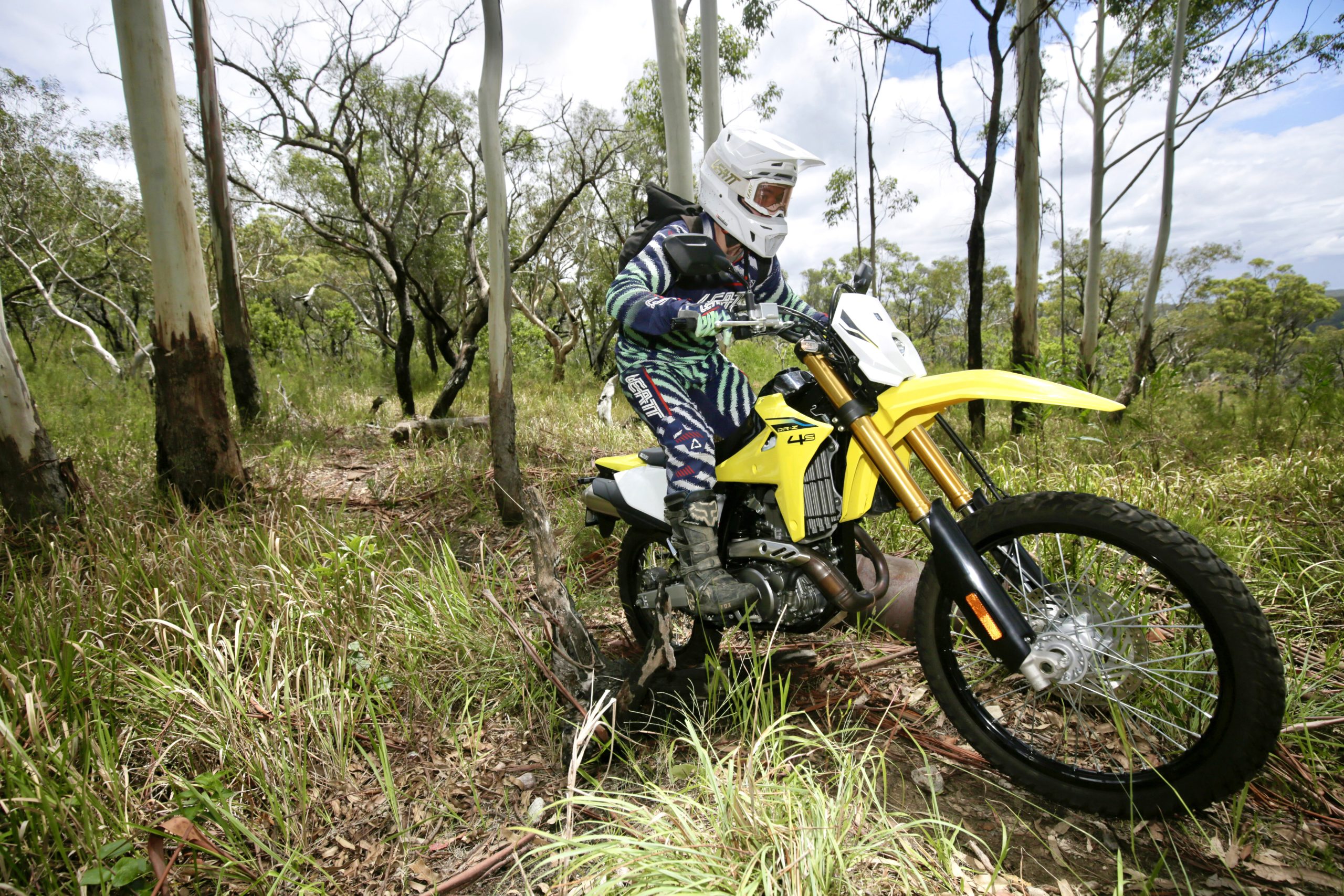
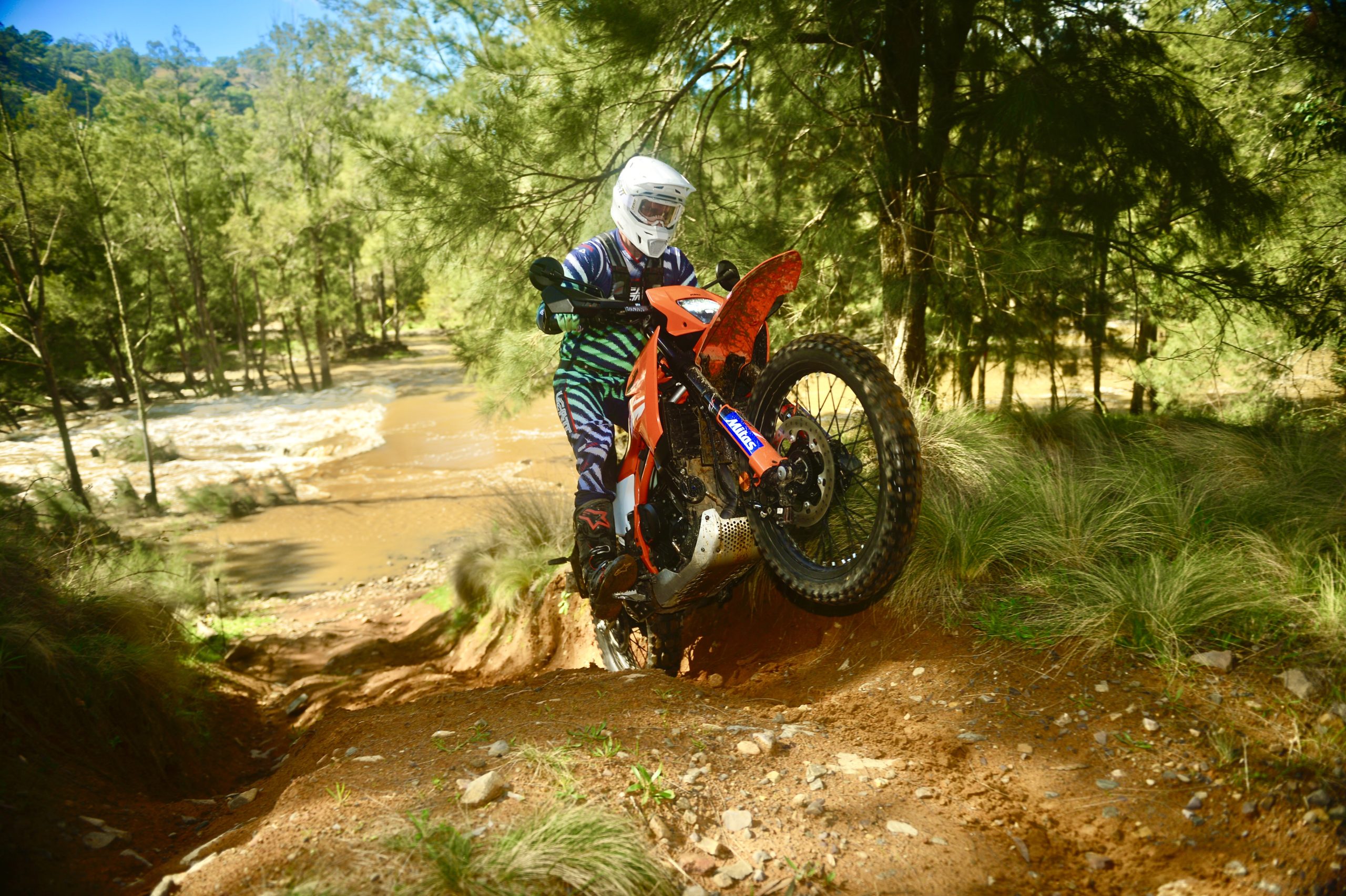
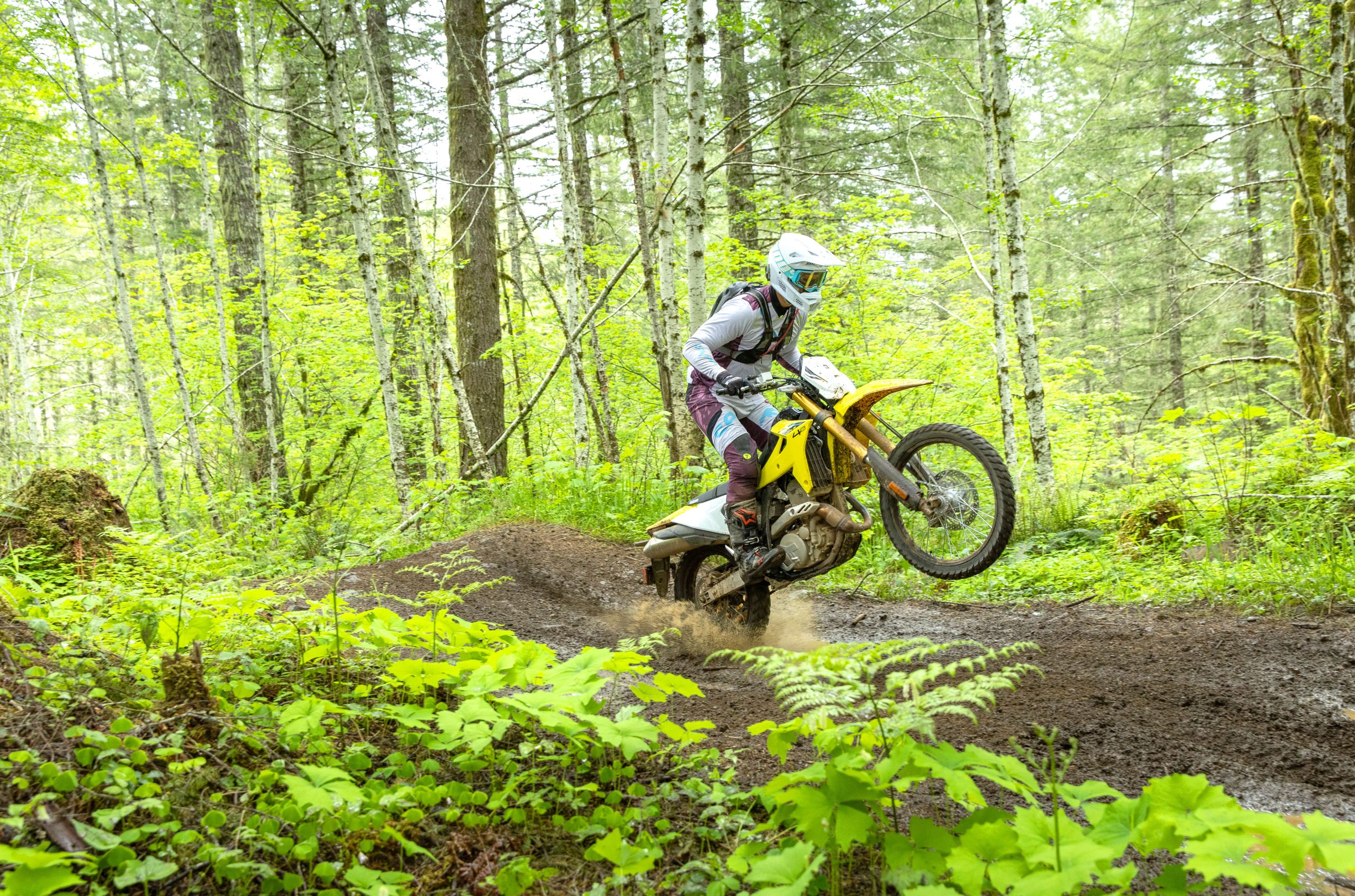
When I first rode the new Suzuki DR-Z4S in the US, one thing kept coming up in conversations with the international media, particularly the Americans, and that was the term dual sport. Every second person seemed to describe it that way, as if it was the most natural label in the world. Sitting there, fresh off the bike, I remember thinking, “what are you all talking about? This is a dirt bike.” I’ve always known the DR-Z400E as a dirt bike, full stop. It’s got long travel suspension, knobby tyres and it’s registerable.
That’s where the cultural disconnect starts. In Australia, the idea of a “dual sport” is a bit blurry because we’ve always had enduro bikes you can register straight out of the crate. It’s probably our biggest genre in Australia. In American that’s not really a thing. In some states they can use motocross bikes to go get the milk and bread and the biggest selling models are motocross machines, by a long way. Over there, if it has a plate and indicators, it tends to get lumped into the dual-sport category. By that logic, a huge chunk of our enduro lineup would qualify as dual sports in the US, even though we’d never think to call them that here.
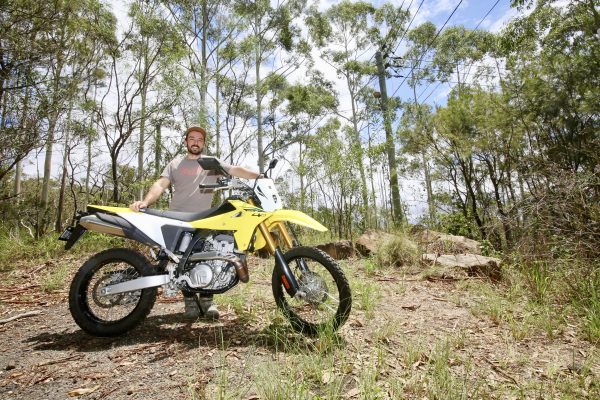
To me, a true dual sport is a bike that can genuinely do everything in stock trim: trail riding, commuting, longer road stints, and even a bit of light adventure without needing major changes. That’s a tough brief these days. Dirt bikes and adventure bikes have drifted so far apart that the crossover is almost non-existent unless you start modifying things heavily, and once you do that, it’s no longer really a dual sport anyway. It becomes something else entirely.
So when the DR-Z4S finally landed on home soil, it felt only right to put those claims to the test properly, in conditions we actually ride in and understand. Testing bikes overseas can be tricky at the best of times, and in this case, it wasn’t until after the US ride day that the “dual sport” label really started getting thrown around. Typical American motocrossers, really. Now the question is simple: is the DR-Z4S genuinely a dual sport by our standards? Or is it something else entirely, maybe even a new category altogether? Trail bike, commuter, adventure machine… or should we be calling it a tri-sport? That’s exactly what we set out to find.
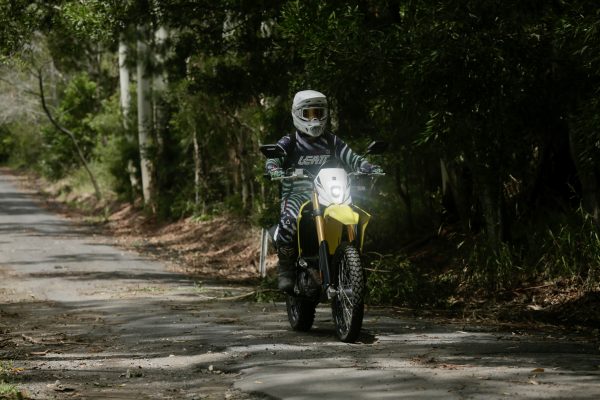
Drawing the Lines
To work out whether the DR-Z4S is a genuine dual sport, or something that sits outside the usual labels, you first need to understand how clearly defined most bikes are on paper. Adventure, road, and enduro machines tend to live in very different spec worlds, even when displacement numbers overlap.
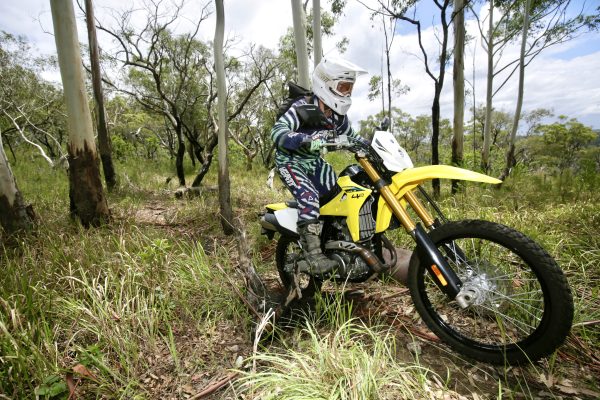
Adventure
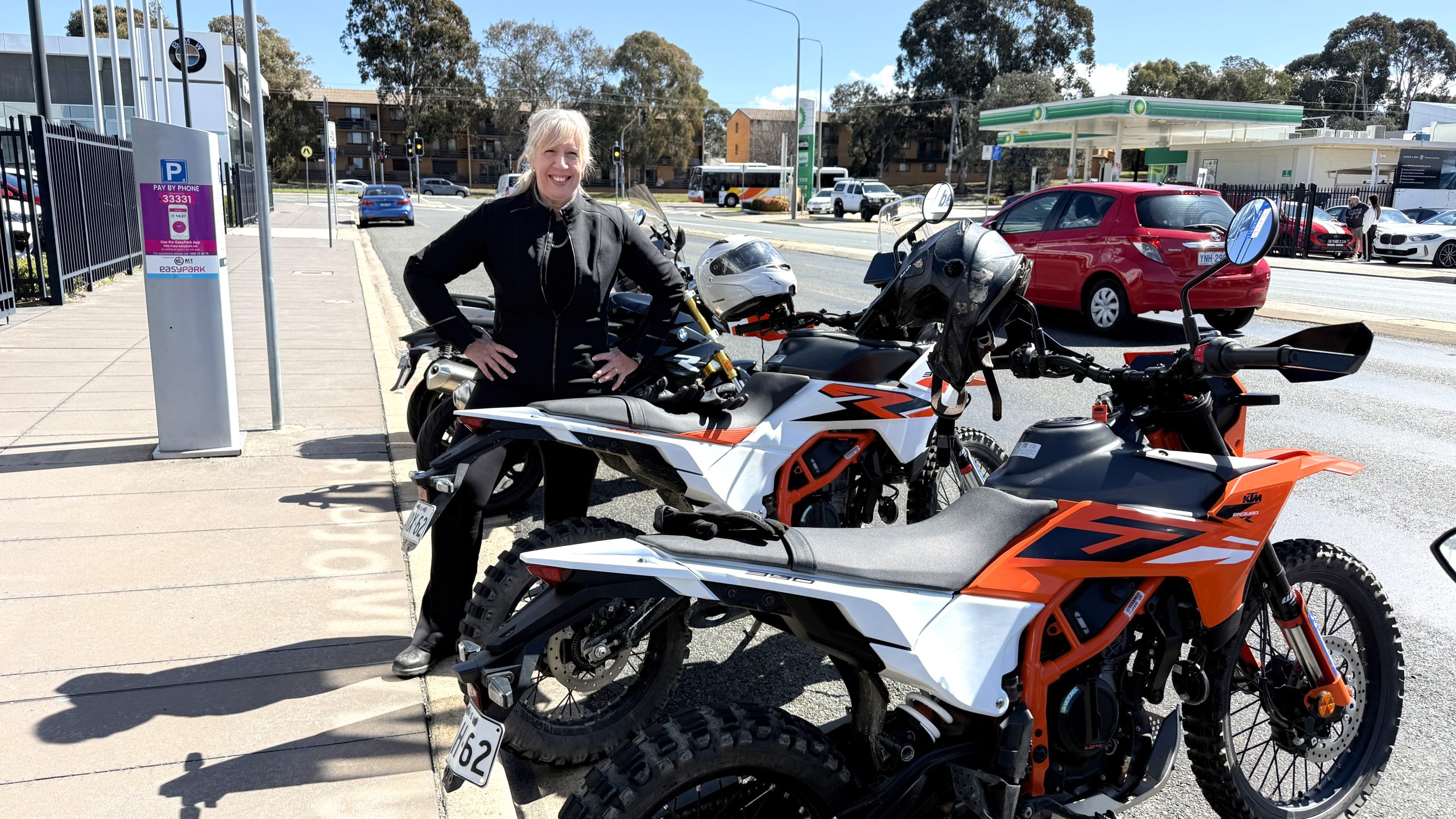
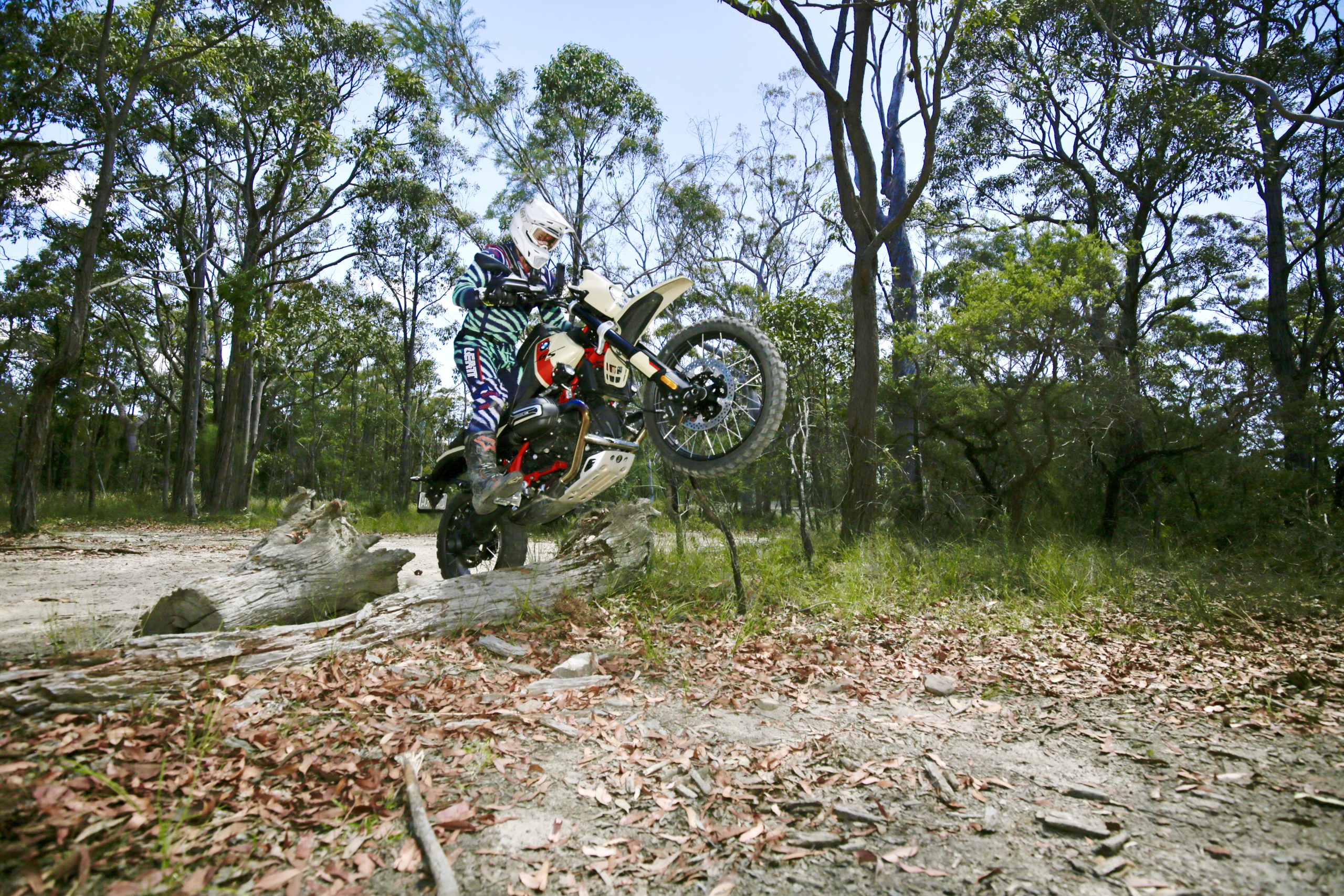
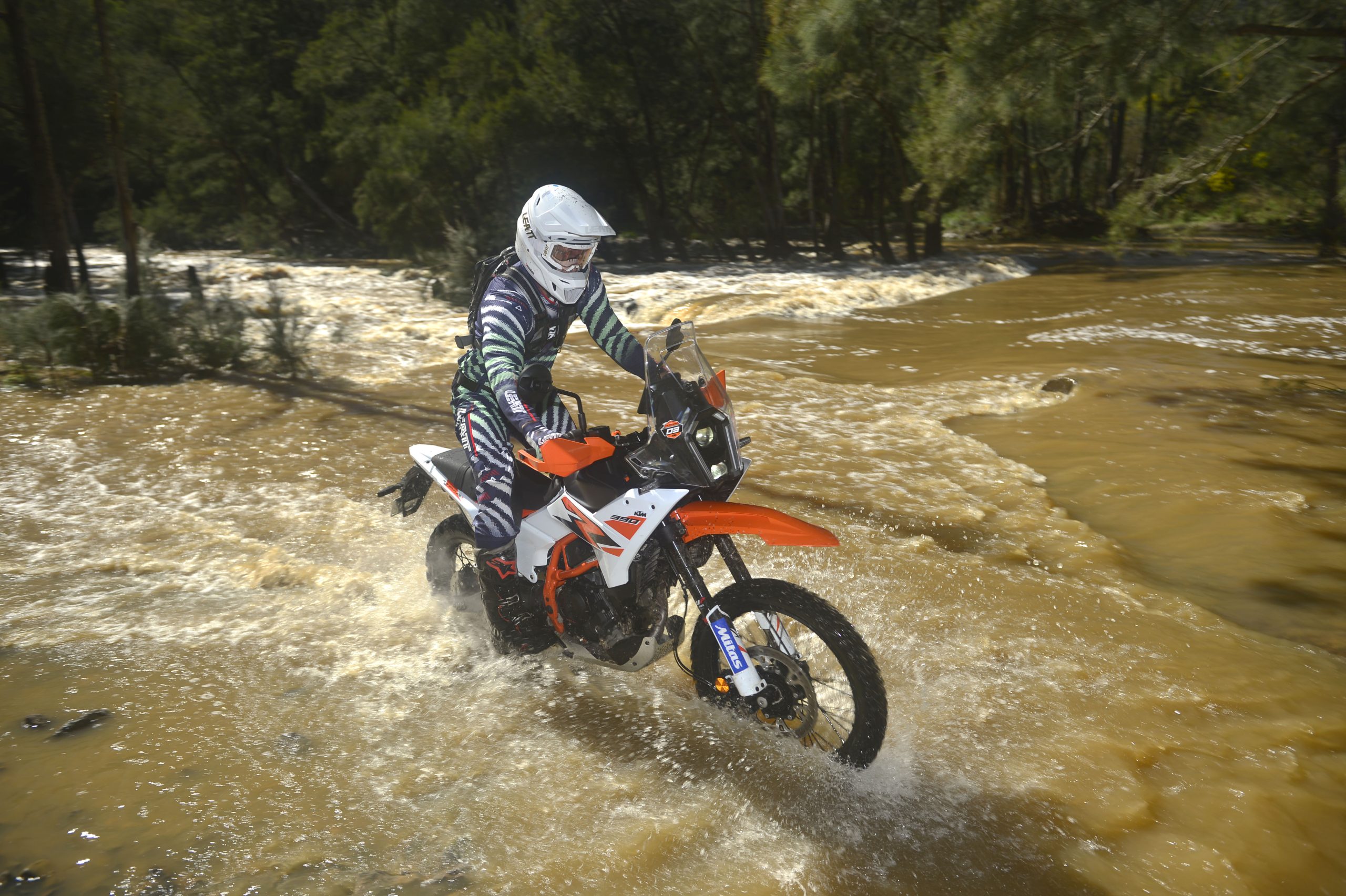
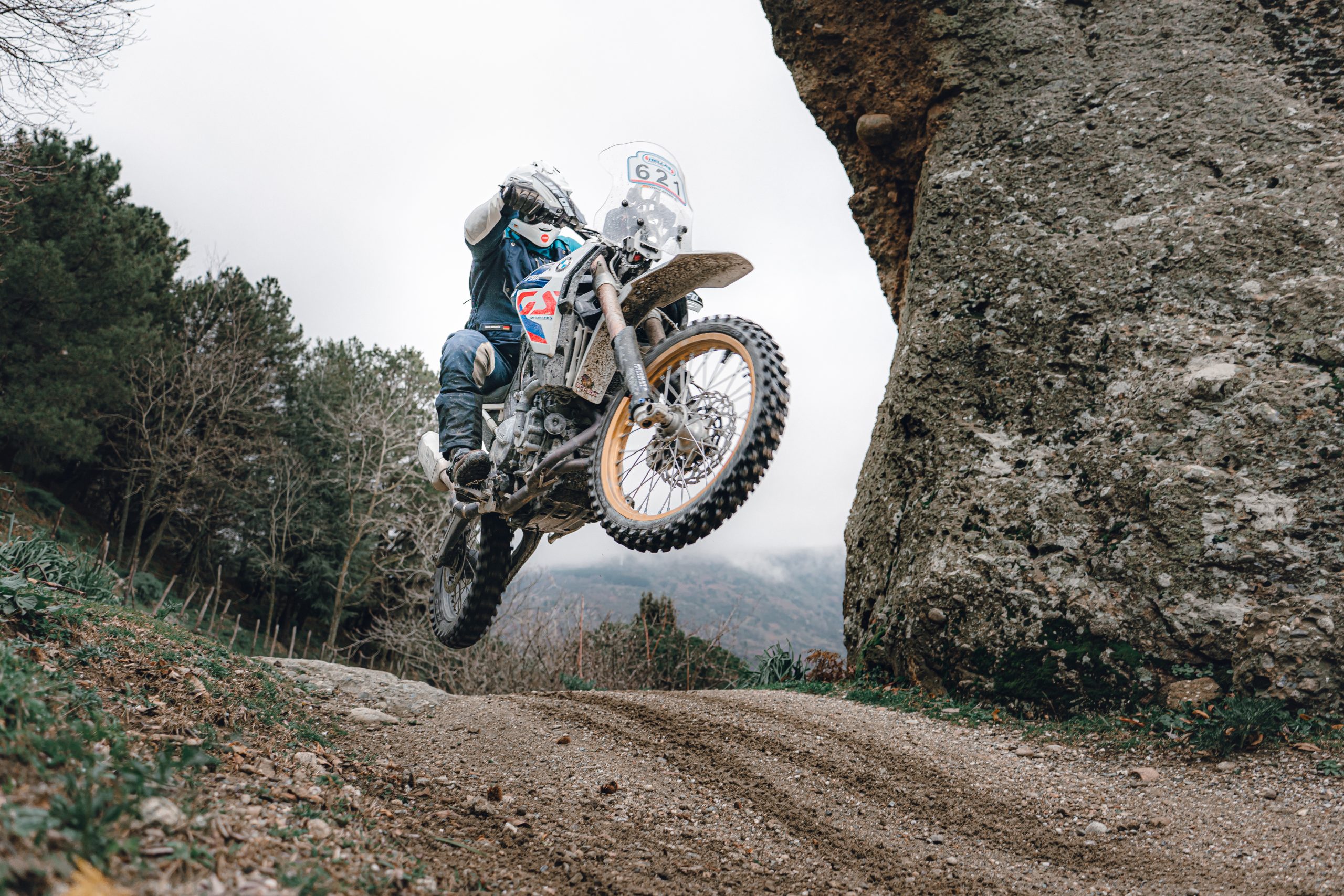
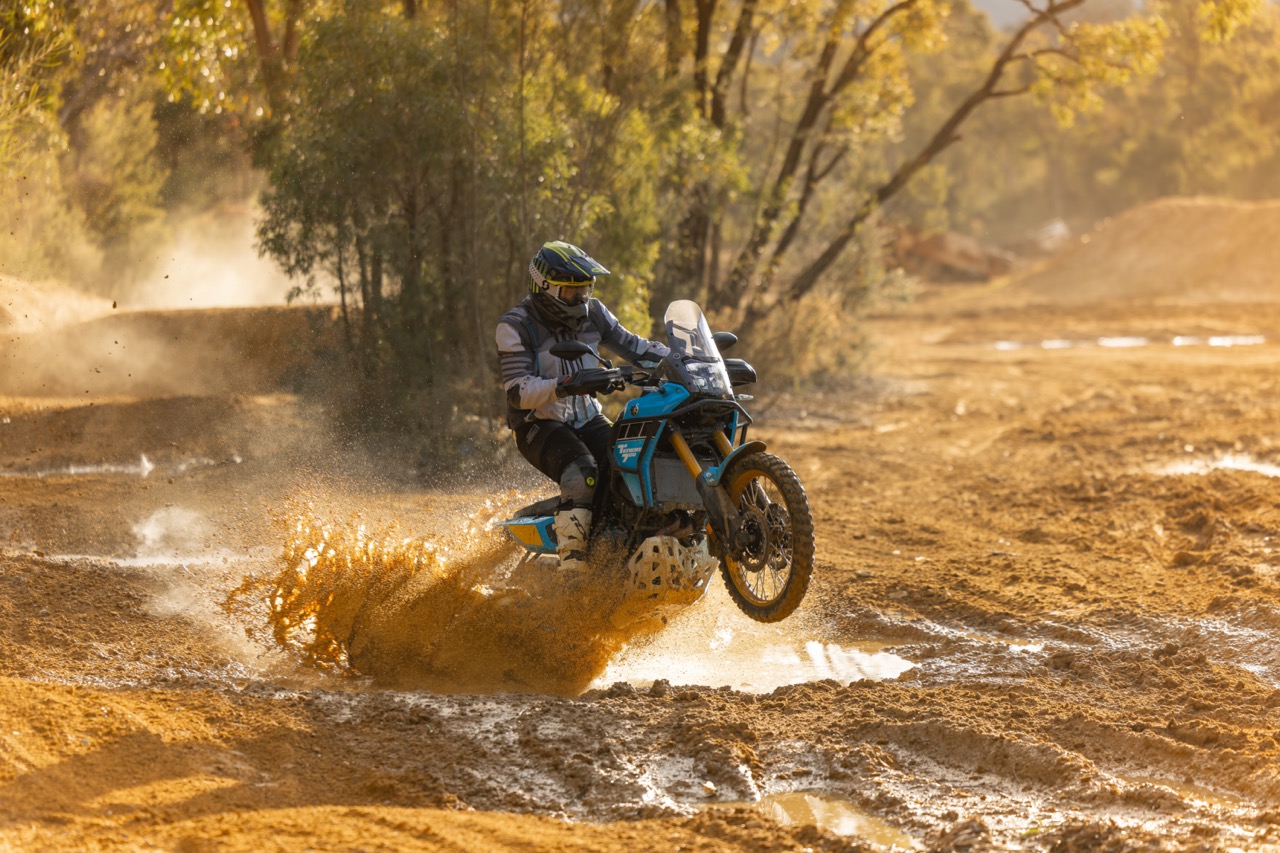
A mid-capacity adventure bike like a 390-class ADV machine is designed around range, stability, and comfort. The clues are everywhere in the specs. A 14-litre fuel tank, sub-900mm seat height, and a wet weight pushing 175kg tell you straight away this is a bike meant to carry fuel, luggage, and a rider for long distances. Suspension travel sits around the 230mm mark, generous by road standards, but conservative compared to enduro, and the chassis prioritises straight-line stability over agility. Brakes are large and road-focused, wheels are wider, and ground clearance is noticeably lower. These bikes can ride trails, but they’re clearly built with sealed roads, gravel fire roads, and long days in mind.
Road
At the other end sits a road-biased machine like a DR-Z4SM-style setup. The shift is immediate. Seventeen-inch wheels front and rear, road rubber, lower suspension travel, and a firmer chassis tune put the emphasis squarely on grip, braking, and responsiveness on tarmac. Even when suspension remains upright and seat heights stay relatively tall, the intent is obvious: this is a bike designed to live on the road, with dirt capability limited by tyres, geometry, and suspension travel rather than engine character.
Enduro
Then there’s a true enduro bike like a Yamaha WR450F. This is where the numbers change dramatically. Wet weight around 117kg, suspension travel north of 300mm, nearly 330mm of ground clearance, and a 955mm seat height tell you this bike is built almost exclusively for off-road performance. Fuel range is minimal, service intervals are tighter, and road comfort is barely a consideration. These bikes can be registered in Australia, but they are unapologetically dirt-first machines.
Where DR-Z4S differs
Now drop the standard DR-Z4S specs into that landscape and things get interesting.
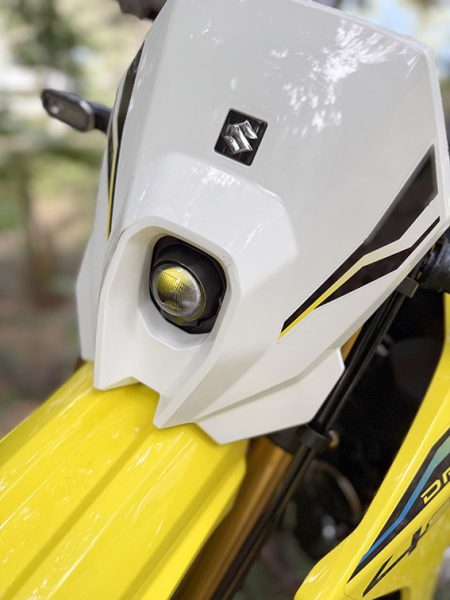
At 151kg wet, it’s significantly heavier than a competition enduro bike, but still well under most adventure machines. Seat height jumps to 935mm, much closer to enduro territory than adventure, and ground-friendly 21/18-inch wheels with proper off-road tyres immediately signal dirt intent.
The fuel tank remains modest at 8.7 litres, which rules out long-range adventure touring in stock trim, but also keeps weight centralised and manageable off-road. Brakes are sensibly sized rather than oversized, and the geometry sits closer to trail bike proportions than anything road-biased.
On paper, the DR-Z4S doesn’t slot neatly into any single category. It’s not light or sharp enough to be a modern enduro racer. It doesn’t have the range, mass, or road bias of an adventure bike. And unlike a supermoto, it arrives ready to hit dirt without needing a wheel and tyre swap.
Which is exactly why the “dual sport” label starts to feel both accurate, and limiting.
Front-End Feel
We asked Jacob Remin, dualsport afficionado (see sidebar) to do the testing for us. Here’s what he thought:
“The suspension feels pretty nice straight out of the box for my weight, I’m about 82kg, maybe a bit more with gear on, and I didn’t feel like I needed to touch clickers immediately.
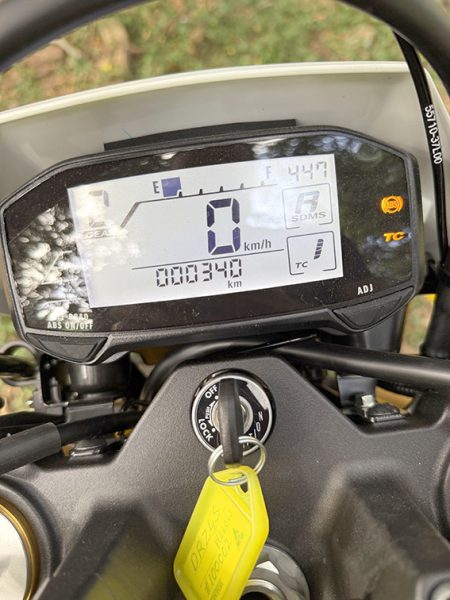
The dash is good. You’ve got fuel level, ABS, traction control, all clearly displayed. There are a lot of controls, maybe almost too many for dirt riding, but for commuting and general use, it makes sense. It’s easy to live with day to day.
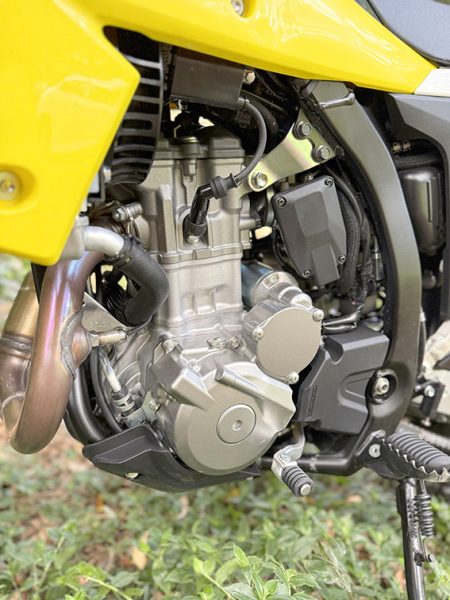
The headlight is nice and bright. I personally prefer the older DR-Z look, so if I owned it I’d probably change it to a different look setup at some point, but functionally it’s good. I’ve ridden it at night and had no issues seeing, it’s bright and modern, more street-bike style than old-school dirt bike.
Ergonomics, Comfort & Vibration
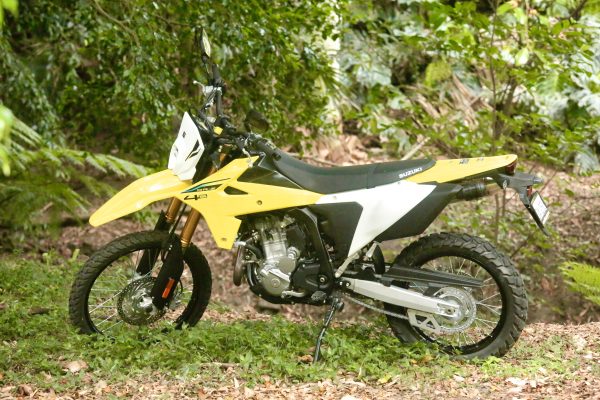
Handlebar bend and standing position are excellent. At my height, the stock setup feels spot-on. I did a long ride, around 12 hours, mostly fire trails and road, and had no arm pump, no fatigue issues.
In terms of vibration, there’s a little bit around 2,000–3,000rpm, but it disappears once you’re riding. You feel it more through the tank and legs than the bars. The heavy bar ends help a lot.
Seated position is comfortable, but I would probably go for the lower Suzuki accessory seat. I’m on the tip of my toes at stops. The lower seat is about 20mm lower, and I’d tick that box if I was ordering one.
Engine Character & Power Delivery
The motor feels good, smooth, easy, and very classic four-stroke in character. It chugs along nicely and feels like an old DR-Z400, but with a bit more pep.
Compared to my CRF450L, the power delivery is much smoother and less snappy. The throttle feels like a half-turn or third-turn setup, and it’s very manageable in stock trim. That’s not a bad thing at all, it suits the bike’s purpose.
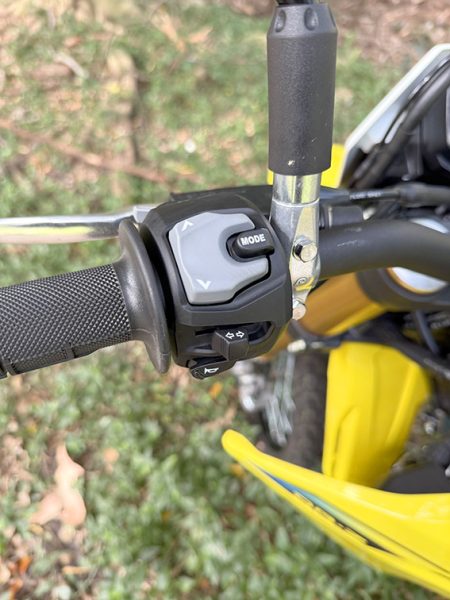
The power modes are useful. Mode C would suit a very novice rider. Mode B is fine, but I pretty much went straight to A. It’s more fun, and honestly, anyone sensible can manage it. You just need to be smooth with the throttle.
You can feel the motor wants more, it’s clearly held back by emissions, but it still feels good. It’s not frustrating, just obvious that there’s more potential there.
Real-World Use
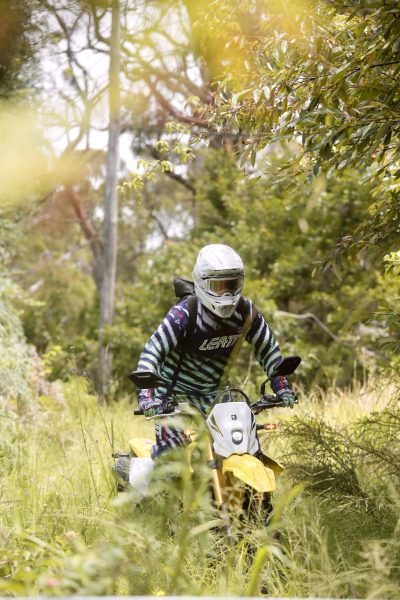
One of the highlights was using it for everything, not just trail riding. On New Year’s Eve, I rode into the city with my fiancée on the back to watch fireworks. No parking, no stress. We lane-split the whole way and probably saved 40 minutes each direction.
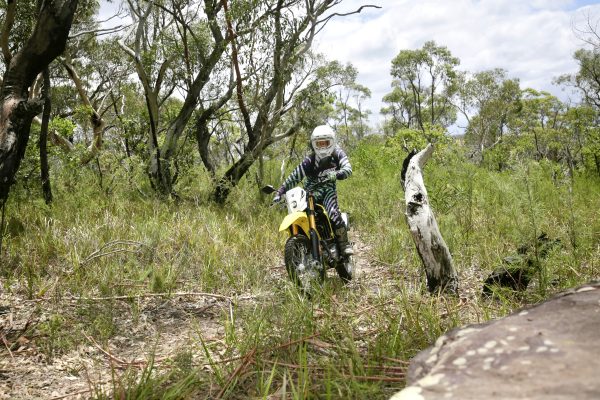
I’ve also used it commuting to work, the gym, shops, and on longer rides. One standout was a 12-hour day riding from Sydney up through Yango, Putty, and the Laguna area, mixing road, fire trail, and off-road, then riding all the way home.
What stood out most was how comfortable it felt doing everything.
Does it need a six-speed?
Everyone talks about wanting a six-speed, and I thought I would miss it because my CRF has one. But honestly, for fire trails and dual sporting, the five-speed is totally fine.
Fourth gear works well around town. Once you hit the motorway, fifth gear at 110–120km/h is comfortable. Under 80km/h, fourth is perfect. If you try fifth at 80, it doesn’t like it.
For singletrack, I’d probably gear it up on the rear, maybe two if you’re not doing much highway riding.
Exhaust, ABS & Electronics
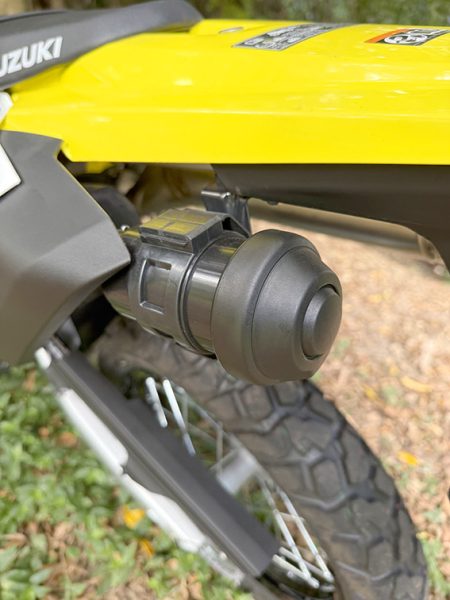
The exhaust is tolerable. It actually sounds a lot like my postie bike, maybe even quieter. It does the job, but it’s huge, heavy, and sticks out a long way. I imagine swapping it would save a lot of weight thanks to the catalytic converter. That would make it feel lighter like a dirtbike.
ABS works well overall. It saved me from going off a cliff once, but also caused me to overshoot a couple of corners when it wouldn’t lock where I wanted it to. Fire trails were best with rear ABS off and front on, that gave me confidence without fully locking the front.
Traction control is annoying on the road if you leave it on. It cuts in when you try to lift the front over speed bumps. Turning it off works, but the warning light stays on constantly, which is frustrating because it’s bright.
Small Gripes
The tyres feel great on the road and are fun to ride. Off-road they were fine for fire trails, but we did have a small slip in soft sand. I dropped the bike and somehow snapped the tip off the gear lever, it didn’t bend, it just sheared. Very odd.
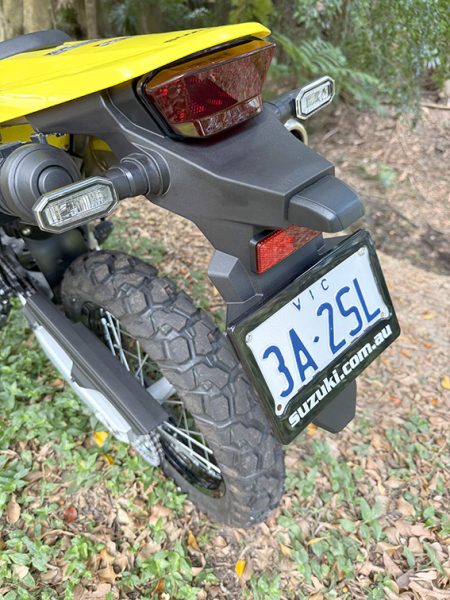
Handguards are a must, mainly for bush riding and protecting fingers. The rear number plate assembly works for visibility but rattles and is bulky, I’d replace it with a tidy tail straight away.
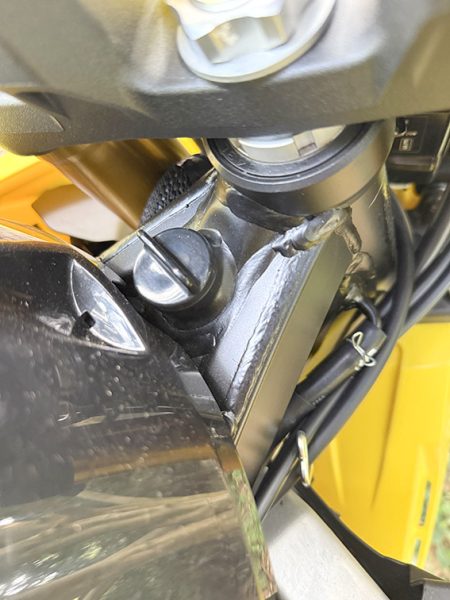
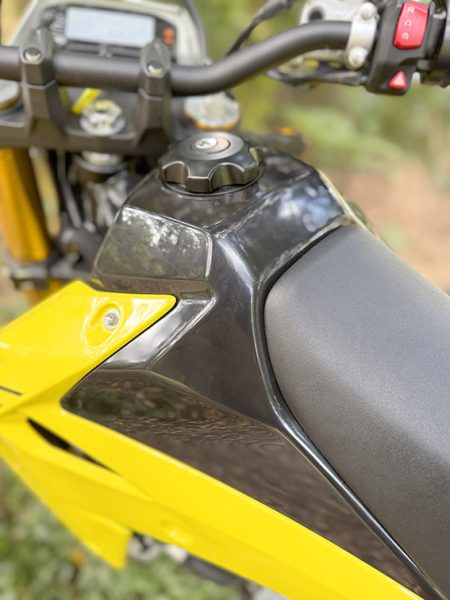
The charcoal canister sticks out and looks like a toolbox. Removing it would save weight, and I’d probably replace it with an actual toolbox for adventure.
The factory toolkit is… optimistic. You need the included tool to remove the seat to access the screwdriver handle, which is also under the seat. So if you need a Phillips head, you’re already five minutes deep.
Is it a dual sport?
Fuel range is impressive. I’m getting about 180km in stock form, the same as my CRF450L with an extended-range tank. That’s genuinely impressive.
Overall, first impressions are fantastic. It’s comfortable, fun, easy to ride, and genuinely versatile. I had grins all day riding it, jumping speed humps, blasting fire trails, passing adventure bikes.
Would I buy one? Yes. In stock form, I’d be happy. Unless you’re a pro-level rider looking for a weapon in the bush, you don’t need to spend money straight away.
So, is the DR-Z4S a genuine dual sport? The answer is yes, and no. Technically, it can do everything: commute, trail ride, light adventure, even the odd longer trip, and Jacob proved that by riding it to work, into the city two-up, and on 12-hour mixed-terrain days without complaint. But it doesn’t dominate any one category. It’s not the best road bike, not the best adventure bike, and not the sharpest enduro, and that’s kind of the point. Where it leans hardest is dirt. Strip a bit of weight, fit proper knobby tyres, drop a larger rear sprocket, and you’re most of the way there, cheaply and easily. Turning it into a great road or adventure bike would take far more money and compromise. So while the DR-Z4S can technically wear the “dual sport” badge, in Australian terms it still feels far more like a dirt bike first, one that just happens to tolerate everything else surprisingly well.
SPECIFICATIONS
Suzuki DR-Z4S
Engine
- Type: Four-stroke, single-cylinder, liquid-cooled, DOHC
- Displacement: 398cc
- Bore x Stroke: 90.0mm x 62.6mm
- Compression Ratio: 11.1:1
- Fuel System: Fuel injection
- Starter System: Electric
- Lubrication System: Dry sump
- Gearbox: 5-speed constant mesh
Dimensions
- Wheelbase: 1490mm
- Ground Clearance: 300mm
- Seat Height: 920mm
- Wet Weight: 151kg
- Fuel Tank: 8.7 litres
Suspension
- Front Suspension: KYB Inverted telescopic, coil spring, oil damped
- Rear Suspension: KYB Link type, coil spring, oil damped
Brakes & Tyres
- Front Brake: 270mm Disc, switchable ABS
- Rear Brake: 280mm Disc, switchable ABS
- Front Tyre: 80/100-21, IRC Tyre
- Rear Tyre: 120/80-18, IRC Tyre
RRP& Warranty
- RRP: $14,490 Ride Away
- Warranty: 3 Year Warranty
- Browser: suzukimotorcycles.com.au
Rider Profile: Jacob Remman
Age: 28
Height: 173cm (5’8”)
Weight: 82kg (without gear)
Current Bike: Honda CRF450L (dual-sport modified)
Previous Bikes:
- 1998 Honda XR250
- 1995 Yamaha DT200
- Australia Post Honda CT110 (“Postie bike”)
Jacob’s rides:
Jacob is a true modern dual-sport rider. His riding splits evenly between trail riding, commuting, fire roads, singletrack, with regular longer-distance rides mixed in. He rides to work, rides to the gym, rides on weekends, and has completed multi-day adventure rides including a five-day Sydney–Kosciuszko trip on his Honda CRF450L.
That mix, dirt, road, commuting, and adventure, makes him an ideal benchmark rider for assessing whether the DR-Z4S genuinely earns the “dual sport” label in Australian conditions.