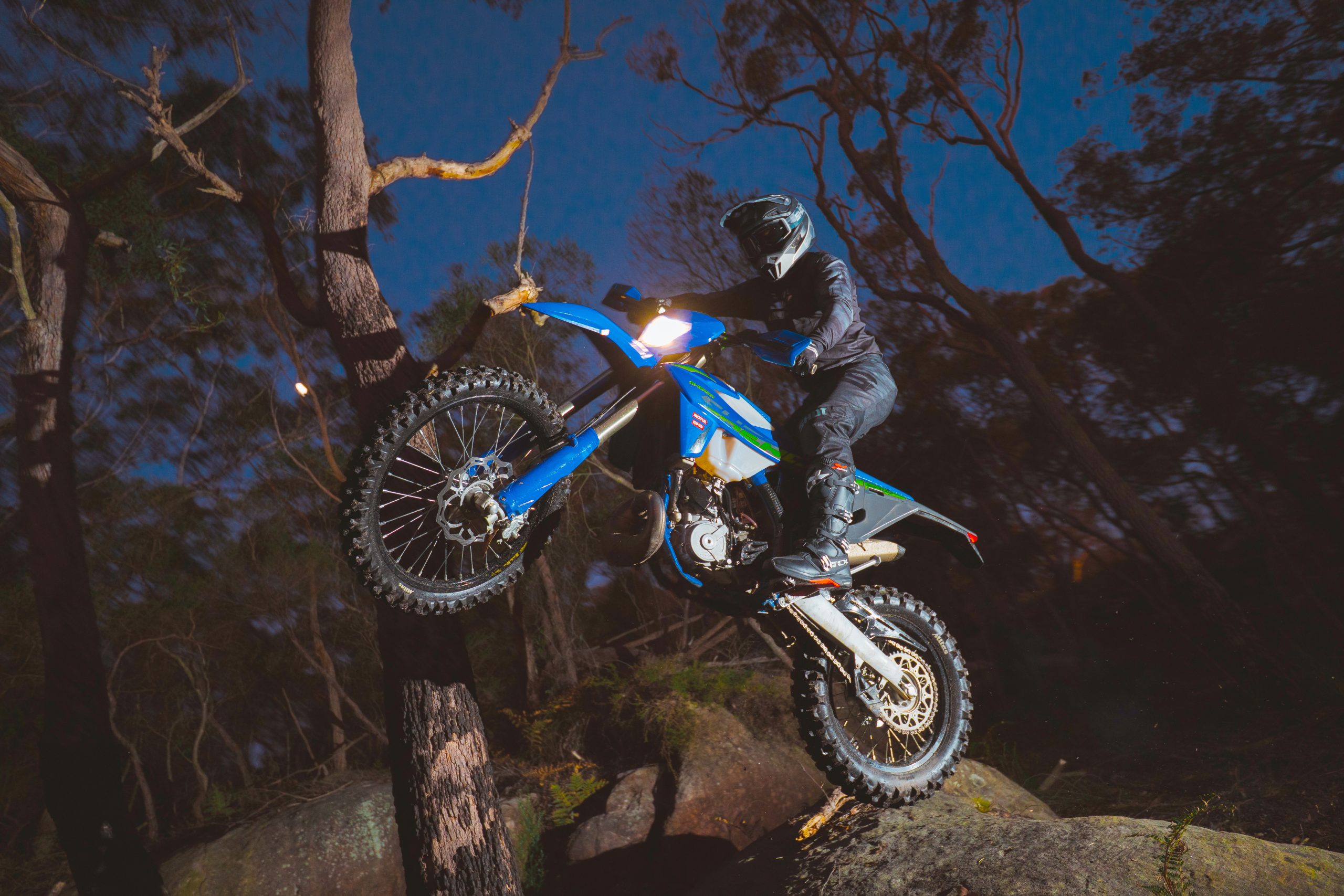
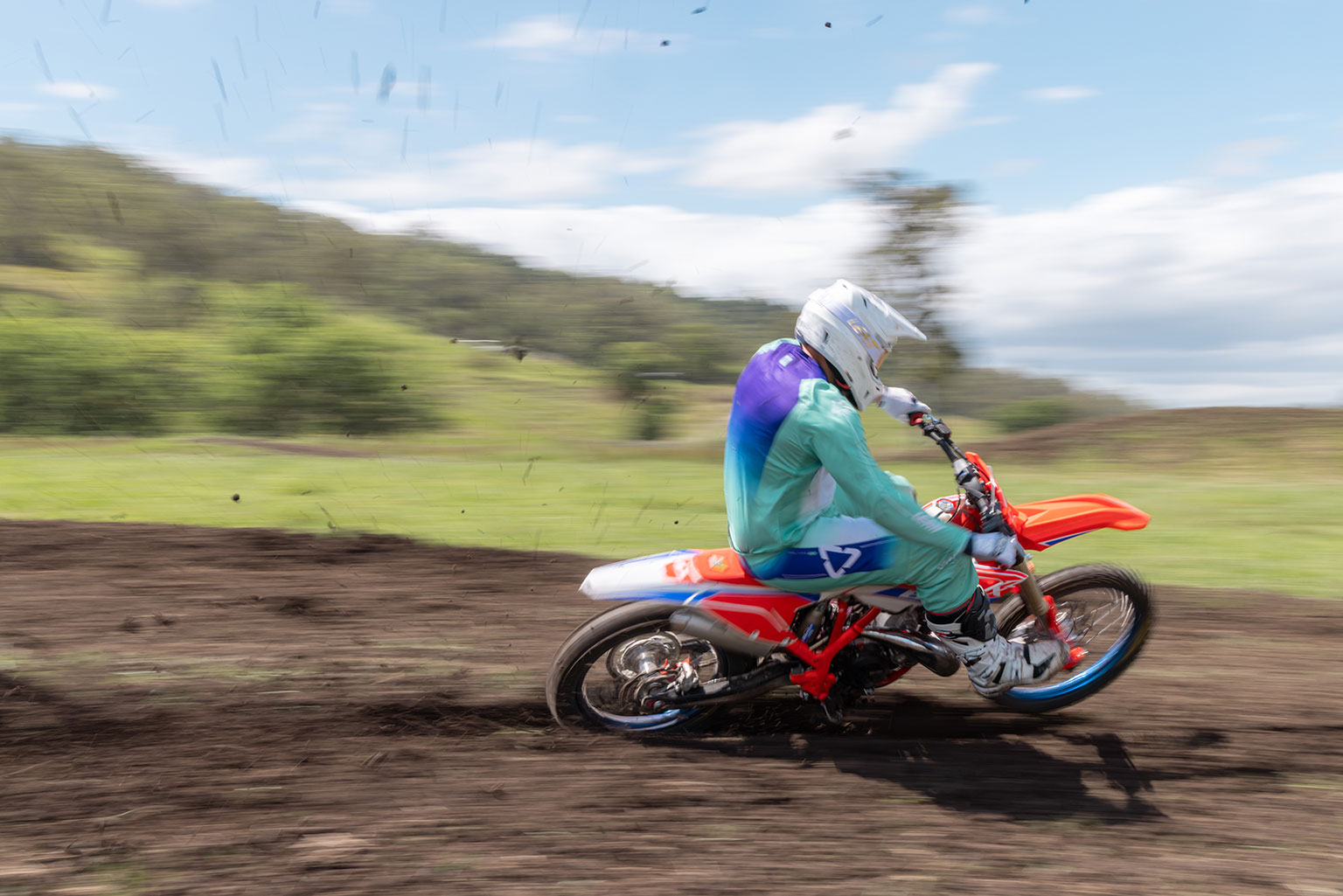
Beta Motorcycles Australia has rolled out the MY26 RR X-PRO range, and while the headline might focus on the new 250cc two-stroke, we thought we’d take a closer look at the two 300cc four-stroke twins.. The X-PRO platform – launched just last year – returns for 2026 but with no drastic changes to most of the range so we thought we’d take this opportunity to answer the question we get asked the most: why would Beta make two mid-capacity four-strokes? So we thought we’d compare the 2026 Beta 350 X-PRO V 390 X-PRO.
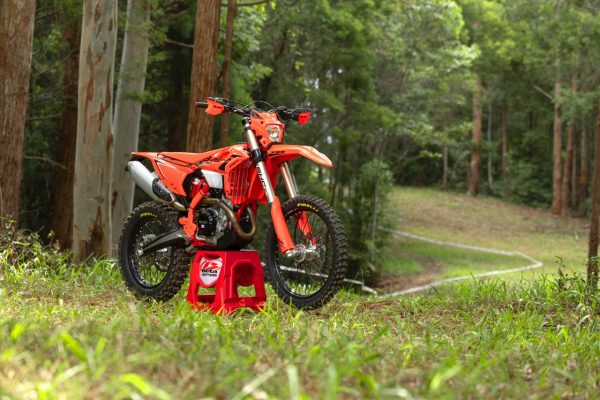
On paper, the two bikes look close enough to be siblings, same frame, same suspension, same lowered 930 mm seat height, and both got their own MY26 engine-mapping update promising smoother, more responsive torque delivery. But throw a leg over each and suddenly they couldn’t feel more different. The 350 is all about revs and razor-sharp agility, rewarding riders who like to ride busy and keep the motor alive. The 390, meanwhile, trades that racey feel for a more linear torque curve and remarkable traction, delivering a calmer, more planted feel that suits riders who prefer letting the motor do the heavy lifting. Beta calls the 390 the “ideal mix,” but the way it carries itself is so different to the 350 and unfortunately most potential customers will never get the chance to test both.
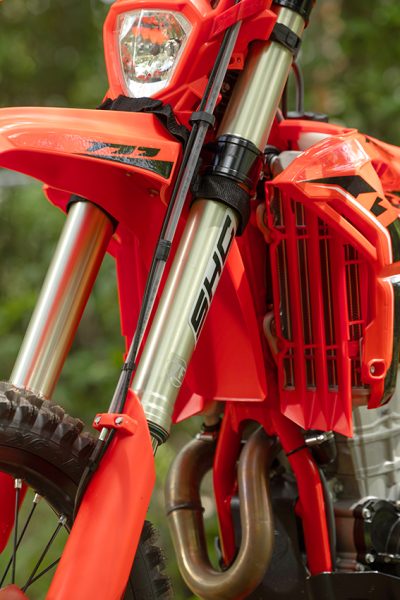
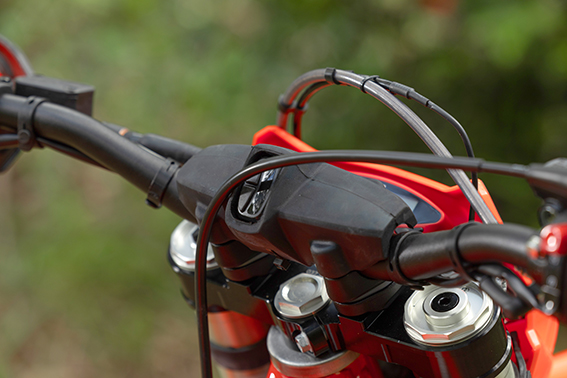
That contrast, the lively, light-feeling 350 versus the torquey, ultra-tractable 390, is what makes this comparison so compelling. They share the same DNA, the same chassis improvements, the same SHC fork and revised ZF shock, and even the same Xtrig FlexFix handlebar mounts to dull vibrations on long days. Yet their personalities on the trail couldn’t be further apart. And for riders trying to choose between them, the question becomes less about displacement and more about how you want to ride. Here’s how the two X-PRO mid-capacities really stack up.
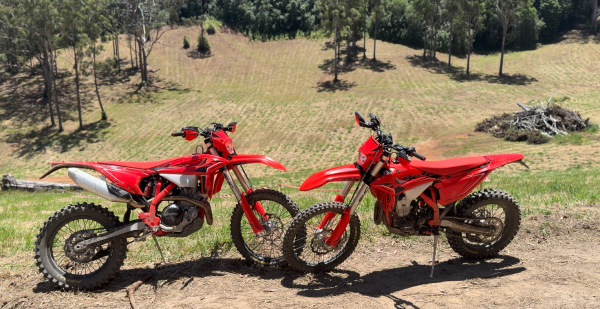
Compare the pair
When you line the MY26 Beta RR 350 X-PRO and RR 390 X-PRO side by side on paper, you quickly realise just how similar these two mid-capacity four-strokes are. The frame, chassis, suspension, brakes, dimensions, wheelbase, fuel capacity, cooling system, wheels, tyres, and even the dry weight are identical. Both bikes share the same 930 mm seat height, the same 315 mm ground clearance, the same ZF suspension package with 295/290 mm of travel, and the same 260/240 mm braking setup. They even weigh the same down to the tenth of a kilogram.
On paper, the 350 and 390 barely differ, same everything, yet they ride like completely different motorcycles. The shorter-stroke 350 is snappy, quick-revving, and rewards an active riding style. It feels light under throttle and loves to be pushed near the limiter.
The 390, with its longer stroke and lower compression, digs in harder, produces stronger and earlier torque, and carries gears longer. It feels calmer and more composed, especially in slippery terrain, and its mapping favours traction over aggression.
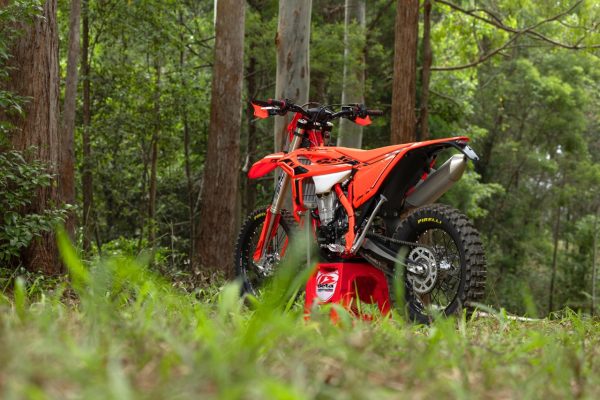
Can you feel it?
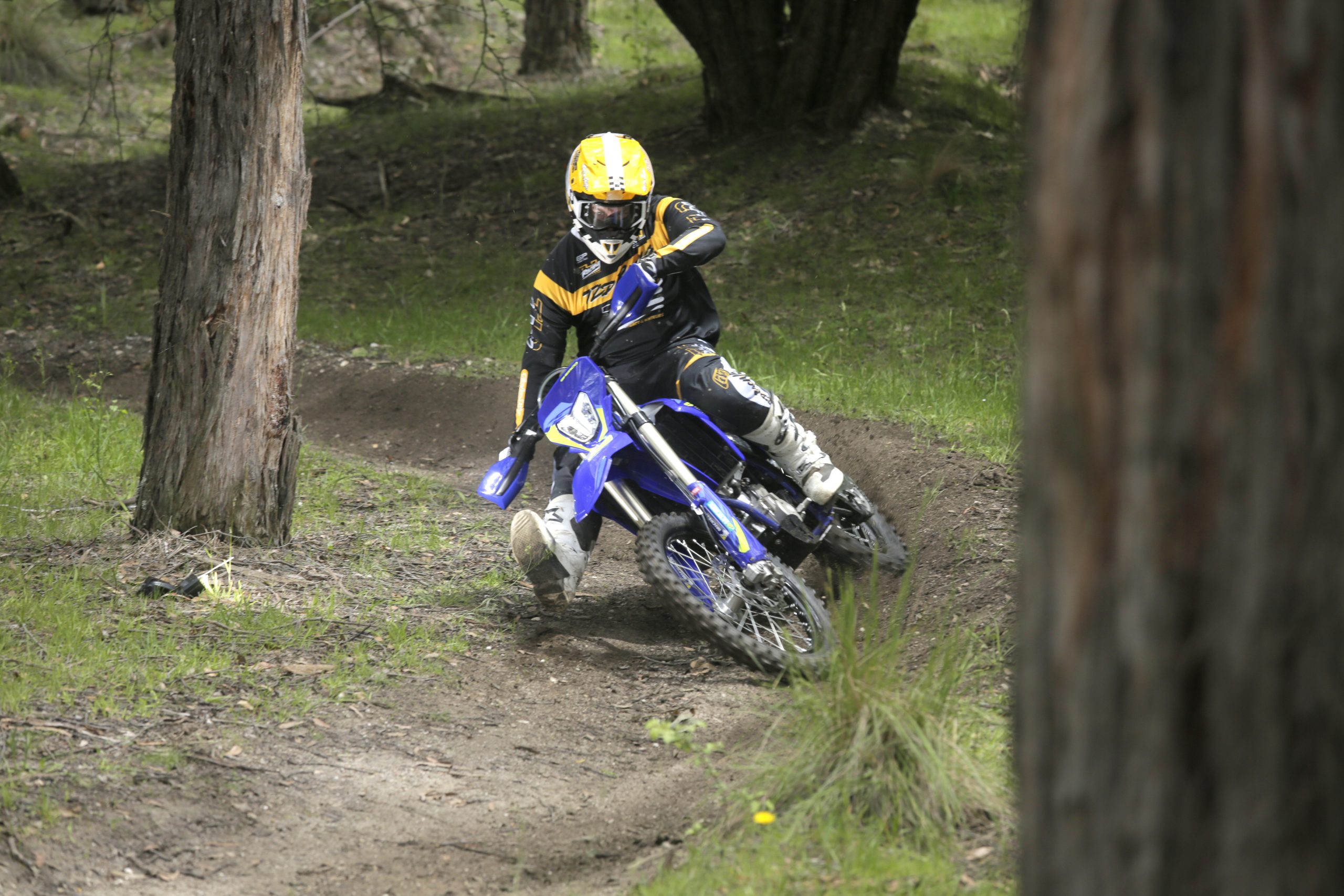
Boy, these two bikes are more different than you’d ever expect. On a spec sheet they’re almost identical, but out on the trail the engines feel worlds apart. The 350 is still very much a revver, it loves mid-range and top-end, and it simply won’t lug like the 390. In my opinion, not even close. You can absolutely ride it like a 250: keep it singing, keep it moving, and keep your left hand busy. It also rolls on beautifully when you shut off, carrying momentum instead of instantly slowing like the 390. It has a bit of a two-stroke feel in that way, and it flows through corners better. If you ride on momentum and prefer that mid-to-top style, the 350 is the sharper tool.
Even though it’s not, the 350 also feels narrower and smaller. It has a more agile feeling. I think this comes from the way the power is a little more lively and how the power doesn’t engine break as hard. This gives it a more two-stroke feel to it when trying to maintain flow and can make it feel more agile.
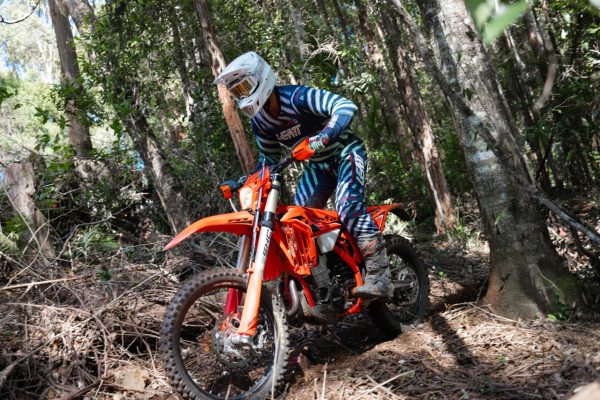
As for mapping, the sub mode with maximum power is the way to go. Because this bike makes its best power in the mid- and top-end, it’s better off in the aggressive map. I found the mid-range power more responsive in the aggressive map and it would let me carry taller gears through corners with more power if I needed it to get out and get going.
Jump across to the 390 and suddenly you’re on what feels like a luggy, doughy 450, similar in attitude to the Beta 430. It’s all about bottom-end torque and tall gears. You can lug it, crawl up hills, and get huge traction with very little clutch work. The Pirellis we had on for our test were like glue, and the 390 took full advantage. The power is strong, smooth and torquey all the way to the top, nothing spiky, nothing frantic. Honestly, it reminds me most of the old KTM 400 EXC: incredibly usable torque that never feels overwhelming. For trail riding, high-country loops, mellow singletrack or long days in the saddle, the 390 is an absolute weapon. It’s still great in tight singletrack, but it definitely sits in that “all-day trailbike” category. I can see why you don’t see many of them raced, E2 rules aside, you’d probably be quicker on a 350 between the trees, while a 450 will overpower it in outright racing.
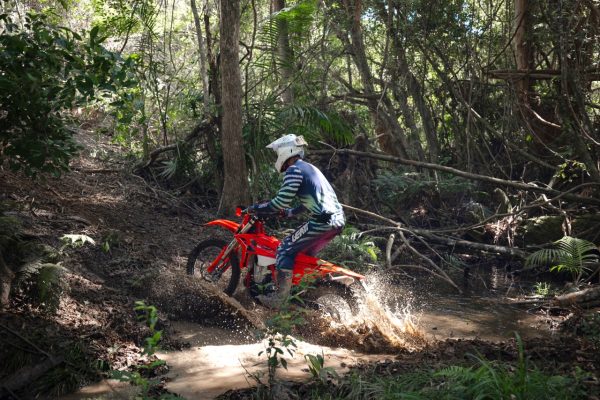
With the 390 I found it didn’t really matter as much what map you were in as I tried to short shift this bike most the time. That meant I was in the torque of the power curve and it has loads of that. The aggressive map had a little more torque but the rain map still produced enough torque to forget worrying about what gear you were in. I couldn’t say the same thing about the 350.
Handling-wise, both bikes run the softer ZF X-PRO suspension, which is perfect for trail riding but lacks the racier feel of the RR Race models. If your plan is to race a 350, I’d suggest stepping up to the 350 Race: it has the snappier race motor and the firmer KYB suspension that makes threading between trees easier. But for trail riders, lighter riders, or anyone who likes to attack the mid-to-top rev range, the 350 X-PRO is spot-on.
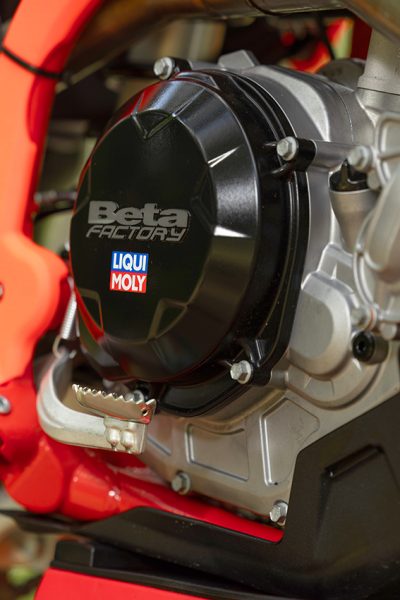
If you’re the kind of rider who sits more, prefers to lug, likes carrying taller gears and wants maximum traction with minimal effort, go the 390. It’s a doughier, torquier package with a calmer feel, perfect for long rides and steep hill country. And for what it’s worth, Beta reliability is superb, we’ve run long-term Betas for years and never had a drama, and most of my riding group is on Betas with zero major issues.
Bottom line: these are two very different motorcycles, designed for two very different riders. Don’t make the mistake of thinking one is just a slightly stronger version of the other, they perform differently, feel different, and shine in different terrain. If you’re a trail rider, aim for the 390. If you’re a racer, aim for the 350.
Everything Else
Both models share:
- DOHC engine configuration with four titanium valves
- Elldor dual electronic injection
- 42 mm Synerject throttle body
- Two-pump lubrication system
- Wet multi-disc clutch
- Exact same 6-speed gearbox and primary drive
- Kokusan ACG
- NGK LKAR 8A-9 spark plug
- Same chassis geometry and ergonomics
- Same dry weight (107.5 kg) and fuel capa
Engine Differences (Where the Story Really Is)
| Component | RR 350 X-PRO | RR 390 X-PRO | What It Means |
| Displacement | 349.1 cc | 385.6 cc | The 390 has ~36 cc more capacity thanks to its longer stroke. |
| Bore | 88 mm | 88 mm | Identical bore. |
| Stroke | 57.4 mm | 63.4 mm | The 390’s longer stroke creates more torque and traction-focused power delivery. |
| Compression Ratio | 13.19:1 | 12.48:1 | The 350 runs a higher compression, helping it rev faster and feel livelier. |
| Mapping (MY26 update) | Sharper, more responsive top-end | Smoother, more tractable low–mid torque | Mapping reinforces each engine’s natural character. |
| Displacement Category | High-revving mid-capacity | Torque-rich mid-capacity | Two engines aimed at different riding styles. |