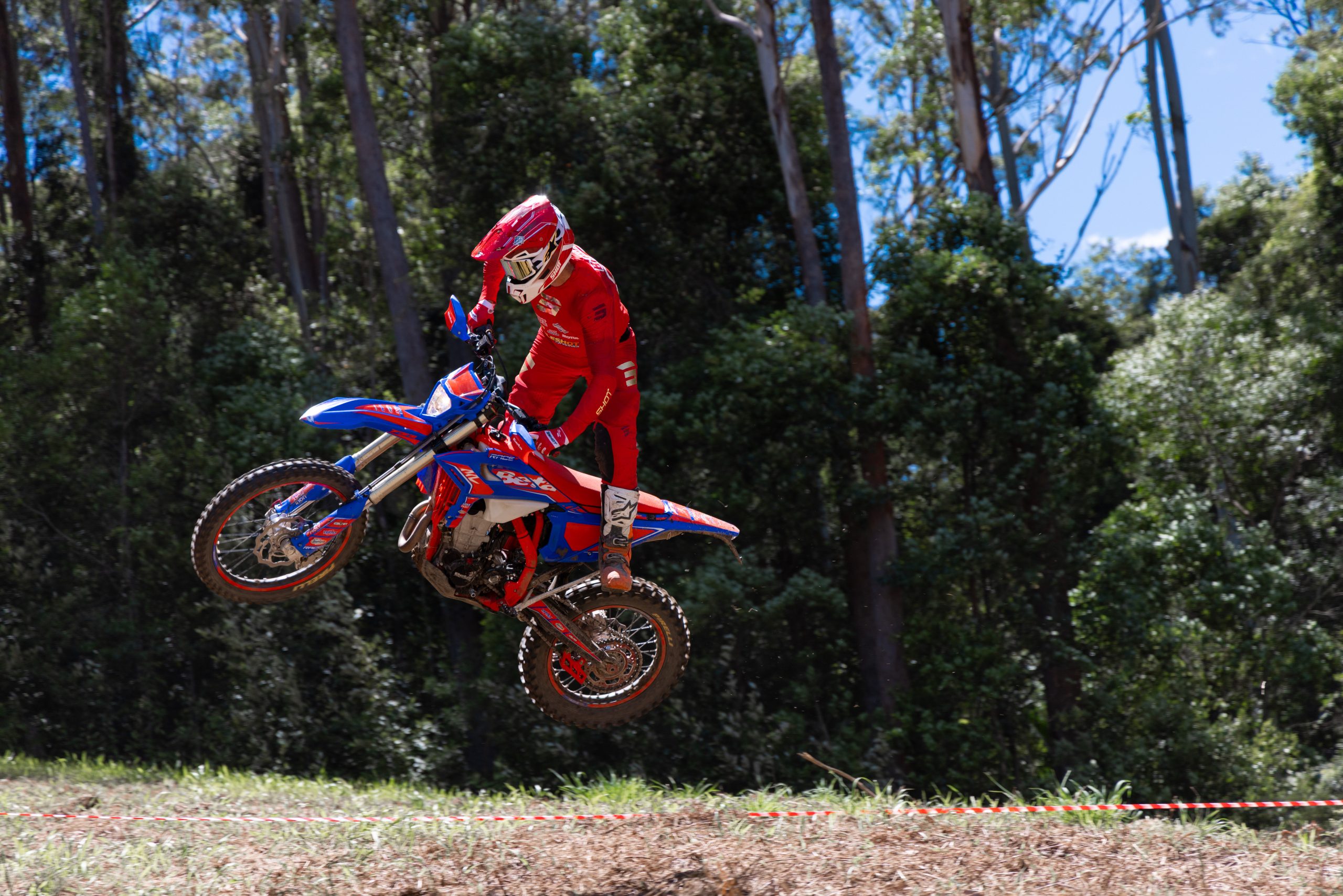
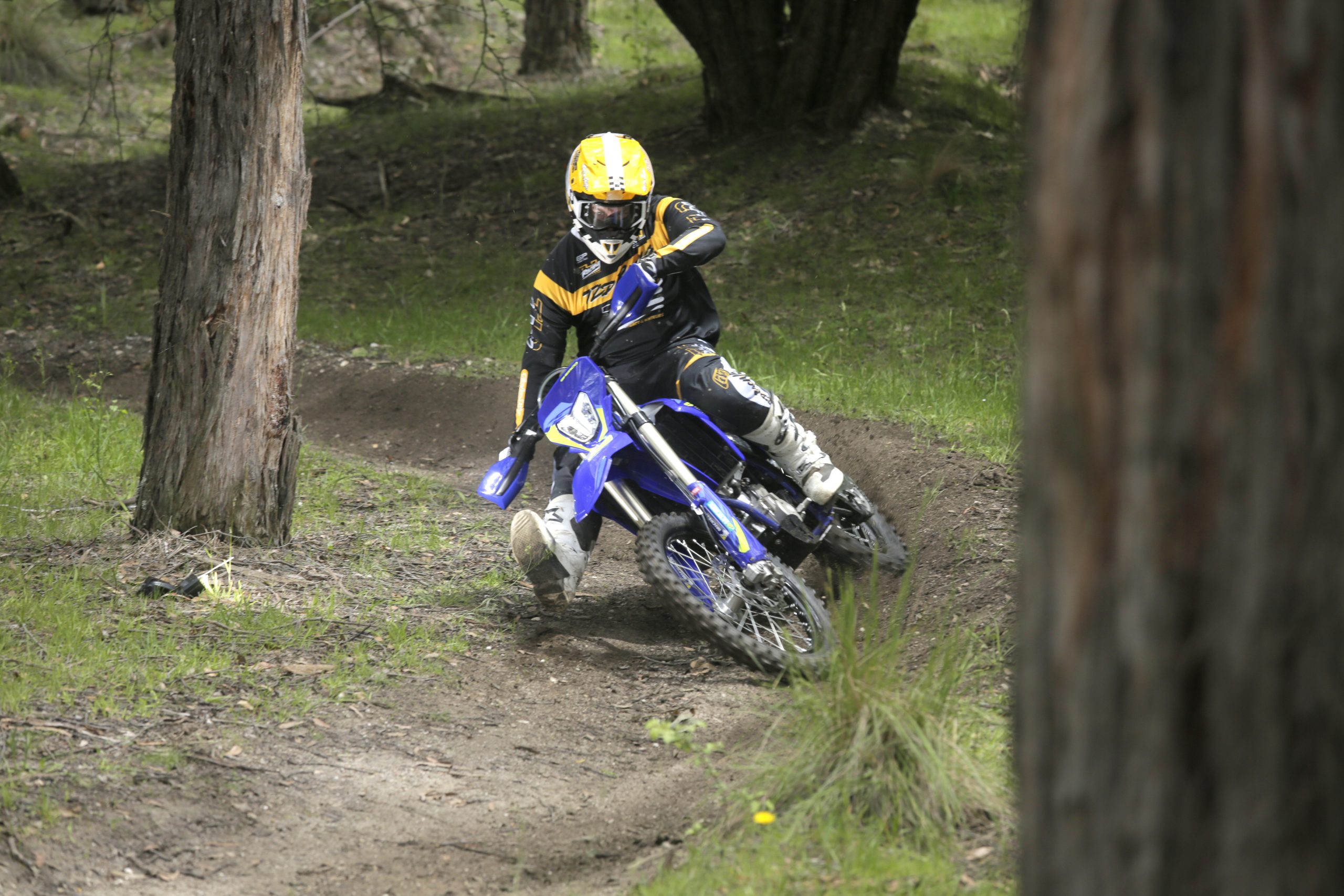
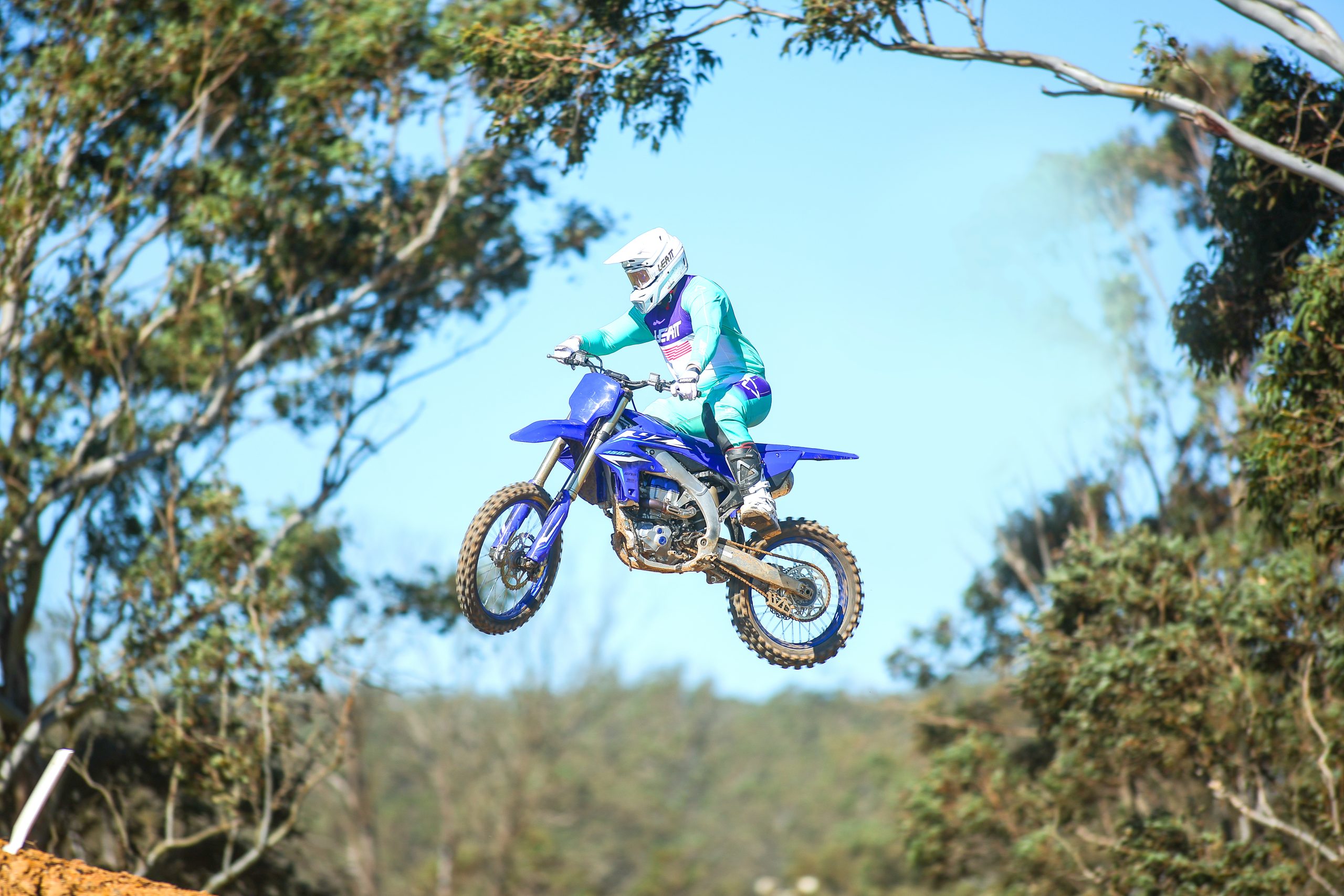
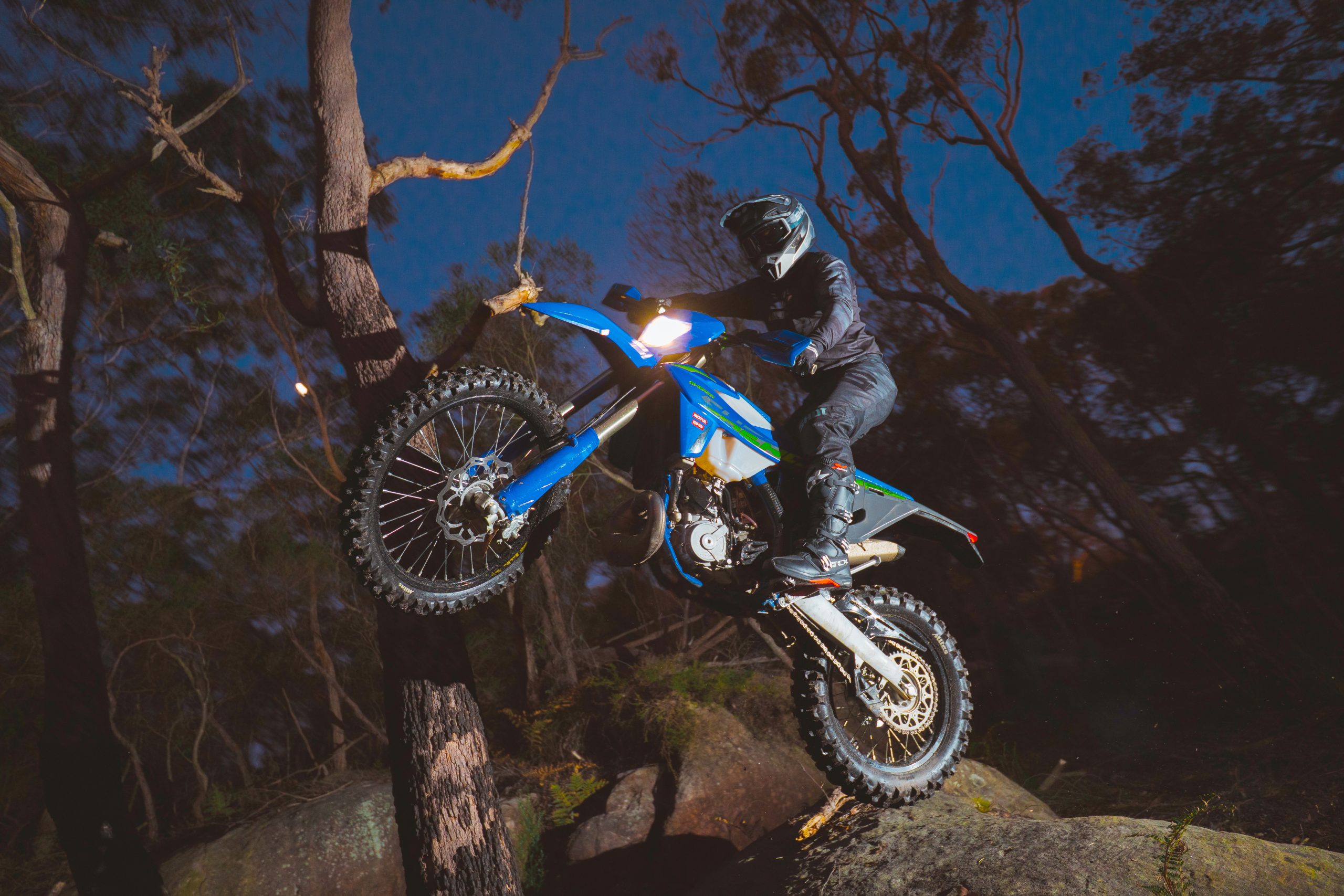
Fresh off its plane ride straight from Italy, we got to test the impressive-looking 2026 Beta RR 390 Race in beautiful Coffs Harbour. Now this would normally be awesome but the day we were testing the mercury hit 40-degrees and the humidity hit 90%. Conditions were hard but luckily the 390 Race goes fast.
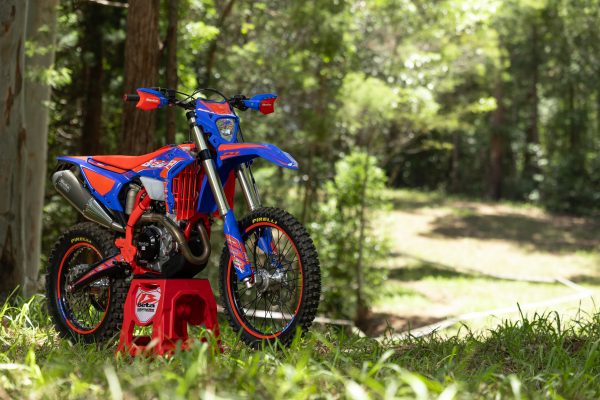
All the Race model bikes feature upgraded componentry at almost every angle compared to the X-Pro line, with KYB suspension being the standout highlight of the Race models. There’s also a whole host of cool little details these bikes possess to earn the ‘Racing’ title. Impressively, this small, family-owned Italian motorcycle company offers four different four-stroke machines in this platform, with the 350, 390, 430 and 480 all available as Race models. The Beta RR 390 Race is the same bike Beta Australia team rider Andy Wilksch has been racing in the AEC, and he speaks very highly of it. After riding it, I can see why.
How it’s put together
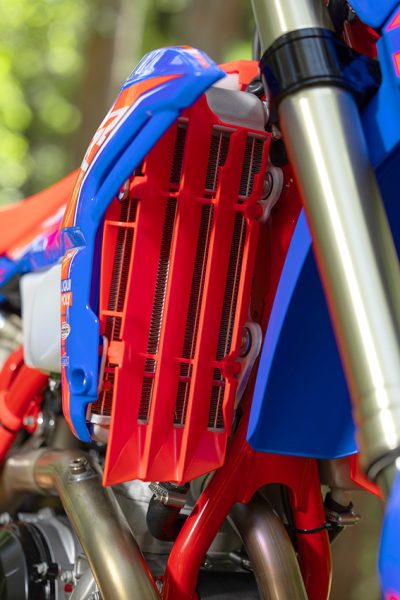
The Beta RR 390 Race comes with loads of fruit but the bones are the same as the X-Pro. Like the X-Pro, it uses a molybdenum steel frame with a double cradle split above the exhaust port. It has a wheelbase of 1480 mm, a maximum length of 2180 mm, a width of 830 mm and a height of 1275 mm. Seat height is tall, taller than the X-Pro, at 950 mm (20mm taller), with 335 mm of ground clearance and a footrest height of 427 mm. Dry weight is 107.5 kg, with 52.7 kg over the front and 54.8 kg at the rear. Fuel capacity is 9.0 L with an additional 2.3 L reserve, and the cooling system holds 1.3 L.
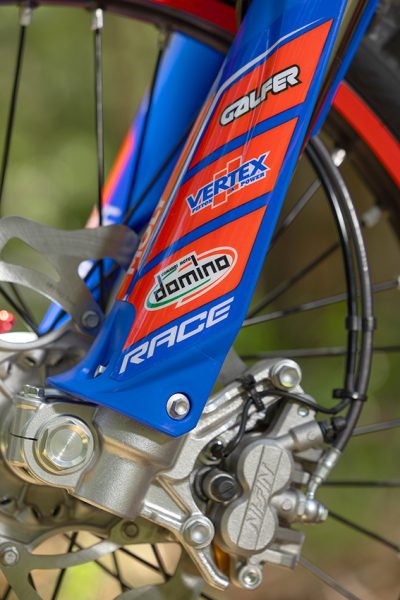
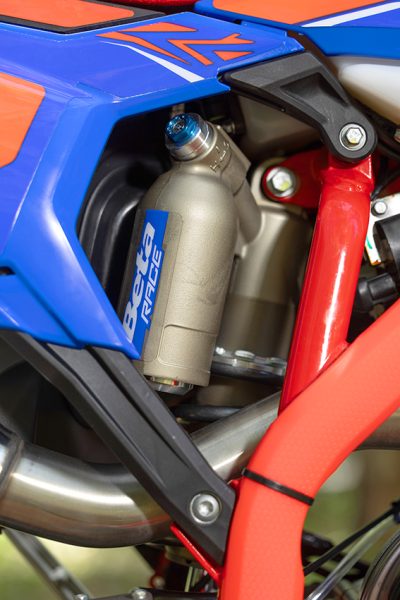
Front suspension is a 48mm KYB USD fork, while the rear uses a KYB monoshock with a progressive compound linkage. Shock absorber stroke is 130 mm, with 300 mm of wheel travel at the front and 287 mm at the rear. Braking is handled by Nissin, tried and tested on so many brands and models so you know they’re solid, with a 260 mm wave disc with a double-piston floating caliper at the front and a 240 mm wave disc with a single-piston floating caliper at the rear. Tyres on the Race model are Pirelli MX32s and they’re a fantastic competition-spec tyre.
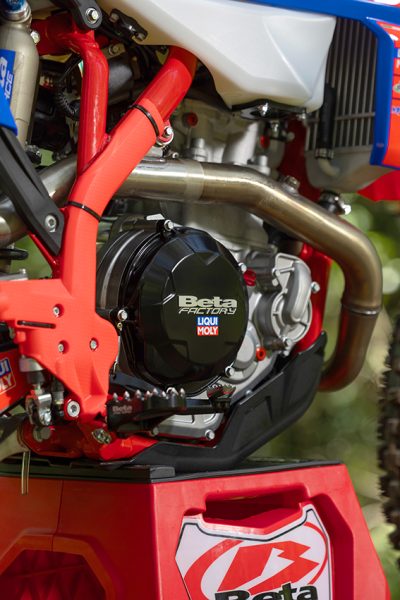
Power comes from a single-cylinder, liquid-cooled four-stroke engine with an 88mm bore and 63.4mm stroke for a displacement of 385.6 cc. Compression ratio is 12.48:1, with a DOHC finger-follower valve train and four valves. It’s the same motor that’s in the 350 Race but with a different stroke and compression ratio. Starting is electric, with an ACG Kokusan ignition system and an NGK LKAR 8A-9 spark plug.
Lubrication is the key on this model with by dual oil pumps improving reliability, while fuel delivery is via an Eldor dual electronic injection system with a 42 mm Synerject throttle body. This combination rarely flames out. The clutch is a wet multi-disc unit, and it has a six-speed transmission drives the rear wheel via chain.
The odd-ball
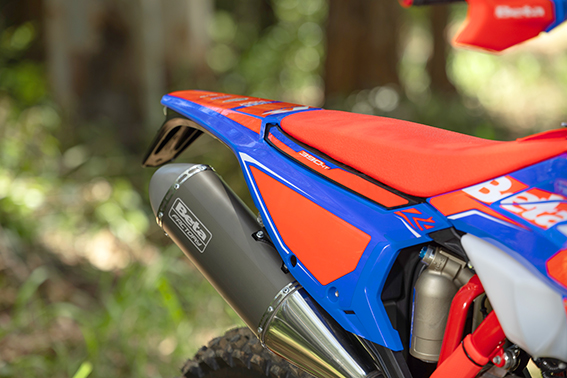
I’ve enjoyed the 390 platform in the past, and I’d go as far as saying it’s been my favourite capacity within the Beta lineup. The motor produces power that’s very easy to manage and suits a wide range of riders. For me, though, the 390 has previously left me wanting a little more. I always felt it needed extra power and snap, like the addition of a straight-through muffler to help the engine breathe. Thankfully, there was a nice surprise this year, with Beta Australia including a Beta Racing slip-on muffler with every Race model purchase. If you buy a Race model, you get the slip-on. The price has gone up a few hundred dollars compared to last year because of the pipe, but considering the muffler retails for around $1,100, it’s a solid inclusion. More importantly, it’s exactly what this bike needs. The 390 works better when it can breathe, and having the system fitted straight out of the crate makes a noticeable difference.
As mentioned earlier, the engine is incredibly usable, and its linear power delivery creates confidence for the rider. Even so, I still think that in race conditions, the bike could benefit from a little more urgency off the bottom, even with the new pipe fitted. It wants to be ridden faster and harder, and I don’t necessarily mean aggressive snap off the bottom, but rather that it feels like it wants to rev just that little bit quicker — maybe a touch more anger, if you will. That said, traction is excellent. The track for our test was off-camber in places and the bike held grip well without breaking loose thanks to the Pirelli mid-softs. On a motocross-style track or in race conditions where you’re banking into ruts, that little extra off-idle response would definitely be welcome.
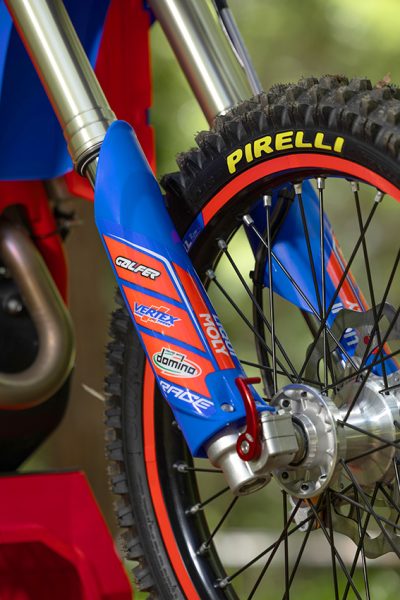
Coming off the X-Pro models and onto the Race models, the improvement in suspension is immediate. The KYB fork and shock transform the bike. The X-Pro models are aimed at trail riders and feel soft for the kind of riding I like to do. With KYB at the helm, the 390 Race sits higher, feels firmer, and offers far more support when riding fast. The seat height is around 20mm taller than the X-Pro, and you notice it when transitioning from standing to sitting. You feel more on top of the bike and able to load the front with confidence.
The KYB suspension lifts the entire platform. It feels balanced and predictable through G-outs and compression hits, and it doesn’t kick, deflect or bottom harshly. It could still be a touch soft for some riders, but for me it’s very good. Importantly, I didn’t get sore hands, which makes a massive difference to overall ride enjoyment. When a bike is plush enough that it doesn’t transmit harshness through the bars, that’s a big win.
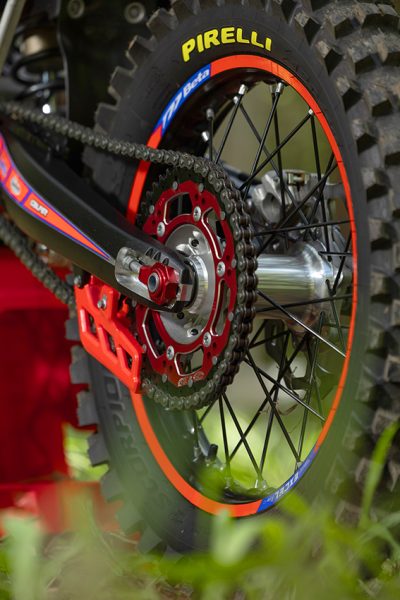
The Race model also gets the new colour scheme. Personally, I think I still prefer the all-red look of the X-Pro bikes, but the Race models are identified by blue highlights and bling parts, and they still present well. The map switch differs from the X-Pro models because the Race bikes include traction control. There are also wider footpegs, anodised components, and other small upgrades across the bike. And let’s not forget the Race bikes come standard with handguards — a simple inclusion that makes a big difference in the bush.
The 2026 model feels like the best version of the 390 platform I’ve ridden. In previous years, there was always something I felt could be improved, but in today’s conditions the bike felt more comfortable than ever. The changes this year, especially the inclusion of the muffler, show that Beta is steadily improving an already strong package. They have a solid platform and are developing it in the right direction.
I’m still stoked to see the Beta team for sticking with it and producing a quality bike in a capacity no one else in the world is doing. So many of these in-between capacities have fallen by the wayside with other brands, but Beta haven’t given up on it. And why would they, it’s won world championships and won races at the Aussie off-roads against bigger bikes. Now that’s impressive!
What continually stands out to me with this brand is Beta’s commitment to offering four distinct engine capacities in this range. The fact they’ve stuck with the 350, 390, 430 and 480 instead of simplifying the lineup to just 250 and 450 like other brands shows they’re serious about giving riders choice, and I respect that. It would be far easier for them to offer only two capacities, but they continue to refine all four. I will say, though, that I do think it’s time for them to enter the 250F market. I’ve heard rumblings before, but for now, we have these four proven machines ready to go.

Engine
- Engine Type: Single-cylinder, four-stroke, liquid-cooled
• Bore x Stroke: 88 mm x 63.4 mm
• Displacement: 385.6 cc
• Compression Ratio: 12.48:1
• Valve Train: DOHC finger follower, 4 valves
• Starter: Electric
• Fuel System: Eldor dual electronic injection
• Throttle Body: Ø 42 mm Synerject
• Lubrication: 2 oil pumps
• Clutch: Wet multi-disc
• Transmission: 6-speed
Chassis
- Frame: Molybdenum steel double cradle split above exhaust port
• Wheelbase: 1480 mm
• Seat Height: 950 mm
• Ground Clearance: 335 mm
• Dry Weight: 107.5 kg (Front: 52.7 kg / Rear: 54.8 kg)
• Fuel Tank Capacity: 9.0 L
• Reserve: 2.3 L
• Cooling System Capacity: 1.3 L
Suspension
- Front: KYB Hydraulic USD fork, 48 mm shaft, 300 mm travel
• Rear: KYB Monoshock with progressive compound linkage, 287 mm travel
Brakes & Wheels
- Front: Nissin 260 mm wave disc with double-piston floating caliper
• Rear: Nissin 240 mm wave disc with single-piston floating caliper
• Front Tyre: 90/90 – 21 Pirelli MX32
• Rear Tyre: 140/80 – 18 Pirelli MX32
RRP & Warranty
RRP: $18,970 Ride Away
Warranty: 6 months
Browser: betamotor.com.au