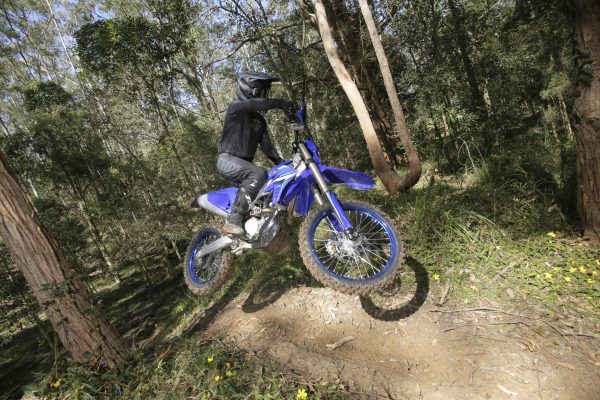
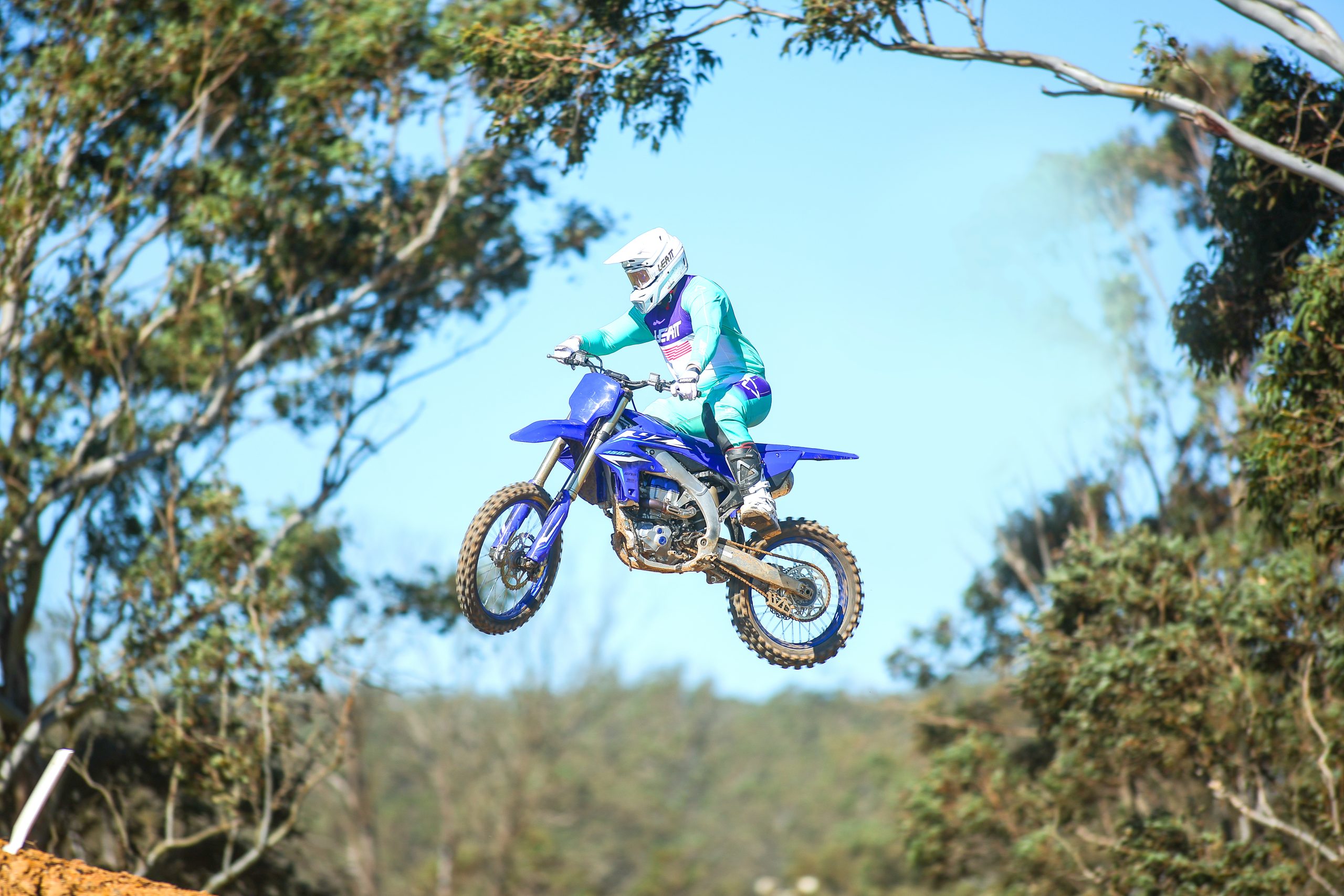
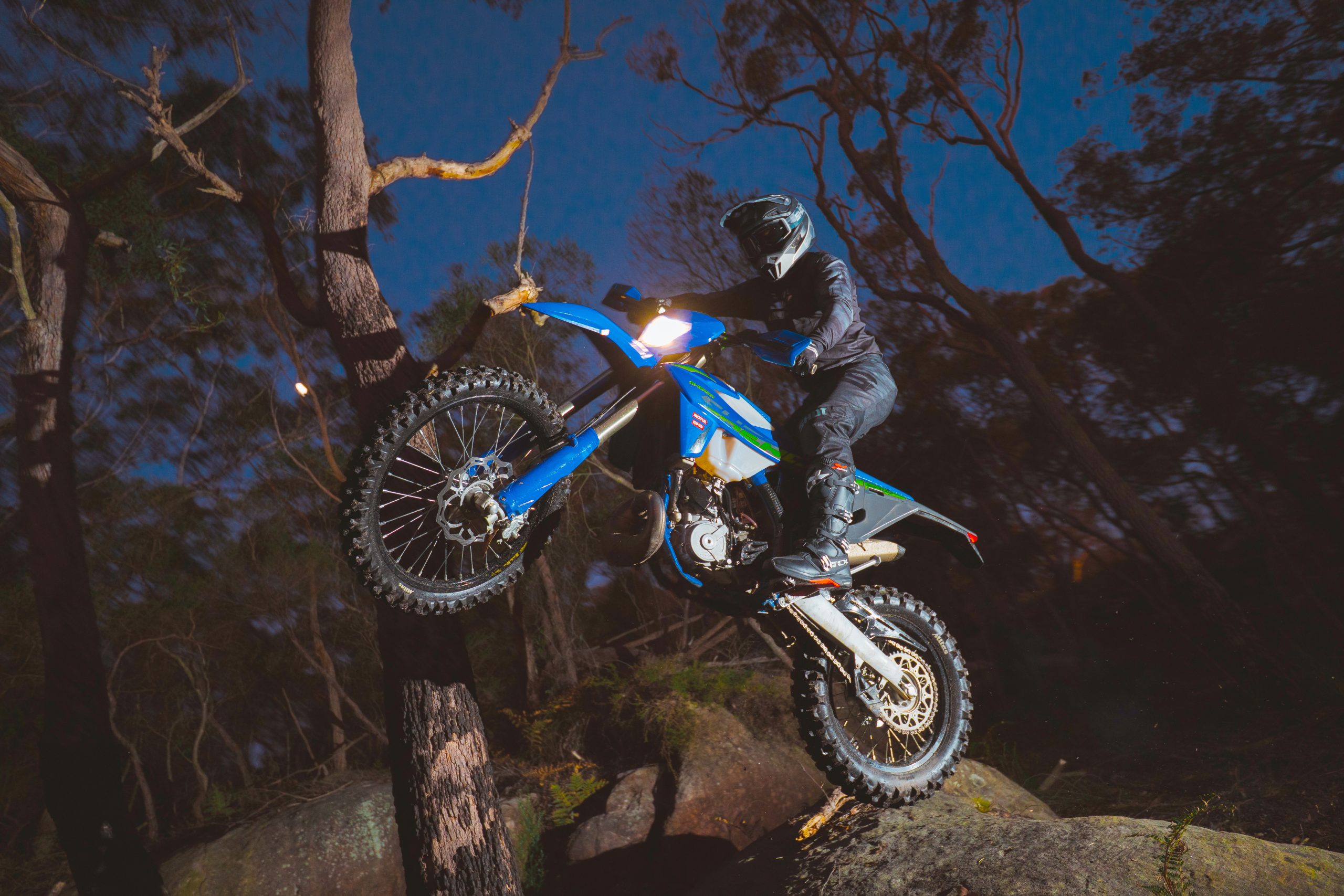
For a whole generation of juniors stepping up into the senior ranks, the Yamaha WR250F changed the rules. Before it arrived, if you wanted to be competitive in the 250 class off-road, you were basically locked into a two-stroke. They were light, fast, and frantic and they demanded that you ride them like they owed you money. The WR250F flipped that script. Suddenly, you could race a four-stroke, stay competitive, and even go faster thanks to a broader spread of power that didn’t punish you for being half a gear out.
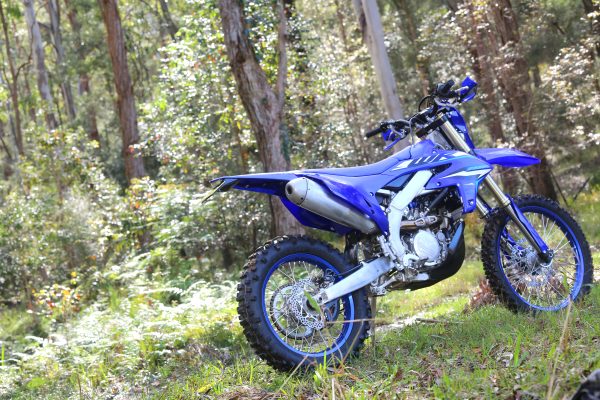
What made it such a game-changer wasn’t just that it was a 250cc four-stroke, it was that it came ready. Registered. Electric start. A proper wide-ratio gearbox. Real enduro suspension. It looked like a trailbike on paper but felt like a low-flying YZ250F in the bush, giving developing riders a platform with actual headroom. It let junior riders grow into speed, not chase it, and that’s what made it so influential during that early shift away from two-strokes.
But that was then. Fast-forward to 2026 and the enduro world is unrecognisable. The 250 four-stroke class has been squeezed from both sides: 350s offer more torque without punishing you, and the modern 250cc two-strokes are lighter and sharper than ever. Somewhere in the middle sits the WR250F, still carrying its motocross DNA but expected to behave like a trailbike for riders who want comfort, range, and versatility.
So where does it truly sit now? Is the WR250F still a racer in disguise, or has it mellowed into a trailbike with just enough bite to keep its heritage intact? That’s the question the 2026 model has to answer: whether it can still be that “step-up” bike, the machine that once bridged the gap for so many riders moving out of juniors and into the deep end of real enduro riding.
Like we did with the 2026 Yamaha WR450F test last issue, we employed the help of Jeff Briggs (40 -something years old and ridden just about every bike for ADB you can think of) and Wes Mills (not quite 40 and stepping out of motocross into trailriding) to help us decide if the WR250F can still dabble in both trail and race worlds.
TECHNICAL BREAKDOWN
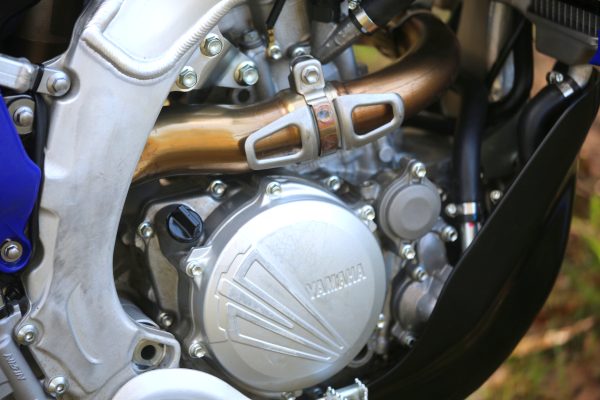
The 2026 Yamaha WR250F sticks with the proven 250 cc, liquid-cooled, four-stroke DOHC engine that’s defined the model for years, built around a 77 x 53.6 mm bore and stroke and a punchy 13.8:1 compression ratio. It’s fuel-injected and fully tunable via Yamaha’s Power Tuner app, letting riders adjust mapping on the fly. The motor runs a wet-sump lubrication system and fires to life through electric start.
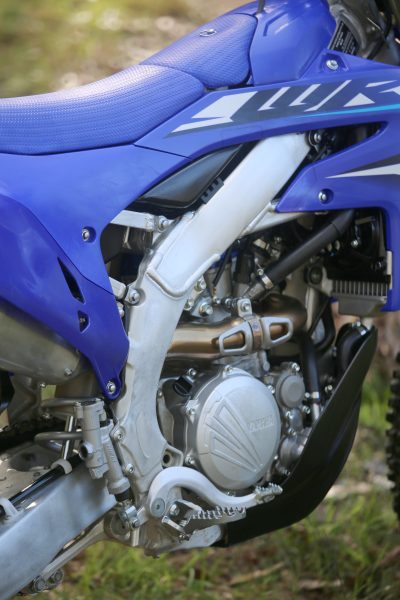
Power is pushed through a close-ratio gearbox and final-drive chain, giving the WR the tight spacing and urgency that still echoes its YZ250F roots. A 7.4-litre tank sits above it all, just enough for a day of trailriding without compromising the bike’s slim feel. The chassis is Yamaha’s bilateral-beam aluminium frame paired with serious suspension numbers: 300 mm of travel from the KYB fork up front, and a hefty 360 mm out back through the linkage-driven KYB shock and swingarm. Ground clearance is a tall 330 mm, while the bike stretches out to a 1,470 mm wheelbase with a 955 mm seat height.
Braking is handled by a 270 mm hydraulic front disc and 240 mm rear disc, both Nissin units, giving the WR sharp stopping power. The Australian-spec bike runs a 90/90-21 front and 140/80-18 rear tyre combo, both Dunlops, which is a setup most local riders will feel right at home on.
Yamaha still leans heavily on the YZ250F DNA when developing the WR250F package, but every year they retune it for enduro work. That means softer, more forgiving suspension settings and a motor that breathes differently to handle long days, technical climbs, and tighter terrain. For 2026, the only major changes are lighter blue fork guards, a lockable ECU and new graphics.
On paper, the 2026 model still looks like a motocrosser with manners but as always, the real question is how it feels out on the trail, and that’s what we’re about to find out.
Engine & Mapping
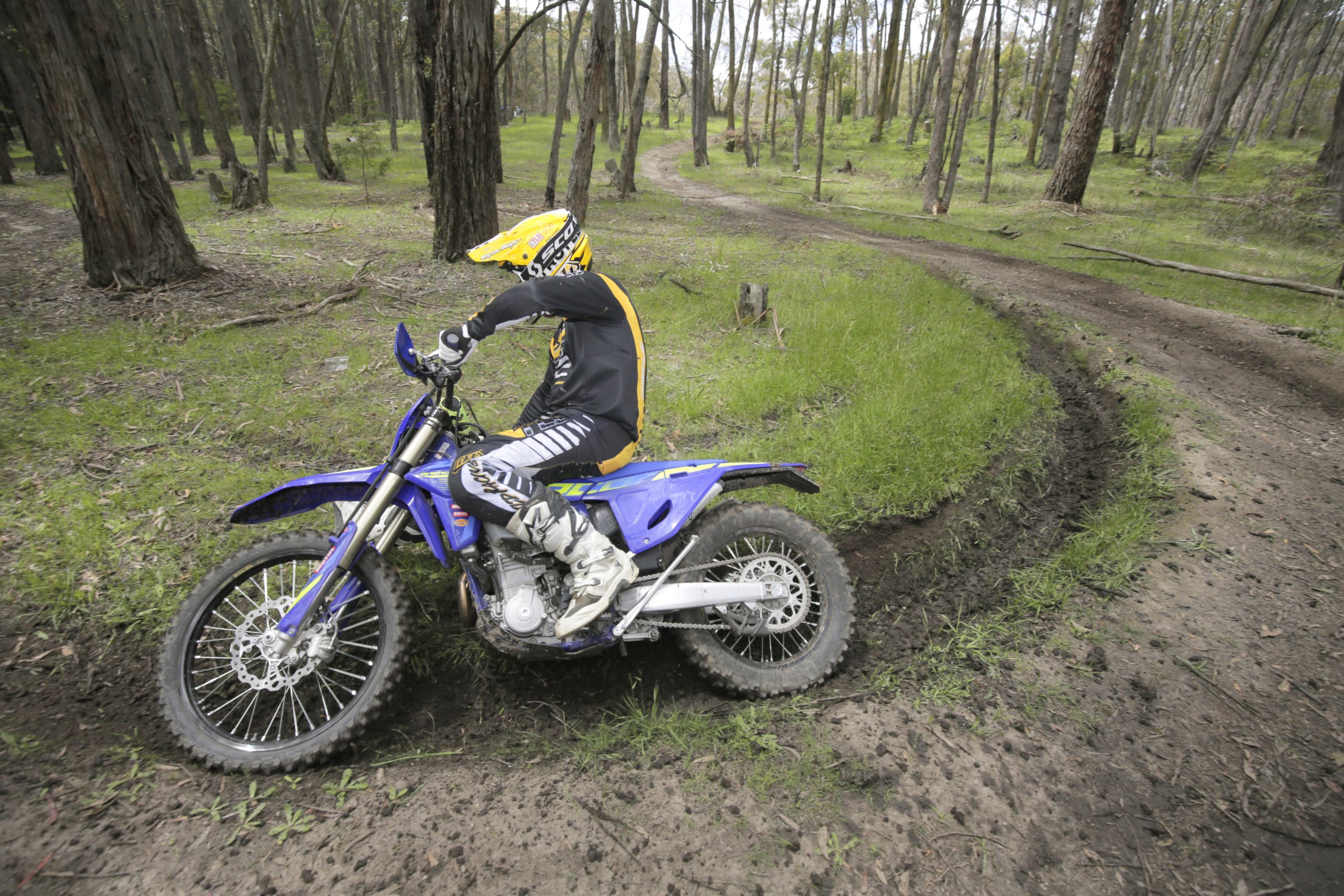
The Yamaha heritage shows itself the moment the WR250F fires. Wes was the first to point out how sharp the throttle response is compared to the two-strokes and 300s he normally rides. “Just a blip of throttle and you instantly feel the engine barking down low,” he said, adding that once the WR is in the meat of the power, it feels angry in a good way. “You can rev them all the way to the limiter, and it sounds so aggro you feel like you’re getting sucked through the airbox,” he laughed. First gear felt short to him, second gear pulled forever, and the bike’s mid-range quickly became his happy place. “You honestly forget you’re on a 250F.”
The aggressive nature of the power delivery stood out to all three riders. The WR responds immediately to throttle, and while it’s impressive, it also means mapping will be essential. “I’d calm that initial hit down with the Power Tuner app,” Wes said. Mitch agreed. “It just keeps revving and revving, and the mid-range is unreal, but it does fire off the bottom pretty hard in stock form.”
Briggs, who’ll be racing this very WR250F in the upcoming season, preferred the engine in the aggressive map but felt the bottom-end was the only area that could use work. “Coming off a 350, you need to remind yourself to be in the right gear. If I missed a shift into third, it just didn’t have the pull I wanted. A pipe and mapping will fix that,” he said. But in the mid to top end? “You’ll win races on it. It’s that good.”
All three agreed the WR250F is deceptively powerful for a quarter-litre. It will stand up on command, blitz water holes, and pop over roots with barely any clutch. “You do have to ride it like a motocrosser in the bush,” Mitch said. “Keep it in that mid-to-top zone and it’s unreal.”
Suspension & Handling
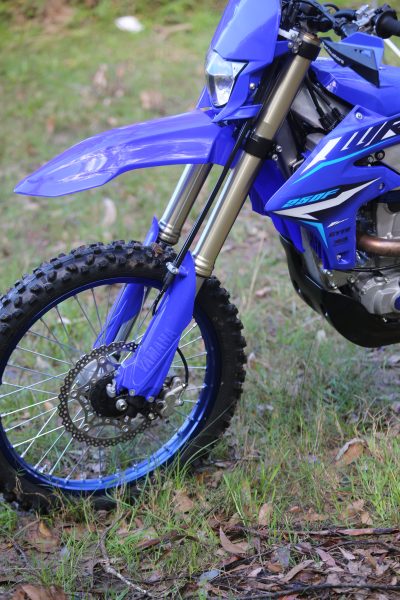
Onto suspension, and all three testers were surprised by how well the WR handled a mix of tight singletrack, ruts, and the odd motocross section. Mitch, at 100 kg, expected to overwhelm the bike but didn’t. “It never deflected, never bottomed, and I could charge into things harder than I expected,” he said. “It was more compliant than the 450F.”
Briggs, at 93 kg, agreed. “You could race it out of the box. The chassis balance is spot on.” He also took it on the MX track and rut track and found it “really fun, really predictable.”
Wes, the lightest of the trio and the most aggressive rider of the bunch, found it firm but that worked in his favour. “For someone my weight, it was perfect. Your average 75–85 kg weekend rider might find it a little stiff, but for racing or hard trail work it’s amazing.”
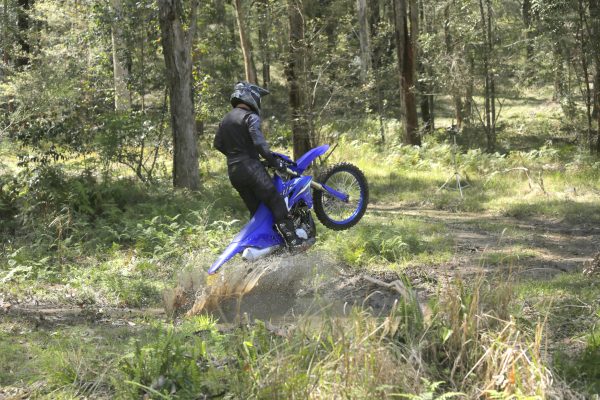
He emphasised that small technique adjustments made a huge difference, especially in sandy sections. “Once I stopped trying to ride it like a 125 and started riding it like an enduro bike –more standing, more neutral body position – it came alive.”
Ergonomics & Comfort
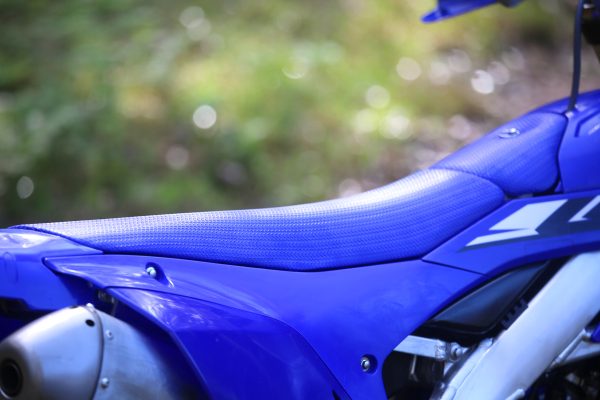
Comfort was another area where the WR250F impressed. The seat, bar bend, and general rider triangle suited all three testers, with only minor nitpicks. Briggs wanted the bars slightly further forward and plans to flip the mounts for his upcoming race. Mitch noted the seat was softer than expected, even after hours of riding.
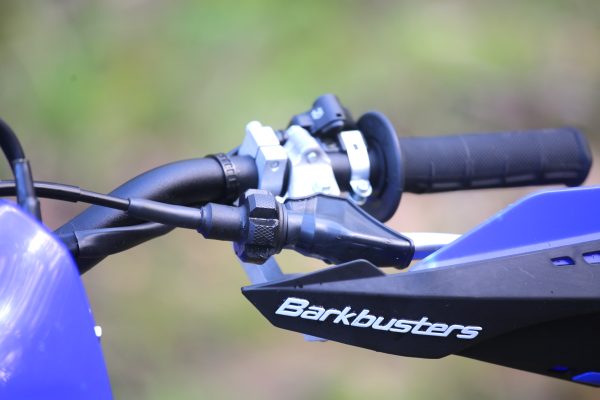
The clutch became a talking point. Despite being cable-operated, all riders agreed it was extremely light and very easy to adjust on the fly. “People get hung up on hydraulic clutches,” Mitch said, “but this one is so light you won’t care.” And if you do care, the aftermarket hydraulic conversion is cheap enough to be a non-issue.
Who’s This Bike For?
In the end, all three testers saw the WR250F as a bike with one of the broadest rider ranges of any model in the enduro class. Wes felt it appeals to “pretty much everyone in enduro,” from club-level trailriders to racers, especially women and lighter riders who don’t want the brute force of a 450.
Briggs was more specific. “Not a beginner’s bike,” he said. “A 250F can still get a new rider into trouble, and a 300 X-Trainer is a better starting point. But anyone from average rider to pro? This thing is perfect.” The bike’s race pedigree speaks for itself, with countless Australian titles in E1 and women’s classes, yet every Saturday you’ll find dozens of them cruising the bush.
And there’s the uniquely Australian angle: the WR250F was originally developed for Australia, with Ben Grabham and Jeff Ballard helping shape its early DNA in Japan. It remains an iconic Aussie enduro bike, one that’s just as likely to win a national title as it is to be out smashing singletrack with your mates.
2026 YAMAHA WR250F
Engine
- Engine: 250cc, Liquid-cooled, 4-stroke, DOHC, 4-valve
- Bore x Stroke: 77.0 x 53.6 mm
- Compression Ratio: 13.8:1
- Fuel System: Fuel injection
- Starter: Electric
- Transmission: Constant-mesh 6-speed
Chassis
- Frame: Bilateral beam
- Front Suspension: KYB Telescopic forks, 300 mm travel
- Rear Suspension: KYB Link-type swingarm, 306 mm travel
- Front Brake: Nissin, Hydraulic single disc, 270 mm
- Rear Brake: Nissin, Hydraulic single disc, 240 mm
- Front Tyre: Dunlop MX32, 90/90-21
- Rear Tyre: Dunlop MX32, 140/80-18
Dimensions
- Seat Height: 955 mm
- Wheelbase: 1470 mm
- Ground Clearance: 330 mm
- Fuel Capacity: 7.4 L
- Wet Weight: 113 kg