Aussies love V8s, trucks and big-bore two-strokes. Until now, the biggest, modern-era mass-produced two-stroke was a 300cc, mostly enduro bikes, aside from KTM and, of course, Beta’s own 300cc motocross machines. For 2026, Beta decided to break the mould and push the limits with a 350cc two-stroke built specifically for motocross.
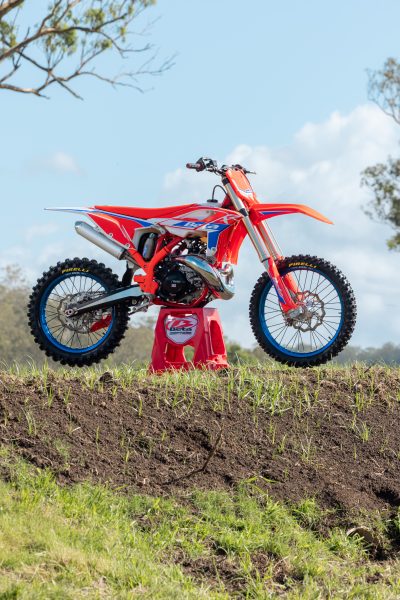
What prompted this is anyone’s guess; after all, there isn’t a racing class for a two-stroke of this capacity. This bike exists purely because Beta wanted to build something that’s fun to ride, something that leaves you smiling from ear to ear. My first thought was, this thing is going to be an absolute animal, but Beta assured us they’d built a big-bore two-stroke with a four-stroke feel.
Sure, back in the day we had 500cc two-strokes, but technology has come a long way. Those old beasts made their power over a tiny 2000rpm window. Today, with modern two-stroke design and electronic ignitions, we can stretch a two-stroke’s power curve to 14,000rpm and beyond. So the idea of a 350cc engine with modern ignition and an adjustable power valve had me genuinely excited.
Even with dealer orders piling up, Beta managed to set aside a few bikes from their 2026 motocross range for us to test. I headed straight to the airport, jumped on a plane and flew to Queensland for my chance to throw a leg over these weapons.
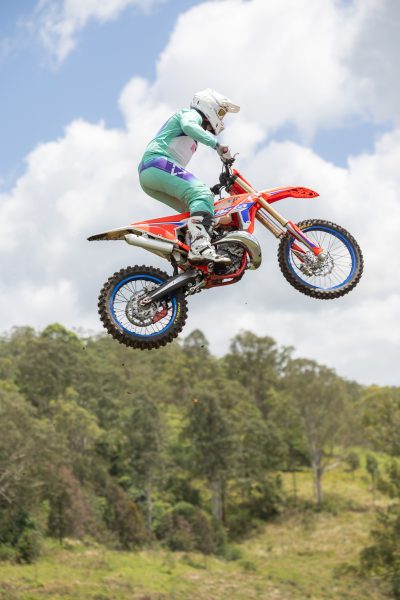
The original plan was to test at QMP, but after more than 100mm of rain in a short period the track was unrideable. A last-minute venue change sent us down to Lismore, to a private track sitting under blue skies and surrounded by bright green hills. The track had been ripped and soaked with just the right amount of rain, forming up better than God could’ve intended for himself. It was one of those rare days when everything aligns, the kind of test conditions we riders dream about.
The track featured several decent doubles, deep black soil and a layout that wound around a grassy paddock with a few tasty step-ups over rolling hills. I’m still frothing just thinking about it. My first instinct was to jump on the new RX 450, but I know you’re all dying to hear about the 350 two-banger, so that’s where I started. And if I’m totally honest, I was just as excited to ride this thing as you are to read about it.
Tech Stuff
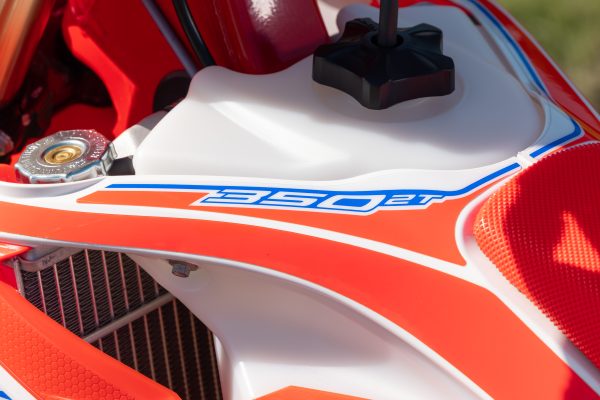
The Beta RX 350 two-stroke is now the largest-capacity two-stroke production bike on the market. Sure, there are odd kit bikes and big-bore cylinders you can buy for other models, but in terms of mass-produced machines, the Beta 350 stands alone. Previously, the RX 300 held the title as Beta’s biggest two-stroke, but for 2026 they’ve seriously upped the game by adding another 50cc.
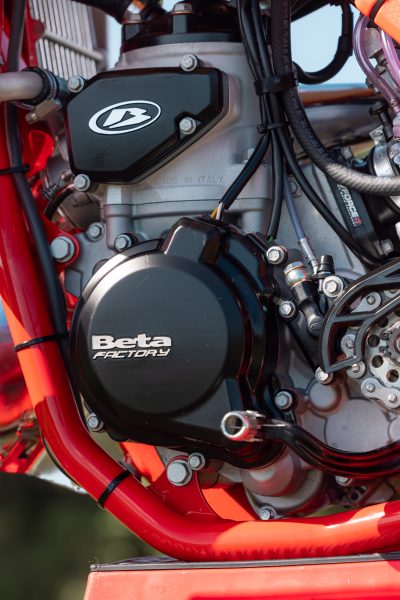
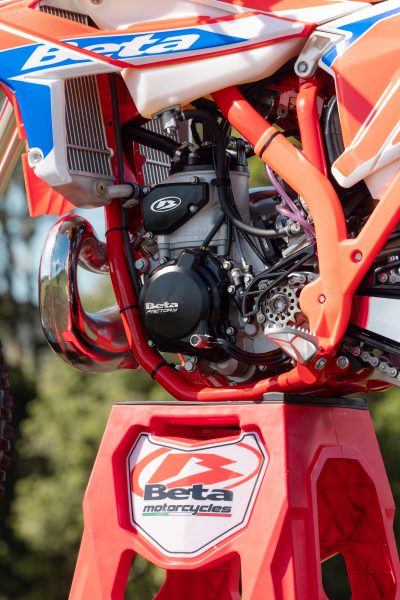
To achieve this, the 350 runs a longer stroke and a larger bore. It also features Beta’s twin–spark plug cylinder head, designed to enhance combustion, this setup is exclusive to the 350. Importantly, the 350 is not just a 250 with a bigger piston. It’s a purpose-built 350cc engine with its own exhaust system, power valve, mapping, carb settings, gear ratios and final-drive ratios.
While the 350 and 250 share the same gearbox, the final-drive ratios differ to suit the bigger capacity. The 350 runs a 47-tooth rear sprocket – three teeth smaller than the 250 – to help smooth out the power curve. The piston is 11.6mm larger, and the stroke is 1.6mm longer.
Beyond the engine changes, the 2026 350 chassis also receives a new cast-in brace to strengthen the frame around the steering neck. It comes fitted with a non-O-ring chain for reduced weight and smoother operation, and uses an aluminium subframe paired with a dedicated motocross chassis.
Suspension is handled by trusted KYB components front and rear: a 50mm link-type monoshock in the back and 48mm air-over-spring closed-cartridge forks up front, tuned and sprung specifically for the weight and behaviour of the 350 engine.
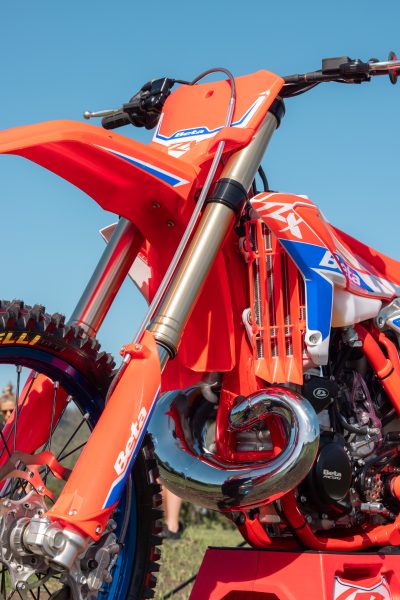
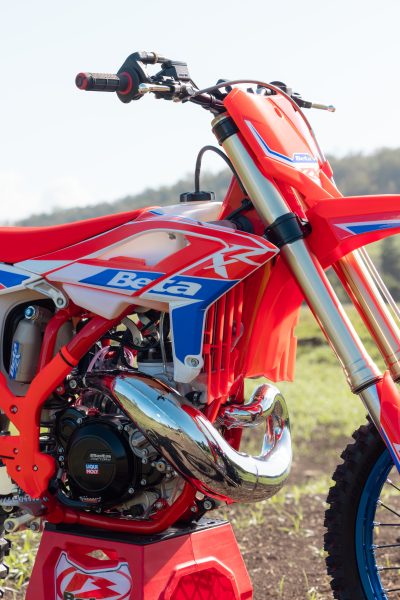
The exhaust system, although visually similar to the 250’s, features a larger expansion chamber and a bigger-diameter silencer core. Even the power valve setup is different, with a unique valve flap size and spring rate to match the 350’s power curve.
The Beta engine retains its diaphragm clutch, five-speed gearbox and Keihin PWK 38 carburettor; jetted, naturally, to suit the larger 350cc capacity.
Track time
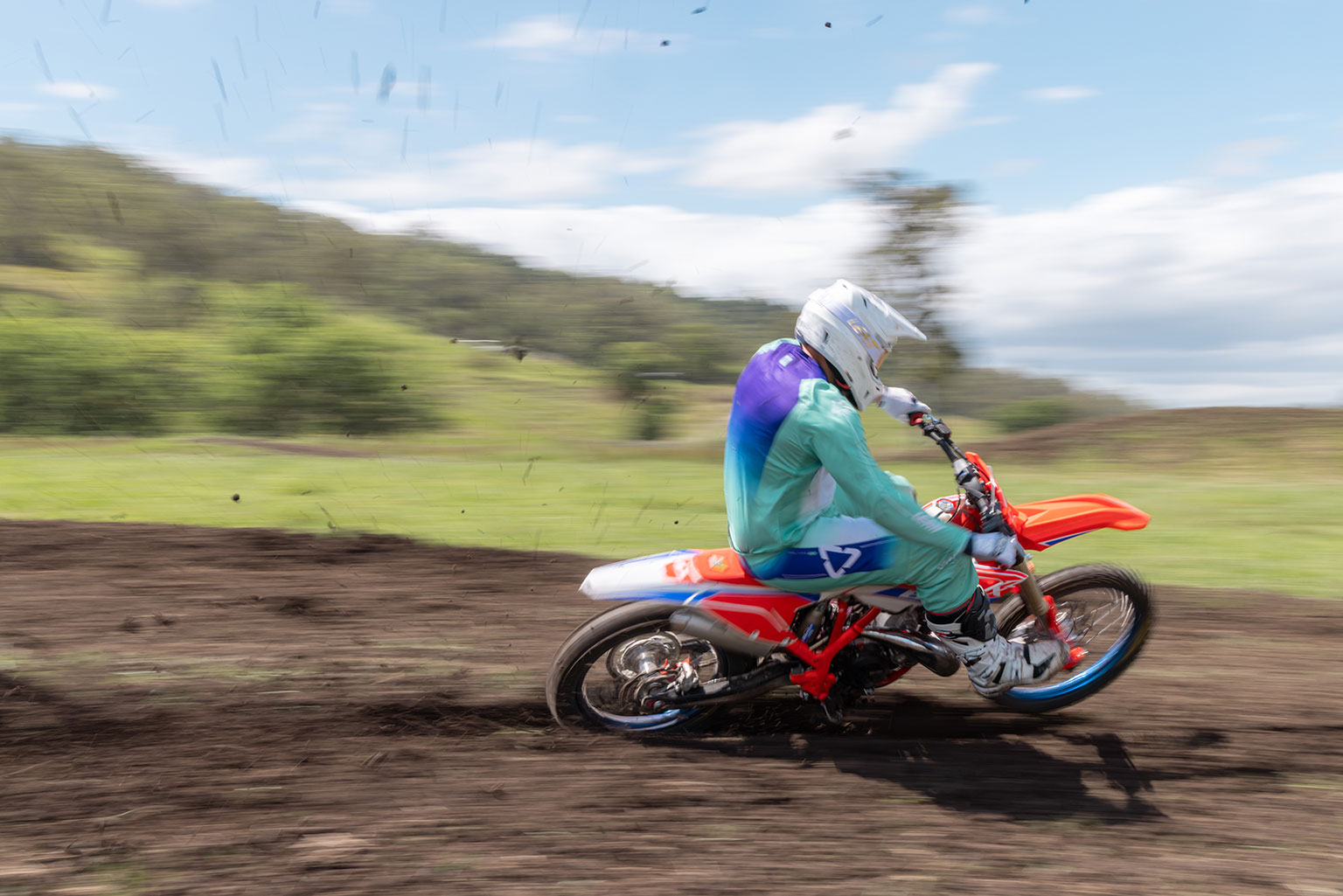
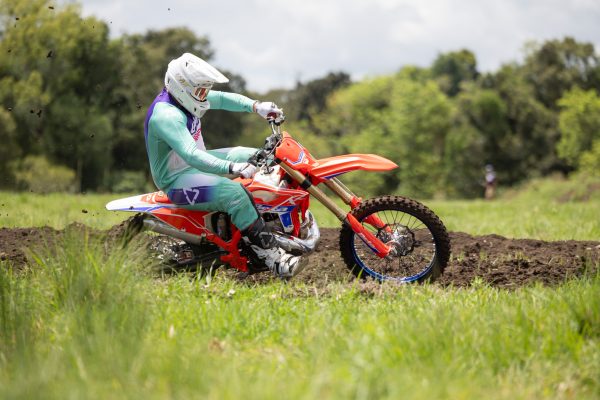
On the track, the 350 is a pleasure to ride. The flat seat–tank junction gives you plenty of room to move, and the gripper seat adds loads of traction to your rear end. The bar-to-seat and seat-to-peg ratios are very comfortable, providing ample space without making the bike feel big or bulky. The entire frame and chassis layout is extremely well balanced and a real credit to Beta’s engineering. Even the ergonomics and plastics are comfortable, with no sharp lips or edges waiting to catch your boots or pants.
The steering on this bike deserves special mention. It’s incredibly easy to tip into ruts and throw around off jumps. However, you do notice the extra inertia from the 350 engine compared to the 250. The KYB suspension has a plush, smooth stroke with a noticeably soft initial part of the travel. It’s comfortable across a wide range of conditions, and perhaps the greatest strength of the KYB setup is its predictability, you always know exactly what it’s going to do, no matter what situation you throw at it.
While I think this suspension will suit a wide variety of riders, I personally would have liked a little more compression valving in the stroke. That said, it never took away from my enjoyment of the bike or stopped me from hitting any of the jumps all day long. I just had a few bottom-outs on some of the harder hits and flat landings.
Two-strokes are often unstable at high speed and can feel flighty through choppy bumps, but to my surprise, the Beta 350 handles all of this like a modern four-stroke, very solid and planted. The diaphragm clutch has a lovely action and provides a precise, accurate feel at the lever. The brakes, front and rear, are strong. In an age where many brands are moving towards a spongier feeling front master cylinder, I personally prefer the solid lever feel that Beta delivers.
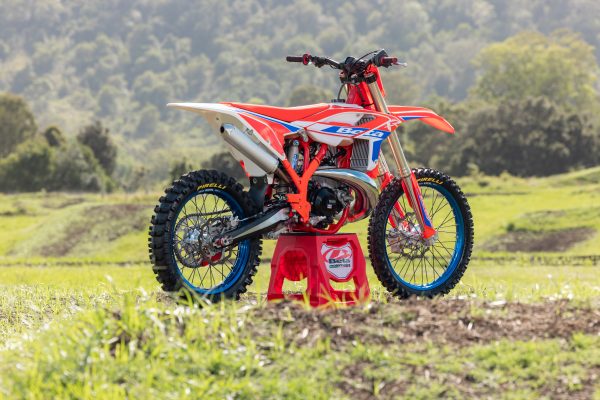
Power-wise, the 350 has a very strong mid-range and pulls well through the revs all the way to the top. If you keep the engine in the meaty part of the powerband, the 350 absolutely hauls. The only issue I had was that it’s a little soft right off the bottom, almost a slight lag off idle. If you keep the revs up in the corners and don’t let it drop back to idle, it’s barely noticeable. But for a 350 two-stroke, I expected the bottom-end hit to be more like a light switch. After all, Beta’s motto is “rideability,” and perhaps they weren’t aiming for the aggressive character I personally would’ve liked.
My expectation of a 350 two-stroke is a bike that yanks at your arms, gives you a fright, and leaves you with a big smile – it’s not supposed to be easy to ride. That’s part of the charm. Overall, though, it’s hard to fault the chassis at all. Beta has clearly done their homework and produced a motorcycle that is both easy and extremely enjoyable to ride. Even though the bike is Italian-made, it doesn’t have a foreign or unfamiliar feel; it feels and handles exactly the way I’d expect, and demand, a high-level motocross bike to feel.
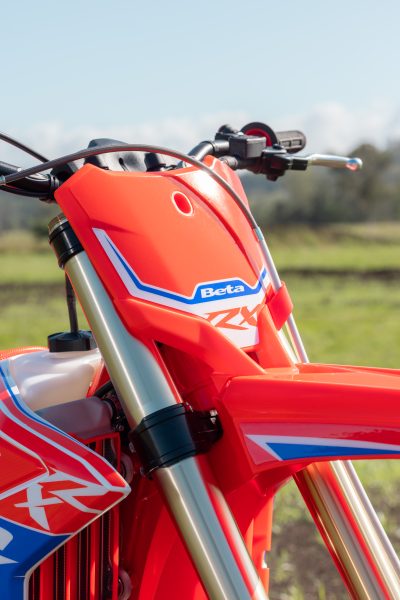
What Did We Change?
I couldn’t help myself, I had to find out how aggressive we could make the Beta 350. We went one turn in on the power-valve adjuster and fitted a 50-tooth rear sprocket in place of the standard 47-tooth. This made the 350 drastically more aggressive. The power was instant, right from the first crack of throttle. The bike launched out of corners and delivered an immediate hit that meant you had to be ready for it and hanging on.
However, it also meant more frequent gear changes. I found that because I was trying to use third gear a lot more with a lighter amount of throttle, the bike felt lean on the needle. We actually had to go one clip richer to fix this problem. All these modifications moved the power in the perfect direction for me. It made the bike much more aggressive and made it feel exactly the way I would expect a 350 two-stroke machine to feel.
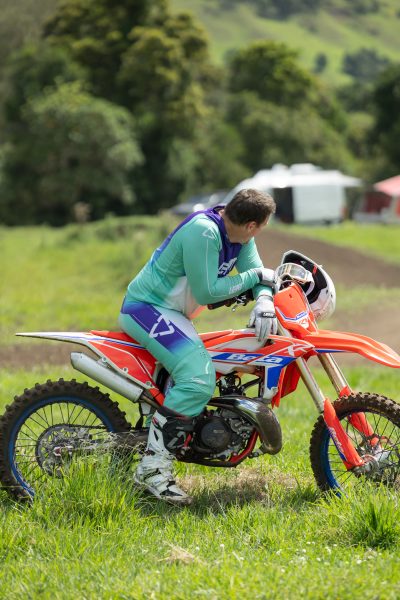
It also allowed me to carry and lug third gear through turns where previously I couldn’t. However, if you are a novice rider or don’t have strong throttle and clutch control, these modifications could absolutely get you into trouble and become a negative. You could also choose to meet in the middle and fit a 48- or 49-tooth rear sprocket to clean up the bottom-end response without making the 350 overly aggressive.
For me, I wanted to feel my heart beat when I rode the 350, and a 50-tooth rear sprocket definitely gave me the feeling I was chasing.
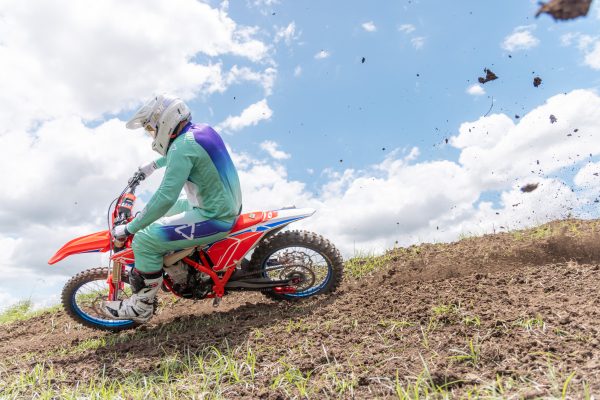
Where Does the RX 350 Fit?
The Beta RX 350 is a top-quality Italian machine that performs and handles amazingly, but in my honest opinion, it’s an excellent bike for anyone simply looking to have loads of fun riding. I’m sure that as more people get the chance to experience them, their numbers will grow and we’ll see more and more of them around. I even expect to see them at local races and ride parks, with people enjoying that big-bore two-stroke feel. But I don’t expect them to make any great resurgence on the professional racing scene.
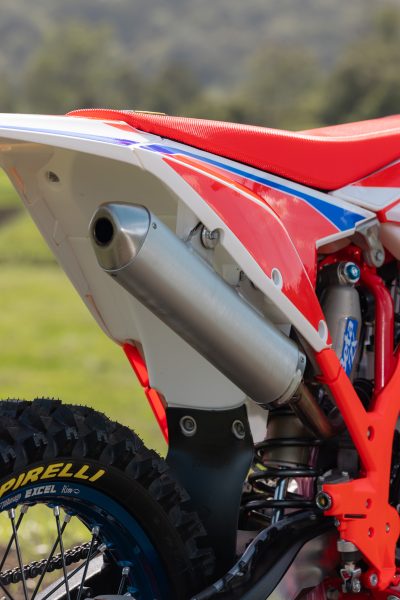
They’d have to line up in the MX1 class against 450cc four-strokes, bikes that are easier to ride fast for longer, which will always lead professional racers to stick with a four-stroke over a big-bore two-stroke. In saying that, I’m sure we could see some local guys at club races absolutely ripping on them and winning motos. I wouldn’t even be against seeing a privateer make a Supercross main, throwing whips and revving the two-stroke for the crowd. The hype behind that would be incredible.
If you’re someone who loves two-strokes and simply wants to enjoy riding, maybe do a few club days and local races with your mates, then I think the Beta RX 350 will blow your mind and you’ll fall in love with it real fast. I put myself in that category these days, and I would absolutely love ripping up the local tracks on the RX 350.
2026 Beta RX350
Engine
- Type:7 cc, Single-cylinder, liquid-cooled, 2-stroke
- Bore & Stroke:78 mm x 6 mm
- Compression Ratio:45:1
- Exhaust Valve:BPV system
- Starter:Electric
- Induction System:Reed valve induction
- Lubrication:Pre-mix
- Carburettor:Keihin PWK 38
- Fuel Tank Capacity:7 L
- Clutch:Hydraulic Wet multi-disc
- Transmission:5 gears
Chassis
- Frame:Molybdenum steel double cradle with quick air-filter access
- Wheelbase:1482 mm
- Seat Height:945 mm
- Ground Clearance:340 mm
- Dry Weight:0 kg (Front 48 kg / Rear 52 kg)
Suspension
- Front Suspension:48 mm KYB AOS Closed Cartridge with adjustable compression & rebound, 305mm travel
- Rear Suspension:KYB 50 mm body with adjustable rebound and high/low-speed compression adjustment, 300mm travel
Brakes & Wheels
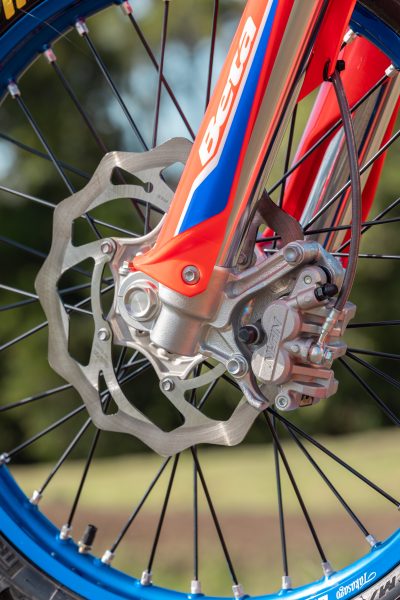
- Front Brake:Nissin Wave disc ø260 mm with double-piston floating caliper
- Rear Brake:Wave disc ø240 mm with single-piston floating caliper
- Front Tyre:Pirelli MX32 90/90-21
- Rear Tyre:Pirelli MX32 120/80-19
Price & Contacts
RRP: $15,495 Ride Away
Browser: www.betamotor.com.au
Warranty: 3 months
Quick Facts
What it is: A bona-fide big-bore two-stroke motocross machine from Italian brand Beta Motorcycles, combining high-revving 2-stroke thrills with smoother, more linear delivery.
Engine highlights: 351.7 cc single-cylinder, 78 mm bore × 73.6 mm stroke, dual-spark plug head, liquid-cooled and tuned specifically for the 350 capacity.
Chassis & handling: Molybdenum steel double-cradle frame, aluminium sub-frame, KYB 48 mm closed-cartridge front forks and 50 mm link-type rear shock. Balanced and planted on track.
Why it matters: It toes the line between modern motocross performance and old-school two-stroke character. The 350 allows you to carry gears, enjoys mid-range grunt, yet stays manageable and fun.
Who it’s for: Riders who want the rumble and zing of a two-stroke but with usable power and an agile chassis, perfect for club racing, serious play days or just ripping for fun.
Limitations: While potent, it may not replace a 450 four-stroke in pro MX1 class settings; bottom-end could be sharper for some riders.
Bottom line: The RX 350 is Beta’s bold statement in the two-stroke world: fun first, serious performance second. If you’re chasing smiles as much as timesheets, this is your kind of bike.