I bought the bike off Facebook, about two hours away from me. It had a locked-up motor when I got it, so the first step was tearing it down to see what went wrong. The piston was broken, and the cylinder was scored and gouged. I sent the cylinder to Millennium Technologies to be replated and to have the piston and head matched. That job kicked off what would become a full-blown rebuild.
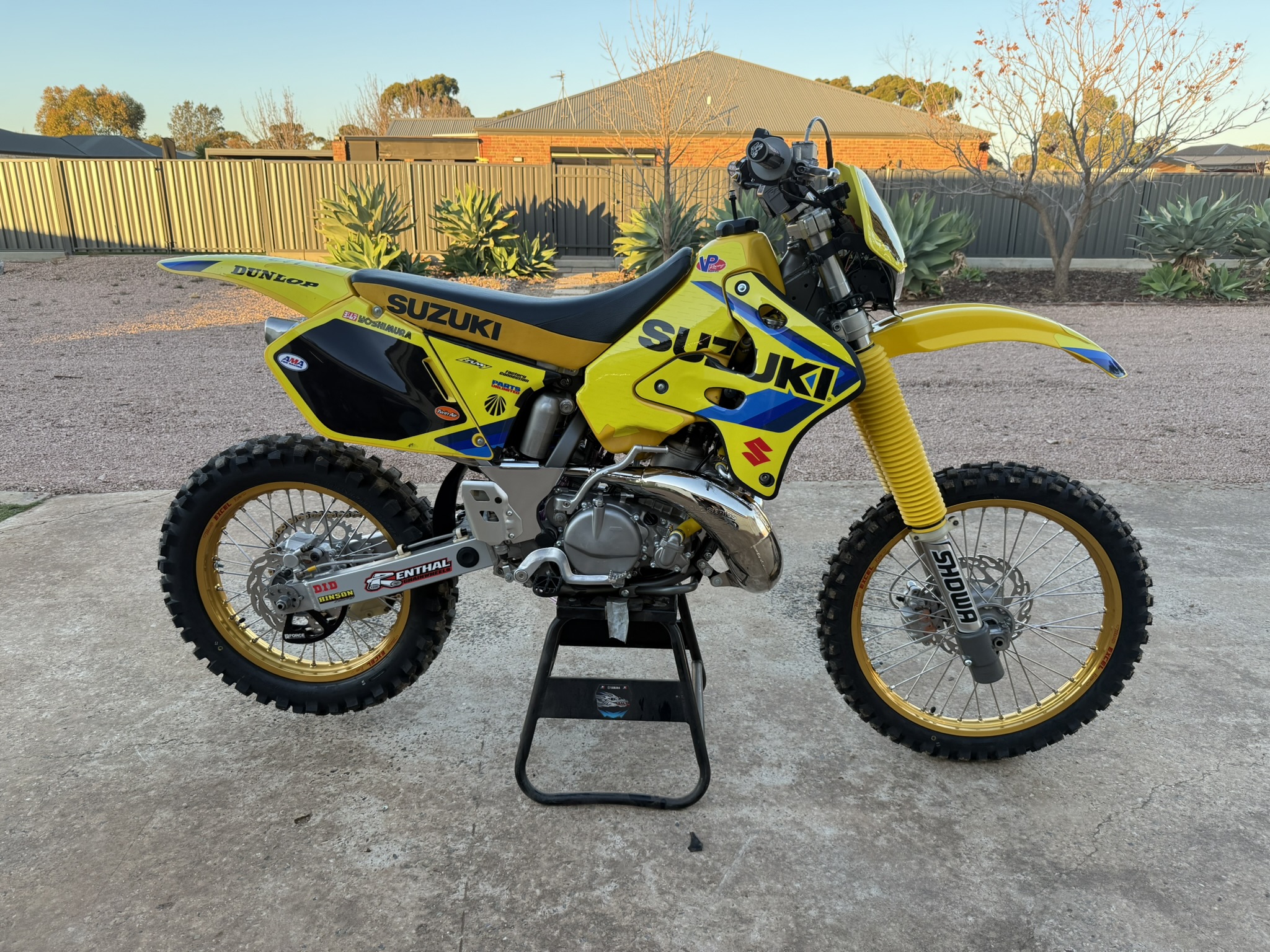
I stripped the bike down to the frame – every nut and bolt came off. I rebuilt and replaced all the brake components and suspension using All Balls Racing and Race Tech parts. Every bearing, bushing, and seal in the bike was swapped out, and I added nickel hardware throughout from Specbolt. I replaced the levers, radiator hoses, brake and clutch lines, and the rear master cylinder clevis with parts from AS3 Performance. For handlebars, I went with Phoenix, paired with ODI lock-on grips – hands down my favourite setup. I also added a few bolt-ons from Works Connection.
Decals were a tough decision, but the guys at Decal Works made the process easy and enjoyable. Tyres were a no-brainer – I always run Dunlop. I went with Warp9 wheels and hubs for their customisation options. Exhaust-wise, I fitted an FMF header pipe and shorty silencer – I’ve always liked their systems. To give it a little extra punch, I installed Moto Tassinari VForce reed valves.
I had the carb cerakoted and then polished the top and bowl to a mirror finish. I topped it all off with a Thrill Seekers seat cover, which is sticky and feels great. A heap of the bike’s parts were also cerakoted, and that finishing touch really brought the whole build together – giving it a unique look that reflected my own design and style.
The last Zook
The 2000 RM250Y was one of the later versions in Suzuki’s legendary RM250 line. Coded “Y,” it represented a refined point in the model’s evolution before the two-strokes began to fade from factory racing.
Powered by a 249cc two-stroke single-cylinder engine producing roughly 45 horsepower, the RM250Y weighed around 97.5kg wet. It used a 5-speed gearbox and Suzuki’s PEI (Pointless Electronic Ignition) system, which gave the motor its signature snappy throttle response. The engine featured a six-port scavenging design with a power reed valve for smoother delivery across the rev range. The chassis had matured by this point, offering a good balance between stability and agility – something riders still rave about today.
The RM250 series ran from 1976 to 2008, and the 2000 model sits right in the sweet spot: the peak of development before emissions laws and four-stroke dominance took over.
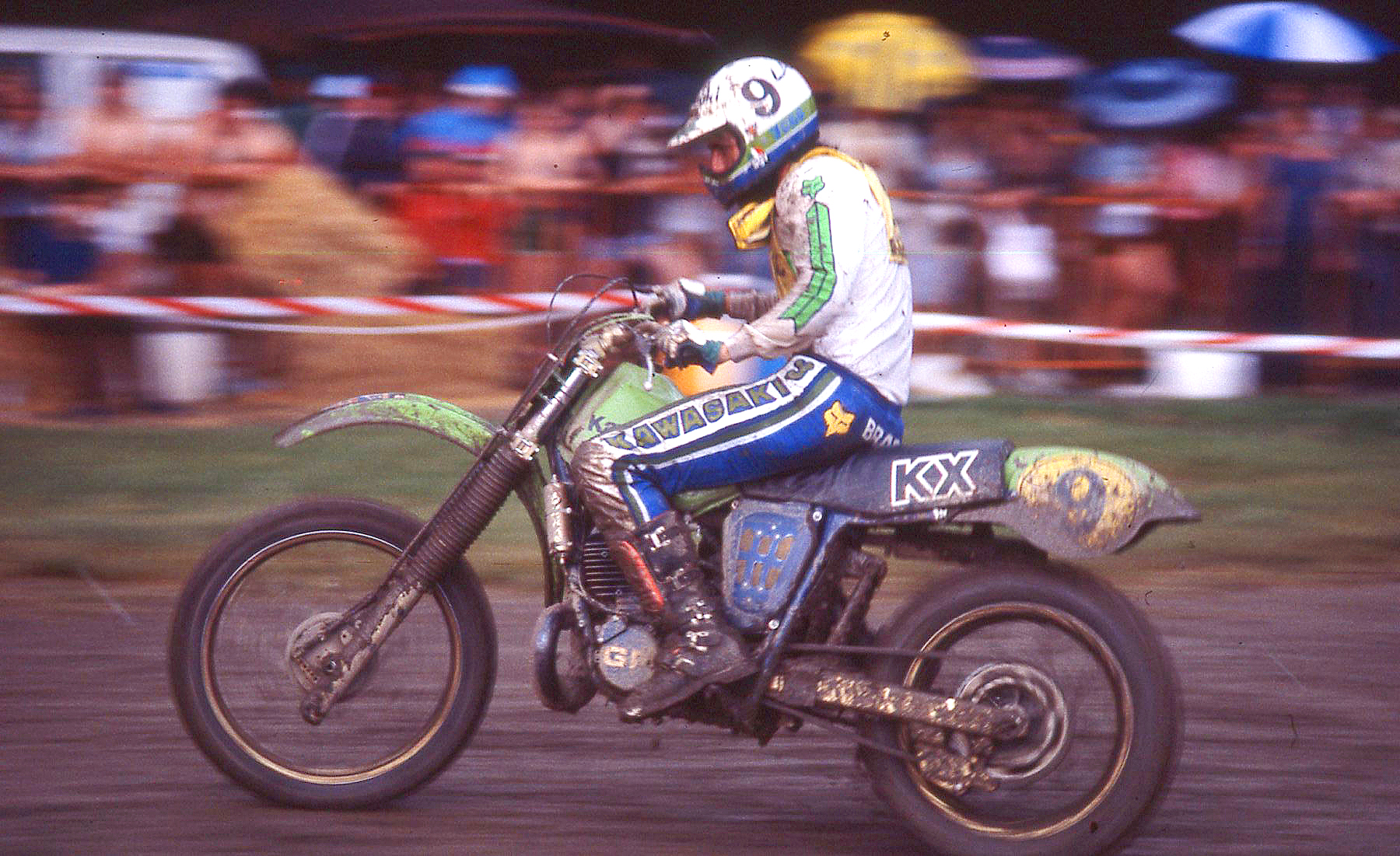
South African motocross legend Greg Albertyn raced a factory-prepped 2000 Suzuki RM250 during the AMA Pro Motocross season that year. His No. 1 machine was tuned and maintained by long-time mechanic Joe Maurer.
Albertyn had just come off his 1999 AMA 250 Motocross Championship – Suzuki’s first major U.S. outdoor title since the mid-1970s – and the 2000 RM250 carried the weight of that success. The bike was built using extensive factory components: titanium bolts, race-spec suspension, and a finely tuned motor aimed at reducing weight and improving throttle precision.
Although Albertyn’s 2000 season was interrupted by injury – he broke his femur during the supercross series – he returned to compete in the outdoor nationals aboard the RM250, showing flashes of the same speed and determination that earned him his title before retiring at the end of the year.
5 things we didn’t know about the bike
- I took a lot of time using Pryme MX cleaning wheels to clean and polish every part you see – and even the ones you can’t.
- For the cerakote colors, I wanted to create a look that reflected my own unique design.
- The graphics from Decal Works feature a matte finish with my custom design.
- I used nickel hardware throughout the entire bike.
- The front fender and number plate are from a 2010 RM-Z250.