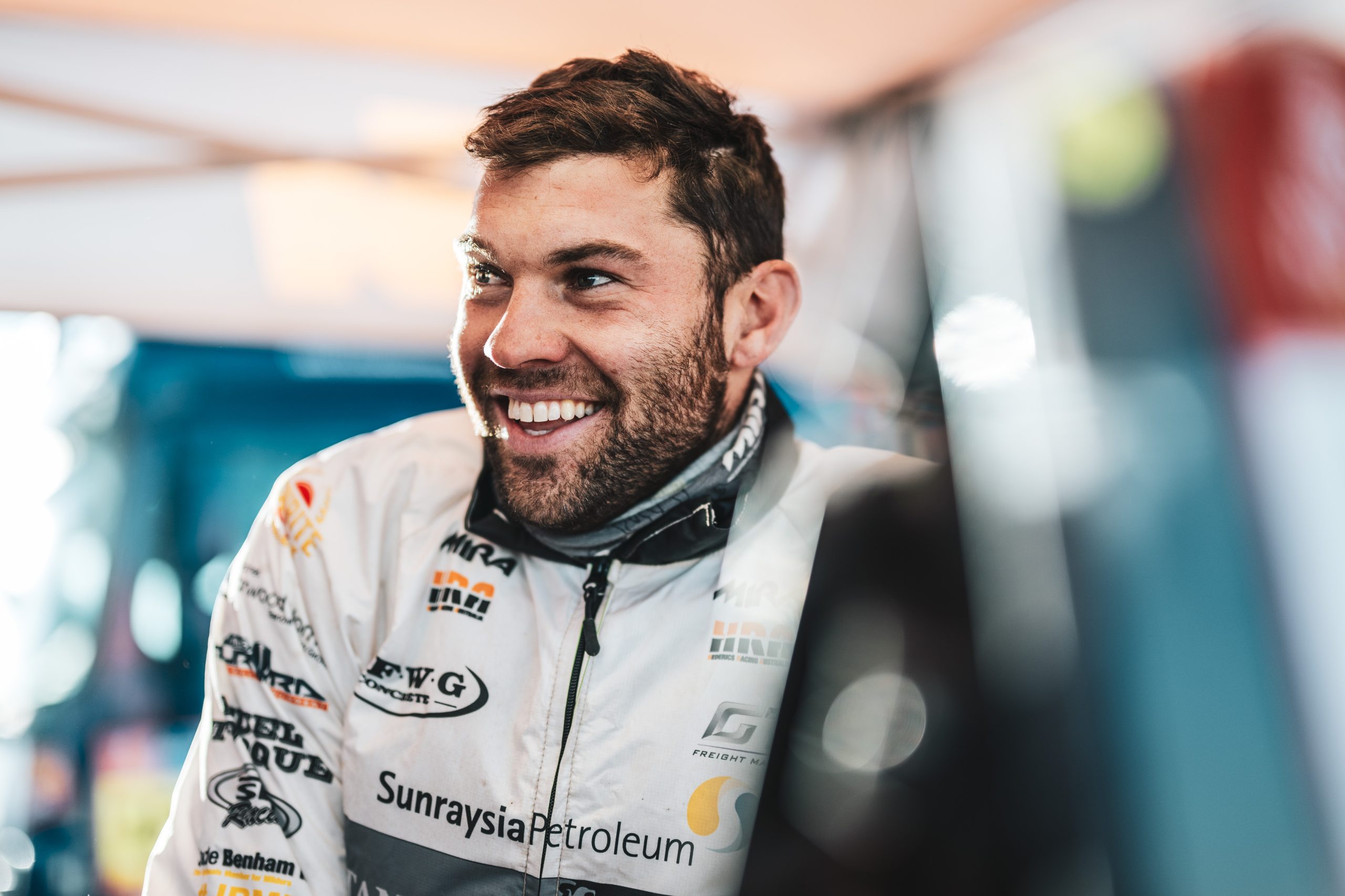
Last issue we caught up with Dakar competitor Toby Hederics to ask just what it takes to get ready to race an event like Dakar. It was insightful and helpful for those of us watching on from the comfort of our home as the 2026 Dakar Rally unfolded.
With the 2026 edition now wrapped up, we thought we’d sit down with Hederics again to talk about what his experience was like when he lined up for the big dance.
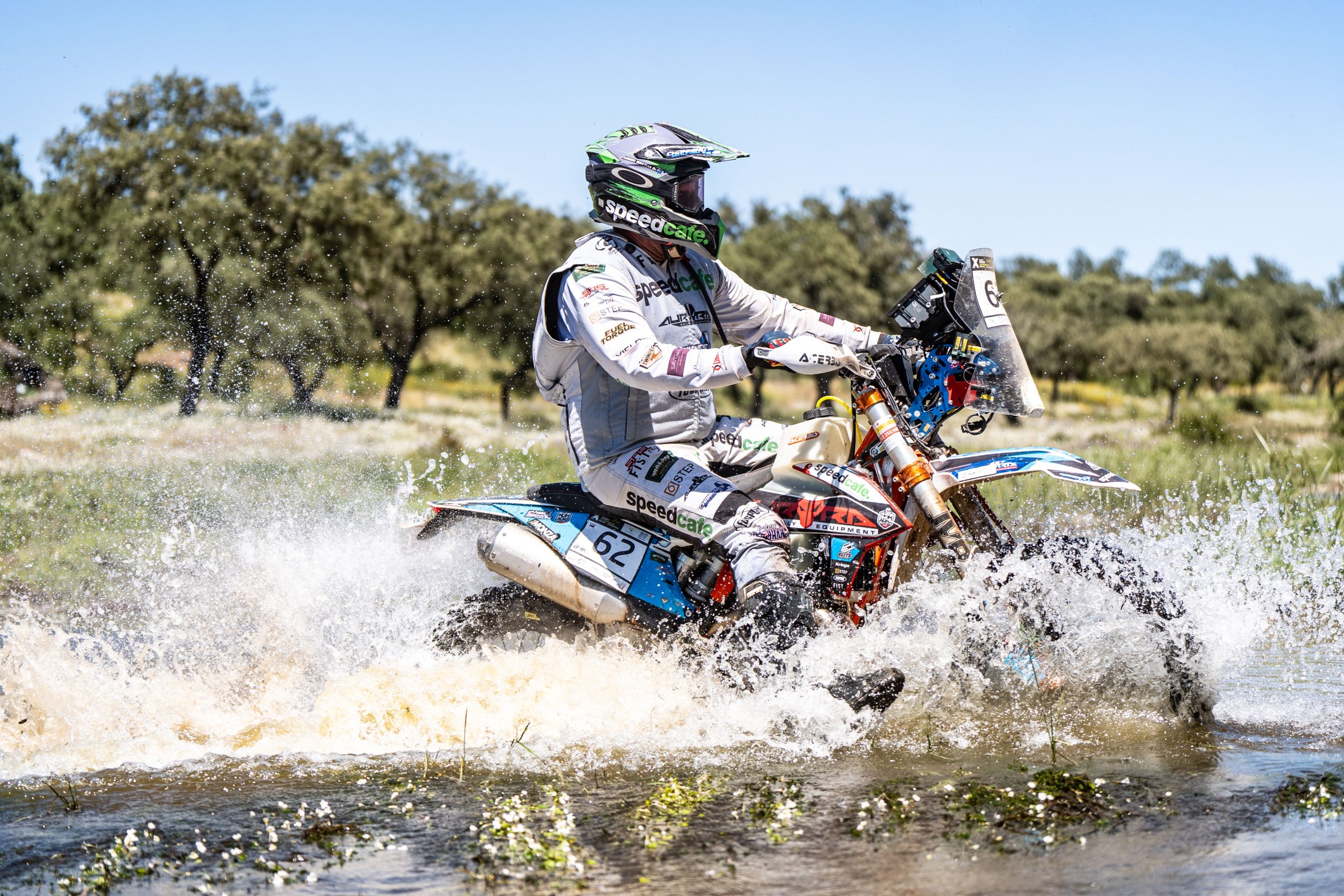
“One morning at Dakar, I lined up to start my stage. Behind me was a line of pro racers, Ricky Brabec (two-time Dakar winner), Luciano Benavides (KTM), Skyler Howes (Honda HRC) and Ross Branch. Looking back, I’m thinking, I’m a f**ken landscaper from Mildura, what am I doing here? This is ridiculous” Hederics said.
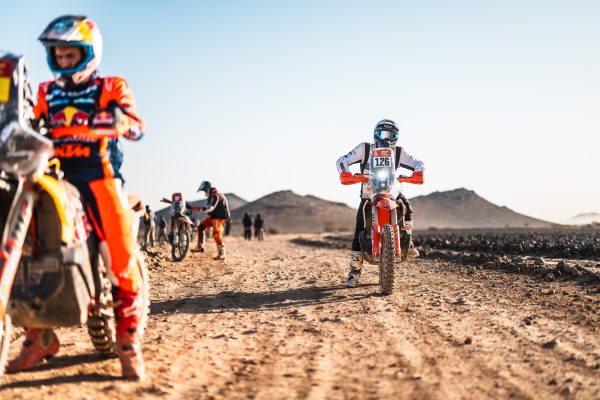
“Dakar is such a big event, you can’t help but feel nervous. You have to battle the overwhelm. But Daniel “Chucky” Sanders is such a confident guy, you can feel it. I’d pull up at the start line of a Dakar stage with plenty of time to talk, and we’d chat nearly every morning. He was so cool, calm and collected. I remember thinking, this guy is battling for the lead and he’s completely chilled out, what have I got to worry about?
“It really calmed me down and settled my nerves. Watching him, he gave off the feeling that it was just a Sunday ride. It was nice to have him there and see him dominate, super special.
“One of the amazing things about rally racing on bikes is that you mingle with the pros, not just at the start line, but out on the track as well. It’s the rawest form of motorsport. Yes, Chucky and the others have factory bikes with more power and better suspension, but once you’re out there racing, one navigation mistake and they could drop five minutes, and suddenly I’m on their tail. It’s a great leveller.
“You have to leave your ego aside. You’ll have an off, or you’ll get lost. It’s essential to be humble, level-headed and calculated. If you’re reading your podium speech in your head while riding, there’s a fair chance you’re going to come unstuck pretty quickly.
“In Saudi Arabia, the dunes are far more technical and physical than they look on TV. For the first 20 kilometres it’s fun, but after that you’re thinking, when is this going to end?
“A lot of the footage you see is in the rolling dunes, which are enjoyable to ride. But the majority of them are nasty, with steep, windblown drop-offs that are incredibly physical and demanding. That’s where I struggled the most. A lot of the pros train over there, so they’re fast in the dunes. They prefer it.
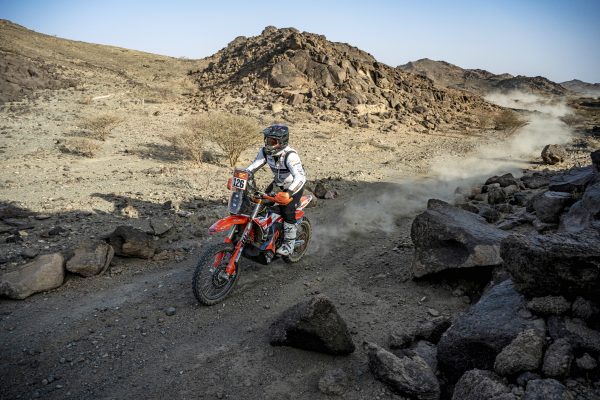
“In the rocky terrain and on tracks, I was stronger. You can see why the event is held there: open deserts, rocky passes, belts of sand dunes, canyons, it varies so much compared to Australia. Obviously, we’re flat out most of the time and don’t get much chance to take it all in, but the photos don’t do it justice. From what I’ve seen, the real thing must be on another level.
“You definitely get fatigued. When you crest a sand dune and think, oh no, we’re not getting out of this for at least another 50 kilometres, it’s very tough.
“I really tried to focus on breaking things down. If you can’t see your way to the end of the day, picture the next fuel stop. If that’s too far away, look at the next 50 kilometres. If that’s too much, focus on the next 10 kilometres, or even just the next note or the next dune to cross.
“You can’t sit on the start line of Dakar thinking about the finish line. Each day you just tick things off: get up, eat breakfast, done. Hop on the bike. Get to the start line. If you try to take it all in at once, it’s too much. You have to break it down into achievable chunks. That takes mental maturity.
“It sounds easy to say, but once the helmet is on and you’re out there in the vast desert, tired, maybe after a navigation mistake, it’s very easy to get overwhelmed. It’s when you stop and have time to think about the size of the undertaking that you feel the pressure. On the bike, at least, you’re focused on one section at a time.
“International rallies are completely different to Australian rallies. Overseas, you’re riding point-to-point, following waypoints and compass headings. Here, it’s very much “follow that tulip and take the road they tell you to take”.
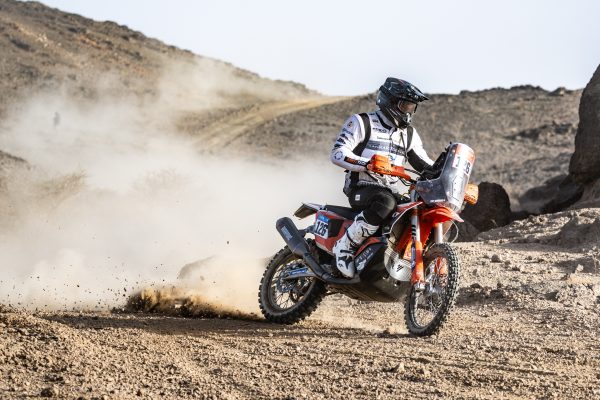
“Overseas, the roadbook gives you headings rather than precise drawings. In Australia, you might have an intersection clearly drawn, telling you to take the third road, it’s written and obvious. But overseas, the drawing might show a 90-degree arc when the actual turn is closer to 30 degrees. They don’t care about the diagram accuracy because they’ve given you the compass heading, and that’s what you follow.
“FIM rally roadbooks also offer far more information, which adds to the mental load. You’re processing more data and need to quickly decide what’s important. At the speed you’re riding, you simply can’t read everything. Unless you know a tricky note is coming up, you just grab enough information to stay on track, usually the cap heading, and that’s it.
“This is where training really comes into play. You need to be fit enough on the bike that you’re not thinking about riding, only navigating.
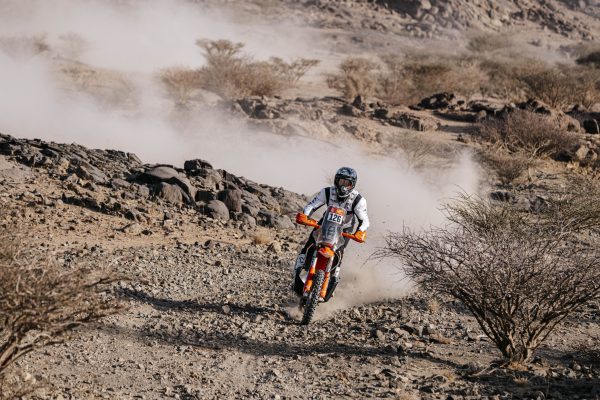
“Take Chucky as an example. He’s so fast and comfortable on the bike that even when he dials it back, he’s still faster than most. Then he keeps his navigation clean. He can lead and win stages because he’s completely at home at pace. I honestly felt that if someone got close to him, he had another 10 per cent in reserve. He could elevate whenever he wanted, he just didn’t need to.
“A rally bike weighs 30 to 50 kilograms more than an enduro bike, so you have to adapt your riding style. The biggest thing is stopping distance, they don’t stop on a dime like an enduro bike. You need to factor in an extra 50 metres or so, and when you pick a line, you’re committed. You can’t correct mistakes mid-line like you can on an enduro.
“Your body weight also has less influence relative to the bike. Body position is still important, but it doesn’t affect turning as much. It’s more about managing the bike than muscling it. You need to respect it and keep something in reserve, if you get it crossed up, forget about it.
“Fuel management becomes second nature too. We start on the rear tanks, draining them down but leaving around five litres before switching to the front tanks. Over time, it just becomes instinct.
19th Overall, 2nd Rookie in 2025, What’s Next?
Honestly? I don’t know, mate. If someone said, here’s the funding, would you like another shot?, it’d be very hard to say no. The bug has definitely bitten.
At the same time, I achieved what I set out to do, and it was huge fun not having pressure on results, just on finishing. I had some informal chats with manufacturers. KTM are really only interested in riders chasing number one; they tend to pick the fastest motocross or enduro racers and teach them to navigate, and that’s not me.
Kove and Sherco are poaching riders from the KTM BAS team, which I rode with, but they’re more focused on the European market. Australia is small in comparison. A couple of brands indicated they’d supply a bike and cover the entry fee, but then what? How much would I still need to self-fund? And what expectations would come with that?
We’ve got a second kid on the way. But the bug did bite, so who knows?