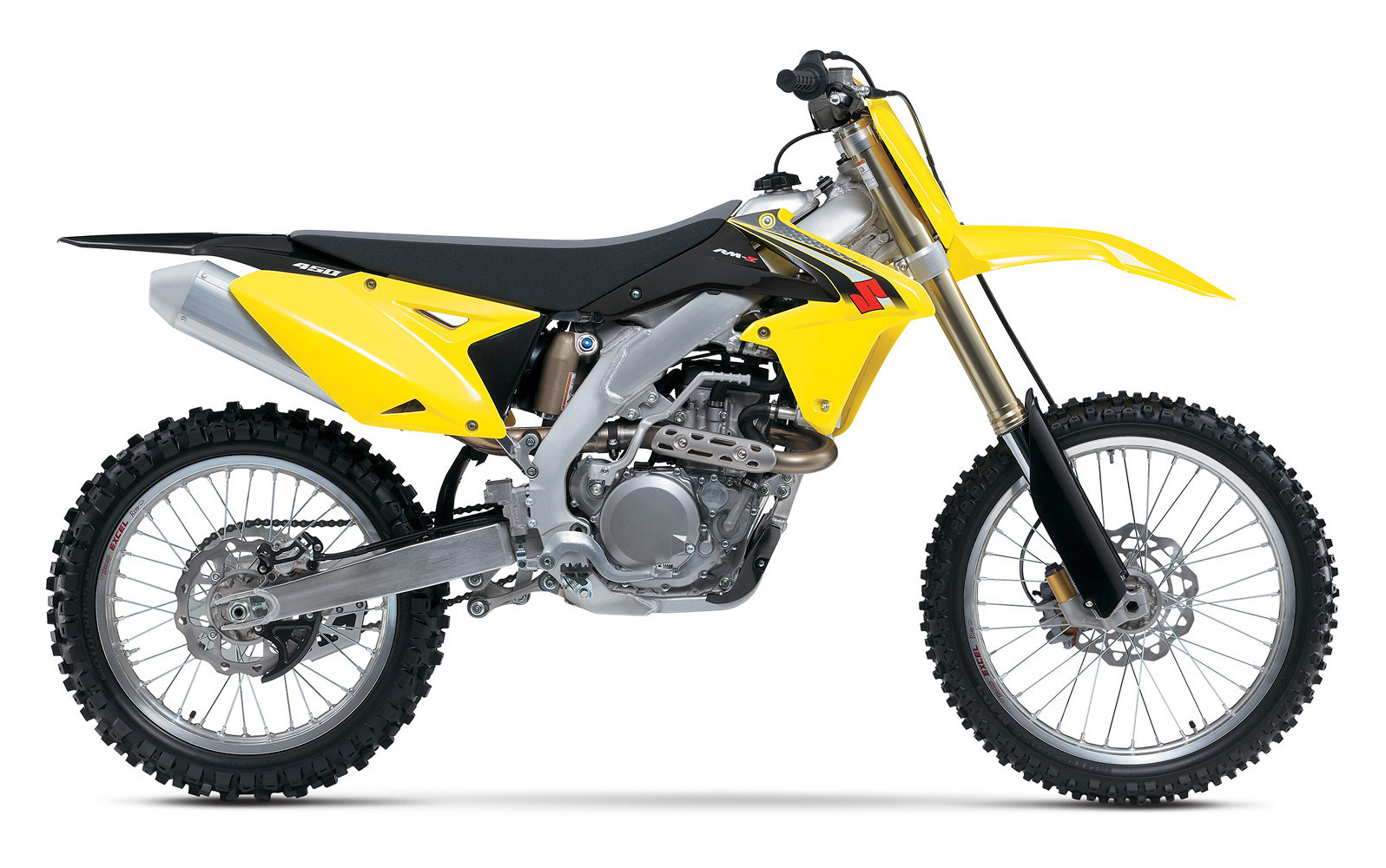
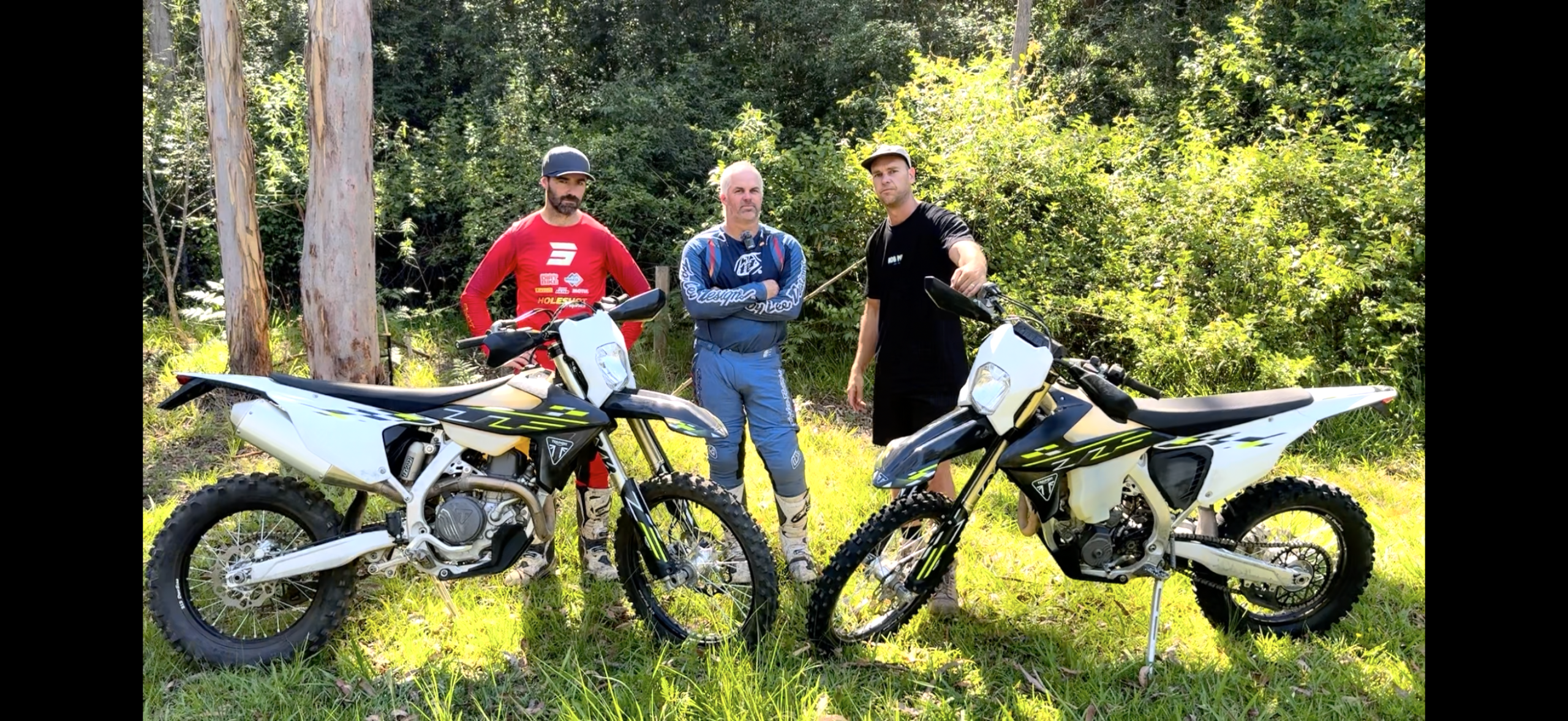
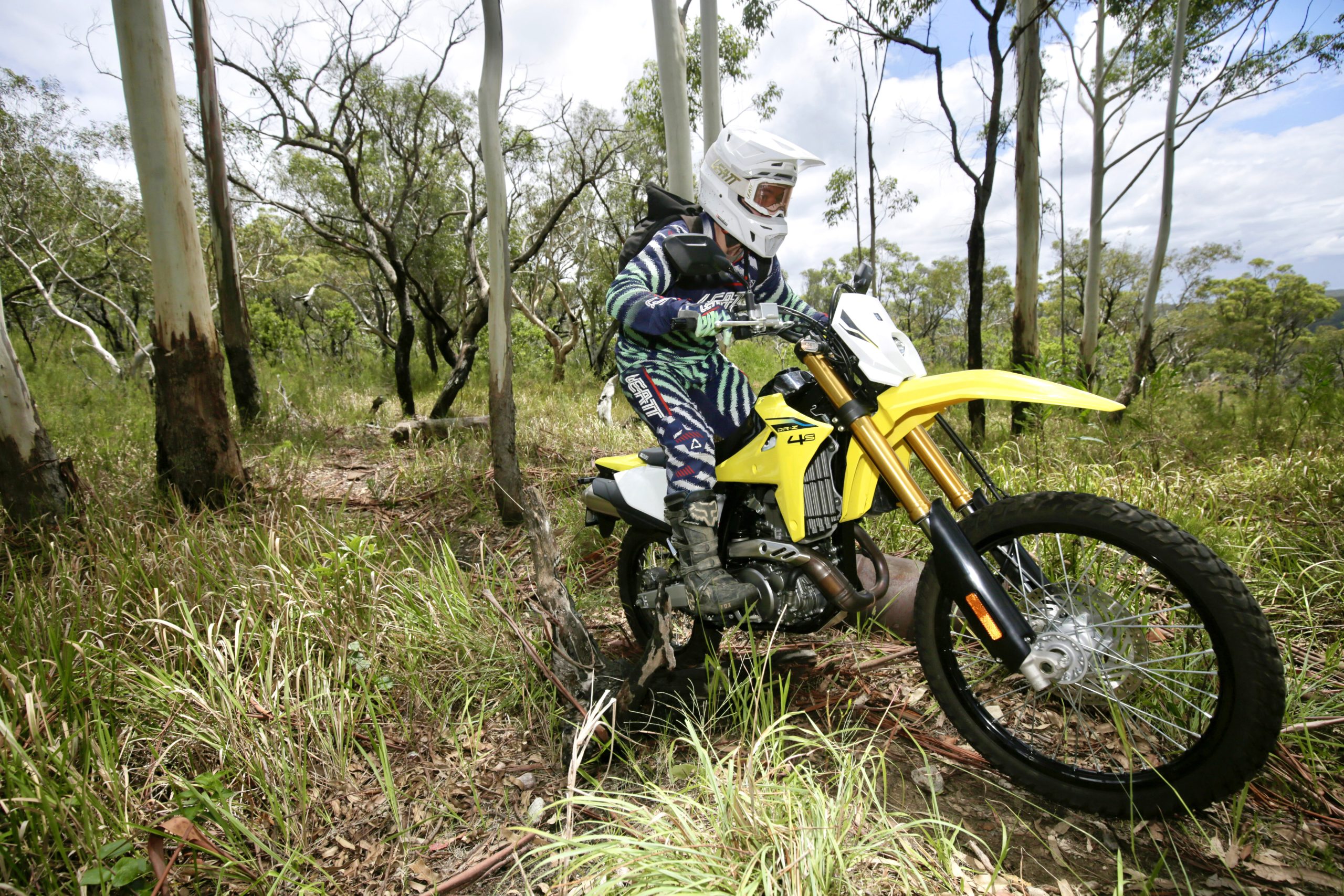
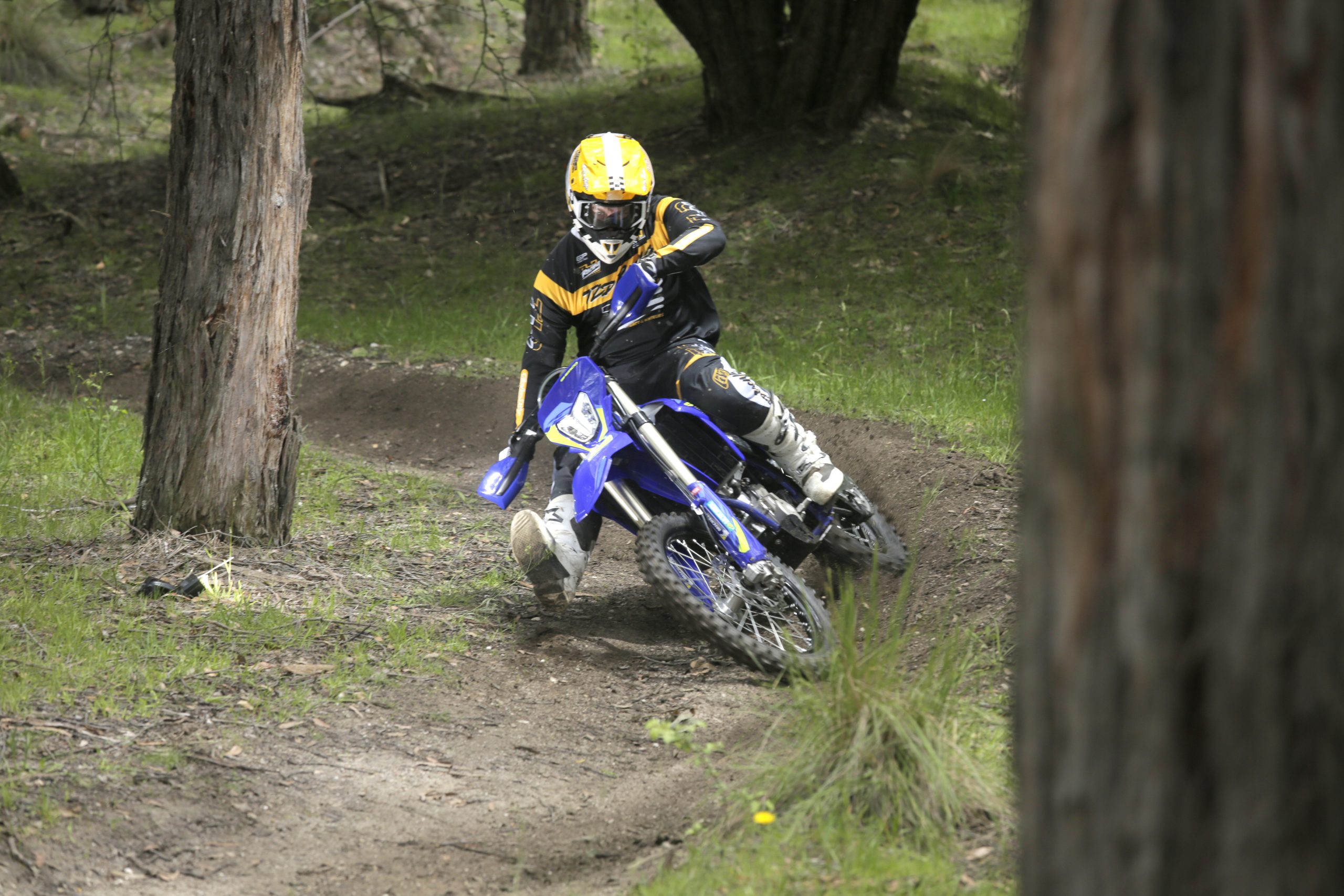
Jet skis, like the Sea-Doo RXP-350, and dirtbikes are like long-lost cousins. They’re the closest thing you’ll get to two wheels when the mercury nudges 40 degrees and it’s too hot to eat dust. When we got the opportunity to test a jet ski our first reaction was, “You know this is a dirtbike magazine right?” As the summer days wore on and the temperature continued to climb we found ourselves riding less eating more. We started looking for a good summer solution to hot days at the track and the first thing we thought of were those jet skis. Maybe a jet ski really is the marine equivalent of a dirtbike? Could it be the perfect summer substitute for riding dirtbikes?
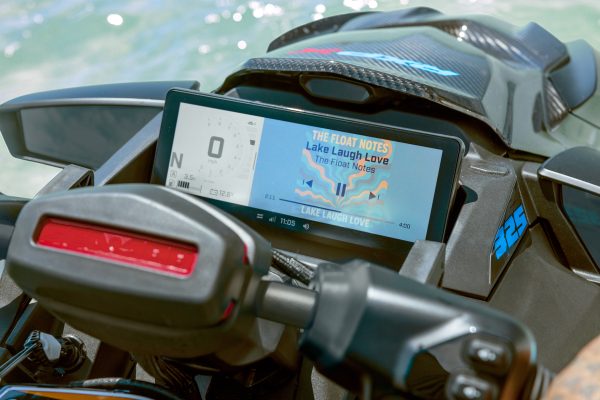
We thought we’d at least have a taste to find out so we sent our long-serving ADB rep, Todd Anderson to test the Sea Doo RXP-325, Sea Doo’s monster ski. Todd’s been part of the ADB furniture for the better part of 20 years, quietly keeping the wheels turning while the rest of us make noise about dirt bikes. He’s also spent most of his life on the water but in a discipline that couldn’t be further from jet skis. Sailing, to be exact. From the moment he could walk, Todd’s been trimming sails, reading wind, and moving across the ocean at what could generously be described as a leisurely pace.
Which is exactly why we thought it’d be funny, and genuinely useful, to put him on a jet ski. In boating terms, sailors and jet skis sit at opposite ends of the spectrum. One is about patience, finesse and letting nature do the work. The other is about noise, throttle, and getting from zero to “hang on” in a blink. So taking Todd from the slowest vessel on the water to one of the fastest felt like a natural social experiment. Call it character development.
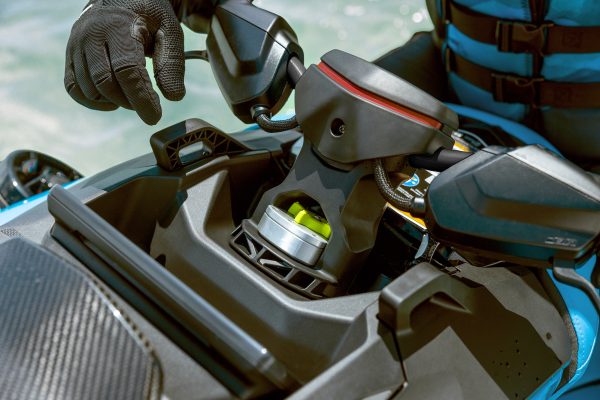
The twist is that Todd isn’t just a sailor. He’s also ridden dirt bikes his entire life. Two-strokes, four-strokes, stand-up skis, sit-down skis, if it has handlebars, there’s a good chance he’s had a crack at it. That made him the perfect test pilot for the Sea-Doo RXP-325. Not a wide-eyed first-timer, but not a jet ski tragic either. Someone who understands balance, throttle control, body position, and momentum, whether it’s on dirt or water.
So the question wasn’t just “Is the RXP-325 fast?” We already knew the answer to that. What we really wanted to know was how it feels to a dirt bike rider. Does it scratch the same itch? Does it reward the same instincts? And how does a lifelong sailor cope when you take the wind out of the equation and replace it with 325 horsepower? We handed Todd the keys, pointed him at the water, and let the slow-boat specialist loose on the fastest thing he’s ever ridden.
How they compare
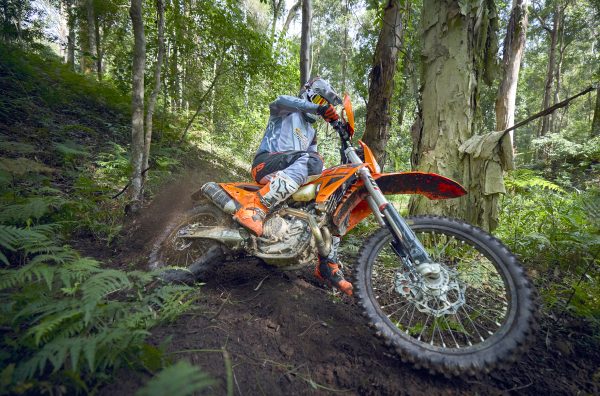
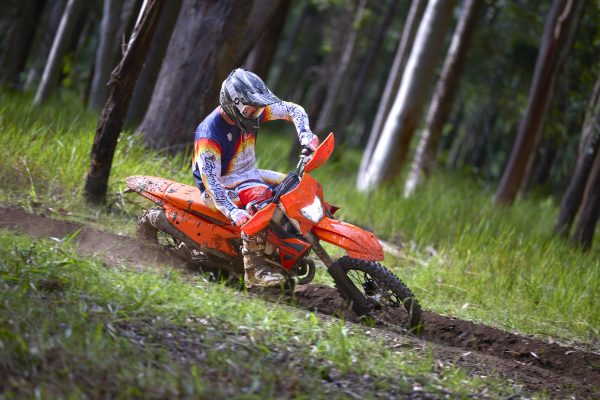
On paper, the idea of comparing a Sea-Doo RXP-X RS 325 to a 2026 KTM 500 EXC sounds ridiculous. One lives on water, the other lives in the dirt. One weighs as much as a small moon, the other can be picked up (just) by an angry enduro rider. But once you strip away the obvious differences, the similarities start stacking up quickly, and that’s where this gets interesting.
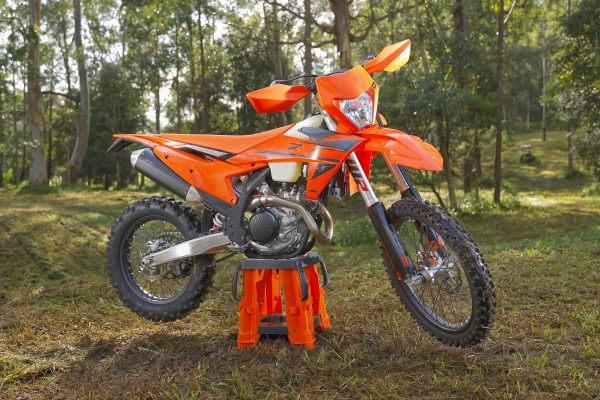
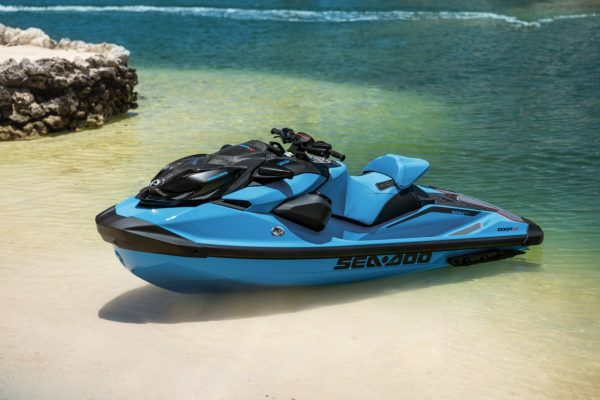
Let’s start with the basics. Both have handlebars, both have a long, narrow seat designed to be moved around on, and both are built around the idea of rider input. You don’t sit in either of them like a couch, you ride them. The Sea-Doo’s Ergolock R racing seat with deep knee pockets is conceptually no different to KTM’s slim EXC seat and tank junction: squeeze with your legs, stay locked in, and let the machine move underneath you. The RXP’s low-rise racing bars and sculpted footwells mirror the standing-attack position of the 500 EXC.
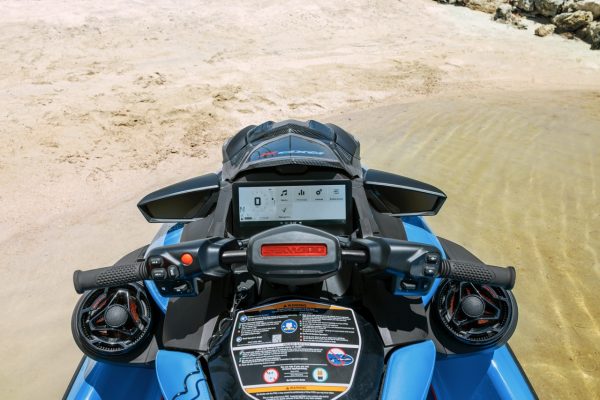
Then there’s power, and this is where both machines start laughing at common sense. The KTM 500 EXC’s fuel-injected single-cylinder four-stroke is famous for one thing: effortless torque. It’ll lug, it’ll rev, it’ll pull gears it has no business pulling, and it does it all with tractor-like confidence. The Sea-Doo RXP-325? Same attitude, different scale. Its supercharged 1630cc Rotax ACE engine punches out 325 horsepower, making it the most powerful production PWC Sea-Doo has ever built. Crack the throttle and it doesn’t accelerate so much as teleport. Just like the KTM, the trick isn’t surviving the power, it’s learning how to use it smoothly.
Technology is another crossover point. KTM’s ride-by-wire throttle, traction control, selectable maps and refined chassis are all about turning violence into usability. Sea-Doo does the same thing with iTC throttle control, launch control, extended VTS trim, and iBR braking and reverse, which, frankly, still feels like witchcraft the first time you grab brake lever on a jet ski and it actually slows down. Both machines reward restraint. Pinning either of them everywhere will end badly. Ride them with finesse and they’re devastatingly fast.
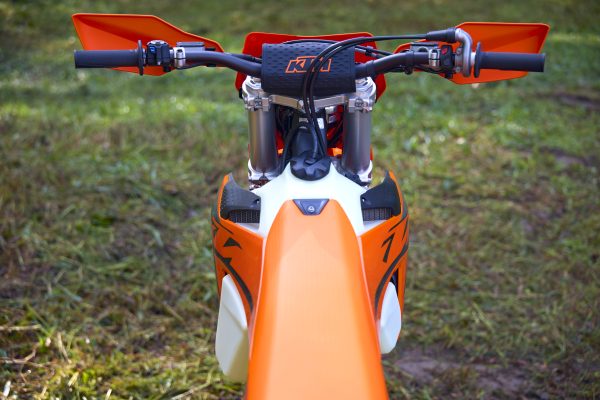
The biggest difference, of course, is consequence. On a KTM 500 EXC, mistakes are paid for in dirt naps, bent levers and bruised egos. On an RXP-325, mistakes involve skipping sideways across chop at speeds that make your brain buffer for a second. That’s why the Sea-Doo’s hydraulic steering damper, T3-R deep-V hull, and X-sponsons matter just as much as suspension valving and chassis balance do on the KTM.
In the end, the RXP-325 feels like a dirt bike that drank too much pre-workout and moved offshore. It’s aggressive, rider-focused, and demands respect, just like a 500 EXC. One rips singletrack, the other shreds open water, but both deliver that same stupid grin that comes from holding onto something absurdly powerful.
Todd’s take
The first thing that struck me when I climbed onto the Sea-Doo RXP-325 was how familiar it felt. Familiar in the way a new dirt bike sometimes does, different, sure, but instantly intuitive. The handlebars were set up so I could rest the heel of my palms comfortably, which sounds like a small thing, but it makes a massive difference once fatigue starts creeping in. Everything felt deliberately thought out, from the ergonomics to the control layout, and within minutes it was obvious this thing wasn’t built just for blasting in a straight line.
It quickly became clear how adjustable the platform really is. You can even brake witht he RXP changing the nozzle angle to slow things down or settle the ski, and there are multiple power settings right there on the dash. Everything is digital now, power modes, GPS, ride data, and it all works together cleanly.
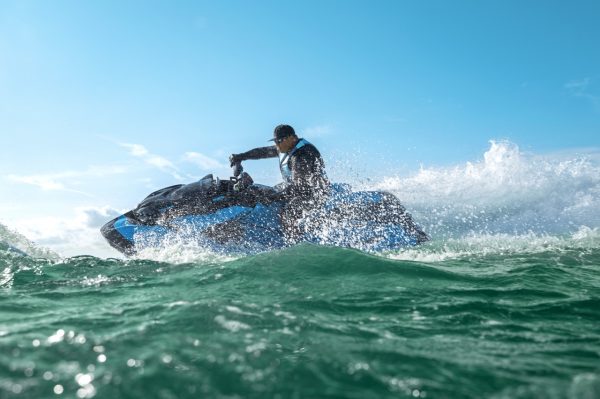
Power-wise, the RXP-325 is properly wild. There’s no sugar-coating it, this thing has a ridiculous amount of power. It is very quick and absolute weapon, damn. Crack the throttle and it responds instantly, more like a high-performance race bike than a leisure craft. What surprised me most, though, wasn’t just the speed, it was how controllable that power felt once I was up and moving.
Despite what the ADB boys might have embellished, my background with jet skis actually runs deep. I’ve owned and ridden everything from old-school stand-ups like the Yamaha SuperJet to Sea-Doo Sparks, Blasters, GPXs, the lot and the RXP-325 feels like everything has finally come together. Compared to older skis that could feel raw or unpredictable, this one feels refined without being boring.
Naturally, with anyone who knows I’ve tested this Sea Doo, the conversation drifts to dirt bikes, because for anyone who rides off-road, that’s the easiest comparison to make. I liken the smaller Sea-Doo Spark to a 125 two-stroke dirt bike. You can manhandle it, preload it over waves, flick the rear out, even stand on the back and pop little wheelies. It’s playful, reactive, and rewards an aggressive, physical riding style. The RXP-325, on the other hand, feels more like stepping onto a big-bore race bike. It’s heavier, more planted, and carries speed in a way that demands respect.
That said, it’s still surprisingly approachable. I reckon any dirt bike rider could jump straight on and feel at home within minutes. The throttle response is from a trigger so a little different in that regard but it’s still smooth, predictable, and easy to modulate. You don’t need years of jet ski experience to get the hang of it. The learning curve is short, especially once you’re up and moving. Slow-speed stability can feel a bit sketchy at first, but that’s no different to balancing a tall enduro bike in tight terrain.
Comfort is another standout. The seat design, riding position, and overall layout mean you can spend serious time on the water without feeling beaten up. Options like a small windscreen, similar to what you’d see on a snowmobile, helps deflect spray at speed. It’s one of those crossover ideas that makes sense.
I ride different skis the same way I rides different bikes. Smaller skis get ridden aggressively, thrown around, jumped, muscled. Bigger skis like the RXP-325 are all about flow, momentum, and control. You don’t fight it, you work with it. That mindset felt instantly familiar to me, because it’s exactly how experienced dirt bike riders approach big four-strokes versus lightweight two-strokes.
Is it a fair comparison?
So how does the Sea-Doo RXP-325 compare to riding a dirt bike? In short, it scratches the same itch. It’s about control, feedback, and that addictive balance between aggression and precision. For dirt bike riders looking for something different without feeling lost, this thing makes a hell of a lot of sense. It’s fast, capable, and genuinely engaging, not just a toy, but a proper performance machine.
And maybe that’s the biggest takeaway. Just like modern dirt bikes, jet skis have evolved. What used to feel niche or novelty is now serious, high-performance equipment. The RXP-325 isn’t just the fastest ski in the lineup, it’s the one that finally feels like it was built by people who truly understand riders.
Sea-Doo RXP-X 325 — Key Specs at a Glance
- Engine: Rotax 1630 ACE – 325
- Power: 325 hp (most powerful production Sea-Doo engine to date)
- Induction: Supercharged with external intercooler
- Cooling: Closed-Loop Cooling System (CLCS)
- Throttle System: iTC™ (Intelligent Throttle Control)
- Ride Modes: Eco®, Sport, Speed Regulator, Slow Speed & Launch Control
- Hull: T3-R deep-V fiberglass race hull
- Handling Aids: Hydraulic steering damper (3-position adjustable), X-sponsons
- Seat: Ergolock™ R racing seat with adjustable saddle
- Braking & Control: iBR® electronic brake, neutral & reverse
- Trim: Extended VTS™ (Variable Trim System)
- Impeller: Stainless polished impeller
- Exhaust: D-Sea-Bel™ exhaust system
- Fuel Capacity: 70 L
- Storage Capacity: 153.7 L total
- Weight Capacity: 182 kg
- Dry Weight: 353 kg (362 kg with sound system)
- Dimensions:
- Length: 332 cm
- Width: 125 cm
- Height: 111 cm
- Display:
- Standard: 7.6-inch digital display
- Optional Tech Package: 10.25-inch touchscreen
- Warranty: 2-year BRP factory warranty (Australia & NZ)