We don’t often veer off into the world of farm gear here at ADB, but every now and then it’s worth swapping berms for barbwire fences and looking at the machines that keep the country ticking. As a proud cattle farmer myself, this issue is quite close to home. This story is for the cockies and the pig chasers, the blokes and ladies who spend more time shifting cattle than scrubbing jumps. ATVs have copped a bad rap in recent years, with politicians and safety boffins deciding they needed saving from themselves. Fair enough, rules are rules — but the truth is, these quads are still the farmer’s mule, still the hunter’s best mate, and still one of the most practical tools you’ll find on four wheels. But, in a blink of an eye, this iconic Aussie ag machine seemed to just vanish.
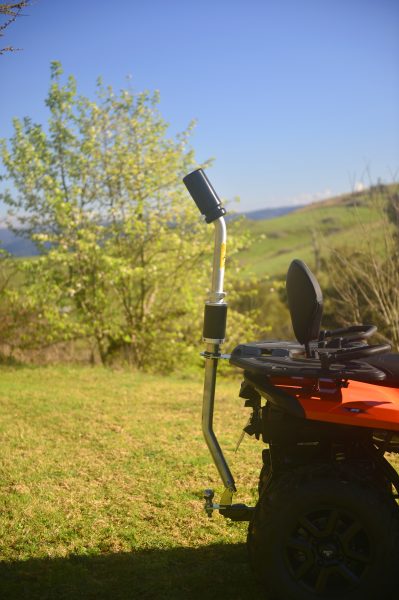
In October 2021, Australia enforced a critical upgrade to its quad-bike (ATV) safety regulation: from 11 October 2021, all new and imported second-hand general-use quad bikes were to be fitted with an Operator Protection Device (OPD) — such as a Quadbar, ATV Lifeguard, or another device offering equivalent protection — or have the protection built into the machine’s design. This requirement was part of Stage 2 of the Consumer Goods (Quad Bikes) Safety Standard 2019, which was rolled out in two stages: Stage 1 (from 11 October 2020) introduced warning labels, “hang tags” showing stability test results, owner’s manual rollover warnings, and basic stability/standard compliance. Stage 2 added the mandatory OPD requirement along with minimum static stability standards (a tilt table ratio for lateral tipping and pitch stability) for general-use quads.
The impact on the sector has been substantial and in some cases disruptive. Several major Japanese and American ATV manufacturers voiced strong resistance — most even withdrew from or reduced participation in the Australian market rather than redesign or retrofit their machines to comply. Dealers had to clear out non-compliant stock; many machines already in use remained outside the new rules unless imported anew. For farmers, rural operators, and ATV users it meant additional costs, logistical issues (ensuring compliance, retrofits where allowed, or choosing only compliant units), and sometimes frustration, especially where the new safety features were seen as burdensome, altering the look, handling, or cost of machines.

Underlying this change is a broader national (and global) shift in how much risk is deemed acceptable, especially in agriculture and outdoor work: an increasing obsession with “over-safety” (depending on your perspective). Proponents of the law argue that the cost in human life and injury from quad bike rollovers is simply too high — about 60 per cent of quad bike fatalities in Australia are from rollovers where the operator is crushed or pinned. Critics counter that mandating roll bars (OPDs) forces manufacturers into costly redesigns, may make machines heavier or bulkier, possibly affecting maneuverability, increasing costs for end users, especially small farmers, and that some of the rules go beyond what is practical in many terrains or uses. Whether the safety benefits justify the regulatory costs is still a subject of debate — but legally, from October 2021, anything sold must comply with the standard, or face penalties.
One of the only ATV manufacturers left standing in Australia after the 2021 shake-up is Segway. While the Japanese and American giants walked away rather than fit Operator Protection Devices, Segway embraced the requirement and continues to sell compliant quads locally. Their presence has kept the market alive, albeit smaller, and made them a key player in shaping how Australians now view ATVs in a post-OPD landscape.
These rollover protection systems are designed to reduce the risk of an operator being pinned under a machine in the event of a rollover. They vary in design but generally act as a frame or flexible bar that prevents the quad from settling flat on top of a rider. We’re going to talk about the mechanics of these devices, how they’re meant to function in practice, and whether they make a difference to handling, manoeuvrability, or the overall ride.
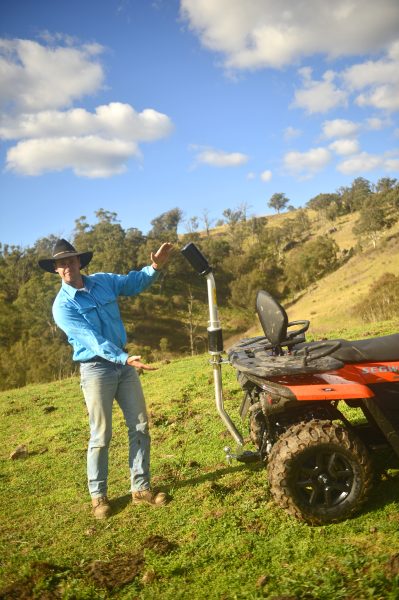
Spot the difference
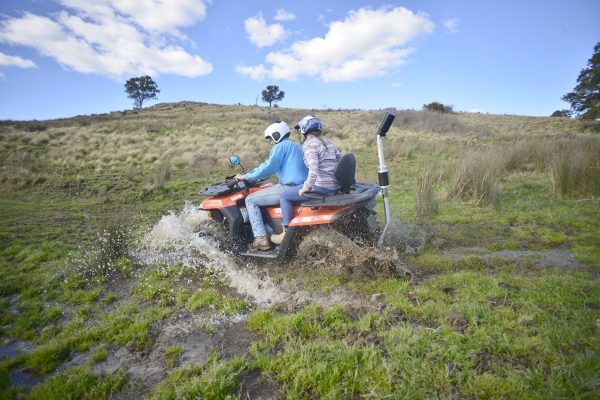
When you first hop on an ATV fitted with an OPD, you’d be forgiven for thinking it might get in the way. In practice, it doesn’t. Throwing your leg over the seat is just as natural as before — you never clip the bar, your foot doesn’t get snagged, and once you’re in the saddle you’d hardly know it’s there. Even when sliding back on the seat, there’s no bumping into it or awkward shifting to avoid it.
On the move, the OPD remains almost invisible to the ride. There’s no extra weight tugging on the rear-end, no sense that the machine is more likely to tip backwards, and no vibration or rattle echoing through the frame. It doesn’t hum, shake, or throw off the balance — the ATV feels the same to ride as one without it. The only time it came into play in day-to-day use was when the dog needed to jump on the back. She simply had to hop around the bar to get comfortable, which was hardly a dealbreaker.
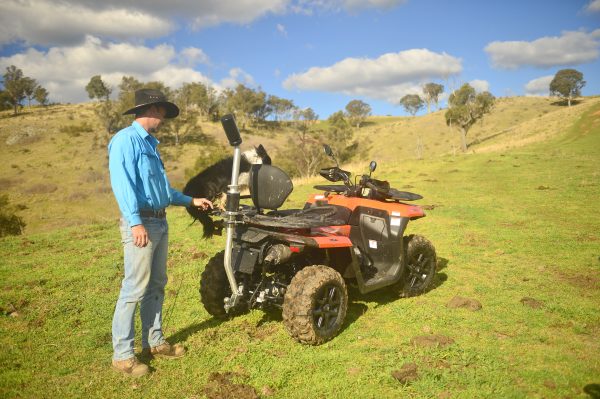
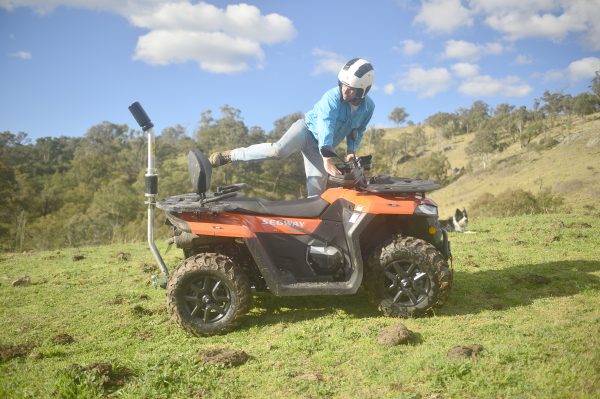
We also deliberately put the OPD to the test by tipping the ATV onto its lid, and this was the moment it proved its worth. Instead of the machine pinning us to the ground, the bar kept the quad elevated off our bodies or preventing us from rolling it altogether, eliminating the risk of being crushed underneath. It’s a simple function but in that scenario, it’s the difference between a bruised ego and a serious injury. For us, it showed exactly why the law now insists they’re fitted.
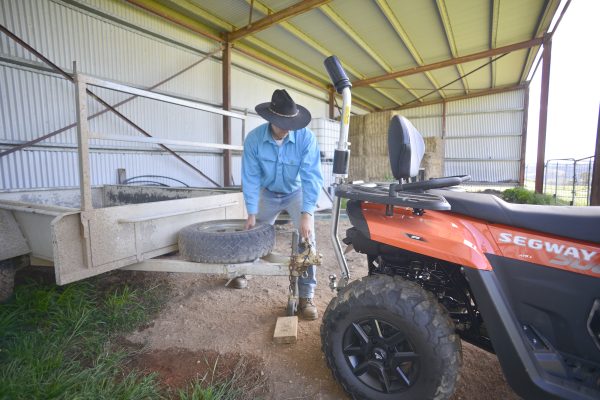
The only potential drawback we could see was when working in dense bush or moving cattle under low-hanging trees, where the bar could conceivably catch on a branch. That said, we never actually had it happen, and it’s more a matter of awareness than a practical issue. Even with a tow ball fitted in the same space, the OPD didn’t interfere with attaching or hauling anything. The reality is, unless you’re loading a dog or ducking under scrub, you barely notice it at all — until the moment it does its job. And with that reassurance in mind, we’d happily choose an ATV with an OPD for farm work every time.
Is there a future?
ATVs are still alive and well in Australia, and in my view, they remain one of the best tools a farmer can own. Don’t be scared off by all the rhetoric about safety concerns — with an OPD fitted, an ATV is no more dangerous than any other piece of farm machinery. Like anything, it comes down to how they’re used. The truth is they’re reliable, versatile, and perfectly suited to the day-to-day grind of moving stock, towing gear, or just getting from A to B across the property.
I’d happily put my money down on one, and if I was buying one tomorrow I’d have no doubts. It’s good to see brands like Segway have stuck around when others pulled the pin, and their machines do exactly what’s asked of them. ATVs haven’t lost their place on the farm — far from it. They’re still excellent work mules, and for many of us, they’ll stay that way for years to come.
The Numbers That Forced Change
- Quad-bike rollovers account for about 60% of all quad-bike deaths in Australia, which makes the rollover problem not just serious, but the biggest killer in that space.
- Before the new standard took effect, 2011-2018 data showed many deaths occurred under similar conditions: uneven ground, steep slopes, or carrying unbalanced loads (gear, trailers, cargo) was common.
- A recent study (2025) suggests there has been a small drop in work-related quad bike deaths since the OPDs and other safety standards kicked in, especially in Victoria and Queensland. But it also flags that not all states saw the same level of improvement.
Manufacturers’ Fight or Flight
- In response to these laws, several major ATV brands (Honda, Yamaha, Kawasaki, Suzuki, Polaris, CanAm) threatened or followed through with withdrawing from the Australian “general-use utility ATV” market rather than redesign their machines or fit OPDs.
- On the flip side, brands like Segway committed to meet the requirements and continue selling compliant machines.
- A big part of the pushback from manufacturers revolved around cost, design changes, and concerns about whether OPDs might themselves bring new risks (or not work as claimed). Some argued the safety science was inconclusive, others worried about performance, weight, and practicality in bush or farm terrain.