When you talk about motorcycle safety, few names carry the same weight as Leatt. Born in South Africa and built from science, the company has spent more than twenty years saving riders’ necks – literally. With over a million lives protected and more than thirty patents to its name, Leatt has turned innovation into a way of life. But like most great ideas, this one didn’t start in a boardroom. It started trackside with tragedy close by.
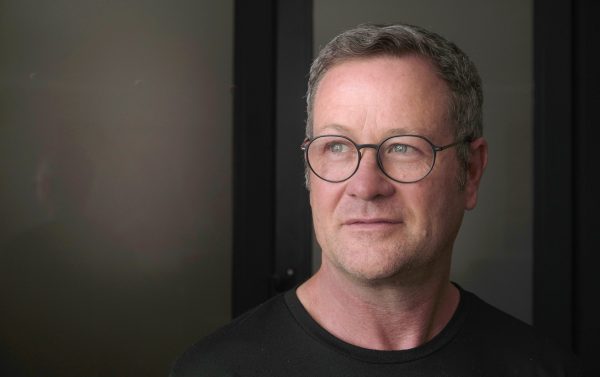
It all began back in 2001, when Dr Chris Leatt was a budding young doctor in training and a passionate motocross rider on the weekends. One ride changed everything. Chris witnessed a fellow rider lose his life in a crash – the same weekend his young son had just started riding. That moment hit harder than any crash he’d had. “I pass the final resting place of Alan Selby’s ashes on a regular basis, that incident will always be firmly imprinted on my mind” he told ADB.
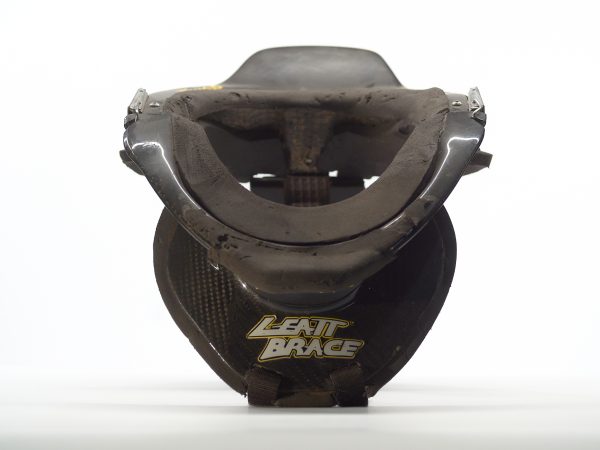
He walked away from his medical career and poured everything into designing something that could stop that kind of heartbreak from happening again. Three years later, in 2004, the first Leatt neck brace hit the market, and the world of motorsport safety would never be the same.
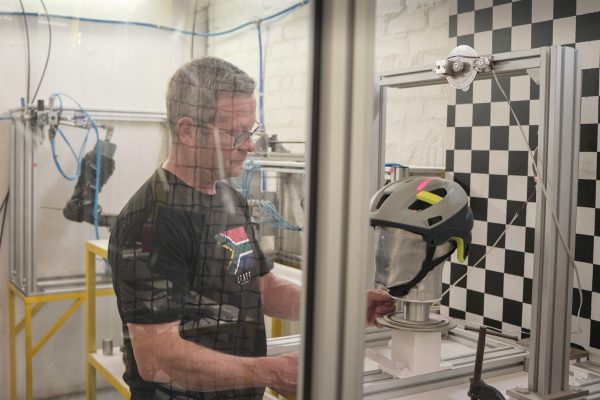
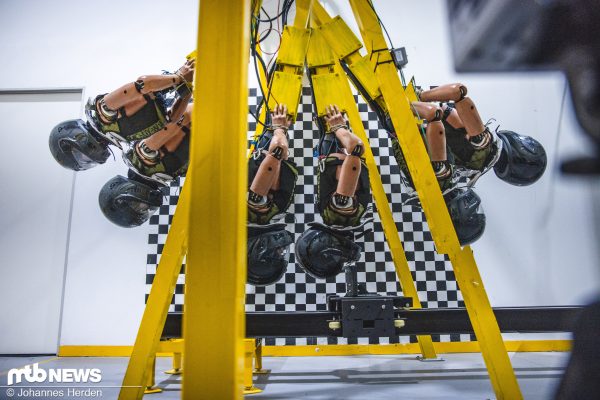
These days, Dr Leatt still rides, but his main track is the Leatt Lab in Cape Town – a place where science, engineering, and a love of two wheels collide. Inside, a crash test dummy named Martin takes the hits for the rest of us, fitted with twenty-three sensors and a human-like neck to simulate the chaos of real crashes. Fifteen thousand impact tests later, Martin’s been through more stacks than most weekend warriors. With advanced spine modelling, finite element analysis, and enough data to make NASA proud, Leatt’s engineers keep fine-tuning their gear to squeeze out every bit of protection possible.
The story of Leatt’s rise in rider protection began with that single, life-changing moment in 2001. Dr LEatt began to questionwhy was there no device to prevent catastrophic neck injuries in motorcycling? He decided to build one himself.
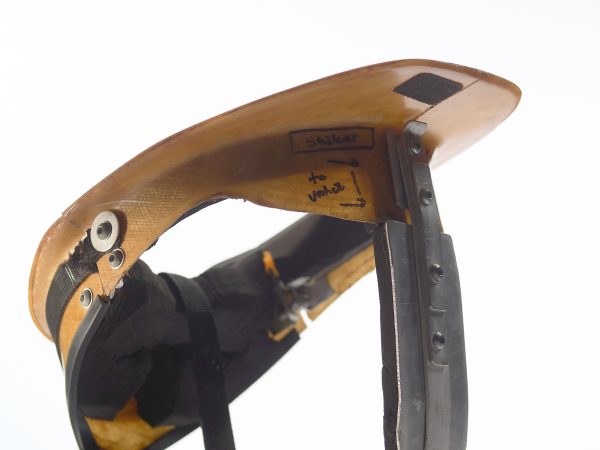
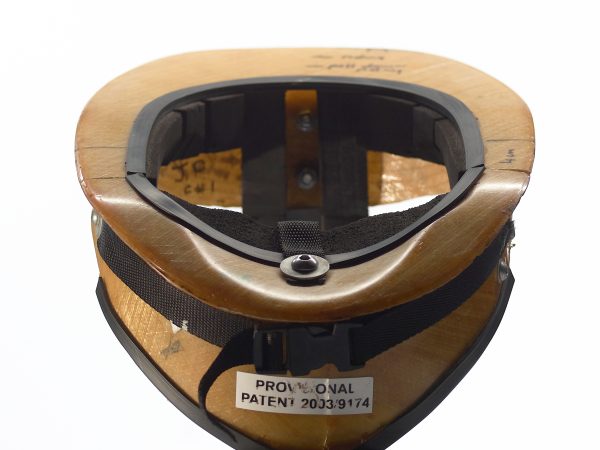
By 2003, Leatt was sketching prototypes, drawing on his background in medicine, biomechanics, and trauma care. The first patents were filed, and in 2004 the very first Leatt neck brace was sold in South Africa. It was the beginning of a revolution in rider safety. The brace used what became known as Alternative Load Path Technology – redirecting impact forces through the body instead of allowing them to compress the neck and spine. It was an elegant idea born out of tragedy, and one that would completely change the way riders protected themselves. “I never considered the magnitude of downstream effects once I started on the iterative process of designing and testing the neck brace. However, I soon began to believe that if the invention could be shown to be effective and was comfortable to wear, it should enjoy significant adoption around the world. This indeed came to be. Our problem solving approach, not just doing what others do, has always been the mainstay of our innovative LEATT-Lab work” Dr Leatt told ADB exclusively.
The company was formally established in 2005, and not long after, Leatt was working with engineers in Munich to refine testing systems for neck and spinal impact forces. By 2007, the Leatt neck brace was gaining global attention, picking up product-of-the-year awards and being adopted by professional racers around the world. Within a few short years, the brand that began in a small Cape Town workshop had created an entirely new safety category – and a standard other manufacturers would spend years trying to catch up to.
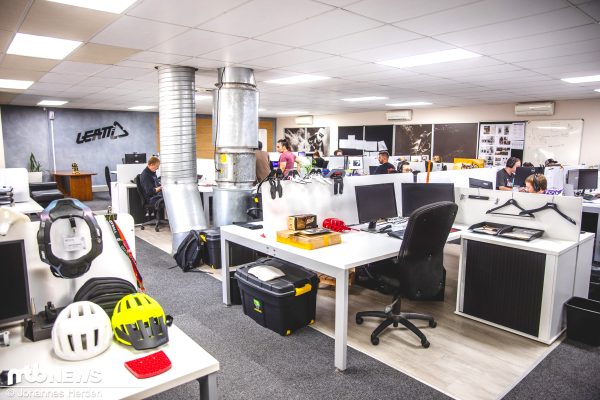
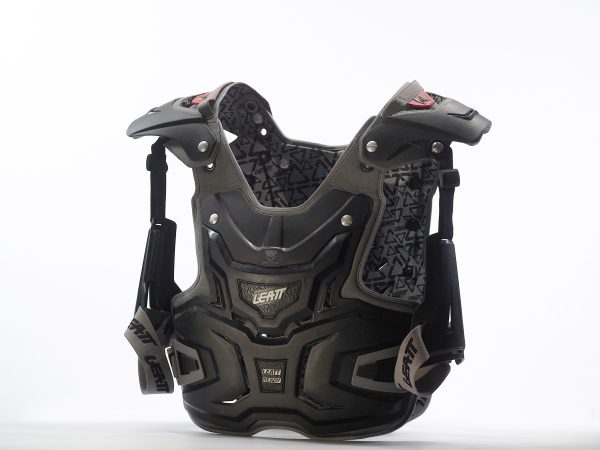
But Leatt’s ambition didn’t stop at the neck. The goal was always bigger: to build a full ecosystem of protection. In 2008, the company established the Leatt Lab in Cape Town, giving engineers and designers the ability to develop, prototype, and test every product in-house. The first step in broadening the range came in 2010, with the release of chest protectors and a mountain-bike-specific neck brace. A year later came full-body armour and the first motorcycle jackets. In 2012, Leatt introduced its 3DF impact foam, a breakthrough soft-shell technology that offered real energy absorption without the stiffness of traditional armour.
“The next product category for LEATT after the launch of the neck brace, was body protection – as this is where we found the most fitment and integration challenges with the neck brace” Chris explained to ADB. “By offering body protection that integrated well with the neck brace, adoption of the neck brace increased and we were able to develop a significant offering of body protectors. Now that we were no longer a neck brace only company, we had to challenge for real estate in retailers against established brands in the body protector space. The product categories have been growing ever since. We have a rigorous multi-level quality control process that guides all our manufacture”.
By 2013, Leatt had launched the Fusion 2.0 Junior, a neck and chest protection system for kids, alongside upgraded neck brace models like the 5.5 and 6.5. The following year, the company moved into lower-body protection with the C-Frame knee brace, giving riders the same level of innovation for their legs that the neck brace had given their spine. In 2015, helmets and CE-certified gloves joined the lineup, marking Leatt’s move from a protection specialist to a full-gear manufacturer. And by 2016, Leatt had entered the apparel game, launching complete motocross and mountain-bike clothing lines that tied together the entire protective system from head to toe.
In 2018, the company launched its Bulletproof Velocity goggles and around 2019 and 2020, Leatt added both flat and clipless shoes for mountain bikers, and in 2021, released its second-generation full-face helmets featuring the brand’s own 360 Turbine Technology – a design that helps reduce rotational acceleration to the brain during impact. What started as one man’s idea to protect his son had evolved into a complete ecosystem of gear worn by riders across motocross, enduro, downhill, adventure, and even karting disciplines.
What Makes Leatt Different
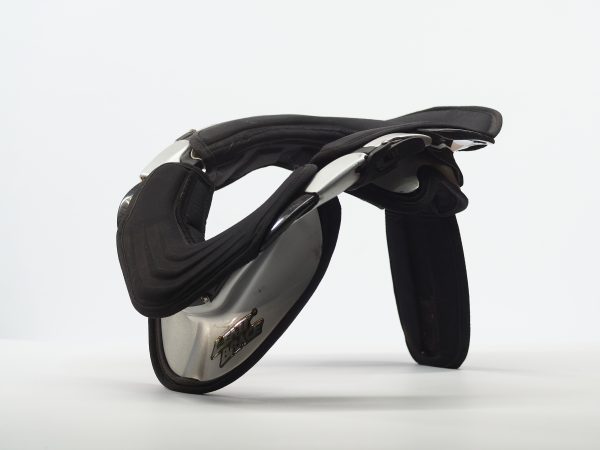
Leatt’s foundation is unlike any other gear manufacturer’s. It wasn’t started by a marketing executive or apparel designer – it was built by a trauma doctor who understood how and why riders got hurt. Chris Leatt’s medical training, combined with his experience in emergency trauma units in South Africa and the UK, meant every product was born from real science, not assumption. That blend of rider empathy and medical insight became the brand’s DNA.When Leatt introduced the world’s first neck brace, it didn’t just fill a market gap – it created one. The design addressed hyperflexion, hyperextension, and lateral and rearward forces in ways no other product had managed. Today, most of Leatt’s competitors sell neck braces inspired by that first design, but none carry the same depth of research, patent protection, or biomechanical testing. The company still leads the field, holding over 30 patents and continuing to refine its technology every year.
A lab like no other
At the heart of Leatt’s operation is the Leatt Lab in Cape Town, a facility that has become synonymous with obsessive testing. Inside, a crash dummy affectionately named Martin bears the brunt of experimentation. Crafted from high-biofidelity materials like rubber, foam, and steel, Martin simulates how the human body moves, flexes, and fails under load.
Leatt’s engineers don’t just smash gear into walls, though. They run validated simulations and spine models using advanced tools like MSC Adams and NASTRAN (that sounded impressive to us!) They collaborate with universities in Strasbourg and Stellenbosch to refine finite-element analyses and pressure-mapping techniques. Even the way moulds flow in production is studied, ensuring consistency between design and final product.
“Our biggest learning I believe, is just how complex head and neck impact kinematics are and considering their interaction with protective apparel. There is so much work still to be done on standardising testing using multiple physical and mathematical surrogates for the human body” Dr Chris Leatt said when asked what they’d learnt over 20 years.
Integrated design, head to toe
Unlike most gear brands that specialise in one or two product types, Leatt’s approach is holistic. Each piece of equipment is designed to work with the others – braces with armour, armour with helmets, helmets with goggles. That integration eliminates fit issues and ensures consistent performance across the body.
Proof over promises
Leatt’s claims aren’t just marketing fluff. Independent studies have shown that riders using Leatt neck braces experience dramatically reduced risk of serious neck and spinal injury. One decade-long study found neck injuries were 89 percent less likely and fatalities from spinal trauma 69 percent lower among brace users. Today, Leatt is a full-spectrum safety and performance brand. Its catalogue spans more than 400 products, protecting over a million riders in more than 60 countries.
Back Where It Began
Two decades on, Chris Leatt still rides. Still tests. Still walks through the Cape Town lab floors where his idea became a global standard. The company may have grown into a world leader in rider protection, but for him, it’s never been about numbers or market share – it’s always been about people. “I think my greatest satisfaction (and success), is in the knowing that we have found a solution to a problem, and have moved the needle on injury prevention. It is a humbling process and requires a very open mind and little ego”.
The riders who walk away from crashes that should have ended differently. The parents who watch their kids ride knowing they’re safer than ever before. We all know riding dirtbikes is dangerous but Leatt has managed to build something far rarer: peace of mind.
LEATT TIMELINE: TWO DECADES OF PROTECTION
2001 – While training in neurosurgery, Dr Chris Leatt witnesses a fatal motocross crash. The idea for the neck brace is born.
2003 – First prototype and patents filed.
2004 – The first Leatt neck brace sold in South Africa.
2005 – Leatt Corporation officially founded.
2007 – Neck brace gains global acclaim and industry awards.
2008 – The Leatt Lab opens in Cape Town.
2010 – Chest protectors and MTB-specific neck brace introduced.
2011 – Launch of full-body armour and jackets.
2012 – 3DF impact foam revolutionises soft-shell protection.
2013 – Fusion 2.0 Junior released for young riders.
2014 – C-Frame knee brace debuts.
2015 – Helmets and CE-tested gloves hit the market.
2016 – Leatt enters Moto and MTB apparel.
2018 – Bulletproof Velocity goggles launched.
2019–2020 – Riding shoes and boots join the lineup.
2021 – 360 Turbine helmet technology introduced.
2024 – Leatt celebrates 20 years of innovation.
BY THE NUMBERS
- 20+ years of innovation
- 1,000,000+ riders protected
- 30+ patents awarded
- 15,000+ impact tests conducted
- 23 sensors in crash dummy “Martin”
- 3 global labs and partner universities
- 400+ products across Moto, MTB & adventure
- 89% fewer neck injuries for brace users
- 69% lower spinal injury fatalities
- 100% rider-driven innovation