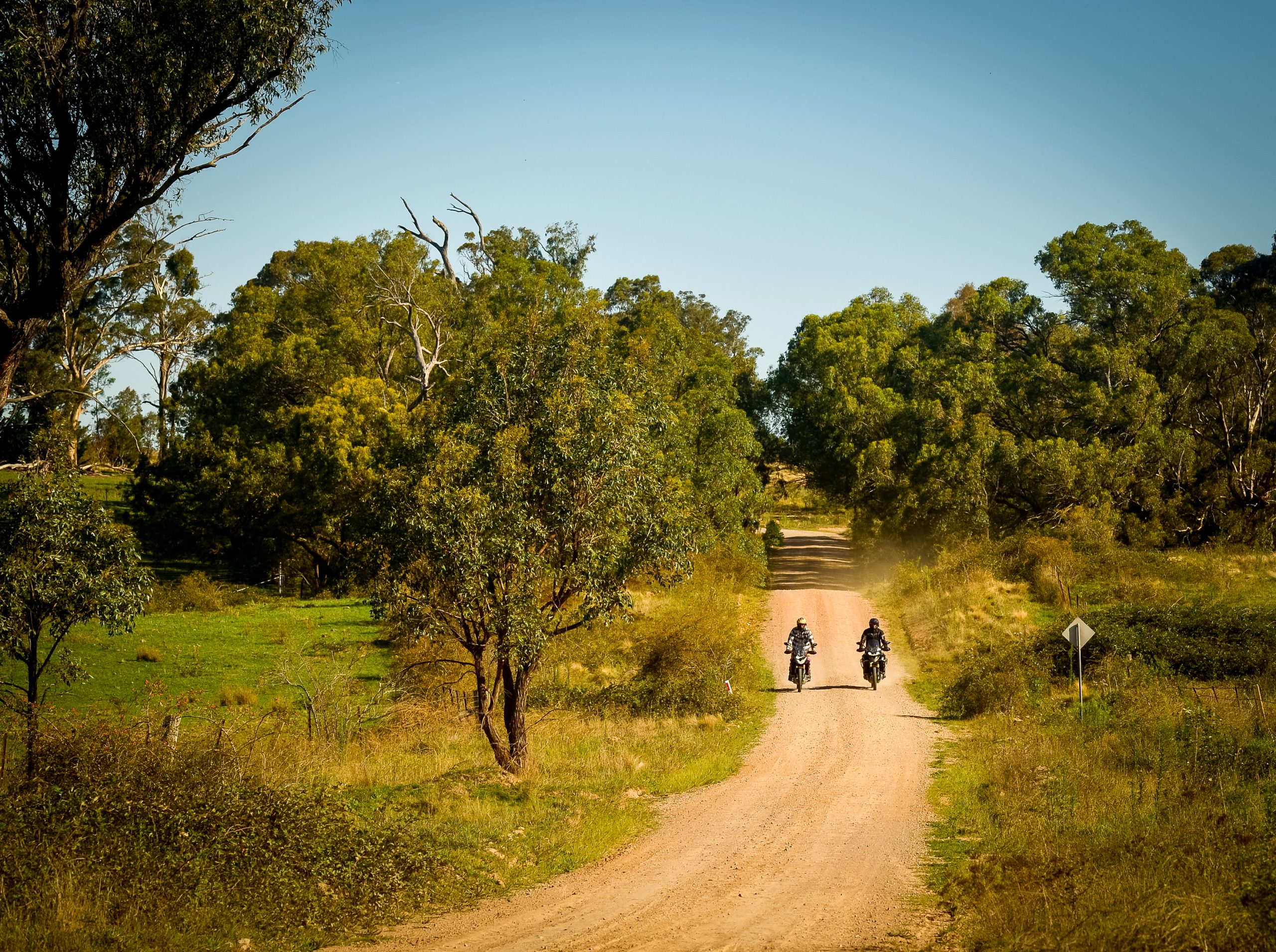
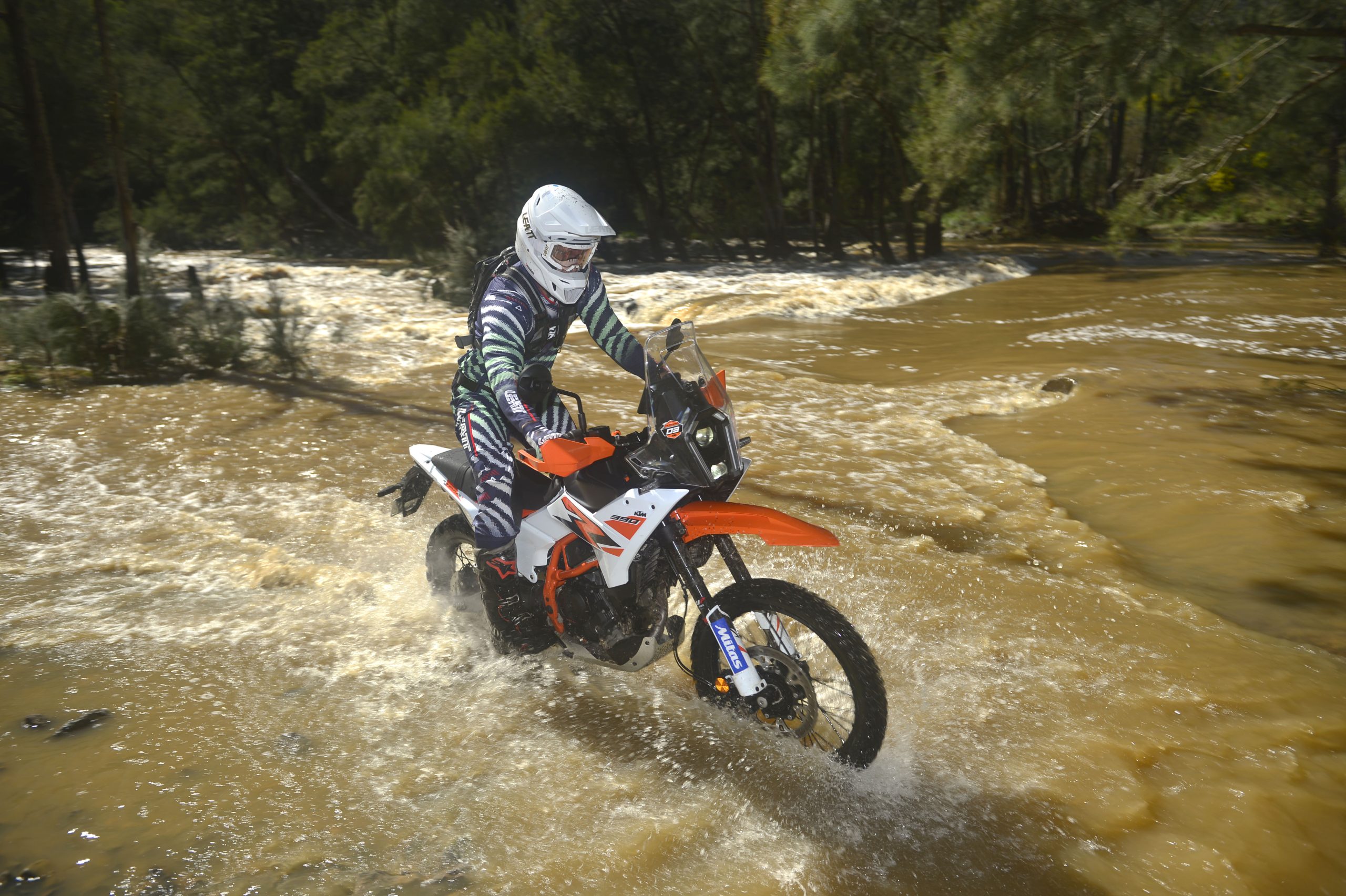
There are two ways to test a big adventure bike. The first is the polished, predictable version. Simply grab the bike, knock over a few hundred kays, find a dirt road, talk about electronics, and hand it back before anything gets uncomfortable. The second way is to hand it to two bored blokes, tell them to ride it properly, and wait to see what comes back.
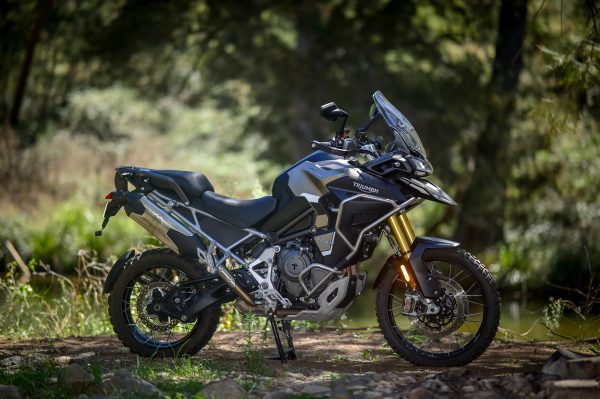
So that’s what we did. We gave Jez Cowley and his old man Nev the keys to a Triumph Tiger 1200, pointed them loosely across Victoria and New South Wales, and told them to ride it like they owned it, even though they didn’t… yet.
What came back was nearly 6000km of real-world riding. Long highway hauls, dusty dirt tracks, steep climbs, loose descents, storms, heat, and more servo stops than either of them could count. It was exactly the kind of test this bike was built for.
ONE BIKE, TWO VERY DIFFERENT HEADS
Jez is your typical modern adventure tragic. He’s ridden everything from the Tiger 900s, KTM 950s, BMWs, to Tenere 700s and he’s got a pretty clear idea of where each bike sits. He knows what he likes, what he doesn’t, and he’s not shy about saying it.
Nev is Jez’s old man and the complete opposite. He hadn’t really ridden anything like this before. He jumped straight onto a 1200 and figured it out as he went. That made him the perfect second opinion, because everything he felt was raw and unfiltered.
That contrast shaped the entire trip. Where Jez would analyse things like geometry and weight distribution, Nev would just say whether it felt right or not. Somewhere in the middle of those two viewpoints is probably the most honest review you’re going to get.
WHAT THE HELL IS THIS THING?
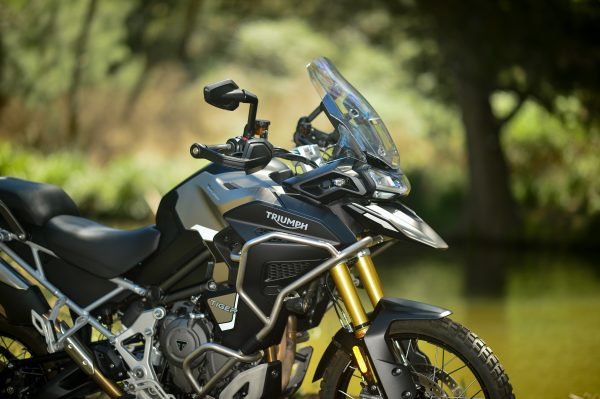
After a month of riding, the biggest question wasn’t about power or tech, it was about identity. What is the Tiger 1200 actually trying to be? Jez summed it up pretty quickly.
“It’s an off-road touring and adventure bike,” he said. “You can take it off-road, and we did with great success, but that’s not really where it shines.”
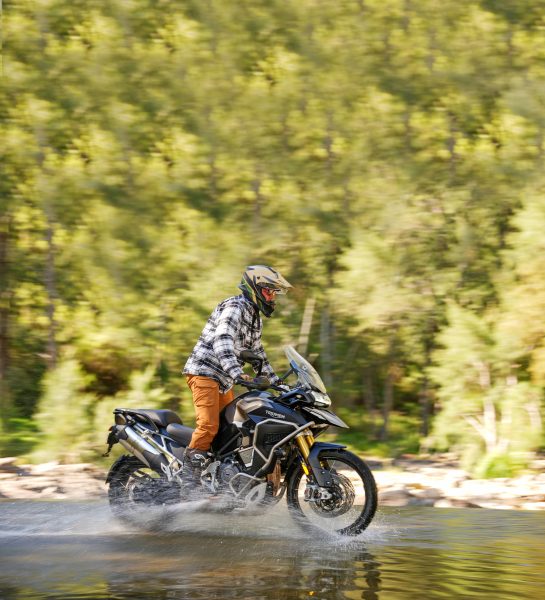
That theme kept coming back. Yes, they rode it through dirt, gravel and rough terrain, and yes, it handled more than expected. But every time they got back onto the bitumen and started chewing through kilometres, it made sense again. This is a bike built to cover ground, not crawl over it.
SOOOO COMFORTABLE!
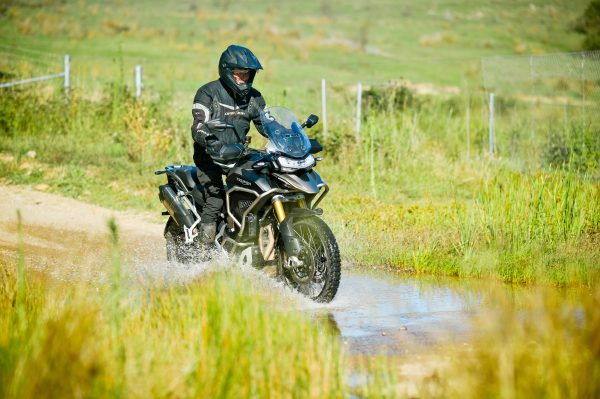
If there’s one thing both of them agreed on straight away, it was comfort. And that’s saying something, because agreement wasn’t exactly common between these two. “You can ride all day and get off and feel fine,” Nev said. “Like you haven’t even done much.”
That’s not something you hear often after 500–600km days, let alone back-to-back rides. They weren’t just cruising either, these were proper travel days with heat, wind, and long stretches where you just sit and tick kilometres off.
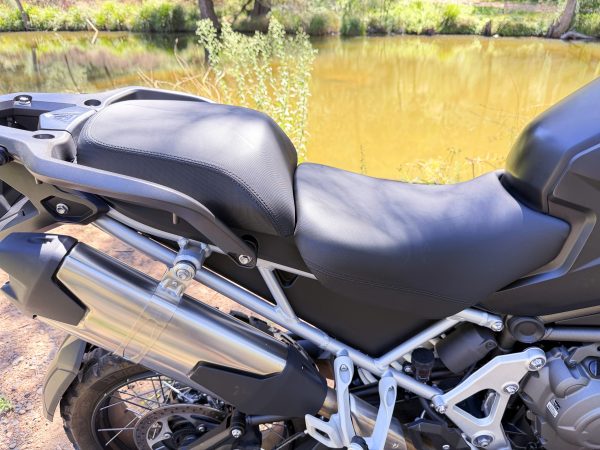
The seating position is a big part of that. You’re upright, relaxed, and not reaching for anything. The bars come back toward you, the pegs sit in a neutral spot, and the seat itself doesn’t punish you after a few hours. Even after a massive 1100km day, Nev was still getting off the bike without that usual stiffness you expect.
Wind protection is another standout. Jez rode through a three-and-a-half-hour storm and came out the other side barely wet. The screen does its job, the fairing keeps the wind off your body, and everything about it is designed to make long days easier.
THE RANGE THING IS REAL
Adventure riders love to talk about fuel range and the Tiger 1200 is pretty decent. They were consistently seeing around 5.1L/100km, which is impressive for something this size. That translates into well over 500km between fills without even trying.
“You don’t really think about fuel,” Jez said. “You just ride.” When you’re out in places where fuel stops aren’t guaranteed, having that kind of range removes a layer of stress.
There were a couple of times where they pushed it a bit close, but more out of curiosity than necessity. The reality is, you’ve got plenty in reserve.
OFF-ROAD ABILITY
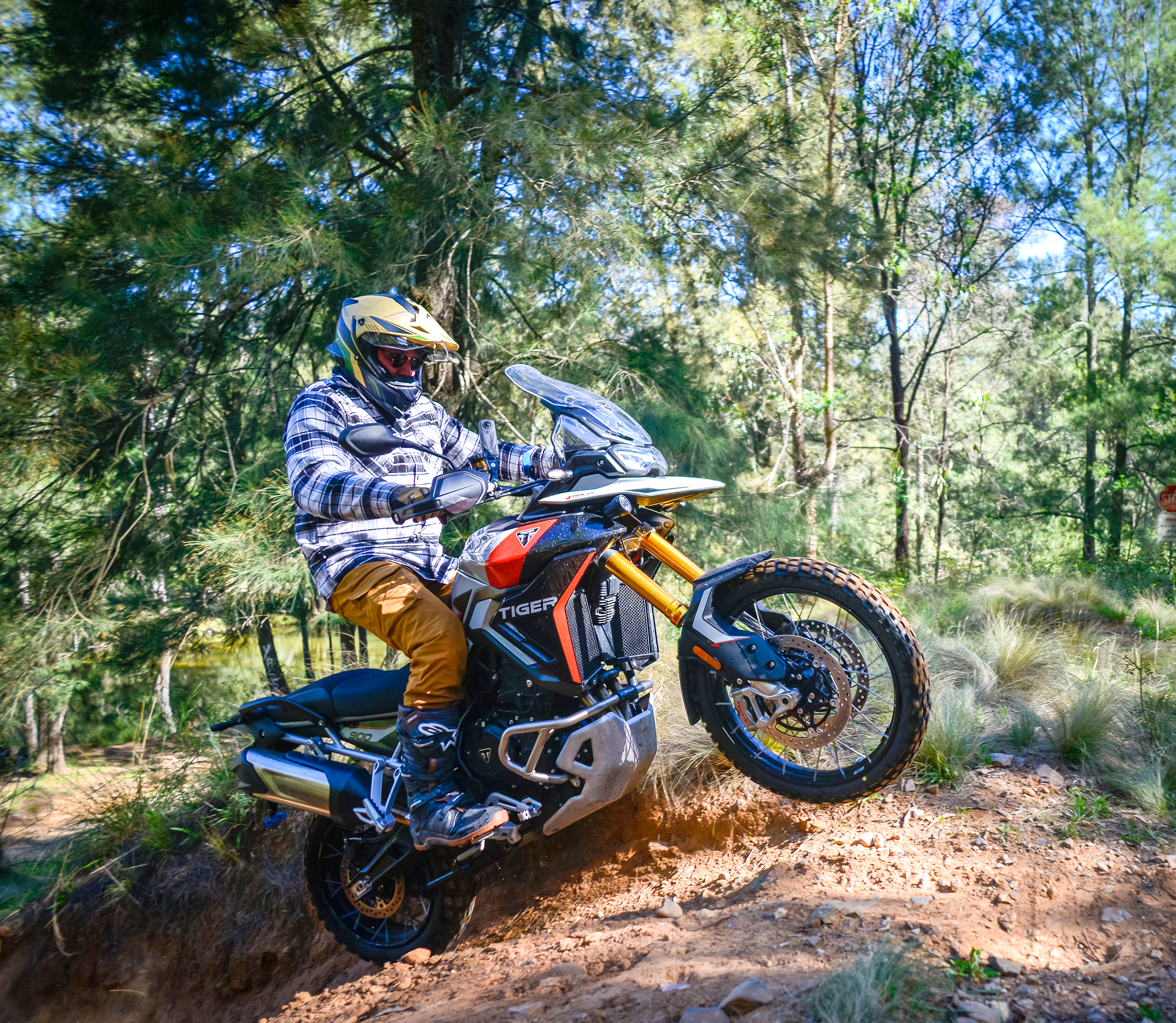
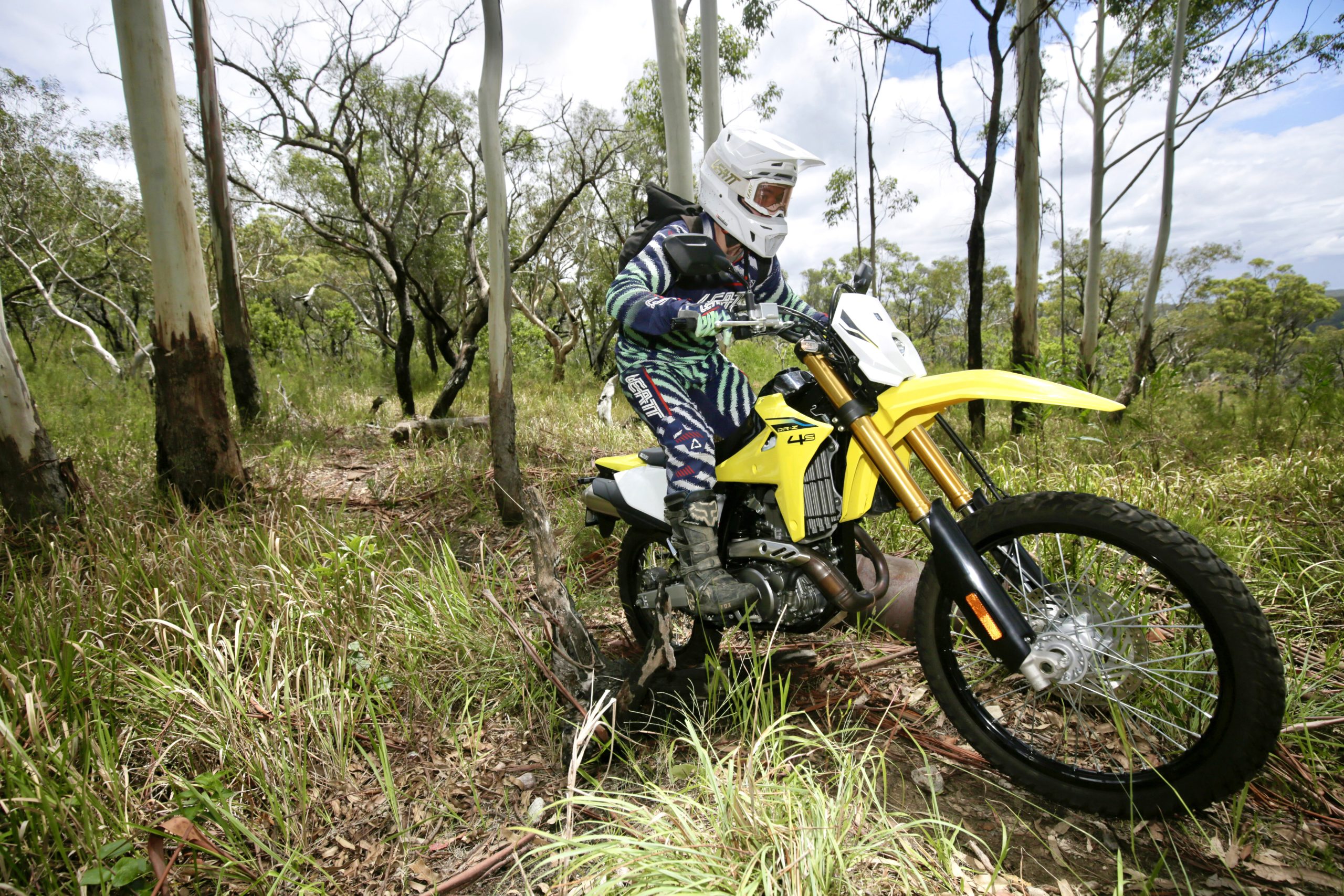
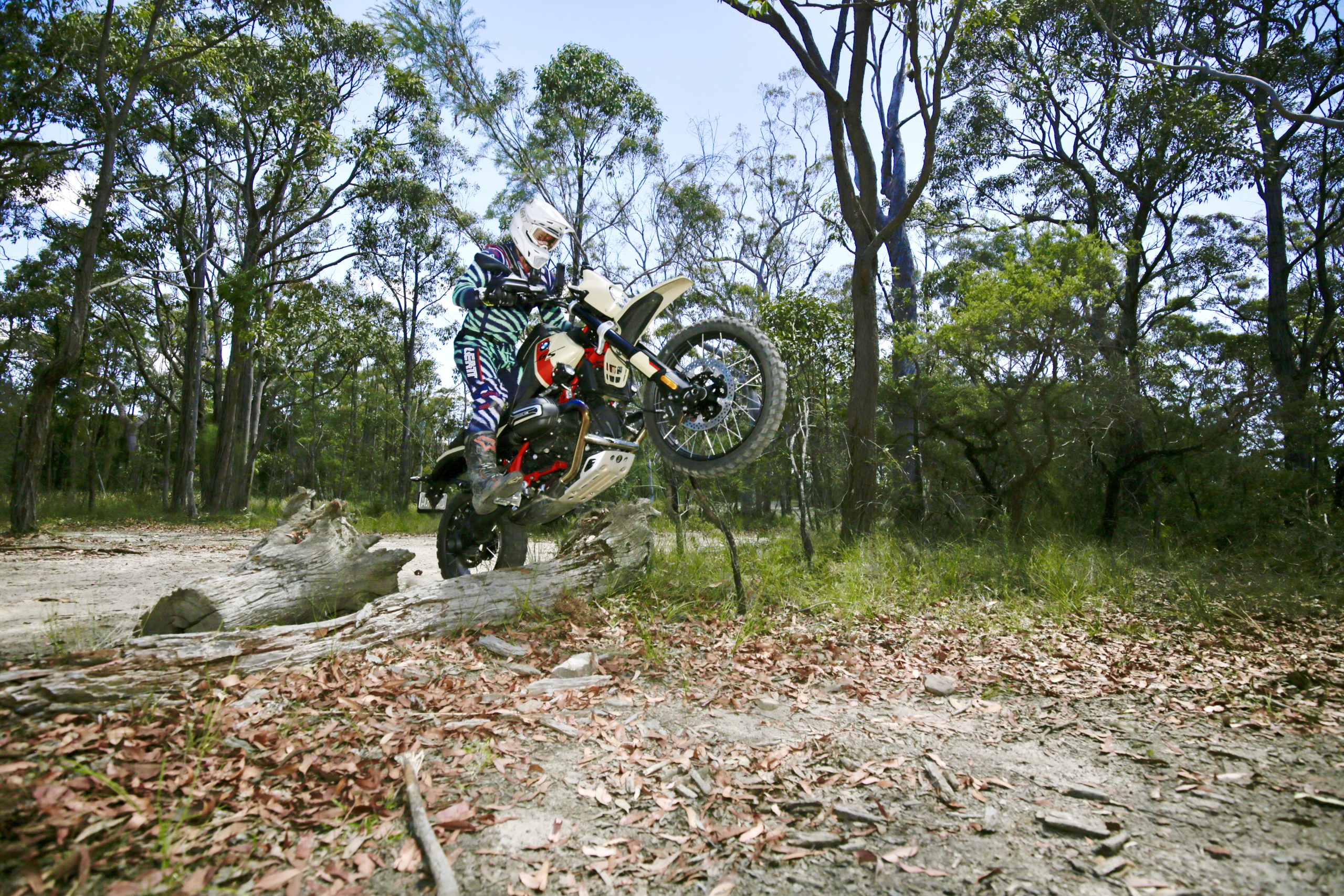
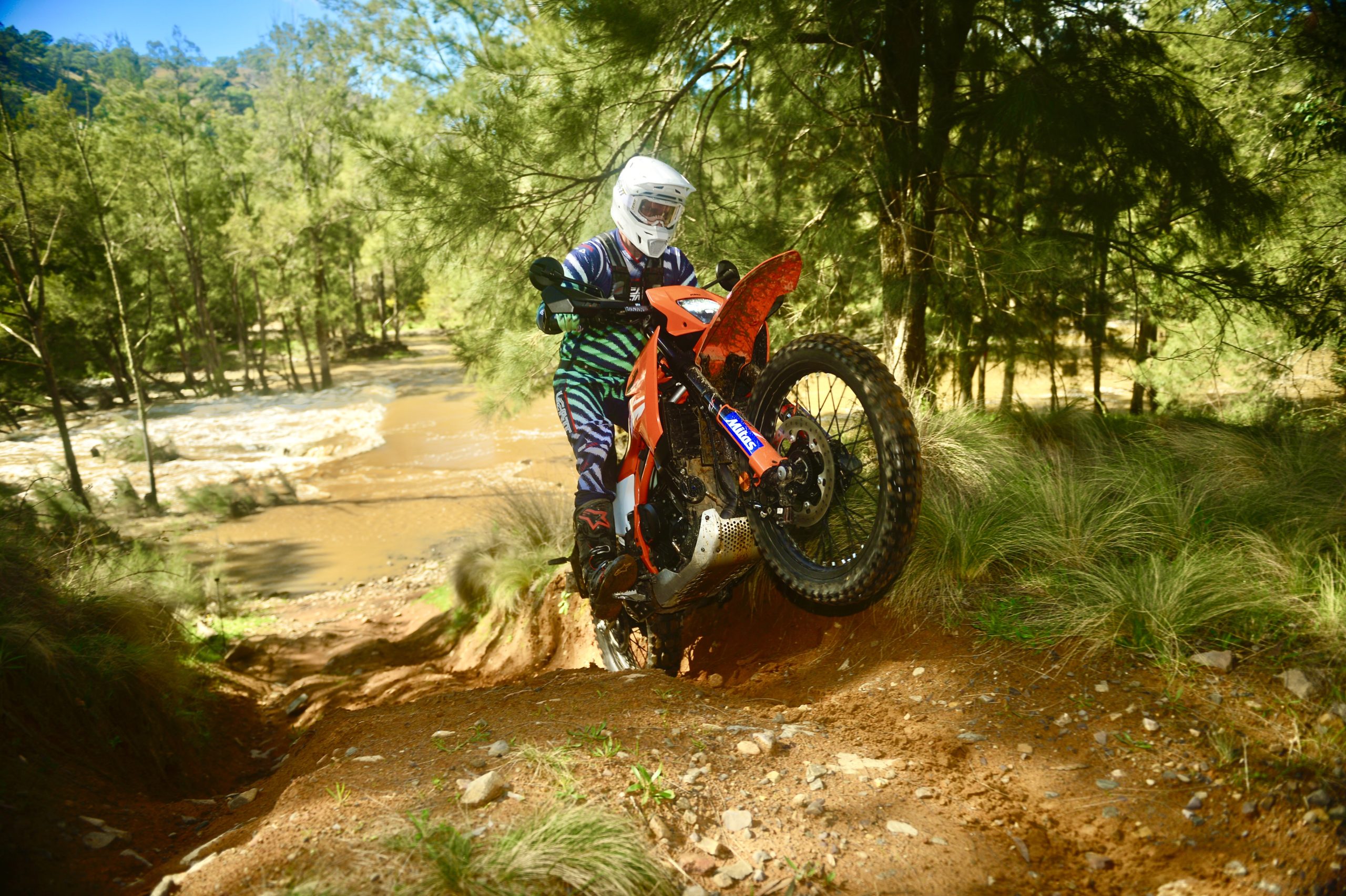
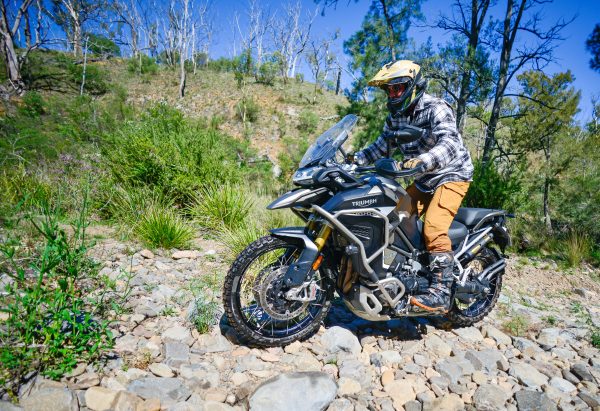
On paper, the Tiger 1200 shouldn’t be fun off-road. It’s big, it’s heavy, and it looks like it should stay on the highway. That’s exactly what Nev thought when he first pointed it at dirt. “Very intimidating,” he said. “At slow speed, you know it’s a big bike.”
And that feeling doesn’t go away immediately. Tight turns, uneven ground, and anything that requires you to prop the bike up with your legs remind you pretty quickly how much weight you’re dealing with. If it starts to go, like it did on Nev a few times, you’re not catching it easily.
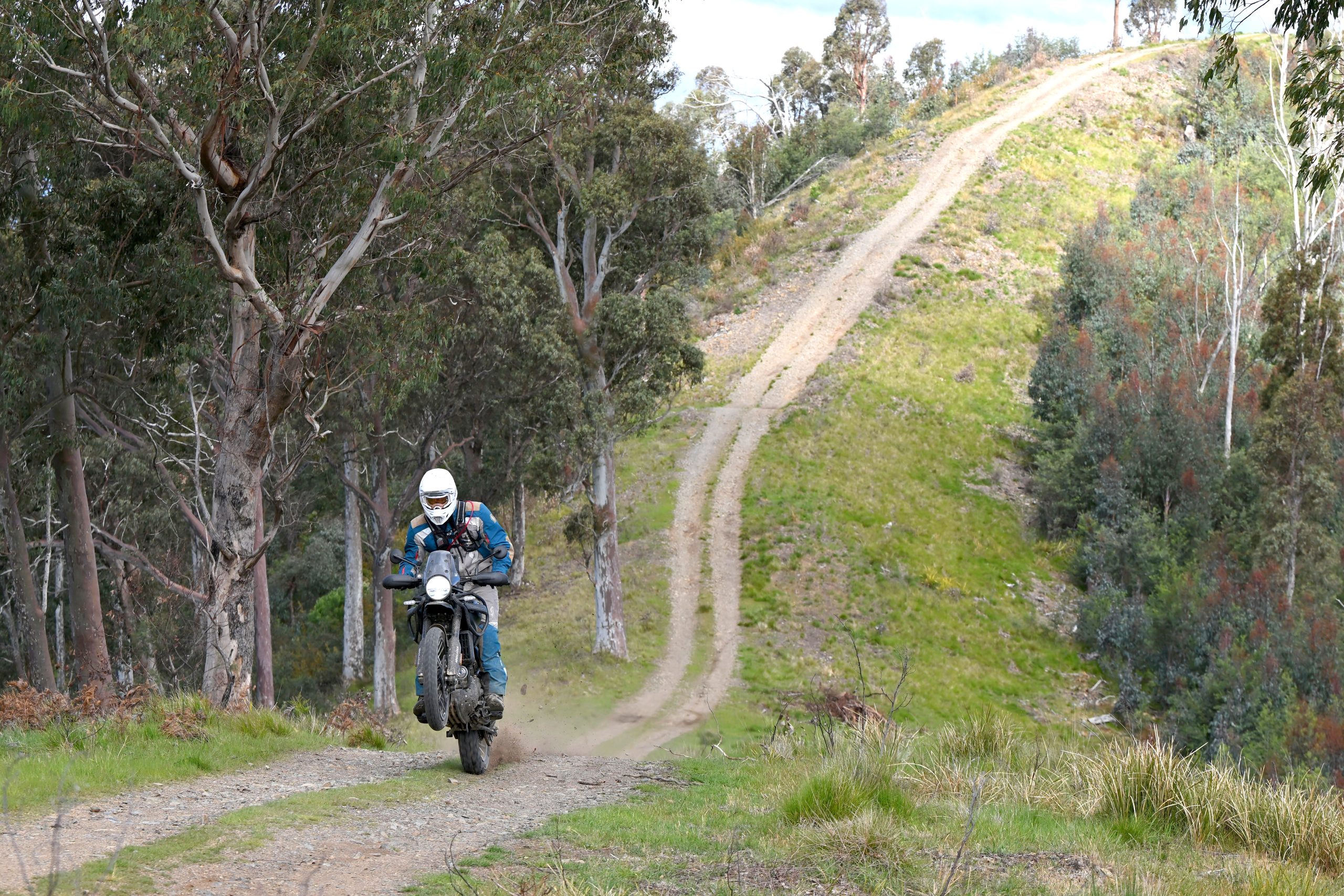
But then something changes when the speed picks up. The weight settles, the suspension starts working properly, and the bike becomes far more stable than expected. Jez noticed it straight away.
“It just sits so nicely,” he said. “Once you’re moving, it’s actually easier to ride than you think.”
That stability is what makes it work. Compared to smaller bikes that can feel nervous or twitchy, the 1200, because of the plush suspension and girth, stays planted. It doesn’t react sharply to every input.
WHERE IT GETS HARD
If you’re thinking of going into hard, off-road trails that are tight and slippery you will need a decent level of skill. Conditions where Jez could survive, Nev could not.
“You’ve got to commit,” Jez said. “You can’t half-ride it.” In difficult off-road sections you need to be strong and aggressive with the bike or it will control you if the track gets challenging.
On a smaller bike, you’ve got room to recover. You can dab a foot, shift your weight, and sort it out. On the 1200, once it’s going the wrong way, you’re dealing with a lot of mass.
Turning it around on a steep hill was an issue for Nev. There were times where it was easier to get off and physically move it than try to attempt a three-point turn or spin turn. It’s just the reality of a big adventure bike being used where a Tiger 900 would be more suited.
ENGINE CHARACTER
The engine isn’t what you’d expect either. For a 1200, it’s surprisingly manageable. There’s no aggressive hit, no sudden burst of power, it just builds smoothly. “It’s really linear,” Nev said. “You don’t get caught out. Even as a relative beginner to off-road adventure riding on big bikes like this, I never felt out of control. It was so easy to control and manage”
That actually makes it easier to ride, especially off-road. When things get loose or unpredictable, you can trust what the bike is going to do. Jez found he could recover from mistakes just by working the throttle and clutch.
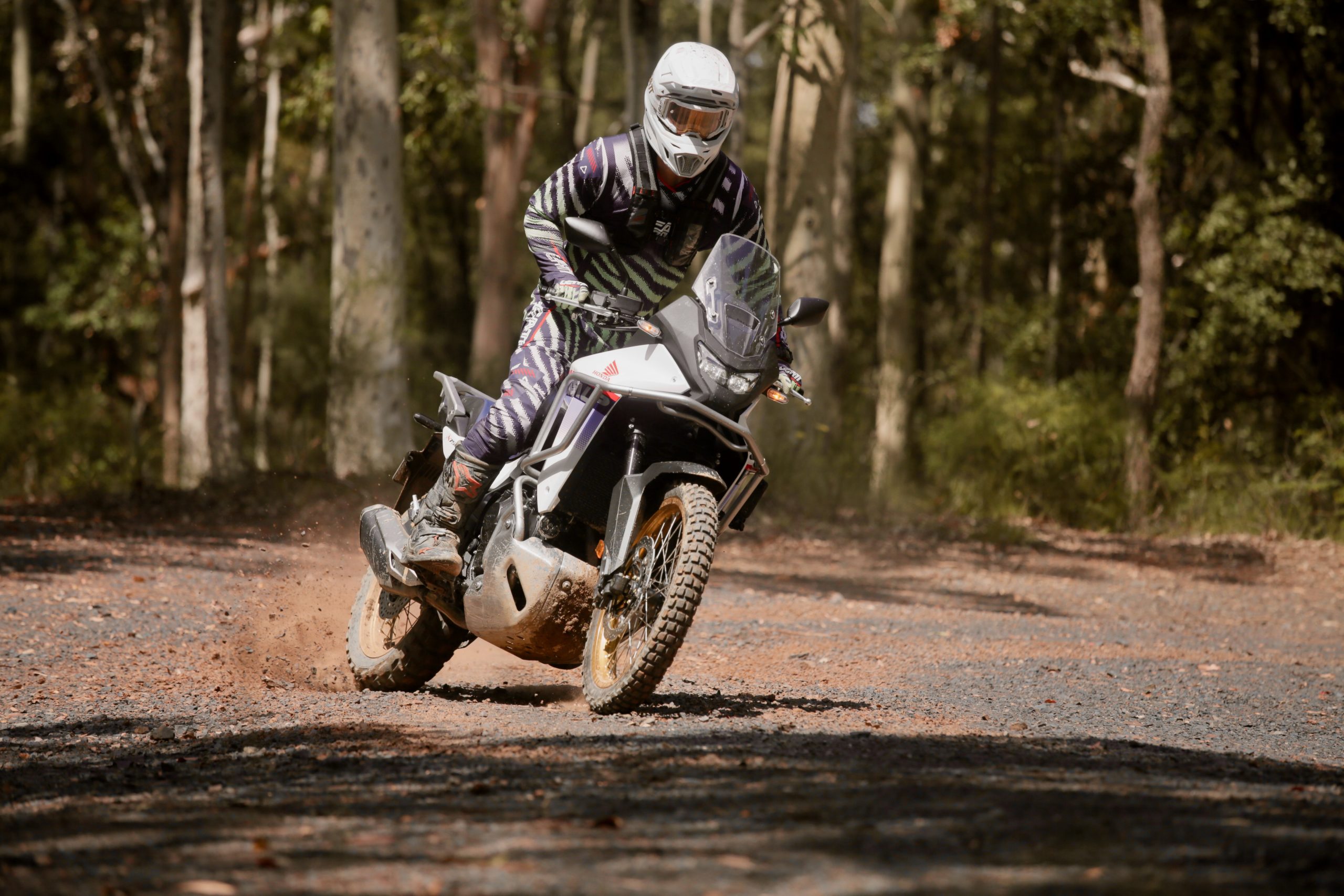
“You can bring it back pretty easily,” he said. “It doesn’t fight you. I could also drift the hell out of it because the bike has so much power and it is so well-balanced and planted.”
That smooth delivery also makes long-distance riding less tiring. You’re not constantly feeling the power jerk when you hit holes or jumping erosion mounds.
How about the heat?
One of the biggest tests came in extreme heat. They rode for 11 hours in 40–45°C conditions, which is about as harsh as it gets. The bike handled it without drama. It got hot, obviously, but it didn’t overheat or start struggling. That’s a big tick for something designed to cover big distances in Australian conditions.
What stood out more was how the heat was managed around the rider. Instead of cooking your legs, the radiators push air away, which makes a huge difference over long days.
“Some bikes just roast you,” Jez said. “This one doesn’t. The hot air from the engine was pushed away from your groin and legs so I never felt like I was overheating.”
THE TECH SIDE OF THINGS
Modern adventure bikes are loaded with tech, and this is no different. Ride modes, traction control, electronic suspension: it’s all there. Jez used most of it, adjusting settings depending on conditions and terrain. Nev, on the other hand, ignored almost all of it. “I don’t need it,” he said. My skill level isn’t at a level that can handle all that stuff, I just left it on the standard mode and rode it like that every where. That being said, I did like the traction control on on the dirt, it saved me a few times and helped keep me from sliding out”.
The bike works regardless of how much you engage with the tech. If you want to fine-tune everything, you can. If you just want to ride it, you can do that too.
The only real gripe was the keyless system. It works, but it creates unnecessary moments where you’re standing there wondering why the bike won’t start. Not a dealbreaker, just something that doesn’t need to be complicated.
THE LITTLE THINGS THAT ANNOY YOU
No bike is perfect, and the Tiger 1200 has a few quirks. Jez wasn’t a fan of the gear lever position, which felt awkward with bigger boots and led to missed shifts. “It just doesn’t feel right,” he said. “I’ve got a massive foot, a size 12, and it was sometimes hard to get big dirtbike boots under”.
The width of the bike also came up, particularly when fitting luggage or riding tighter tracks. Those big grab rails at the back get in the way, and you notice it when things get narrow. But the boys were able to tie off luggage which was handy and when Jez got home, the missues could grab a hold of them for a few two-rides.
None of it ruins the bike, but they’re things you notice over time, especially when you’re living with it for thousands of kilometres.
THE TURNING POINT
Early on, Jez wasn’t convinced. “I didn’t like it at first because it looked so big” he admitted.
It felt too big, too heavy, and too different from what he was used to. But the more he rode it, the more it started to make sense. A week later, his opinion had completely flipped.
“I reckon I need one,” he said. In fact, since writing this article with Jez, we learned he bought one! Jokes on you mate, we knew we’d get you… or errr the Triumph would get you.
Who does it suit
The Tiger 1200 isn’t trying to be everything. It’s not pretending to be a lightweight off-road weapon, and it’s not trying to replace smaller adventure bikes.
What it does is simple. It covers big distances comfortably, efficiently, and without wearing the rider out. It can handle dirt when needed, but its real strength is in how it deals with long days on fast open dirt roads and real-world conditions.
Nev summed it up best after the trip. “It’s my dream bike. Even though my skill level doesn’t match the bike, it was just such a dream to ride and I’d say, even easy to ride. I could do 6000km in a week no problem, just like we did!”
And coming from someone who started the trip not knowing what to expect, that probably says more than anything else.
SPECS
ENGINE
Type: Liquid-cooled, 12-valve, DOHC, inline three-cylinder
Capacity: 1160cc
Bore x Stroke: 90.0 x 60.7mm
Compression Ratio: 13.2:1
Final Drive: Shaft drive
Clutch: Hydraulic wet multi-plate slip and assist clutch
Gearbox: 6-speed
DIMENSIONS
Seat Height: Adjustable 875–895mm
Wheelbase: 1560mm
Fuel Capacity: 30L
Wet Weight: 262kg
SUSPENSION
Front Suspension: Showa 49mm semi-active USD forks, 220mm travel
Rear Suspension: Showa semi-active monoshock with automatic electronic preload adjustment and Active Preload Reduction feature, 220mm wheel travel
WHEELS & TYRES
Front Wheel: Spoked tubeless, 21-inch
Rear Wheel: Spoked tubeless, 18-inch
Front Tyre: Metzeler Karoo Street 90/90-21
Rear Tyre: Metzeler Karoo Street 150/70R18
BRAKES
Front Brakes: Brembo M4.30 Stylema monoblock radial calipers with twin 320mm floating discs, OC-ABS, Magura HC1 adjustable radial master cylinder
Rear Brakes: Brembo single-piston caliper with 282mm disc and OC-ABS
RRP: $34,590
Warranty: 3 years
Browser: triumphmotorcycles.com.au