There’s something about the 900cc adventure bike class that just hits the sweet spot. Too small and you’re wringing its neck on the highway trying to keep up with traffic. Too big and suddenly every dirt road feels like you’re wrestling a refrigerator. But a 900, in particular a Triumph Tiger 900 Rally Pro? That’s the Goldilocks zone of adventure riding. Big enough to eat kilometres on the highway, light enough to still feel manageable when the tar turns to gravel, and powerful enough to carry luggage, camping gear and a questionable amount of red wine into the middle of nowhere.
That’s exactly why this capacity class has become such a battleground in recent years. Husqvarna has the Norden 901, KTM has the 890 Adventure R, BMW has its F900GS and Ducati has the DesertX. Then there’s Triumph’s Tiger 900 Rally Pro, which on paper feels like the Gucci version of the category. It’s dripping with tech, bristling with electronics, and wrapped in that unmistakable British styling.
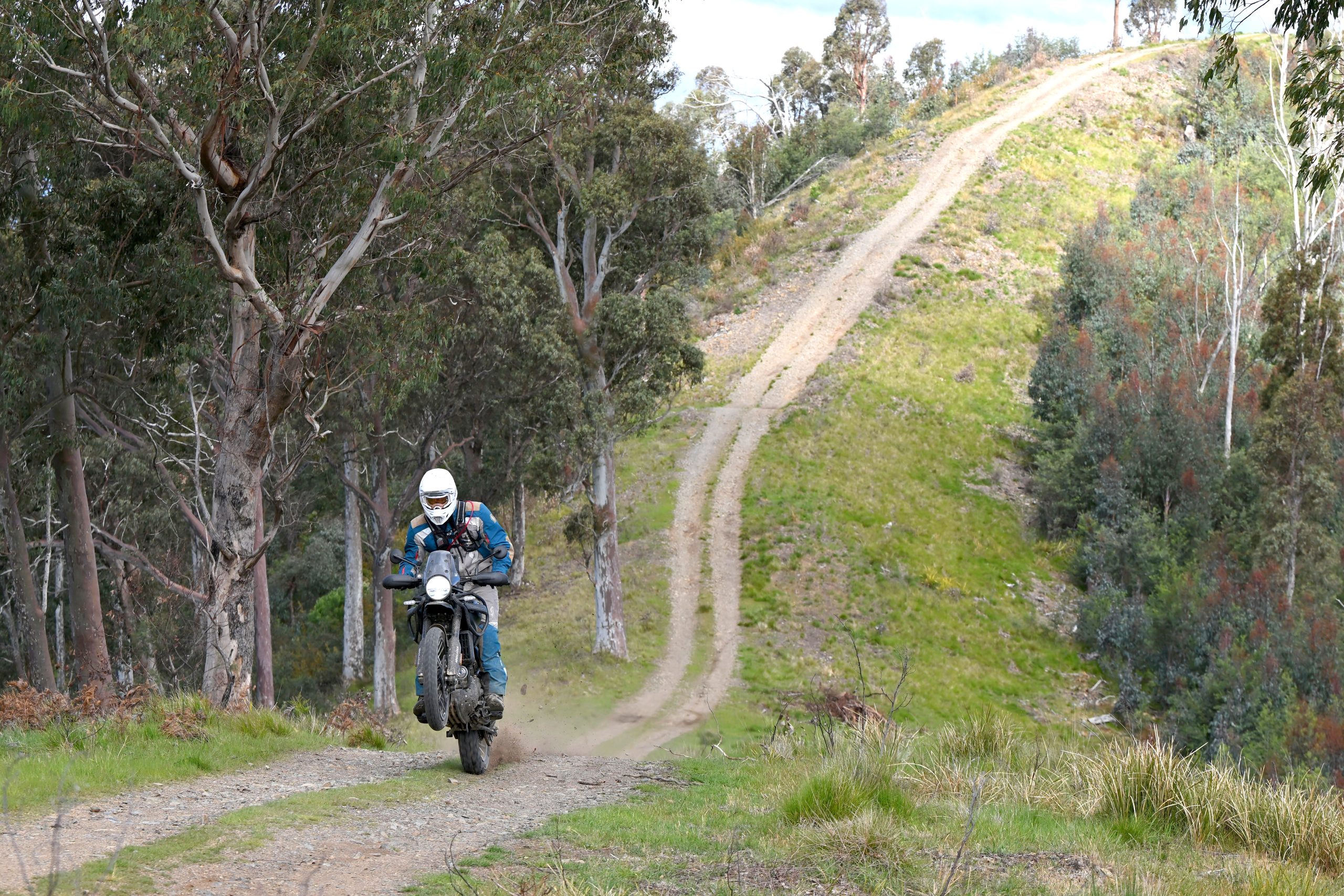
The real test is whether they can genuinely do the job: long highway slogs, rough backroads, dusty trails, river crossings and the occasional messy hill climb. To find out, we handed the Tiger 900 Rally Pro to a father-and-son duo who sit right in the middle of the adventure riding demographic. Nev Cowley represents the rider coming from a mostly road background who’s curious about exploring further afield, while his son Jez has spent years riding dirt bikes and adventure machines, including his own KTM 950 Adventure. Between them they racked up five to seven thousand kilometres, travelling from Melbourne across Victoria, along the Murray River, through New South Wales and out into the central west.
That’s a proper test of an adventure bike. Here’s what they thought.
WHAT THE TIGER IS PACKING
Before we dive into how the Tiger behaves in the real world, it’s worth taking a quick look at the hardware Triumph has built into the Rally Pro.
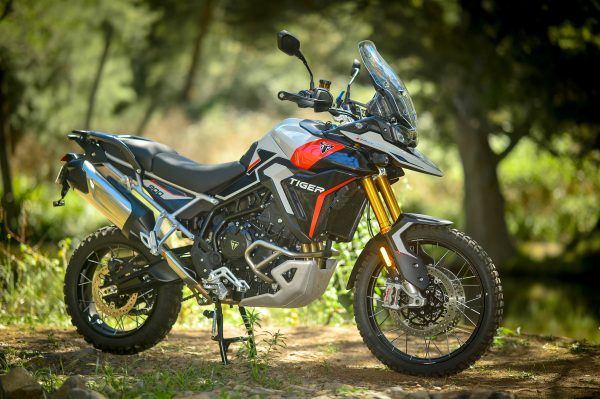
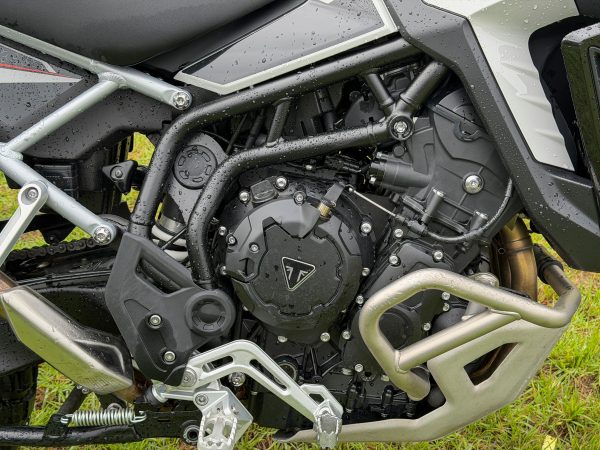
At the heart of the bike is Triumph’s 888cc inline three-cylinder engine, producing 108 horsepower at 9,500rpm and 90Nm of torque at 6,850rpm. It’s fuel injected with ride-by-wire throttle control and paired with a six-speed gearbox and slip-assist clutch. The triple-cylinder layout is something of a Triumph trademark and gives the bike a character that sits somewhere between a revvy twin and a smooth four-cylinder.
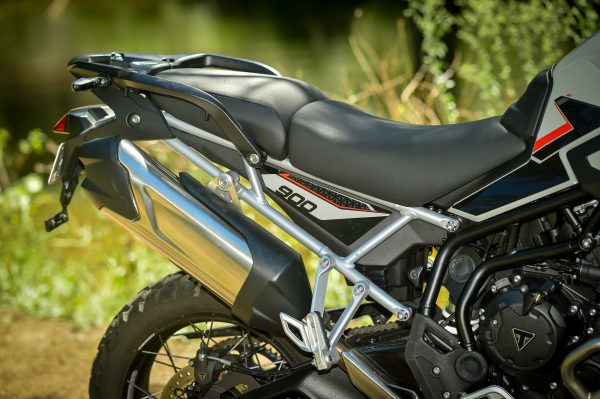
The chassis is built around a tubular steel frame with a bolt-on subframe, paired with a cast aluminium swingarm. Suspension duties are handled by Showa components, with fully adjustable 45mm upside-down forks delivering 240mm of travel at the front and a rear shock providing 230mm. That’s serious suspension travel for a bike designed to cover both highways and off-road terrain.
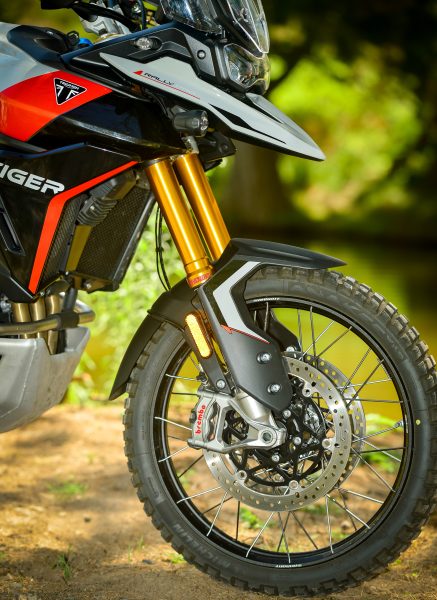
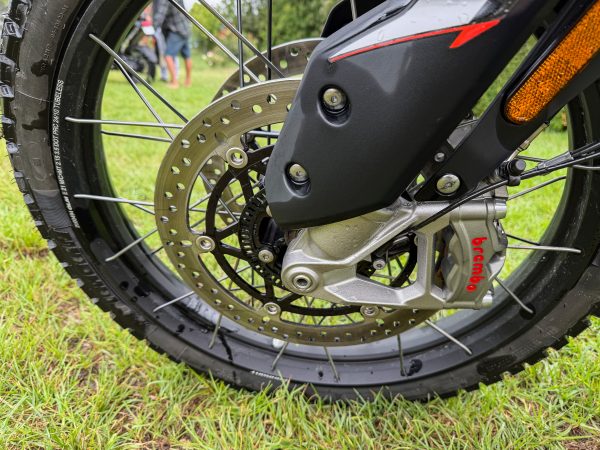
Wheel sizing follows proper adventure-bike tradition with a 21-inch front and 17-inch rear spoked wheel, running tubeless Bridgestone Battlax Adventure tyres, in standard trim. Braking is equally serious with twin 320mm discs up front clamped by Brembo Stylema four-piston calipers, supported by cornering ABS.
Tech-wise, the Rally Pro is stacked. A 7-inch full-colour TFT display sits in front of the rider and integrates with Triumph’s connectivity system, while electronic riding aids include multiple riding modes, traction control, cruise control and a host of adjustable electronic settings.
Dimensionally, the Tiger sits with a 20-litre fuel tank, 228kg wet weight, and an adjustable seat height between 860mm and 880mm. Service intervals are a healthy 10,000km, meaning it’s designed to cover some serious distance between workshop visits.
FIRST IMPRESSIONS
For Nev, the first encounter with the Tiger 900 was as much about stepping into the unknown as it was about learning the bike. “I’m definitely not a dirt rider,” he laughs. “My background is road riding, a bit of track and even speedway, but adventure riding? Not really.”
That makes him the perfect test subject for this type of machine, because many riders approaching the adventure category are coming from exactly that place. His first impression? “Visually it’s a beautiful bike. Spectacular looking. When you sit on it, the seating position is really nice, very balanced and comfortable.”
But while the engine power wasn’t intimidating, the size of the bike definitely made an impression. “The height and size, yes, that’s noticeable straight away. But once you’re moving, the balance is fine.”
The biggest learning curve for Nev wasn’t the riding, it was the technology. “In the old days you had a speedo and a tacho. Now you’ve got this big digital screen with all this information and settings. That took a bit to wrap my head around.”
LONG-DISTANCE TOURING
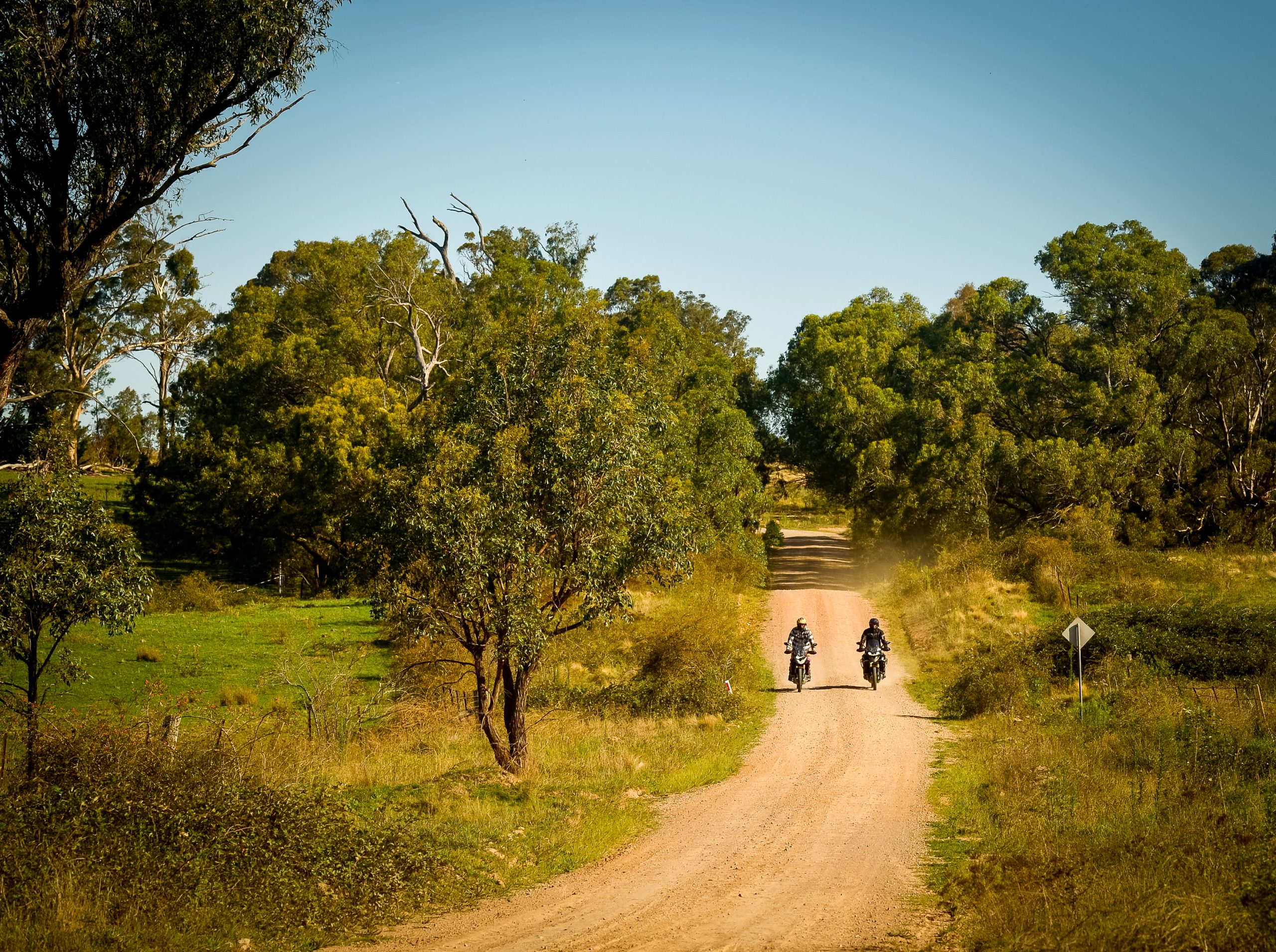
The first leg of the trip was a proper touring test. Jez and Nev rode from Melbourne down to Phillip Island before heading north and eventually making their way up toward Mildura. Long highway stretches, high temperatures and plenty of kilometres, exactly the kind of riding most adventure bikes spend the majority of their lives doing. According to Jez, the Tiger absolutely thrives in that environment.
“It tracks beautifully on the road. It just sits there and eats kilometres. The cruise control is a massive thing. I didn’t realise how much I’d use it.”
Even after long days in the saddle, the ergonomics held up well. “It’s not the most relaxed riding position ever, compared with the 1200 on long highways stretches but it works with your body really well. You don’t get that feeling where your hips are rolled forward and your back starts to ache.”
Wind protection from the manually adjustable screen was decent too, although taller riders will still notice some buffeting around the shoulders. “I’m about six-foot-two and fairly broad, so I still felt a bit of wind on the shoulders. But overall it does a good job.”
After a full day covering serious distance in temperatures pushing into the high 30s, the verdict was simple. “This thing just eats kilometres.”
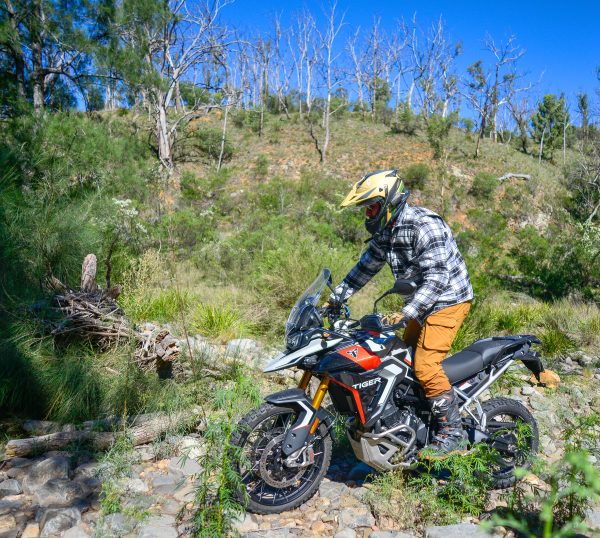
Eventually the asphalt gave way to gravel and the Tiger had to prove whether it could back up its adventure credentials. For Nev, the transition was handled cautiously.
“The first dirt roads we hit were pretty mild, which was good for my experience level,” he says. “As long as I stayed within my limits, the bike handled it well.”
With Jez helping manage the riding modes and traction control settings, the bike remained composed on easier terrain. But the moment Jez got the chance to really push it, the Tiger showed its wild side.
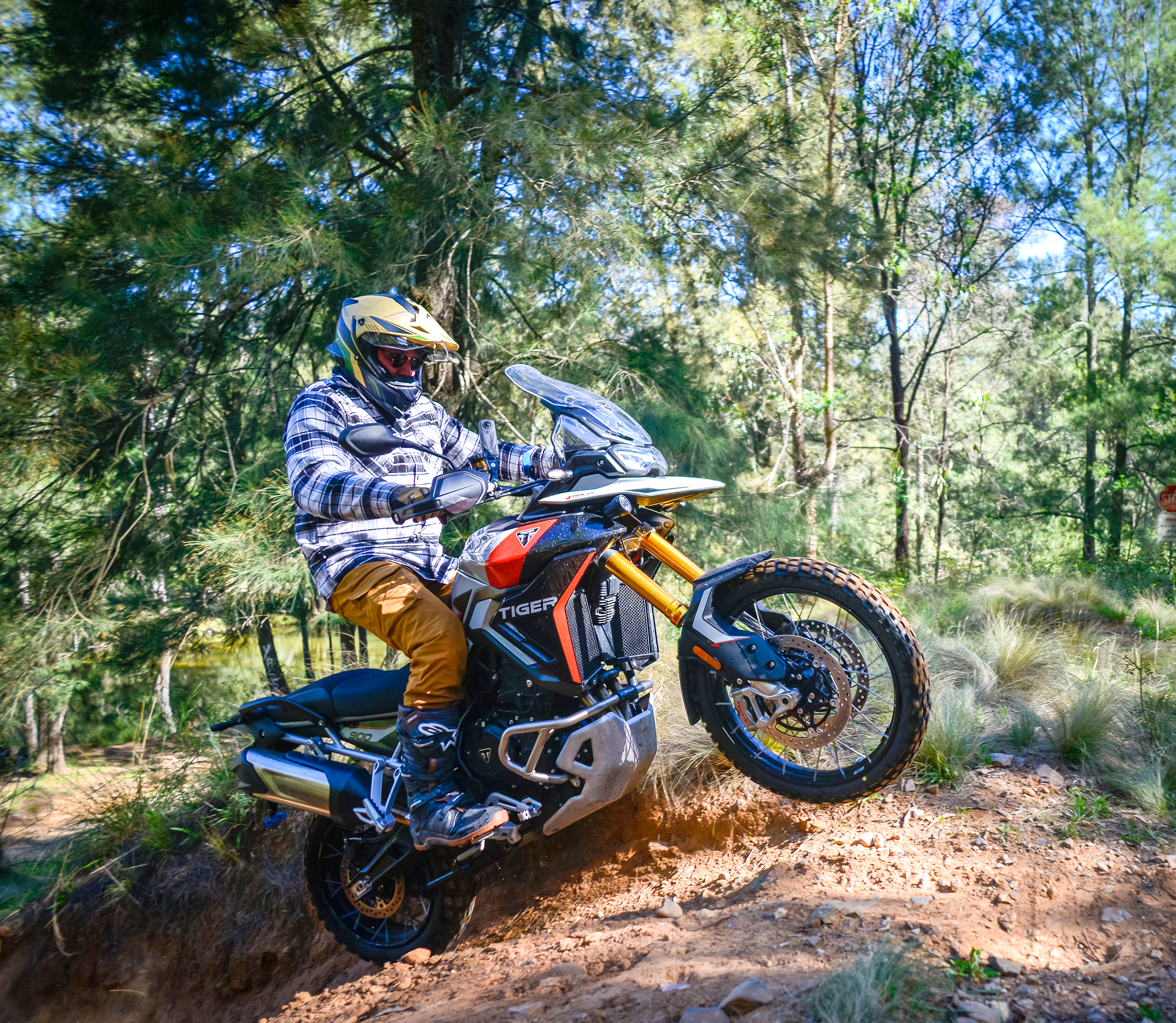
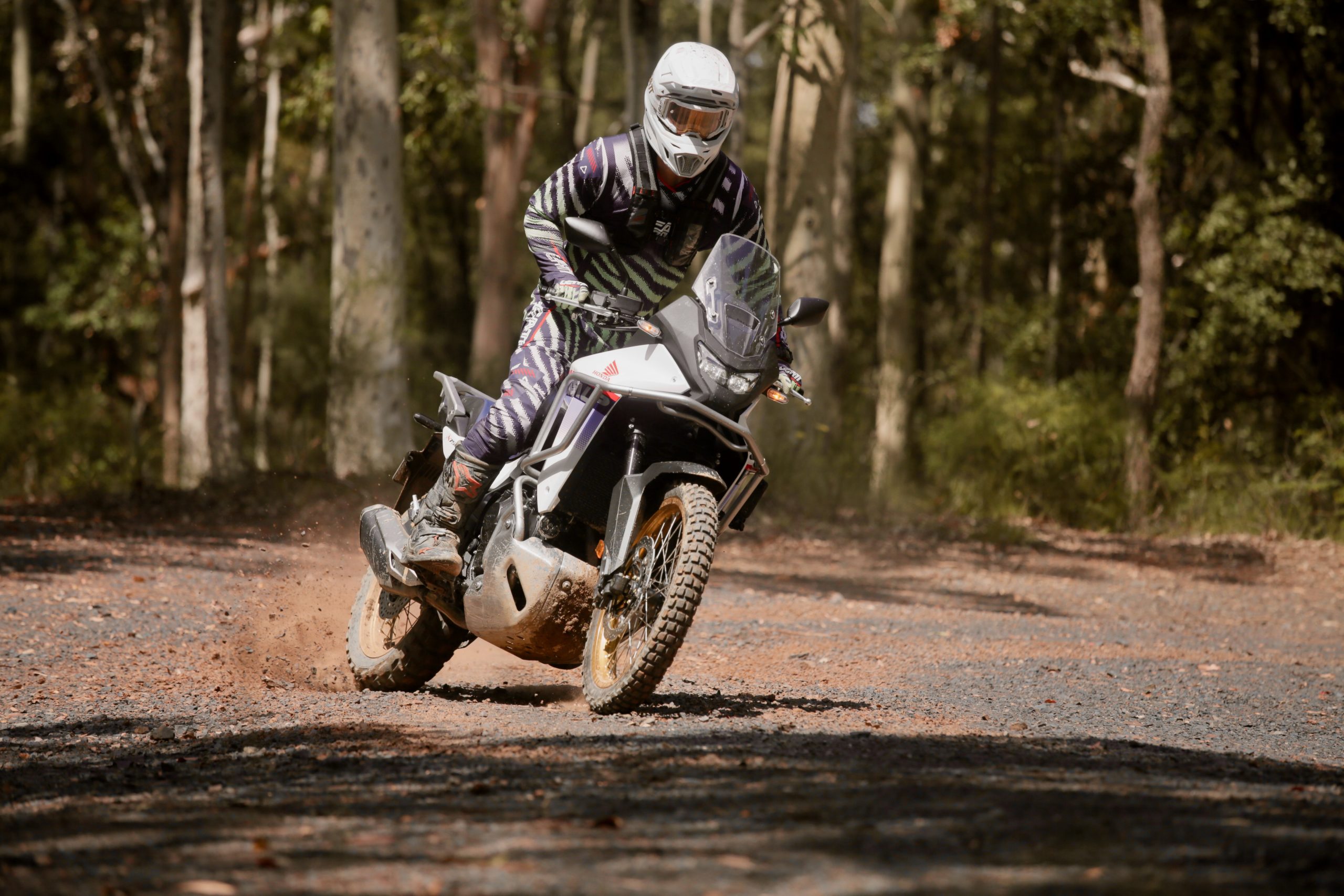
“This thing is like a firework,” he laughs. “It’s aggressive. It wants to step out, do wheelies, spin the rear tyre. It’s got a crazy amount of power.” That inline triple engine gives the Tiger a punchy personality that’s very different from the parallel twins dominating the category. “Straight out of the box it just wants to rip.”
OFF-ROAD PERFORMANCE
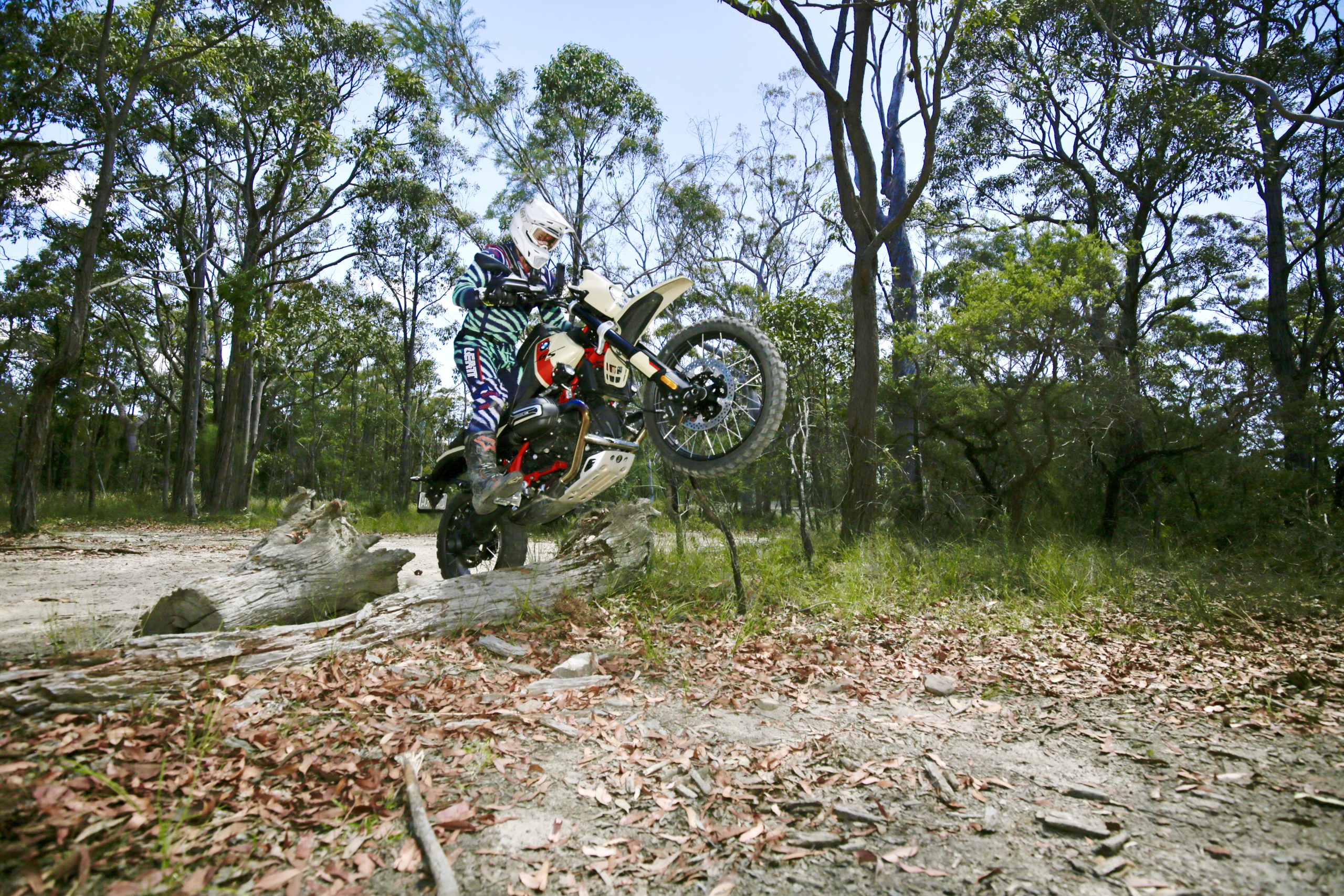
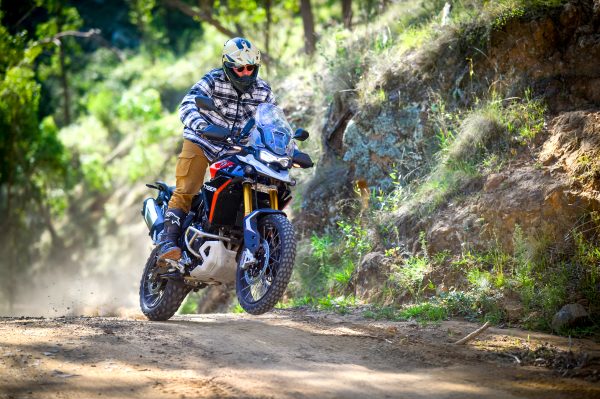
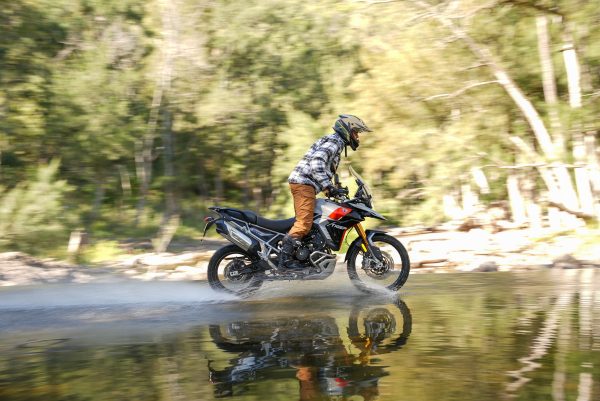
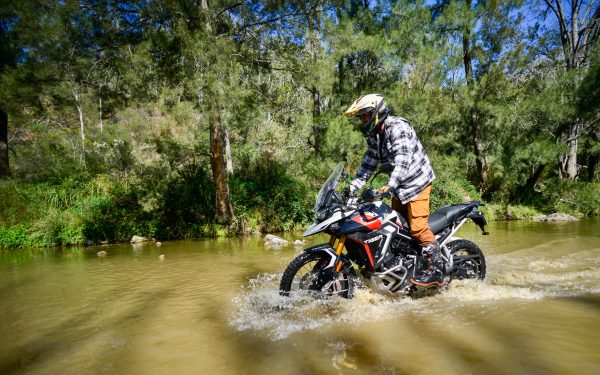
Once the terrain got rougher, Jez started to get a better understanding of where the Tiger 900 Rally Pro sits in the adventure spectrum. “It’s capable, really capable. We’ve taken it up some pretty sketchy hills and through river crossings and it does everything you want from a motorcycle.”
But like most mid-sized adventure bikes, weight and suspension setup become noticeable once the pace increases. “The weight is carried fairly high, and when you really start pushing it, you can feel that. You come into a corner hard, power out, and the rear wants to step out while the front can feel a bit vague.”
Suspension was another area that needed attention when the bike was loaded with luggage. “We had to wind the suspension up a lot to get the sag right with the gear on it. At speed we bottomed it out quite a few times.”
That’s not unusual for a stock adventure bike setup, especially with a rider weighing over 100kg and carrying luggage. “New springs or a suspension revalve would make a big difference.”
ELECTRONICS: BLESSING OR CURSE?
The Tiger’s electronics package is extensive, and while that opens up huge possibilities for tuning the bike, it also requires some learning. “The traction control can be really sensitive,” Jez says. On wet roads it performed brilliantly. “In the rain it was amazing. It kept everything stable and gave you confidence.” But on mixed surfaces, like patches of dirt on bitumen, it could become a little abrupt. “You’d suddenly get no power at all because the system thinks you’re losing traction.”
Fortunately, the bike’s rider modes allow extensive customisation. “You can set it up exactly how you want. Once you spend time dialling it in, you can really tailor the bike to your riding and you can take it off altogether”
HEAT MANAGEMENT
One unexpected quirk appeared during extremely hot riding conditions. The radiator shrouds direct heat toward the rider’s legs, which became noticeable in high temperatures.
“On the days where it was pushing close to 40 degrees, the heat coming off the bike was pretty intense,” Jez says. The airflow from the radiator vents directs warm air toward the rider’s knees, which isn’t ideal during Australian summer riding.
“It definitely cooks you a bit in really hot weather.”
THE VERDICT FROM THE COWLEYS
After thousands of kilometres covering highways, gravel roads and rougher off-road sections, the Cowleys came away impressed. Nev believes the Tiger suits riders looking to expand their riding horizons.
“It’s a bike for someone who wants to explore further. Someone who wants to go longer distances and push a bit further off-road than where a 1200 can take you”
Jez summed it up with a comparison that perfectly captures the Tiger’s place in the adventure world. “If you want to go to a café, buy a 1200. If you want to go to the pub, take a 900.” In other words, it’s built for riders who actually want to get the thing dirty.
Does it tick the boxes?
The Triumph Tiger 900 Rally Pro sits in that sweet spot of the adventure market where bikes need to do everything reasonably well.
Touring comfort? Tick.
Long-distance capability? Tick.
Off-road potential? Tick.
It’s not the lightest adventure bike and it’s not the most basic. But what Triumph has built is a machine that blends performance, technology and comfort into a genuinely capable package. For riders coming from road bikes who want to start exploring dirt roads and backcountry routes, it offers a premium entry point into adventure riding.
And for experienced riders, who want to tackle nasty off-road sections, once the suspension is dialled and the electronics are set up properly, the Tiger becomes something else entirely: a fast, aggressive and surprisingly capable adventure weapon.
TRIUMPH TIGER 900 RALLY PRO RRP: From $26,390
ENGINE
Type: Liquid-cooled, DOHC, 12-valve inline three-cylinder
Capacity: 888cc
Bore x Stroke: 78.0 x 61.9mm
Compression Ratio: 13.0:1
Fuel System: Multipoint sequential electronic fuel injection with ride-by-wire throttle
Clutch: Wet, multi-plate slip and assist
Gearbox: 6-speed
Final Drive: O-ring chain
DIMENSIONS
Wheelbase: 1551mm
Seat Height: Adjustable 860–880mm
Fuel Tank: 20L
Wet Weight: 228kg
CHASSIS
Frame: Tubular steel frame with bolt-on subframe
Swingarm: Twin-sided cast aluminium alloy
SUSPENSION
Front: Showa 45mm USD forks, adjustable preload, rebound and compression damping, 240mm travel
Rear: Showa rear shock, adjustable preload and rebound damping, 230mm travel
TYRES & BRAKES
Front Tyre: 90/90-21 Bridgestone Battlax Adventure
Rear Tyre: 150/70-17 Bridgestone Battlax Adventure
Front: Twin 320mm floating discs with Brembo Stylema 4-piston monobloc calipers, cornering ABS
Rear: Single 255mm disc with single-piston caliper, cornering ABS
RRP & Warranty
Warranty: 2 year, unlimited km
RRP: From $26,390
Browser: triumphmotorcycles.com.au
Service Interval: 10,000km / 12 months