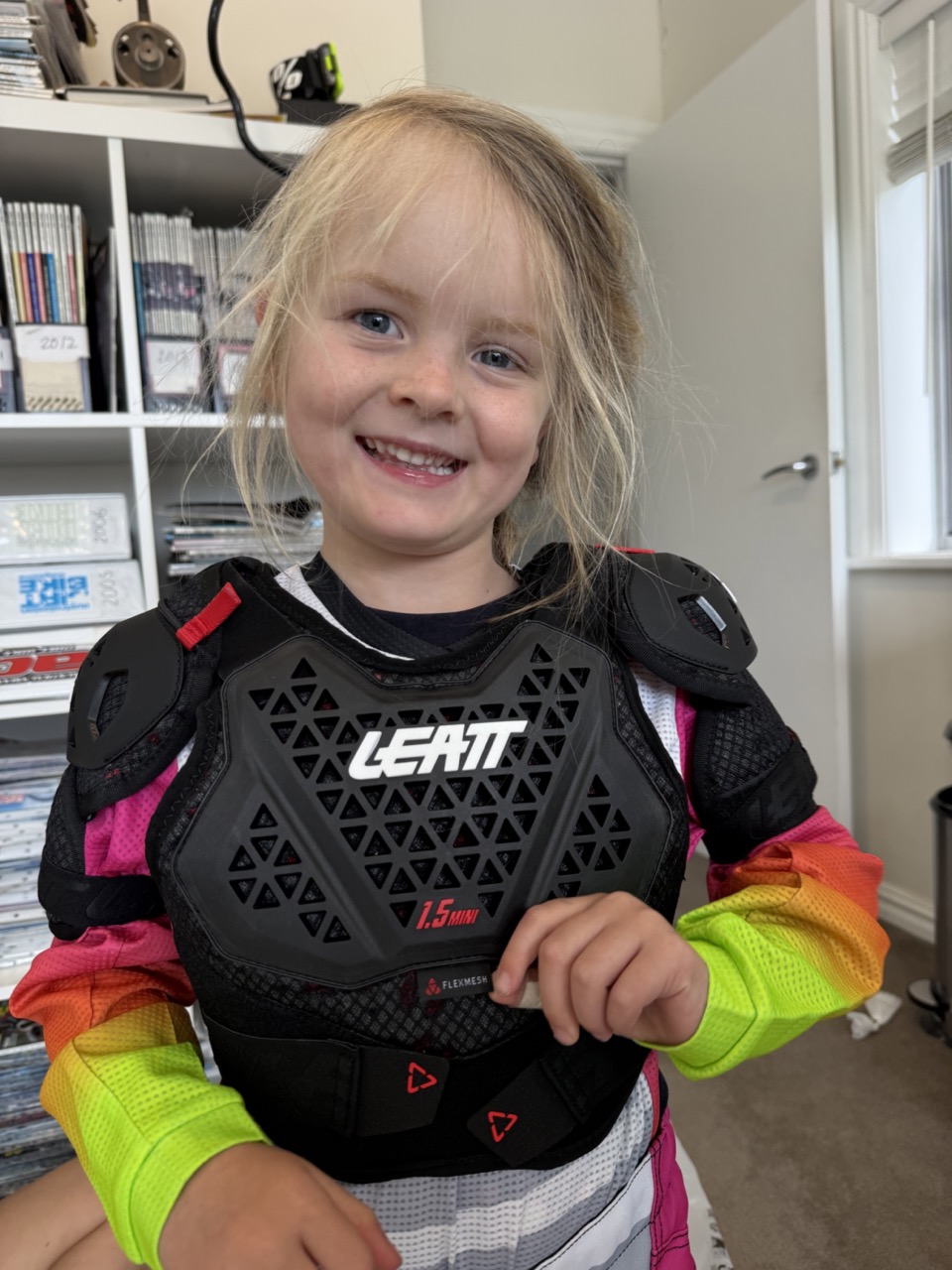
Finding good kids’ armour is harder than it should be. Most of it is either bulky, uncomfortable, just doesn’t fit right for their little boldies. That’s what led us to these two junior options from Leatt: the soft-shell 3DF AirFit EVO Pro Jr and 1.5 Pro Mini Chest Guard. One sits neatly under the jersey with soft impact foam, the other is a lightweight harder-shell setup that can go over or under.
First impressions are strong across both. The 3DF AirFit EVO Pro Jr is all about comfort. It’s soft, flexible and properly low profile, wrapping around the body so well the kids barely notice it’s there. It uses ventilated 3DF impact foam through the chest, back and shoulders, and the fit is spot on thanks to the 3D shaping. The 1.5 Pro Mini Chest Guard doesn’t feel bulky or restrictive. The FlexMesh-style perforated shell does a great job of letting air flow through, and the padded base layer stops that plasticky rub you sometimes get with cheaper guards. The fit is dialled too, with adjustable waist straps and a simple buckle system.
On the bike, they do the job without getting in the way. The 1.5 Pro Mini sits close to the body, works fine over or under a jersey, and the added shoulder coverage is a nice touch for a bit of extra peace of mind. The low-profile design also means it plays nicely with a neck brace if you’re running one.
Out on the bike is where both really make sense. The biggest win? The kids don’t complain. No tugging at straps, no asking to take it off halfway through a ride. Ventilation is solid on both, even when speeds drop, and they stay comfortable for longer sessions. More importantly, both have already been crash-tested in the real world, and the result has been no injuries.
So far, we’re big fans of both, but they definitely serve different roles. The 3DF AirFit EVO Pro Jr is the go-to for everyday riding where comfort and low profile are key, especially under a jersey. The 1.5 Pro Mini Chest Guard is a great option for younger riders or those who prefer the feel of a hard shell with plenty of airflow and simplicity. We’ll keep swapping between the two to work out where each really shines.