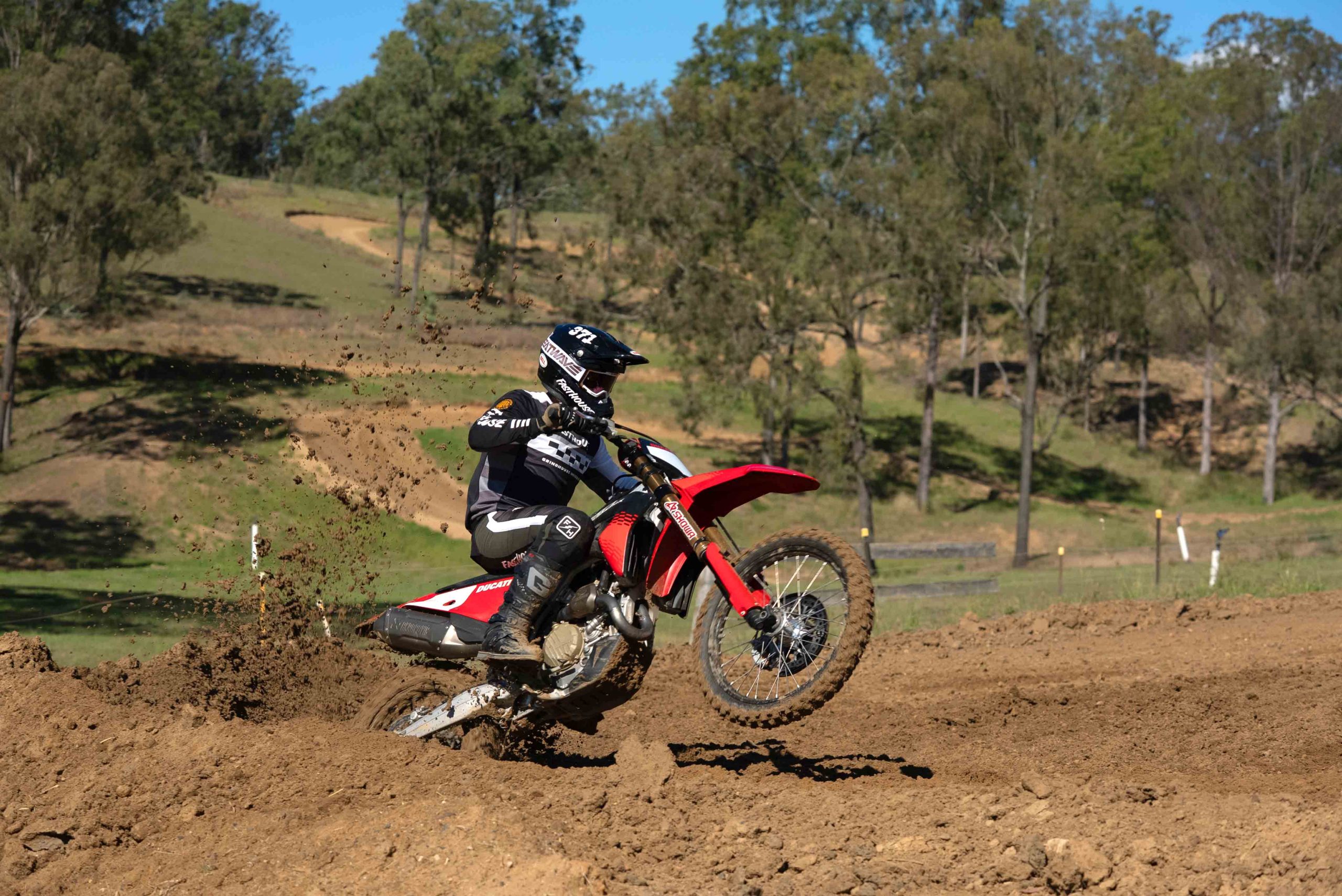
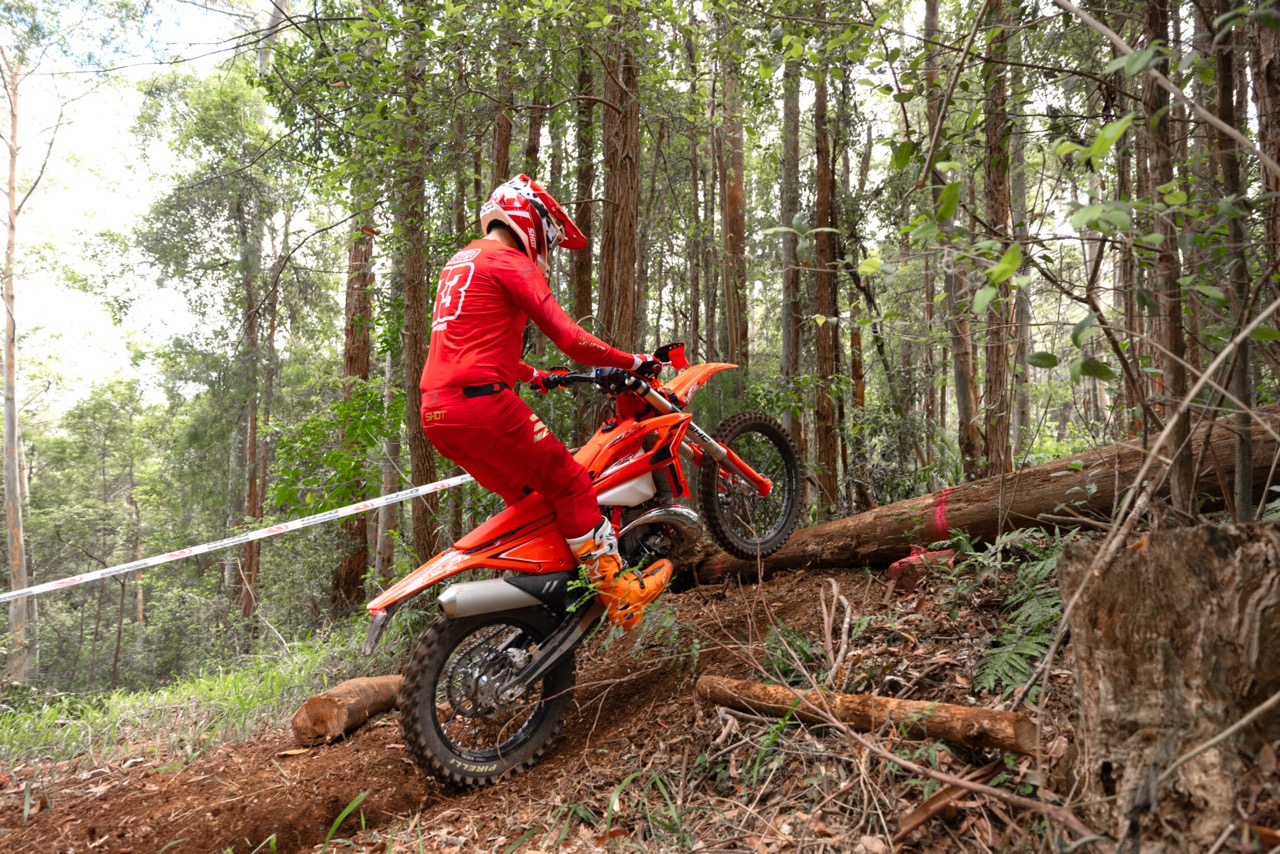
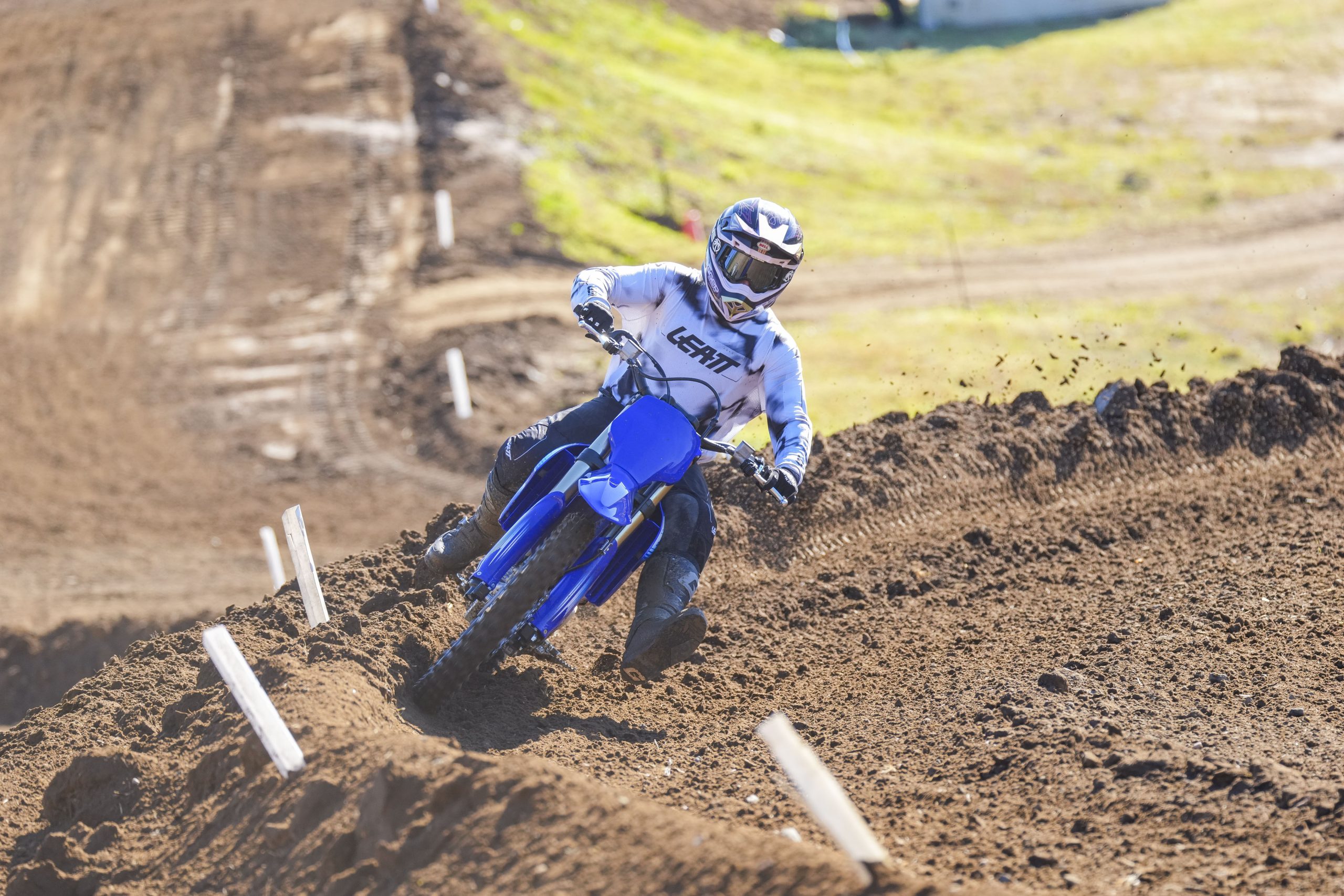
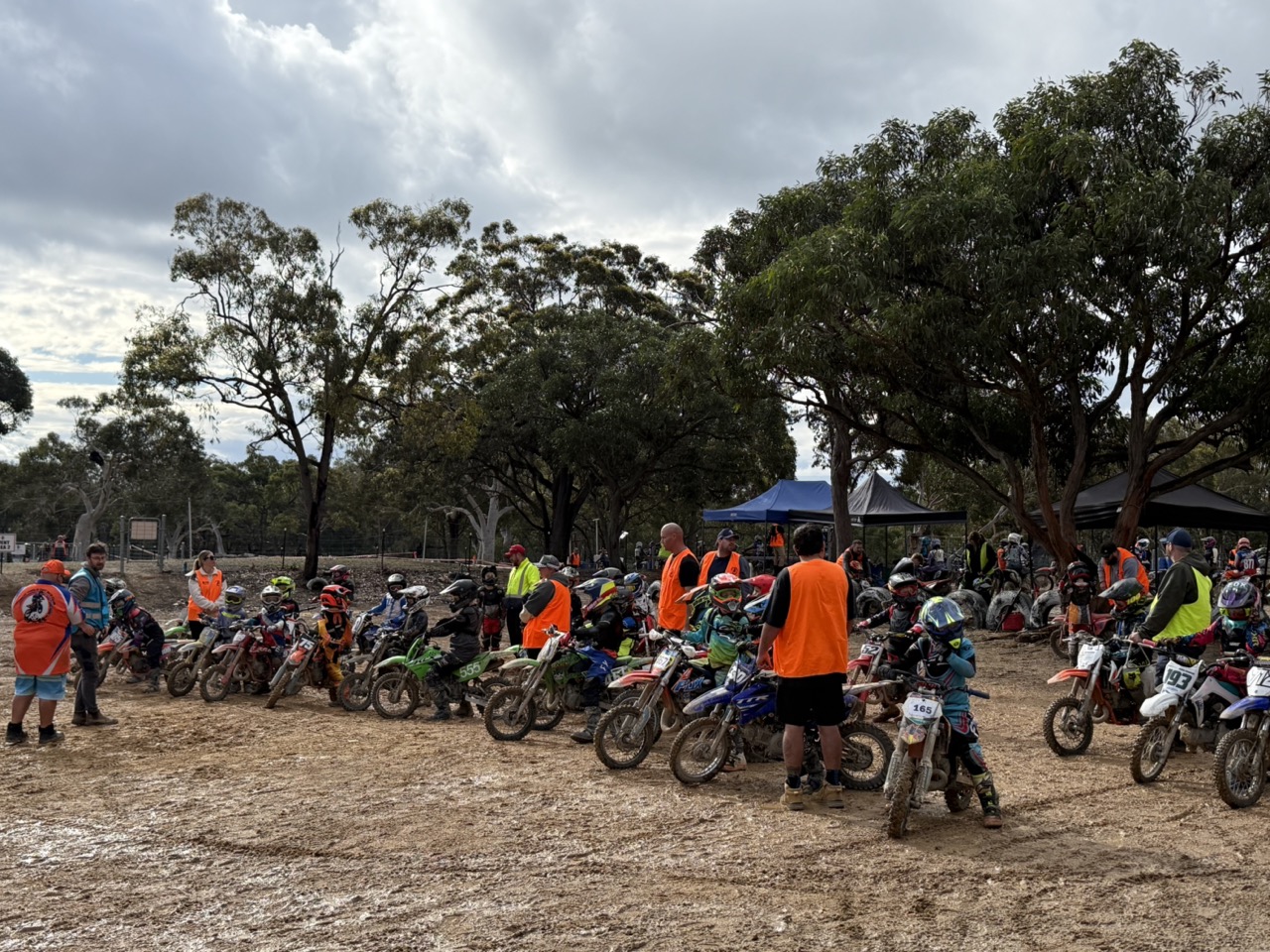
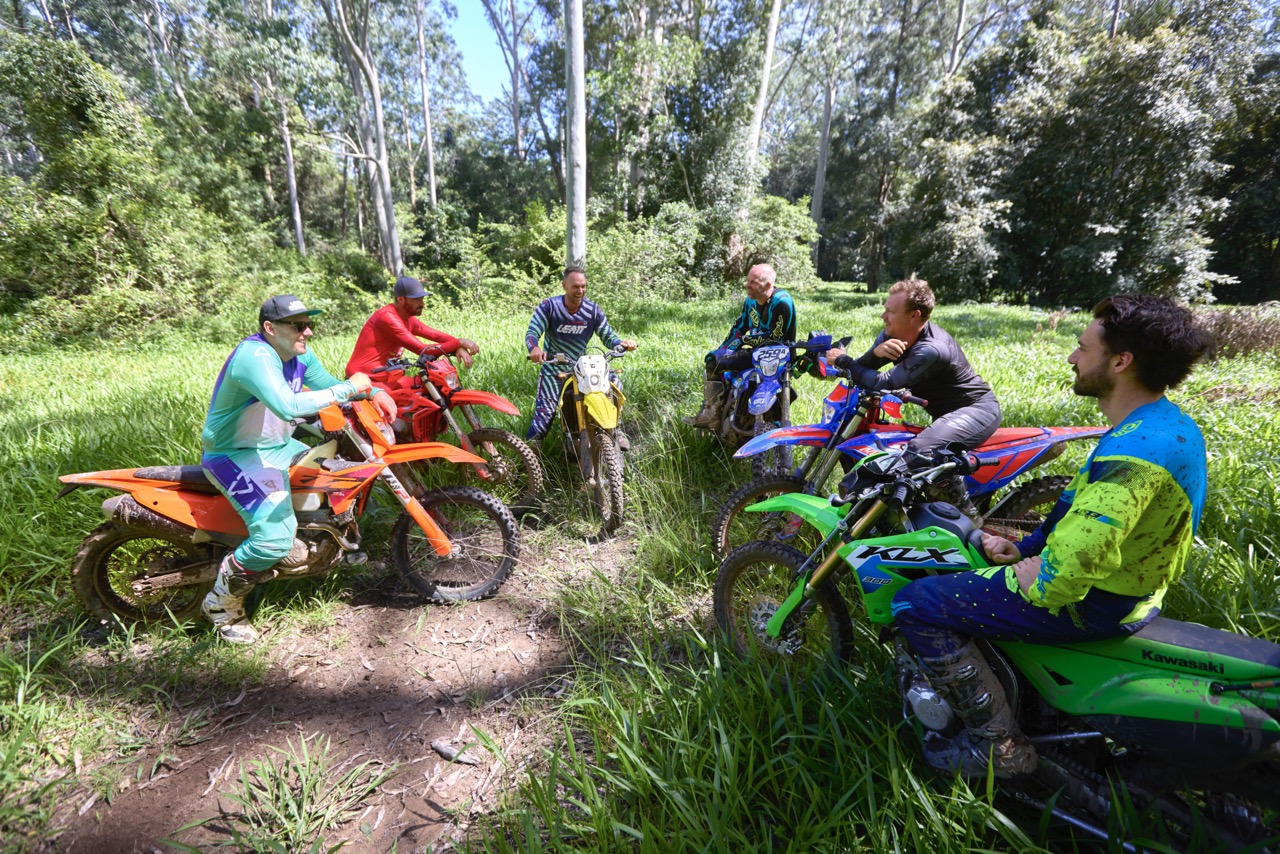
We first laid eyes on the Sur-Ron Hyper Bee under lights, noise and chaos, not at a test track, not in a car park, but at the Melbourne Supercross, where it rolled out for an exhibition race in 2025. Kids went bar-to-bar and showed just what this thing can do and suddenly this little electric bike wasn’t just a novelty, it was a genuine contender. In front of a crowd. That moment mattered, because it showed Sur-Ron wasn’t mucking around with a pit bike; they were aiming squarely at junior racing.
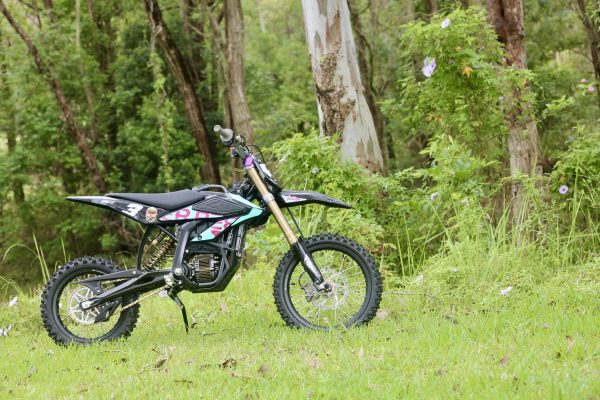
What makes the Hyper Bee genuinely different is its dual-wheelset concept. One bike, two personalities. Run it with a 10/12-inch wheel combo and it fits neatly into the 50cc-sized class space. Swap to the 14/12-inch wheels, and suddenly you’ve got a machine that can line up with 65-class, same chassis, same motor, same battery, different stance and feel. For families staring down the barrel of buying (and maintaining) multiple race bikes as kids grow, this could be a big money-saver.
But what about all the issues with battery power? Battery swaps are quick and easy, no tools, no drama, and no waiting around for things to cool down. Have a spare battery charged and you’re back on track in minutes. In theory, that alone could save families thousands over a few seasons. Fewer bikes, fewer engines, fewer rebuilds, fewer headaches. But electric bikes don’t get a free pass just because they’re convenient.
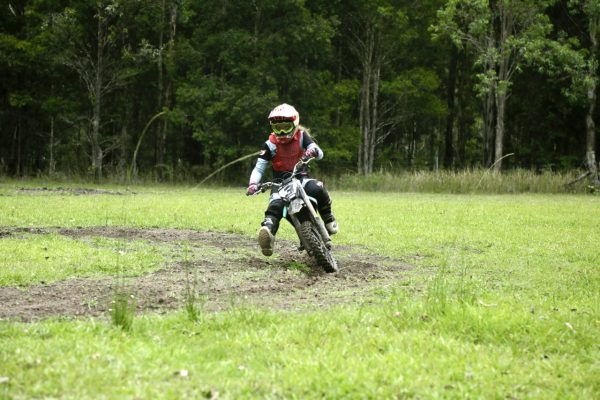
The big question is the one that actually matters: is it competitive? Can one bike really span two classes without feeling compromised? Can it holeshot, corner, jump, and survive proper racing abuse? We handed the Hyper Bee to Jaxon (6) in the 50 class and Henley (9) in the 65 class to find out.
The good stuff
The Sur-Ron Hyper Bee X is powered by a removable 50.4V, 1,260Wh (25Ah) lithium battery, which can be charged either in the bike or separately. Claimed range is up to 50km when cruising at 40km/h, with a listed top speed of 55km/h. Charging time is quoted at 3–4 hours using the supplied 10A fast charger, and battery swaps are designed to be straightforward for quick turnaround between sessions.
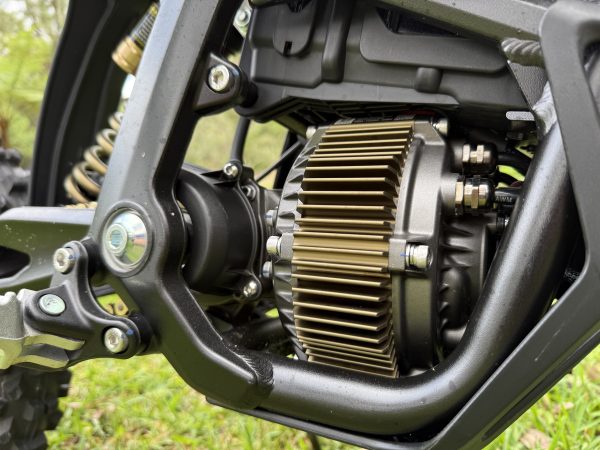
Power comes from a BLDC mid-mounted electric motor producing a claimed 5kW peak output and 158Nm of maximum torque, delivered through a belt and chain final drive with a 7.6:1 reduction ratio. Throttle operation is fly-by-wire twist grip, controlled by an FOC sine wave X controller, and the bike offers three selectable ride modes: Eco mode for reduced power and energy conservation, and Sport mode for maximum torque and speed. A remote parental control is also included to manage power for beginner riders.
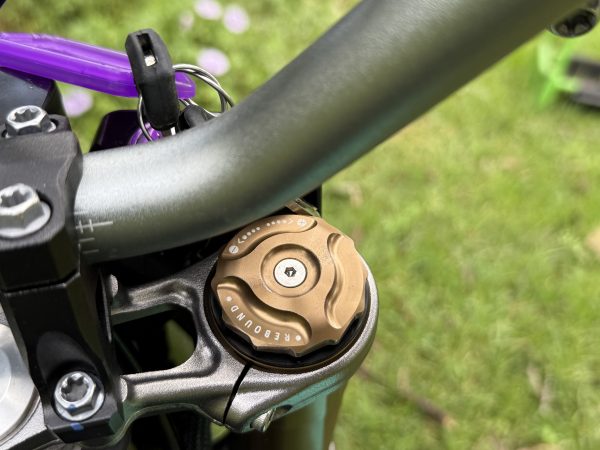
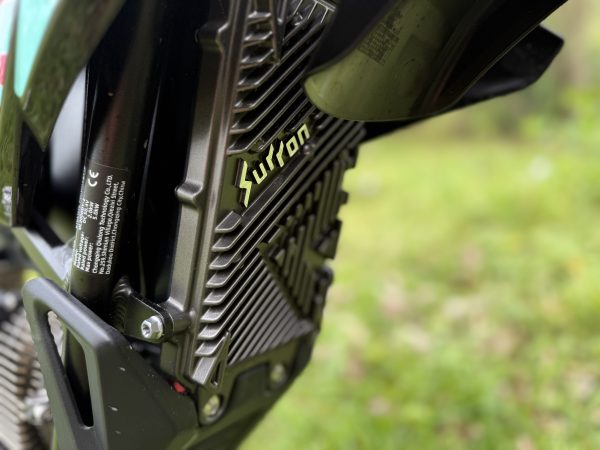
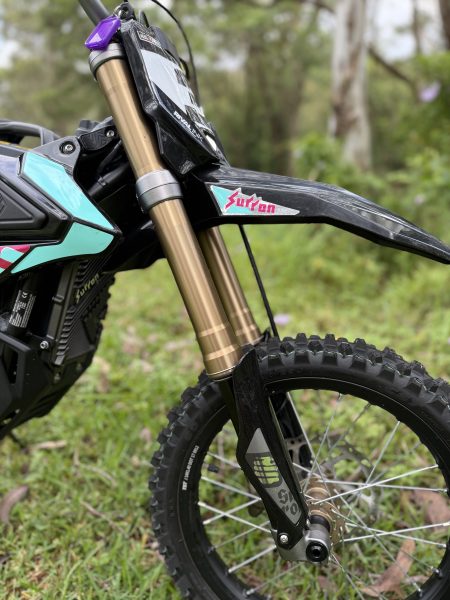
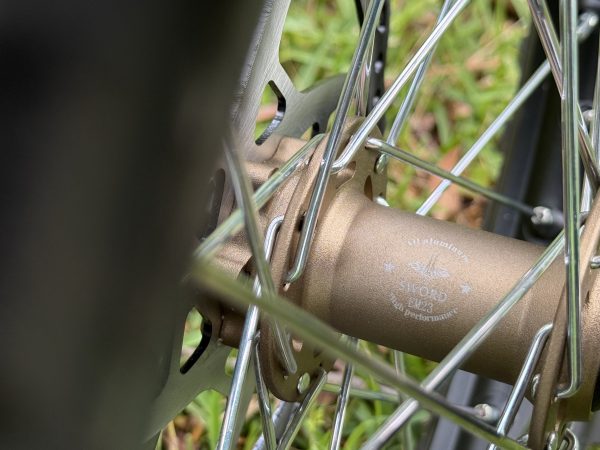
Braking is handled by hydraulic disc brakes front and rear, using dual-piston calipers, with a 180mm front disc and 160mm rear disc. Suspension consists of KKE upside-down front forks with 170mm of travel, paired with a KKE rear shock featuring 87mm of travel and an Intersect TR design. The frame is constructed from 6061 T4 and T6 forged aluminium, with 6061 aluminium handlebars used up front.
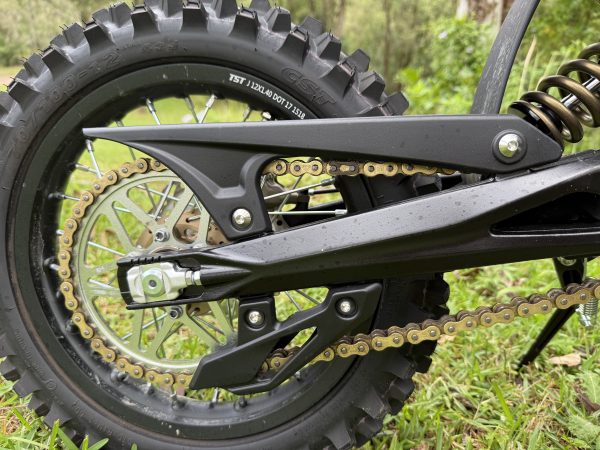
One of the Hyper Bee’s defining features is its dual wheel-size compatibility, allowing the same bike to be run with either 10/12-inch wheels or 14/12-inch wheels. Both setups use aluminium spoked rims fitted with CST off-road mud tyres. Depending on wheel size, overall dimensions change accordingly: the 10/12-inch configuration measures 1,460 x 680 x 860mm, while the 12/14-inch setup measures 1,500 x 755 x 885mm. Seat height ranges from 635–673mm (10/12) to 665–705mm (12/14), with corresponding ground clearance figures of 213–234mm and 240–260mm.
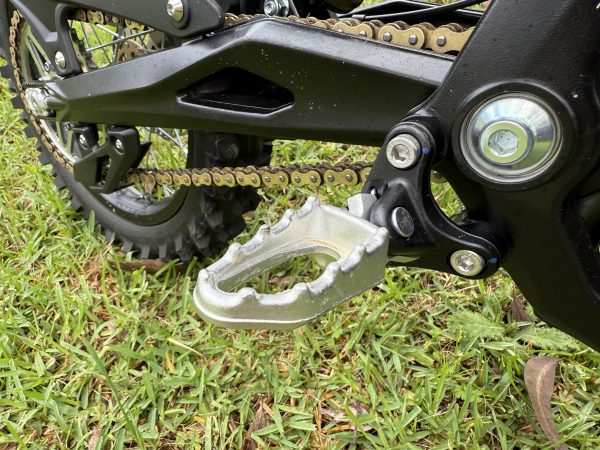
Weight is listed at 38kg for the 10/12-inch configuration and 39kg for the 12/14-inch setup, with a maximum rider load of 60kg. The wheelbase is 1,033mm across both configurations. Standard equipment includes a front LED light (always on), horn, rear fender mounted to the seat, and a multi-function LCD display showing speed, trip, odometer, battery status, and top speed. The bike is supplied with a one-year warranty, and comes in the box with the bike, 10A charger, front number plate, two keys, and owner’s manual, noting that items such as additional fenders and chain guards are not standard inclusions.
How does it go?
Henley Briggs (9 years old – 65 class)
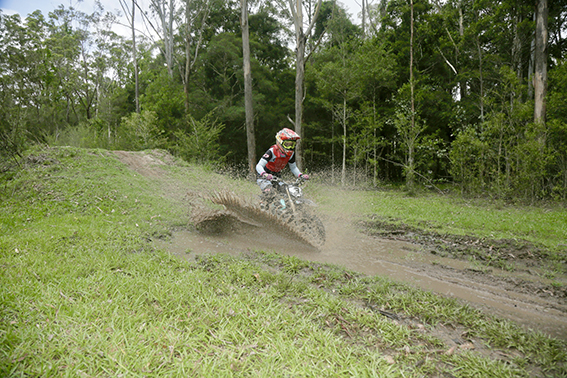
Straight up, Henley was clear on power mode one: too slow. She struggled to carry momentum, especially through slippery sections and boggy corners, saying she “could barely get around” and couldn’t drive out of those spots properly. Throttle response in that mode felt calm and predictable, but very much beginner level, and not something she’d want to race on.
When it came to brakes, Henley was instantly comfortable. She described them as easy to use, solid, and soft enough to feel what the bike was doing without being grabby. Having both brakes on the handlebars felt natural to her, especially coming from riding a pushbike, and the transition from a traditional foot brake setup didn’t take long at all.
On suspension, Henley felt it was soft and light, without feeling vague or unstable. She didn’t notice it deflecting or feeling harsh, and said it stayed comfortable even through bumps and jumps. Over jumps in particular, she felt the bike was easy to manage and forgiving, which gave her confidence to ride it aggressively without feeling out of control.
Power mode two sat in the middle for her — fast enough to have fun, but still too slow for racing. Power mode three, however, was a different story. She felt it had enough punch to be genuinely competitive in the 65 class, noting how quickly it got moving and how easily it would lift the front wheel under acceleration. She also mentioned the bike felt agile, light, and easy to turn, which stood out compared to heavier combustion bikes.
Henley said she’d be comfortable racing an electric bike against her friends on 65cc petrol bikes and didn’t feel there was any stigma around riding electric. In fact, while she still likes petrol bikes, she felt electric was “a bit better” in terms of how the bike behaved and how easy it was to ride.
Dimension-wise, she did note that the Hyper Bee felt slightly smaller than her regular 65, something she was aware of, but not something she felt would stop her from racing it. She felt comfortable on the bike overall and was keen to see how that sizing difference would play out once she spent more time racing on it.
Jaxon Lees (6 years old – racing in the 50)
Jax rode the Hyper Bee in the 65 wheel configuration (we were waiting on the 10- and 12-inch setup to arrive), which made the bike noticeably taller for him. He could only just get his feet on the ground, and needed a hand to hold the bike upright at take-off. Despite that, he was still able to ride confidently once moving.
We’ve since got the 10/12-inch combo and Jax at 125cm tall can nearly get both feet flat on the ground.
In power mode three, Jax said the bike felt a little scary at times, particularly after hitting a jump where he landed slightly sideways. He described it like being “in the surf and about to get barrelled,” (whatever that means but it made us laugh, we think he means from a scary perspective) which summed up the sensation of the bike moving underneath him rather than doing anything unpredictable. Even so, he stayed in control and didn’t crash.
Power mode three, which is the most aggressive setting, surprised everyone. Despite the added speed and torque, Jax never looped out, didn’t lose control in corners, and said he felt comfortable riding it. He didn’t find it overwhelming or too scary, even at full power, and was happy riding it at pace.
Jax stood up a lot while riding, which seemed to come naturally. He didn’t consciously choose to stand, it just felt like a good position on the bike. That upright stance helped him stay balanced and confident, particularly over bumps.
Like Henley, Jax found power mode one far too slow, even for his age. He wanted more speed and throttle response, and that seemed to be the shared opinion among all the kids testing the bike that day.
Having ridden plenty of electric bikes before, Jax was already comfortable with the handlebar-mounted brakes. He said they felt light and accurate, similar to mountain bike brakes. This setup also helped him start learning to use the front brake more, rather than relying only on the rear, which has been a habit he’s been working through. The levers felt slightly far away for his smaller hands, but there is adjustment available to bring them closer.
In terms of size and confidence, Jax said the bike (in 65 trim) didn’t scare him, except when stopping due to the height. Once moving, he felt fine. He didn’t really notice the suspension working underneath him, which suggests it was on the firm side for his weight (around 25–30kg), but it didn’t stop him riding comfortably or confidently.
So after seeing it race under lights at Melbourne Supercross, pulling it apart on paper, and then handing it to a 6-year-old and a 9-year-old to ride back-to-back in two different classes, the Sur-Ron Hyper Bee has done exactly what it promises: one bike, two wheel setups, proper race pace, and zero drama to live with.
Level three power is fast enough to mix it with 65s, level one is genuinely beginner-friendly, the brakes and controls make sense for kids straight off pushbikes, and the quick battery swaps and lightweight feel tick the boxes for parents staring down the cost of junior racing. It’s not perfect, size will matter for riders on 65s and long-term durability will tell the real story but as a versatile junior race bike that can cover 50s and 65s without buying two machines, the Hyper Bee isn’t a gimmick; it’s a genuinely clever solution that now deserves to be taken seriously on the start line.
SURRON HYPER BEE
Motor
BLDC mid-mounted electric motor
Peak Power
5 kW
Maximum Torque
158 Nm
Controller
FOC Sine Wave X controller
Transmission
Belt and chain drive
Final ratio: 7.6:1
Throttle
Fly-by-wire twist throttle
Battery
Removable, HBX 50.4V / 1,260Wh / 25Ah lithium battery, Charge in-bike or externally
Charging Time
3–4 hours with supplied 10A fast charger
Range
Up to 50 km (cruising at 40 km/h)
Top Speed
55 km/h
Ride Modes
Mode 1: Eco
Mode 2: Sport
Mode 3: Full power
Remote parental control included
Front Suspension
KKE upside-down forks, 170 mm travel
Rear Suspension
KKE adjustable shock with Intersect TR, 87 mm travel
Front Brake
Hydraulic disc, dual-piston caliper, 180 mm disc
Rear Brake
Hydraulic disc, dual-piston caliper, 160 mm disc
Wheels
Aluminium spoked rims
10/12-inch or 14/12-inch interchangeable wheelsets
Tyres
CST off-road mud tyres
Dimensions – 10/12-inch Setup
Seat height: 635–673 mm
Ground clearance: 213–234 mm
Weight: 38 kg
Dimensions – 14/12-inch Setup
Seat height: 665–705 mm
Ground clearance: 240–260 mm
Weight: 39 kg
Wheelbase
1,033 mm
Maximum Load
60 kg
Display
LCD multi-function display
Speed, trip, odometer, battery status, top speed
Lighting & Equipment
Front LED light (always on)
Horn
Rear fender mounted to seat
Warranty
1 year
RRP
$4499