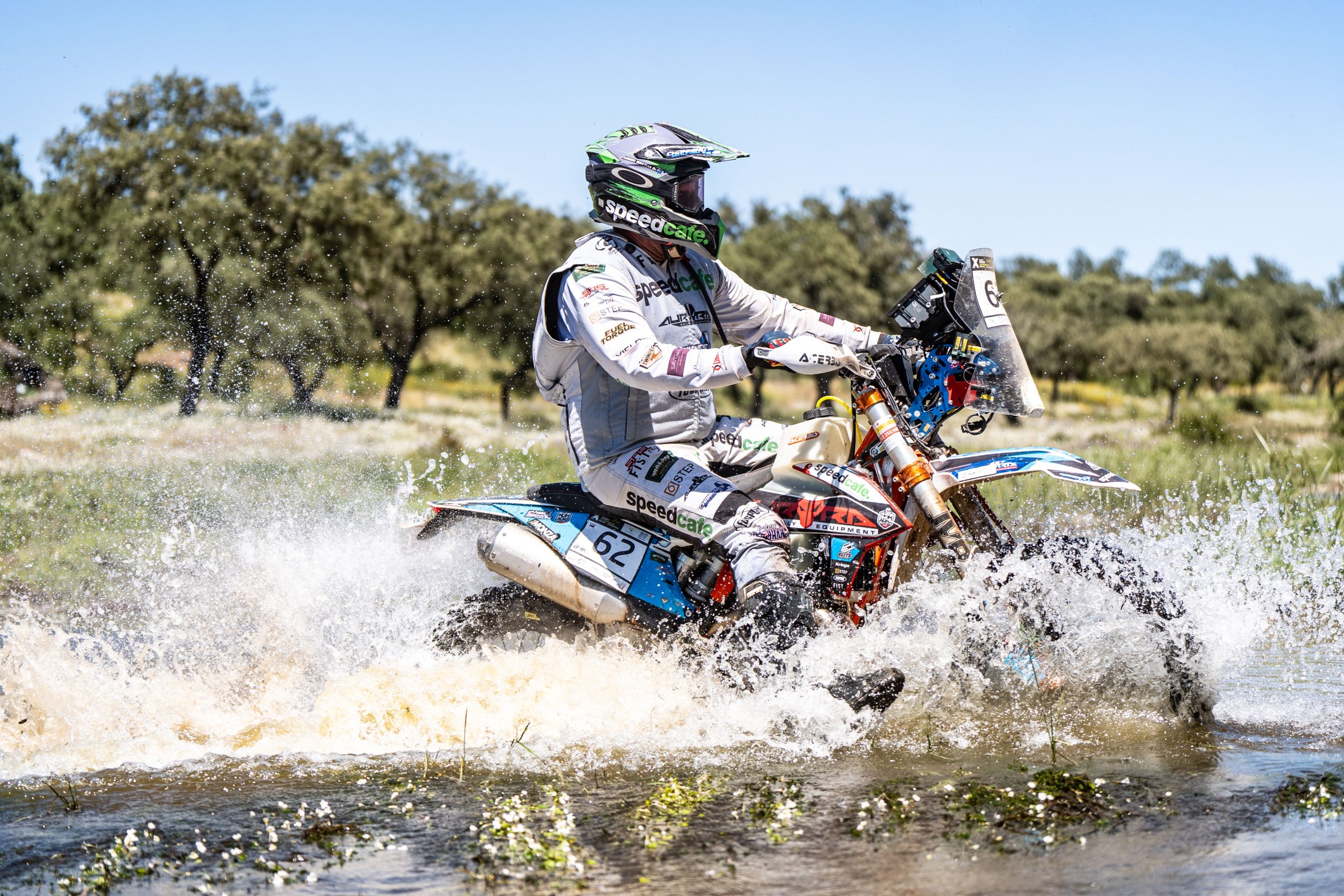
Six stages into the 2026 Dakar Rally, the world’s toughest rally raid has already delivered a brutal mix of speed, strategy, navigation chaos, and mechanical survival. At the centre of it all sits Daniel Sanders, who has quietly but decisively, asserted himself as the rider to beat. While the leaderboard has shuffled repeatedly and rivals have traded blows stage by stage, Sanders’ consistency, composure, and ability to manage risk have him leading the rally as it pauses for the Riyadh rest day.
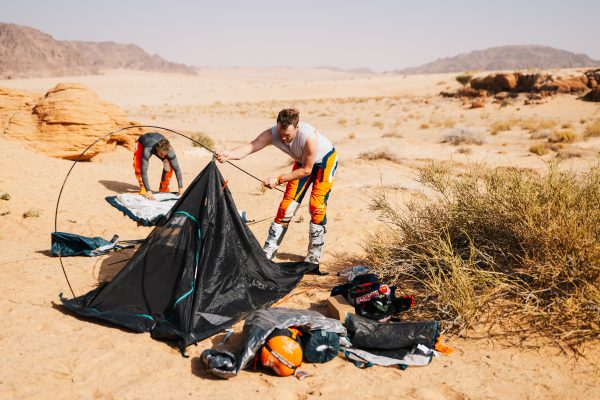
A fast start without fireworks
The rally opened with a rapid prologue and an uncompromising Stage 1 loop around Yanbu. Sanders didn’t arrive with fireworks or headline-grabbing risks; instead, he delivered exactly what champions do early in Dakar, controlled speed. Second in the prologue and second again on Stage 1, Sanders allowed teammate Edgar Canet to grab the early spotlight while keeping himself perfectly positioned. The terrain was fast, dusty, and deceptively simple, with wind and visibility testing concentration more than raw technique. Sanders’ ability to stay mistake-free while others fought dust and pressure set the tone for his rally.
By the end of Stage 1, Sanders sat just over a minute behind Canet overall, having lost nothing of consequence and gained valuable information about conditions, navigation style, and the rhythm of the rally.
Stage 2: Sanders strikes back
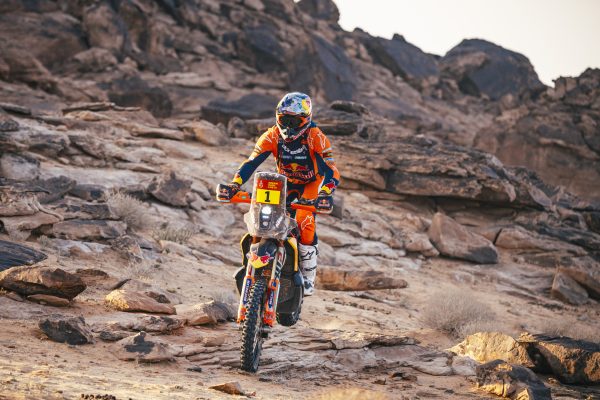
Stage 2 marked the first proper “Dakar” feeling day, long, varied, and mentally draining as the route climbed inland toward the Hejaz Mountains. Starting second on the road, Sanders wasted no time asserting control. By kilometre 70 he was in front, opening the stage and managing navigation in terrain that punished hesitation. Riding alongside Canet for large portions of the special, Sanders balanced speed with discipline, capitalising on bonus time to claim his first stage win of the rally and his 10th career Dakar stage victory.
That win put Sanders into the overall lead, albeit by a razor-thin 30 seconds. More importantly, it confirmed what many already suspected: once the rally moved away from flat-out sprinting and into classic rally terrain, Sanders was completely at home.
Stage 3: damage limitation, championship thinking
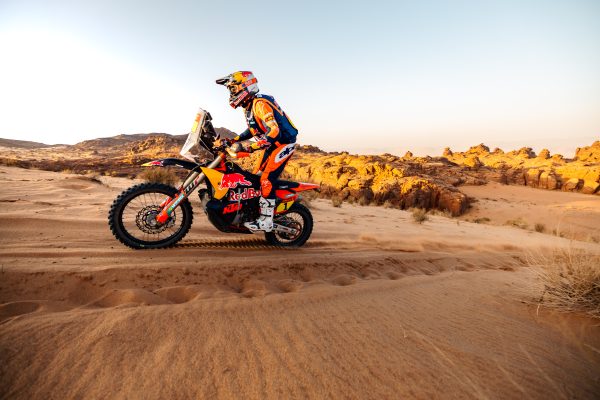
Stage 3 was the longest timed special of the rally so far and arguably the most mentally taxing. Navigation dominated everything, with fading tracks, hidden dangers, and constant rhythm changes around AlUla. Sanders opened the stage from start to finish, a role that often costs time, but turned it into an advantage by riding cleanly and banking over six minutes of bonus time.
Third on the stage may not have looked spectacular on paper, but it was one of the most important rides of Sanders’ rally. While others made costly navigation errors or pushed too hard, Sanders focused on flow and survival. His reward was an increased overall lead and a strong starting position for the looming marathon stage.
The marathon stage: experience over aggression
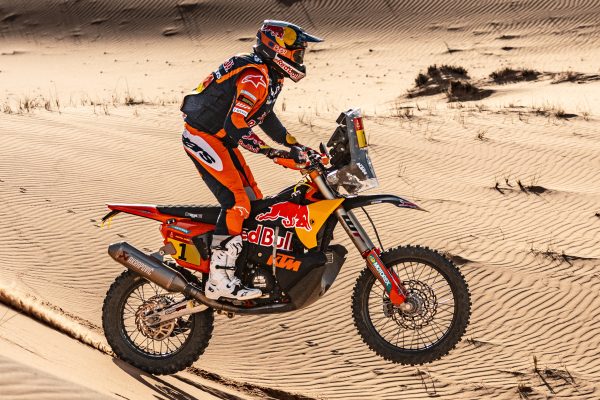
Stages 4 and 5 formed the first marathon stage, where riders were isolated from their teams and forced to manage their own maintenance overnight. This is where Dakar often breaks contenders, and where Sanders’ maturity stood out.
While teammate Luciano Benavides charged to a stage win on Stage 5, Sanders played the long game. Noticing early signs of tyre damage, he adjusted his pace, resisted the urge to chase outright speed, and prioritised simply reaching the finish. That decision proved crucial.
By limiting losses and avoiding catastrophic failure, Sanders emerged from the marathon stage back in the overall lead, while Canet’s promising run was derailed by rear mousse damage that cost him significant time.
Sanders’ Stage 5 result, third place, was a textbook Dakar performance: not flashy, but perfectly executed.
Stage 6: brilliance, then frustration
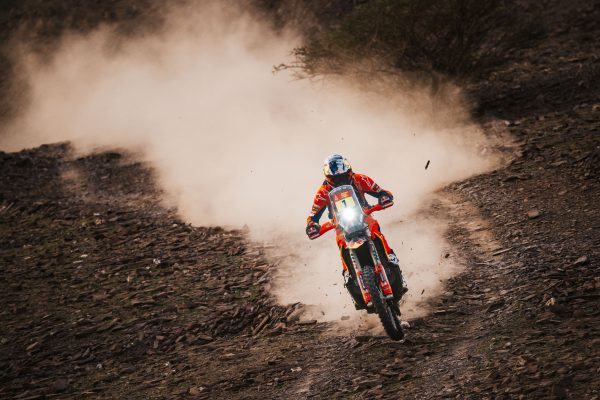
Stage 6 was the longest day of the rally so far, with 920 kilometres from Ha’il to Riyadh and a sand-heavy special through the Qassim dunes. Sanders delivered what was arguably the ride of the rally, opening the stage in deep sand, navigating cleanly, and building a commanding gap to the field. By the finish line, he had been fastest by nearly five minutes.
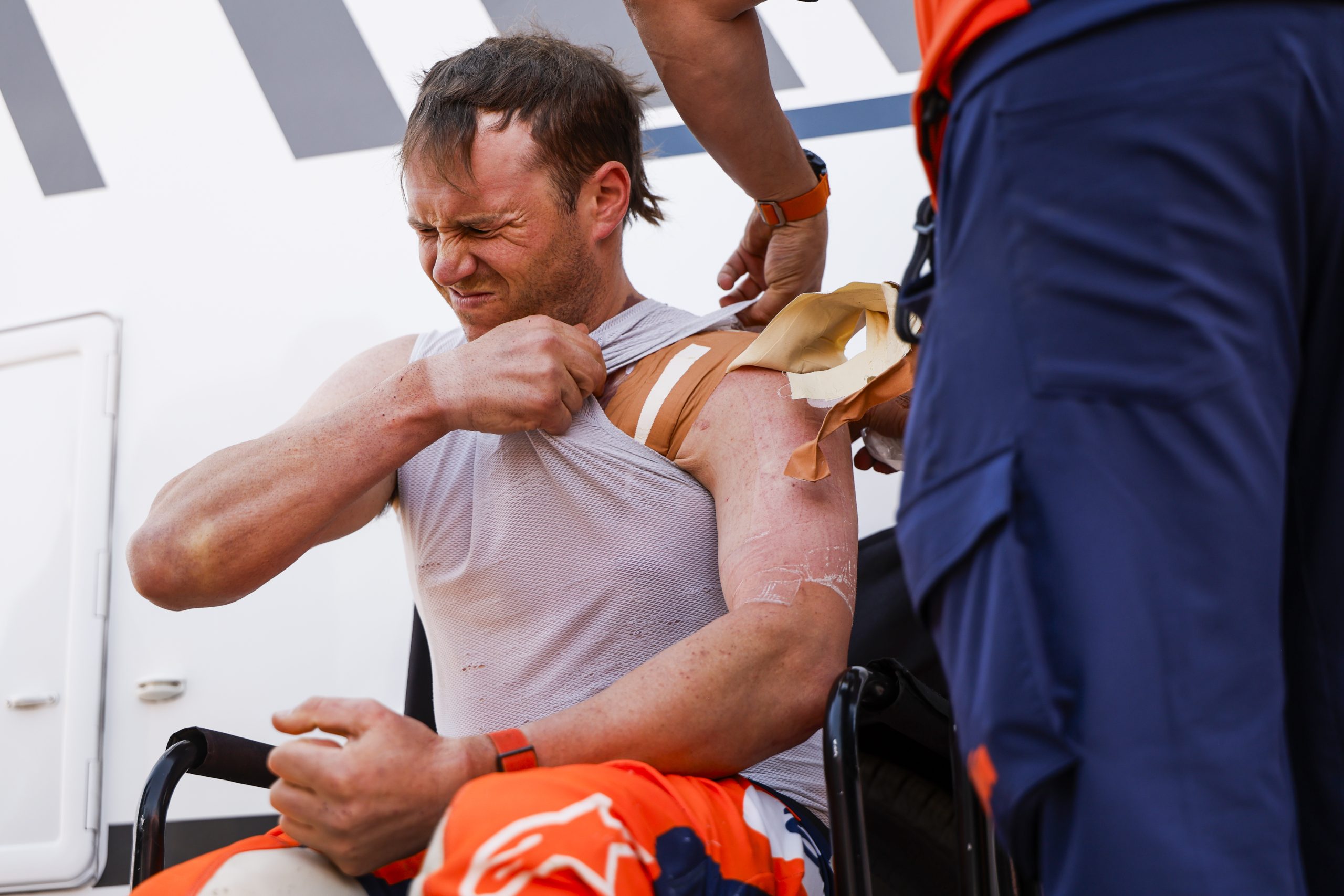
Then came the sting. A six-minute speeding penalty dropped him to third on the stage and slashed his overall lead to just 45 seconds. It was a reminder that Dakar punishes even the smallest lapses, and Sanders was openly frustrated despite retaining the lead.
Still, context matters: without the penalty, Sanders would have stretched his advantage significantly. Even with it, he heads by 45 seconds going into the rest day as rally leader after six gruelling stages.
What sets Sanders apart so far
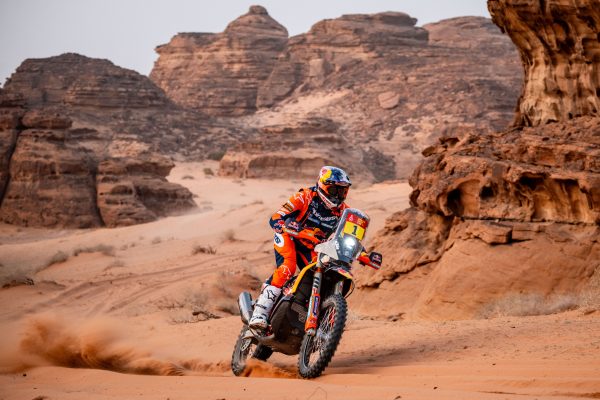
Through the first half of the rally, Sanders has not been the fastest rider every day, but he has been the smartest. He has:
- Finished every stage inside the top three except one
- Won a key stage when conditions suited him
- Managed opening duties without bleeding time
- Preserved tyres and equipment during the marathon stage
- Avoided major crashes or navigational disasters
The rally is far from decided
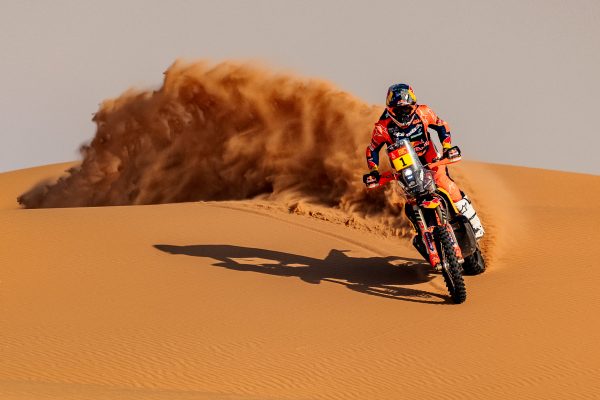
Despite leading at the rest day, Sanders’ advantage is slim. Brabec sits just 45 seconds behind, with Benavides and Schareina still within striking distance. The second week promises bigger dunes, longer stages, and the kind of cumulative fatigue that can unravel even the most disciplined riders.
What Sanders does have, however, is momentum and clarity. He knows where he’s been strong, where he’s made errors, and what needs tightening up. With half the rally still to run, the Australian enters week two not as a rider chasing glory, but as one defending control, exactly where Dakar winners prefer to be.