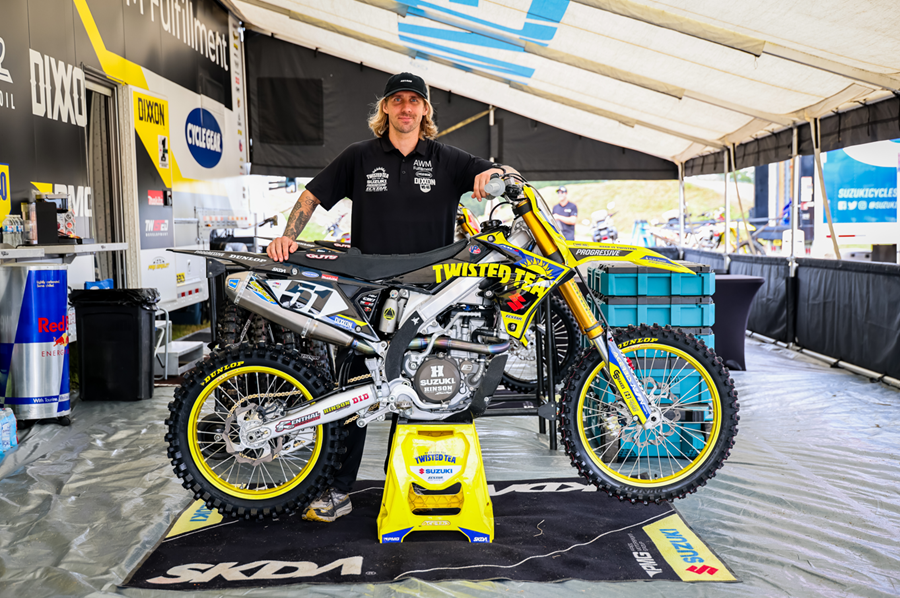
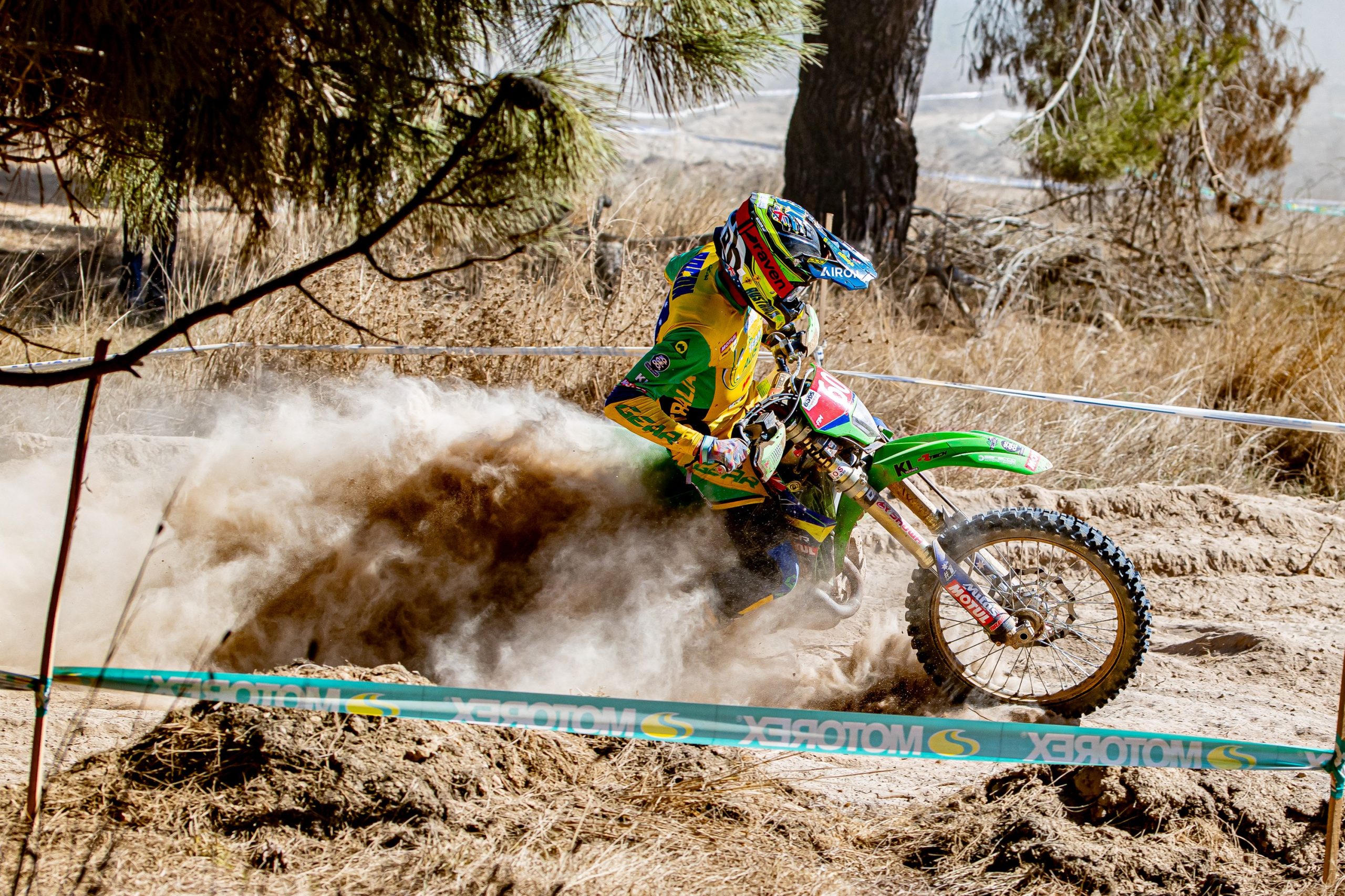
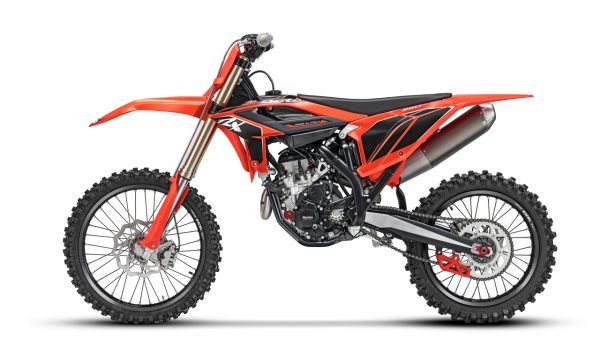
Beta has confirmed its 2027 RX motocross range, headlined by the arrival of the all-new RX 250 4T. After spending 2026 racing and developing the bike at a high level, Beta has now added the production version to its motocross line-up, joining the RX 450 4T and the RX 250 and RX 350 two-strokes introduced last year.
The RX 250 4T represents far more than simply a smaller version of the RX 450. Beta says the engine and chassis are completely unique to the model, with both designed specifically around the demands of a modern 250cc motocross four-stroke. The company’s goal was to create a bike capable of competing at world championship level while remaining approachable for everyday riders through its RideAbility philosophy, which focuses on balancing performance with ease of use.
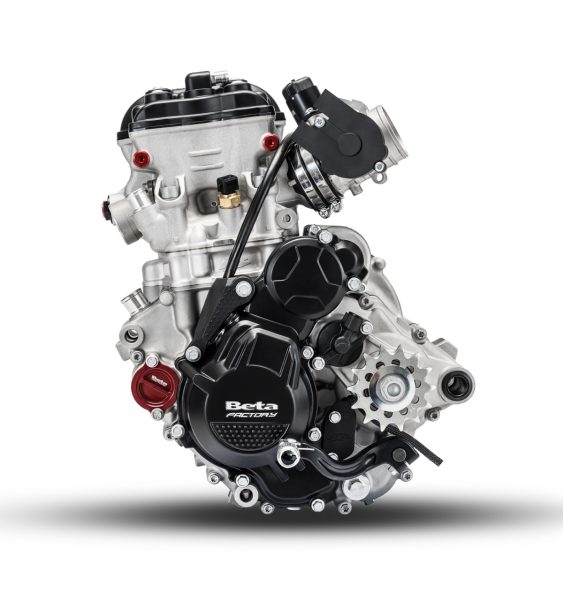
At the heart of the new machine is an all-new DOHC engine that shares nothing with Beta’s existing four-stroke platform. The cam chain is positioned on the right-hand side and uses a Morse-type chain driven by a gear linked to the water pump shaft. A hydraulic tensioner is employed to reduce noise and vibration while maintaining reliability at high rpm.
Beta targeted class-leading compactness and mass centralisation during development, resulting in an engine package claimed to be around 1.5kg lighter than the current class benchmark. The weight savings come from die-cast aluminium crankcases with extremely thin wall sections and magnesium covers, including the cylinder head cover.
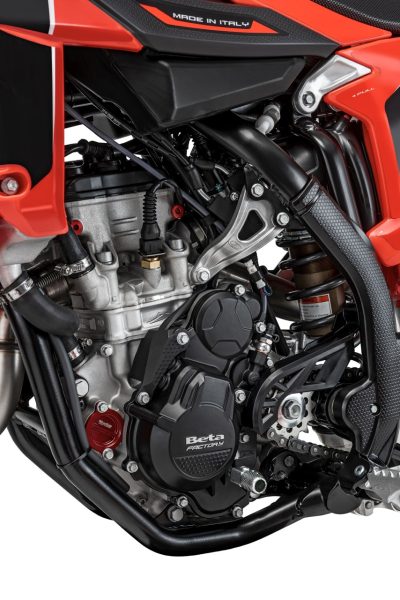
Performance comes from a dual-injection fuel system that uses one injector in the throttle body and a second in the airbox sleeve. Beta says the arrangement optimises fuelling across the entire rev range, delivering crisp bottom-end response while allowing the engine to continue pulling strongly at high rpm. The engine features forged steel crankshaft journals running on roller bearings, a forged connecting rod with a plain bearing and a Formula 1-inspired box-in-box piston design.
Cooling has been developed using CFD analysis to maximise efficiency while minimising pressure losses. Unlike the RX 450 4T, the new 250 uses a closed-type water pump impeller for improved coolant flow in a more compact package, eliminating external coolant lines that could potentially be damaged in a crash. Electric start, a shared oil supply for the engine and gearbox and a purpose-built exhaust system complete the package.
The clutch carries over from the RX 450 4T and features seven friction plates and six steel plates, while incorporating a new integrated clutch basket and updated hydraulic actuation. The five-speed gearbox is all-new and designed to be compact, lightweight and fast-shifting without compromising strength.
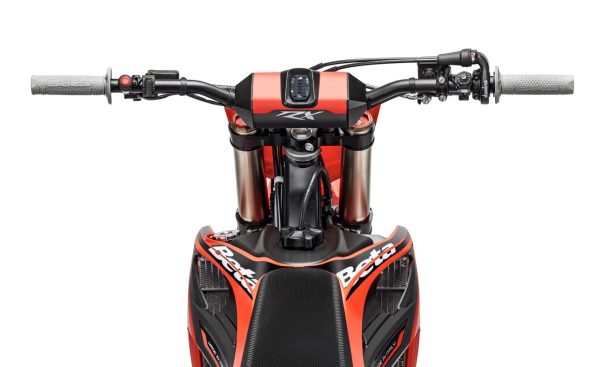
For the first time on a Beta four-stroke motocross model, electronics have been heavily influenced by the factory race team. The RX 250 4T comes standard with five-level launch control, quick shift, two-level traction control and dual engine maps for dry and wet conditions. All functions are controlled through a redesigned switch block integrated into the handlebar pad, helping protect the controls in the event of a crash while making them easier to access during a race.
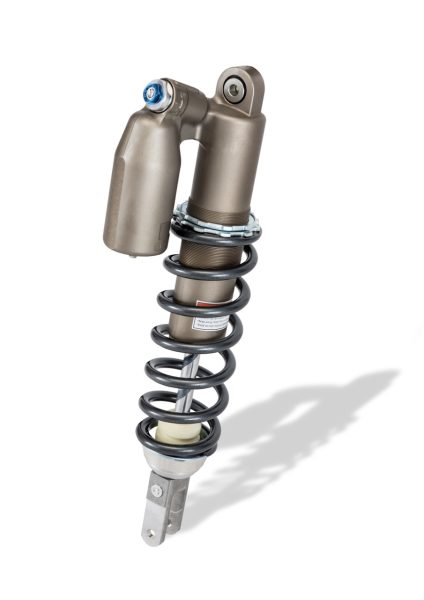
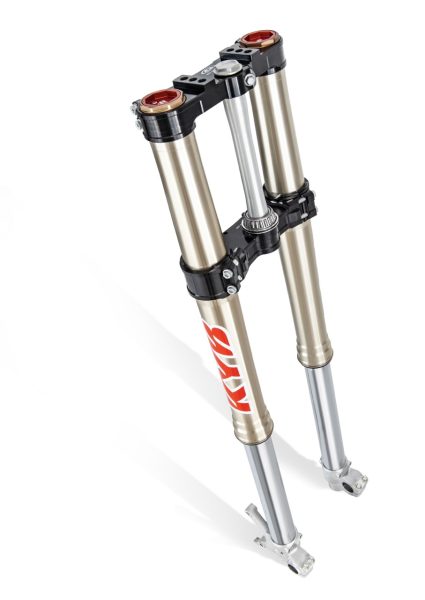
The frame has also been designed specifically for the new engine. The lower frame rails wrap tightly around the engine cases for a compact layout, while side-mounted cylinder head stays replace the central mount used on the RX 450 4T. Beta says the arrangement increases torsional rigidity while maintaining vertical flex, improving cornering precision, traction and stability. Suspension duties are handled by a KYB package comprising a 48mm closed-cartridge fork and a 50mm rear shock, with settings tailored specifically for the new 250.
While the new RX 250 4T grabs the headlines, Beta hasn’t ignored the rest of the range.
The RX 450 4T receives a significant electronics update, gaining the same five-level launch control, quick shift, two-level traction control and dual-map functionality as the new 250. Both engine maps have been recalibrated to improve performance, while a new tapered throttle body is designed to improve airflow and reduce turbulence, resulting in smoother and more precise throttle response.
The RX 250 and RX 350 two-strokes have also received targeted updates. Beta continues to position the RX 250 as the sharper, more aggressive race bike, while the RX 350 remains the more torque-focused and versatile option. For 2027, the RX 350 receives a completely redesigned piston featuring PVD-coated rings. The new piston reduces reciprocating mass and friction, resulting in sharper throttle response and a claimed power increase of around 1.5 horsepower.
The RX 250 2T receives revised final-drive gearing, moving from a 13/50 combination to 14/51. Beta says the taller overall ratio provides smoother gear progression and improved drive on fast sections and corner exits. Both two-strokes also receive updated silencer internals for improved durability under motocross conditions.
Like the four-strokes, the two-strokes now come fitted with the latest-generation Dunlop tyres, which Beta says improve traction and performance while reducing overall weight. The handlebar pad has also been redesigned to provide additional rider protection while housing the map-selection controls and aligning visually with the four-stroke models.
Across all four RX models, Beta has introduced a reinforced chain guide designed to better withstand mud, sand and impact damage, a redesigned front sprocket guard for improved protection and rider safety, softer-compound grips for increased comfort and a new red-and-black graphics package marking the arrival of the long-awaited RX 250 4T.
Several key RX features carry over unchanged. Frame geometry remains the same on the RX 250 and RX 350 two-strokes and RX 450 four-stroke, retaining the stability and predictability Beta has built its RideAbility philosophy around. All models continue to use an aluminium subframe and tool-free left-side air filter access. The KYB suspension package remains, with model-specific valving updates aimed at maintaining comfort and sensitivity early in the stroke while providing support for big jumps and high-speed riding. Nissin brakes paired with 260mm front and 240mm rear Galfer discs also continue, along with handlebar mounts that now sit 5mm higher for improved ergonomics.
The updated RX 250 and RX 350 two-strokes, along with the RX 450 4T, are scheduled to arrive in September 2026. The all-new RX 250 4T will follow a month later in October. Australian pricing will be announced closer to launch.