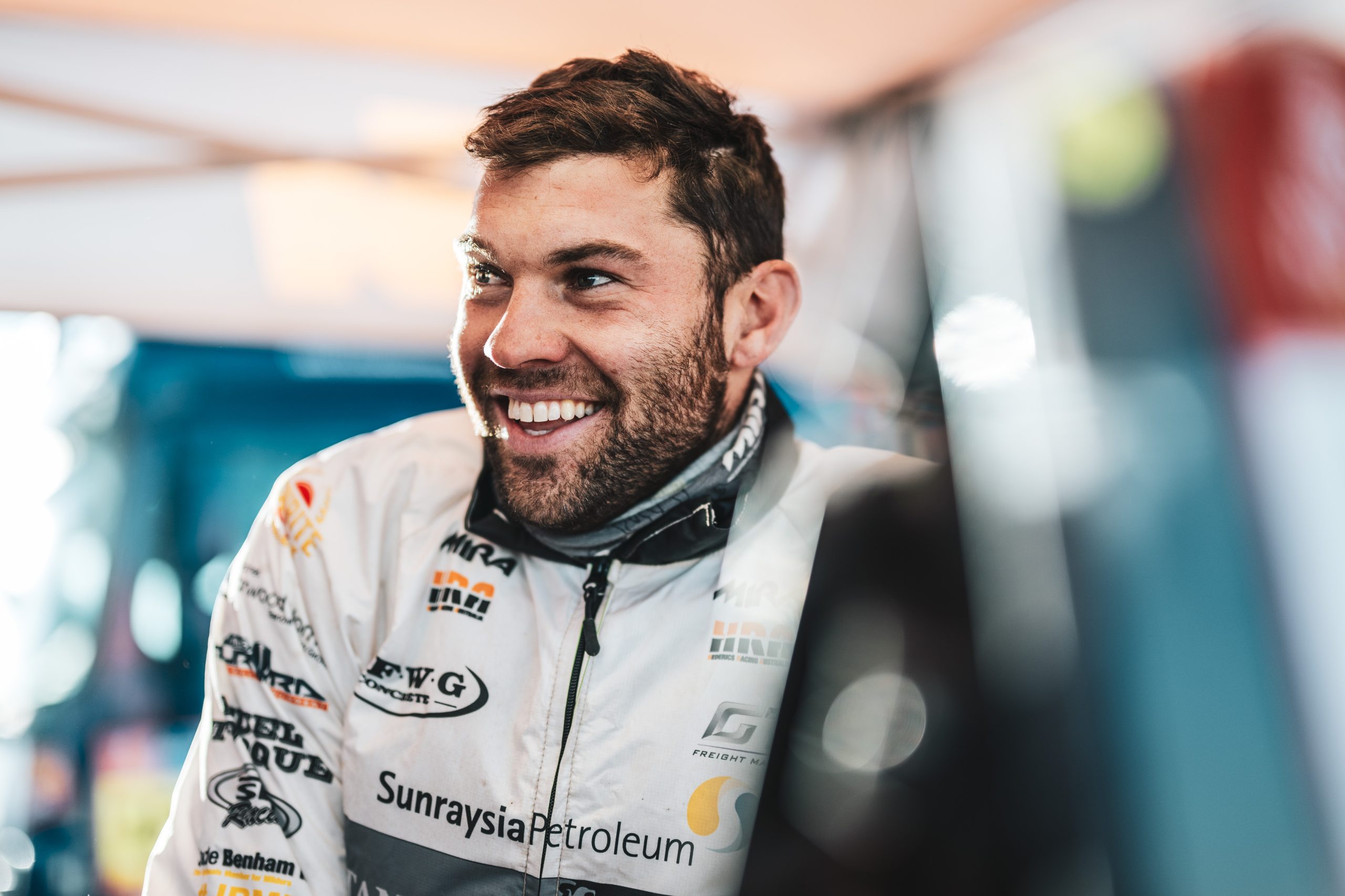
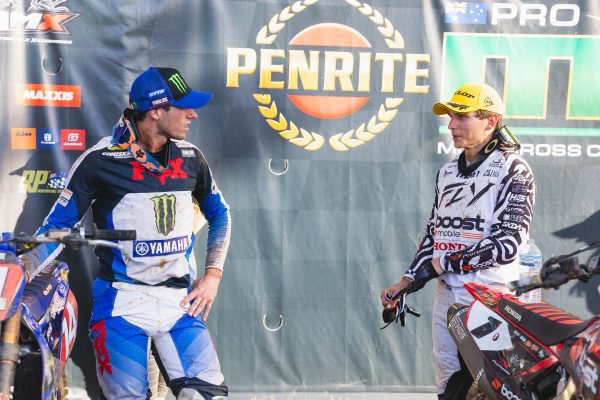
Jed Beaton sat down with us to talk through the crash that broke his femur, the impact it had on his 2025 ProMX title hopes, his MXoN selection chances, salaries in Europe v salaries in Australia and what comes next. From managing a season-long championship battle with Kyle Webster to his thoughts on future Motocross of Nations selection, Beaton opened up about the highs, lows, and what drives him forward.
Q: Can you tell us what literally happened on the bike? How did the accident happen?
A: Uh, it was just a normal day, normal routine. We were doing our morning warm-up and then a qualifying session. I was on a fast lap, came around, washed speed off on a jump and clipped my foot on the up-ramp. It sent my feet straight above my head. I landed on my head, went to get up and felt I’d broken my femur. I kind of knew straight away it was broken. It’s a tough pill to swallow knowing what was on the line, but it is what it is—it’s part of our sport. Now my focus is on making the best recovery I can and making sure everything goes smoothly. At the moment it feels quite good for where I’m at. It’s just on six weeks now, so I’ll see a doctor in a couple of days, get the X-rays, and a bit more information about when I’ll be able to get back on a bike and start doing a little bit more. Right now, I don’t really know too much, but in the next few days I should find out a lot more and have some direction.

Q: What kind of hardware went into the leg?
A: They took me in the day after I crashed, so I had to wait a night. It was just a normal procedure—they put a rod in it. They fixed me up, had me up the next day and walking around. I think it’s a pretty straightforward procedure for them. They were confident, and I saw the X-rays from after the surgery—looked pretty good—but I’m no doctor, so we’ll see what they say.
Q: The crash had big implications. You were in a title fight with Kyle Webster for the ProMX MX1 Championship. How did it feel knowing the championship was probably gone—and you were the red plate holder at the time?
A: Like I said, it was a tough pill to swallow. I was leading from the first round and felt I managed the championship well all season. The closest the points got was about 12. Then I started building it back up and, after Canberra, it was 29 points or so. Kyle and I were riding at a good level, and I pretty much just had to get third or fourth for the rest of the series to win—as long as nothing silly happened. But that’s how it goes; it’s part of our sport. You realise not everything you plan happens. It was a bummer at the time—so many things go through your mind in hospital the next day. It had been four or five years since I’d had an injury, so that was tough too. I’d probably only crashed four or five times all season, practicing and racing, and it just takes one mistake to have a huge consequence. Now I’m looking forward to a full recovery and putting my focus on next year.
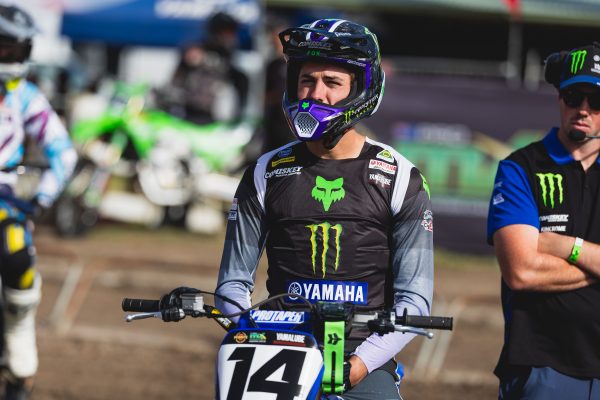
Q: Let’s talk Motocross of Nations. You were up 29–30 points when the accident happened. The MXoN opportunity went up in smoke when you broke your femur. Being on CDR Yamaha here in Australia—does that make it harder to get on the MXoN team, even if you’d won the title by 15–20 points?
A: Yes and no. With Jett and Hunter and the Honda side, it makes it easier for them. But I think the team should be picked on who’s the best rider at the time, not the equipment. That said, it’s easier when there’s a ready position like that. The other thing is Jett and Hunter want to ride 450s, so whoever else is selected has to ride a 250. It’s harder to get a really competitive 250 than a 450. If I was selected on a 450, we could take nearly all our parts and make a 450, but you can’t really do that with a 250. Over there, the bikes are world class and on a 250 you’re chasing horsepower. So Honda having that option makes my position harder. Still, it should come down to the best guy at the time. Everyone wants to represent their country at the highest level. I used to race GPs, so I wanted to go back, catch up with people, and race guys I haven’t raced for a long time. Unfortunately, I got injured and that made the selection easy. There’ll be more opportunities next year and beyond. I’m focused on getting back to my level and progressing—I feel there’s more to improve on, and hopefully I get selected in the next few years.
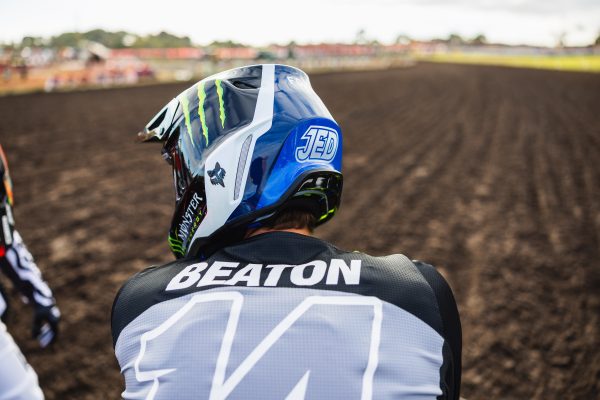
Q: If you’re selected in future years—say next year you’re clearly the best rider and Australia picks simply the best—when was the last time you rode a 250, and how would that change things?
A: That’s the hard part. You’d probably have to practice here on a 250, which makes things a bit more difficult. But if you get picked, you’re not going to say no because of the bike. I think it’s easier going from a 450 back to a 250—you just ride it a bit harder and it feels slower than what you’re used to. The bigger challenge is going from a 250 rider to a 450 role. A 250 is easier to set up and get comfy on; you just have to learn to rev it more than a 450. It’s mainly getting used to a less powerful bike again, which isn’t too crazy.
Q: How long have you signed with CDR Yamaha, and what’s the plan for next year—motocross and supercross? You were going to race supercross this year as well as motocross, right?
A: Yep. My deal was going to end at the end of this year, but midway through I signed another two-year deal—’26 and ’27 with CDR—for both motocross and supercross. I’m excited for that. Motocross plan is the same: my goal is to win it. The last two years I’ve been right there, but it hasn’t happened. Next year and the year after, I’ll try to get on a roll and win as many as I can. I enjoyed supercross more than I expected last year, so I’m pretty bummed not to be racing it this year—I was looking forward to it. It’s something different and I enjoyed the fresh focus after so many years of just motocross and GPs. For now, I’ll watch this season out, get fit and healthy, see a doctor in a couple of days about getting back on the bike. Hopefully I’m riding before supercross finishes, then I’ll start doing hours on motocross again, build fitness back up, and be ready before preseason. Same goal for next year and beyond: go out there and win some races.
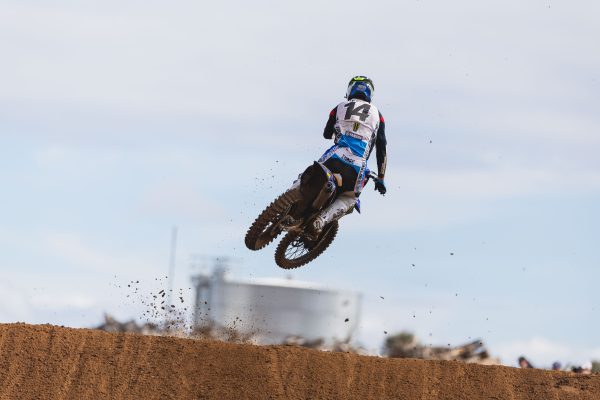
Q: Alright, let’s talk about your return from MXGP. Why’d you come home? How long were you in Europe, and what was the motivation to come back to Australia?
A: I think I was there for five or six years. The age rule lifted me up to MXGP. I finished fourth and fifth in the championship in my last two years in MX2. After that, all the factory seats for the 450 class were full, so I joined a satellite team. It was a really good deal. At the first round, I think I finished fifth or sixth overall. Everyone was happy with that, and so was I. I didn’t expect it, but we’d had a really good off-season.
At the second race, I got out of shape, went off the track, and hit one of the steel barriers on the side of the track for the sponsor banners—straight into my shoulder. I had a plate in my collarbone at the time, and it pushed the plate back, putting pressure on my shoulder. It hurt for a few weeks, then the pain went away, but my hand started feeling weak. I’d ride for 10–15 minutes, and my hand would go numb and lose all its strength, so I couldn’t use the clutch. Because I had no pain, I didn’t really know what was going on and just kept pushing through.
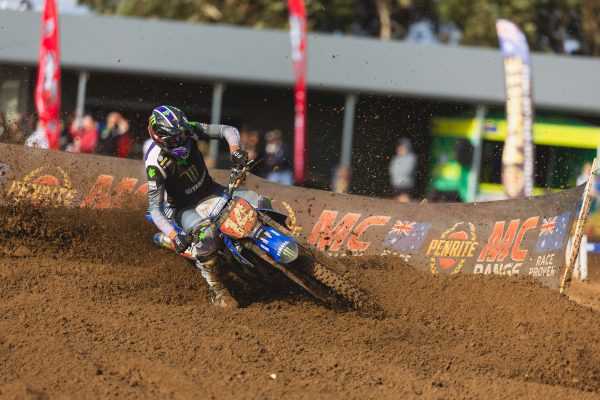
Around midway through the year, my dad was diagnosed with cancer. I think it was 2020 or 2021. I knew he was sick, but I got stuck in Europe for two years and couldn’t go home. I stayed that season and went home after the next one, but halfway through that year he passed away. I flew home, missed a race to see him and say goodbye, then went back. He passed while I was at the next race.
After that, I just started thinking—over the last five years, I hadn’t seen much of Dad. Results weren’t the best, I had injuries, and it was a buildup of things. When you’re not getting results over there, it’s hard to stick around. They want results, and being from overseas makes it harder to take a year off and come back. Once you go out, you’re often not thought of again.
So I started talking to people back in Australia after all that. At first, I didn’t really talk to anyone—I just packed my stuff, came home to see how it would pan out. Once word got around that I wasn’t going back, I started getting phone calls and working out what I was going to do. I didn’t really have a single reason to come back—it was just a snowball of things going wrong.
Once I was back, I got the shoulder checked. It turned out to be a nerve blockage. When I raised my arm to a certain point, blood flow stopped to my hand. They called it thoracic outlet syndrome. It was weird. I rode that year with Honda without getting it fixed, just tried to push through, but had some problems with it. As soon as the motocross season finished, I started dealing with it properly and eventually had the plate taken out. That helped a lot. Got it fixed up after 2023 and just went on from there.
Q: Do you think going to MXGP and then the US is still the best way? If you want to end up in the US, is MXGP still the best path?
A: Yeah, I mean, it depends what age you’re at. If you’re a young family and just want to make the dream happen, you’d probably just go straight to America because you’re exposed to Supercross and everything earlier. Where Hunter went to Europe—he was 16 or 17 at the time—and then to America, he probably lost two or three years where he could’ve been riding Supercross and getting used to it. That’s where I think Jet got the massive benefit. He was only 15 or 16, the perfect age to learn, pick up the feel, and get the timing right. He probably picked it up almost instantly, while it took Hunter a little longer. They’re both great riders, but I think the age difference helped Jet a lot. Hunter made mistakes, Jet learned from them, and that helped too.
Q: Do you think you can go straight from the Aussie scene into the US and be competitive? Or do you need to race the brutal tracks in Europe, away from family and support?
A: Yeah, it depends. Like I said, if you go there as a family, you probably don’t need to be taken through that European path. But if you’re a young kid, no family with you, and you need to learn to live by yourself and handle everything, then Europe’s probably a good thing. It’s definitely a hard process—packing up, leaving home, and figuring it out—but if you want something badly enough, you’ll do everything to make it happen.
Whether it’s America or Europe, it’s not going to be easy. Both are a struggle in different ways. In America, you don’t have the language barrier, but you’ll still face struggles and need to pull yourself out of them. It’s all part of getting better. If you can stick it out long enough and have a plan, you can make it work—but not everyone can get through that.
When things are going well, everything feels easier. But when results aren’t there, you’ve got no one around, and you’re just a young rider trying to figure out life, it’s tough. Looking back now, at my age, I can see I could’ve done things differently, but when you’re young and in the moment, you don’t always know what to do.
Having family around can definitely help, but even then, as a young kid, you don’t always listen. Every rider is different. The sport is tough, and families are always deeply involved. You can’t really predict who the next big rider will be until it happens. That’s part of the sport—it’s difficult, but also what makes it exciting.
Q: MXGP contracts versus racing in Australia—like you said, with a satellite team you could place anywhere in the top 20. Are you better off staying in Europe to try and earn money, or is it better to come back here, race locally, and be on a team in Australia to make a living?
A: I’ll be honest—I signed for 80,000 euros that year, which worked out to around $130–140k AUD. That’s not bad money, but once you’re living there on your own, you don’t save much. You’re doing 20 rounds of GPs, and the top guys are always solid in the top five, so making bonus money is really difficult.
If I was to do it again, I’d race a lot more of the German, Dutch, and British championships. They each have full series with their own bonus money and championship payouts. Say you’re racing GPs, but you slot in a British series as well—you might pick up £8,000 in bonuses and £40,000 for a championship. You’d make a lot more doing that, because your chances of winning are much higher compared to GP-level events.
I didn’t do that when I was there—I only raced GPs. Most smaller teams will actually let you do those extra series. For example, if you’re with a satellite team based in Germany, they’ll want you racing the German championship, but they’ll also take you to the GPs. I think you could definitely make more money that way, but I never tried it so I don’t know exactly how much.
Here in Australia, I make good money now, and at my age I should be. If I was still in Europe on 80,000 a year, I don’t think I’d be enjoying it. You’ve got to be content with what you’re doing. If you’re there and not at the level you think you should be, it’d feel like a long grind. But if you’re winning races and performing where you think you should, then of course it makes sense to stay.
The top guys in Europe make a lot more than we do here. If you’re in the top five or six, you’re making very good money.
Q: Are we talking about millions—like the very top guys?
A: Yes, definitely. With a sign-on plus contingency bonuses, the top riders make well over a million euros a year.
Alright, well thanks for your time today, Jed. We wish you all the best with your recovery and can’t wait to see you back racing next year. Especially with Kyle—your rivalry is building into something special. We know you two are mates off the track, but from the sidelines it’s great to watch. Hopefully, when it comes to next year’s Motocross of Nations, you’re right up there in contention and Motorcycling Australia selects the fastest rider we have to represent the country.
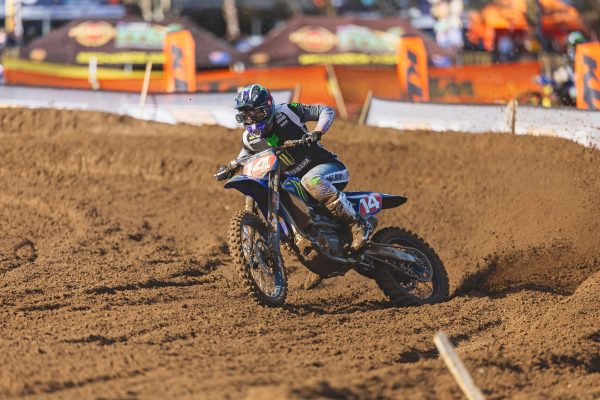
Image Details
Camera: Canon Canon EOS R3
Lens: Canon RF 100-300mm F2.8L IS USM
f 2.8
1/2000 sec
ISO 160
Credit: Marc Jones/Foremost Media
Date: 27 April 2025