What: 2016 Suzuki RM-Z250
When: January 2016, Issue 436
Purpose: Motocross
How Much: $9,990
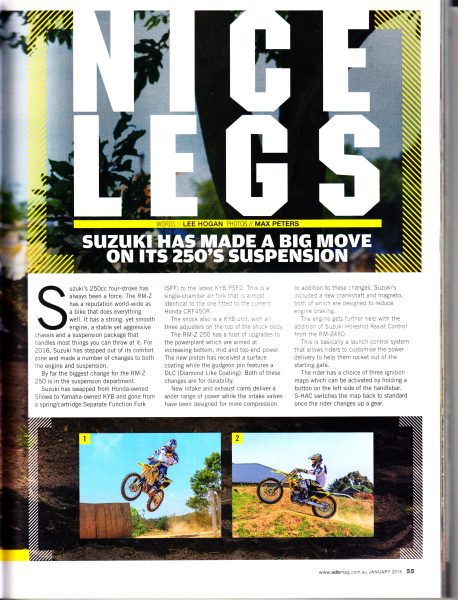
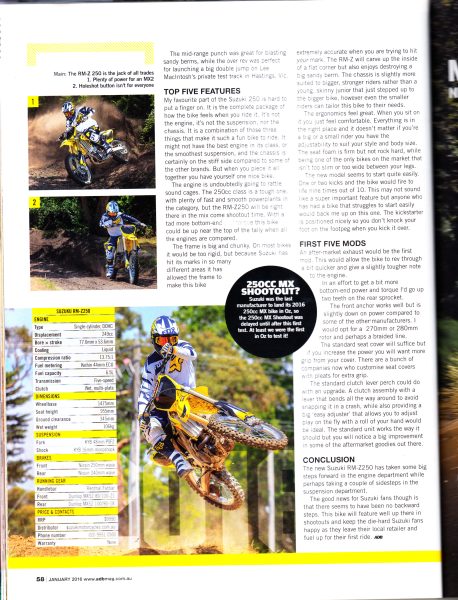
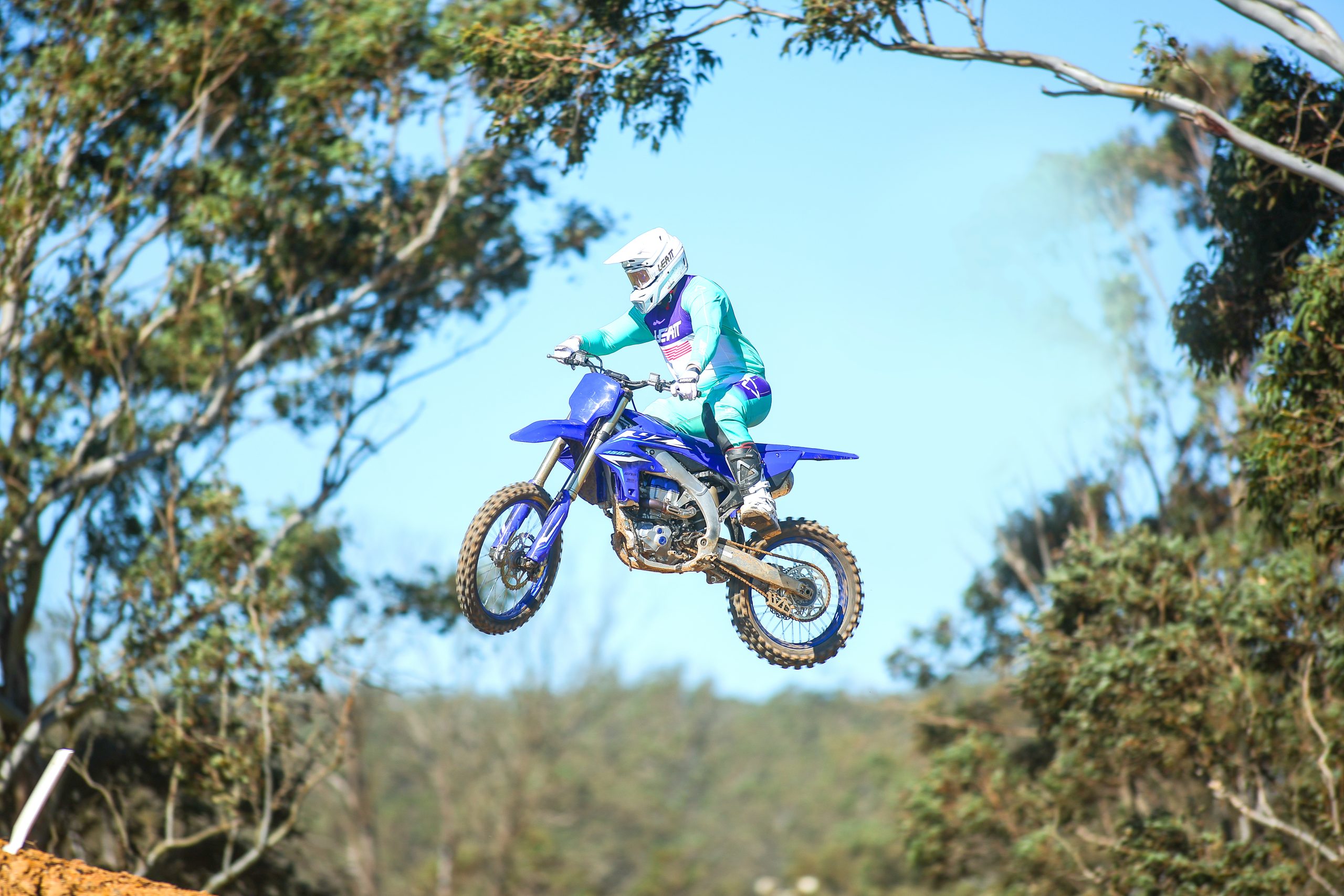
Suzuki’s four-stroke 250 motocrosser already had a reputation as a bike that did everything well with a strong smooth engine, stable chassis and a suspension package that could handle most anything thrown at it. Despite all this Suzuki saw fit to make a number of changes for 2016 with the biggest being in the suspension department swapping from Honda owned Showa to Yamaha owned KYB and a spring/cartridge Separate Function Fork to the then latest KYB PSF2 single chamber air fork. The 2016 Suzuki RM-Z250 rear shock was also a KYB unit with all three adjusters on the top of the shock body.
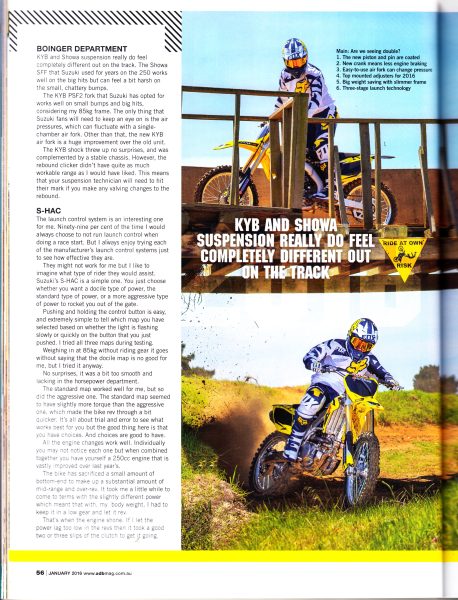
The 2016 Suzuki RM-Z250 engine saw some upgrades too, with the aim of increasing bottom, mid and top end power by use of a new piston with a surface coating and a DLC gudgeon pin, new intake and exhaust cams, intake valves designed for more compression and a new crankshaft and magneto to reduce engine braking. Three ignition maps could be chosen from by a switch on the left handlebar for the Suzuki Holeshot Assist Control which allowed riders to customise power delivery out of the starting gate and returned the map to standard once the rider changed gear. Tester Lee Hogan tried all three naturally and found the most docile lacking horsepower and a bit too smooth, while both the standard and aggressive maps worked well for him with the standard seeming to have slightly more torque than the aggressive. He found the engine changes to have sacrificed a little bottom end but to have added a substantial amount of midrange and over-rev with the midrange punch great for blasting out of sandy berms.
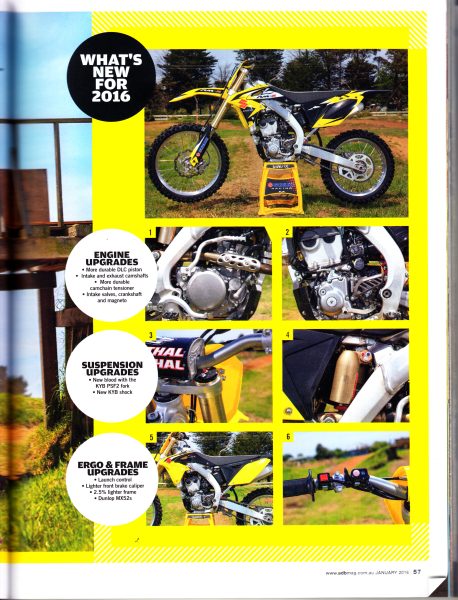
Hogan liked the way the fork worked on both small bumps and big hits but suggested air pressure would need a close eye kept on it and he didn’t think the rebound clicker had enough range as he would have liked. He couldn’t name a particular favourite part of the bike between engine, suspension or frame as he decided it was the combination of all three that made the bike so much fun to ride, it being able to carve up the inside of a flat corner or destroying a big sandy berm. He did suggest some mods he would do, like an aftermarket exhaust to allow revs to pick up a bit quicker, two more teeth for the rear sprocket to improve bottom-end torque and a slightly bigger front disc and braided brake line to improve braking power. His conclusion was that Suzuki had taken big steps forward in the engine department, while perhaps a few sidesteps in the suspension area, but overall there were no backward steps.