If you’ve ever stood beside the Finke track and watched riders disappear into the horizon at over 180km/h, you’ve probably wondered what makes someone spend tens of thousands of dollars just to race two days across the desert.
It’s not a professional sport for most of the field. There are no million-dollar contracts waiting at the finish line. There aren’t television crews following every rider around. In fact, most competitors fund the entire thing themselves, take annual leave from work and spend months preparing just to line up at the start.
Yet every year hundreds of riders do exactly that. And few embody the privateer spirit of Finke better than Stu Windsor and the Six27 Racing crew.
The name itself comes from Windsor’s very first Finke race number: 627. Back in 2017 he wasn’t running one of the biggest privateer support operations in the race. He was simply another bloke from Western Australia with a motorcycle and a dream of conquering the desert.
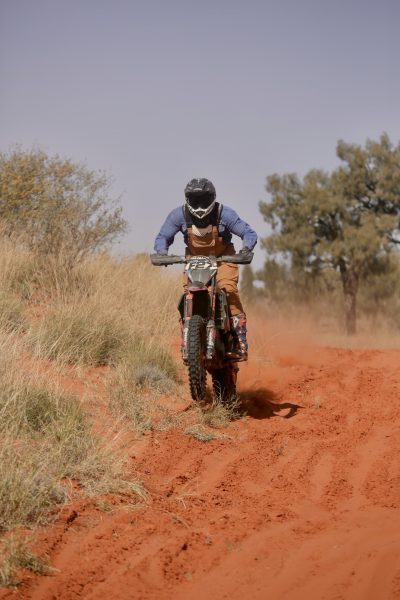
The funny thing is he hadn’t even raced before. “I’d never done an enduro race, motocross race or anything,” Windsor explained. “Finke was the first race I’d ever done on a motorcycle.”
Like most first-timers, he had no idea what he was getting himself into. He knew Finke had a reputation for being difficult and that was part of the attraction. Windsor has always been drawn towards challenges, and there are few bigger tests in Australian motorcycle racing than 460 kilometres of whoops, rocks and square edges hidden in bull dust
The race got its hooks into him immediately. “It was such a challenge,” Windsor said. “You want to see how far you can push your physical and mental ability.”
Not only did he keep coming back, but he also remembered how much help he received from experienced competitors when he first arrived in Alice Springs. Riders he’d never met were willing to offer advice, explain the race and help him survive one of the toughest events in the country.
Instead of forgetting about that support, Windsor decided to pay it forward.
Privateer code
What started as a small Facebook page has evolved into one of the most recognised support operations at Finke. Today the blue Six27 Racing setup is impossible to miss. Massive pit areas, support vehicles, Starlink systems, live timing screens and a team of volunteers make it look more like a professional race outfit than a privateer camp.
Every year preparation begins almost as soon as the previous Finke ends. Accommodation is locked in 12 months in advance, with the crew booking the same 10 sites at the caravan park they’ve occupied for the past six or seven years.
Then comes the planning. Windsor works out which riders will be racing, what support structure they’ll need and how the team will operate. Some years they support a large number of riders. This year they deliberately reduced numbers to focus on another major project we’ll get to later.
Regardless of numbers, the workload is enormous. Tyres, tubes, spare parts, fuel logistics, support vehicles, accommodation, communications equipment and rider mentoring all need to be organised long before race week arrives.
The impressive thing is they’re not trying to make money from any of it. “We’re not doing it to provide a service that we can make money on,” Windsor explained. “We’re doing it because we’re already there and we love doing it.”
Virgin Finkers
First-timers are guided through the entire process. They get advice on accommodation, bike setup, pre-running and race strategy. During the event they’re supported by fuel crews equipped with live rider tracking, Starlink internet, televisions and two-way radio systems that allow every bike to be monitored in real time.
It sounds expensive because it is. The surprising part is how little riders actually contribute. Most competitors only pay enough to help cover operational expenses. The goal isn’t profit. It’s simply making sure the system can continue helping riders year after year.
Of course, that’s only one part of the financial equation. Actually building a motorcycle capable of surviving Finke is another story altogether.
The cost to race
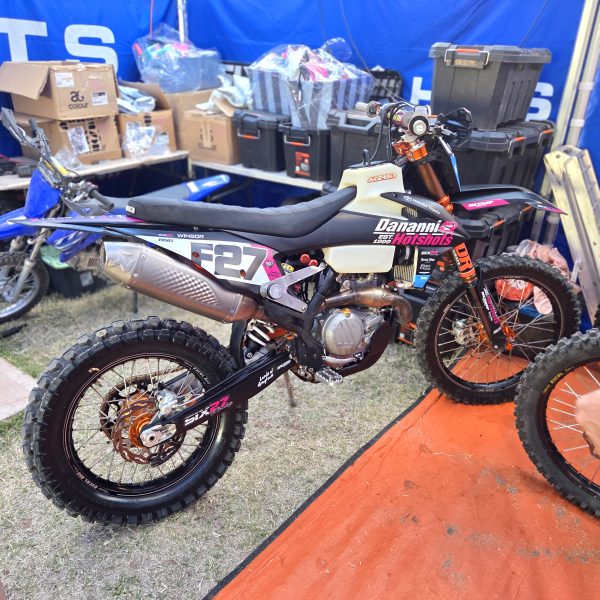
For Windsor, that process starts with a KTM 500 EXC. It’s the weapon of choice for both him and most of the riders directly associated with the Six27 Racing program. But buying the bike is only the beginning.
Suspension is one of the first things to be addressed. This year Windsor used GDR suspension, while previous bikes have run components prepared by Endurotech. The standard setup simply isn’t enough for the punishment the Finke track dishes out.
Steg Pegz are fitted to reduce rider fatigue. Triple clamps are upgraded. Seat modifications are made for comfort. Wheelsets are changed because the standard rims simply won’t survive repeated impacts at desert racing speeds. Tyres and mousses are consumed at an alarming rate during testing, pre-running and race week itself.
Then there are the spare parts. Nobody wants to drive 3000 kilometres only to be sidelined by a failed component. Spare wheels, tyres, mousses and critical engine components all form part of the package. By the time everything is added up, the numbers become eye-watering.
“A bike ends up being around $25,000 to $30,000 by the time you finish building it,” Windsor said. And that’s before you’ve even left home.
Add accommodation, fuel, support vehicles, entry fees, travel costs and race-week logistics and Windsor estimates a typical Finke campaign can easily become a $40,000 to $50,000 exercise.
But the attraction isn’t trophies or prize money. It’s the challenge itself. “You hate the race after you’ve done it,” Windsor laughed. “You never want to go back. Then you forget about the pain and want to go back and test yourself again.”
2026 Campaign
That mentality was tested harder than ever for Stu in 2026. After more than two years away from racing, Windsor returned to Finke determined to improve on previous performances. Fitness wasn’t the issue. He felt strong physically and believed a top-50 outright finish was achievable if everything went to plan.
Unfortunately, Finke has a habit of exposing even the smallest mistakes. In Windsor’s case, the problem was preparation. He spent so much time making sure everyone else in the team was looked after that he neglected some details of his own race setup. During pre-running he wasn’t wearing the exact equipment he’d race in. When race morning arrived and he strapped on his air vest and hydration pack, everything felt noticeably tighter.
Too tight. “It wasn’t until I raced that I realised I couldn’t breathe properly,” he said. The issue affected him immediately.
His prologue result of around 120th was well below expectations and left him frustrated heading into race day. A rider who genuinely believed a top-50 finish was possible suddenly found himself playing catch-up.
About 50 kilometres from Alice Springs on the return journey, Windsor tangled bars with a teammate. The collision broke his hand instantly. “I immediately knew I’d broken it,” he said.
Unable to properly grip the handlebars, he spent the final 50 kilometres nursing the KTM home with essentially one functioning hand. The dream result was gone, replaced by the simple goal of reaching the finish line. It wasn’t the race he’d hoped for. But strangely, it only strengthened the obsession.
Punter’s drug
Like so many riders before him, Windsor crossed the line swearing he’d never do Finke again. Then reality set in. Now he wants redemption.
“I’ll end up going back,” he admitted. “Now I need redemption.”
That mindset explains why Finke continues attracting riders from every corner of Australia. It’s not just a race. It’s a challenge that never really lets go. Every year competitors promise themselves they’re finished. Every year they start planning the next one.
And every year privateers like Stu Windsor keep showing up, spending ridiculous amounts of money and putting themselves through unimaginable punishment for the chance to test themselves against the desert one more time.
Because that’s what Finke does. It breaks you, empties your wallet and leaves you wondering why you ever entered. Then somehow it convinces you to come back.
THE BAJA DREAM
While Finke remains the heart of Six27 Racing Racing, the crew now has its sights set on something even bigger — the legendary Baja 1000.
For years, Australian desert racers have looked across the Pacific and dreamed about taking on Mexico’s most famous race. The event is longer, more complex and arguably even more brutal than Finke, with hidden dangers, changing terrain and enormous logistical challenges.
Rather than rushing into it, Windsor and fellow Six27 Racing rider Ben Stevens spent years planning their attack. They travelled to Mexico in 2025, followed the race, studied how it operated and built relationships with key people already competing there.
One of the biggest breakthroughs came through Hero Racing and Australian Dakar rider Corey Hammond. The relationship gave the team invaluable access to people already competing at the highest level.
Instead of guessing what Baja required, they were able to learn directly from competitors already succeeding there. The result is shaping up as one of the biggest Australian Baja assaults ever attempted.
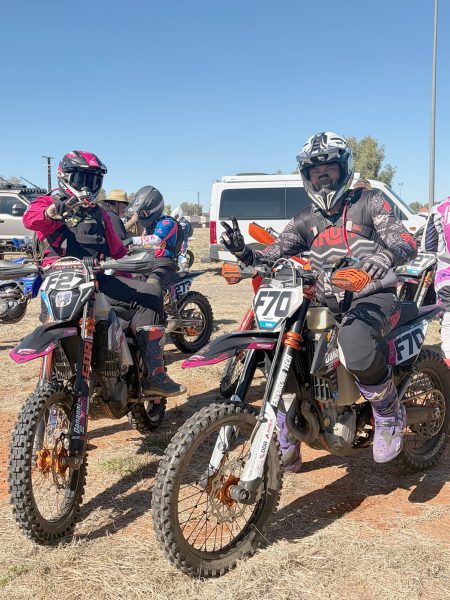
The rider list includes Campbell Hall, Mitch Outram, Ben Stevens, Will Ashby, Jacko Smart, Sean Chidlow, Mark McDonald and Stu Windsor himself. It’s a collection of riders specifically chosen not just for speed, but because they work well together.
“We didn’t just want the fastest riders,” Windsor explained. “Everyone needs to gel and be like-minded.”
Initially the team planned to race KTM machinery, but discussions with Hero Racing have also opened the possibility of running Ducati desert racers, depending on final logistics and development.
The challenge now is funding. Like every privateer adventure, Baja doesn’t happen without support. Sponsorship packages remain available, with businesses and individuals able to help Australian riders tackle one of the toughest races on earth.
If the project succeeds, it won’t just be a win for Six27 Racing. It’ll be Australian privateers taking on the world. Get in touch with Stu and support their dream!