There was a time when choosing an enduro bike was pretty simple. If you wanted something light and lively, you bought a 250cc four-stroke or two-stroke. If you wanted effortless torque, you bought a 450 or maybe even a 500 if your riding was more open country than tight trees. Everything in between was largely ignored but not anymore.
Over the last decade, the mid-capacity four-stroke has quietly become the sweet spot of off-road riding. Modern 300s, 350s and 390s produce enough torque to be ridden lazily like a big-bore, yet they’re still light and agile enough to flick through singletrack without trying to rip your arms from their sockets. They’re easier to manage when you’re tired and less intimidating for newer riders.
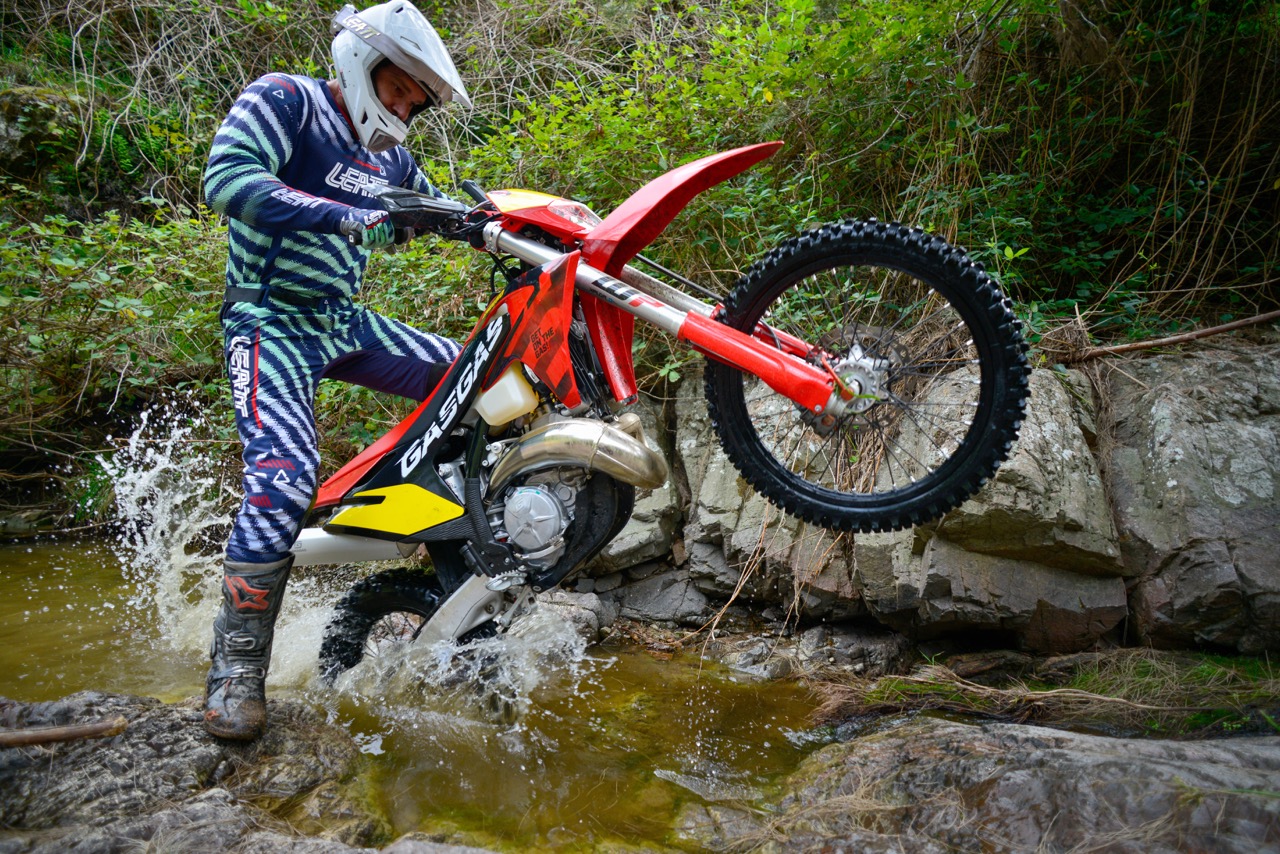
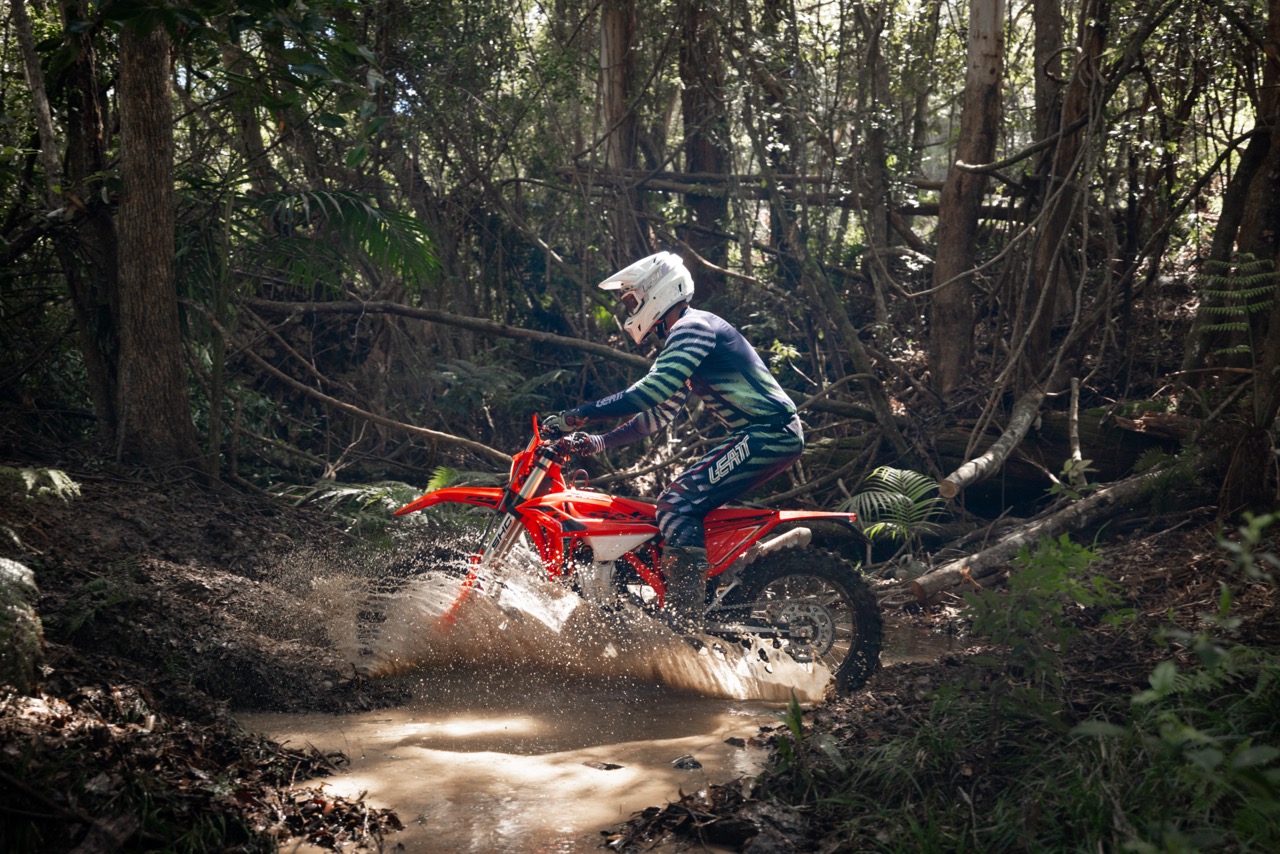
For this comparison we assembled six very different interpretations of what a mid-capacity trail bike should be. At one end of the spectrum sit the race-bred KTM 350 EXC-F, Sherco 300 SEF Factory, Beta RR 350 X-Pro and Beta RR 390 Race. These are serious off-road weapons designed to tackle everything from weekend trail rides to national enduro competition.
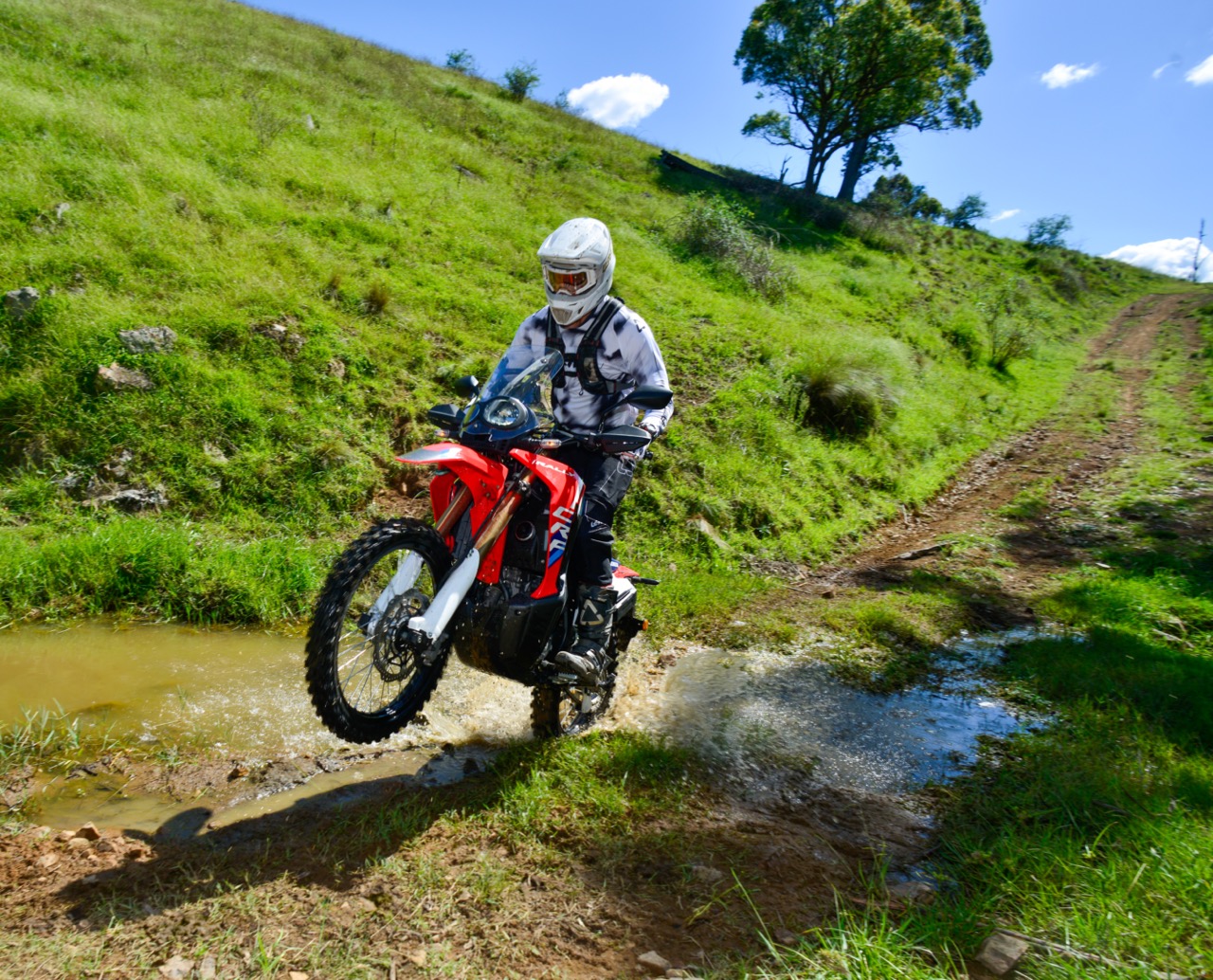
At the other end are two bikes built with a completely different philosophy. Kawasaki’s KLX300 and Suzuki’s new DR-Z4S aren’t trying to win enduros. They’re designed to commute, explore, carry camping gear and survive thousands upon thousands of kilometres with little more than routine servicing. Yet they’re still capable enough to tackle the same bush tracks as the competition bikes, even if they go about it very differently.
Which raises an interesting question. If they’re all around the same engine capacity, can they really be compared? The answer is yes… but not in the way you’d expect.
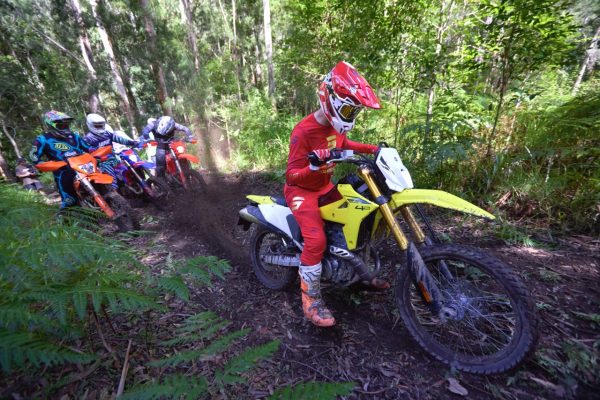
WHY THIS ISN’T A SHOOTOUT
Let’s clear something up before anyone jumps into the comments asking why we didn’t crown an outright winner. This isn’t a shootout. It couldn’t be.
On paper these bikes all sit within roughly the same engine capacity which is 300 to 400cc four-strokes but that’s where the similarities end. Asking the Suzuki DR-Z4S to compete against the Sherco 300 SEF Factory in a traditional points-based shootout would be like comparing a LandCruiser to a rally car. They both have four wheels and both will get you down a dirt road, but they’re designed to do completely different jobs.
The KTM, Sherco and both Betas are genuine competition motorcycles. You could unload them at an Australian Enduro Championship round tomorrow, fit your race numbers and go racing with very little preparation.
The Suzuki and the Kawasaki are trail bikes first, commuters second and adventure bikes third. They’re built to carry gear, survive years of ownership and require significantly less maintenance than a race-focused enduro bike. They make less power, weigh more and wear softer suspension, but they also offer durability, versatility and everyday practicality.
So instead of scoring them against each other, we approached this test with one simple question.
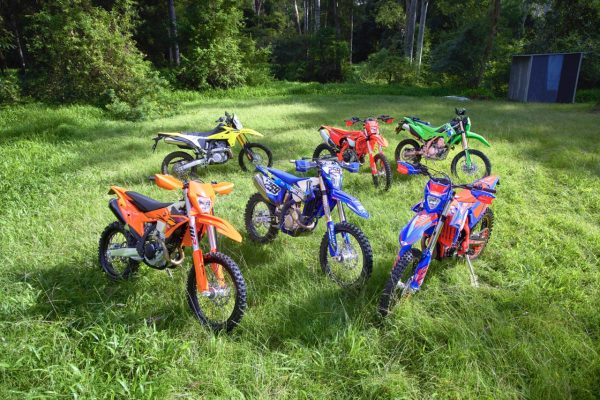
Who is each bike actually built for?
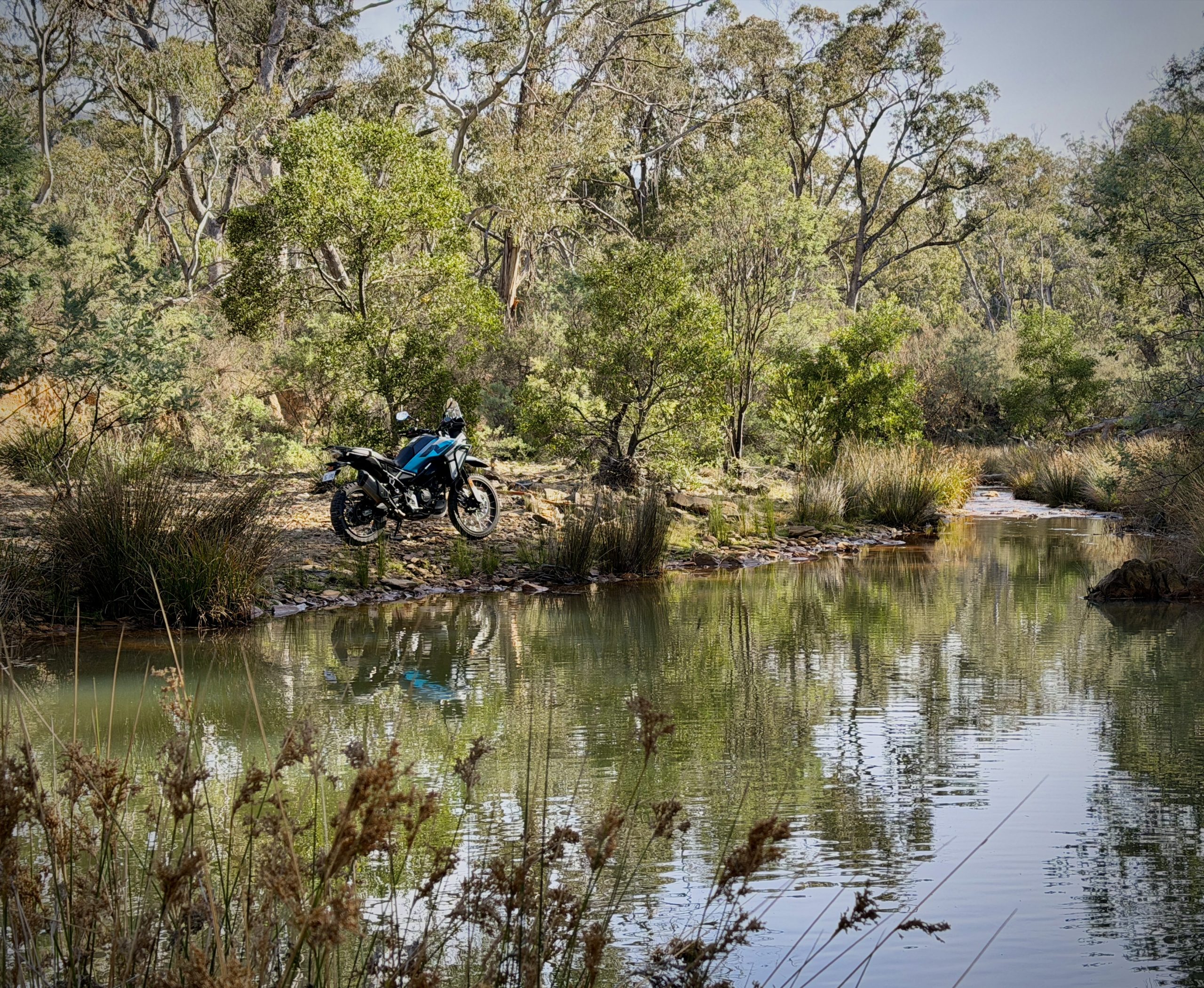
Because the best bike for a 20-year-old A-grade racer isn’t necessarily the best bike for a 65-year-old trail rider who commutes to work during the week. Likewise, the bike we’d choose for a four-hour enduro probably isn’t the one we’d load with camping gear and disappear into the Victorian High Country for a long weekend.
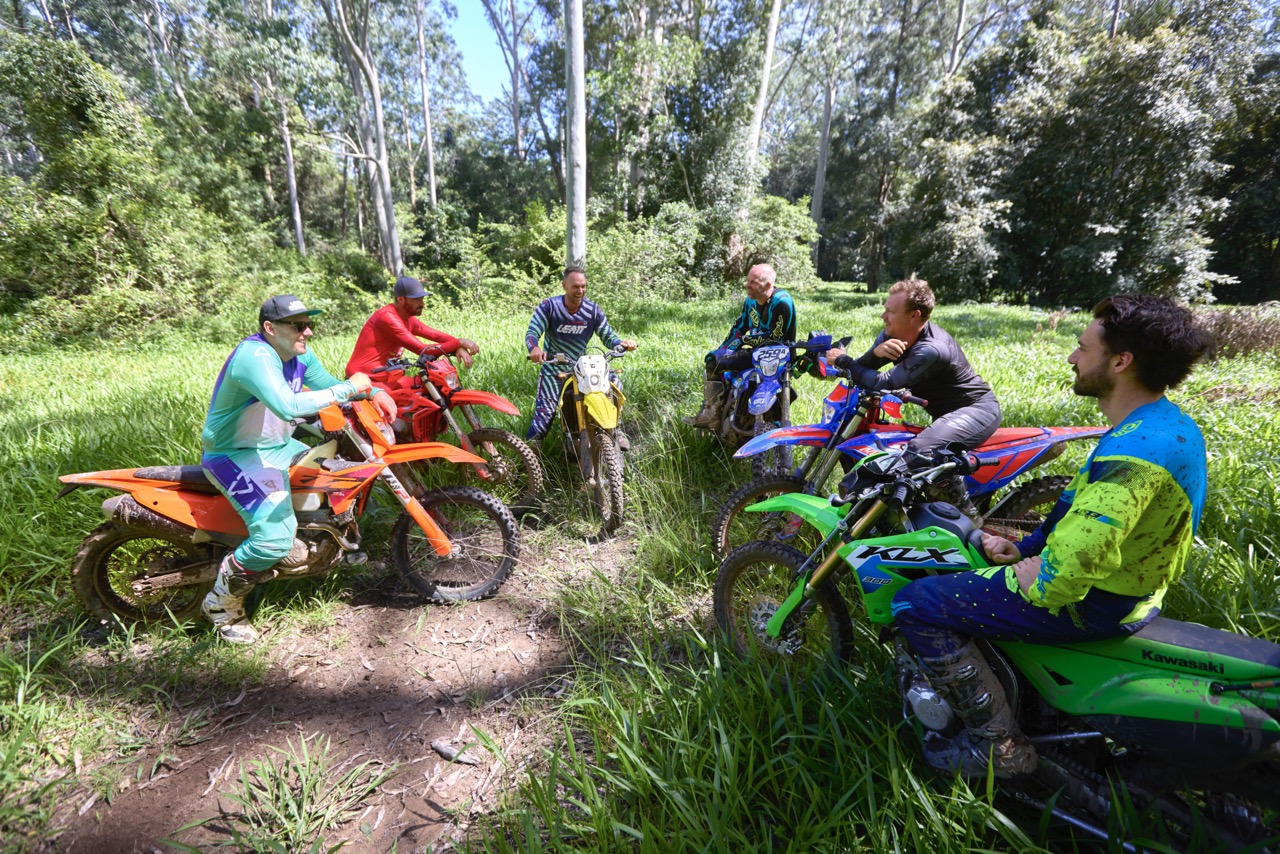
Throughout the day we rotated every rider across every motorcycle. Geoff Braico, Matt Boyd, Jeff Briggs and even Jacob Remin, a newer off-road rider who currently has our DR-Z4S long term test bike, shared impressions back-to-back across the same enduro and trail loops.
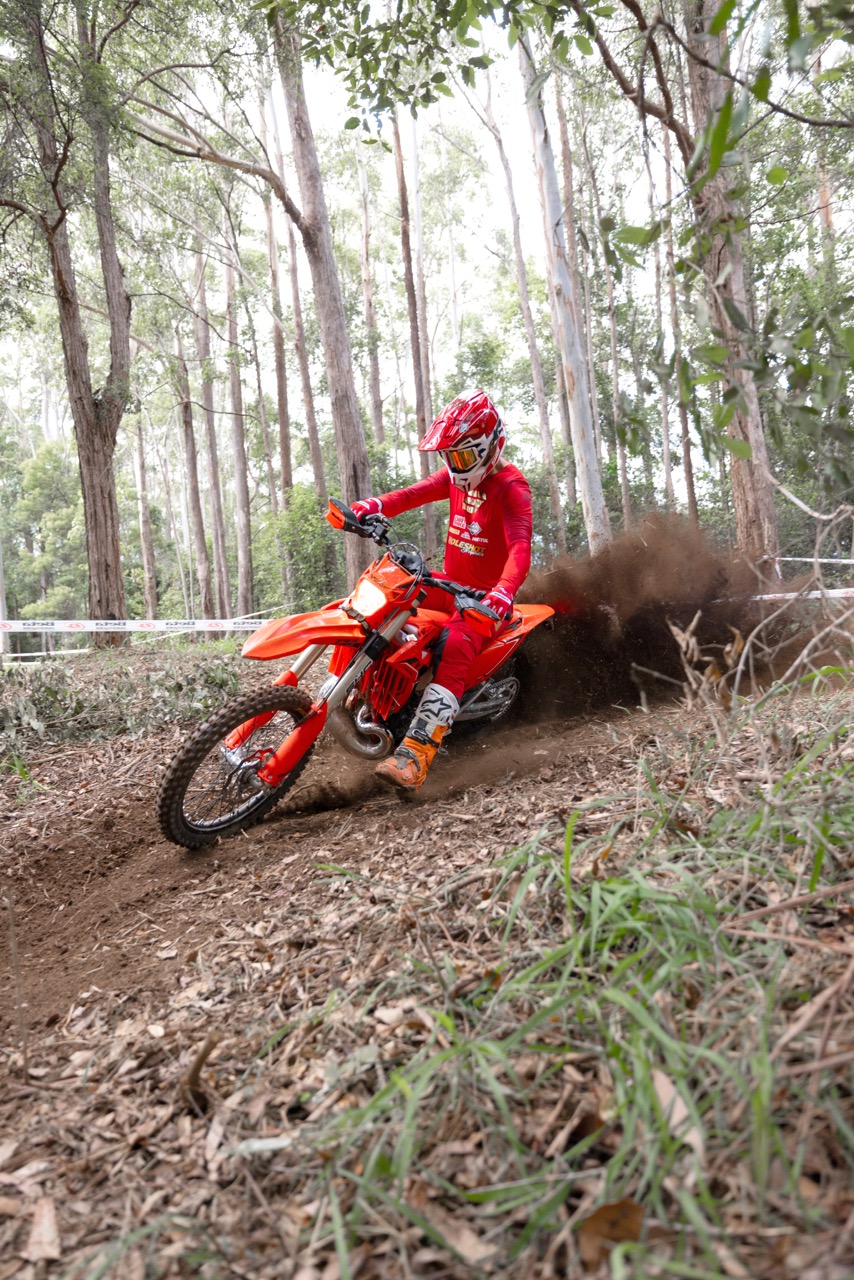
KTM 350 EXC-F
THE BENCHMARK
Every manufacturer has a bike that defines a class. In the mid-capacity enduro world, that’s the KTM 350 EXC-F.
It has been the benchmark ever since KTM introduced the modern 350 concept more than 15 years ago, and every bike that has followed has inevitably been compared against it. Whether it’s a Beta, Sherco or any future Japanese challenger, riders subconsciously ask themselves the same question: “Is it as good as the KTM?”
Nothing about the KTM stands out as spectacular. But equally, nothing lets it down. That might sound like a backhanded compliment, but in reality it’s probably the biggest praise you can give an enduro bike.
“The KTM would suit such a wide audience,” Matt Boyd said after climbing off the bike. “There wasn’t one thing that made me go, ‘Wow, that’s incredible,’ but there also wasn’t one thing I could complain about. The suspension is forgiving and plush, the engine is smooth and if I had to go trail riding for 10 hours, this is probably the bike I’d choose.” That sentiment was echoed by almost everyone.
Compared with the old XPlor fork models, the current suspension is noticeably more compliant in trail conditions but still firmer. It absorbs rocks, roots and square edges without constantly reminding you the bike is built to win races, yet when the pace increases it still has enough support to attack faster terrain with confidence.
The engine follows exactly the same philosophy. There’s enough torque to ride lazily, but it never feels intimidating. You can short-shift it through technical terrain or rev it harder when the trail opens up, and it responds without drama. That smoothness is what makes the 350 such a unique capacity.
“I honestly think you could put a complete beginner on this bike and they’d be fine,” Briggsy commented. “The power delivery is smooth enough that it never scares you, but if you want more, you just twist the throttle further and it keeps giving.”
“It feels like the most versatile bike here,” Mitch Lees observed during testing. “That’s why I don’t understand why more manufacturers haven’t built a 350. It genuinely feels like the perfect capacity. It’s got enough power to satisfy experienced riders, but it’s still easy enough that someone with much less experience can enjoy it too.”
That versatility was reinforced by one of the day’s least experienced testers, Remin. “After riding all the bikes today, that was the one that instantly felt natural,” he said. “It just felt like I’d ridden it before. Everything was comfortable and easy.”
KTM has spent years refining its rider triangle, handlebar position, seat shape and control layout. It isn’t flashy, but it works. Every lever falls naturally to hand, the ergonomics disappear beneath you and the bike simply allows you to focus on the trail ahead.
If you could only own one bike to race, trail ride, explore and occasionally commute between riding areas, the KTM 350 EXC-F remains one of the safest recommendations in motorcycling.
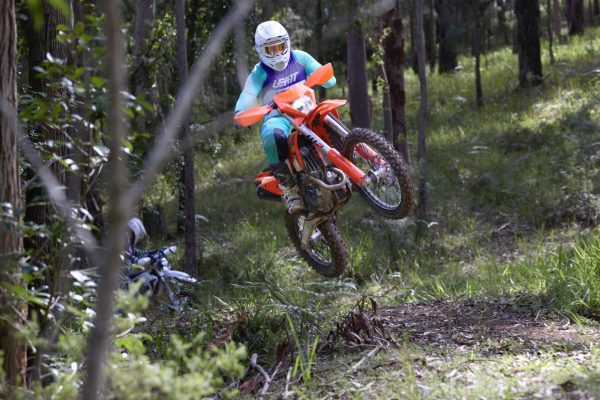
2026 KTM 350 EXC-F
ENGINE
Type: Single-cylinder, 4-stroke
Displacement: 349.7cc
Fuel System: Keihin EFI, 42mm throttle body
Engine Management: Keihin EMS
Gearbox: 6-speed
Clutch: Wet DDS multi-disc, Brembo hydraulics
Primary Drive: 24:72
DIMENSIONS
Seat Height: 963mm
Ground Clearance: 347mm
Fuel Tank: 8.5L
Weight (dry): 106.8kg
SUSPENSION
Front: WP XACT USD fork, 48mm, compression and rebound adjustable, 300mm travel
Rear: WP XPLOR shock with PDS, compression, rebound and preload adjustable, 310mm travel
BRAKES & Tyres
Front: Brembo, Disc brake
Rear: Brembo Disc brake
Tyre: Maxxis MaxxEnduro
RRP: $17,165
Warranty: 6 months
Website: ktm.com/en-au
SHERCO 300 SEF FACTORY
THE RACER
If the KTM is the dependable all-rounder that quietly gets every job done, then the Sherco is the bike that’s loud and wants to be ridden hard.
It’s the most race-focused motorcycle in this comparison, and unlike the KTM, which encourages smooth, measured riding, the Sherco rewards aggression. It wants to be ridden harder, revved higher and jammed into every rut and turn. The faster you ride it, the better it feels.
That shouldn’t come as a surprise. Our test bike wasn’t a showroom-fresh machine as it had just finished racing at the Australian Enduro Championship in Roma and forms part of ADB’s long-term fleet. Aside from professionally sprung KYB suspension, handlebars and a few ergonomic tweaks, however, the engine remained untouched, still running the standard Akrapovič exhaust system that comes fitted from the factory.
The Sherco has an urgency about it. “I feel like it’s a little bit more aggressive,” Jeff Briggs explained. “It’s not quite as torquey and tame as the KTM or the Betas. It wants to rev quicker and it gets there quicker. It’s definitely more responsive.”
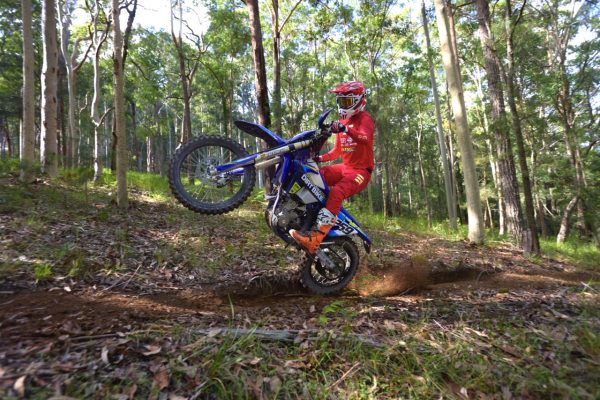
Where the KTM encourages you to short-shift and flow through the terrain, the Sherco almost begs you to hold onto each gear a little longer. Crack the throttle and the engine snaps to attention immediately. It isn’t intimidating, but there’s a sharper connection between your right wrist and the rear tyre that makes the whole bike feel alive.
It isn’t necessarily faster than everything else here, but it feels faster because of the way it responds. Despite its lively engine, the chassis never feels nervous. In fact, several riders thought it was one of the most planted motorcycles of the entire test.
“I’d say it’s probably the most nimble bike here,” Mitch said. “In those deep ruts early in the loop it was the easiest bike to place exactly where I wanted it. Even when I wasn’t riding particularly well, I was having an absolute ball on it.”
Matt Boyd agreed. “It almost feels like a mountain bike,” he laughed. “It’s so easy to throw around. It changes direction quickly and it just feels balanced underneath you.”
That agility became even more noticeable as the track deteriorated throughout the day. Our test loop was wet, slippery and heavily rutted after recent rain, yet the Sherco consistently found traction and held its line without demanding huge physical effort from the rider.
If anything held it back during this particular test, it wasn’t the chassis or the engine, it was the gearing. Briggs, having spent considerable time racing the bike, was quick to identify the one change he’d make before lining up again.
“The gearing is the biggest thing I’d change,” he admitted. “I found myself caught between second and third in a few places, especially racing. The KTM seems to carry third gear a little easier. Once I sort that out, I honestly think it’ll transform the bike again.”
It’s a small criticism, but one worth mentioning because it highlights how close these modern enduro bikes have become. Another point worth mentioning is the exhaust. We’ve spent time testing this bike both with and without the removable baffle, and the difference is more noticeable than many riders might expect.
With the baffle removed, the Akrapovič system gives the 300 SEF Factory a far more aggressive personality. Throttle response sharpens, the bike feels livelier and it develops the crisp, instant hit that had everyone grinning during this comparison. Put the baffle back in and it calms the bike noticeably, smoothing the power delivery and making it friendlier in technical terrain.
“I’d actually like to put the bung back in,” Briggs admitted. “It definitely softens the engine. At the moment it’s pretty snappy, which suits some riders, but I’d be interested to see how it feels again with the quieter setup.”
Likewise, its standard map switch gives riders another layer of adjustability. Most of the day the bike remained in its aggressive map but several commented that the softer map would probably become their choice for longer trail rides.
For a motorcycle that arrives with a genuine Akrapovič exhaust system, premium KYB suspension and quality components throughout, the Sherco remains surprisingly competitive on price against the established European brands. It’s difficult to ignore just how much motorcycle you’re getting for the money.
“If you asked me to pick one to trail ride and one to race,” one tester summed up, “I’d take the KTM trail riding… but I’d race the Sherco every day of the week.” Boydy summed it up pretty well.
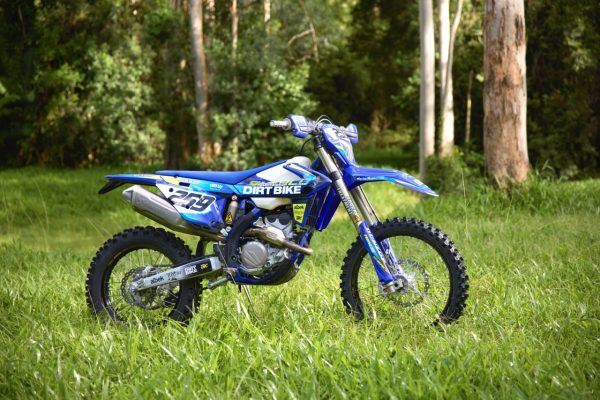
2026 Sherco 300 SEF Factory – Specifications
ENGINE
Type: Single-cylinder, 4-stroke DOHC, 4-valve SHERCO technology
Displacement: 303.68 cc
Bore x Stroke: 84 mm x 54.8 mm
Fuel System: Synerject digital electronic fuel injection
Ignition: DC-CDI with digital advance, dual map switch (Hard / Soft)
Cooling: Liquid-cooled with radiator thermo fan and expansion tank
Starter: Electric
Exhaust System: Full Akrapovič exhaust system
Gearbox: 6-speed sequential
Clutch: Brembo hydraulic, multi-disc wet clutch
Tank: 9.8 litres
DIMENSIONS
Wheelbase: 1480 mm
Ground Clearance: 355 mm
Seat Height: 950 mm
SUSPENSION
Front: 48 mm KYB closed-cartridge fork, fully adjustable, 300 mm travel
Rear: KYB shock absorber, fully adjustable, 330 mm wheel travel
BRAKES
Front: Brembo hydraulic system with Galfer 260 mm disc
Rear: Brembo hydraulic system with Galfer 220 mm disc
WHEELS & TYRES
Front Wheel: 21 EXCEL Takasago rim (black), Michelin Enduro Medium
Rear Wheel: 18 EXCEL Takasago rim (black), Michelin Enduro Medium
RRP & WARRANTY
RRP: $17,999 + ORC
BROWSER: SHERCO.COM.AU
WARRANTY: 6 MONTHS
BETA RR 350 X-PRO
THE TRAIL SPECIALIST
It’s easy to dismiss the X-Pro because it wears the cheaper badge in Beta’s range, sitting below the Race model with its softer suspension, lower seat height and more trail-focused specification. But after riding it back-to-back with every other bike here, we actually came away appreciating exactly what Beta was trying to achieve.
It’s a purpose-built trail bike. Instead of trying to be everything to everyone, Beta has deliberately softened the package to appeal to riders who spend more time trailriding.
The biggest surprise wasn’t the engine. It was the suspension.
The X-Pro is fitted with Beta’s open-cartridge ZF suspension package rather than the KYBs found on the Race model, and while it undoubtedly gives away some outright pace when the riding gets aggressive, every rider commented on how comfortable it felt.
“It’s definitely a lot softer than the KTM,” Matt Boyd explained. “But that’s not necessarily a bad thing. There was this nasty off-camber section with ruts and slippery clay where you could actually feel the suspension working underneath you. It gave you a bit more feedback and confidence.”
Where the Sherco and KTM encouraged you to attack obstacles, the X-Pro seemed happiest when you backed the pace off a touch and let the suspension absorb the trail beneath you. It irons out rocks, roots and braking bumps beautifully, making it one of the easiest bikes in the comparison to simply sit down and trail ride.
The 350cc engine still produces more than enough performance for almost any trail rider, with a smooth, torquey delivery that never feels intimidating. Compared with the KTM, however, there’s a little less urgency when you crack the throttle.
“The KTM motor probably feels a little bit stronger,” Mitch observed. “The Beta is softer everywhere. It doesn’t have quite the same lug, punch or grunt, but it also doesn’t demand as much from the rider.”
One thing a few testers noted was the ergonomics felt slightly more unfamiliar.
“The KTM is just so neutral,” Matt Boyd said. “You jump on it and everything immediately feels familiar. The Beta isn’t bad at all, but the handlebars, the seat and the rider triangle just feel a little different. I reckon with a different set of bars and a few small changes it’d feel even better.”
Older riders will remember when hopping on a Beta felt… well… foreign. The seats were hard, the ergonomics were quirky and it often took a ride or two before you felt completely comfortable. That’s no longer the case.
“They’ve improved these things massively,” Briggsy commented. “Years ago you’d jump on one and think, ‘Gee, this feels different.’ Now they’re all really close. KTM might still have that last little bit of refinement, but Beta has caught up in a big way.”
Price also works heavily in the X-Pro’s favour. With roughly a $2,500-$3,000 saving over the KTM, it represents outstanding value for riders who don’t necessarily need a race-ready motorcycle.
“I don’t think there’s three grand worth of difference between them,” Mitch said. “The KTM is still the benchmark, but Beta has closed the gap enormously. If you’re mainly trail riding, it’s hard to ignore how much bike you’re getting for the money.”
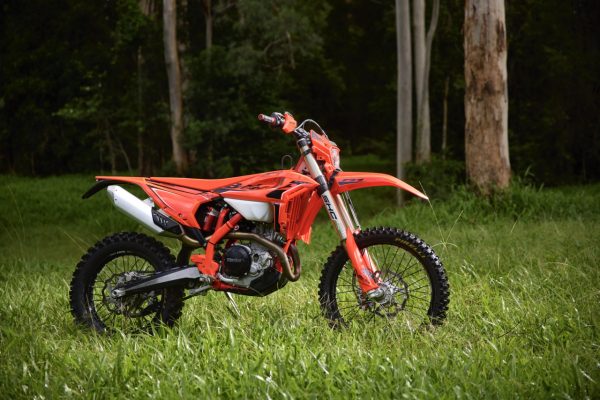
BETA RR 390 RACE
THE TORQUE MONSTER
If there was one bike that genuinely surprised everyone during this comparison, it was the Beta RR 390 Race. Not because it was the fastest. But because every rider climbed off saying exactly the same thing: “That motor is bloody good!”
It’s funny how perceptions change. Ten years ago, a lot of riders would’ve looked straight past a 390. It sat in an awkward middle ground between a 350 and a 450, leaving many wondering why they wouldn’t just buy the bigger bike. Ride one for five minutes today and you’ll understand.
The 390 has become its own category. It’s got all the benefits of a modern mid-capacity enduro which is light handling, manageable weight and easy cornering but the engine delivers a level of torque that almost makes you question whether you need a 450 at all.
Straight away, Matt Boyd summed it up perfectly: “I really liked the 390,” he said. “I think it’s the torquiest bike here. You could honestly ride the whole loop a gear higher if you wanted to. If you missed a gear, it just kept pulling anyway.”
Mitch agreed, “That’s what impressed me,” Mitch explained. “You could be lazy on it. You didn’t have to think about changing gears all the time because it’d just keep driving. That’s something I really liked.”
A traditional 450 can become hard work in tighter terrain. The extra rotating mass, stronger engine braking and sheer punch eventually wear you down. The 390 somehow manages to produce a very similar riding style without bringing all of the fatigue that usually comes with a larger-capacity motorcycle.
“I honestly never thought I’d be looking at buying one of these,” Mitch admitted. “I always thought if I was buying a four-stroke it’d either be a 250 or a 450. But after riding this, I completely get it. They’ve got enough torque now that you can ride them lazily like a 450, but without having all that weight and inertia trying to drag you into every tree.”
The Race model itself also deserves plenty of credit. Where the X-Pro is deliberately built as a comfortable trail bike, the RR 390 Race is exactly what the badge suggests. The KYB suspension is firmer, offers more hold-up under brakes and copes with higher speeds far better than the X-Pro, yet Beta has somehow managed to avoid making it harsh.
“That’s probably what impressed me most,” Briggs said. “It’s still plush enough that you could trail ride it all day, but when you started charging, the suspension just kept working. It never felt like it was getting overwhelmed.”
Like the Sherco, the RR Race arrives with genuine performance parts straight from the showroom floor. Australian-delivered bikes now include the race muffler as part of the package, adding yet another layer of value to what is already a very competitive motorcycle.
“I think that’s pretty cool,” Remin said. “It’s beyond my capability but I could ride it and you’re getting a genuine race package without having to spend money the minute you get it home”.
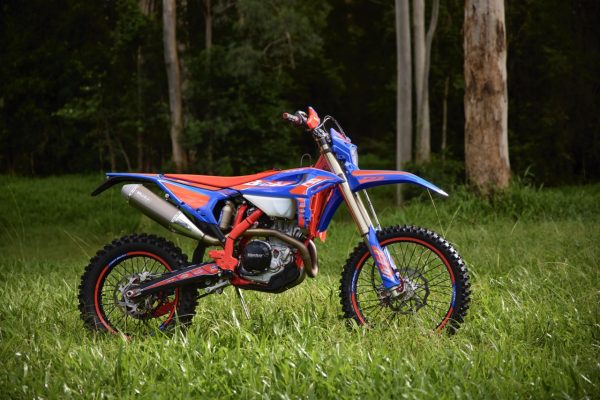
The conversation eventually shifted to who this bike is really aimed at. “Who’s buying the 390?” someone asked around the group. “If you’re sort of at that point where you’re not racing every weekend anymore but you still ride pretty aggressively, I reckon this thing makes heaps of sense,” Matt explained. “It’s got enough performance to race if you want, but it’s still comfortable enough to spend the whole day trail riding.”
Like the X-Pro, several riders felt Beta still trails KTM ever so slightly in overall refinement. But we’re talking about the final five per cent.
“Five years ago there was a much bigger gap,” Briggs reflected. “Now? Beta has probably improved more than anyone. These things are rock solid. The quality’s there, the components are there and I’d happily own one.”
For experienced trail riders wanting effortless torque, genuine race capability and one of the easiest engines in this comparison to ride quickly, the Beta RR 390 Race quietly makes one of the strongest cases of the entire test.
Engine
- Engine Type: Single-cylinder, four-stroke, liquid-cooled
• Bore x Stroke: 88 mm x 63.4 mm
• Displacement: 385.6 cc
• Compression Ratio: 12.48:1
• Valve Train: DOHC finger follower, 4 valves
• Starter: Electric
• Fuel System: Eldor dual electronic injection
• Throttle Body: Ø 42 mm Synerject
• Lubrication: 2 oil pumps
• Clutch: Wet multi-disc
• Transmission: 6-speed
Chassis
- Frame: Molybdenum steel double cradle split above exhaust port
• Wheelbase: 1480 mm
• Seat Height: 950 mm
• Ground Clearance: 335 mm
• Dry Weight: 107.5 kg (Front: 52.7 kg / Rear: 54.8 kg)
• Fuel Tank Capacity: 9.0 L
• Reserve: 2.3 L
• Cooling System Capacity: 1.3 L
Suspension
- Front: KYB Hydraulic USD fork, 48 mm shaft, 300 mm travel
• Rear: KYB Monoshock with progressive compound linkage, 287 mm travel
Brakes & Wheels
- Front: Nissin 260 mm wave disc with double-piston floating caliper
• Rear: Nissin 240 mm wave disc with single-piston floating caliper
• Front Tyre: 90/90 – 21 Pirelli MX32
• Rear Tyre: 140/80 – 18 Pirelli MX32
RRP & Warranty
RRP: $18,970 Ride Away
Warranty: 6 months
Browser: betamotor.com.au
SUZUKI DR-Z4S
THE ADVENTURER
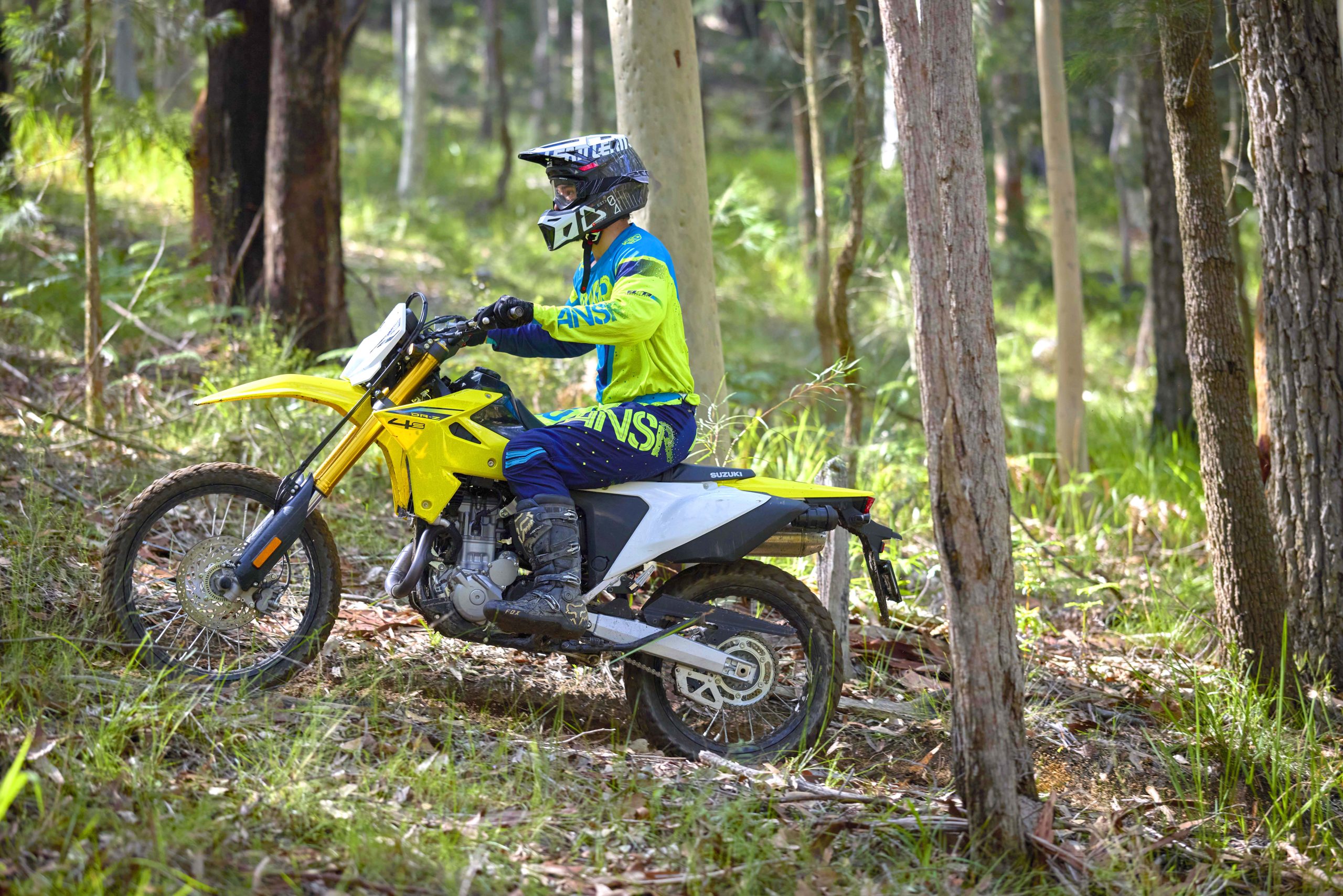
The Suzuki DR-Z4S was always going to be the odd one out in this comparison, but that’s exactly why we wanted it here. It shares similar engine capacity with the European race bikes, yet its mission in life couldn’t be more different. Suzuki hasn’t built the DR-Z4S to win enduros, instead, it has built it to do a little bit of everything. Ride it to work during the week, disappear into the bush on Saturday, strap camping gear to the back on Sunday and then repeat the whole process next weekend.
That’s why scoring it against the KTM, Sherco or Betas would completely miss the point. We deliberately took the DR-Z4S through exactly the same terrain as every other bike in this comparison. Steep climbs, deep ruts, slippery creek crossings, muddy hills and tight singletrack and it followed the race bikes everywhere they went. There were moments where it was completely out of its comfort zone, but remarkably, it never failed to get through.
“I’d call it a trail bike first,” Matt Boyd said. “People call them dual-sports these days, but really it’s a trail bike that you can commute on. It’ll happily ride fire trails, connect them with a bit of singletrack and then take you home on the road afterwards.”
The biggest surprise was the engine. Nobody expected it to compete with the race bikes for outright performance, and it doesn’t. But once you accept what it is, the little Suzuki becomes incredibly entertaining. You can hold the throttle wide open almost everywhere, use every bit of the power it has and never feel like it’s trying to get away from you.
“That’s what makes it so much fun,” Briggs explained. “You’re absolutely wringing its neck all the time and you still want more. It reminds me of riding an old XR200 or XR400 when you were a kid. You know it’s not fast, but you’re having an absolute ball trying to ride it as fast as you possibly can.”
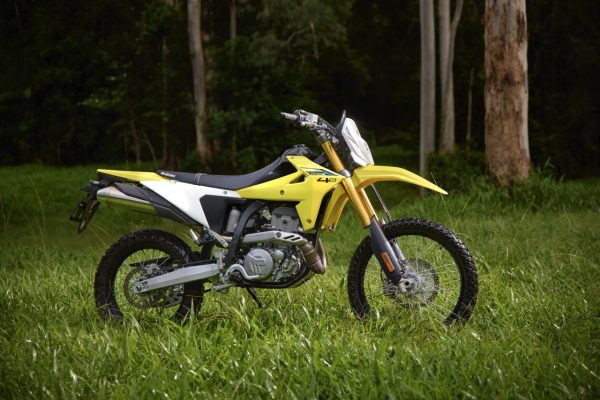
Of course, there are compromises. The suspension is significantly softer than the race bikes and quickly reaches its limits if you start riding aggressively. We heard the fork bottoming on bigger hits throughout the day.
“It probably shouldn’t have done half the stuff we made it do today,” Mitch laughed. “We took it down rock drops, through ruts and into terrain that nobody buying one of these is realistically going to ride every weekend, yet it still kept going. That’s pretty impressive.”
The biggest advantage the Suzuki holds over every other bike here is longevity. While owners of the KTM, Sherco and Betas will be thinking about piston hours and regular race-bike maintenance, the DR-Z4S is built to accumulate kilometres. Tens of thousands of them.
The group quickly recalled Ben Grabham’s experience using an earlier DR-Z as a coaching bike out at Finke. “Grabbo bought one because he could spend an entire season coaching, rack up 10,000 to 15,000 kilometres and barely touch the engine,” Mitch said. “You’d probably rebuild two or three race bikes before you’d even think about opening up one of these.”
That durability inevitably becomes part of the value equation. Yes, at around $14,500 ride away it’s no longer the bargain that the old DR-Z400E once was, but it’s also a far more refined motorcycle. Fuel injection, modern suspension, some electronics and dramatically improved comfort make it far easier to live with every day than its predecessor ever was.
“You could honestly buy one of these, fit some better tyres and probably not spend another dollar on it for years,” Remin said. “If your riding is camping trips, pub rides, commuting and trail riding with your mates, that’s a pretty attractive proposition.”
Tyres were really the only thing holding the Suzuki back during our test. The standard dual-purpose rubber simply wasn’t designed for the greasy clay and deep mud we encountered after heavy rain. Once they packed up with mud they became little more than slicks, forcing every rider to work much harder than necessary.
“Throw a proper set of knobbies on it and it’d be a completely different bike,” Remin said. “For what most people are actually going to use it for they’re probably okay, but if you’re planning to ride proper bush tracks, tyres would be the very first thing I’d change.”
SPECIFICATIONS
Suzuki DR-Z4S
Engine
- Type: Four-stroke, single-cylinder, liquid-cooled, DOHC
- Displacement: 398cc
- Bore x Stroke: 90.0mm x 62.6mm
- Compression Ratio: 11.1:1
- Fuel System: Fuel injection
- Starter System: Electric
- Lubrication System: Dry sump
- Gearbox: 5-speed constant mesh
Dimensions
- Wheelbase: 1490mm
- Ground Clearance: 300mm
- Seat Height: 920mm
- Wet Weight: 151kg
- Fuel Tank: 8.7 litres
Suspension
- Front Suspension: KYB Inverted telescopic, coil spring, oil damped
- Rear Suspension: KYB Link type, coil spring, oil damped
Brakes & Tyres
- Front Brake: 270mm Disc, switchable ABS
- Rear Brake: 280mm Disc, switchable ABS
- Front Tyre: 80/100-21, IRC Tyre
- Rear Tyre: 120/80-18, IRC Tyre
KAWASAKI KLX300
THE GATEWAY BIKE
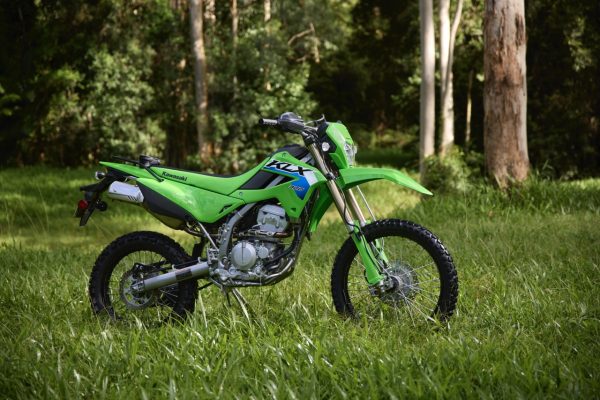
The Suzuki DR-Z4S is the bike you buy before you know whether dirt bikes are going to become a lifelong obsession. At around $9,000 ride away, the KLX300 is also comfortably the cheapest motorcycle in this comparison. Kawasaki knows buyers aren’t cross-shopping it against a KTM 350 EXC-F or Sherco 300 SEF Factory. Instead, it’s aimed at first-time trail riders, commuters, farmers and anyone wanting a reliable motorcycle that can tackle dirt roads and slow singletrack.
The moment you climb aboard, the difference is obvious. The engine is calm, predictable and incredibly easy to manage. Compared with the European bikes, there’s no explosive hit, no aggressive throttle response and certainly no urgency. Instead, the little 292cc engine builds its power smoothly, making it one of the least intimidating motorcycles here.
“It’s nowhere near as powerful as the Sherco,” Matt Boyd said. “It’s not even in the same conversation, but it’s not supposed to be. For what it’s designed to do, the power is actually spot on.”
Every time someone started comparing it directly with the race bikes, another tester would quickly remind them they were missing the point. Kawasaki never intended the KLX300 to be raced. It’s designed to help riders build confidence. For complete beginners, that gentle nature is arguably its greatest strength.
“My wife has almost no riding experience,” Mitch explained. “I’d happily put her on this bike. I wouldn’t put her on the KTM or the Sherco because they’re still proper race bikes. This thing’s smooth, quiet and the clutch is so forgiving that it’d be a perfect bike to learn on.”
Remin is the sort of rider Kawasaki is targeting and he appreciated how unintimidating the bike felt. Despite having ridden all the high-performance machinery during the day, the KLX never felt disappointing because expectations were different from the outset.
One surprise was how capable the chassis proved once we left the fire trails. Like the Suzuki, the Kawasaki tackled every obstacle we pointed it at, including steep climbs, slippery off-camber sections and deeply rutted singletrack. It certainly required more effort than the race bikes, but it never gave up.
“I was really impressed with where it actually went,” Briggs said. “It followed the KTM, Sherco and Betas everywhere. Sure, it wasn’t as fast and you had to work harder, but it still made it through everything we rode today.”
Although it lacks the outright performance of the European bikes, its slim chassis made it surprisingly enjoyable to thread through ruts and tighter terrain. It actually felt smaller than the DR-Z4S.
“It feels really narrow,” Remin observed. “You notice that straight away. It doesn’t feel bulky and, through the ruts, it actually feels pretty agile. That’s something I wasn’t expecting.”
The biggest criticism centred on seat height. Ironically, Kawasaki had to raise the bike to satisfy Australian Design Rules and avoid fitting ABS, leaving the KLX surprisingly tall for a motorcycle aimed at novice riders.
“It’s actually quite tall,” Remin said. “I’ve got fairly short legs and there were definitely times I struggled to get a foot on the ground. That’s something I’d tell anyone to check before buying one.”
Like the Suzuki, tyres also became the limiting factor in our conditions. The standard dual-purpose rubber was overwhelmed by the greasy clay and heavy mud, packing up quickly and offering very little bite. On dry forestry roads or gravel tracks they’d be perfectly adequate, but anyone intending to spend most of their time riding singletrack should budget for a more aggressive front tyre at the very least.
“If you’re riding proper bush tracks, especially in the wet, I’d change the tyres straight away,” Briggs said. “The bike’s capable enough, but the tyres just weren’t designed for the sort of conditions we rode today.”
2026 KAWASAKI KLX300
ENGINE
Type: Liquid-cooled, 4-stroke single, DOHC, 4 Valve
Displacement: 292cc
Bore x Stroke: 78.0 x 61.2mm
Compression Ratio: 11.1:1
Fuel System: Fuel injection, 34mm throttle body
Starting: Electric
Gearbox: 6-speed
Clutch: Wet multi-disc, manual
DIMENSIONS
Wheelbase: 1440mm
Ground Clearance: 315mm
Seat Height: 935mm
Fuel Tank: 7.5L
Curb Weight: 137kg (wet)
SUSPENSION
Front: 43mm inverted telescopic fork with adjustable compression damping, 285mm travel
Rear: Uni Trak gas-charged shock with piggyback reservoir, adjustable compression, rebound and preload, 289mm travel
BRAKES & TYRES
Front: 250mm petal disc with twin-piston caliper
Rear: 240mm petal disc with single-piston caliper
Front Tyre: Dunlop D605, 21-inch
Rear Tyre: Dunlop D605, 18-inch
RRP: $9503 Ride Away
Warranty: 2 years
Browser: Kawasaki.com.au
How they stack up
Every one of these bikes left us impressed for completely different reasons. The amazing part wasn’t how similar they were, it was how different they were, despite all sharing roughly the same engine capacity. Manufacturers have stopped building motorcycles to fit neatly into capacity classes and instead started building them to suit completely different riders.
The KTM 350 EXC-F continues to set the benchmark because it simply does everything well. It’s incredibly refined, suits almost every rider and never feels out of place whether you’re racing an enduro, exploring singletrack or spending an entire day trail riding.
The Sherco 300 SEF Factory sits at the other end of the scale. It’s sharper, livelier and constantly encourages you to ride harder. If you’re the type of rider who enters races whenever you can and wants to go fast, it’s hard not to fall in love with its aggressive personality.
Beta’s RR 350 X-Pro isn’t trying to compete directly with the KTM or Sherco. Softer suspension, a lower seat and an easier-going personality make it one of the friendliest bikes in the comparison. Then you jump on the RR 390 Race and everything changes. That torquey engine, excellent KYB suspension and race-ready specification create a motorcycle that several testers admitted they’d happily own tomorrow.
The Suzuki DR-Z4S and Kawasaki KLX300 reminded us that not everyone needs, or wants, a competition motorcycle. Both happily followed the European bikes through terrain they were never really designed to tackle, and although they required more effort, neither one ever gave up. More importantly, they offer something the race bikes simply can’t: everyday practicality. Ride them to work, head away camping, disappear on an adventure ride or spend years trail riding without worrying about something breaking.
So, which one would we buy? Honestly, it depends entirely on what you want to do. If you’re chasing one bike to do absolutely everything, the KTM 350 EXC-F is still incredibly hard to beat and the RR350 is of the same ilk. If racing is your priority, we’d point you towards the Sherco 300 SEF Factory or Beta RR 390 Race. the Suzuki DR-Z4S and Kawasaki KLX300 make a compelling argument that fun doesn’t have to come in a race package, they’re still capable of going everywhere the others did, just slower and probably easier.
Whatever type of rider you are, there’s now a bike in this class that’s built specifically for you and that’s why the 300 to 400cc category has quietly become the sweet spot of modern trail riding.
Who’s who
Name: Geoff Braico
Age: 36
Size: Not tall, not short, not heavy, not light. Narrow shoulders.
Ability: Very fast, like could probably top 10 an AEC.
Name: Jeff Briggs
Age: 41
Size: Average height, solid build. If he ran at you it would hurt but he likes soccer so that would never happen.
Ability: Expert
Name: Matt Boyd
Age: 39
Size: Unit. Crossfit filled him out. 100kg+ and 6 foot.
Ability: Can ride everything from motocross to enduro, adventure riding and supermoto. A-grade in all disciplines
Name: Mitch Lees
Age: 40
Size: Tall and sizey. Always trying to slim down but fails miserably every time. Built like a second-rower.
Ability: Can’t go fast so he spend his days in rock gardens pretending he has some ability.
Name: Jacob Remin
Age: 29
Size: Pocket Rocket. About 178cm but surprisingly heavy despite looking lean.
Ability: New to off-road riding so just cruises along, perfect DR-Z400 candidate.