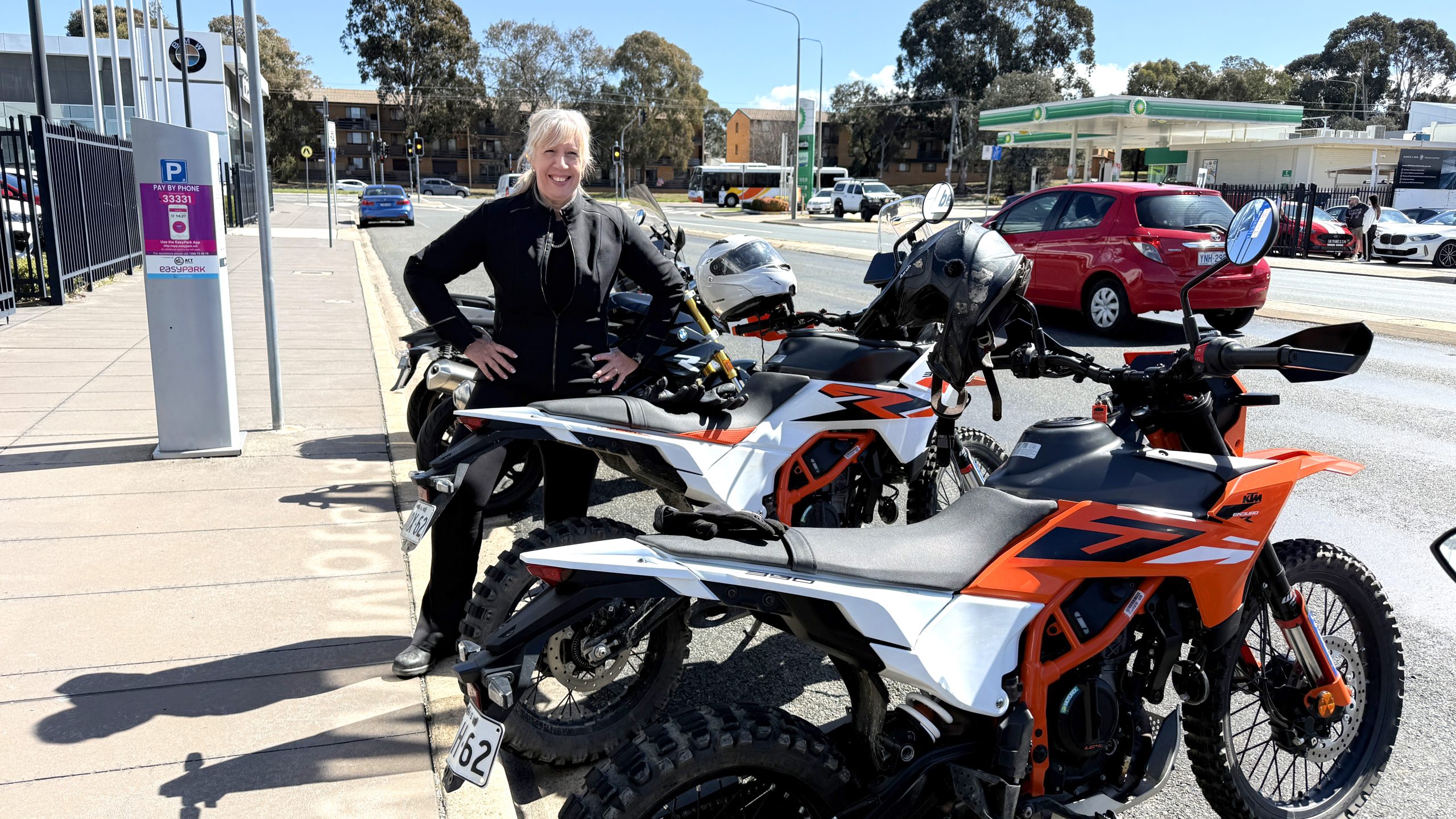
There are worse ways to conduct a motorcycle debrief than sitting outside a café with a coffee and a curry pie. Jeremy Cowley had just returned from three solid days of interstate riding aboard BMW’s R 1300 GS Pure, so rather than ask him to sit down and type 2000 words about it, I figured I’d shout him lunch and hit record. Besides, after that many kilometres aboard BMW’s big boxer, his arse had probably spent enough time sitting down. Plus, do you know how hard it is for a journo to get his wallet out!
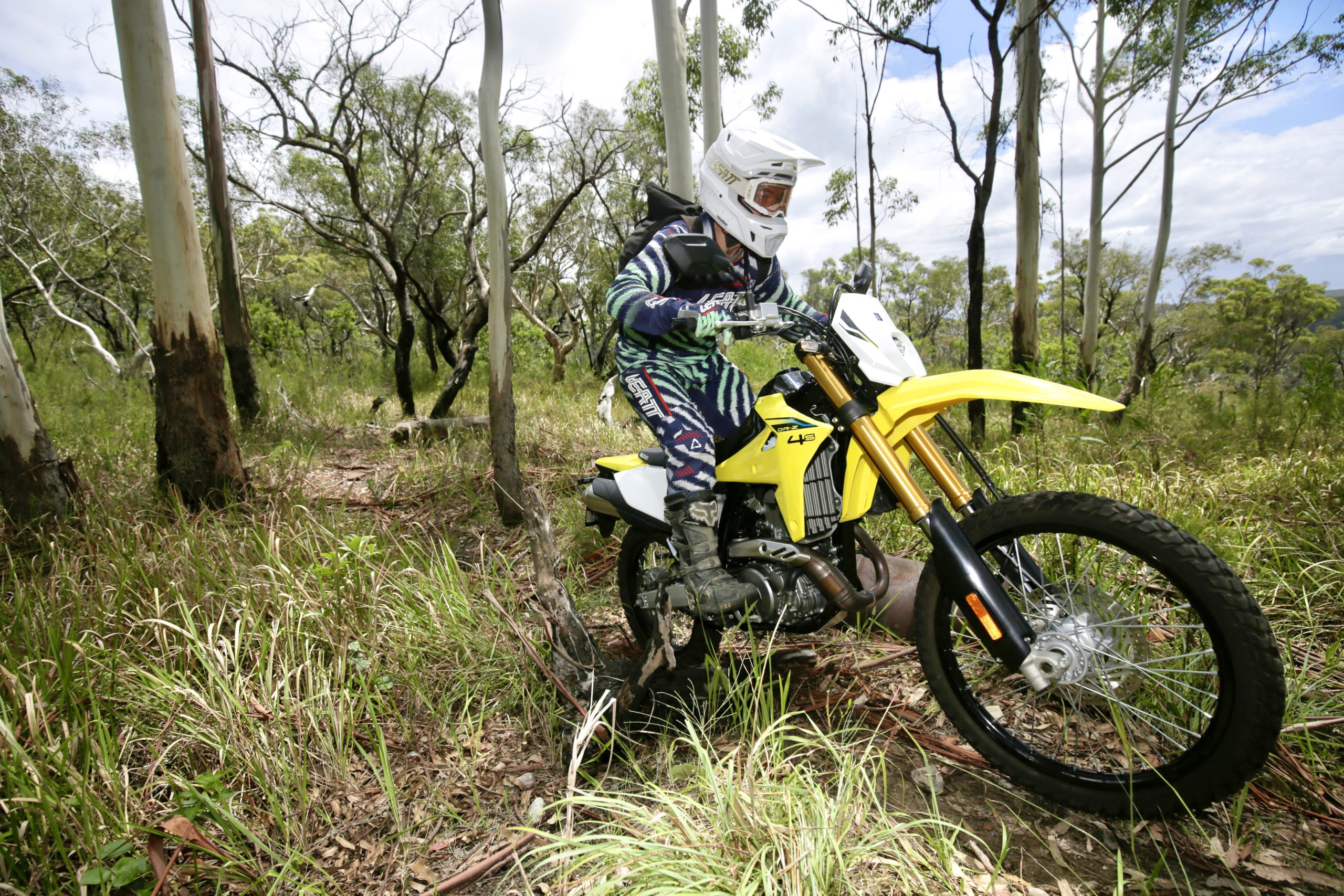
Cowley is becoming our resident adventure-bike tragic whether he likes the title or not. He owns a Husqvarna Norden 901 and a 2006 KTM 950 Super Enduro, has ridden everything from the Royal Enfield Himalayan and Honda CRF300 Rally to the CFMOTO 450MT-X, and there’s plenty more big-bore ADV experience in the family. His old man has owned a Triumph Tiger 800 and now has a Tiger 1200.
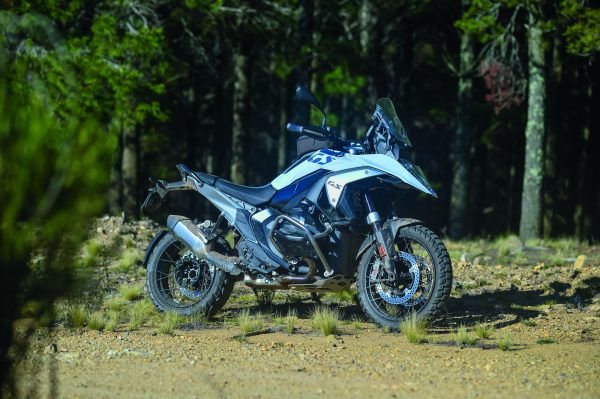
The GS Pure is an interesting proposition. This isn’t the fully loaded, everything-and-the-kitchen-sink GS most people picture when they hear BMW. It’s the stripped-back entry point into the R 1300 GS family, but it still gets the 1300cc ShiftCam boxer producing a whopping 107kW and 149Nm, along with electronic suspension adjustment, riding modes, a quickshifter, TFT display, keyless ignition and laced wheels. In other words, ‘Pure’ doesn’t exactly mean you’re starting the bloody thing with a kickstarter.
So, with coffee in hand and the curry pie rapidly disappearing, I started with the obvious question.
MITCH: FIRST IMPRESSIONS?
JEREMY: Big. And weird. I’ve never really spent much time on BMWs before, so the first thing I noticed was that motor hanging out either side. I’m a massive boxer fan from driving and racing Subarus, so I understand the concept and actually love that engine configuration, but on a motorcycle it’s strange when you’re not used to it. Normally you look down on an adventure bike and see a tank or dual tanks, but on the BMW you look down and there are two bloody cylinder heads sticking out the sides.
Once you’re on it, though, it immediately feels like a nice motorcycle. Sometimes with a base-model bike you can tell where the manufacturer has saved money with maybe cheaper bars, slightly ordinary ergonomics or something that makes it feel like the povo-pack version but I didn’t really get that from the Pure. The riding position was comfortable, everything felt quality and after three big days aboard it, I wasn’t looking for an excuse to throw it in a ditch.
MITCH: AND THAT MOTOR?
JEREMY: Bugger me. There is just so much power. It’s that huge wave of torque where you can be cruising along in fourth gear, decide you want to disappear and it just motors. I’ve ridden some seriously fast big adventure bikes now and, for me, the power delivery from this thing was better than any of them.
On the road it was beautiful, and I honestly reckon I could ride that thing around Australia. Long highway days, big open roads and huge distances are where that engine makes complete sense because you’ve always got this ridiculous amount of effortless power sitting underneath you.
But I reckon it’s almost too much off-road. You’ve got 145 horsepower in an adventure bike and at some point you’ve got to ask yourself what the hell you’re supposed to do with all of it. Nobody needs that much horsepower on a dirt road. Nobody.
MITCH: SO IS IT ACTUALLY AN ADVENTURE BIKE?
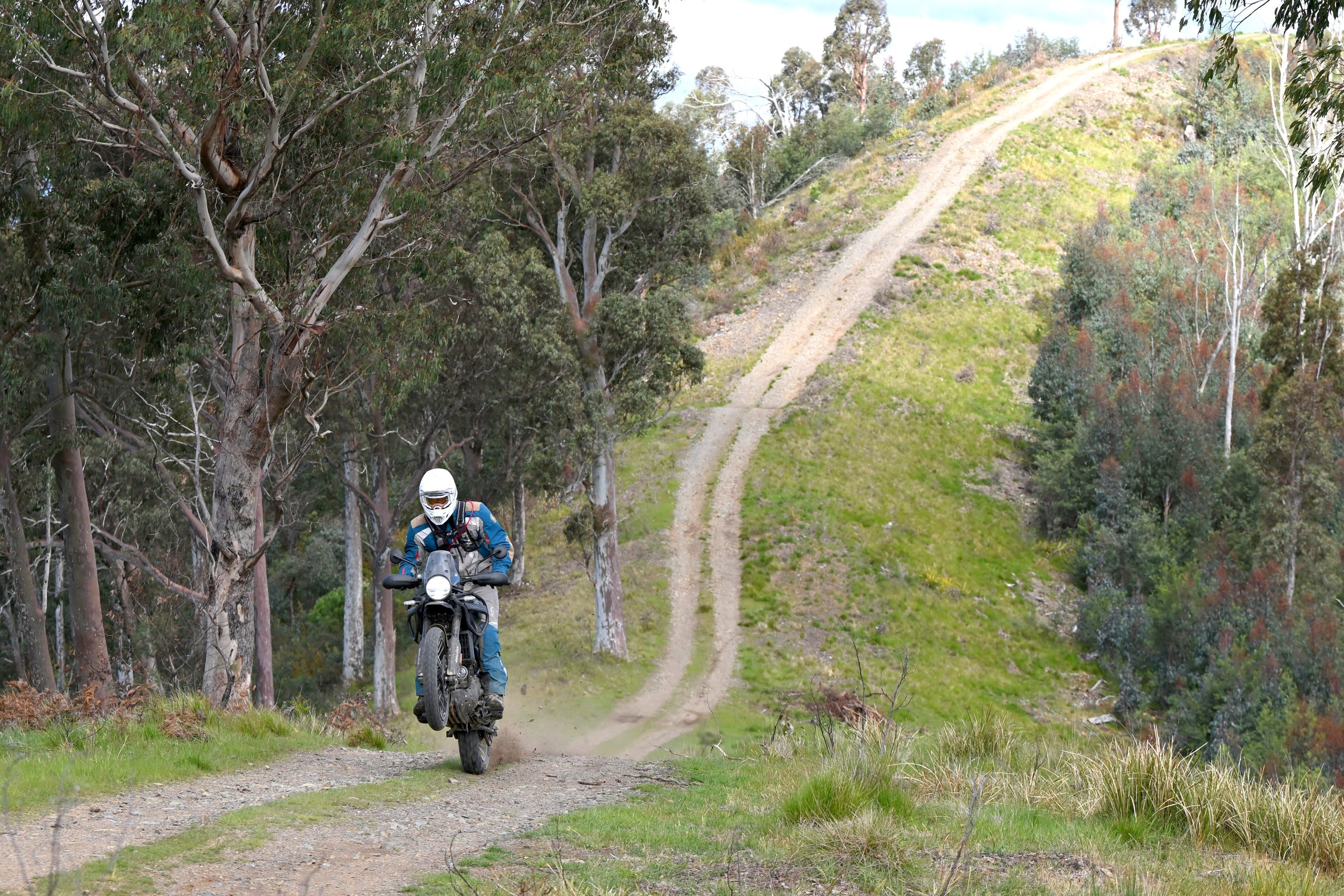
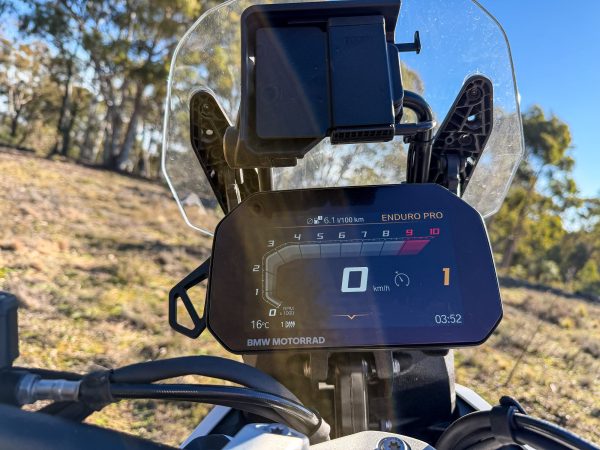
JEREMY: I reckon the definition of an adventure bike has changed. On the dirt, I felt like I was having to work for it more than I wanted to. That’s not because the GS is bad; it’s because it’s a massive, hugely powerful motorcycle and this particular Pure isn’t really set up to be a hardcore off-road weapon. It still has plenty of technology to make it manageable, but if I wanted to get serious in the dirt I’d start with tyres and then probably look at the suspension to get it working a little better for that sort of riding.
But I don’t think that’s what this bike is trying to be. We’re talking big gravel roads, corrugations, fire trails and stuff where you’re travelling rather than trying to find the nastiest singletrack possible. Put some decent tyres on it and I’d happily point it down that sort of road all day.
MITCH: Like a lounge chair you can take down the Oodnadatta Track?
JEREMY: Exactly. A really bloody fast lounge chair.
MITCH: BUT IT DOESN’T FEEL AS HEAVY AS IT LOOKS?
JEREMY: No. That boxer engine looks enormous because you’ve got those cylinders hanging out the sides, but all that weight is sitting low. Once the bike is moving it feels much lighter than you’d expect, and when you’re flowing along a road it disguises its size incredibly well. It was probably the nicest adventure-roadie-tourer-whatever-you-want-to-call-it I’ve ridden on the highway.
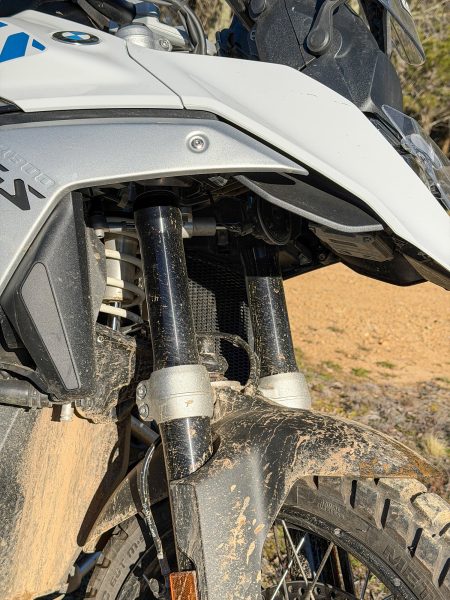
The front-end was another thing. It’s BMW’s Telelever setup and apparently I’m supposed to have some grand opinion on that. Honestly, I didn’t. I probably wouldn’t have mentioned it because there was nothing strange about the way it behaved – it just worked.
MITCH: WHAT ABOUT STANDING UP?
JEREMY: Fine. The rider triangle felt good sitting or standing and I never really had an ergonomic issue with it. Wind protection was decent too. It’s nowhere near the worst adventure bike I’ve ridden for buffeting although you could fit a bigger screen if you were doing huge touring kilometres. The Pure doesn’t have that giant touring screen, but again, that’s part of what this model is.
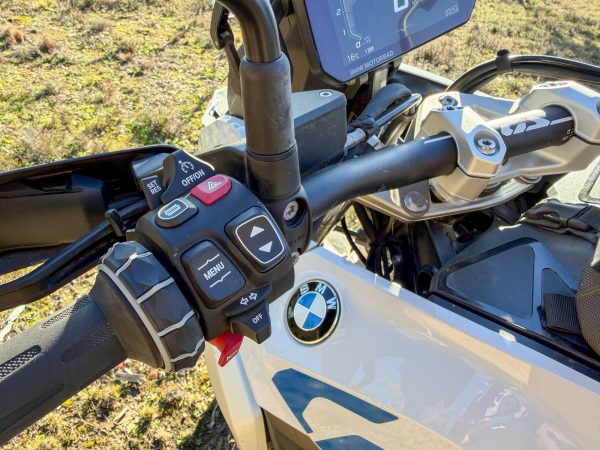
The only thing that annoyed me was BMW’s scroll-wheel controller on the left grip. I’m not a fan of those systems on bikes generally, so it’s not really a BMW-specific whinge. It works, I just reckon there are simpler ways of doing it.
MITCH: ARE BIG-BORE ADVENTURE BIKES BECOMING TOURERS?
JEREMY: I think once you get into the 1200 and 1300cc stuff now, you’re really moving towards touring. Look at the bikes around 900cc, you can ride those things all day on the road without a drama, but they’re still bloody capable when you get properly off-road.
My KTM 950 Super Enduro is a 2006 model and the 950/990 generation is still regarded by plenty of people as some of the best adventure bikes KTM ever made. It’s funny because the market spent years moving towards 1200 and 1300cc bikes, and now we’re almost coming back around to that 900-ish capacity because it’s such a good compromise.
MITCH: WHAT WOULD YOU CHANGE?
JEREMY: Tyres first, depending on what I was doing. My 950 has a proper aggressive off-road tyre because when I use that bike it’s generally at an event where I know I’m going into the dirt. My Norden 901 has more of a 70/30 tyre because I actually ride it on the road to get places, and when I hit the dirt I’ll drop a couple of psi and get on with it.
That’s probably exactly how I’d approach the BMW. If you’re doing 70 per cent bitumen to get to 30 per cent dirt, there’s no point fitting a massive aggressive knob and destroying it at highway speeds before you’ve even reached the fun stuff. The sort of person buying a GS in Sydney, Melbourne or Canberra is probably going to spend a fair chunk of every adventure just getting out of town.
MITCH: DID YOU PLAY WITH THE ELECTRONICS?
JEREMY: Yep. The Pure has Eco, Rain, Road and Enduro modes, and Rain mode is actually really nice on the dirt. It takes the edge off the throttle and gives you some slip without letting the thing completely light up, which isn’t a bad idea when you’ve got a 1300cc boxer trying to fire you at the horizon. Dad used Rain mode quite a bit and I can understand why.
A lot of adventure riders do the same thing. You don’t necessarily need maximum aggression just because you’ve left the bitumen; sometimes making a huge motorcycle softer and easier to manage actually lets you ride it faster and with less effort.
Where does it fit?
And that, really, is where we landed once the coffees were empty and Cowley had demolished the pie. The R 1300 GS Pure isn’t pretending to be a 1300cc enduro bike, and perhaps we’ve reached the point where we need to stop expecting enormous adventure motorcycles to be one. Its job is to smash out huge distances in ridiculous comfort, make 145 horsepower feel effortless and let you keep going when the bitumen ends.
For that job, Cowley reckons BMW has built a bloody good thing.
BMW R 1300 GS PURE
ENGINE 1300cc air/liquid-cooled four-stroke boxer twin, DOHC, BMW ShiftCam
BORE × STROKE 106.5 × 73mm
COMPRESSION 13.3:1
FUEL SYSTEM Electronic fuel injection
CLUTCH Hydraulically operated wet anti-hopping clutch
TRANSMISSION Six-speed
FINAL DRIVE Cardan shaft
Chassis & suspension
FRAME Two-part main and rear frame, engine as a co-supporting element
FRONT SUSPENSION BMW EVO-Telelever, central shock absorber, 190mm travel
REAR SUSPENSION BMW EVO-Paralever, aluminium single-sided swingarm, central WAD spring strut, 200mm travel
Tyres & Brakes
FRONT BRAKE Twin 310mm semi-floating discs, four-piston radial calipers
REAR BRAKE 285mm disc, two-piston floating caliper
ABS BMW Motorrad Full Integral ABS Pro
FRONT TYRE 120/70 R19
REAR TYRE 170/60 R17
Dimensions
SEAT HEIGHT 850mm
WHEELBASE 1518mm
FUEL CAPACITY 19L
WEIGHT 237kg (wet)
RRP & Warranty
RRP $29,978
Warranty 5 year
STANDARD EQUIPMENT
Dynamic Package with Dynamic Suspension Adjustment (DSA), Gear Shift Assistant Pro and Riding Modes Pro
Sports Brake
GPS preparation
Black cross-spoke wheels
850mm rider’s seat