Yamaha has unveiled an entirely new range of dirt scooters (well, actually adventure scooters but we’ve been calling them dirt scooters for decades), combining motorcycle-derived engines, long-travel suspension and off-road electronics with the practicality of a conventional scooter.
The new RW range consists of three models: the RW700, RW700 Explore and RW350, all designed to bridge the gap between everyday commuting and light off-road exploration.
While adventure-styled scooters are nothing new, Yamaha has taken a different approach with the RW700 by using its proven 690cc CP2 parallel-twin engine and an updated version of its Yamaha Automated Manual Transmission (Y-AMT).
The RW700 also features a six-axis IMU, selectable off-road riding modes, switchable rear ABS and adjustable footpegs designed to allow riders to stand when negotiating rough terrain.
The smaller RW350 takes a different approach, introducing an all-new 330cc single-cylinder engine and a revised CVT drivetrain designed to reduce unsprung weight and improve suspension performance.
Both models feature underseat storage, smartphone connectivity, cruise control and block-pattern tyres, but there are significant differences in their engines, transmissions and chassis.
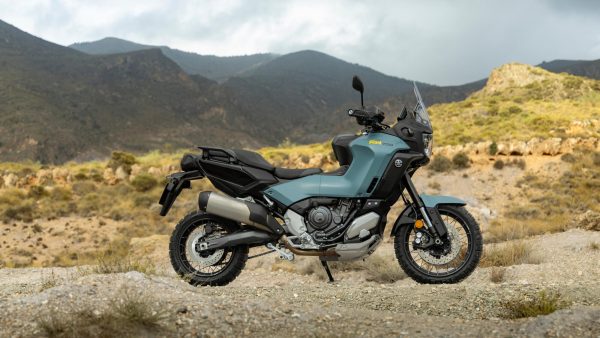
RW700 – CP2 ENGINE WITH OFF-ROAD AUTOMATIC TRANSMISSION
At the centre of the RW700 is Yamaha’s familiar 690cc CP2 parallel-twin engine, the same basic engine platform used across several of the manufacturer’s middleweight motorcycles.
The engine features Yamaha Chip Controlled Throttle (YCC-T), with electronic throttle mapping designed to provide smooth response at low engine speeds and predictable power delivery across the rev range.
However, the biggest development is the transmission.
The RW700 uses Yamaha’s Y-AMT automated manual transmission, which eliminates the conventional clutch lever and gearshift pedal while retaining the ability to change gears manually.
Riders can select fully automatic shifting or use a handlebar-mounted see-saw switch to change gears themselves, with Yamaha claiming gear changes can be completed in 0.1 seconds.
For the RW700, the system has been revised specifically for off-road use, marking the first time Yamaha has developed Y-AMT with loose-surface riding in mind.
Changes include a rubberised clutch damper, revised shift-rod spring settings and a redesigned handlebar switch intended to improve control when riding over uneven terrain.
The automatic shift programming has also been altered to prevent unwanted upshifts when the rear wheel is spinning or sliding on gravel.
In GRAVEL mode, the system can hold a gear longer after throttle application, allowing riders to maintain drive and better control rear-wheel traction.
Yamaha has also introduced a clutch-control strategy designed to reduce the likelihood of stalling during hard braking or rear-wheel lock-up.
The system automatically reduces clutch engagement when necessary, including in situations where the rear wheel suddenly loses momentum over obstacles.
FIVE RIDING MODES AND SIX-AXIS IMU
The RW700 features a six-axis IMU that works with Yamaha’s electronic rider aids to manage traction, sliding and braking.
Yamaha Ride Control provides five preset riding modes, divided into ROAD and GRAVEL settings.
ROAD includes SPORT, STREET and ECO modes, with SPORT delivering sharper throttle response and ECO reducing engine response to prioritise fuel efficiency and ease of use.
GRAVEL offers EXPLORE and EXPLORE+ settings, with the latter providing stronger throttle response and additional customisation options.
The electronic package includes traction control, slide control, brake control and a back-slip regulator, which manages engine torque when the rear wheel begins to lock.
Brake Control and the Back-slip Regulator can be switched off, while rear ABS can be disabled when either GRAVEL mode is selected.
The RW700 also comes standard with cruise control and Yamaha’s Variable Speed Limiter, making it suitable for longer road journeys as well as commuting.
LONG-TRAVEL SUSPENSION AND SPOKED WHEELS
Underneath the RW700’s scooter-style bodywork is a high-tensile steel tubular frame designed to accommodate both seated and standing riding positions.
Suspension consists of a 41mm inverted fork offering 160mm of travel and a bottom-link monoshock with 155mm of rear-wheel travel.
The rear suspension features seven preload settings and rebound damping adjustment, while the higher-spec RW700 Explore adds adjustable front fork preload and rebound damping.
Wheel sizes are 17 inches at the front and 15 inches at the rear, with aluminium rims, stainless-steel cross spokes and tubeless Pirelli Scorpion Rally STR tyres.
The front tyre measures 120/70R17, while the rear is a 160/60R15.
Although Yamaha is positioning the RW700 as an adventure-capable machine, its relatively small wheels and 160mm of front suspension travel make it substantially different from a conventional adventure motorcycle.
The scooter has 170mm of ground clearance and a wet weight of 221kg, figures that will be worth considering for riders planning to venture beyond maintained gravel roads.
Braking is handled by twin 298mm floating front discs with four-piston radial-mounted calipers and a single 267mm rear disc.
ABS is standard at both ends, with the rear system able to be disabled in GRAVEL mode.
An aluminium skid plate provides protection for the engine, frame and exhaust, while tapered aluminium handlebars and plastic handguards add further protection.
DESIGNED TO BE RIDDEN STANDING UP
One of the RW700’s more unusual features is its adjustable footpeg arrangement.
Unlike conventional scooters, which generally restrict riders to a feet-forward seating position, the RW700 features footpegs that can be moved between four positions.
The pegs can be adjusted forwards, backwards, higher or lower, allowing riders to tailor their standing position.
Rubber inserts can be removed for additional grip when riding off-road, while separate folding footrests positioned further forward provide a more relaxed riding position on the road.
The seat has also been shaped to allow riders to move forwards, backwards and sideways, with a narrowed front section intended to make it easier to reach the ground.
Seat height is 810mm, and the compartment underneath the passenger seat is designed to accommodate a full-face helmet, depending on its size.
Fuel capacity is 14 litres.
RW700 EXPLORE ADDS COMFORT AND SUSPENSION ADJUSTMENT
The RW700 Explore uses the same CP2 engine, transmission, frame and electronics as the standard RW700 but adds equipment aimed at longer-distance touring.
Its front fork gains 15mm of preload adjustment and 11 rebound damping settings, allowing riders to make more changes to the suspension setup.
Heated grips and a heated rider’s seat are also standard, with both offering ten adjustable heat settings.
Other additions include a centre stand, backlit switchgear and exclusive colour options in Forest Green and Midnight Black.
The standard RW700 will be offered in Sage Blue and Power Grey.
RW350 – NEW ENGINE AND UNUSUAL CVT DESIGN
The smaller RW350 introduces an all-new 330cc liquid-cooled, four-stroke, SOHC single-cylinder engine with four valves and fuel injection.
Unlike the RW700, which uses an automated manual gearbox, the RW350 retains a continuously variable transmission.
However, Yamaha has developed a new drivetrain arrangement called Yamaha Dynamic Ride, which differs from the conventional unit-swing design used on many scooters.
Instead of mounting the engine and transmission together as a single moving assembly, the RW350’s engine is rigidly mounted to the frame.
Only the CVT unit moves vertically around the crankshaft pivot, reducing the amount of unsprung weight carried by the rear suspension.
Yamaha says the arrangement improves chassis rigidity, suspension performance and handling over rough surfaces.
A four-axis balancer is also incorporated into the drivetrain to reduce vibration.
The new engine features Yamaha Chip Controlled Throttle, with three selectable riding modes through Yamaha Ride Control.
STREET is designed for everyday riding, ECO softens throttle response for slippery conditions, while EXPLORE allows a greater degree of rear-wheel slip when riding on loose surfaces.
Each mode changes the power delivery and traction control settings.
Cruise control is also standard on the RW350.
RW350 GETS 140MM FRONT SUSPENSION TRAVEL
The RW350 uses a high-tensile steel tubular frame with a 37mm inverted fork offering 140mm of front-wheel travel.
At the rear, twin shock absorbers provide 105mm of travel and seven preload adjustment settings.
Wheel sizes are 16 inches at the front and 14 inches at the rear, with Dunlop D615 tubeless block-pattern tyres developed specifically for the model.
The rear cast aluminium wheel also incorporates a hub damper designed to reduce drivetrain vibration during acceleration and deceleration.
Ground clearance is listed at 185mm, which is 15mm more than the larger RW700.
Like the RW700, the RW350 features wide footpegs with removable rubber inserts, allowing riders to stand when negotiating rough terrain.
Folding forward footrests provide an alternative riding position for commuting and longer road journeys.
A skid plate protects components underneath the chassis, while tapered steel handlebars are intended to provide additional durability.
The RW350 also offers underseat storage large enough to accommodate a full-face helmet, depending on helmet size, and has a 13-litre fuel tank.
TFT DISPLAYS, NAVIGATION AND SMART KEYS
All three RW models feature five-inch colour TFT displays with smartphone connectivity through Yamaha’s MyRide app.
The system allows riders to view notifications, manage calls and music, and access navigation through the Garmin StreetCross app.
Navigation can be displayed as a full map or turn-by-turn directions, with real-time traffic information available.
Each model also features three selectable display themes, including an RW-specific layout with mountain-inspired graphics.
USB-C charging sockets are fitted across the range.
Smart key technology allows riders to start the engine, operate the steering lock and access the seat and fuel cap without removing the key from their pocket.
The scooters also feature one-push starting, LED lighting and self-cancelling indicators.
Emergency Stop Signalling activates the indicators during sudden braking, while a lane-change function provides three flashes with a light press of the indicator switch.
Yamaha has also incorporated recycled and plant-derived materials into the RW range, including DURABIO bio-engineered plastic components.
A range of genuine accessories will be offered, including aluminium luggage cases, soft luggage, radiator guards, headlight guards and additional protection equipment.
CAN YAMAHA MAKE AN ADVENTURE SCOOTER WORK OFF-ROAD?
The arrival of the RW700 and RW350 represents an interesting move for Yamaha, particularly with the larger model borrowing technology from the company’s established motorcycle range.
The CP2 engine, automated manual transmission and six-axis IMU give the RW700 a technical specification closer to a middleweight motorcycle than a traditional scooter.
Its off-road-specific shift programming, adjustable footpegs and switchable rear ABS also suggest Yamaha has put considerable effort into making the scooter usable beyond sealed roads.
However, the RW700’s 221kg wet weight, 17-inch front wheel and 170mm ground clearance will inevitably influence how far riders can push it when the terrain becomes more demanding.
The RW350 presents a different proposition, with its 330cc engine, CVT drivetrain and 140mm front suspension travel aimed more towards everyday riders who occasionally venture onto gravel and rough roads.
Whether the RW range delivers genuine off-road capability or remains better suited to commuting and touring with occasional dirt-road excursions will only become clear once the bikes are tested.
Australian pricing, availability and final local specifications have not been confirmed in the supplied announcement.