If you’d asked me before this launch which Beta 300 I’d rather own, I probably would’ve pointed straight at the RR Race. It’s the bike with the KYB suspension, the premix engine and all the fancy bits that everyone talks about. On paper, it’s the obvious choice if you’re looking for the ultimate 300cc two-stroke. I’m also big and heavy and like to go fast.
Then I rode the RR 300 X-Pro. To be completely honest, I walked away more impressed with this bike than I was with the Race model. That’s not because it’s faster or because it has better components, but because everything about it just works so well for the type of riding most people actually do, plus the price is hard to ignore. Beta hasn’t tried to build a cheaper version of the Race bike. Instead, they’ve built a motorcycle that has its own personality, and for trail riding, I honestly think they’ve nailed it.
The RR 300 X-Pro sits just below the Race model in Beta’s line-up, but it still shares the same proven 292.6cc liquid-cooled two-stroke engine and molybdenum steel double-cradle chassis. Instead of KYB suspension and premix, though, the X-Pro gets ZF suspension and electronic oil injection, which automatically meters the oil depending on riding conditions.
THE ENGINE IS THE STAR OF THE SHOW
Let’s start with the engine because, honestly, it rips. One thing we noticed straight away with the oil-injected engine is that it actually felt better off the bottom than the Race version. We were riding at a bit of altitude, it was hot, it was humid and they’re exactly the sort of conditions where carburetted bikes can become a little fussy. I found the Race model had a slight fluffiness right off idle, but this bike simply didn’t.
The only real difference between the two bikes is the oil injection system and a slightly different exhaust pipe, yet the X-Pro just felt cleaner everywhere. Because the oil injection is controlled electronically, it seems to deliver a much cleaner mixture at really low rpm. Whatever Beta has done, it works.
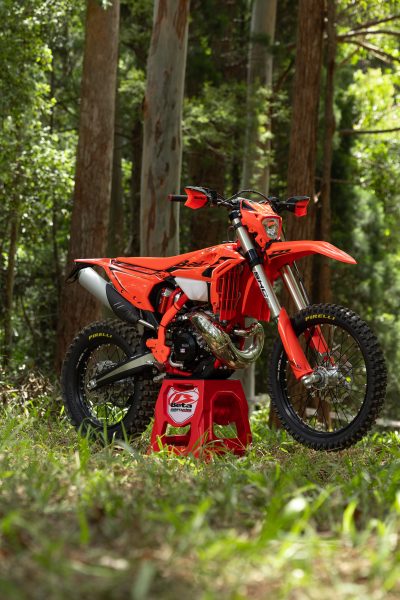
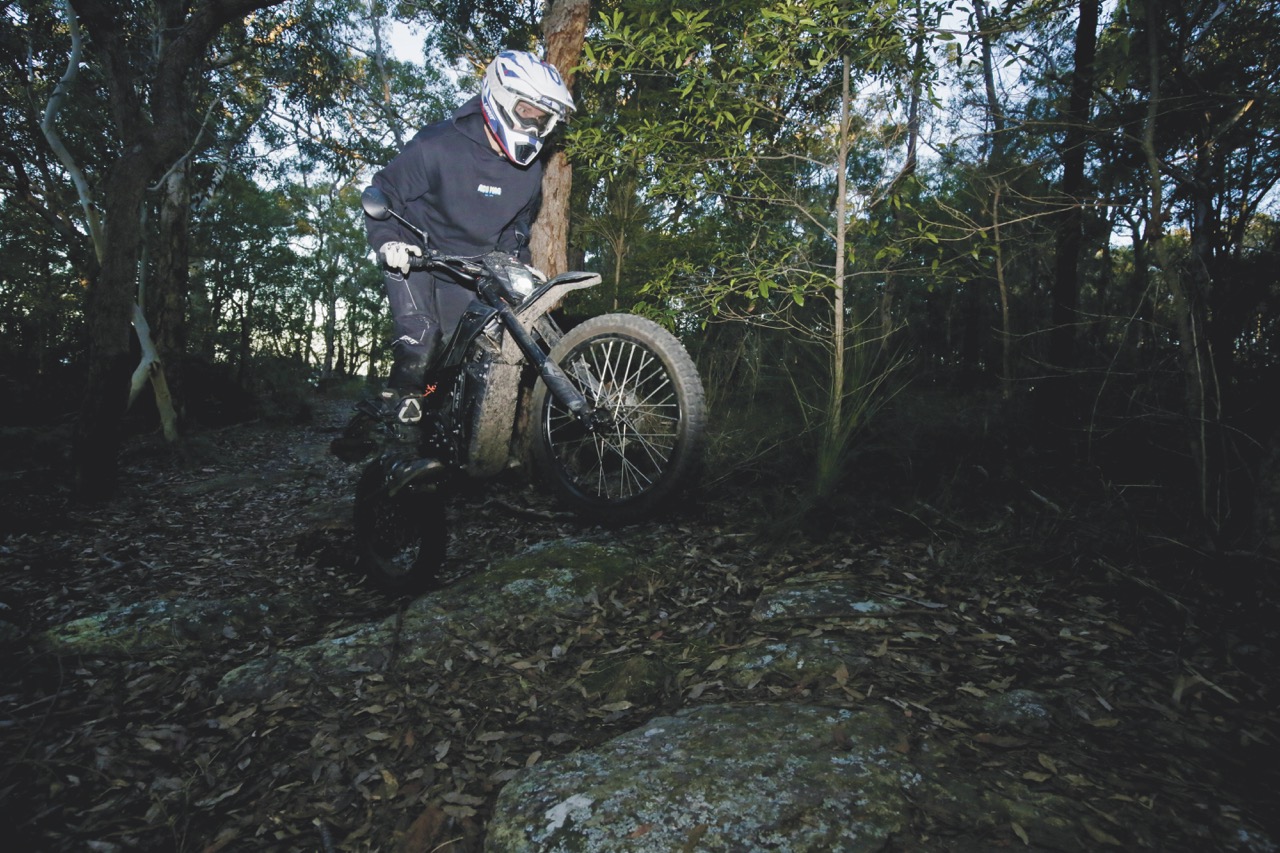
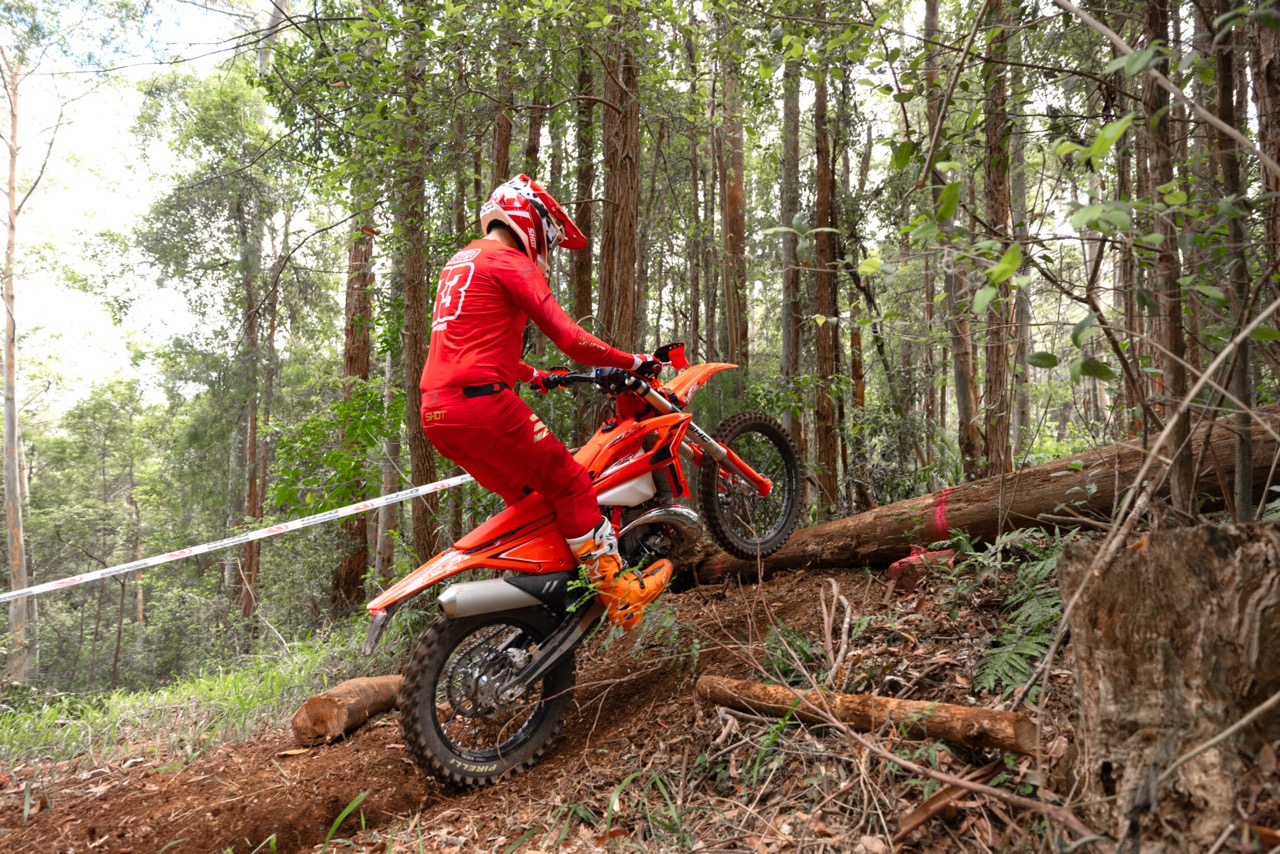
We spent a lot of our day weaving through tight trees and slow, technical singletrack where you’re barely moving faster than walking pace. Those conditions expose any weakness in an engine almost immediately because you’re constantly asking it to lug well below where it really wants to be. Plenty of bikes start fluffing, loading up or threatening to stall.
There were sections where I hardly even needed the clutch. I could leave it in a tall gear, let the revs drop right down and it would just continue pulling without bogging or coughing. It honestly surprised me just how clean the fuelling was because there are fully fuel-injected motorcycles that don’t crawl through technical terrain this well.
The interesting thing is Beta hasn’t changed the carburettor settings compared to the Race model. As far as I understand, they’re running the same Keihin PWK36 carb with the same jetting. That really points towards the oil injection system doing exactly what it’s was designed to do.
Motor-wise, I actually preferred this bike over the Race. I really liked the Race model, but this engine just suits trail riding beautifully. Down low it has heaps of torque, heaps of grunt and enough flywheel effect that you don’t need to constantly rev it or abuse the clutch to keep moving. It’ll crawl along at walking pace, idle unbelievably low and just keep driving forward.
Then, when you want to ride harder, it’ll absolutely open up. We had a grass-track section where we could really start leaning on the throttle and seeing what the engine had at the other end of the rev range. Even there, it didn’t disappoint. It still revved freely, carried speed well and had all the performance you’d expect from a modern 300 two-stroke.
For me, the engine is the standout feature of this motorcycle.
DON’T BELIEVE THE HYPE
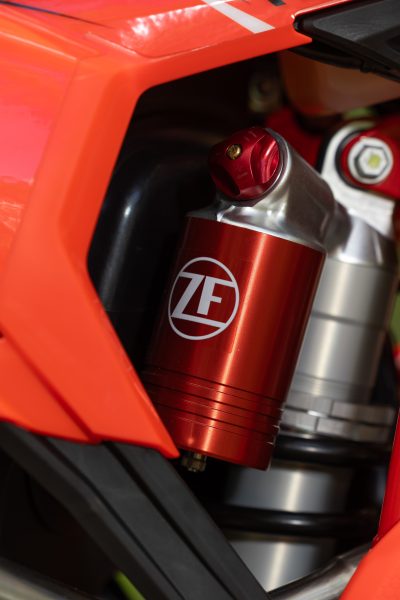
The other thing everyone seems to talk about with the X-Pro is the suspension. Apparently, if you read the internet, you absolutely need KYB suspension to ride quickly and anything else simply isn’t good enough. Honestly, I think that’s a load of rubbish for most of us.
The ZF suspension on this bike is pretty damn good. If you’re a trail rider looking to save a bit of money on the purchase price and you don’t want to spend another couple of thousand dollars modifying your suspension straight away, this package is brilliant. It’ll comfortably do everything most riders are ever likely to ask of it, and I think people have become far too obsessed with brand names rather than how a motorcycle actually performs.
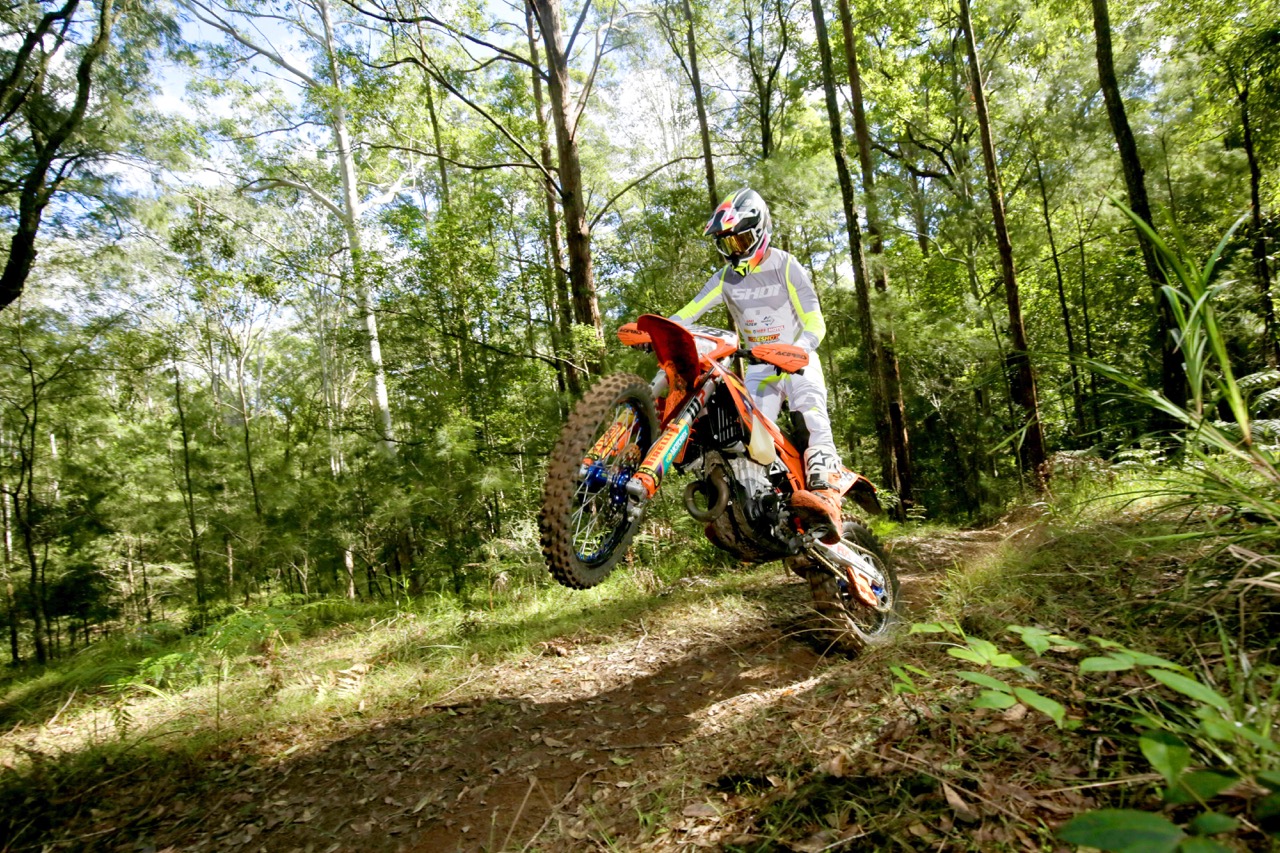
Out in the tight, technical singletrack, the softer ZF setup was actually one of the bike’s biggest strengths. It soaked up rocks, roots and trail chatter beautifully, giving the bike an incredibly plush ride that made it easy to spend hours in the saddle. Rather than deflecting off obstacles, the suspension simply absorbed everything and kept the tyres tracking the ground.
Yes, it’s softer than the KYB-equipped Race model, and yes, you notice that when you start riding aggressively. But for the vast majority of riders, that’s actually a positive rather than a negative because it makes the bike far less demanding to ride.
For trail riding, it’s super soft, super plush and absorbs everything beautifully. Unless you’re absolutely hammering a race track, I don’t think you’ll ever feel like you’re missing out. The internet (and our Enduro Editor Geoff Braico) seems obsessed with saying you need KYB suspension to go fast, but for most riders, you simply don’t.
If you’re a heavier bloke like me, you could probably go up a spring rate or two and personalise it a little. That’s the same with almost every bike on the market because suspension is always rider dependent. But if you’re buying this bike to trail ride with your mates and don’t want to spend thousands of dollars modifying it before you’ve even ridden it, you’ll have absolutely no issues with this setup.
THE LITTLE THINGS COUNT
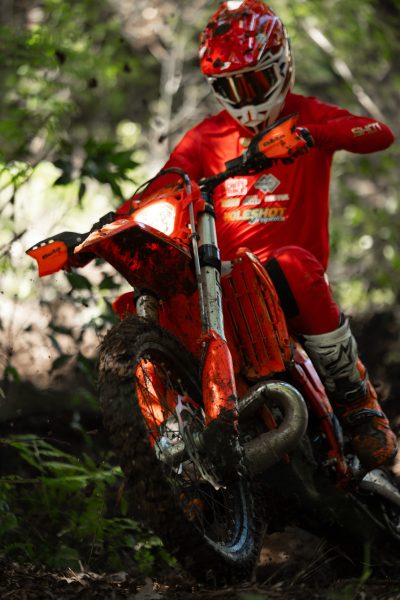
One thing I experimented with throughout the day was the mapping switch. Interestingly, I didn’t find the difference between the Sun and Rain maps anywhere near as noticeable as I did on the Race model. There’s definitely still a change between the two, but it wasn’t quite as dramatic.
In the end, I spent almost the entire day riding in the Sun map. Because the engine is so good down low, I could simply run taller gears and let the torque do the work. The Rain map signs off much earlier, which is fantastic if you’re riding in slippery, greasy conditions because it stops the rear tyre spinning up every time you crack the throttle. We had really good traction on the day, though, so I just left it in the Sun map and enjoyed the extra punch.
Beta has also continued refining plenty of the smaller details that make these bikes so enjoyable to ride. The Nissin brakes have been improved again this year with an updated front caliper that gives the front brake a little more power and feel. A few years ago I thought the brakes were one of the weaker points on the Beta, but they’ve well and truly sorted that out now. I never once found myself wanting more braking performance throughout the test.
The seat deserves a mention as well because it’s a huge improvement over what Beta was producing a few years ago. Back then, it honestly felt like sitting on a piece of timber. This seat is much softer and far more comfortable, which might not sound exciting until you’re five or six hours into a trail ride. If you’re spending an entire weekend riding with your mates, your backside will definitely thank you for it.
The hydraulic clutch remains beautifully light, too. The lever position is adjustable, so it’s easy to tailor it to suit your hands, and we didn’t have a single issue with clutch feel or consistency all day.
Another thing I’ve always liked about Betas is the overall riding position. They’ve always felt agile between your knees, they’re well balanced and they have a really neutral riding position now that suits just about everyone. As soon as you throw a leg over one, it immediately feels familiar, and that makes it very easy to build confidence.
The only thing I actually preferred on the Race model was the handlebar position. The X-Pro runs a taller bar mount than the Race, while the Race has a flatter setup that I personally prefer. It’s a really minor thing, but it’s probably the only change I’d make if this bike was sitting in my shed. Other than swapping to a lower bar mount, I’d honestly just ride it exactly as it comes.
The conundrum
One thing that’s worth pointing out is that this motorcycle hasn’t really changed from the bike we tested during our 300cc Hard Enduro Shootout a year ago. That’s not a criticism either, because it was one of our favourite bikes then and it’s one of my favourite bikes now.
I genuinely came away more impressed with the RR 300 X-Pro than I expected to. Going into the test, I thought the Race model would be the obvious choice because it has all the premium hardware and bigger-spec suspension.
The engine is cleaner, stronger off the bottom and easier to ride in technical terrain than the Race model. The suspension might not be as firm or as race focused, but for trail riding it’s arguably the better package because it’s so comfortable and forgiving. Add in the comfortable ergonomics, improved brakes, softer seat and Beta’s trademark nimble handling, and you’ve got a motorcycle that’s incredibly easy to jump on and enjoy.