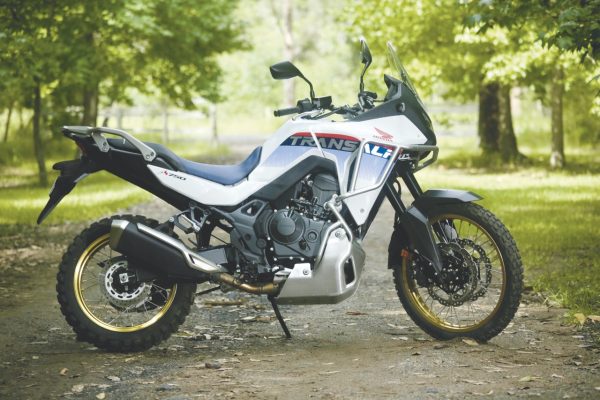
On paper, the Honda XL750 Transalp looks like a road bike pretending to be an adventure bike. The spec sheet talks about a parallel-twin engine, road-biased electronics and a fairly modest suspension package compared to some of the more hardcore adventure machines out there. And if you just scroll through photos online, it definitely leans more toward the touring side of the spectrum, fairing, big screen, road-like bodywork. At first glance, you’d probably assume it’s more comfortable on bitumen than it is on dirt.
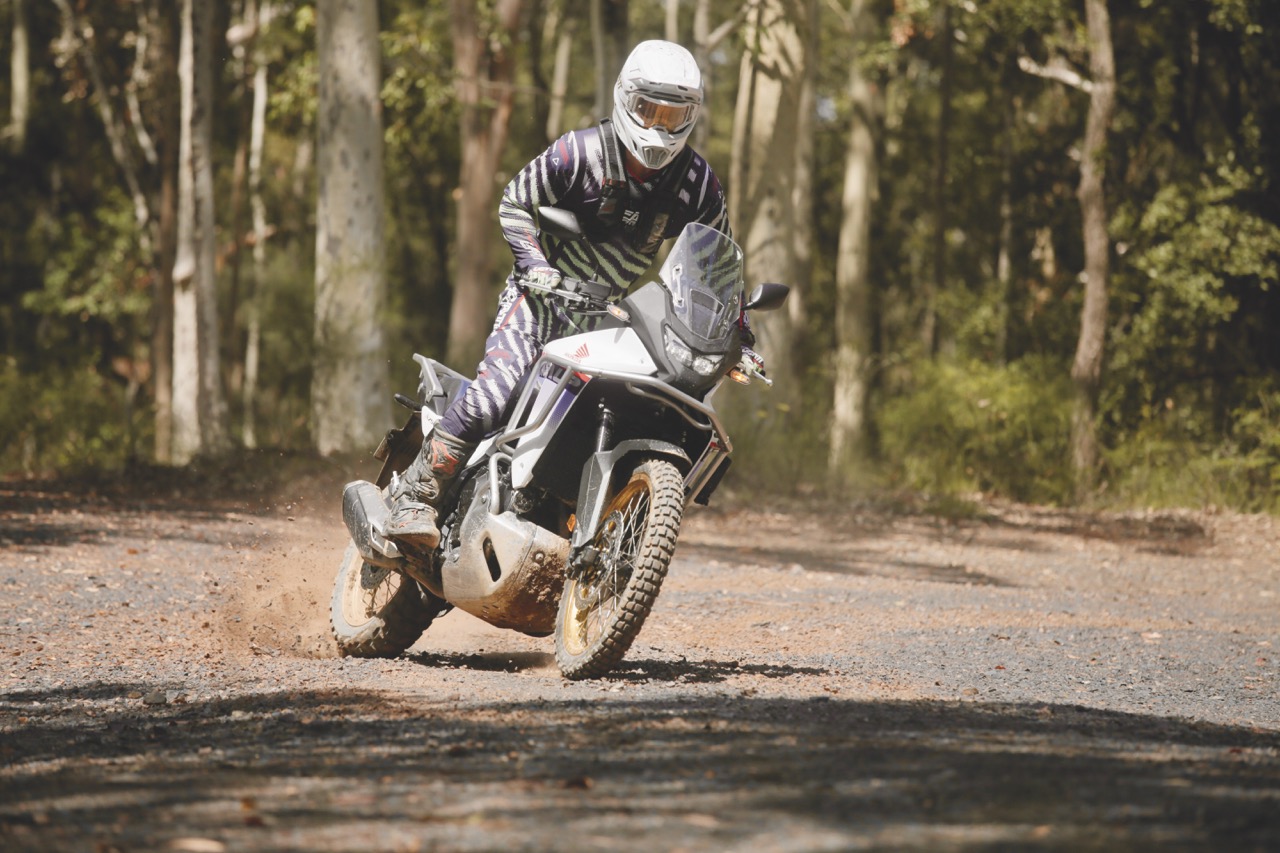
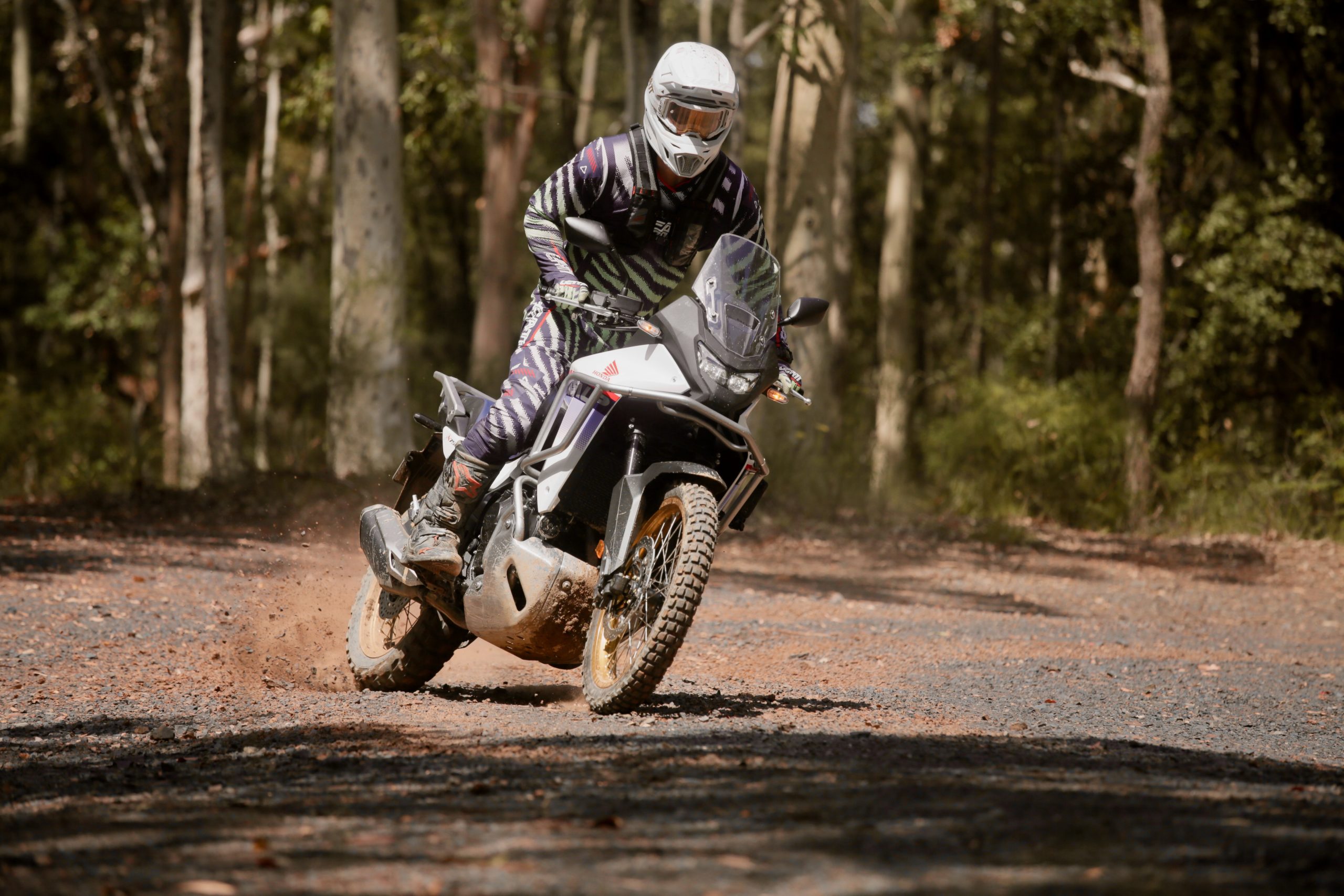
But when the bike rolled into the ADB garage, it was a different story. In person, the Transalp actually looks far more like a dirtbike than the photos suggest. The tall stance, 21-inch front wheel and slim midsection give it a proper off-road presence. Once you swing a leg over it, the riding position feels upright and natural and the whole thing immediately gives off a more off-road adventure feel.
Then there’s the price. Right now the Transalp sits around $16,967, which is pretty eye-catching in today’s adventure bike market. That puts it well below a lot of the big-name competitors in the middleweight class, yet it still brings a 755cc parallel-twin engine, modern electronics and a proper adventure chassis. When you line it up against other bikes in the category, the value proposition jumps out immediately.
So the obvious question becomes: is this the best value mid-capacity adventure bike on the market right now? On paper it might look like a road bike. In photos it might look a bit polite. But when you factor in the performance, the capability and that price tag, the Transalp starts to look like one of the most compelling adventure bikes you can buy in this class.
By The Book
Once you look deeper into the specs, the Transalp starts to make more sense as an adventure bike rather than just a road-focused tourer. The 755cc liquid-cooled parallel twin uses an 87mm bore and 63.5mm stroke with an 11:1 compression ratio, which usually points toward a smooth, midrange-focused power delivery rather than an aggressive top-end rush. With a six-speed gearbox and chain drive, it’s clearly designed to balance highway cruising with a loads of fire road action.
The chassis numbers also hint at a bike that leans further toward adventure riding than the photos suggest. A 21-inch front wheel paired with an 18-inch rear is classic off-road adventure sizing. Suspension travel of 200mm up front and 190mm at the rear is respectable for a middleweight adventure bike, especially considering the relatively simple 43mm inverted fork and single rear shock setup. With preload adjustment available front and rear, it should be easy to dial the bike in for luggage, passengers or different rider weights, while the relatively long 1,560mm wheelbase should provide good stability at speed.
With a seat height of 850mm, it is fairly standard for a bike in this category, while the 210kg kerb weight is heavy but also pretty average for a middleweight adventure machine with a 16.9-litre fuel tank. Ground clearance of 210mm is also decent. Put all those numbers together and the Transalp looks like it should land somewhere right in the middle of the adventure spectrum.
By the Bush
After a full month with the Honda XL750 Transalp, the biggest takeaway was honestly how capable this bike turned out to be. We went into the test expecting a fairly road-biased adventure bike, something comfortable for commuting, touring and maybe the occasional gravel road. That’s how Honda tends to market it. But once we started putting kilometres on it, especially off-road, it quickly became clear that the Transalp has a lot more ability than people might expect.
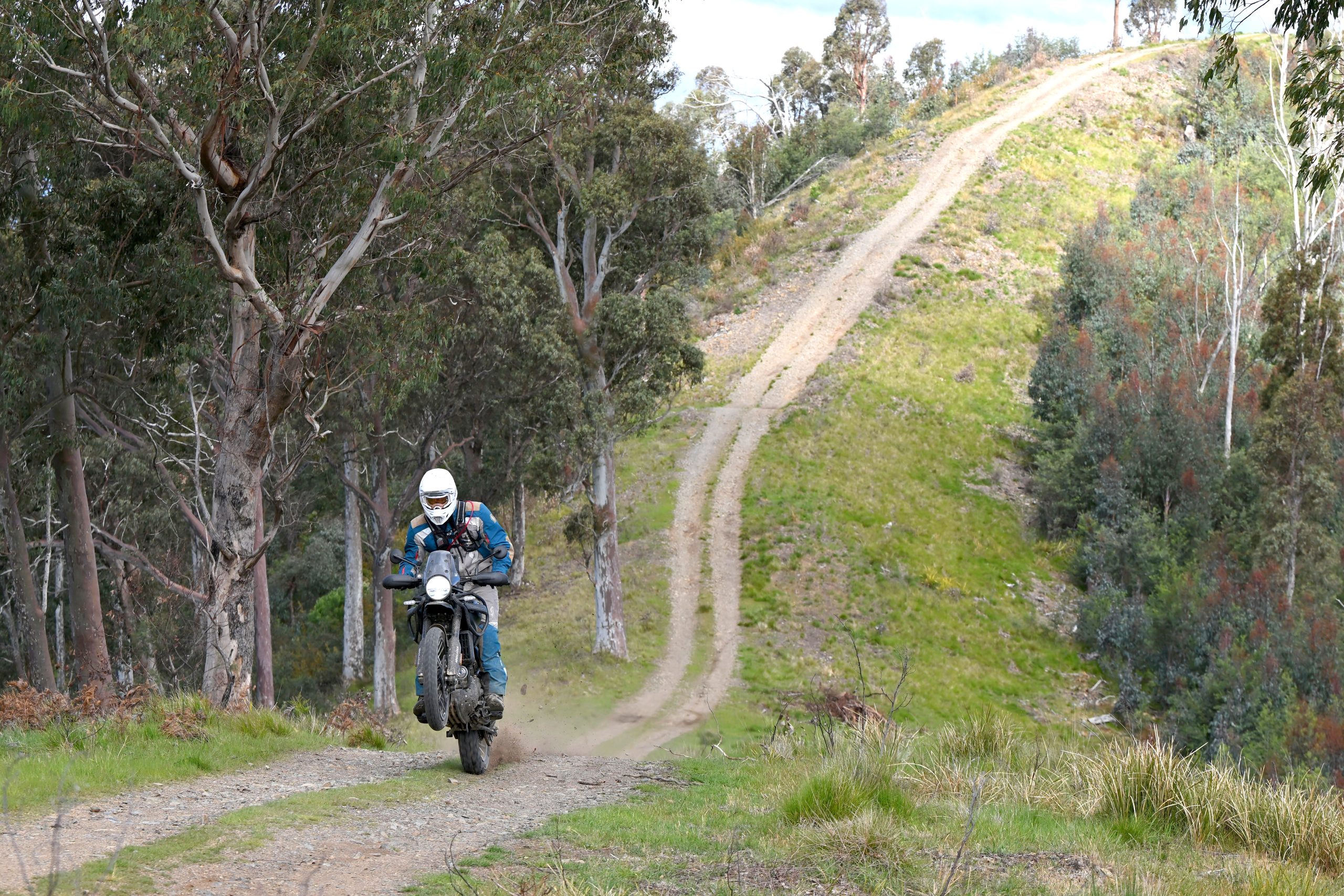
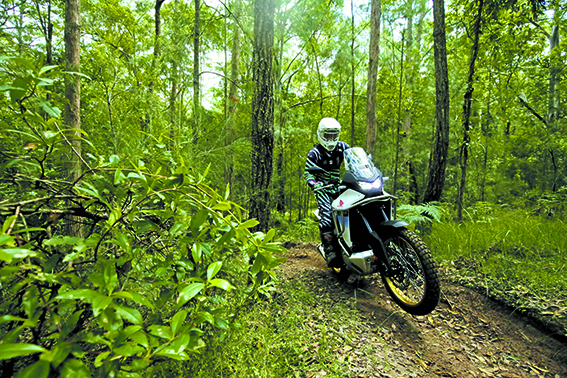
Over the course of the test we rode it on everything from tight single track to wide fire roads, as well as plenty of highway kilometres. That’s really the point of bikes in this 700–800cc adventure category, they’re meant to do a bit of everything. And in that sense the Transalp delivered. It handled all of those conditions surprisingly well. But the most impressive thing wasn’t just what it could do, it was how well it did it considering the price.
At less than $17,000, this is the cheapest Japanese or European off-road adventure bike we could find in that 700–800cc category. That immediately makes it interesting. Adventure bikes have become expensive machines, and it’s not unusual to see bikes in this class creeping up towards $25,000 or even $30,000 once you start adding options. The Transalp comes in significantly cheaper, yet it still manages to feel like a well-developed, well-rounded package.
Off-road capability
Now, it’s important to put this bike in context. I wouldn’t say the Transalp is the most hardcore off-road adventure bike you can buy in this capacity range. If you’re comparing it directly with something like a Yamaha Ténéré 700, the Yamaha probably still has the edge in pure dirt riding. The Ténéré has a little more suspension resistance and a more off-road focused chassis.
That doesn’t mean the Transalp struggles off-road, far from it. It just responds differently.
The engine is one of the areas where you notice this. The 755cc parallel twin is a really good motor overall. It’s smooth, responsive and makes strong power through the mid-range and top-end. But it doesn’t quite have the same low-down grunt as some other adventure bikes. When you’re riding slow technical terrain or working through sandy sections, you sometimes need to keep the revs up a little more than you might on something with a torquier engine.
That’s probably because the engine clearly has road-bike DNA. It likes to rev a little more and comes alive in the mid-range rather than just chugging from idle. But the flip side is that once you’re moving, the engine feels great. It’s lively, responsive and never feels short on power.
Chassis balance
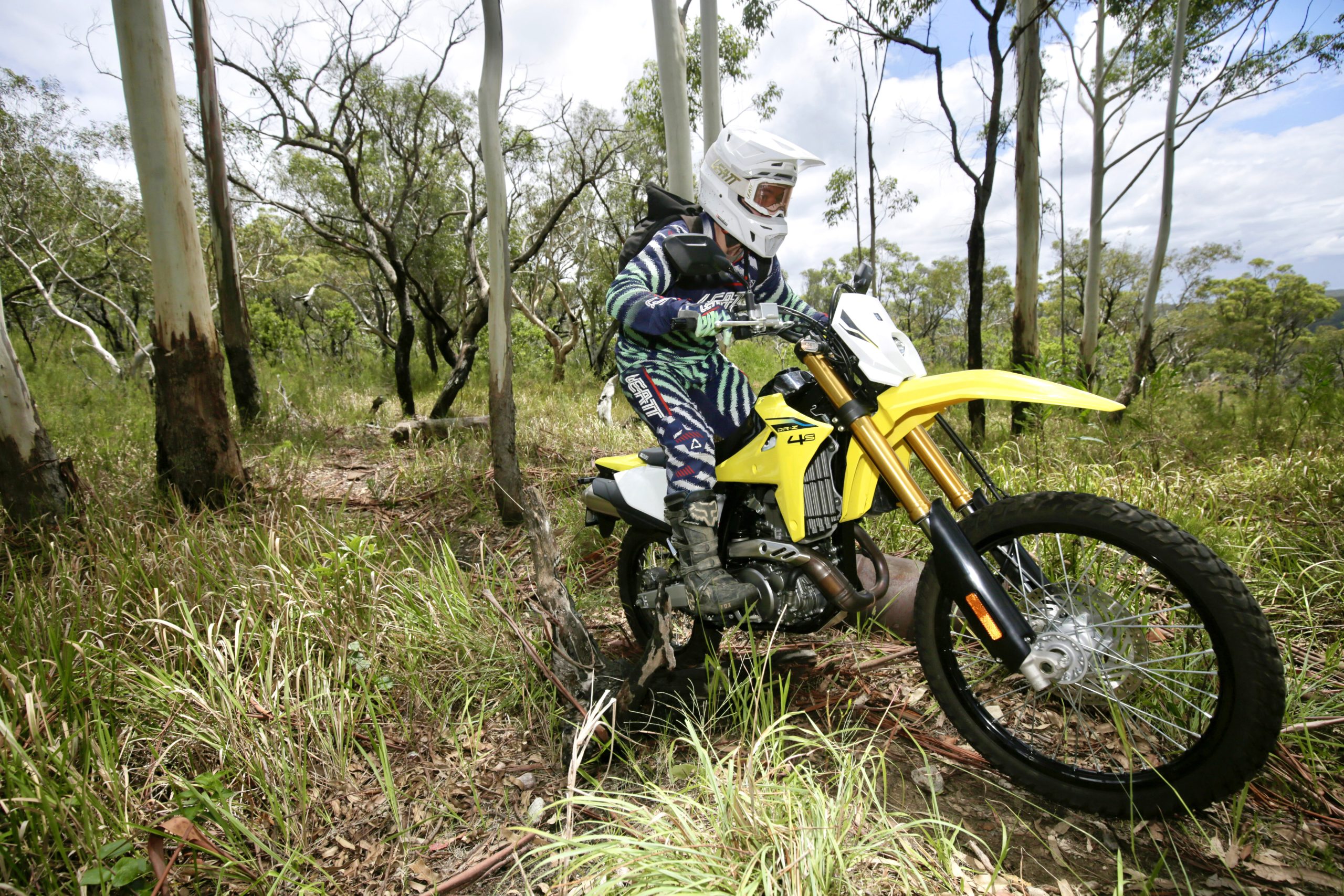
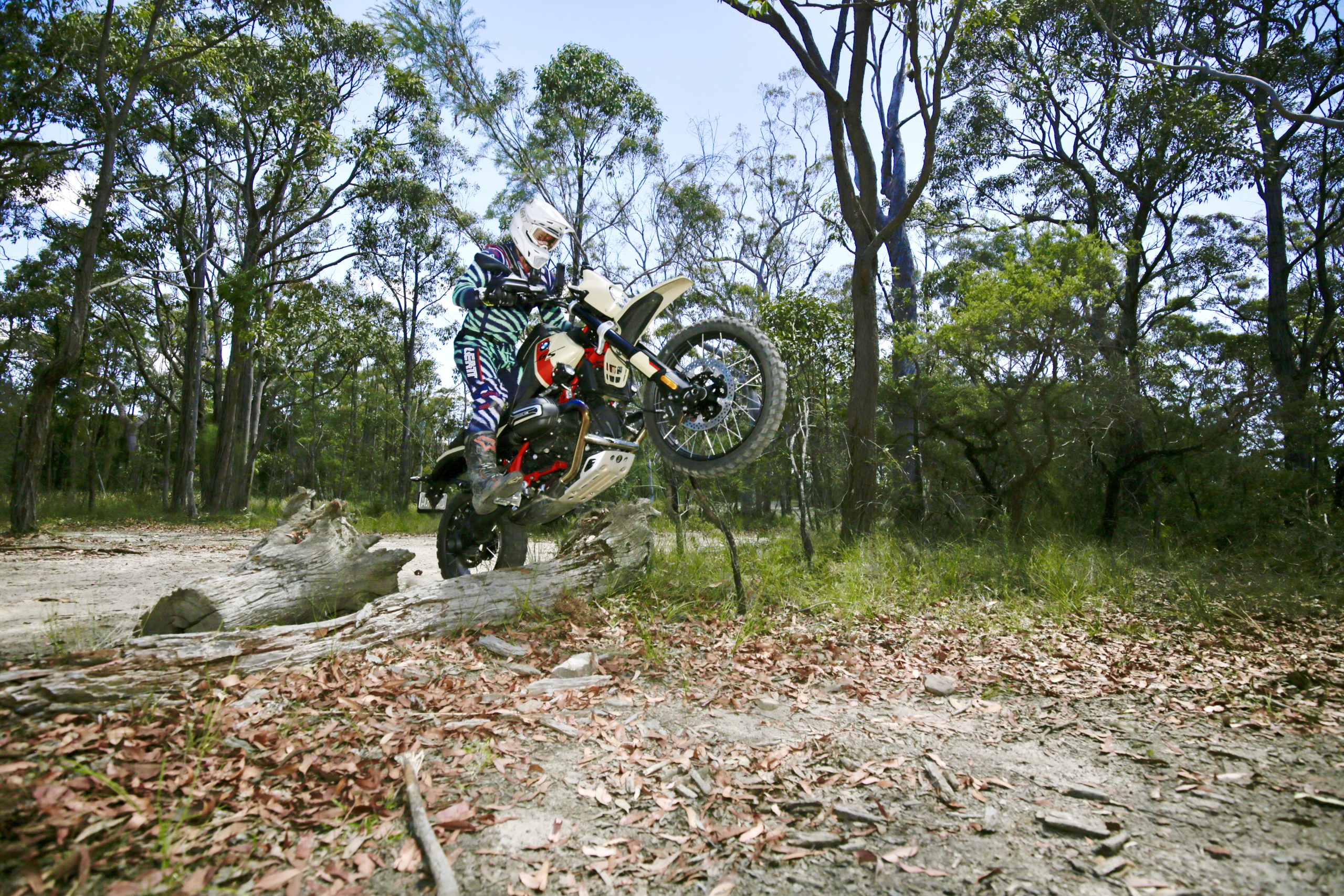
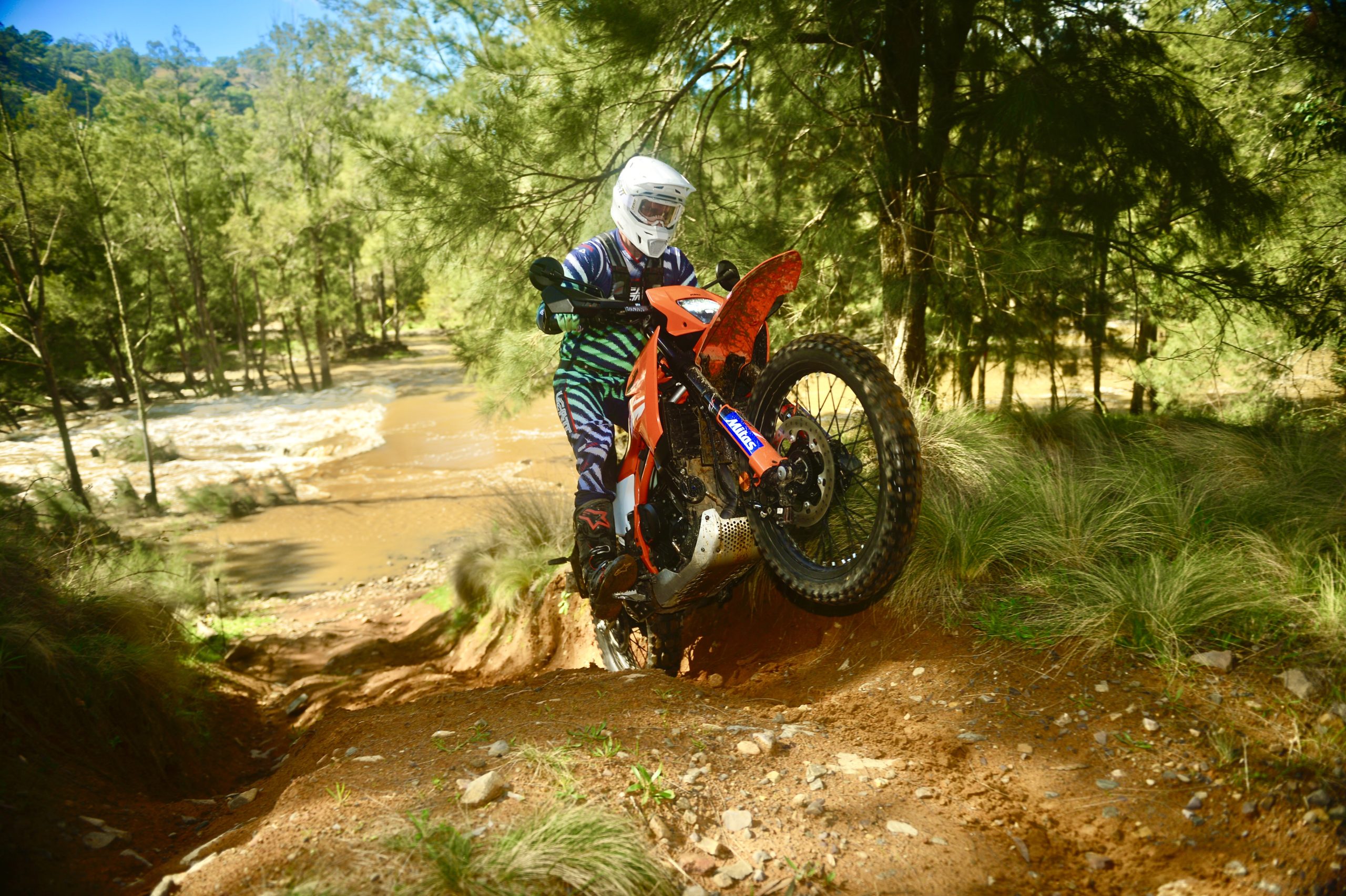
The biggest surprise of the entire test was the chassis. The balance of this bike is genuinely impressive. We took the Transalp into some single track sections, the sort of terrain where we usually ride proper enduro bikes. Standing up through ruts, weaving through trees, picking our way along technical trails. And the bike handled it far better than we expected.
The balance is excellent. It doesn’t want to climb out of ruts. It doesn’t lurch forward and push the front wheel. It feels planted and predictable. Standing up on the pegs feels natural and the bike responds well to rider input.
Even when we pushed it harder through rougher sections it never felt like it was fighting me. The weight feels low and well distributed, which makes a big difference on a 210kg adventure bike.
The only limitation we found was ground contact from the footpegs and the crash bars when riding aggressively through tighter terrain. That’s fairly typical for an adventure bike, though, and it didn’t stop the bike from getting through the trails.
Suspension
Suspension performance was another pleasant surprise. Like most adventure bikes, the suspension is relatively soft, but it’s also well-controlled. It doesn’t wallow, it doesn’t rebound unpredictably and it doesn’t feel twitchy on rocky terrain.
We even jumped it a few times. Naturally, a 210kg adventure bike will bottom out eventually if you start launching it like a motocross bike. But the suspension stayed predictable. It absorbed impacts well and settled quickly afterwards rather than bouncing or unloading harshly.
For normal off-road riding, fire trails, rocky sections, uneven terrain, the suspension does its job very well.
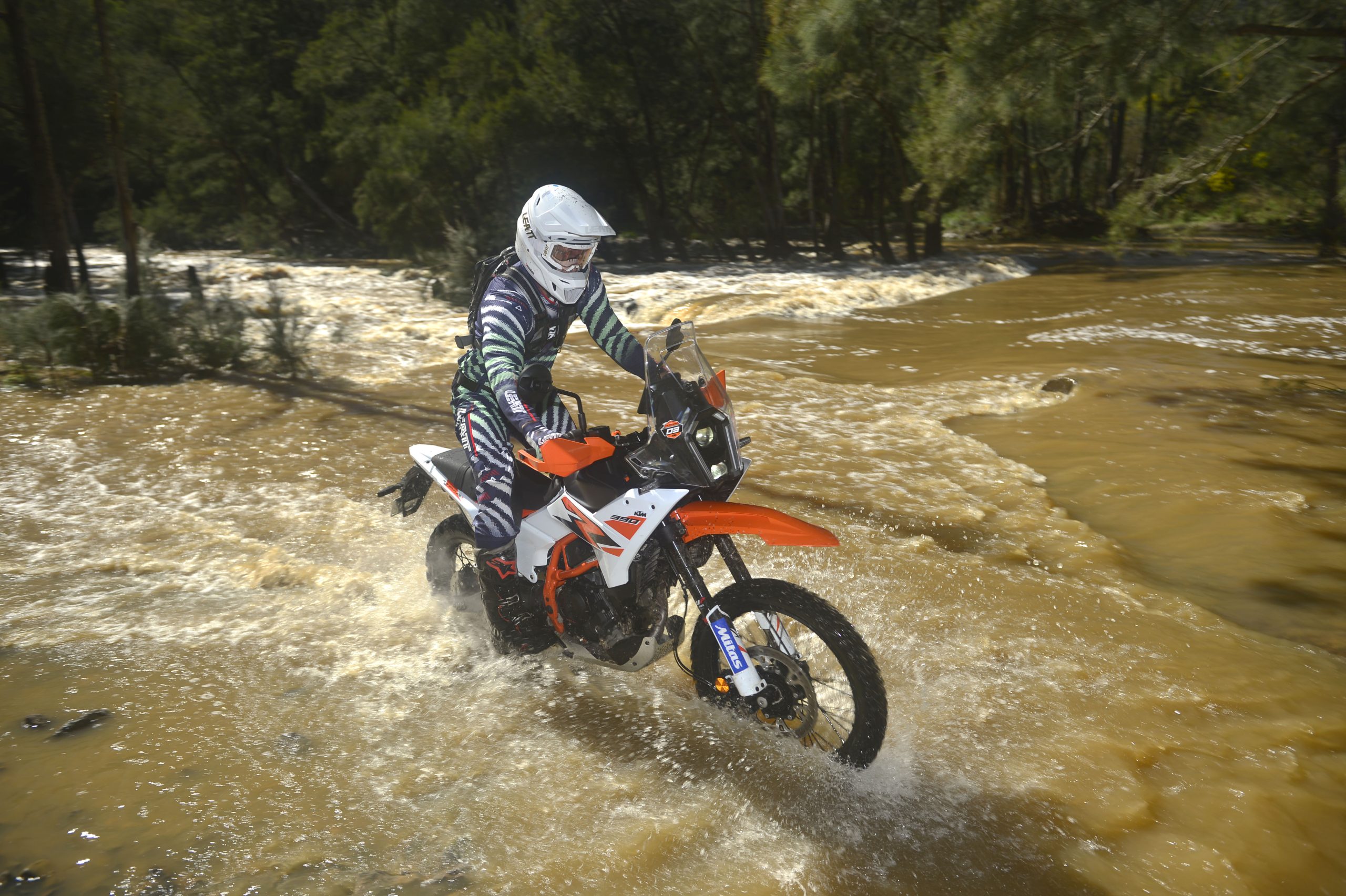
Ground clearance is also good, and importantly there’s nothing hanging dangerously low underneath the bike that looks like it’s waiting to get smashed on the first rocky creek crossing. And the bashplate we had on our unit was massive!
Comfort and ergonomics
Ergonomics are another area where the Transalp works well. The seat is nicely scalloped, which helps shorter riders reach the ground. I’m fairly tall so it wasn’t an issue for me, but we had other riders on the bike who were under about 5’8” and they could still get their feet down comfortably.
Standing position is comfortable too. Once we removed the rubber inserts from the footpegs, which only takes a quick 8mm bolt removal, the pegs offer good grip and control when riding off-road.
The bike is also surprisingly good for carrying a passenger. We did a few short trips two-up and it handled that without any issues. The passenger seat is comfortable and the engine has enough power to carry the extra weight easily.
Highway performance
At highway speeds, 110 to 130km/h, the engine isn’t revving hard. There’s no excessive vibration or buzzing through the bars. The bike will cruise all day at those speeds comfortably.
Wind protection from the fairing is decent as well. The screen isn’t adjustable on the fly like some more expensive adventure bikes, but it does a good job of directing airflow away from the rider. Even with broad shoulders, there was very little buffeting.
Electronics and ride modes
One thing Honda got right is the usability of the electronics. Adventure bikes can sometimes bury you in complicated menus and endless settings, but the Transalp keeps things relatively simple. Adjusting power modes, traction control and engine braking is done with a straightforward toggle on the left handlebar.
You can customise settings for power delivery, engine braking and traction control, and store them in user modes. The system also includes preset modes like Road, Rain, Sport and Gravel.
The only real frustration we had was with the ABS. While the bike has an off-road mode, we couldn’t find a way to completely disable ABS during our test (but we did find a light for it!). Even after digging through menus and researching it online, we couldn’t get it to switch off entirely. That means when you’re trying to slide the rear wheel into corners off-road, the ABS can still intervene.
Final thoughts
So where does the Honda Transalp 750 fit in the adventure bike world? It’s not the most hardcore off-road machine in the class. And it’s not trying to be.
What it is, however, is an incredibly well-balanced adventure bike that can handle dirt far better than its marketing might suggest. It’s comfortable on the highway, capable on gravel roads and trails, and surprisingly competent even in tighter off-road terrain.
And when you factor in the price, the value becomes hard to ignore. For less than $17,000, you’re getting a bike that can commute, tour, carry a passenger, tackle fire trails and even dip into single track if you’re confident enough.
Would I take it around Australia? Absolutely.
For riders who want a capable, versatile adventure bike without spending a fortune, the Honda XL750 Transalp is one of the best-value options on the market right now.
2026 Honda XL750 Transalp
ENGINE
Type: Liquid-cooled, four-stroke inline two
Displacement: 755cc
Bore x Stroke: 87 x 63.5mm
Compression Ratio: 11.0:1
Starting: Electric
Transmission: 6-speed
Drive: Chain
DIMENSIONS
Wheelbase: 1560mm
Ground Clearance: 210mm
Seat Height: 850mm
Fuel Tank: 16.9L
Kerb Weight: 210kg
SUSPENSION
Front: Showa 43mm inverted telescopic fork, adjustable preload, 200mm travel
Rear: Showa Single shock, adjustable preload, 190mm travel
BRAKES & TYRES
Front: Nissin Dual 310mm discs with ABS
Rear: Nissin 256mm disc with ABS
Front Tyre: Michelin Anakee 90/90-21
Rear Tyre: Michelin Anakee 150/70-18
RRP $16,967
Warranty: 24 Months
Browser motorcycles.honda.com.au