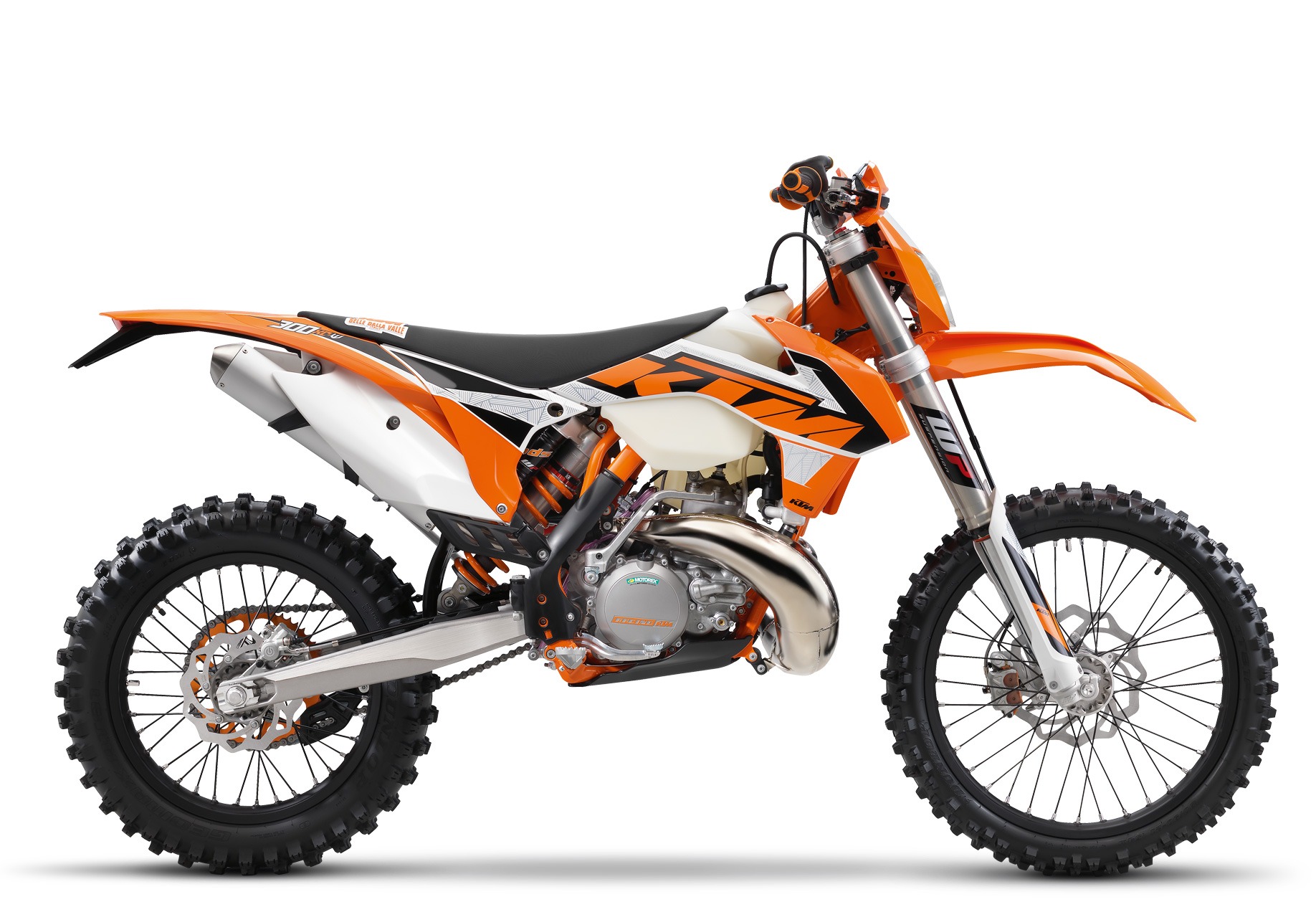
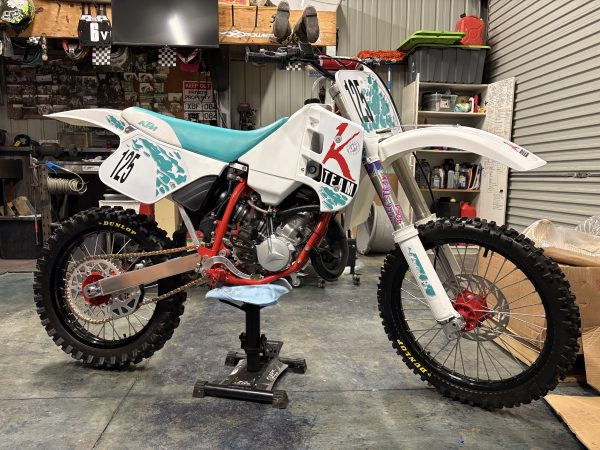
WHAT IS IT? 1992 KTM 125 MX
WHO? Pete Johnson (Dad) & Kane Johnson (Son)
WHERE DID YOU BUY IT? Facebook Marketplace, Christmas Hills, Victoria
HOW MUCH? $7,800
WHY DID YOU BUY IT?
We had been searching for this bike since we started our 1992 125s restoration adventure. We were losing hope before this one appeared on Marketplace, so we jumped on it without hesitation. Excitement was an understatement, as KTMs from this era are a rare find and, for us, this bike is the holy grail.
The lad we bought it from had acquired it from a helicopter mechanic in Queensland who had restored it to a reasonable standard. It started and sounded super crisp, KTMs from this era have a very distinct sound.
Once we got it home and took it for a test ride, the first thing we noticed was that the kickstart, exhaust and drivetrain are all on the opposite side compared to Japanese bikes. After testing it and concluding that the engine sounded and felt tight, as did the transmission, we decided no engine rebuild was required.
WHAT HAVE YOU DONE TO IT?
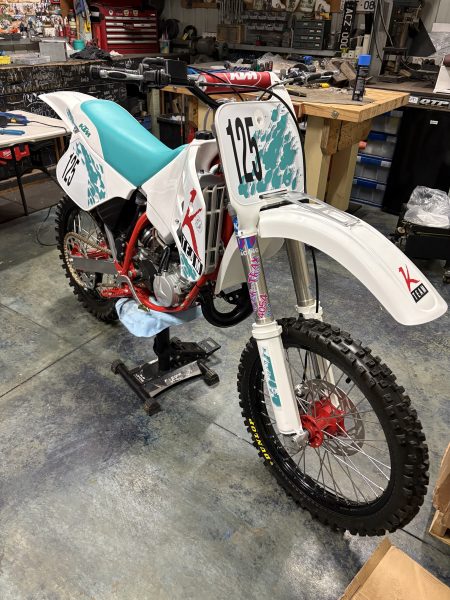
The strip-down started straight away, and this bike is very different being Austrian-built compared to Japanese machines. What we discovered was that nearly every part had been painted, including the engine, fork outers and swingarm. We did consider leaving a few components painted, as the paint quality was very good, but factory correctness has been the theme, so the paint stripper came out.
We also noticed something we had overlooked when we bought it, the swingarm and forks are from a 1994 KTM 125. Not ideal, but something we’ll have to live with unless we can find correct 1992 parts down the track. Parts for these early KTMs are incredibly hard to find, and there isn’t even a parts schematic available. We did manage to find an original spare parts brochure, which has helped with part numbers.
All parts were prepared and sent away for restoration: vapour blasting, powdercoating of the frame, footpegs and rear spring (A Plus Powder Coatings), Cerakote on the calipers and brake reservoirs, paint on the tank and engine cases (Pete Maggs), and zinc plating of bolts, sprockets and fasteners (Coburg Plating). Restoring the components that had been painted was a painstaking job, especially the engine, but we’re glad we went this way.
While we can’t talk about every single part, we can say that apart from the engine internals, every nut, bolt and component on the bike is either brand new or restored to the highest possible standard. Around 400 hours have gone into this build, and we hope we’ve done the bike justice.
HOW DOES IT GO?
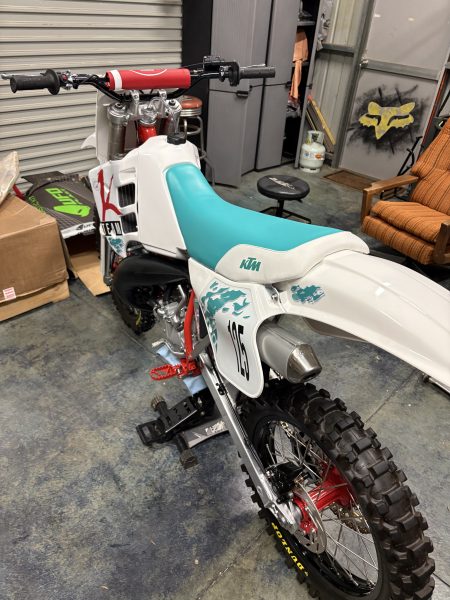
We don’t do much test riding once our bikes are finished because we don’t want any signs of wear. We even use a donor fuel container straight to the carby to keep the tank uncontaminated. We took it up and down the asphalt driveway a few times just to make sure everything worked as it should.
Don’t get us wrong, we’d love to take this thing straight to the track, we just can’t bring ourselves to do it.
WOULD YOU RECOMMEND BUYING ONE?
For anyone looking to buy a KTM from this era, unless you are prepared to restore it and spend countless hours searching for parts, many of which simply aren’t available, we wouldn’t recommend it. The only reason we took this project on was to complete the set.
5 UNIQUE THINGS ABOUT YOU OR THE BIKE
- The sound of the engine, so crisp.
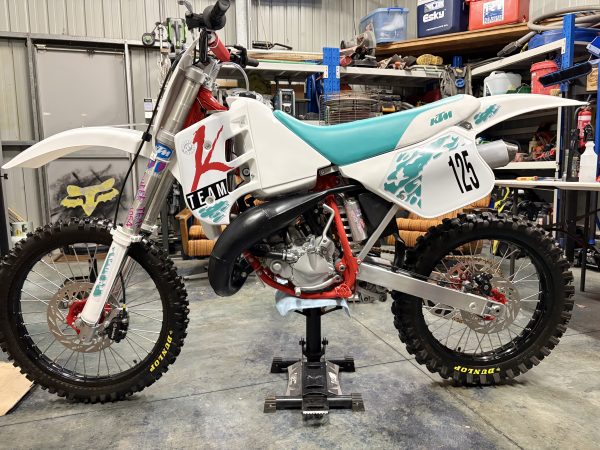
- The left-side kickstart, which feels incredibly awkward.
- The right-side drivetrain.
- Only when the search for a better-condition or OEM part has been exhausted will we accept what we have and restore it as best we can.
- A father and son building bikes, and memories, together.