Motorcycling Australia (MA) cops plenty of heat in the comment sections. Licences go up, permit requirements get tighter, and suddenly the story doing the rounds is that “MA is killing the sport” or “they’re just clipping the ticket”. But when you actually sit down with MA CEO Peter Doyle and pull the whole thing apart, the picture looks very different and a lot more sobering.
The ugly truth is that modern motorsport insurance is a global knife fight, and Australia is one of the most litigious places on earth. When riders get hurt — or worse, when spectators get hurt — the lawsuits don’t land on a Facebook thread. They land on the sport. And the sport can’t operate for free in a country where a single incident can threaten the viability of an event, a club, or an entire discipline.
So yes, MA’s costs have gone up. Yes, permits feel stricter. And yes, some events are disappearing. But Doyle’s argument is blunt: people confuse “more rules” with “more control”, when most of it is simply the price of keeping motorcycle racing insurable and keeping the doors open.
What is Motorcycling Australia, exactly?
Before you can talk about insurance, costs, or why events are getting harder to approve, you’ve got to understand the structure. Because the structure explains half the friction.
Doyle describes MA as two things operating together:
- MA the business: its own independent entity, and Australia’s affiliate to the FIM (the global governing body). It’s the national body recognised by Sport Integrity Australia and the Australian Sports Commission.
- MA the Federation: a federated model that includes the states. And here’s the catch: those states are independent businesses, trying to act as one body under the federation umbrella.
In Doyle’s words, it’s “complex, but also quite simple once you explain it.” The real-world outcome is that Australia has eight entities trying to act like one sport because internationally, Australia can’t be represented by eight separate governing bodies.
And this is where his “one word” summary lands: overgoverned.
Each state has a board. Each board has 6–8 directors. When you do the math, Doyle says the sport ends up with around 64 people who believe they’re leading it, and with turnover, “we go through over 70 board members a year.” In a sport that needs fast, consistent decisions — especially around risk and insurance — that many cooks in the kitchen creates drag, inconsistency, and sometimes outright conflict.
Doyle says plenty of sports globally have modernised into leaner models. Australia’s federated system, by comparison, is old — “a hundred years old” in concept — and he believes it should be phased out in sport because it creates inefficiency and weak accountability.
The key point: MA can’t just snap its fingers and rewrite the model. The voting members are the states. Structural change needs the states to agree. That’s why governance reform is slow, messy, and always political, according to Doyle.
Is MA actually in trouble financially?
This is one of the most persistent rumours: “MA is broke” or “the sport’s about to collapse.”
Doyle says the opposite. He describes MA’s current financial position as solid and stable, and claims that when he took over, the business was “pretty much insolvent.” Now, it’s consistent and recovered post-COVID. MA is a not-for-profit, so the core idea is that revenue ultimately goes back into the sport — but the baseline business is functioning.
“MA, from a financial perspective, we’re solid.” Doyle said. “When I took over here, the place was pretty much insolvent. It’s solid now. It’s quite consistent.”
Doyle went on to say: “Even though COVID set everybody back, we’ve recovered from that. In the end, we’re a non-for-profit, so everything that we do has to go back into the sport ultimately.”
From the federation side, he says things are “working okay” and improving, with several states pushing in the same direction. His frank view is that some states are consistently more difficult than others, but overall the federation is moving forward.
The insurance problem
Insurance is where most riders get angry, and it’s where most misunderstandings live.
Doyle’s point is simple: public liability insurance is the hard one, and globally there are only a handful of insurers willing to touch high-risk motorsport. “Globally… there’s… about six people who really want to be involved in motorsport… high risk environment.”
He references how some countries have struggled or even stopped forms of racing because public liability became impossible to secure. “A number of countries have been struggling to get public liability insurance, which is the specific one that’s difficult.”
He says the premium spikes have “plateaued” into something more consistent. That’s the good news. “The situation’s probably smoothed out… we’re not seeing the big jumps in premium right now… we’re not seeing any reductions, but it seems quite stable.”
The bad news is: “we’re not seeing any reductions.”
So if you’re waiting for licence fees to magically drop… you’re probably going to be waiting a while.
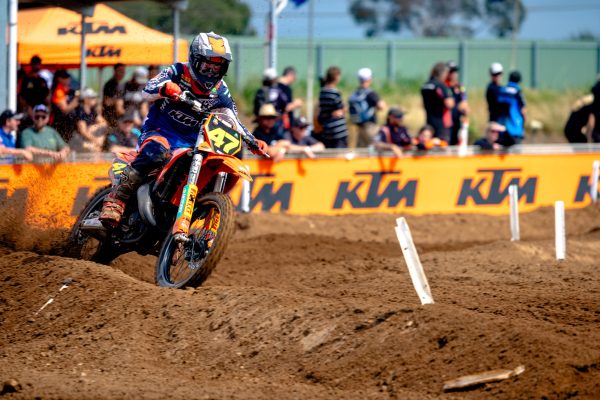
What insurers actually care about now
The conversation gets real when Doyle breaks down what creates insurance risk in modern motorcycle racing. He narrows it to two big themes:
1) Negligence: rule-breaking that leads to injury
Doyle describes a repeating pattern: people treat rules like they don’t apply to them, someone gets hurt, and suddenly the sport is exposed to legal action. “The biggest problem the sport faces is two things. One is just negligence.” He went on to say, “So you have a set of rules and people think they’re above the rule… so they break the rules and then they hurt somebody. Once that happens… if you get sued, you’re in trouble.”
This is one of the reasons the sport feels “stricter” now. It’s not always that MA wants to crack down — it’s that insurers won’t tolerate sloppy governance, inconsistent officiating, or events running outside the rule framework.
2) Spectator safety: the fastest way to destroy an event
This is the one that keeps risk managers awake. Doyle points to how spectators often stand in stupid places because they think it’s their right, or because they want the thrill. It’s exciting until it isn’t. And once spectators are injured, the legal exposure explodes.
“People standing next to the track think it’s their right to stand there… it’s exciting until they get hurt… and then they want to sue somebody and the sport pays. Motorcycle racing is dangerous… has been a pretty well-known saying forever.”
In this environment, “people go to watch a show or entertainment,” but if they’re hurt, they sue. And the sport pays.
Then Doyle drops the line that should make every Aussie organiser flinch: “We are the most litigious country in the world… way worse than the U.S.”
If that’s true — and he’s speaking from global experience — it explains why Australia’s insurance burden feels so heavy compared to what riders assume is happening elsewhere.

What it costs
Here’s the figure that reframes the whole debate. Doyle says the cost to insure the sport — across public liability, personal accident, directors & officers, and cyber — has “just clicked over” $3.7 million per year. Every year.
And that money has to come from people participating in the sport.
Doyle also argues MA’s public liability product is “bulletproof” and proven over 25 years: it has protected every public liability claim in that period, averaging about seven public liability claims per year. “The MA product, the public liability, is bulletproof… tried and tested. It’s been operating for nearly 25 years. It’s protected every single public liability claim… they average about seven a year.”
How much of your licence fee is insurance?
This is the second number riders need to understand because it explains why licence fees feel painful.
Doyle says, on average 50–55% of a race licence fee goes to insurance. He pegs the average around 53%. “The average is between 50 and 55% of your licence fee goes to insurance. And the rest is for operating the sport. Administration, international teams, general overheads, employment costs. So you’re spending more on insurance than you are on the sport.”
So yes — in very blunt terms — the sport is spending more on being insurable than it is on actually “doing” the sport. But what choice do they have?
Which disciplines drive the most claims?
If you want to know why motocross riders feel like they’re paying a fortune, here’s the uncomfortable part. Doyle says: “Motocross… it’s probably around close to 70% of the claims come out of motocross. If you broke it down differently… by participation… dirt track is actually quite high. We get a number of serious injuries in dirt track… But purely on claims, motocross sits at the top.”
That being said, Doyle went on to explain that motocross has by far the greatest participation of any discipline, by a long way. Nearly 70% of race licenses are for motocross.
Disappearing events
This is where riders feel it most: fewer events, more permit stress, more hoops, and organisers burning out. Doyle’s explanation lands in two buckets: cost and control.
1) Land access and red tape for off-road events
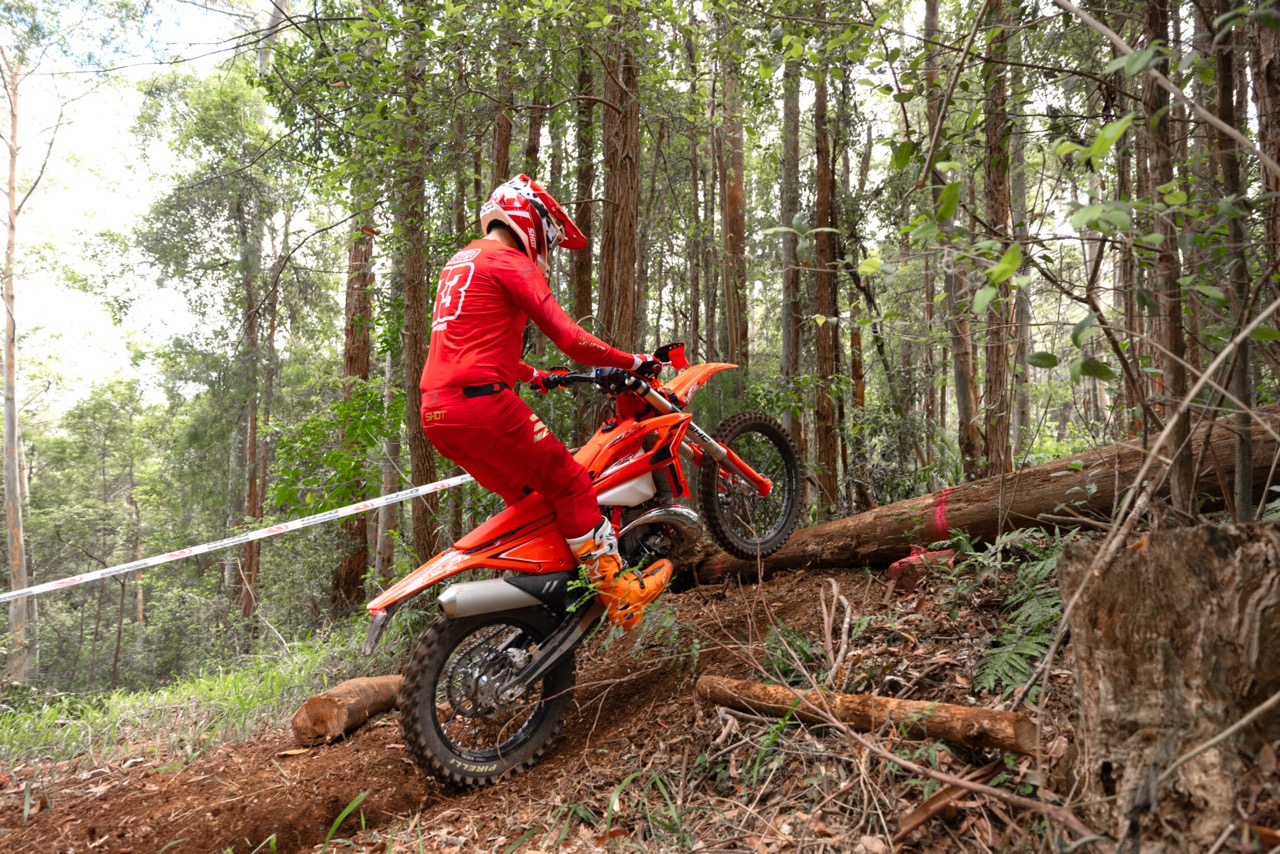
NAV-style events (safari/rally/enduro loops across mixed land types) are increasingly complicated because they often cross:
- private property
- crown land
- council land
- state forests
- access roads
- areas where spectators can appear anywhere
Doyle says it’s “all politics, council regulation” and that any land not designated specifically for motorcycle recreation brings heavy red tape.
He also makes a point riders don’t always consider: insurance itself isn’t always the killer — sometimes it’s the delineation of liability.
In other words: what’s MA’s responsibility, what’s the organiser’s responsibility, what’s the land manager’s responsibility, and who wears it when something goes wrong in an area you can’t fully control?
That uncertainty is what makes some organisers walk away. Not because they hate the sport but because they don’t want to carry the risk anymore.
Doyle uses Finke as an example of the opposite: long history, strong government relationships, crown land, and a structure that supports the event. Where that support exists, events survive. Where it doesn’t, things get harder every year.
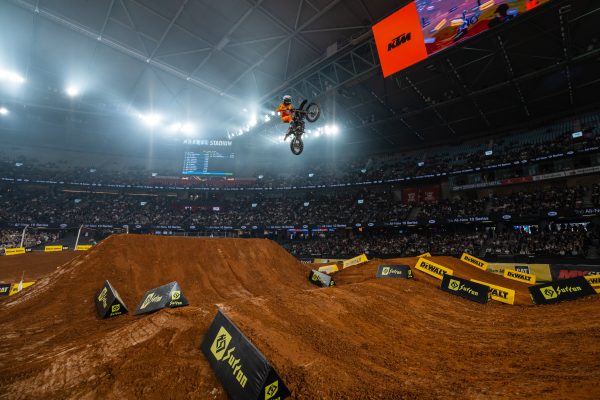
2) Supercross
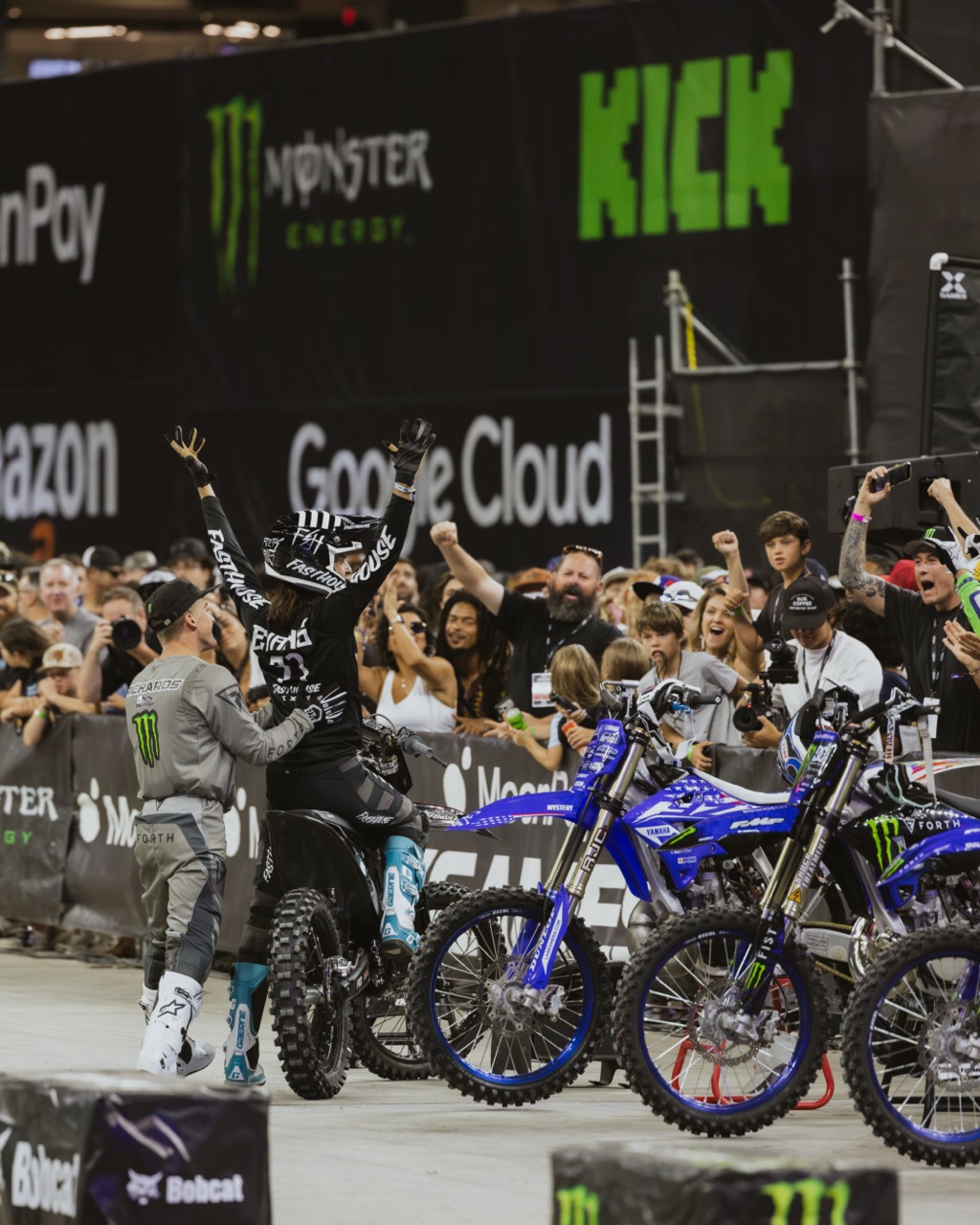
Doyle says the discipline that “scares people” or insurers most are supercross, because they are high risk by design, have a limited participation base in Australia (we don’t have the volume as the US), spectator proximity and jump design risks and the engineering/physics of “big jumps that don’t end up in the crowd”
He says safety work in the background has improved massively over the last 5–8 years, but the nature of the discipline means the risk conversation never goes away.
And there’s a second layer riders forget: modern stadium events don’t exist on entry fees alone. They rely on tourism/major event funding — hotels, rentals, transport, and visitation economics.
That’s why government money is now part of the landscape even for some state-level events: governments need to fund the event for visitation.
International teams
Doyle says MA funds five key international teams at different levels:
- ISDE
- Motocross of Nations
- Speedway of Nations
- Trial of Nations
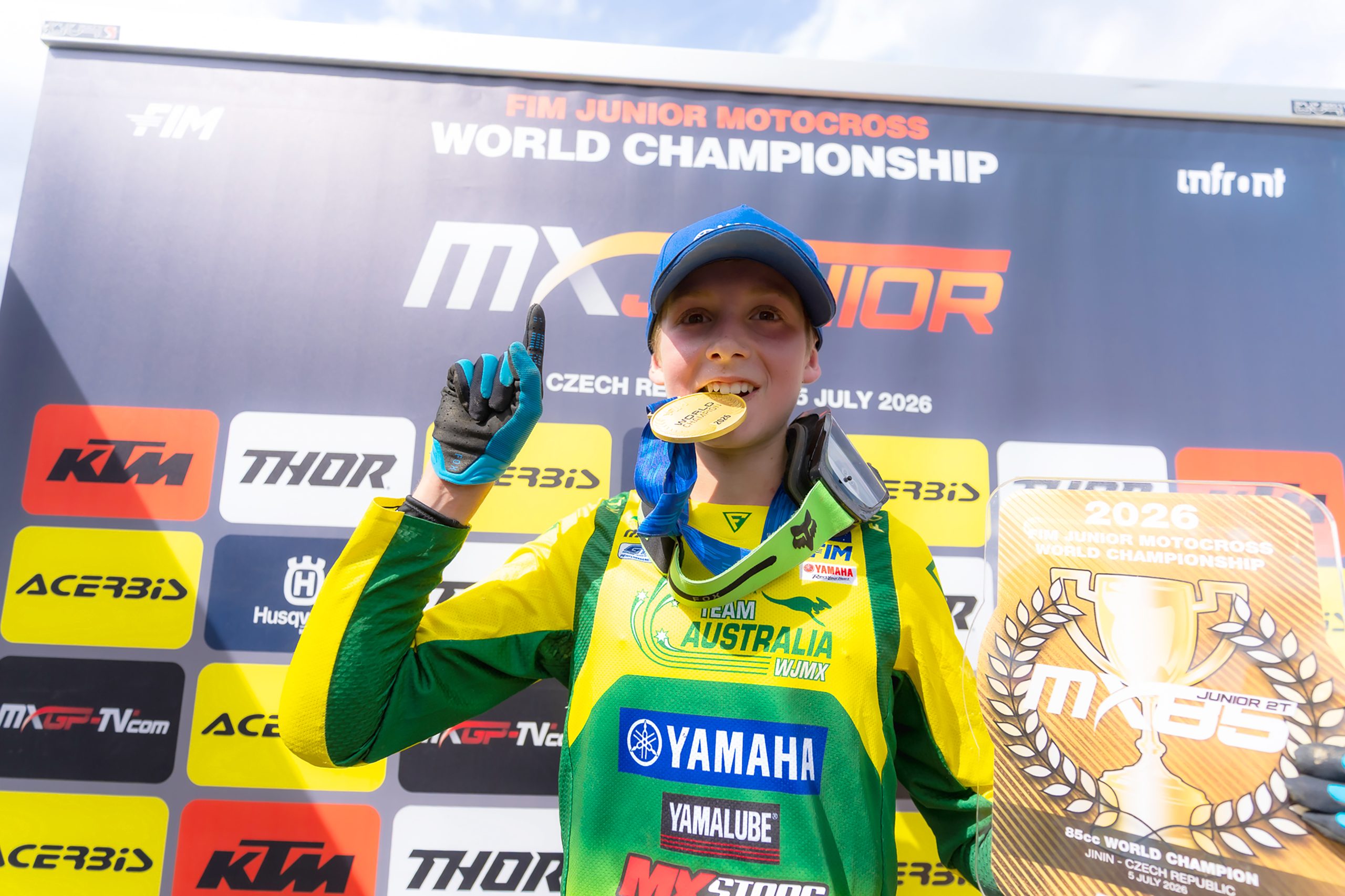
- World Junior Motocross
He claims ISDE is actually MA’s largest-funded international team, with $100,000 going into the ISDE tank, plus partner contributions. “From outside, ISDE gets more funding than Motocross of Nations. We put $100,000 into ISDE tank. ISDE is our largest funded international team. By a long way. Between those five teams, we spend roughly $300,000.””
Then comes the comparison that resets expectations: he says the French ISDE team budget — when shipping outside Europe — can be around €300,000.
He also says, compared to other sports, motorcycle sport licences are not expensive for a high-risk environment. He points to car motorsport as an example where licences can be higher despite lower risk and lower insurance costs.
His estimate: if Australia wanted to better fund the sport and teams at a higher level, licence prices might need to be $500–$600+.
Participation
Despite all the noise, Doyle says 2024 was a record year for annual licences and participation, based on reliable data since 2016. “By all accounts… 2024 was a record year in both licences and participation” Doyle said there are “Over 20,000 licenses, Motocross licence sales are number one. The area of growth over the last few years has been off-road.”
While dirtbike racing is growing, it’s not as positive for road racers, “Road racing is suffering… hugely expensive… massive track hire costs… clubs don’t really own road venues, they’re commercial.”
Safety equipment
MA is implementing chest/back protection requirements in motocross (a change that has been coming and “shouldn’t be a surprise”).
On airbags, Doyle says they’re not on the table for domestic levels right now, mainly due to price and serviceability. He expects the FIM mandating airbags could increase volume and bring price down, but insurers won’t instantly discount premiums just because a rule changed. They’ll “measure outcomes in three years.”
Being realistic
This is where Doyle’s position is fairly direct: people see price movement and assume it’s greed or mismanagement. But in his view, they don’t see the $3.7m annual insurance bill, Australia’s litigation exposure, the governance drag of a federated model, the cost of compliance (integrity, standards, modern cyber/administrative requirements), the real price of running elite-level international teams (even partially)
Doyle also makes a point about comparisons: fans constantly compare Australia to the US, then get angry when Australia can’t replicate it.
His blunt answer is: “in case you hadn’t noticed, we’re not in America.”
Population, scale, and industry size are not comparable. Australia’s industry is small, our travel is expensive, and our event economics are different.