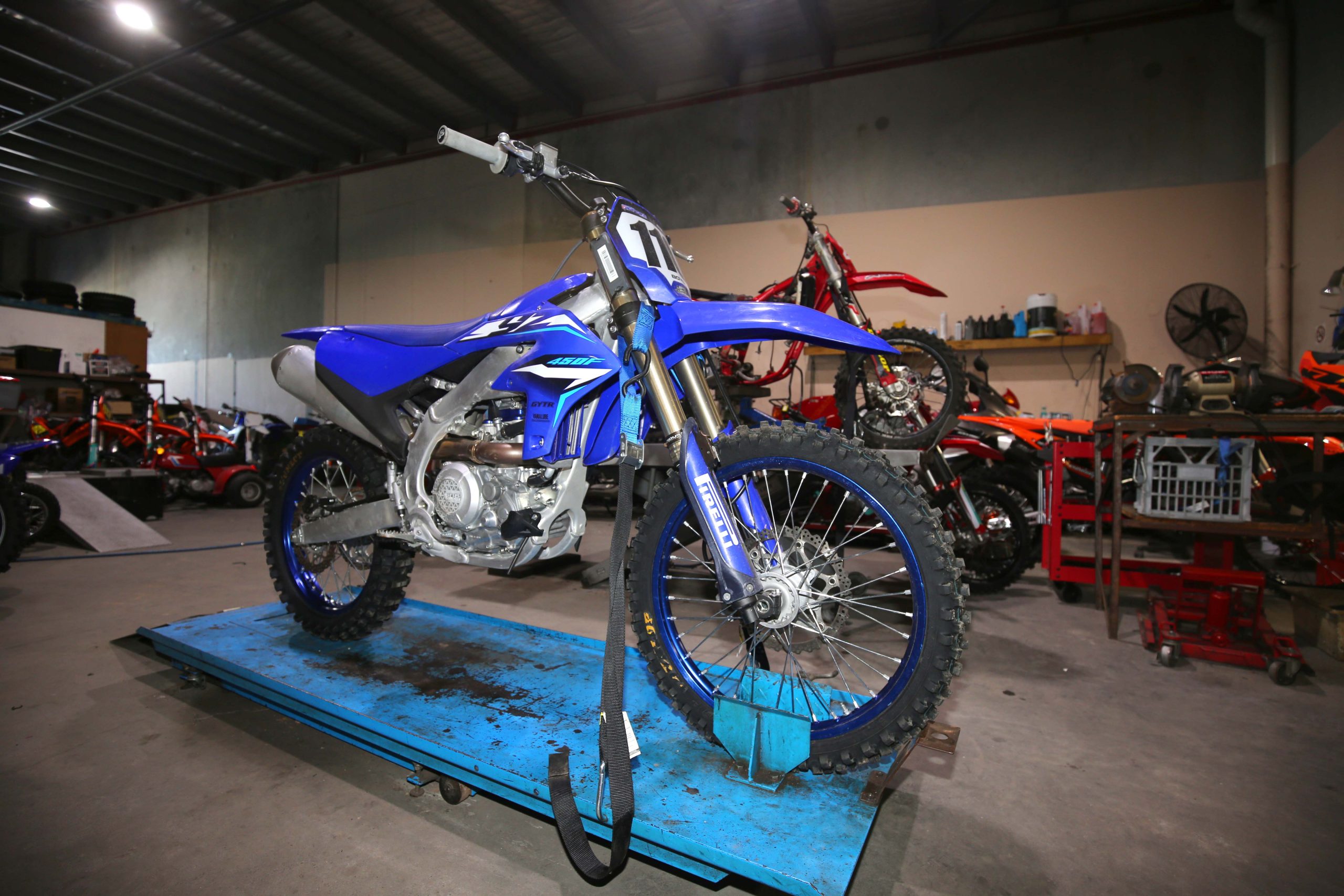
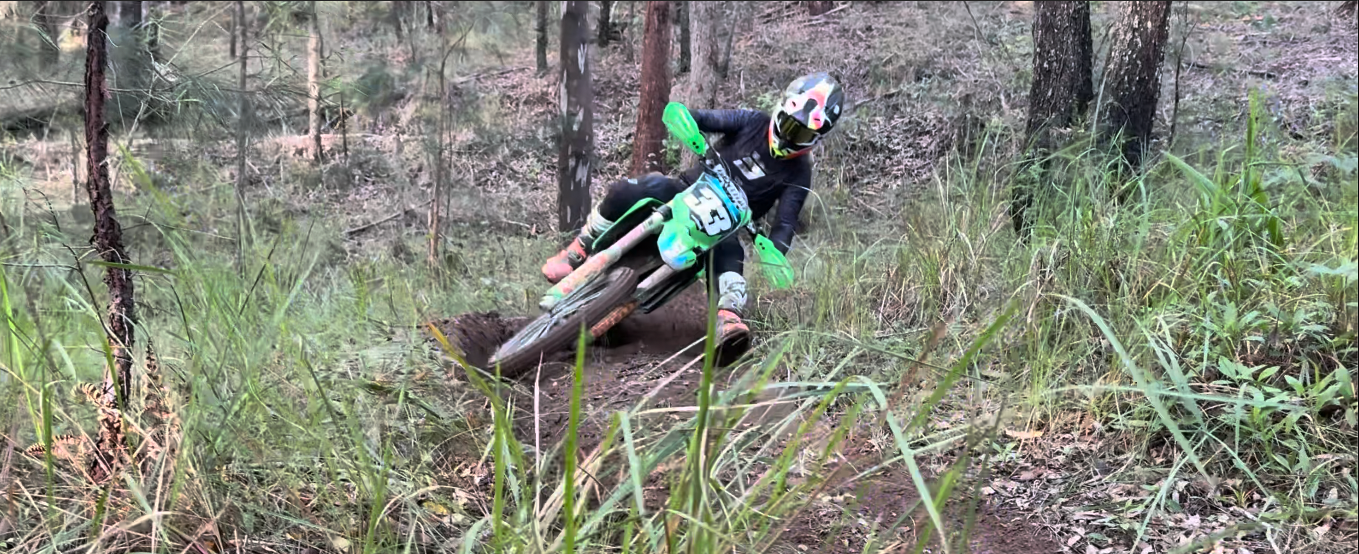
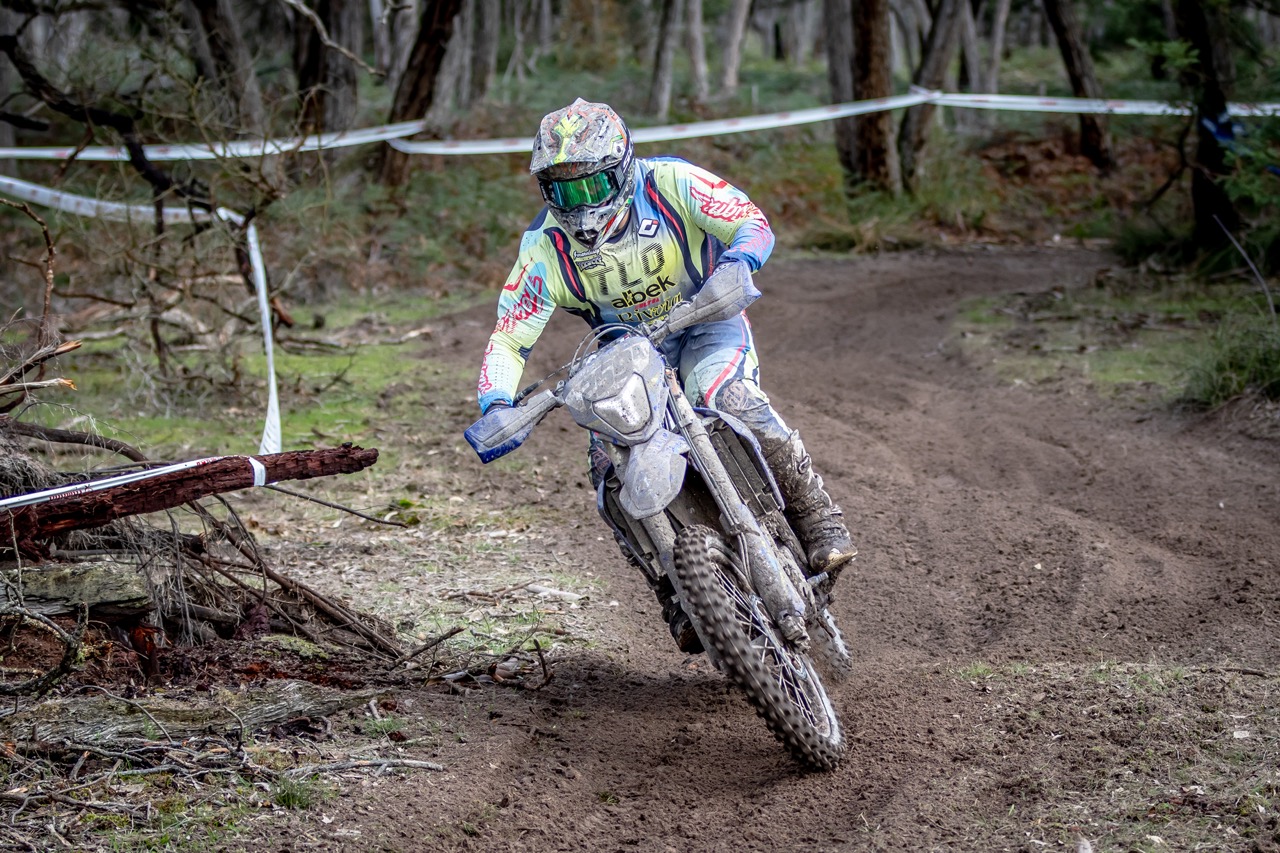
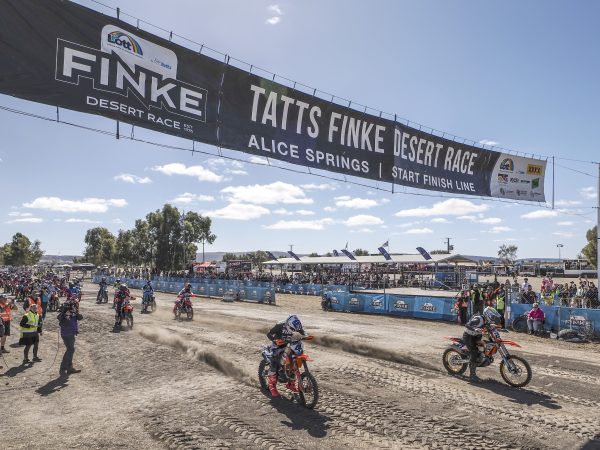
Finke isn’t just another off-road race you pencil into the calendar and “see how we go”. It’s the one that turns grown adults into nervous wrecks, makes mechanics sleep with one eye open, and has riders doing maths on fuel range like their life depends on it… because it kind of does. In 2026, it’s also the 50th running of the Tatts Finke Desert Race, and the whole week is being treated like a proper golden anniversary blow-out — celebration dinner (Wednesday 3 June), street party and night markets (Thursday 4 June), scrutineering (Friday 5 June), prologue (Saturday 6 June), then race day one and two (Sunday 7 and Monday 8 June).
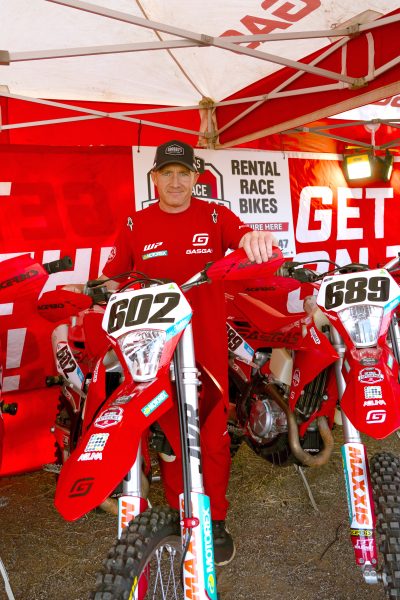
The reason Finke has that aura is simple: there’s nowhere else quite like it. Two days, Alice Springs to Aputula and back, flat-out desert speed mixed with square edges, whoops that go on forever, and a track that punishes the tiniest setup mistake. The race has been doing exactly that since 1976, and it still catches riders out every single year, especially anyone who thinks they can rock up with a “normal” off-road setup and just tough it out.
That’s why we rang Ben “Grabbo” Grabham and basically said: talk to us like we’re idiots (because the desert has a way of making idiots out of everyone). Grabbo’s message is blunt: a proper Finke bike is often a bike you wouldn’t want anywhere else. It’s built for speed, stability, and survival, not for your local singletrack loop, not for a Sunday moto, and definitely not for impressing your mates in a paddock. His whole approach is about making the bike forgiving at insane pace, so the wheels follow the ground instead of skipping across it and trying to put you on your head.
So this is your 50th-anniversary setup guide, straight from Grabbo: what matters first (and what’s just expensive noise), how he thinks about suspension and chassis “windows”, what to bolt on before you even think about horsepower, and the little reliability habits that stop your dream week turning into a long, hot, expensive tow back to Alice.
The Finke suspension myth
The one aspect most people leave too late is suspension: “Probably the most important part would be suspension… a lot of people chase engine and power out there, but it means nothing unless you can hold the thing open.”
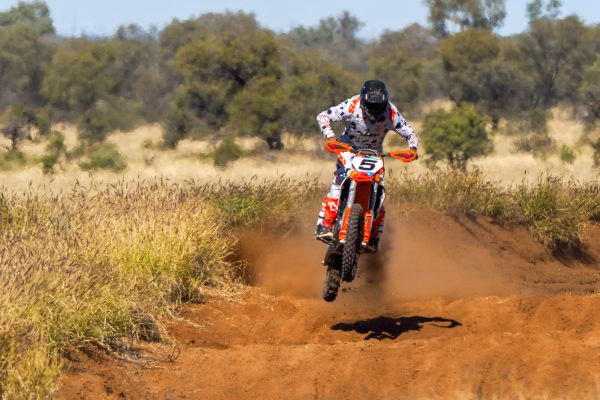
A lot of people walk into Finke with the same assumption: the faster you go, the firmer it has to be. Grabbo flips that on its head. “You want the suspension to be quite loose and active,” he says, because the goal is to keep the wheels following the ground at speed. That’s why he describes a properly set Finke bike as something a motocross rider would hop on and instantly think feels wrong: “they’d feel like pogo sticks.”
But that “pogo” feel is deceptive. At low speeds you can absolutely make a desert setup feel like it’s bottoming or wallowing. At proper Finke pace, it settles into its working zone. Grabbo explains it like this: “If you were just messing around… slow speed, you would bottom out… but once you get these things up around 100k an hour and start hitting bumps… they firm up at the right [time].”
As for the old “soft rear / firm front” rule of thumb? Grabbo says the vibe is close, but the phrasing is better like this: “More feel in the front. Lower in the rear.” In other words: front holds up and stays calm; rear stays compliant and drives without trying to kick you into next week. And none of it works unless it’s tailored to your speed and your weight — which is why Grabbo keeps circling back to the importance of a suspension tech who actually understands Finke.
First on the list
When you ask Grabbo what he’d do first for anyone “rocking up there,” he doesn’t start with horsepower or trick parts. He starts with safety and control. “The first one would be a steering damper. I would not go on that track without a decent steering dampener.”
That’s his non-negotiable. Next up: “Steg Pegz… [they’re] a bit of a game changer out there, just being able to use your legs more.” Those two are his foundation.
Tyres, mousses, tubes
Grabbo’s tyre talk is gold because it’s brutally practical and it demolishes a few myths that refuse to die. “You can’t run mousses at Finke” — yes you can (if you do it properly) “People believe you can’t do mousses. I’ve ran top 4s… with moose front and rear.”
The catch is: don’t chuck in some random soft enduro mousse and hope. Grabbo says you need a “proper desert spec moose… like the boys run at Dakar.” His modern preference though is pretty clear: “For us these days, a moose front is important.” Rear? He’s got a specific setup he trusts: “We run… a Brazilian tube called a Lucioli tube. Rim locks and everything built into it.”
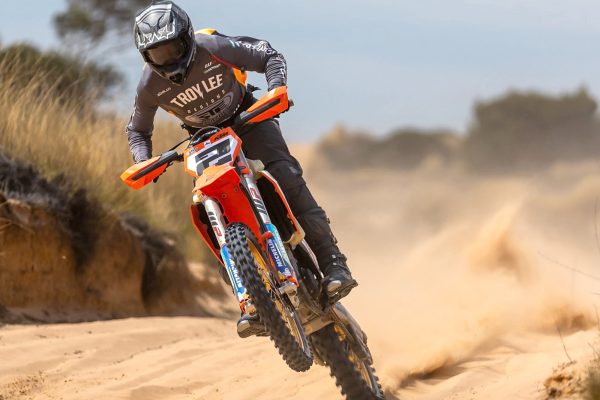
If you want the most common Finke mechanical failure in one sentence, Grabbo doesn’t hesitate: “It’d have to be the rear tyre.” And the way it happens is classic desert arrogance. Riders show up with a knobby they’ve “run their whole life,” it survives pre-running, and then race day cooks it: “They just start constant speed and then [the] tire cooks from the inside and the knobs peel off… canvas shown… the canvas splits.”
His fix is simple and very specific: “You need something that is speed rated to roughly 170.”
And he adds a detail most people don’t think about: sometimes you don’t want maximum grip in the whoops. He prefers the tyre to move around a little rather than hooking up and trying to swap side-to-side through whoops. His trick? “I actually do burnouts and skids… just around the tire over and take the edge off… You actually want the grip to be a little bit limited.”
Fuel range
If you’re wondering whether the fast guys run big tanks: yes — and it’s not just because they’re thirsty for distance. Grabbo says most enduro bikes are “touch and go” on a standard tank, but conditions change quickly: “Headwind… you’ll use 2 more litres over 80k’s compared to normal.”
So they build in margin: “We run always around your 12 litre tank… get you the 2 stops reasonably safe.”
The ergonomics
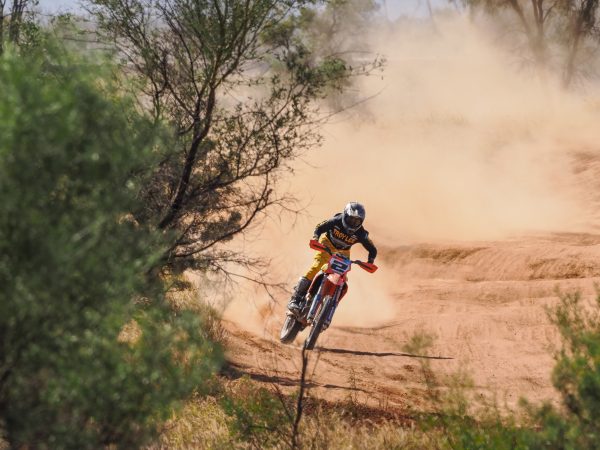
Finke setup isn’t just suspension and tyres. It’s contact points, fatigue management, and not getting beaten up by your own bike. Grabbo says desert seats became “a thing” after Toby Price and now everyone thinks they need one — but he doesn’t.
“I’m only… 178 centimetres tall and I don’t run one because otherwise, through the whoops that hits me in the butt and scares me.”
His rule is simple: taller riders can benefit because the extra foam helps when you’re sitting down. But don’t fit a desert seat just because the internet told you to.
He’s also big on reducing hand punishment: “I run the foam rally grip… it’s a bit easier on your hands.” “Basically, you’re chasing something that’s quite, quite floppy and forgiving compared to, say, a motocross setup.”
Austrian Chassis
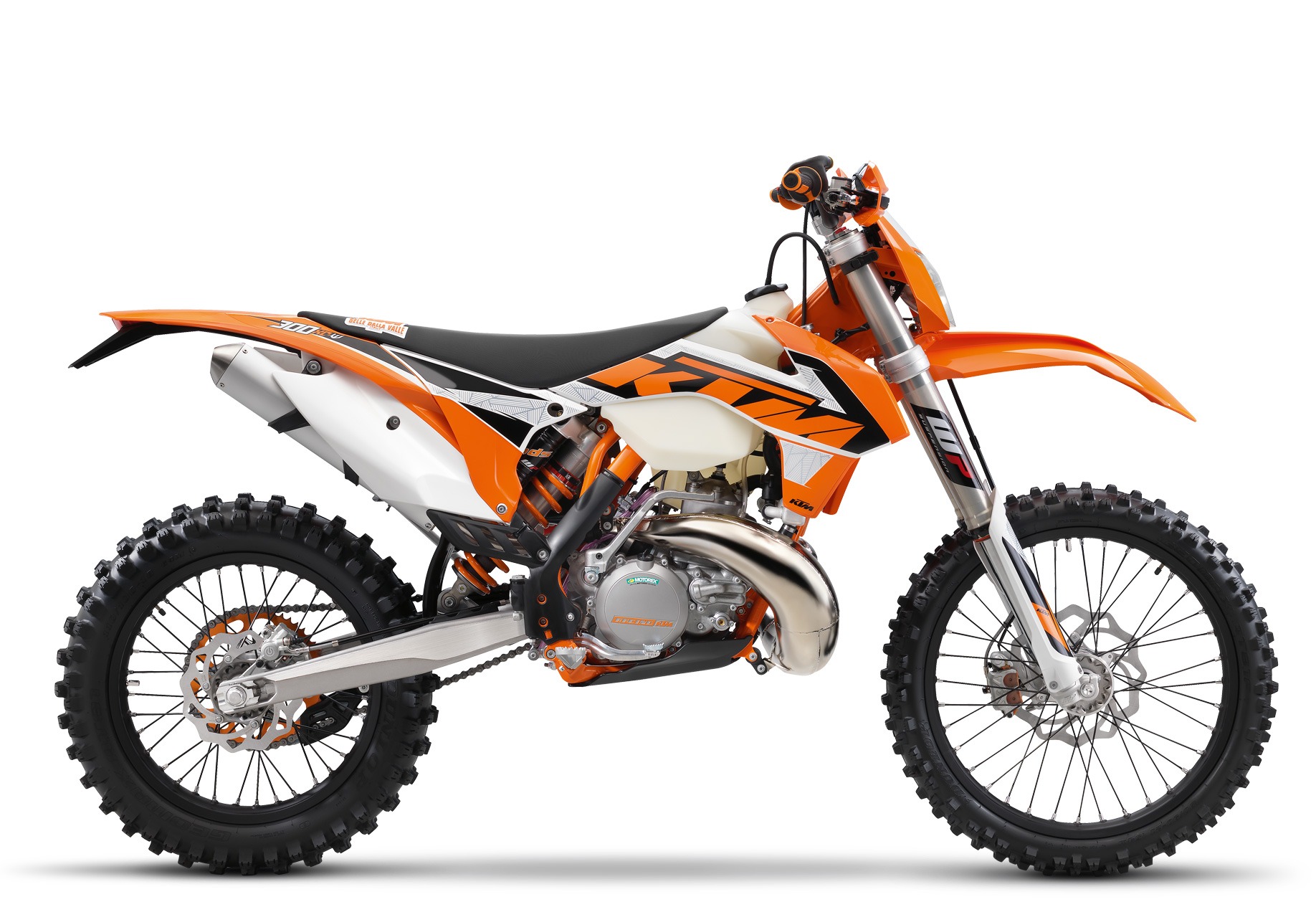
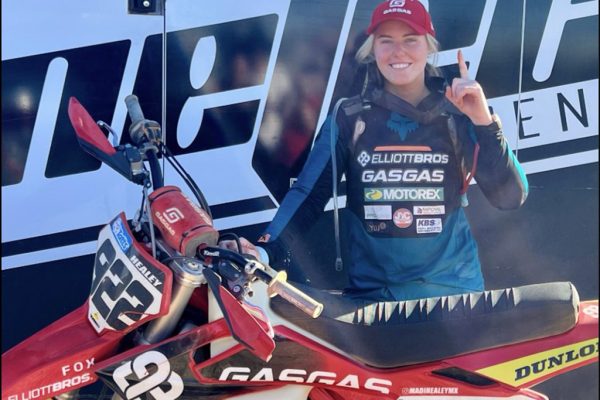
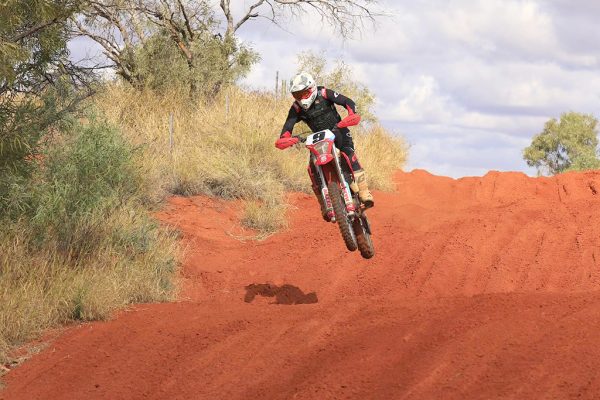
This is one of the most interesting technical chunks in the whole chat, especially for anyone on the newer-generation KTM/Husky/GASGAS platform. Grabbo says the early talk was that the new frame felt “reasonably rigid or stiff… stiffer than the previous one,” and people assumed it “doesn’t really work well.”
But after testing, his conclusion isn’t that the frame is bad, it’s that the setup window is tighter. On the previous generation, you could be miles off and still be okay: “On a 500 EXC… you could have up to say 140mm rider sag, back to 110mm, and the thing would still be safe and rideable.”
On the newer one? “You could be like 2mm out and the thing was like unrideable. And you get it in that window and the thing is amazing.”
That’s a massive difference. It means two riders can jump on the same model and have completely different opinions because one is slightly out of the sweet spot and the other is nailed.
And when it’s wrong, what does it feel like? “Too much feedback through the rear end… which would always push into the front… you’d be just chasing the front… harder, harder… and then… the bike [is] way too hard and beating you up.”
He even gives a tiny example that shows how sensitive it is: “140mm static sag… versus 142mm… that was the difference… confident versus… sketchy.”
In other words: if you’re on the newer frame and you’re not loving it, don’t immediately blame the bike. The fix might be two millimetres and a smarter plan. And once it’s right? “The rougher the track gets, the better the bike handles.”
Aftermarket shock?
There’s a great little history lesson here about why some older desert-specific tech felt so good and why people still copy parts without understanding them. Grabbo talks about the old black WP “track shocks” as “the pinnacle of a Finke shock.” They had a mechanism that would effectively allow the shock to recover fully after being extended in the air, so it didn’t “pack down” through whoops.
Without that mechanism, a shock can keep riding lower and lower in the stroke through repeated hits which makes it harsher and less stable. “The shock will pack down… get lower, lower, lower… which makes it harder and… jittery.”
But those old shocks had a workaround: “It would open up… and so your shock would fully recover. You’d have the full stroke again.”
The downside? They could get damaged internally if hammered. And because that specific shock isn’t really a thing anymore, they stick with modern production/pro shocks without that old mechanism.
Do you need cone valves?
This is another myth Grabbo handles well. You don’t need to throw unlimited money at WP Pro everything to be competitive but you do need the right type of fork and a suspension tech who understands desert. “You need technology in the forks,” he says. For GASGAS, they run a 6500 kit because the stock fork is basic. But for KTM/Husky style dual-chamber forks (or equivalent quality designs from KYB, Showa, etc.), that’s generally the level you want.
450 v 500
Grabbo drops a number that’ll make most people swallow their tongue: “I’ve got 185 on a GPS on a bone stock EC 500… standard exhaust, standard mapping, standard everything.”
That’s with gearing (he mentions 14/45) and conditions, but the point is clear: modern 500s are already plenty fast. In his words: “There’s not many people out there that need more power than that.”
Which leads into the 450 conversation…
Grabbo reckons you’re going to see a lot more 450s lined up this year, and he wouldn’t be surprised if the “outright podium’s full of 450s.” His view is that 450s have “always been as quick, if not quicker in certain sections.”
The trade-off is reliability and maintenance: “You got to rebuild them a lot more.”
He explains why teams shifted to 500s when 450s first went fuel injected — power dropped a bit, and it was expensive to make them fast and reliable. With modern 450s, power is back, but the cost is piston life: “You just got to throw pistons at them… a lot quicker than you would a 500.”
And he shares a personal reason he’s leaning that way too: throttle-off behaviour. “On and off the throttle, [the 500] doesn’t try to kill you as quick as the 450 does.” That’s a very Grabbo way of describing engine braking and how a bike behaves when you roll out at speed.
Wheels
Grabbos’ run bulletproof wheel builds in the past and didn’t love them: “You wouldn’t bend the wheels, but your teeth would fall out… that rigid.”
So he prefers standard wheels because they add forgiveness. He’d rather bend a rim than get ejected: “I would rather bend the rim… less chance of ending up on your head.”
He even points out that sometimes a bent rim still doesn’t equal a flat, another nod to how forgiving setups can save your day. And yes, the zip-tie trick on spokes gets a mention too, keeping broken spokes from tangling in brakes or chain.
Has the track changed?
Grabbo says pre-COVID Finke was narrower. Since COVID, it’s “nearly… double the width.” The impact? You can “beeline everything and just… carry speed everywhere,” which is why older benchmark times are easier to match now.
But wider doesn’t mean easier. It changes the bump profile and introduces more square-edge hits. And then there’s the wildcard: side-by-sides. “They make nasty… bumps… more motocrossy in some sections… knee high bumps that just come out of nowhere.”
He also says they’re harder to read at midday because of light/shadow: “there’s no cloud… really hard to read the side-by-side bumps.” And while some years the track has been “a highway,” he prefers it when it’s rough: “It slows people down… you don’t have guys… going over their head… I like it when it’s rough and challenging.”
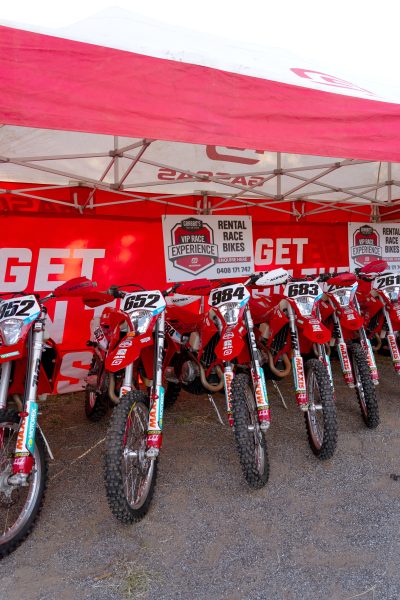
VIP Race Experience
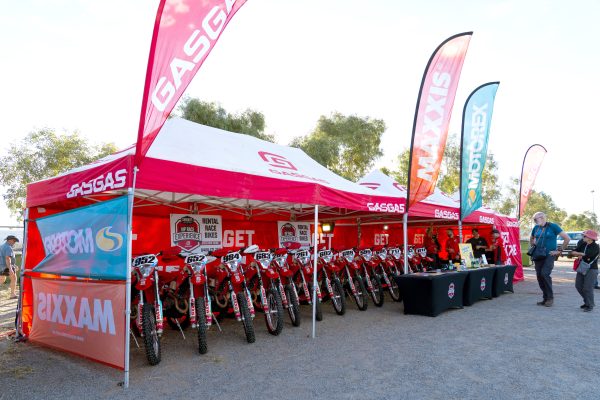
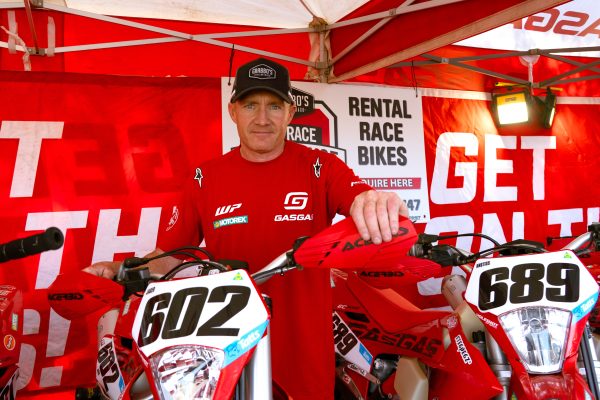
Grabbo’s VIP Race Experience setup is basically: show up with a gear bag and a functioning body, and they handle the rest. “We keep it simple… we’ve just got the one package.”
He says the cost is $7,700, and acknowledges it sounds like a lot until you add up the real cost of doing it yourself, roughly $25k.
They set bikes up based on rider height/weight early in the year (springs, seats, bars, grips), offer different pre-run packages, and if you do the base package you arrive the week before and they take you down-and-back to show you the “lines” and the fuelling points.
“I try to build a bike that can either stay at the front or keep the guys happy at the back.”
The fleet is mostly 500s because for tired riders lugging tall gears, he says a 500 is often the easiest bike to ride.
They also run other events (Hattah, Yellow Mountain, Don River Dash, Kalgoorlie), and adjust setup between events mainly via “suspension, gear and then tyres” depending on terrain and format.
On a budget
Grabbo’s non-negotiables
- “Steering dampener”
- “Steg Pegz”
- “Tyre preparation as in moose or Lucioli…”
- “Gearing”
- And then suspension once you’ve ticked the basics.
Last minute advice:
“Start off slow… It takes… 2 to 3 days of your eyes rattling in and getting used to the speed… biggest thing… don’t rush it. The main thing is to make that start line.”