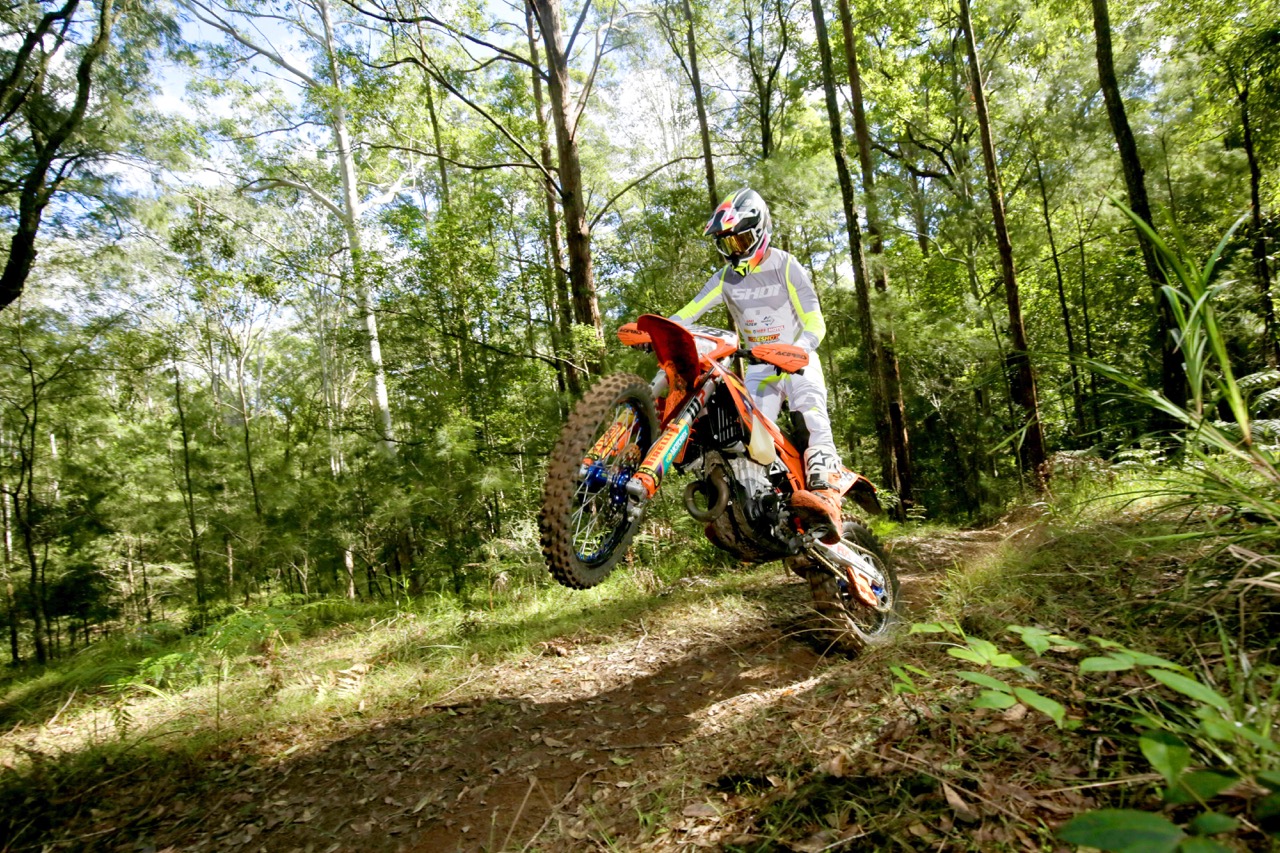
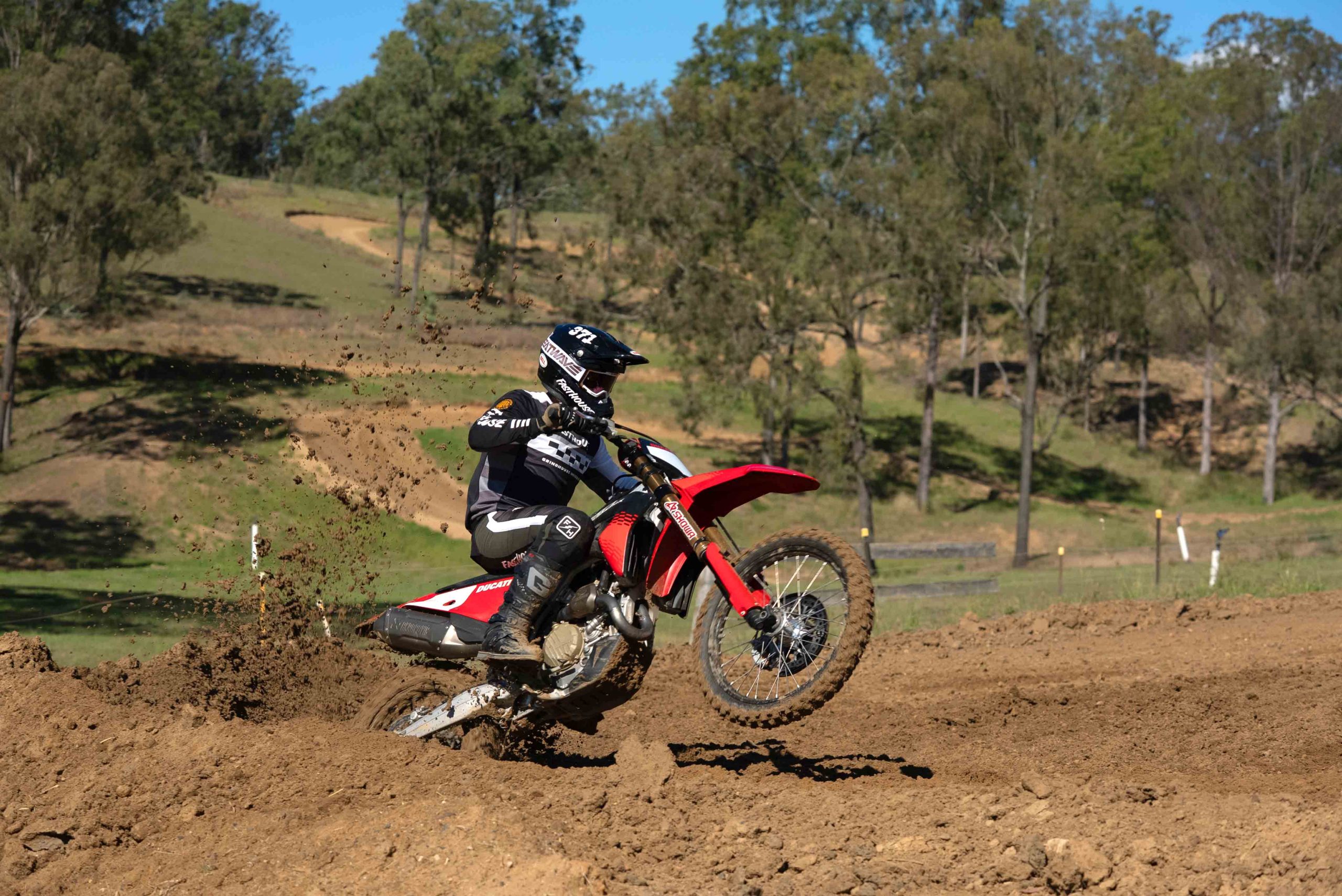
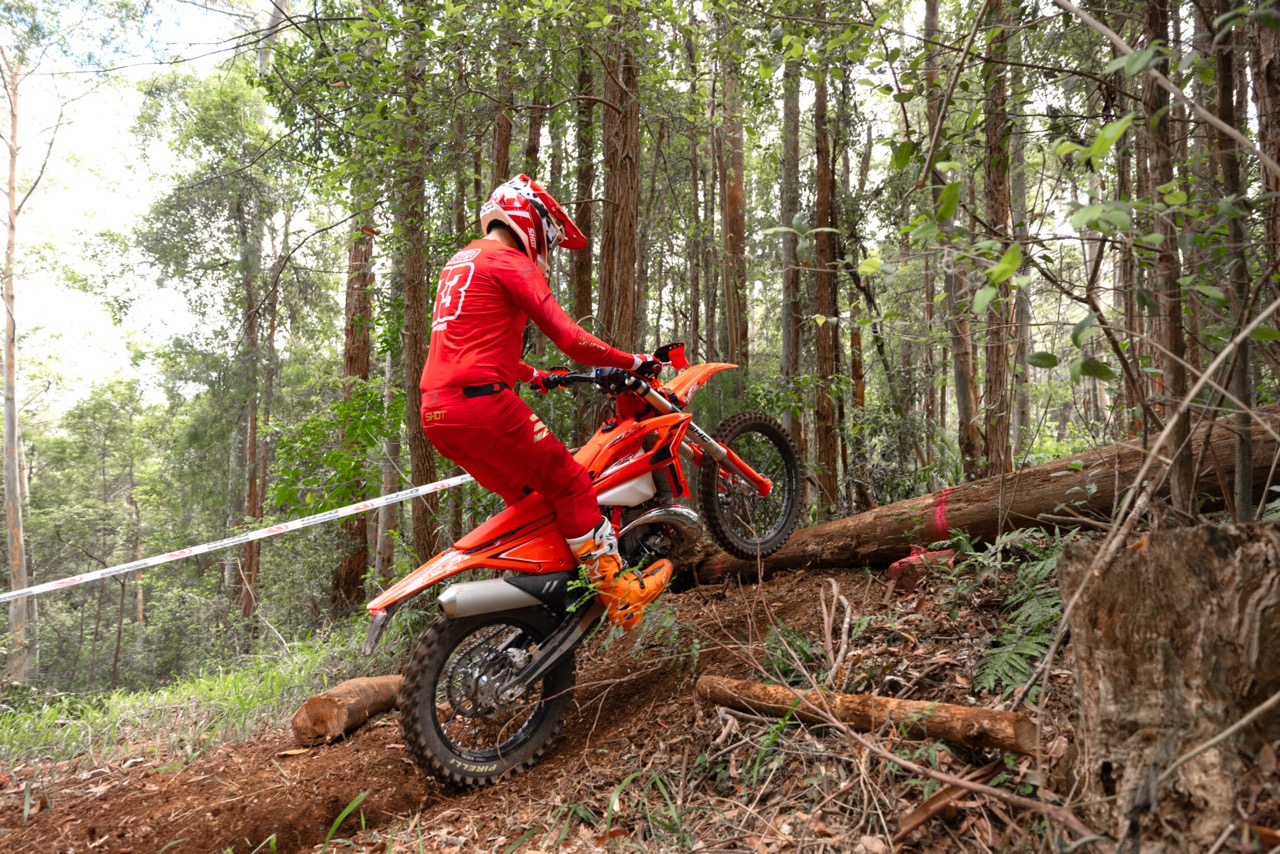
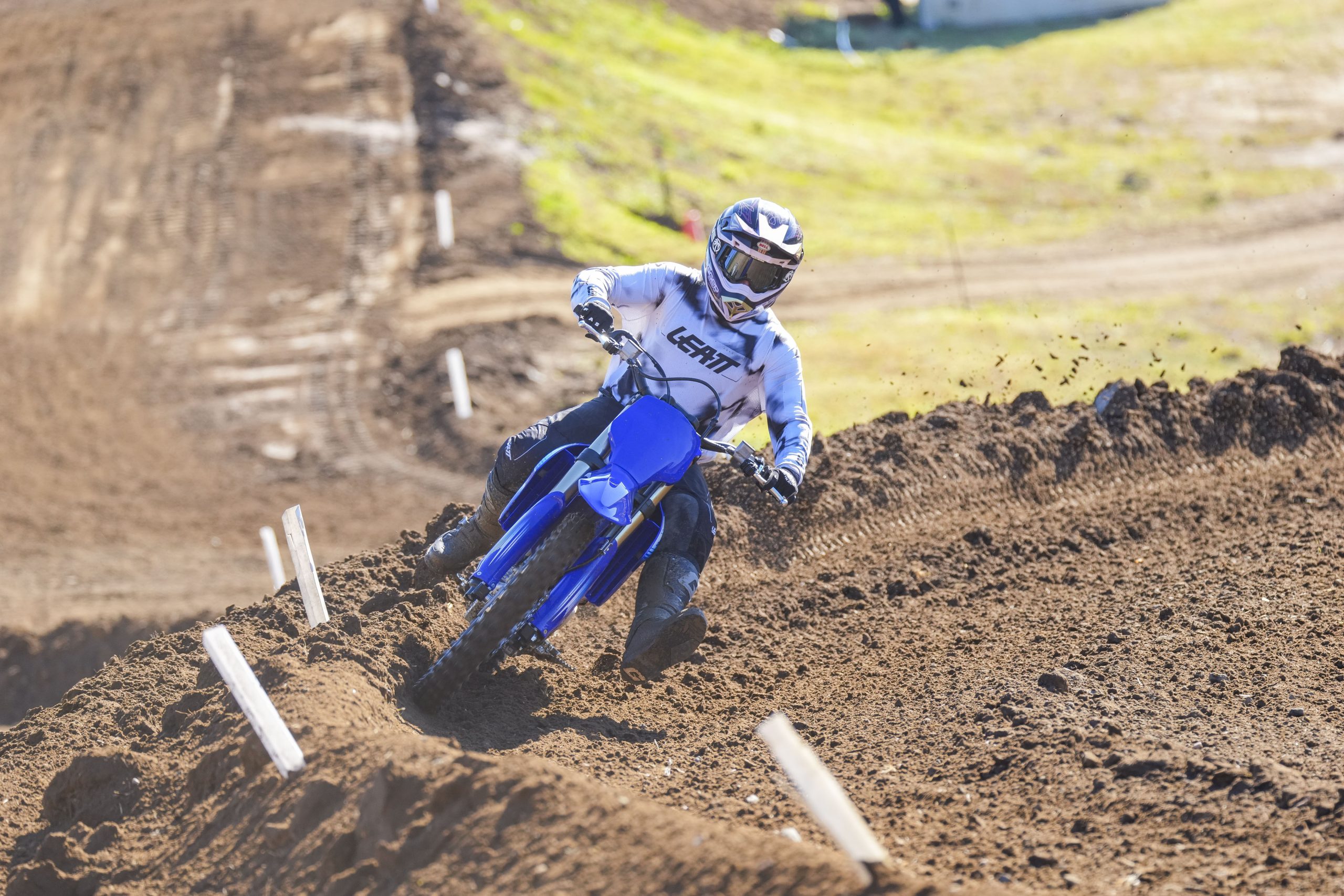
There has been a massive hole in the Australian trail bike market for a long time now, and it’s one that doesn’t get talked about nearly enough. If you want a proper race-ready enduro bike, you’re spoiled for choice. There are 250s, 300s, 350s, 450s and 500s everywhere, all with fancy suspension, huge performance, and price tags that make your eyes water. But if you just want a simple, easy-to-ride, mid-capacity trail bike that you can legally register, ride to work, take up a fire trail, poke through some single track and maybe use around the farm, the options get thin real quick. That’s what makes the 2026 Kawasaki KLX300 such an interesting bike.
We’ve tested this machine before, but until now the big catch has been that it wasn’t registered for the road in the way a lot of riders wanted. It had the bones of a fun, affordable trail bike, but if you wanted to link up state forest trails legally, duck into town, commute during the week or just have that peace of mind that comes with ADR compliance, you were a bit stuck. For 2026, though, Kawasaki has fixed that. The KLX300 is now properly road registerable, and that turns what was once more of a rec-reg or farm-bike proposition into something much broader.
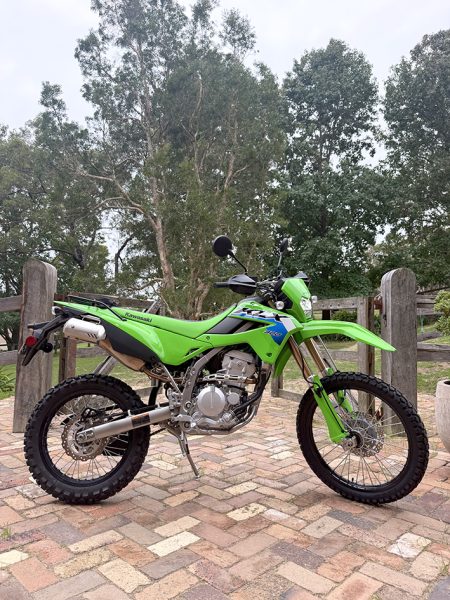
And that’s important, because this class is largely untapped in Australia. We don’t have many easy-to-ride trail bikes in the market That’s exactly where the KLX300 lands. It’s not trying to be an enduro race weapon. Kawasaki doesn’t pretend it is. But what it does offer is a very affordable, very approachable platform that could make a lot of sense for riders who don’t need 60 horsepower and factory-level suspension just to go and have a good time in the bush.
WHAT had to change
The interesting part about making the KLX300 road-registerable is that Kawasaki couldn’t just bolt on a headlight, mirrors and a brake light and call it done. To get this bike through ADR compliance, they had to make some changes that affect the way it feels and rides.
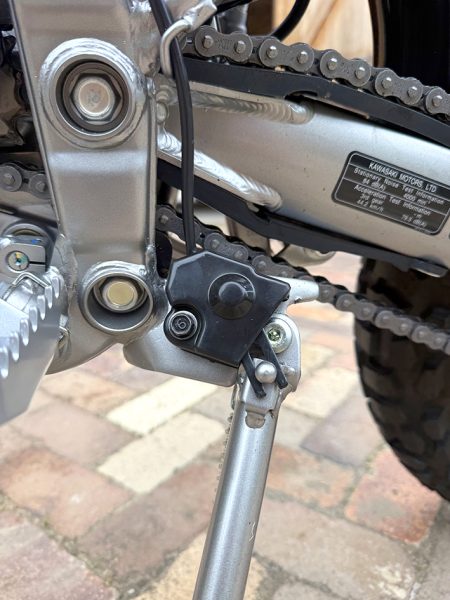
The biggest thing Kawasaki had to work around was ABS. Rather than fitting ABS brakes, which would have added complexity, cost and probably weight, Kawasaki instead had to make geometry and height-related changes to get the bike through the required regulations as an “off-road model”. That’s why this 2026 KLX300 has a noticeably taller rear-end than you might expect. There’s some ADR-related reason around suspension travel or the relationship between the rear wheel and the guard that meant they had to lift the back of the bike. The result is a machine that still has a fairly normal seat height where you sit, but the rear of the bike is definitely taller and more kicked-up than the old unregistered version.
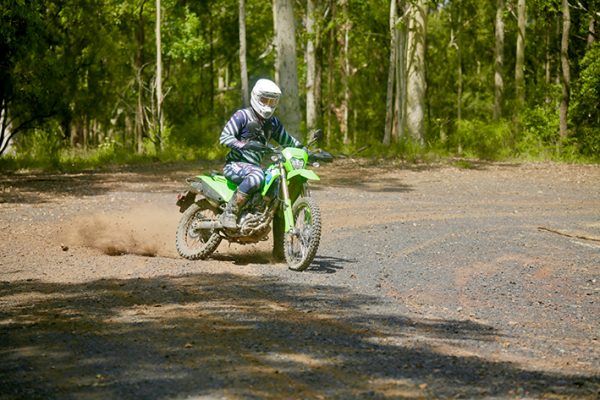
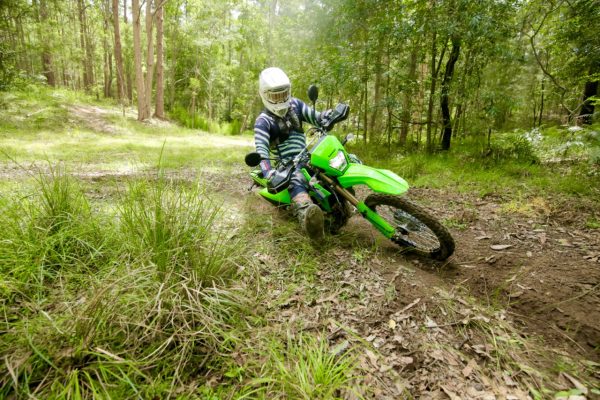
That taller rear end changes the feel more than you’d think. Swinging a leg over it, especially in bigger boots, the back feels tall. Doing things like pivot turns or trying to really get right over the rear of the seat, it’s a little awkward. But the funny thing is, it also helps the bike in some places. Because the rear sits up, it shoves you down toward the front of the bike, and that actually helped the KLX300 get into ruts and stay in them far better than I expected.
Apart from the geometry tweaks, the 2026 KLX300 also had to be choked up compared to the previous, non-ADR version. And you can feel that in the motor straight away. The old bike felt more responsive, more eager and a bit more like a proper dirt bike. This one is softer and more muted down low, because Kawasaki had to make it as ADR-compliant as possible. That means the engine doesn’t have quite the same instant punch as the older, non-registered version, and it takes a little more clutch and a little more attitude to get it moving sharply off that first friction point.
So yes, it’s registered now, and yes, that’s massive. But the trade-off is that it’s a little more polite and a little more compromised in stock trim. That said, these are all simple fixes.
THE BONES
On the spec sheet, the KLX300 still has some pretty decent hardware for what is, in the end, a budget trail bike. It runs a 292cc liquid-cooled, DOHC single-cylinder four-stroke in a high-tensile steel perimeter frame. Suspension is actually respectable too. It gets an adjustable 43mm inverted cartridge fork and a Uni Trak rear shock with adjustable damping and preload. It sits on proper off-road-sized 21-inch front and 18-inch rear wheels.
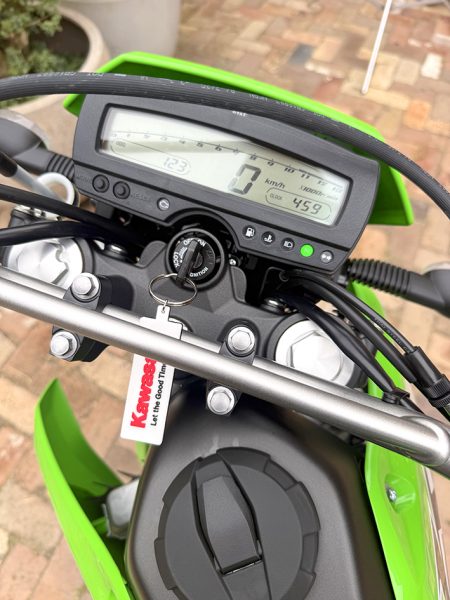
The chassis is lightweight and slim, the ergonomics are built around a relaxed upright riding position, and the new bodywork gives it a much sportier, KX-inspired look. You also get a full digital dash (it’s big and bulky) LED headlight, mirrors, indicators and all the stuff you need to make it road legal.
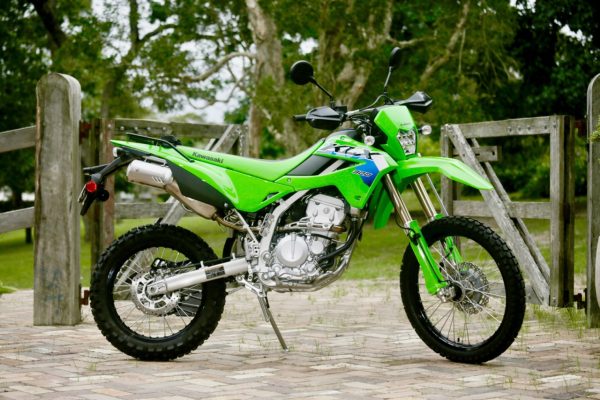
Most importantly, though, this thing is cheap. At under ten grand ride-away, the KLX300 is dramatically cheaper than most performance-oriented enduro bikes.
WHERE IT FITS
Before talking about the details, it’s worth making one thing really clear: this is not a high-performance 300 or 350 four-stroke enduro bike. It’s not built to race. It’s not designed to go and line up at the AEC or pretend it’s a motocross bike with a numberplate.
THE ENGINE
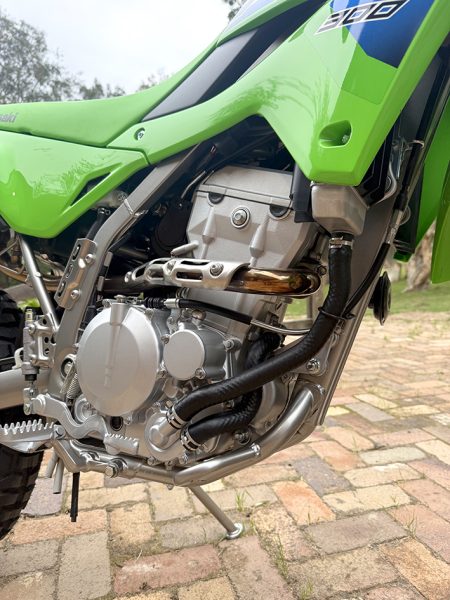
The motor is where you notice the ADR changes most. As I said earlier, compared to the old, non-registered KLX300, this 2026 version is definitely more choked up. It doesn’t have the same lively bottom-end response, and it takes a bit more clutch and effort to get it moving sharply from low revs. If someone asked me, “Does it feel like the old one that wasn’t registered?” I’d have to say no, unfortunately not.
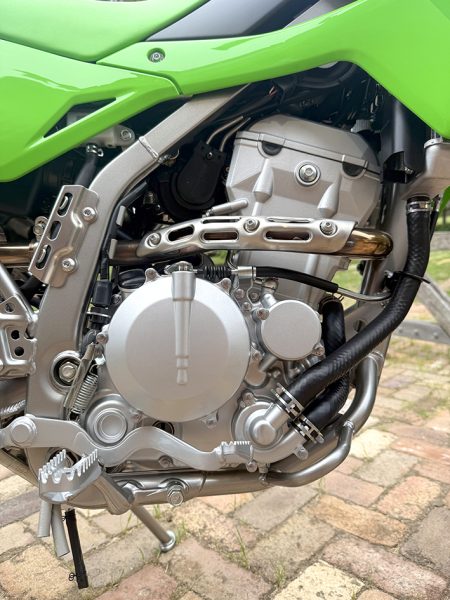
But that doesn’t mean it’s bad. Far from it. What Kawasaki has ended up with is probably the easiest motor I’ve ridden in a very long time. It’s so smooth, so linear and so predictable that you can pretty much do whatever you want with the throttle and it’s never going to bite you. There are no spikes. No sudden bursts of aggression. No moments where it tries to rip your arms out or loop you over the back.
If you’re a beginner or someone stepping up from a farm bike or smaller trail bike, that’s brilliant. It means you can learn to ride the thing properly, use a lot of throttle in ruts or loose turns, and not worry about it punishing you.
The mid-range is actually pretty strong too. You do have to rev it, and you have to ring its neck more than you would on a torquier race-bred enduro bike, but once you do that, there’s enough there for the kind of riding this bike is intended for. Kawasaki has geared it more toward dual-sport and commuting than pure off-road work, and that shows. First, second and third are all pretty tall. In fact, by the time you’re in third you’re already doing serious speed, which makes it feel too tall for tight trail work.
If you were going to use this bike mainly off-road, I’d absolutely recommend changing the gearing. Go up two or three teeth on the rear, or drop one on the front, and you’d immediately wake up the bottom-end and make it feel far more dirt-bike-like when you’re trying to pop over logs.
As it sits, though, the gearing makes more sense if you want to commute during the week, cruise fire roads on weekends and do a bit of general trail riding without anything too technical.
The SUSPENSION
It’s not premium race-level Showa or KYB gear, but it’s decent. It works. And for the kind of trail debris, fire roads and easier single track most KLX300 owners are likely to ride, it’s good.
The best way I could describe it is this: it feels a bit like an old Honda XR250, but with a little more resistance. If you remember those old bikes, that’s actually not a bad comparison. It’s soft, it’s forgiving and it’s comfortable.
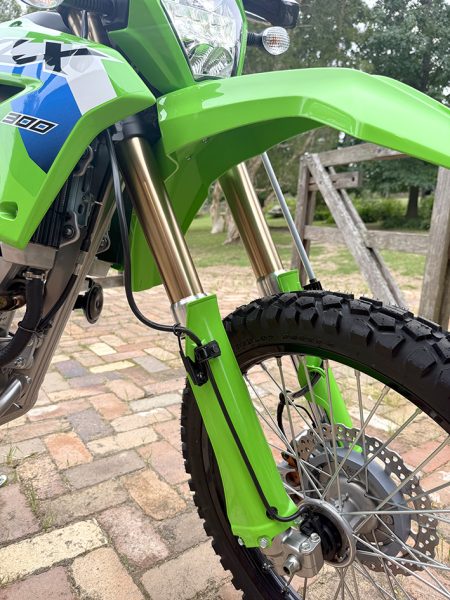
At around 100 kilos, it didn’t pogo too badly, but if you’re a bigger bloke and start trying to charge through bumps, you’re going to find the limits of it pretty quickly. I know some people who’ve already bought these from local Kawasaki dealers and gone straight into heavier springs and different valving, and apparently that transforms them.
So in stock form, the suspension is good for exactly what this bike is built for: gentle trail riding, commuting and casual adventure stuff. If you want to do more serious off-road riding, it’ll need work.
TYRES and bits
Like most ADR-compliant bikes in this class, the tyres are set up with a foot in both camps. They’re okay for the road and okay for general trail riding, but if you’re heading into muddy, slick or more technical terrain, you’ll want a proper knobby. What really hurt this bike for me in the wet stuff was the lack of aggressive side knobs. Once it started stepping out, it just kept going. The tyres definitely aren’t aimed at hardcore off-road riding.
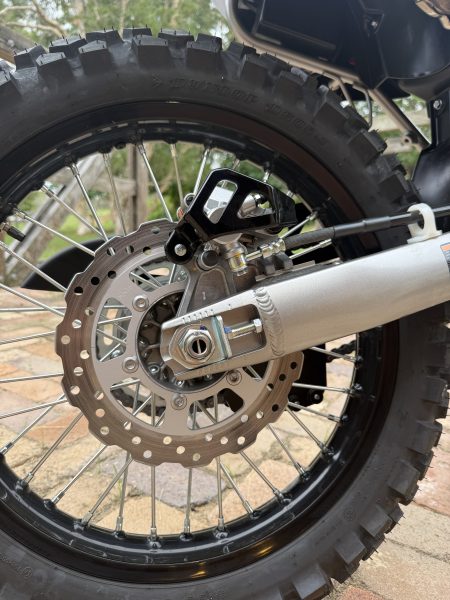
There are also a few little ADR-related bits hanging off the bike that remind you this started life as something simpler. There’s a visible cable near the front that looks a bit like an afterthought, and the radiator hose on the side is a little exposed. If you went bush-bashing hard and started smashing through thicker sticks or ugly scrub, you’d want to be mindful of it. Maybe a bash plate or some extra protection would be worth looking into there.
The mirrors, indicators, speedo and road gear all do their job, but they also add a bit of clutter. On a proper bush bike, you’d probably want to tidy some of that up.
THE CHASSIS
The best thing about the KLX300, by a long way, is the chassis balance. This was what really surprised me. For a bike that looks a bit quirky and has that taller rear, I was expecting it to push the front and maybe climb out of ruts. Instead, it was the opposite. The thing gets into ruts incredibly well and feels very well balanced once you’re moving.
For beginners, that’s gold. It gives them confidence. They can learn how to corner properly, carry some throttle and ride with good technique without the bike trying to murder them every time they get excited.
Standing up, the bike is also comfortable and neutral, although at my height I did feel like I was reaching down a little too far to the bars. Shorter riders probably won’t notice that.
Why it matters
The 2026 Kawasaki KLX300 matters because it’s filling a part of the market that has been neglected for years. It’s not a race bike, and that’s fine. It’s not meant to be. What it is, though, is a properly registered, genuinely useful, affordable trail bike that can ride to work, head into the bush, poke around the farm and do a bit of everything in between.
It’s easy, forgiving, comfortable, cheap and surprisingly good in ruts. For a whole bunch of riders in Australia, that’s actually a far better combination than another race bike they’ll never use properly.
POTENTIAL
If I had to sum up the 2026 KLX300 in one word, it would be potential. Not because it’s unfinished, but because this bike has more room to become exactly what you want than most bikes we ride. Usually, when we test something, it’s already built with one purpose in mind. This isn’t. This is a blank canvas.
Take the mirrors off when you hit the bush. Fit proper handguards. Change the tyres. Change the gearing. Maybe open up the airbox a little, help it breathe a bit more, maybe even sort the exhaust. Tidy up a few of the ADR leftovers. Do a bit to the suspension if you’re heavier or riding harder.
Do all that, and you’d have a really, really solid trail bike that still keeps its registration at half the price of the more fancy enduro bikes.
2026 KAWASAKI KLX300
ENGINE
Type: Liquid-cooled, 4-stroke single, DOHC, 4 Valve
Displacement: 292cc
Bore x Stroke: 78.0 x 61.2mm
Compression Ratio: 11.1:1
Fuel System: Fuel injection, 34mm throttle body
Starting: Electric
Gearbox: 6-speed
Clutch: Wet multi-disc, manual
DIMENSIONS
Wheelbase: 1440mm
Ground Clearance: 315mm
Seat Height: 935mm
Fuel Tank: 7.5L
Curb Weight: 137kg (wet)
SUSPENSION
Front: 43mm inverted telescopic fork with adjustable compression damping, 285mm travel
Rear: Uni Trak gas-charged shock with piggyback reservoir, adjustable compression, rebound and preload, 289mm travel
BRAKES & TYRES
Front: 250mm petal disc with twin-piston caliper
Rear: 240mm petal disc with single-piston caliper
Front Tyre: Dunlop D605, 21-inch
Rear Tyre: Dunlop D605, 18-inch
RRP: $9503 Ride Away
Warranty: 2 years
Browser: Kawasaki.com.au