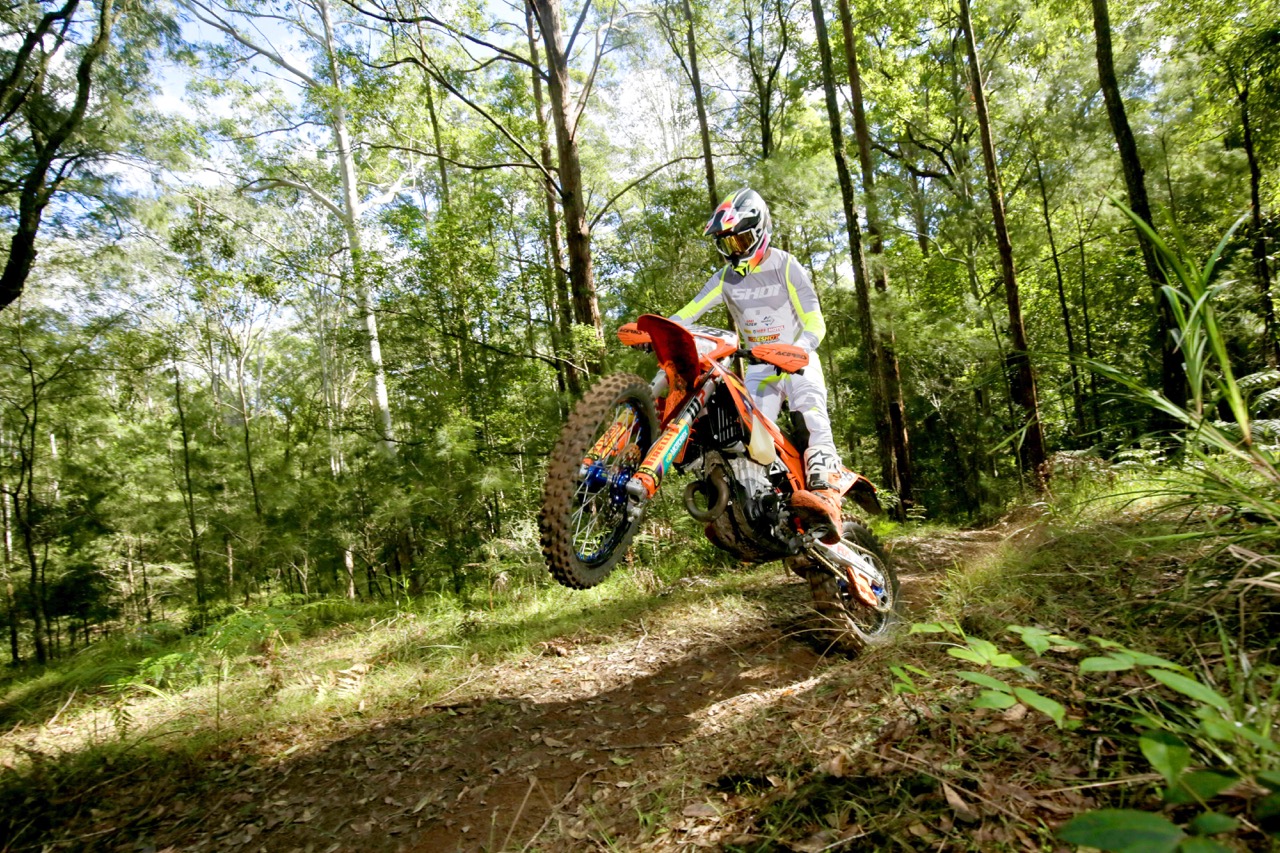
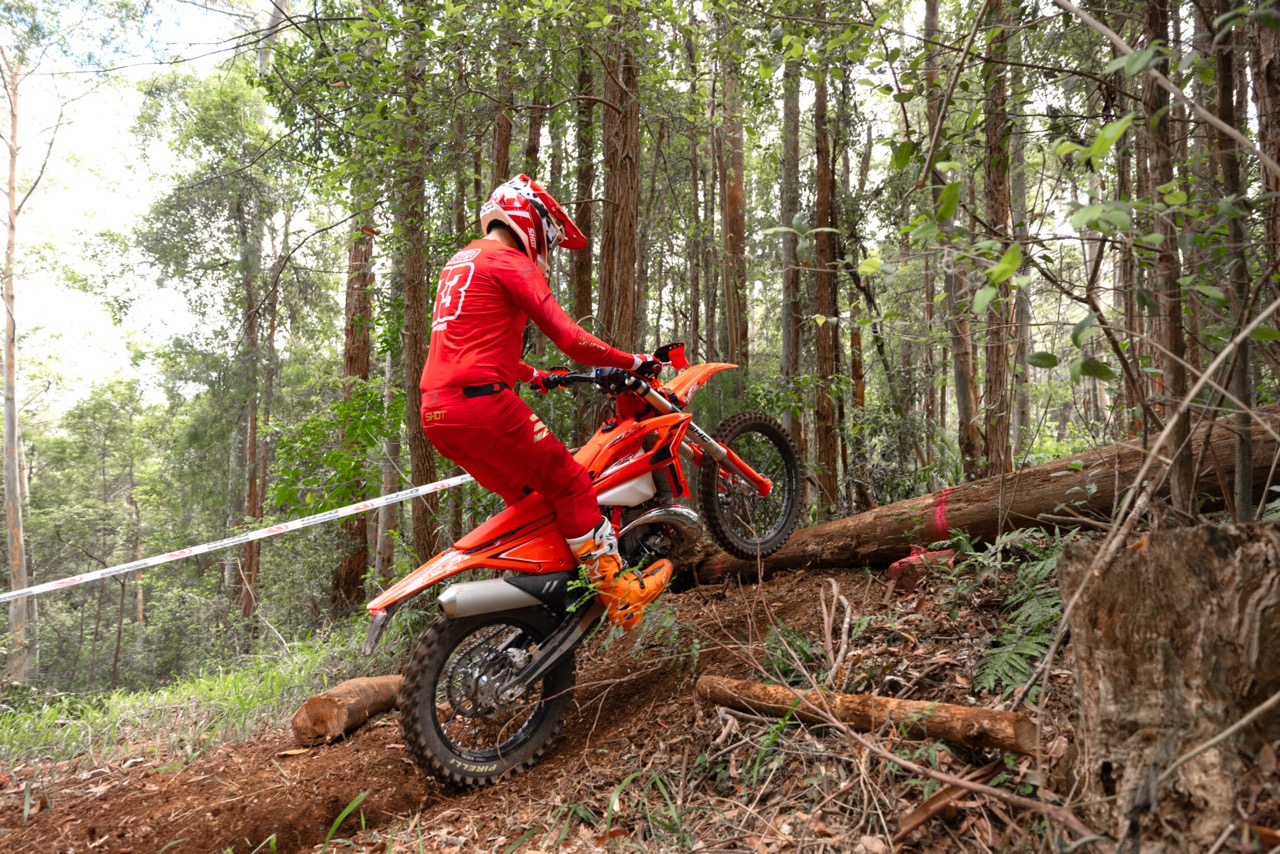
When Triumph Motorcycles unveiled the TF 450-X, the rumours kicked off straight away, people reckoned it looked like a hybrid between a Yamaha and a KTM. KYB suspension and that familiar chassis of a Yamaha, with a Euro looking motor, ergos, brakes and other components… it had everyone asking the same question: just how close is it to a Yamaha, or a KTM really?
We heard it everywhere. So when we tested the enduro models earlier this year in issue #558 and put the Yamaha WR450F and WR250F up against the Triumph TF 450-E and TF 250-E, the response was instant: “Do the motocross bikes.”
Fair enough. Because if there’s one place where a bike can’t hide moreso than in the bush, it’s on a motocross track.
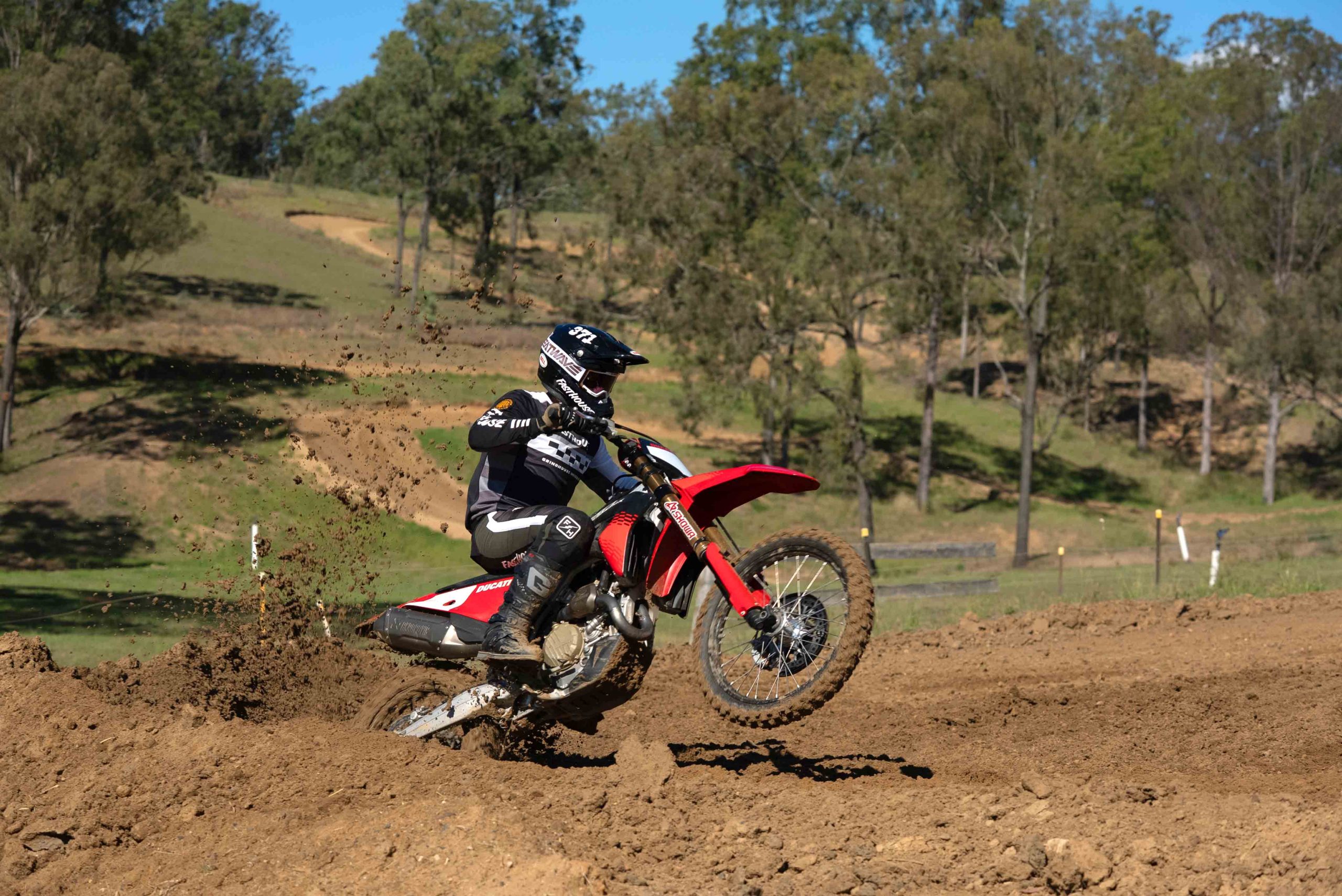
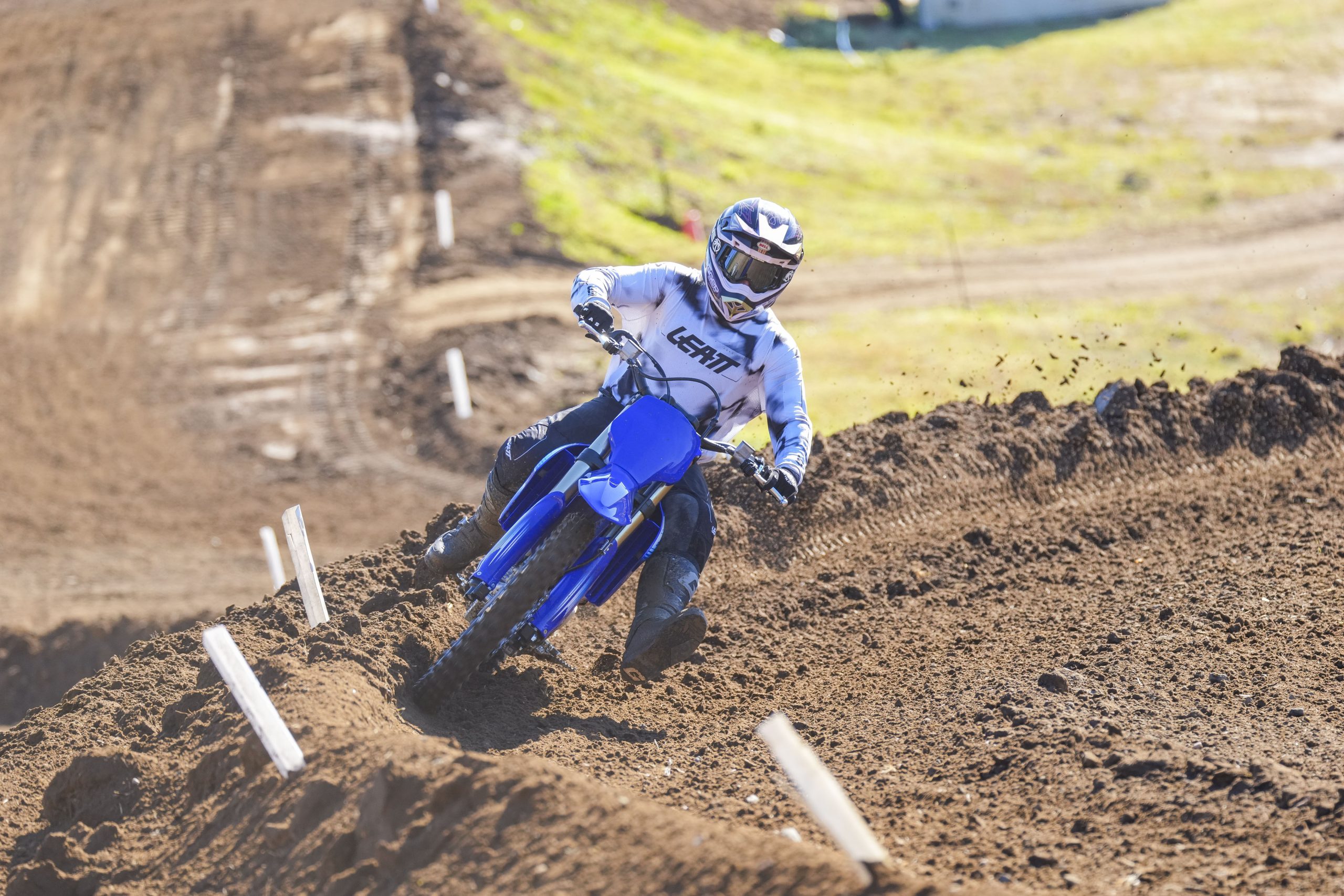
So here we are again, back-to-back , this time with the 2026 Yamaha YZ450F and the 2026 Triumph TF 450-X. Not the RC factory spec, this is the X, the bike most riders will actually buy.
We took them to Briggs Moto Factory, grabbed three very different testers, Wes Mills (250cc motocrosser), Geoff Braico (enduro guy) and Jeff Briggs (450cc motocross guy), and did this test properly with starts, laps, swapping back-to-back and all that.
And straight away, one thing became obvious… These two bikes are nothing alike.
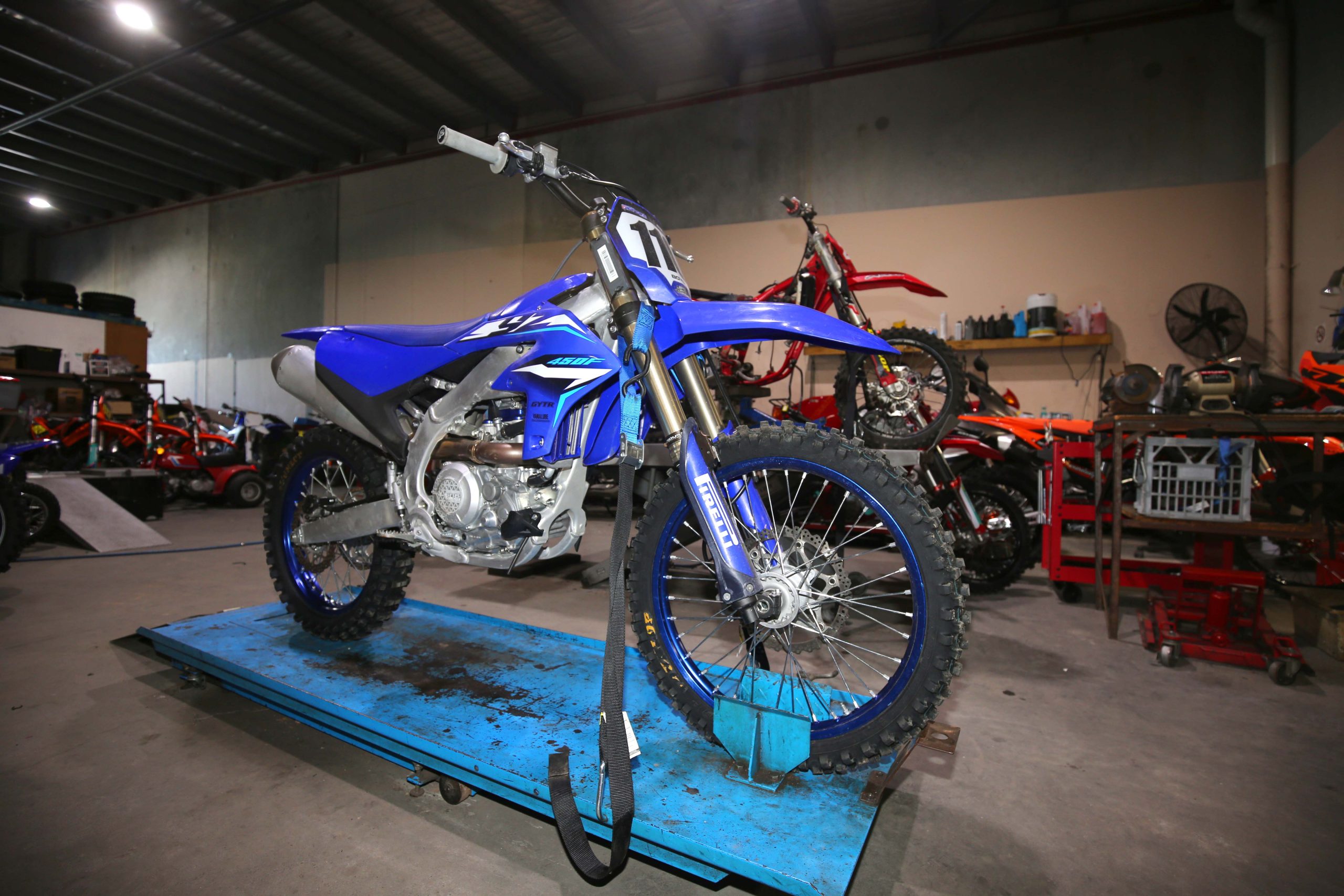
On paper, both the 2026 Yamaha YZ450F and Triumph TF 450-X sit closeish in the modern 450 motocross class of high-compression, fuel-injected singles, but they go about it in slightly different ways. The Yamaha runs a 450cc DOHC four-valve engine with a 97.0 x 60.8mm bore and stroke and a 13.0:1 compression ratio, while the Triumph comes in at 449.5cc with a SOHC layout, a slightly longer stroke (95 x 63.4mm) and a marginally higher 13.1:1 compression ratio. Both bikes run five-speed gearboxes and chain final drive. The Triumph runs Athena EMS, along with features like traction control, launch control and a quickshifter fitted to the handlebar.
Looking at the chassis, the Yamaha sticks with its proven bilateral beam frame, while the Triumph opts for an aluminium spine and double cradle design. Suspension is almost identical on spec sheets, with both running KYB components and 310mm of travel up front, though the Triumph has a slightly longer rea-wheel travel of 305mm of versus the Yamaha’s 295mm. This is largely due to the unique subframe the Yamaha runs.
The Yamaha keeps things traditional with a Nissin 270mm front disc and 240mm rear, while the Triumph runs a twin 260mm front disc with Brembo calipers and a 220mm rear, also Brembo, giving it a slightly more premium braking package on paper. Both bikes run the standard 21/19-inch motocross wheel combo, but the Triumph comes equipped with D.I.D DirtStar rims and Pirelli MX32 tyres, while the Yamaha sticks with its usual Dunlop MX33 setup. Ergonomically, they’re close, seat heights sit at 965mm for the Yamaha and 960mm for the Triumph, but the Triumph has a longer wheelbase (1492mm vs 1475mm) and slightly wider stance.
Finally, weight and capacity, the Triumph claims a wet weight of 108.6kg and carries a slightly larger 7-litre tank compared to the Yamaha’s 6.2 litres. The Yamaha has a wet weight of 110kg.
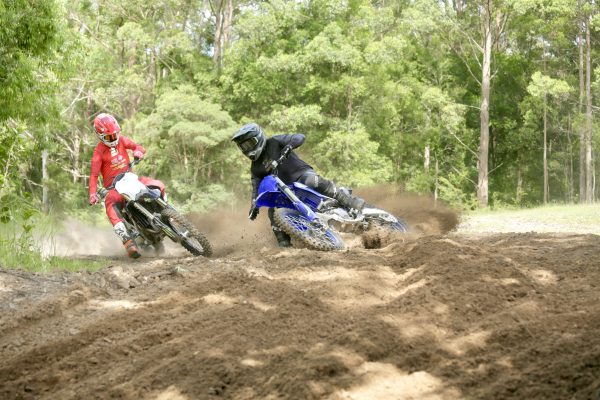
SAME ON PAPER, DIFFERENT ON TRACK
On paper, you can make a case that these bikes should feel similar. KYB suspension. Modern geometry. High-end components. But as soon as the boys jumped off one and onto the other, that theory went straight out the window.
“No. No. No,” was the response when asked if they feel the same.
Braico summed it up best: “The Yamaha is a much more motocross purpose-built machine… whereas the Triumph is a much more user-friendly machine.”
That pretty much sets the tone for this entire comparison. The Yamaha is angry. Sharp. Hard-edged. The Triumph is smooth. Comfortable. Manageable.
Both are fast. Both are good. But they go about it completely differently.
ENGINE: VIOLENCE VS CONTROL
Let’s start with the big one, power. Because this is where the Yamaha absolutely punches you in the chest and Braico didn’t hold back: “This bike is by far the fastest 450 motocross bike I’ve ridden in a long time… it’s just angry!” You can make it more rideable using the Yamaha Power Tuner app but that’s no fun!
The boys said, when you come out of a corner on the YZ450F and crack the throttle, it just explodes. It’s not building power, it’s delivering it all at once. It’s aggressive, it’s exciting, and it’s borderline ridiculous how hard it pulls.
Wes noticed it straight away too: “You can just leave it in gear… it screams.”
It’s that kind of engine where mistakes don’t matter. Stall it? No problem. It’ll make up the time on the next straight. “I stalled… and felt like I was doing the same speed by the end of the straight” said Briggsy.
Now jump on the Triumph and it’s a completely different story. Braico said it would suit those who want softer power much better “That [the Triumph] is just a lot more linear and more progressive.”
Briggsy described it as almost Honda CRF450R-like in the power, “The motor almost feels kind of like a Honda-ish… that smoother kind of feel.”
Instead of exploding out of corners, the Triumph just drives forward. Smooth, predictable, controlled. Wes picked up on that straight away saying “You know exactly what the motor’s going to do quite early on which makes it easy to ride”
And that’s why, over a full moto, “I think I’d survive more on the Triumph… just because of the comfort.” Wes and Braico said.
LAP TIMES
Here’s where it gets interesting. Braico was faster on the Triumph. Wes was faster on the Yamaha. Briggsy was faster on the Yamaha. Split by about a second to a second and a half either way.
That tells you everything you need to know. There’s no clear bike that’s way faster than the other. It depends on how you ride. Wes explained it perfectly: “I’m more of an aggressive rider… I lean towards the enjoyment of having something quite exciting.” That’s Yamaha territory.
But then was added, “If I was to punch out long motos… I’d probably lean towards the Triumph.”
KYB DONE TWO WAYS
Both bikes run KYB, but they feel completely different. The Yamaha is firm, aggressive, and sits high. It wants to be ridden hard. Briggsy, the heaviest of our testers, noticed it straight away, “The Yamaha… pogoed a little more because of the aggressiveness.” That’s not necessarily a bad thing, it just means it’s built to attack.
The Triumph, on the other hand, is softer and more forgiving. “You just find you’re going a little bit more cautious… but more comfortable.”
Braico also pointed out the comfort factor of the seat, “The seat’s a lot softer… suspension’s a lot softer on the Triumph”
That softer setup makes a massive difference over time. It soaks up mistakes, keeps you fresher, and makes the bike easier to ride fast, especially for vet riders or anyone not riding at 100% aggression all the time. But if you are strong, ride aggressive tracks and want the bike to hold up in hard braking, the Yamaha will do less jumping around.
TWO DIFFERENT FEELS
Cornering is where our testers were split the most. Briggsy preferred the Yamaha for outright pace because I know it will stay firm no matter how fast I try to go, “I could go out on a beat-up motocross track and have confidence I can go faster on the Yamaha.”
But Braico leaned towards the Triumph for cornering “Mid-corner comfort… it just felt better on the Triumph.” And that comes down to rider position. The Yamaha sits you higher, more aggressive, more attack stance. The Triumph drops you into the bike a bit more, with a softer seat and slightly different bar feel.
Braico explained it like this: “You feel like you’re more over the top of it.”
GEARING
One area where the Yamaha clearly has the edge is in the gearing. Briggsy loved how well finished the little things were on the Yamaha, “The gear ratios and everything on this bike… they’re pretty spot on.”
The Triumph still needs a bit of rider input though, especially on the clutch on our smaller track that don’t flow like the US tracks. “The gearbox doesn’t feel as clean” Briggsy said.
And the gearing differences are what separate these bikes almost the most. The Triumph feels taller and needs more clutch attention, while the Yamaha just flows naturally.
That said, the Triumph has room to improve with setup, something all three testers agreed on.
ELECTRONICS & SETUP
Both bikes come packed with modern tech, maps, traction control, launch control, but interestingly, none of the testers really leaned on it.
Braico said it best “You kind of just set and forget with both these bikes”
However, one key takeaway that our testers found is that if you want Yamaha power in the Triumph, you’ll need work, mapping, gearing, maybe even an exhaust.
If you want to mellow the Yamaha? That might be easier as you can fiddle with the PowerTuner App. But be warned, that smoothness from the Triumph will be hard to replicate.
Still, all the boys agreed with Wes, “You’d be better off mellowing this [the Yamaha] down than chasing more power out of the Triumph”. That’s a big insight for buyers.
Is it a hybrid?
Briggsy’s ranking says a lot. Out of all the bikes he tested the Triumph is a podium contender and falls in this order: “KTM, Yamaha, then the Triumph.” That puts the Triumph ahead of Honda, Kawasaki, Suzuki, Beta, TM, Fantic, Husky and GASGAS.
For a brand-new motocross platform, that’s massive. And it shows just how good this bike actually is.
The Yamaha YZ450F is still the benchmark. It’s aggressive, explosive, and built to win races.
The Triumph TF 450-X is the surprise package. Smooth, comfortable, and incredibly capable. They don’t feel the same. They don’t ride the same. But they’re both right at the front of the pack.
If you’re an aggressive rider with fitness and the ability to hang on to huge power go the Yamaha.
If you want something you can ride hard for longer, with less fatigue then consider the Triumph.
And if you’re Triumph? You’ve just walked into the toughest class in motocross… and (hypothetically) landed on the podium first try. That’s no small feat.