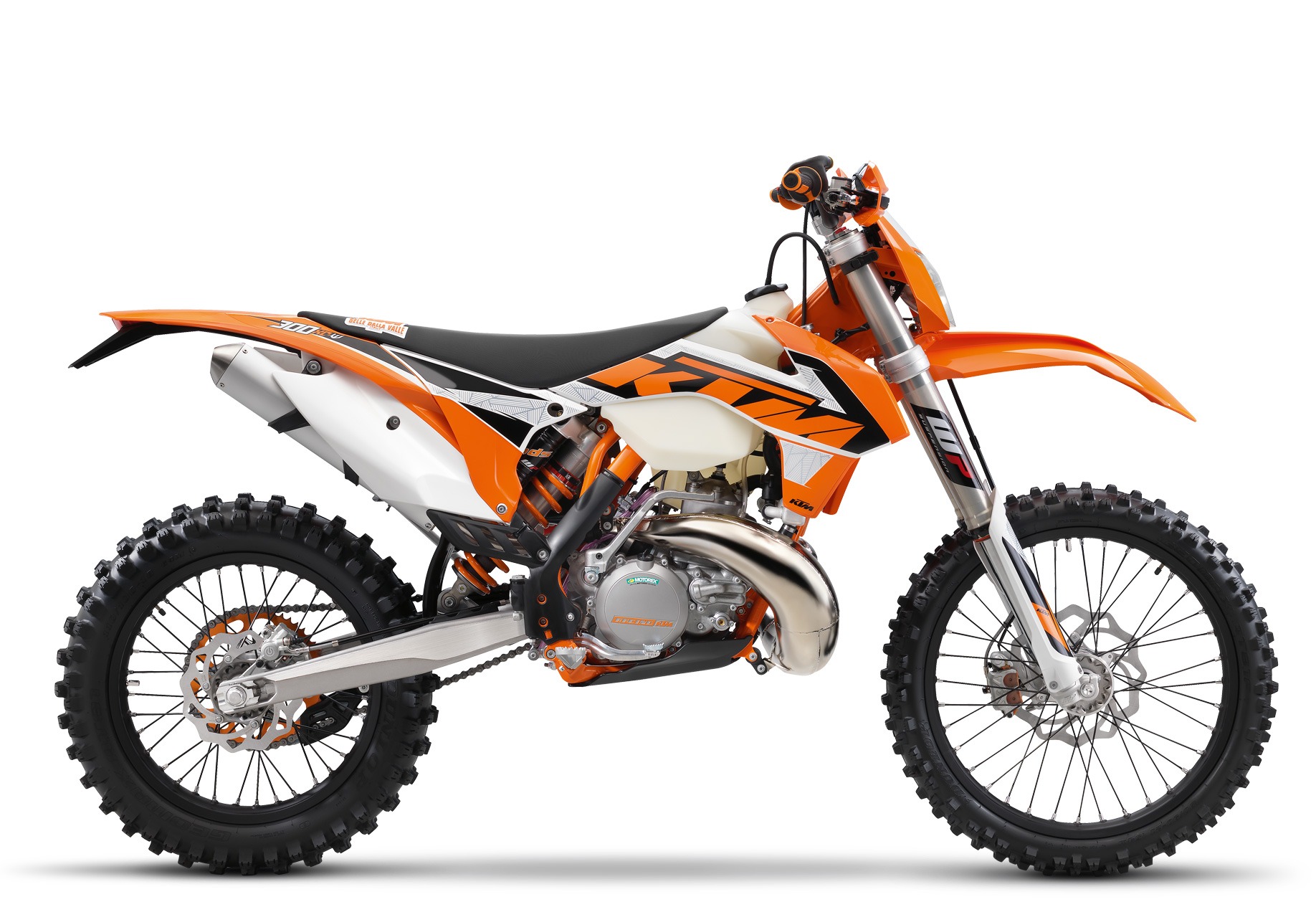
For years now, Yamaha diehards have been screaming the same thing into the void: “Build us a mid-capacity four-stroke enduro bike!” Not everyone wants a screaming 250F that needs revs everywhere and not everyone wants the brute force and inertia of a 450 either. There’s this massive sweet spot in the middle where bikes like KTM’s 350 EXC-F have absolutely exploded in popularity because they offer the best bits of both worlds. Enough torque to be lazy, enough revs to still feel playful and light, and without the intimidating feel of a full-size 450.
But despite the entire market shifting toward these middleweight four-strokes, Yamaha Japan has stubbornly refused to join the party. So Athena did it for them. And honestly? After riding this thing, we’re starting to wonder why Yamaha hasn’t done it themselves already.
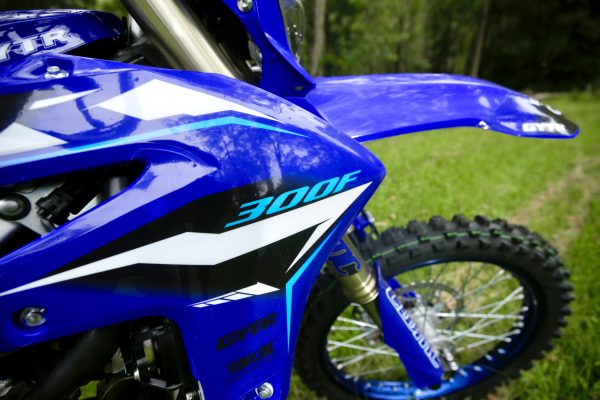
Chris Watson Motorcycles up on the Central Coast of New South Wales has built what is essentially the WR300F Yamaha fans have been begging for. Starting with the already excellent Yamaha WR250F platform, Chris fitted Athena’s 304cc big-bore kit, added supporting modifications and handed us the keys to go see whether this thing could genuinely bridge the gap between a 250F and a 450F.

WHAT THE ATHENA KIT ACTUALLY DOES
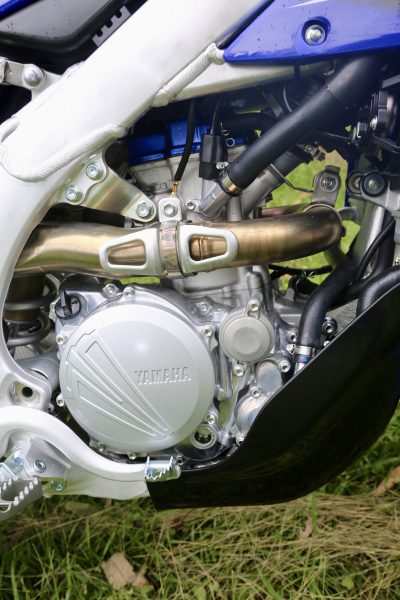
The Athena kit doesn’t just throw a bigger piston into the engine and call it a day. This is a pretty serious engineering package. The standard WR250F engine already has a reputation as one of the strongest 250F engines off the bottom. Yamaha’s reverse-head engine design delivers incredible initial throttle response and strong low-to-midrange pull compared to a lot of the competition. The Athena kit basically takes all those strengths and amplifies them.
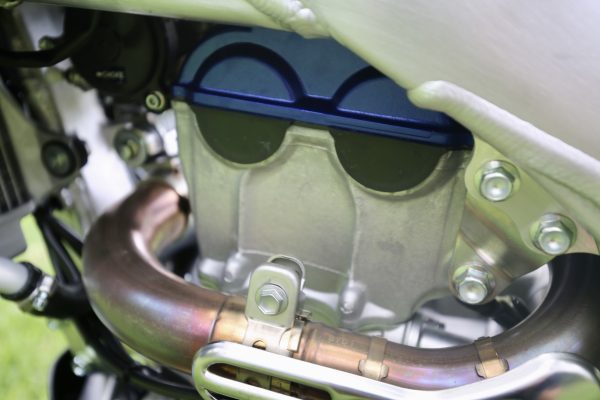
Displacement jumps out to 304cc using an enormous 85mm bore steel-lined cylinder without requiring any modifications to the engine cases themselves. That’s one of the clever parts of the whole package. Athena developed a completely new cylinder system using an aluminium cylinder body with a co-fused steel liner that’s actually integrated into the aluminium casting process itself.
Instead of pressing a sleeve into the cylinder afterwards like old-school big-bore kits, Athena casts the steel liner directly into the cylinder during production. The aluminium literally wraps around the steel, creating a much stronger bond, better heat transfer and improved long-term reliability. It’s proper engineering stuff, not just backyard horsepower chasing.
Inside that cylinder sits a forged aluminium piston with a fully open boxed bridge design underneath for improved strength and cooling. Athena has also coated the piston skirt with molybdenum disulfide to reduce friction and noise while improving durability. The rings are made in Japan with chromium nitride coatings and the gudgeon pin uses a DLC coating over aeronautical-grade steel. Basically, it’s all pretty trick.
The gasket kit is equally serious too. Athena uses MLS multi-layer steel head gaskets with laser-cut stainless-steel construction designed to cope with the increased pressures and temperatures generated by the larger displacement. Again, this isn’t just some cheap piston swap kit. Athena clearly wanted this thing to survive properly hard off-road use.
FIRST IMPRESSIONS
The first thing you notice riding the WR300F is that it still feels like a WR250F. The chassis still feels light, agile and easy to throw around. You don’t suddenly hop on it and think you’re riding some giant heavy monster. It still changes direction quickly, still feels playful underneath you and still has that familiar Yamaha feel the bLUcRU riders already love about the WR range.
Then you crack the throttle. That sorts the bottom-end problem out pretty quick! That was immediately the biggest difference. The standard WR250F is already a good engine, but it can feel a little lacking right down low when compared to bigger-capacity bikes. Especially in technical terrain or when trying to carry taller gears, you sometimes find yourself needing to work it harder than you’d like. The Athena kit changes that straight away.
Suddenly the bike pulls gears it normally wouldn’t. You can leave it in third through tighter corners where the stocker might need second and the whole bike feels more relaxed because of it. There’s simply more torque everywhere off the bottom.
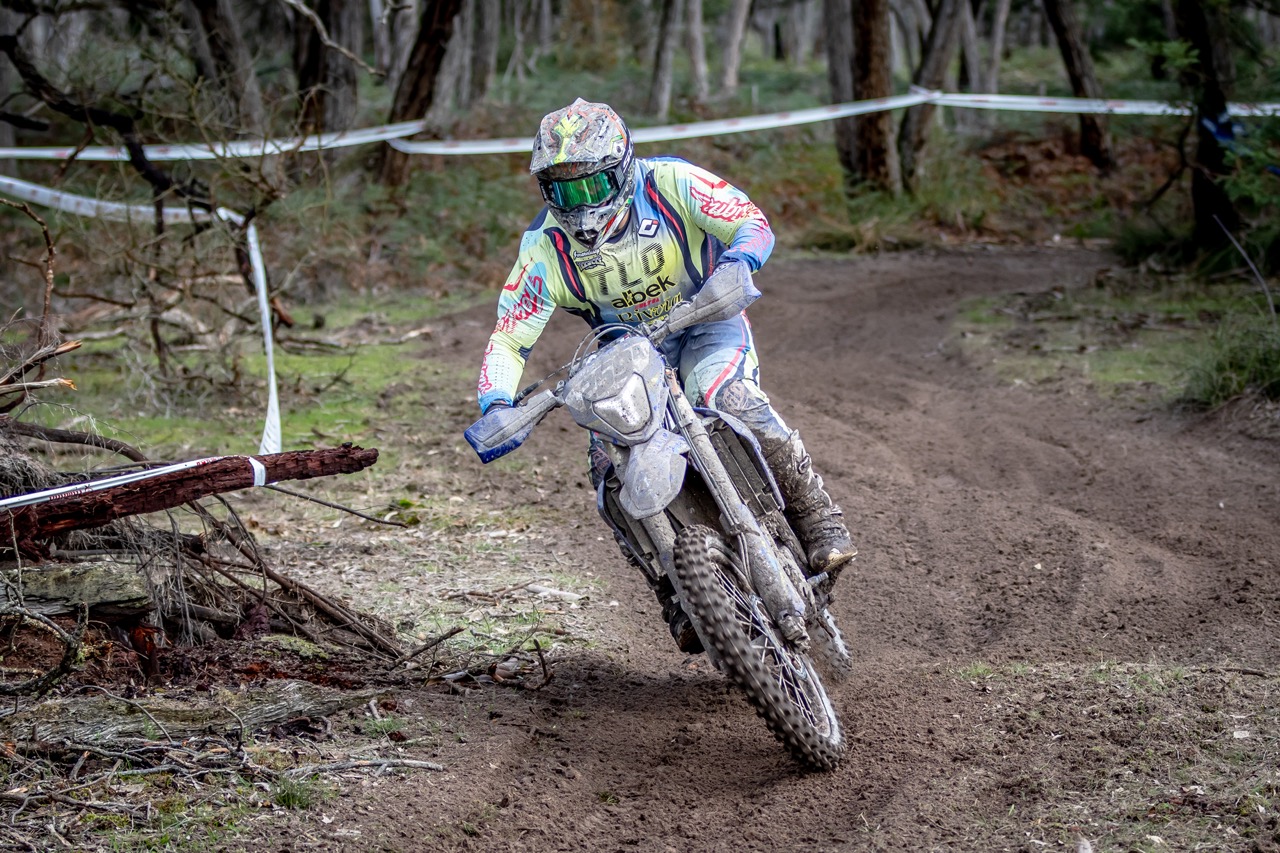
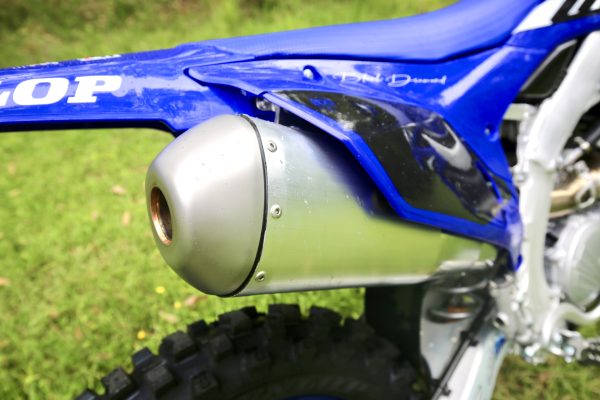
Chris Watson’s runs a standard YZ250F muffler, and the thing absolutely barks. We could hear this thing through the entire bush loop. It doesn’t sound like a little 250F anymore, it sounds like a proper big bike. Deep, aggressive and angry without becoming obnoxious. It sounds frigging unreal!
You still have to rev it and ride it properly like a 250F, but there’s noticeably more authority underneath you. Chris also explained they can tune the Athena setup around different exhaust systems too, whether that’s Akrapovic, FMF or other aftermarket options.
MORE TORQUE
One of the biggest compliments we can give the Athena setup is that it doesn’t ruin the WR250F character. Sometimes big-bore kits completely change a bike’s personality. They can become lazy, heavy-feeling or overly aggressive. This doesn’t. Instead, it feels like the exact same WR250F… just with more power everywhere.
The bottom-end increase is definitely the most noticeable improvement. The mid-range and top-end both gain a little more too, but the real magic happens right off the bottom where trail riders actually spend most of their time.
You can ride it a gear higher everywhere. That’s the biggest difference. Long hill climbs, slippery technical terrain, deep ruts and tight bush tracks all become easier because you’re not constantly abusing the clutch trying to keep momentum.
The wider-ratio WR gearbox works beautifully with the extra torque too. The bike now lugs cleaner and drives harder while still retaining the smooth tractability that makes the WR range so popular.
THE PERFECT VETS BIKE?
One thing I kept coming back to was how good this bike would be for older riders or bigger trail riders who don’t necessarily want a full 450 anymore. A lot of riders eventually get sick of wrestling big-capacity bikes through tight terrain all day. 450Fs can be incredibly effective, but they’re also physically demanding. The extra rotating mass and inertia beat you up over long rides.
The WR300F sort of splits the difference perfectly. It still turns like a 250. It still feels light and playful. But it now has enough torque to be lazy when you’re tired, sitting down on a long hill climb or just trying to survive a brutal trail ride late in the day. I think this thing would be unreal for vets riders
WOULD IT WORK IN E2?
Technically, if you raced this thing competitively, it would land in the E2 class against the 350s and 450s. On paper, it still gives away quite a bit of capacity. But interestingly, I didn’t think that would really matter much for most riders.
You might lose a little bit on deeper tracks or faster sections. But the 250 guys are already winning outright tests sometimes anyway so you could still be competitive on this bike in E2.
For clubman riders, vets riders or even plenty of serious state-level racers, this thing would absolutely be competitive. The average rider is far more likely to benefit from the lighter handling and easier rideability than they are to miss outright horsepower.
THE KIT STILL NEEDS TUNING POTENTIAL
The one thing both I thought and even Chris Watson mentioned was that there’s still more performance left in the package with additional tuning. Apparently Athena’s supplied mapping can feel slightly lean in certain situations. It still ran well during our test, but there were moments where you could tell the bike probably had more in it with further tuning.
ADB Tech Editor Matt Boyd has already worked with one of these Athena setups previously and managed to gain another four to six horsepower using a GET ignition system and revised mapping. That’s a huge increase on a bike like this.
And considering Athena and GET already work closely together in Europe, it makes sense that the electronics package could unlock even more potential.
WHY YAMAHA SHOULD BUILD THIS
The weirdest part about riding this bike is how obvious it feels. I spent the entire ride wondering why Yamaha hasn’t built this already.
The chassis already exists. The WR250F platform is already excellent. The market clearly wants middleweight four-strokes. KTM has proven that repeatedly with the 350 EXC-F.
This Athena-equipped WR300F basically feels like the missing link in Yamaha’s lineup. It’s not scary like a 450. It’s not revvy and demanding like a stock 250F. It just sits beautifully in the middle. Trail riders would love it. Vet racers would love it. Bigger riders who don’t want a 450 anymore would absolutely love it.
The Athena-equipped WR300F isn’t some weird backyard science project. It genuinely feels like a factory model Yamaha forgot to build. The extra torque transforms the WR250F platform into a much more relaxed, tractable and versatile motorcycle without losing any of the agility or playfulness that makes the 250 so good in the first place.
After riding it, we reckon a whole lot of Yamaha fans are going to start asking even louder why Japan still hasn’t built one themselves.
WHAT IS THE ATHENA WR300F KIT?
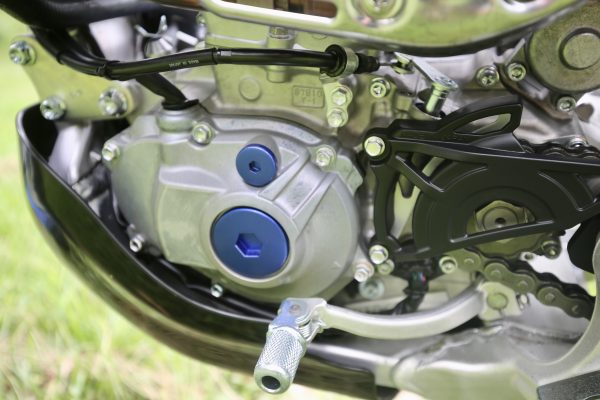
Instead of simply fitting a bigger piston, Athena completely redesigns the top end using an oversized 85mm aluminium cylinder with an integrated steel liner, forged piston kit and dedicated gasket package. One of the clever parts of the Athena system is the way the cylinder is manufactured. Instead of pressing a steel sleeve into the aluminium cylinder afterwards, Athena casts the steel liner directly into the aluminium during production using a co-fusion process. This improves heat transfer, durability and long-term reliability. It also gets Japanese-made piston rings and a DLC-coated gudgeon pin designed specifically for the higher loads generated by the increased capacity.
To fit the kit, the standard WR250F top end is removed and replaced with the Athena cylinder, piston and gasket package. Chris Watson Motorcycles then customises the ECU mapping to suit the increased displacement and whichever exhaust system the customer wants to run, whether that’s, FMF or Akrapovic. Additional tuning can also be done using systems like a GET ignition to unlock even more performance. The bike otherwise remains largely standard.