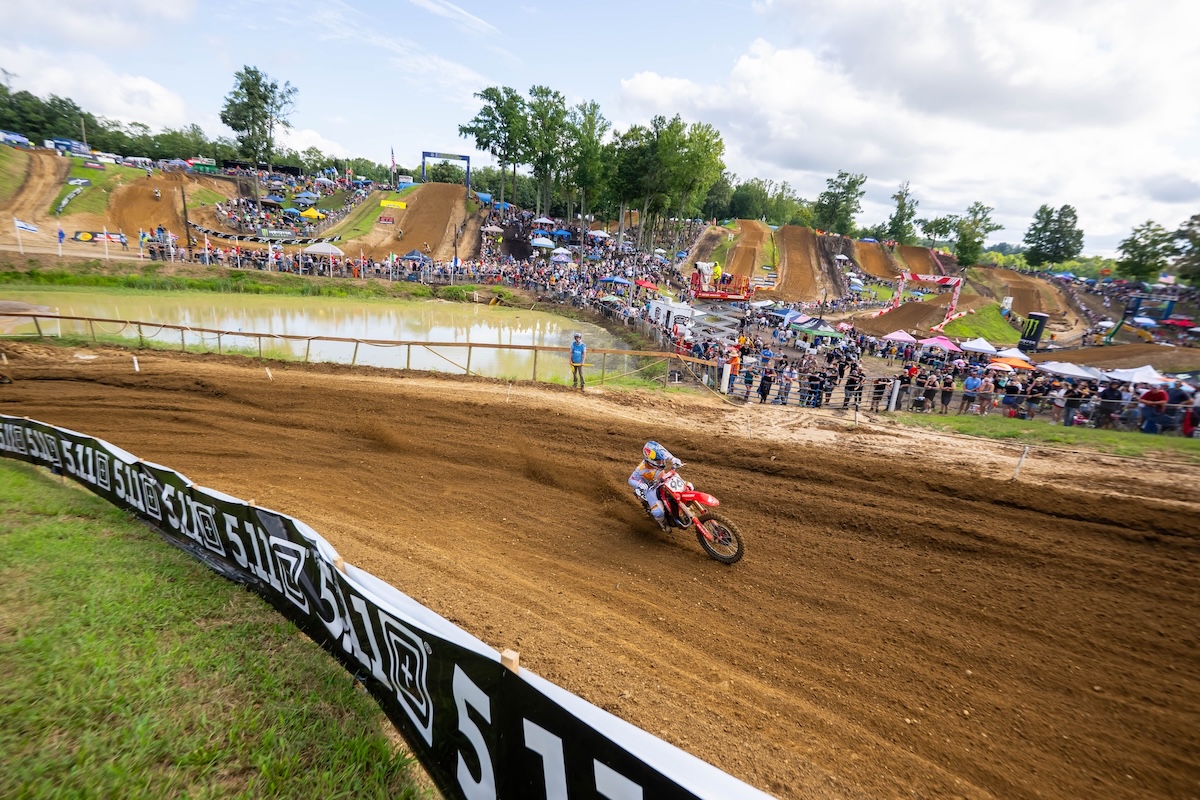
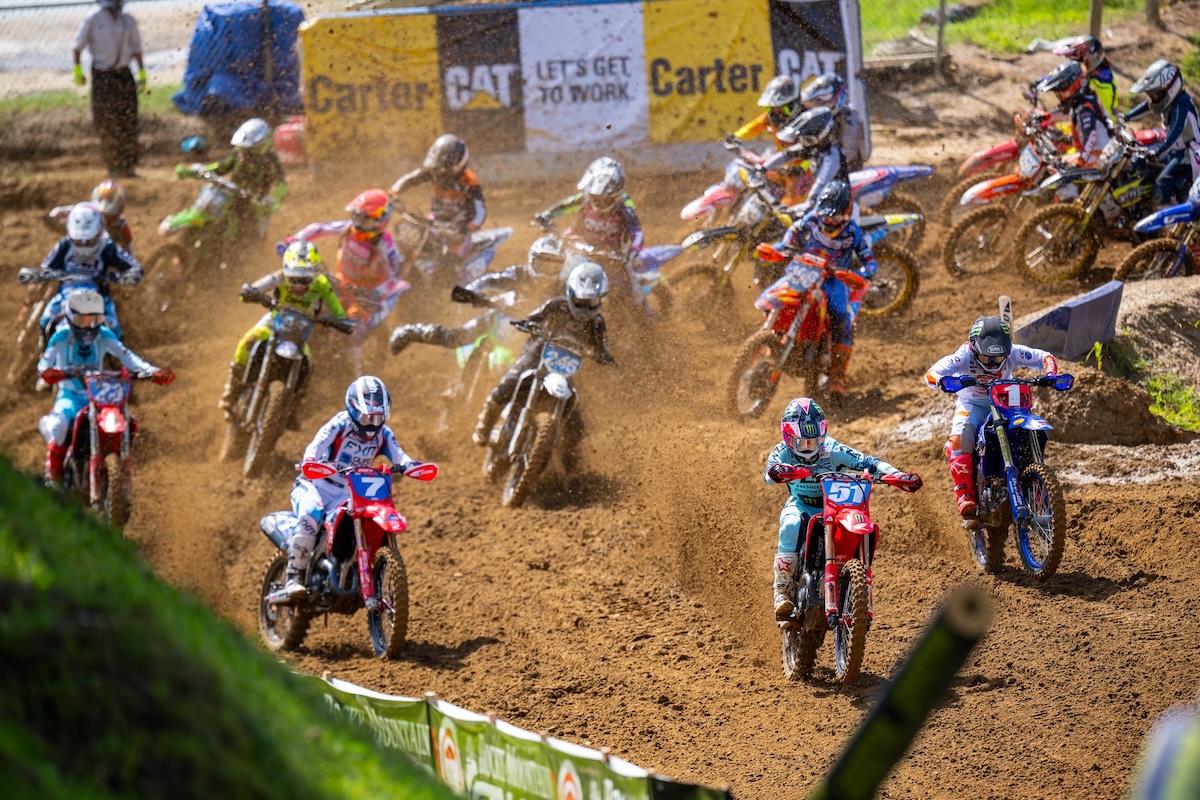
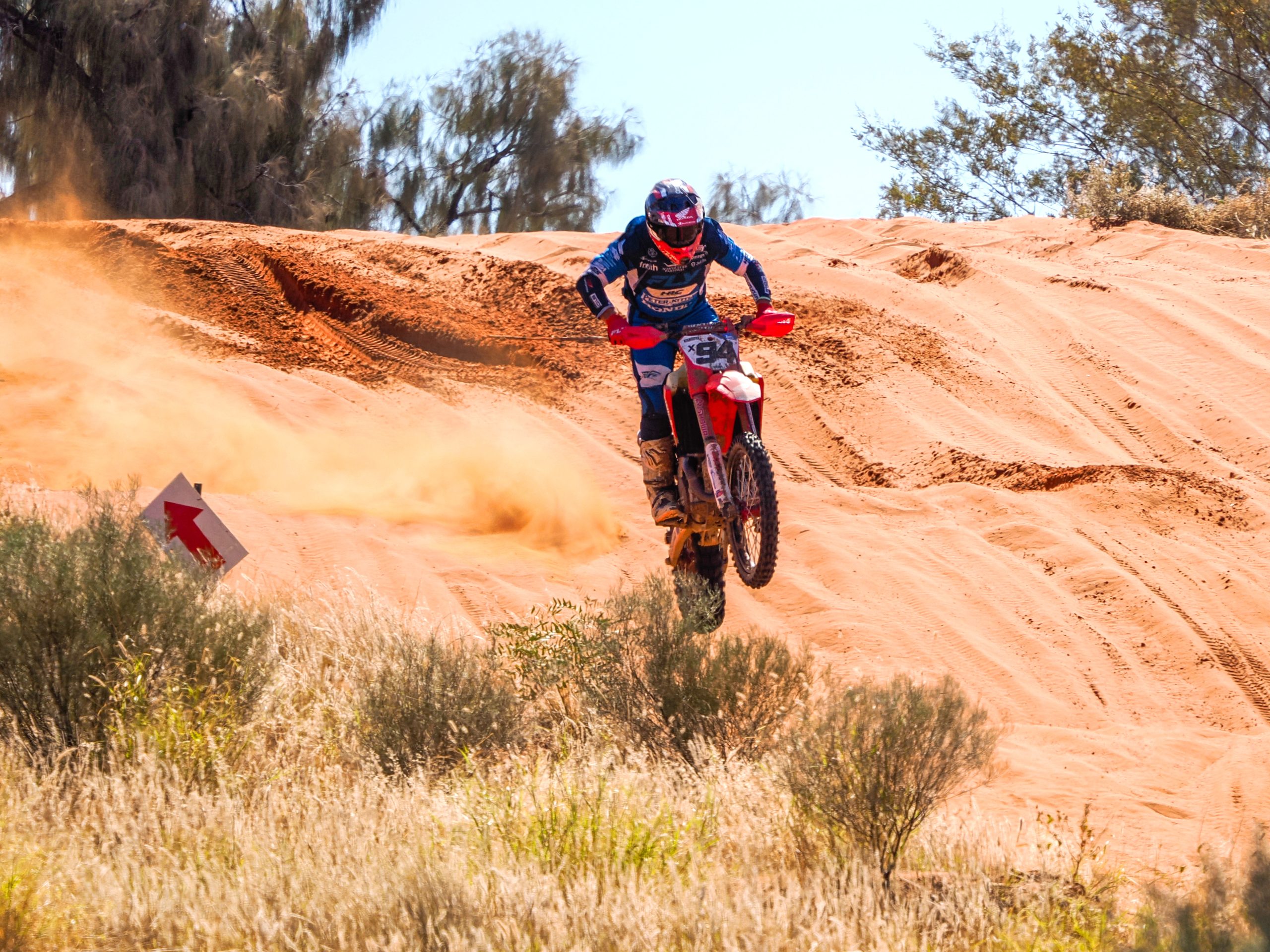
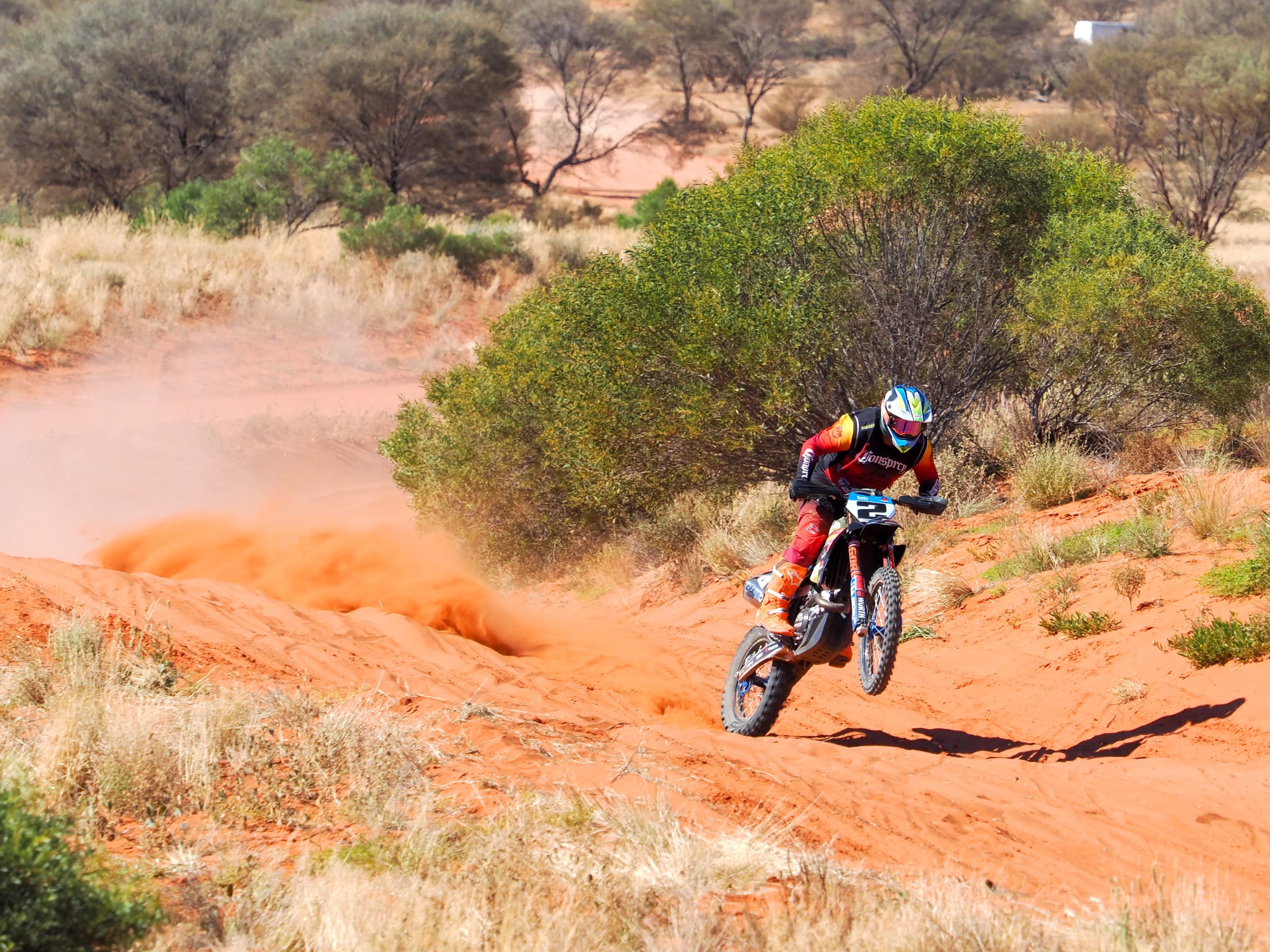
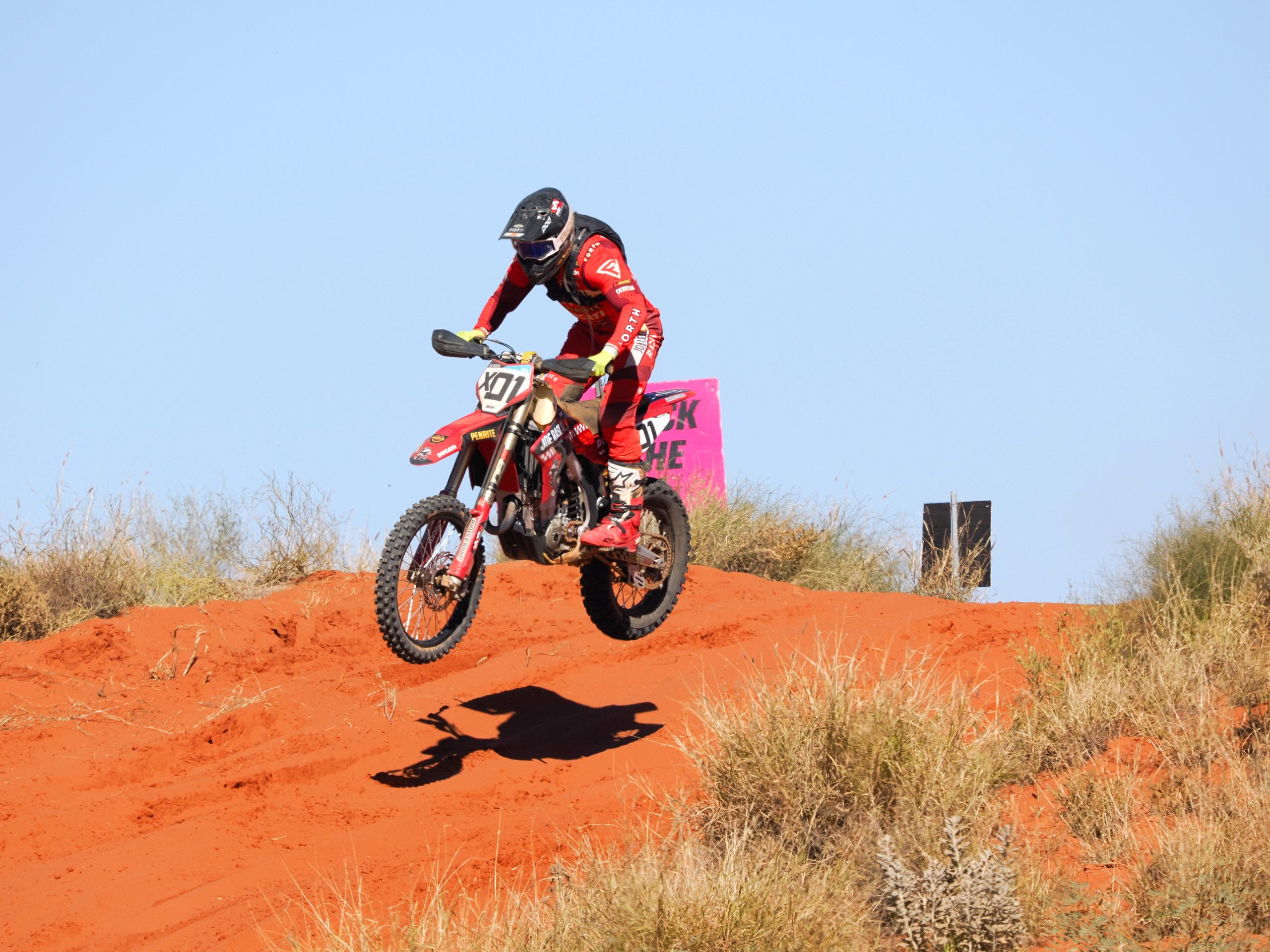
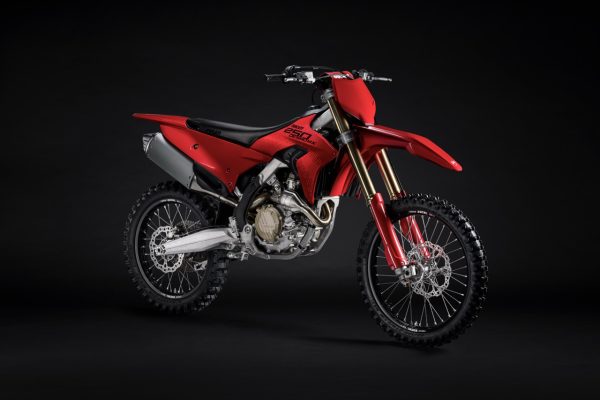
Ducati has officially taken the next step in its off-road expansion, unveiling the all-new Desmo250 MX just 12 months after launching the Desmo450 MX motocrosser.
Developed through Ducati’s motocross racing program in the Italian Prestige MX2 Championship with Alessandro Lupino, the Desmo250 MX becomes the second modern motocross machine from the Italian manufacturer and follows the same philosophy as its larger sibling – using competition as the proving ground for technology before it reaches production motorcycles.
At the heart of the Desmo250 MX is an entirely new 249.7cc single-cylinder engine that showcases Ducati’s signature desmodromic valve actuation system. Weighing just 24.7kg, the engine produces 44.5hp at 12,500rpm and 28.3Nm of torque at 8,800rpm.
The engine has been developed using technology and design principles derived from Ducati’s Panigale V4 R superbike program. It shares the same bore and stroke dimensions of 81 x 48.4mm and features titanium intake valves, steel exhaust valves and a completely new cylinder head design tailored specifically for motocross competition.
One of the biggest talking points is the engine’s ability to rev to an astonishing 15,000rpm, a figure Ducati claims sets a new benchmark for the class. The desmodromic valve system allows precise valve control at extreme engine speeds, enabling riders to carry gears longer and maximise acceleration out of corners and over jumps.
Fuel delivery comes via a 44mm Mikuni throttle body, while the exhaust system has been designed specifically to balance performance with current international motocross noise regulations.
Power is sent through a dedicated five-speed gearbox developed exclusively for the Desmo250 MX. The transmission features an upshift quickshifter as standard and is paired with a hydraulically operated Brembo clutch using a seven-plate clutch pack and disc spring arrangement.
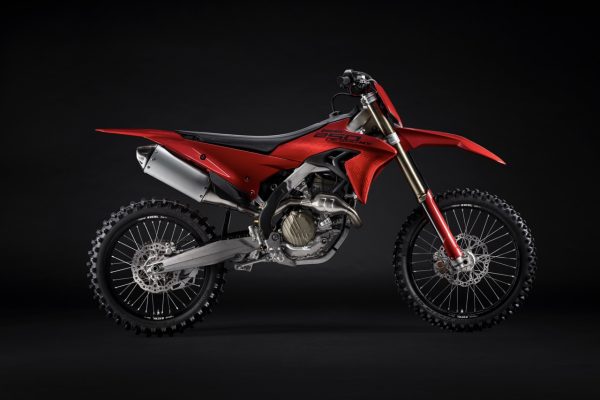
The chassis architecture is based on the Desmo450 MX, utilising a twin-spar aluminium perimeter frame and cast aluminium swingarm. Ducati says extensive work has been carried out to refine frame stiffness characteristics specifically for the demands of the 250 class, with a focus on rider confidence during braking and cornering.
Suspension duties are handled by Showa, with model-specific settings developed for the smaller-capacity machine. Up front is a fully adjustable 49mm Showa upside-down fork with Kashima coating and 310mm of travel. At the rear sits a fully adjustable Showa monoshock delivering 301mm of wheel travel.
The complete package tips the scales at just 103kg wet without fuel.
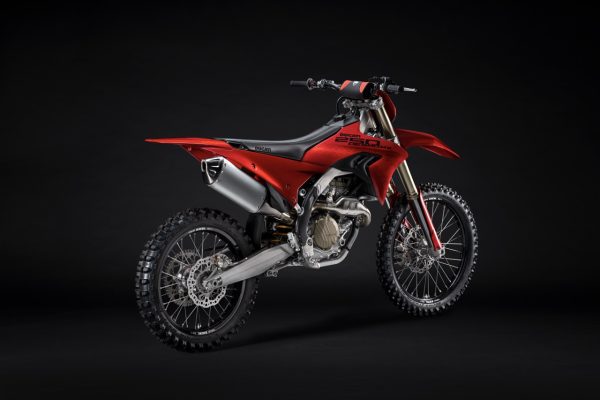
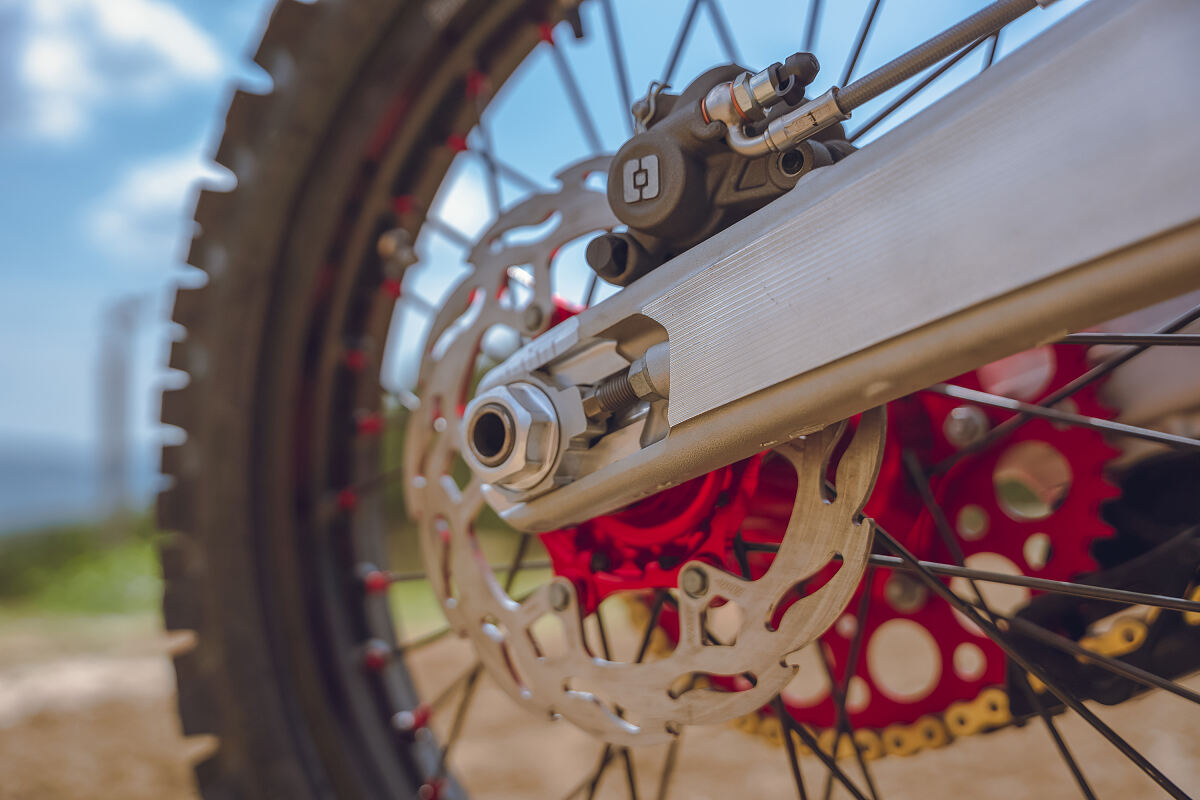
Ducati has equipped the Desmo250 MX with Pirelli Scorpion MX32 Mid-Soft tyres, including a 100/90-19 rear tyre aimed at improving agility and corner-entry performance. The wheels feature Takasago Excel aluminium rims laced with Alpina spokes.
Braking is handled by the same package used on the Desmo450 MX, comprising Brembo calipers and Galfer discs measuring 260mm at the front and 240mm at the rear.
Electronics represent another major area of focus.
The Desmo250 MX receives Ducati’s latest-generation rider aid package, derived directly from the Desmo450 MX. Riders have access to two power maps and two riding modes, both configurable through Ducati’s optional X-Link smartphone application.
Ducati Traction Control (DTC) is adjustable through three intervention levels, while Engine Brake Control offers two settings and Launch Control provides three levels of adjustment. Ducati says its traction control system differs from those commonly used in motocross by measuring actual rear-wheel slip and adjusting power delivery accordingly, rather than relying on pre-programmed intervention strategies.
Standard equipment also includes Power Launch functionality and a quickshifter.
One of the most unique features of the Desmo250 MX is its predictive maintenance system. Drawing on technology developed through Ducati Corse’s MotoGP and World Superbike programs, an onboard algorithm continuously calculates an engine stress index based on riding conditions and operating loads.
Using data collected through the X-Link app, maintenance schedules can be adapted to suit actual usage rather than fixed service intervals.
The maintenance program is divided into two service levels.
A MID Service includes valve clearance inspections after 45 hours and piston replacement between 45 and 60 hours depending on calculated engine stress.
A FULL Service involves complete engine overhaul intervals ranging from 90 to 120 hours, again depending on riding conditions and engine load history.
Ducati has also confirmed a comprehensive range of factory accessories through its Ducati Performance catalogue.
Owners will be able to build a near-factory replica of the bike raced by Simone Mancini in MXGP competition, with available upgrades including CNC-machined triple clamps, Akrapovič titanium exhaust systems, Brembo Racing brake components and Showa Kit A suspension. The only components unavailable to customers are the factory Showa works suspension units used by Ducati’s official race team.
A complete apparel range developed with Drudi Performance will also be available, including Alpinestars riding gear, Arai helmets, technical jackets and race apparel.
The 2027 Ducati Desmo250 MX will arrive in selected European dealerships from July 2026 before expanding into North America in August and other global markets thereafter.
KEY SPECIFICATIONS
Engine: 249.7cc Desmo single-cylinder four-stroke
Power: 44.5hp @ 12,500rpm
Torque: 28.3Nm @ 8,800rpm
Maximum RPM: 15,000rpm
Throttle Body: 44mm Mikuni
Transmission: 5-speed with quickshifter
Clutch: Hydraulic Brembo, 7-plate
Frame: Twin-spar aluminium perimeter frame
Fork: 49mm Showa USD, Kashima-coated, 310mm travel
Shock: Showa monoshock, 301mm travel
Brakes: Brembo with Galfer discs (260mm front / 240mm rear)
Tyres: Pirelli Scorpion MX32 Mid-Soft
Wheels: Excel aluminium rims with Alpina spokes
Weight: 103kg wet (without fuel)
Fuel Tank: 7.2 litres
Electronics: Ducati Traction Control, Launch Control, Engine Brake Control, Quickshifter, 2 Power Modes, 2 Riding Modes
Availability: Europe from July 2026