When the all-new 2026 Rieju MR300i Racing first landed in Europe, plenty of people in Australia were already asking the same question: why the hell isn’t it here? By the time we finally got our hands on one in the first week of April 2026, the bike had been floating around overseas for the better part of nine months. That’s just the reality of being on the wrong end of the world. Australia rarely gets first crack at anything, especially when it comes to niche Euro enduro bikes, and by the time stock hits our shores, half the internet has already formed an opinion on it.
But that didn’t matter much to us, because this wasn’t just a mild update with fresh stickers and a reshuffled parts list. The 2026 MR300i Racing is a genuinely new platform. It’s fuel injected, it’s got a new frame, new suspension, new ergonomics and a very different engine character to the old bike. That mattered, because we’d ridden the previous MR300 before and knew exactly what it was: fast, aggressive, exciting and a little bit wild. It had all the ingredients people wanted on paper, but on the trail it felt more like a 250cc motocrosser with a big-bore attitude than a mellow, technical 300cc two-stroke. It was a cross-country bike through and through.
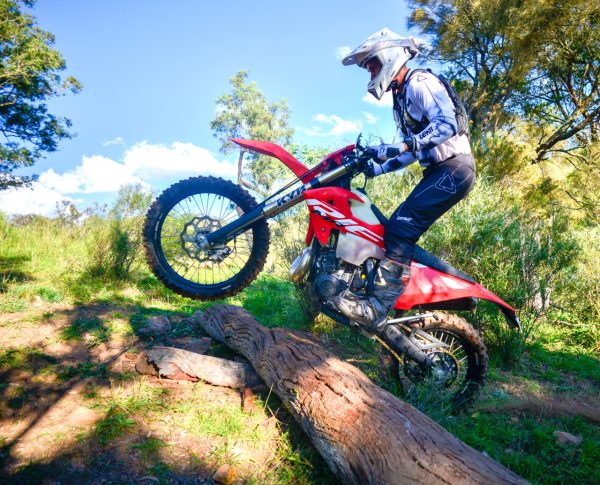
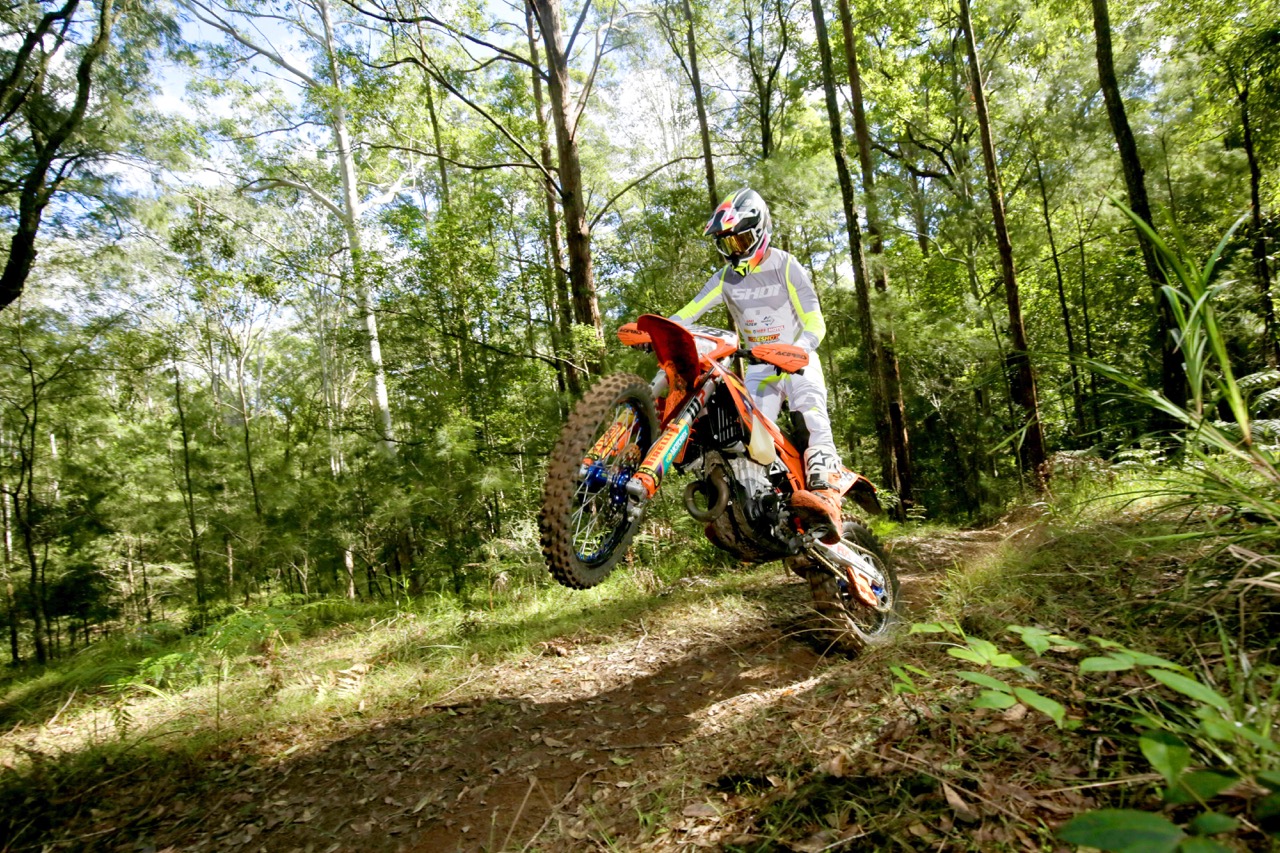
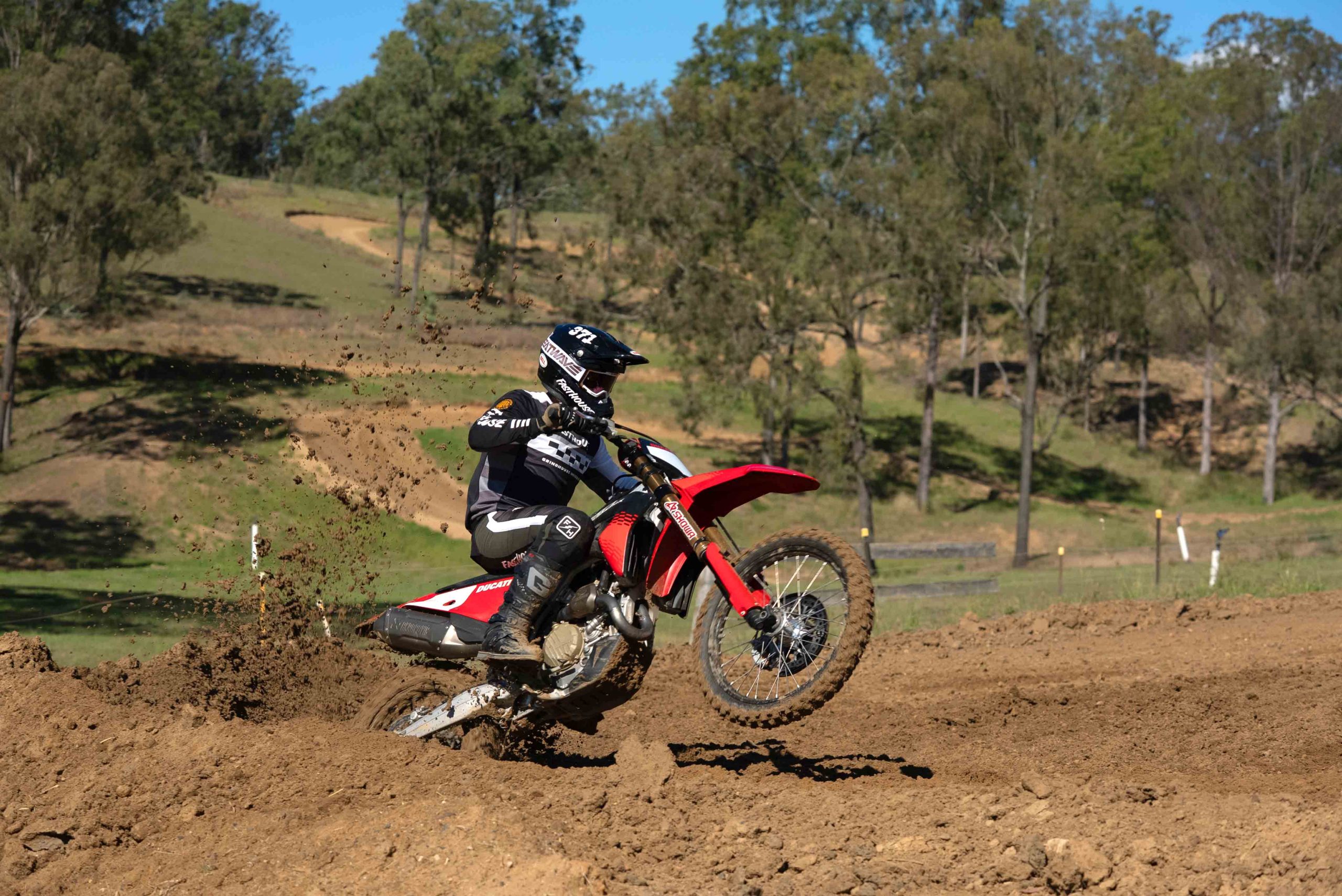
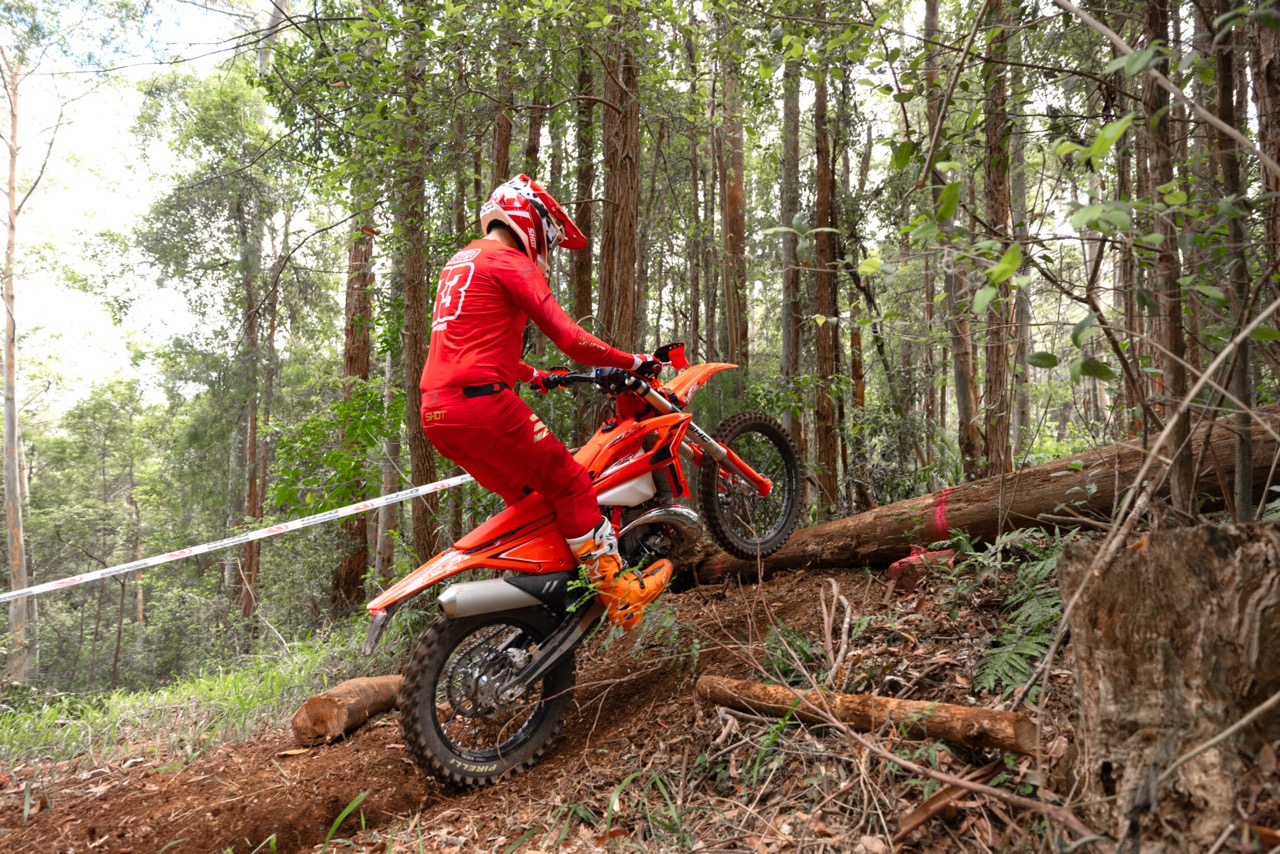
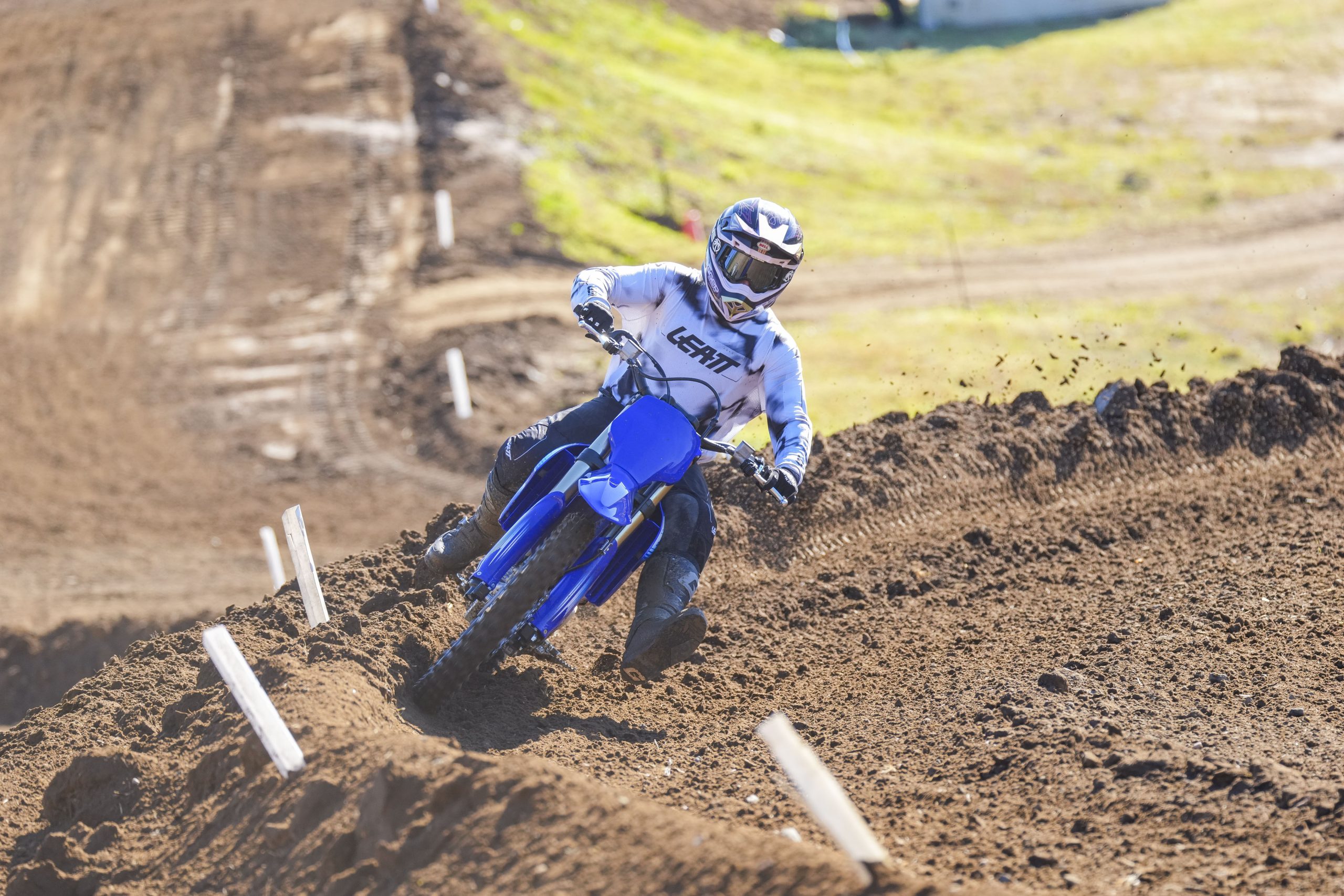
So the big question for this new one was simple. Has Rieju just modernised the old bike, or have they actually changed the personality of it? To find out, we took it to three very different environments with three very different testers. A grass track to see how it behaved when you were charging and braking hard. Fire roads to gauge outright speed, stability and throttle response. Then a proper mix of enduro and hard enduro terrain to see whether this thing had evolved into a genuine all-round 300, or whether it was still happiest with its head kicked in and the rear wheel throwing rocks into the next postcode.
Joining me was Jeremy Cowley from the Dirt Bike Burrito podcast and Bernie den Hertog, both guys with plenty of two-stroke experience.
By the end of the day, we all landed in roughly the same place. This is a vastly better motorcycle than the old MR300. It’s more refined, more polished, easier to ride and better built. But it hasn’t turned into a soft, sleepy trail bike. It’s still a race bike at heart. It’s just gone from being a slightly mad cross-country weapon into a much more complete enduro race bike with real European GP-style intentions.
Finally, It Feels Like a Modern Bike
The first thing that stood out before we even really got into the riding was how much more complete the bike felt. Bernie was quick to point it out, and he was right. “This one’s light years ahead. The build quality, the switchgear, the instrumentation… the bike itself presents beautifully.”
That’s important because older Riejus, especially those based on the previous GasGas DNA, always had that slight feeling of being a bit behind the times. The bones were good, but there were always little details that reminded you the platform wasn’t exactly cutting edge. Switches were in odd spots, the general finish wasn’t as polished as the big brands, and the overall package felt a touch old-school. This one doesn’t. The cockpit is tidier, the controls make sense, and the bike has a much more premium feel the moment you throw a leg over it.
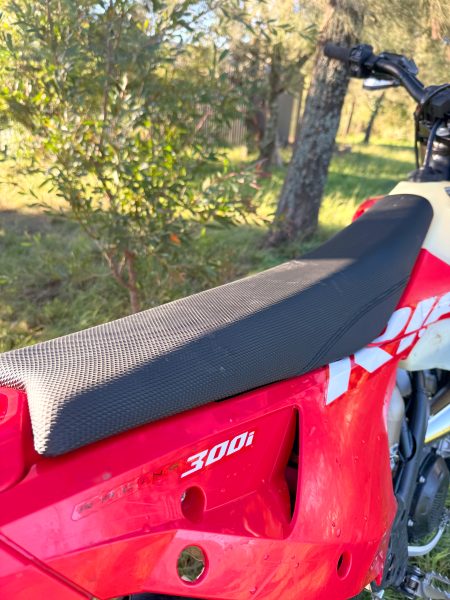
The ergonomics have come a long way too. It’s slim between the legs, easy to grip with your knees and has a seat that’s grippy without being annoying, firm without being uncomfortable, and shaped in a way that lets you move around easily.
The seat was grippy and I never felt myself sliding off the seat. On the grass track in particular, you could really feel how seat held your arse. I could stand comfortably through ruts, stay neutral on the bike and then drop back onto the seat on the exits without feeling like I was fighting to stay at the front.
Jeremy agreed. “It’s nice between the legs. It’s slender. Easy to grab with your knees. The riding position was solid, the grips were soft.”
Nothing Like the Old One
If you rode the old carburetted model, you’ll know exactly what we mean when we say it had a proper hit. It waited, waited, then absolutely smacked you in the face. Great fun if you wanted to blitz a paddock or smash a cross-country special test, but in technical terrain it could feel like a bit of a handful.
Bernie summed up the difference perfectly. “The old carby model 300 was a very aggressive, typical old two-stroke. Bottom-end just waiting, waiting, and then it just hit with a massive smack and while we were launching roost everywhere we were just basically trying to hang on to that thing. Whereas this one by comparison is very four-stroke-like in terms of being very linear, it’s smooth, the power is great top end on it, but it comes in progressively.”
This engine has been civilised without being dulled. It still revs hard and still feels lively, but the delivery is now much more progressive. It builds instead of exploding, and that immediately makes it easier to ride for a much wider range of riders. The fuelling was excellent too, which is probably the most important part of the whole deal given the move to injection. “I was really impressed with the power,” Bernie said. “It was crisp, it was great. Jetting was spot on, very impressive.”
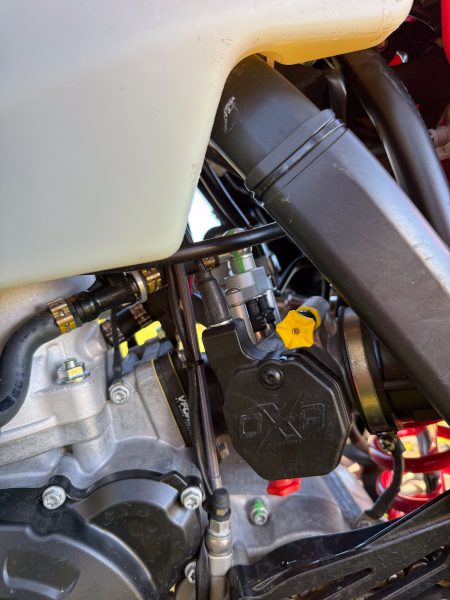
We all know how quickly a fuel-injected bike can lose its shine if the mapping isn’t right for local conditions, but this one felt clean, crisp and responsive everywhere. Whatever work Rieju Australia has done with the maps for our homologation seems to have paid off.
That said, and this is where the discussion got interesting, we didn’t think it was the strongest 300 in this class right off the bottom. It’s definitely stronger down low than the old bike, but compared with some other 300s currently on the market, there are still bikes that lug a little easier and produce that tractor-like grunt with slightly less input from the rider.
Jeremy picked up on that straight away once we got into the really nasty stuff. “I had to feather that clutch more than I’ve had to feather it on, say, the KTM 300s or even the Beta that we have.” That doesn’t mean it’s bad. It just means the bike still likes a more active rider.
Three Personalities
One of the more interesting features on this bike is the map switch. Because the MR300i is injected, Rieju has the ability to shape the engine character in ways the old bike simply couldn’t. In Australia, the bike comes with three maps, and Rieju Australia has worked through them to make sure they suit our fuel, our conditions and our riding.
Map 1 was described to us as the best all-round map. It was the one they reckon most riders will use most of the time. Map 2 is the aggressive map, the faster and livelier option, while Map 3 is the slower, doughier mode.
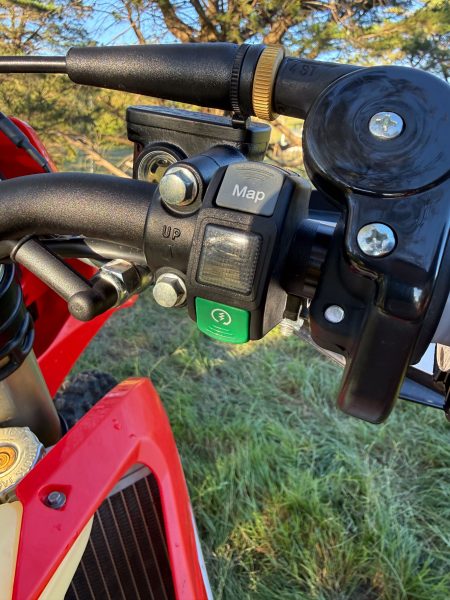
We found uses for all three. On the grass track, Jeremy actually preferred the aggressive setting. “I could go into a corner, kind of maybe second or third, and then power through the corner out and hold that gear a lot longer than, say, in map one.”
In technical terrain, though, Map 3 came into its own. Jeremy said it best: “That was the best one to be in for that luggy kind of stuff because you could, it was a lot more doughy and you could catch it a lot easier when it did start to bog out.”
That slower map didn’t magically turn the bike into a hard enduro weapon, but it did take a bit of the edge off and made the engine more manageable in ugly creek beds and on rocky climbs. It’s good to have that option, especially for riders who are going to dabble across different types of riding and want to tailor the feel of the bike to the terrain.
Still Grass Track King
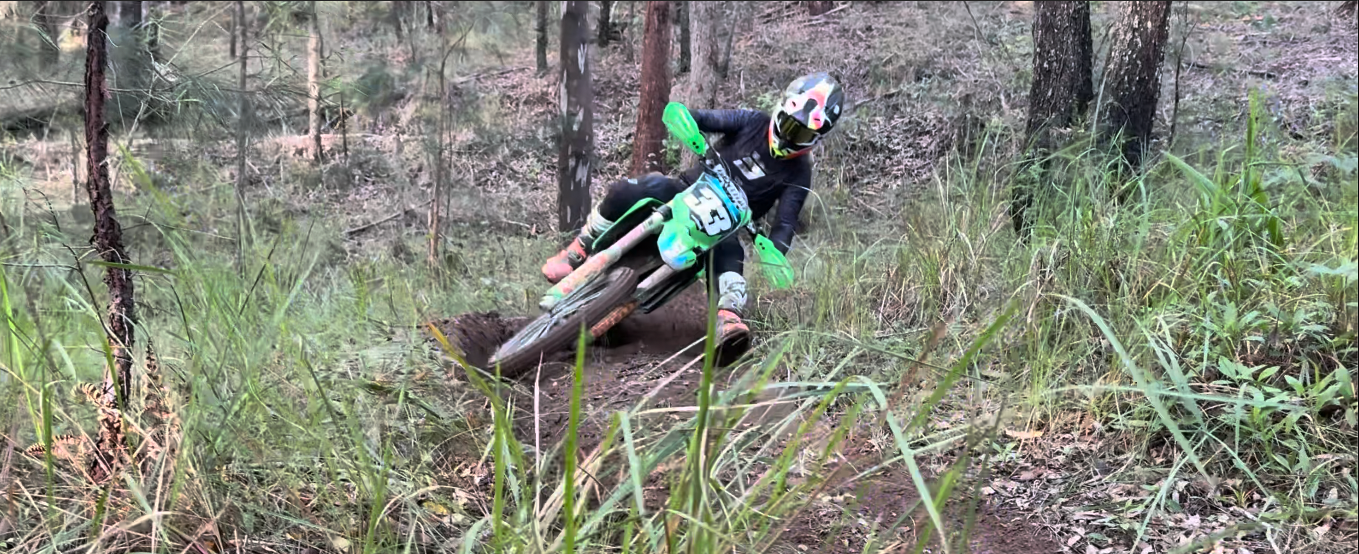
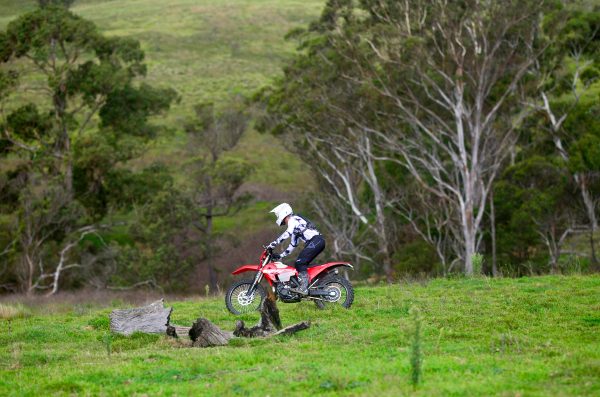
If there was one environment where all three of us immediately went, “Yep, this thing is built for this,” it was the grass track and faster fire road stuff. The engine really comes into its own when you can let it breathe, smash through the gears and use the stronger mid-to-top power.
Jeremy loved it on the grasstrack, “The power in this is just unbelievable. It tracked straight. It was great.” The braking package deserves a mention here too. The brakes are powerful and sharp, and that worked especially well in the harder, more motocross-style riding.
We did notice it was geared quite short. Jeremy noticed he could hit fourth gear on a surprisingly short straight and then bang back down again without ever feeling like the bike was falling flat.
Hard Enduro Capable?
Can you ride this thing in hard enduro? Of course you can. Jeremy made that point pretty quickly. “I think any bike can do hard enduro.” He’s right. We’d had a farm-style AG bike in the same loop carrying camera gear and fuel, and that thing got in and out too. So the question isn’t whether the Rieju can do it. The question is how much work it takes.
Strangely, I stalled it more than I expected too, and I wasn’t the only one. The fuelling itself was still excellent, but there was something about the clutch bite and the way the engine responded at ultra-low revs that meant you had to stay on top of it. Bernie said he thought at first I simply wasn’t using the clutch enough, then he got on it and did exactly the same thing himself.
It feels more like an enduro race bike first, and a hard enduro bike second. With changes to gearing, tyres and maybe some setup work, you could absolutely make it far more at home in that environment, but out of the box it’s definitely happier charging than crawling.
Suspension and Chassis
All three of us are north of 100kg, so none of us were exactly ideal test riders if you wanted an assessment based on stock spring rates. Even so, the KYB suspension did a pretty solid job.
Bernie’s take was simple: “I actually thought, like, you know, jumping over off some rocks and landing in some grass and stuff, it’d be pretty good. Never really pogoey.”
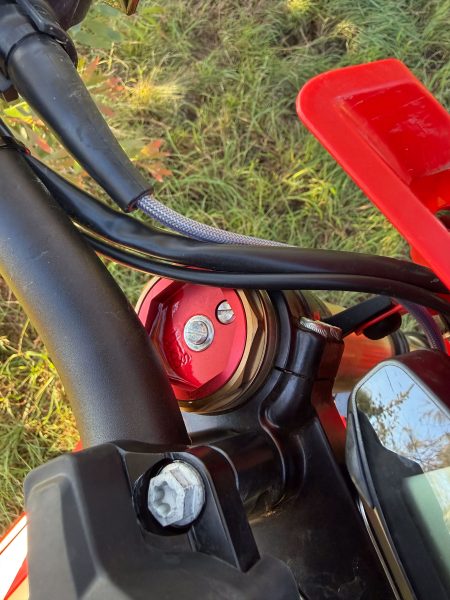
I backed the clickers out a few positions before the others arrived because it felt a little firm in some of the slower terrain, and that definitely helped. Around the grass track, I actually liked the fork quite a lot. It’s firmer than most other bikes so it held up under brakes, didn’t dive uncontrollably, and gave the front a nice planted feeling in ruts and under heavier load. Compared with some bikes we’ve ridden in the past that have come with excessively soft forks, the Rieju felt far more composed.
We all agreed the front felt a little twitchy coming into turs on the grasstrack but that was more about the tyres than the suspension. It had Mitas TerraForce EF tyres which are ADR compliant tyres and much like the MAxxis MaxxEnduro tyres found on other brands, are not the best. That’s fair, and it was the main split in our opinions on the bike. He felt a bit of buckle or vagueness at times when diving into corners. The positive there is that the bike has decent hardware, proper triple clamps and quality KYB suspension, so there’s a solid base to work with.
Where It Fits
By the end of the day, we all pretty much agreed on the same thing. This is a very good motorcycle.
This is an enduro race bike. A EnduroGP weapon. A cross-country bike. An AEC-style machine. It’ll fly through single track, blast fire roads, brake deep into grassy corners and reward an aggressive rider who likes to attack the trail. If you’re a trail rider who wants a bike that feels exciting, sharp and alive, it’s going to make a lot of sense.
If your life revolves around nasty, greasy, slow-speed hard enduro and you want a 300 that’ll just lug and chug all day with minimal effort, then a few setup changes and the Rieju will be golden.
As we said at the end of the day, the fuelling was excellent, it didn’t flame out over logs, the build quality has taken a huge jump, and the thing offers really good value for money in this Racing trim. You can see why riders in Europe race them, and you can see why someone like Sam Rogers has always had a lot of time for the platform.
What’s New on the 2026 Rieju MR300i Racing
The headline change on the 2026 Rieju MR300i Racing is the new 300cc two-stroke engine with TFI electronic fuel injection, using two Bosch injectors for separate high- and low-rpm fuelling. Rieju says the aim was to keep the feel and throttle response of a carburetted two-stroke, but with cleaner, more controlled fuelling, lower fuel use and a more manageable power delivery. It also now gets an electronic exhaust valve and a counter-rotating balance shaft, which helps reduce vibration and make the power feel more consistent across the rev range.
The bike also gets three standard riding modes — Race, Forest and Wet. Chassis-wise, it runs a chrome-moly central frame with an aluminium subframe, and the suspension package is high-end KYB gear front and rear. Up front there’s a 48mm KYB closed-cartridge fork with AOS technology, while the rear gets a fully adjustable KYB shock with high- and low-speed compression adjustment working through a linkage system. It has been upgraded for 2026. It also comes loaded with quality parts, most of which have received an upgrade too including black anodised Excel rims, a Power Racing by Oxa exhaust, Neken bars and grips, a lithium battery and Mitas Terraforce tyres. Add in the new diaphragm clutch and you’ve got one seriously upgraded Spanish beast!
2026 RIEJU MR300i RACING
ENGINE
Type: 2-stroke single-cylinder with TFI (Throttle-Body Fuel Injection)
Displacement: 298cc
Bore x Stroke: 72 x 72.52mm
Fuel System: Dual-injector electronic fuel injection
Starting: Electric starter
Gearbox: 6-speed
Clutch: Oil-immersed multi-disc diaphragm clutch
Power Modes: Race, Forest, Wet
Intake: Reed valve with VForce 4
Exhaust: Rieju Power Racing by OXA
DIMENSIONS
Wheelbase: 1475mm
Seat Height: 949mm
Fuel Tank: 9.8L
Weight: 105kg (dry)
SUSPENSION
Front: 48mm KYB inverted closed-cartridge fork with AOS, adjustable compression and rebound, 300mm travel
Rear: KYB shock with preload, high/low-speed compression and rebound adjustment, linkage system, 310mm travel
BRAKES & TYRES
Front: 260mm Galfer disc with Nissin caliper
Rear: 220mm Galfer disc with Nissin caliper
Front Tyre: 90/90-21 Mitas Terraforce EF on Excel rim
Rear Tyre: 140/80-18 Mitas Terraforce EF on Excel rim
RRP: $16,790
Warranty: 6 months
Website: rieju.com.au