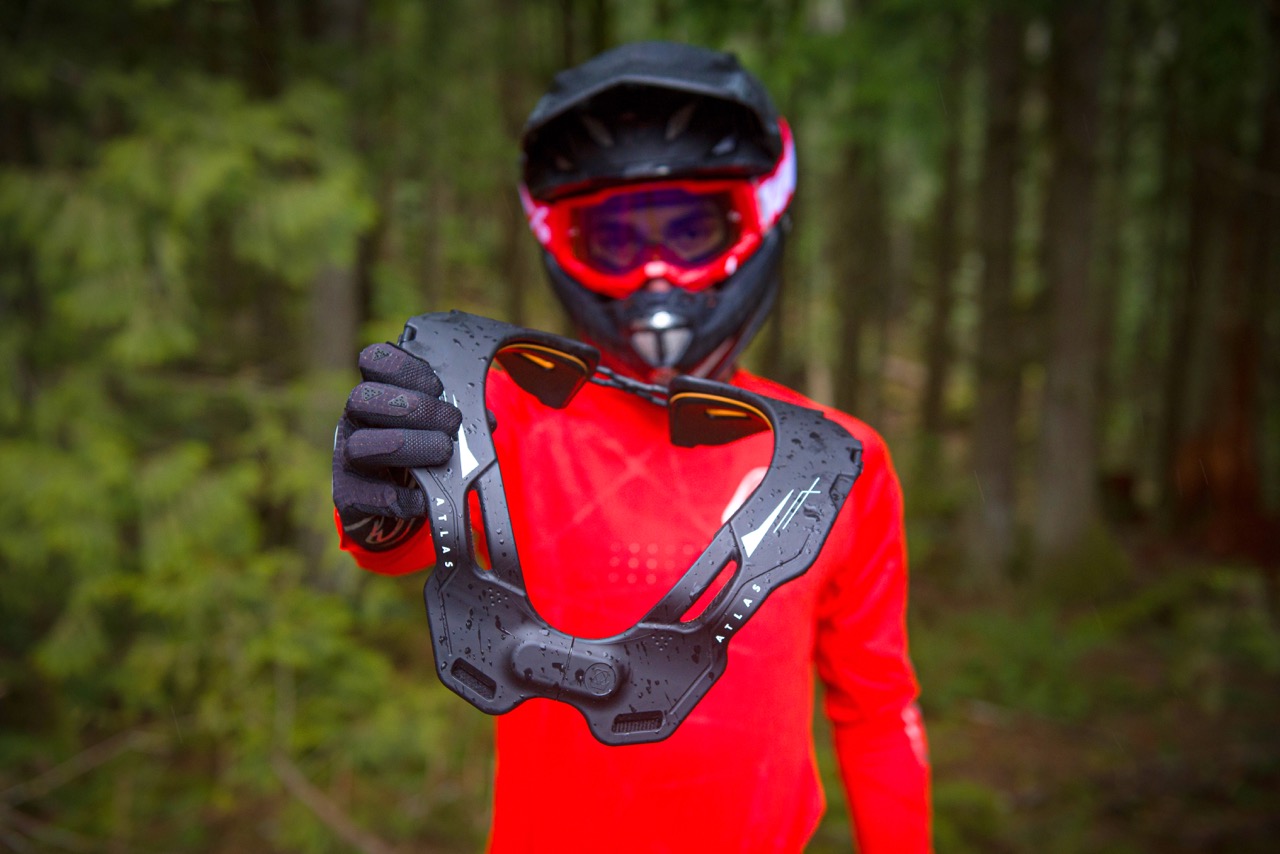
We sat down with Atlas founder and former professional Supercross racer Brady Sheren to ask why he entered the protective-equipment industry, what a neck brace is designed to do and why he believes the available evidence overwhelmingly supports wearing one. There’s plenty of conjecture around this topic which he also addresses, like the long-running collarbone myth, the dangers of spinal compression and freedom of movement so rather than simply give you our two cents, we’ll let Sheren explain it from their side and you can make up your mind!
ADB: For anyone unfamiliar with your background, who are you and what is your role with Atlas?
Brady Sheren: My name is Brady Sheren and I’m the CEO and founder of Atlas. I’m originally from Canada and raced Supercross professionally in America, as well as a little in Canada. Once my racing career finished, I began working on the designs that eventually became Atlas.
ADB: Neck braces were a polarising product when they first appeared. It seems more junior riders wear them now, but the numbers often drop as those riders grow older. Why do you think that happens?
Brady: A new product is always difficult to introduce, especially in a sport that had existed for decades without it. People hadn’t seen neck braces before and didn’t know how they would feel or whether they would work, so convincing them to try one was challenging.
The difficult part is that neck braces are popular among kids, but then those kids become teenagers and decide they’re too cool to wear one. Our sport is largely dominated by men between roughly 18 and 25 years old, and it’s hard to think of another group of people who care less about personal safety.
Most people at that age don’t yet have a family, children, bills or responsibilities that require them to be healthy enough to go to work on Monday. They’re naturally more inclined to accept risk, and that makes the safety conversation difficult.
ADB: What was the most common complaint riders had about early neck braces?
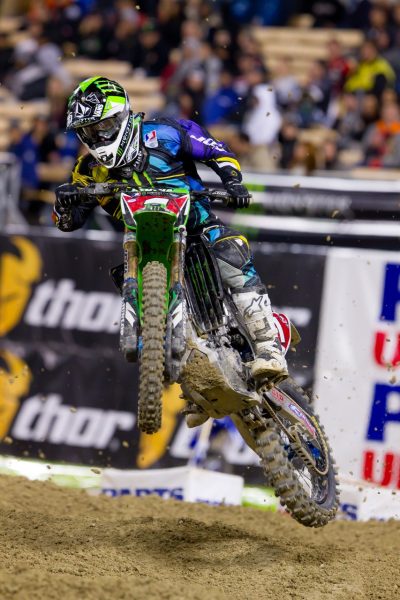
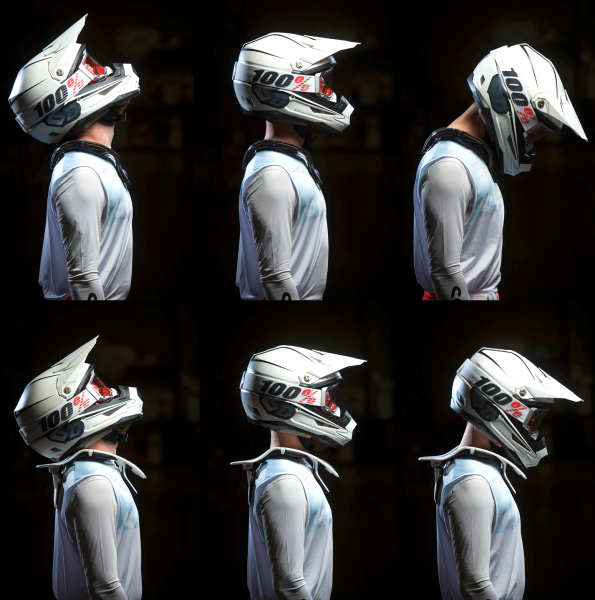
Brady: Rigidity was the biggest complaint. They were large, stiff products that could be difficult to move in. Range of motion was also a concern, particularly because riders have different neck lengths and those early braces didn’t always offer enough adjustment.
ADB: Let’s address the main question: what is a motorcycle neck brace actually designed to prevent?
Brady: It is designed to address several different types of movement and load. On a motorcycle, we have to deal with compression, hyperflexion, hyperextension and lateral hyperflexion. Hyperflexion is the head moving forward and down, hyperextension is the head moving backwards, and lateral hyperflexion is the head moving towards either side.
The simple goal is to reduce the forces reaching the neck.
ADB: Which areas of the body are most critical for a rider to protect?
Brady: There are three areas where an injury is most likely to result in death or permanently alter someone’s life: the head, neck and internal organs. That means a helmet, neck brace and chest protector are, to me, a fairly obvious combination.
Internal-organ injuries can involve being impaled or struck by something, so they’re less common. However, landing on your head or neck after going over the handlebars is something we see regularly.
Even when the outcome isn’t death, paralysis, concussions and repeated trauma can accumulate over time and drastically change someone’s life.
ADB: Is a neck brace a guarantee against paralysis or death?
Brady: No. We can’t promise that it’s foolproof because nothing is. A seatbelt can’t guarantee survival in every car accident either.
What we can say is that when you examine a large data set, riders are significantly better off wearing a neck brace across every scenario that has been properly studied. That includes severe neck injuries, head injuries and collarbone injuries.
The figures we’ve seen show that a rider wearing a neck brace is 89 per cent less likely to suffer a severe neck injury and 45 per cent less likely to break a collarbone. The difference is substantial. To me, it’s comparable to the benefit of wearing a seatbelt.
The difficulty is that people often respond with an anecdote about a friend who was injured while wearing a brace. That incident matters and it is terrible for the person involved, but you have to place it within a much larger data set.
When that is done, the figures are overwhelmingly positive. There will always be outliers and certain accidents that protective equipment cannot prevent.

ADB: What kinds of neck injury can’t a brace prevent?
Brady: A major example is pure rotational movement. Imagine standing upright and having your head spun around 360 degrees. We can’t build a brace high enough to completely stop that kind of rotation because the rider would no longer be able to function on the motorcycle.
There are some situations where there is simply very little that any existing product can do.
ADB: One of the most persistent claims is that neck braces cause broken collarbones. Is there any truth to it?
Brady: I think much of that belief comes from optics. People see an object sitting on or near the collarbone, so it becomes an easy scapegoat when that bone breaks.
However, that isn’t generally how collarbones are broken. I broke mine when I was nine years old, long before neck braces existed, and almost everyone I know who has broken one has done it through a shoulder impact or by extending an arm during a fall.
The collarbone is the weak link in that chain and it takes very little force to break. It only takes around nine pounds of pressure, so it’s an extremely vulnerable bone.
Collarbones also generally break or displace upwards, not downwards into the body. If the brace were directly driving the injury, you would expect to see the bone forced inwards or downwards. Look at most X-rays and that is rarely what has happened.
ADB: How did Atlas specifically account for the collarbone area?
Brady: We made certain there was nothing hard or rigid directly over the collarbone. We extended the shoulder padding forward to the chest support, so the collarbone is covered by a substantial layer of padding.
We didn’t want the brace frame contacting the collarbone under any circumstances. More importantly, a neck brace can reduce collarbone injuries because it prevents the sharp lower edge of the helmet from striking the bone.
The rim of a helmet coming down onto a collarbone can act like a knife. By comparison, the underside of a brace is several centimetres wide and has padding beneath it, so it spreads that load across a much broader area.
There was a study based on 10 years of ambulance data collected across several US states. It examined more than 10,000 detailed injury reports and found 45 per cent fewer collarbone injuries among riders wearing neck braces.
ADB: Of all the loads placed on the neck during a motorcycle crash, which is the most dangerous?
Brady: Compression is the killer. Compression can cause a vertebra to effectively explode, sending fragments into the spinal cord. Those are extremely serious injuries and are the scenarios we most want to avoid.
However, most motocross accidents involve both compression and directional movement. A rider goes over the handlebars, strikes the ground and then the head moves forward, backwards or sideways.
It is rare to see pure compression, flexion or extension by itself. Usually there is a combination, and during a long tumble the rider may experience several different versions of those loads.
Compression combined with movement is the worst-case scenario.
ADB: You mentioned the brace transferring force away from the original impact. How do you stop that force from creating a secondary injury elsewhere?
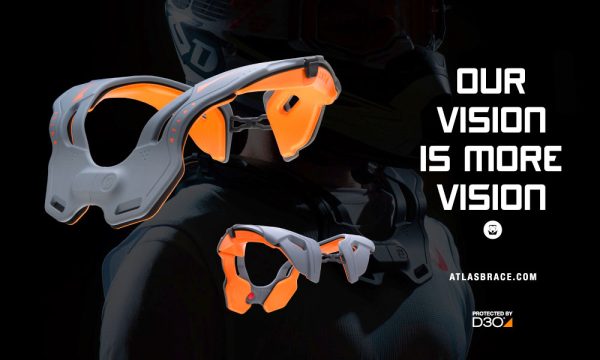
Brady Sheren: That was a major part of the design. When the chest and back supports sit against the body, we don’t want them creating another problem while they’re trying to protect the neck.
Atlas uses four separate contact points, with two chest supports and two back supports. Some earlier products used a single support at the front and another at the back, which meant those components sat directly over the sternum and spine.
My thinking was that if you’re going to transfer force into the body, deliberately placing the supports over the sternum and spine doesn’t seem logical. I knew professional riders who had either broken or cracked their sternum while wearing neck braces, and I didn’t want to follow that design path.
Our dual chest supports sit over larger muscle groups instead. We did the same at the rear to move the supports away from the spine.
That design also increased the total surface area contacting the body by 27 per cent compared with some competing products. The greater the surface area, the more broadly the force can be distributed.
An easy way to understand it is to poke yourself hard with one finger and then apply the same pressure with your whole palm. The difference in how that feels comes from spreading the load over a larger surface area.
When you’re dealing with a substantial impact, that can make a significant difference to bruising, muscle soreness, fatigue and the likelihood of a more serious secondary injury.
ADB: Riders such as Villopoto and Trey Canard made neck braces very visible at the height of their careers. Why do fewer leading Supercross riders appear to wear them now?
Brady: There are several things happening.
The first is that the initial trend died away. Neck braces arrived strongly in the mid-2000s and a lot of people tried them, but some of those early products weren’t particularly comfortable or refined.
A rider may have tried one back then, disliked it and permanently decided, “I’m not a neck-brace guy.”
The problem is that everyone’s products have evolved enormously since then. Atlas has improved, our competitors have improved and the category as a whole is far better than it was 15 or 20 years ago. However, some riders wrote the entire concept off based on an early experience and have never reconsidered it.
The second issue is sponsorship. We’ve had riders who wanted to use Atlas but couldn’t because of their team agreements.
I wouldn’t necessarily call it political, but there are commercial deals happening behind the scenes. A team may be sponsored by another protective-equipment or apparel company and tell the rider they cannot wear anything from a competing brand.
That has stopped several potential deals over the years.
ADB: Have you had professional riders try the brace, like it and still choose not to wear it?
Brady: Yes. We’ve had riders test it, come off the track and tell us, “I couldn’t even notice it was there. It felt great.”
I’ll say, “Perfect, let’s do a deal,” and they’ll still decide they don’t want to wear it.
At that point, I don’t know where else to take the conversation. They’ve confirmed that comfort and mobility aren’t the problem, but something in their own assessment still makes them decide against it.
ADB: Could compulsory neck braces help overcome the sponsorship problem by taking the decision away from teams?
Brady: Perhaps, but getting the industry to put safety ahead of money would probably happen shortly after we remove money from politics. I’d never say never, but it’s extremely difficult.
I understand why companies want exclusivity. They invest money into a team and want the riders to wear their equipment. The unfortunate part is that it can interfere with rider safety.
I understand the commercial reasoning, but it’s still unfortunate.
ADB: Is there anything else riders should understand when questioning whether neck braces work?
Brady: To me, the most interesting point is that we now have approximately 20 years of positive data and I’ve never seen a negative data set produced.
There are anecdotes involving individual accidents, but a sample size of one doesn’t establish a trend. It may be a terrible and tragic incident, but it doesn’t prove that the brace created a negative outcome.
If anyone has a credible data set showing neck braces cause a net increase in injury, I genuinely want them to send it to me.
In my view, it hasn’t been produced because it can’t be produced. Everything we’ve seen points towards a significant net benefit.
ADB: After everything you’ve learned through development, testing and studying the available data, what is your message to riders still unsure about neck braces?
Brady: Read the information and make your own decision.
Don’t base it solely on a rumour from the pits or one individual accident. Look at the large data sets, understand what the product is designed to do and consider the consequences of the injuries it is trying to prevent.
No neck brace can guarantee that you’ll never suffer a severe injury. We can’t make that claim, and neither can any other protective-equipment company.
What we can say is that the available evidence shows a substantial net benefit. I’ve seen around 20 years of positive data and no credible large-scale data showing that neck braces create a worse overall outcome.
You wear a helmet even though it can’t save you in every possible crash. You wear boots even though they can’t guarantee you’ll never injure an ankle. Protective equipment is about improving your odds.
A neck brace belongs in that same conversation.
I hope riders wear one and never need it. That is the perfect outcome.