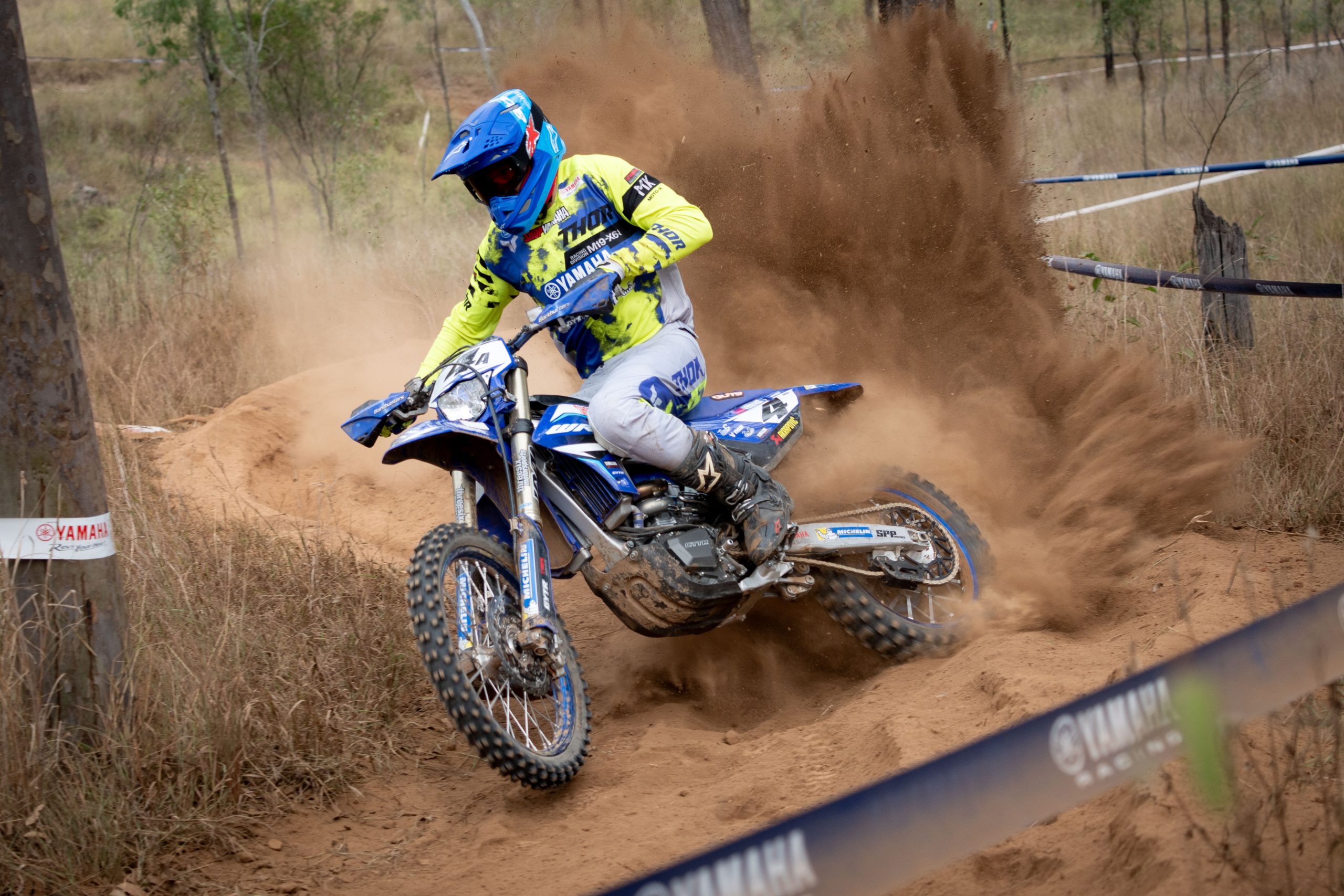
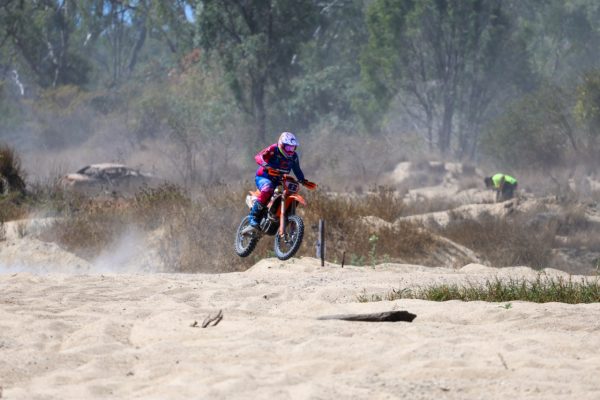
The Don River Dash might not have the history of Finke or Hattah, but it is rapidly earning a reputation as one of the toughest and most unique off-road races in Australia. Held in the Don River at Bowen, Queensland, the eighth running dished up around 300km of deep, coarse sand, high-speed river straights, flowing water crossings, hidden rocks, huge holes and a track that was changing underneath the riders constantly. Heavy rainfall and flooding earlier in 2026 had completely reshaped the river, forcing organisers to put hundreds of hours into creating two 25km race tracks running upstream and downstream.
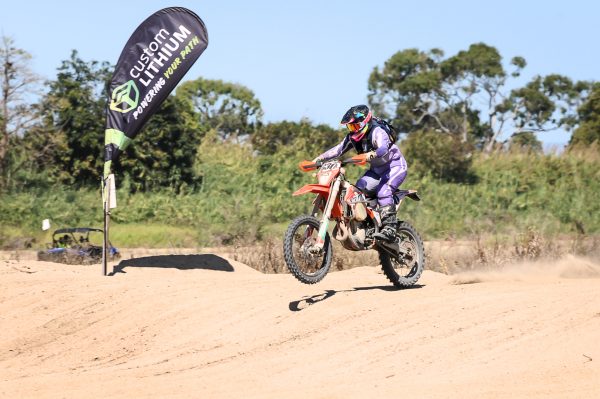
Into that mess stepped Newcastle’s Levi Stephens. Runner-up at the Don in 2025, Stephens returned in 2026 aboard a 500 and produced the ride he’d been threatening for some time, completing the race in 2 hours and 50 minutes to take the outright bike victory. Queensland’s Eli Englebrecht finished second in 2:57, with Tomas Kruger third in 2:59.
For anyone who has been watching Stephens over the past few years, the result shouldn’t come as a complete surprise. He’s already been putting together some impressive performances at Australia’s biggest desert races at an age when most riders are still figuring out how the hell to go fast in the first place. But winning the Don is another step entirely, so after the dust – or more accurately, mud and river water – had settled, I sat down with Levi to find out exactly how he did it.
STEPPING UP TO THE 500
There was a big factor Levi was quick to acknowledge. Defending winner Ivan Long wasn’t there, while Brent Storey – a rider many had tipped as the man to beat – didn’t have the weekend expected of him.
“Ivan wasn’t there either, so that obviously helped,” Levi said. “I reckon we would’ve had a good battle. But Brent Storey was there and he was the one to beat, everyone said that. I’m not too sure what happened to him on the weekend; he still rode well, but I think I just stepped it up to another level a little bit and let it out. That was it.”
The move to a 500 was a significant part of that step too. Stephens raced a stock GASGAS 450 at the Don in 2025, but the bigger bike gave him another layer of performance for a race where carrying speed through brutally rough sand is everything. “I was riding a 500 this year and they’re obviously a bit more ballsy and a bit more powerful. I reckon that helped a lot, and my riding has definitely progressed.”
“Just the power everywhere,” Levi explained. “Especially when you’re coming from sixth to fifth gear, it’s still revving really hard. That’s when you get sketchy on the 450 a little bit because you’re already in top gear. When you’re going over the bumps, I think that’s what helps a lot on the 500.”
That doesn’t mean Stephens believes a 450 can’t win the Don. Callum Norton and more recently David Walsh have all helped keep the debate around 450s versus 500s alive in Australian desert racing, and Levi isn’t about to write off the smaller-capacity option.
“Oh yeah, for sure,” he said when I asked whether the Don could be won on a 450. “I just think as my riding progressed from Finke, the 500 has helped me a lot. The 450s definitely feel lighter and they’re definitely a good bike. I’ve still got one of my 450s that I muck around on. They’re still the best bike, I reckon – it just depends.”
A DIFFERENT DON
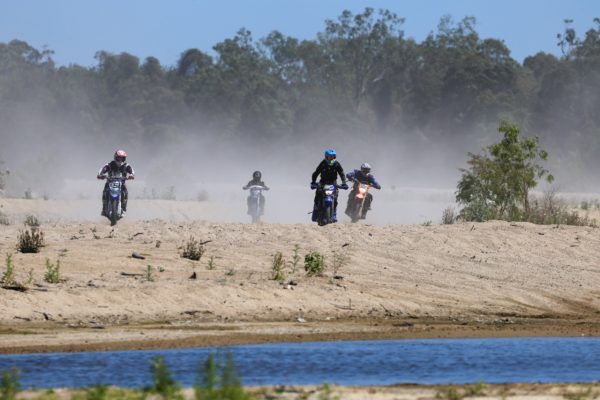
Whatever Stephens chose to ride, he was going to have his hands full in 2026. Heavy rain and flooding during the early months of the year washed away huge amounts of sand and vegetation from the Don River and left the organisers with a completely different canvas. Residual water remained in sections of the river and heavy machinery was needed just to produce a safe, raceable course.
The end result was a Don that Levi reckons was substantially harder than the one he’d raced to second place on in 2025. And he knew it almost immediately.
“Man, it was like Sunday last year on the first race day. It was that rough,” he said. “I was like, ‘Oh, what have I got myself into?’ It was super chopped up because of all the rain and all the washouts. It was chopping everywhere.”
The Don’s coarse, heavy sand already has a reputation for chewing through bikes, but this year riders also had to deal with holes and washouts that could punish them for backing off at exactly the wrong moment. “Some spots you couldn’t let off because if you let off, your back wheel would almost make you crash,” Levi said. “It’s that heavy sand.”
TEN NEAR-CRASHES IN ONE LAP
Stephens was hanging it out and wasn’t immune to a few scary moments himself either.
“I definitely had a few moments, especially pre-running the track,” he said. “My good mate Jesse Ryan and I were pre-running together and we were just hitting stuff flat-out, and then next minute we were almost crashing. It was good, though. We were telling each other what to do.”
Then came race day. “On the first day, because I was pushing really hard, I definitely almost had – I don’t know – probably 10 crashes on the first lap. Just because the water’s that deep. It’s pretty sketchy.”
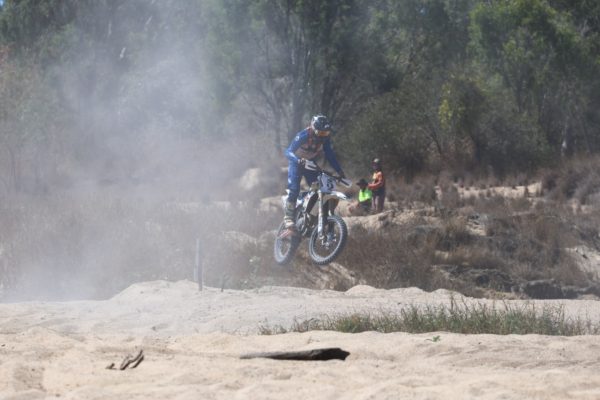
Stephens reckons the 2026 course was considerably tougher than the previous year, although the organisers had added more turns to work around the water. Ironically, he liked that part of the revised layout because it brought the speeds down in places and gave the bikes a slightly easier time. “They had a few more turns in it because of the water, which slowed it down a bit,” he said. “I reckon that was better for the bikes. They should do that even when it’s dry.”
130KM/H INTO WATER
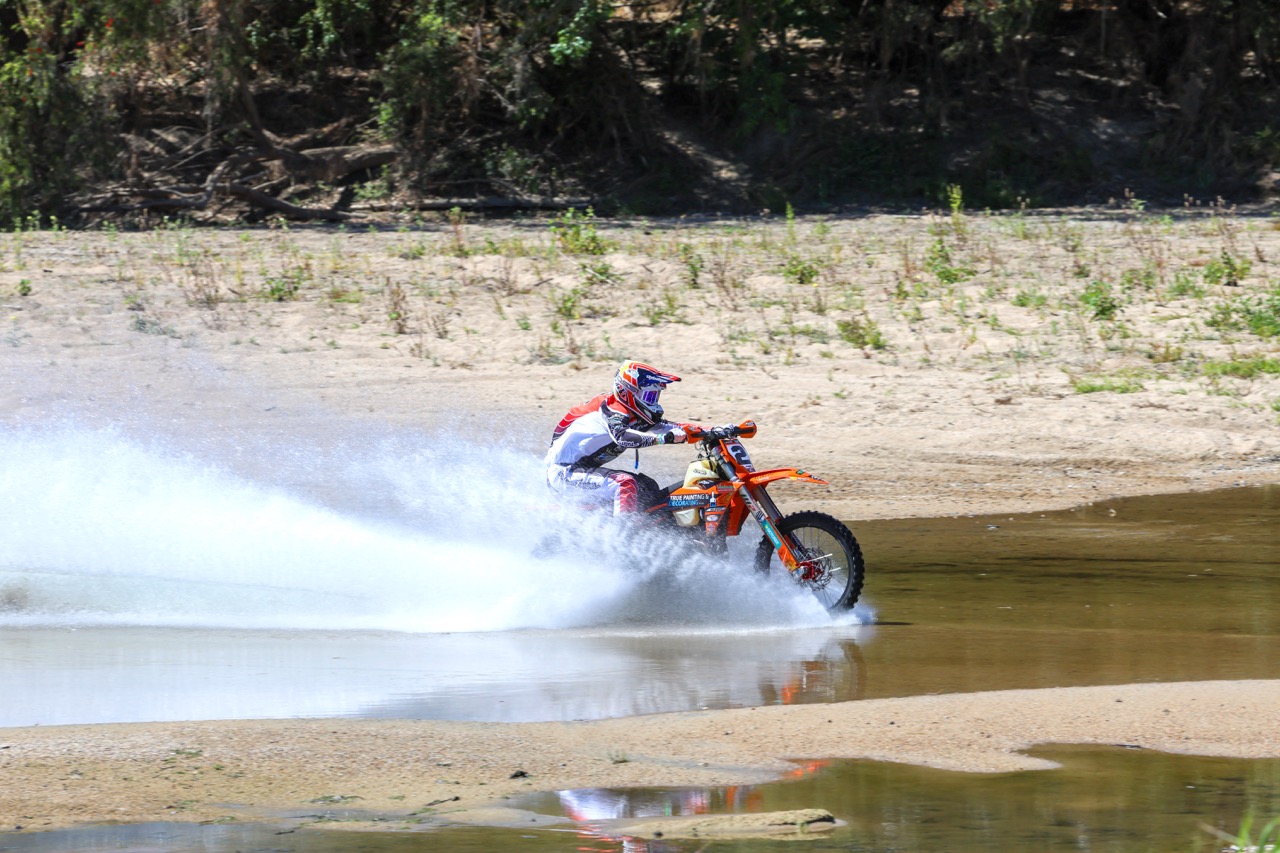
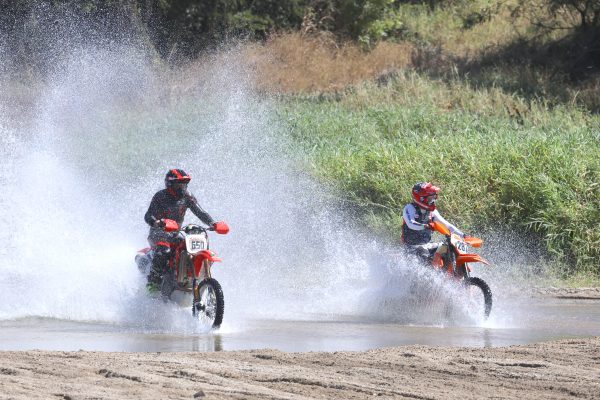
The photos from the Don tell half the story. Riders are charging down a riverbed and suddenly disappearing into sheets of water, often with the rear wheel almost swallowed by the crossing. What a still image doesn’t convey is how bloody fast the front runners are arriving.
Some crossings were actually flowing this year rather than simply holding standing water. Then the trophy trucks would go through, digging the sand out and making those same crossings progressively deeper. “Some of the water crossings you’ve probably seen videos of, they’re actually flowing,” Levi said. “When the buggies go through, that digs the sand out, so it just gets even deeper because the water keeps coming through.”
How fast do you hit something like that? Pretty bloody fast.
“There are river sections that are on straights and there might be a bank for 50 metres, then another one,” Levi explained. “You’d be able to hit them wedged, but if you get sketchy on the first one you might crash on the next one. Some of them you’d be hitting doing 120 or 130 on the hard sand, and then some you’d be hitting at about 70km/h because they’re just that deep. You’ve got to try and wheelie.”
KEEP THE HATTAH SETUP
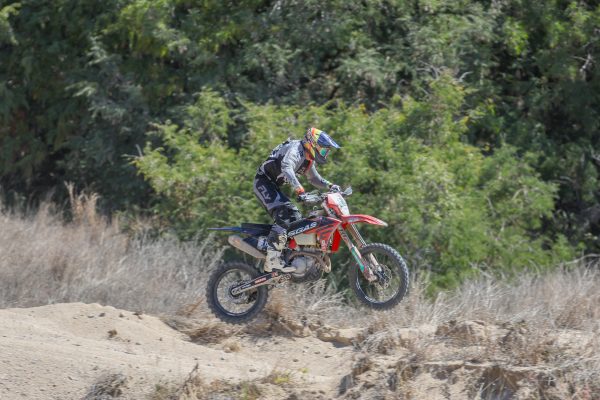
You’d imagine a race as unique as the Don would require some equally unique motorcycle setup. In reality, Stephens kept things surprisingly simple and essentially arrived with the setup he’d already developed for Hattah.
“I didn’t do any suspension changes from how I literally just rode Hattah,” he said. “Last year I rode the Hattah setup and it was good. It was a little bit harsh, but when it got rough it was safer. It felt safer hitting the big bumps.”
The familiar desert-racing additions were there: steering damper, Steg Pegz and the other pieces that help a rider hang onto a 500 when the riverbed is doing its best to rip the handlebars out of their hands. But one area Stephens wasn’t prepared to gamble on was tyres and mousses. He fitted a new rear tyre and new mousse for each day.
“That was just to be safe,” he explained. “Obviously it lasts a day. I haven’t opened a tyre up and had a look at it, but we got two, one for each day, which was a safety thing. With new ones, you can’t really beat them.”
The heat generated in high-speed desert racing can destroy a mousse, and Stephens won’t use one in the rear at Finke. “You can’t run a mousse at Finke,” he said. “In the front wheel you do, but out there you just run the heavy-duty tubes and the big desert Michelin tyres. I run a mousse at Hattah, but not at Finke. It’ll just fall apart.”
A FAMILY OPERATION
For all the speed and professionalism required to win an event like the Don, there’s still something beautifully grassroots about Stephens’ effort. There’s no giant factory semi parked behind him and an army of technicians waiting for the bike to return. Mum and Dad are still right in the middle of it.
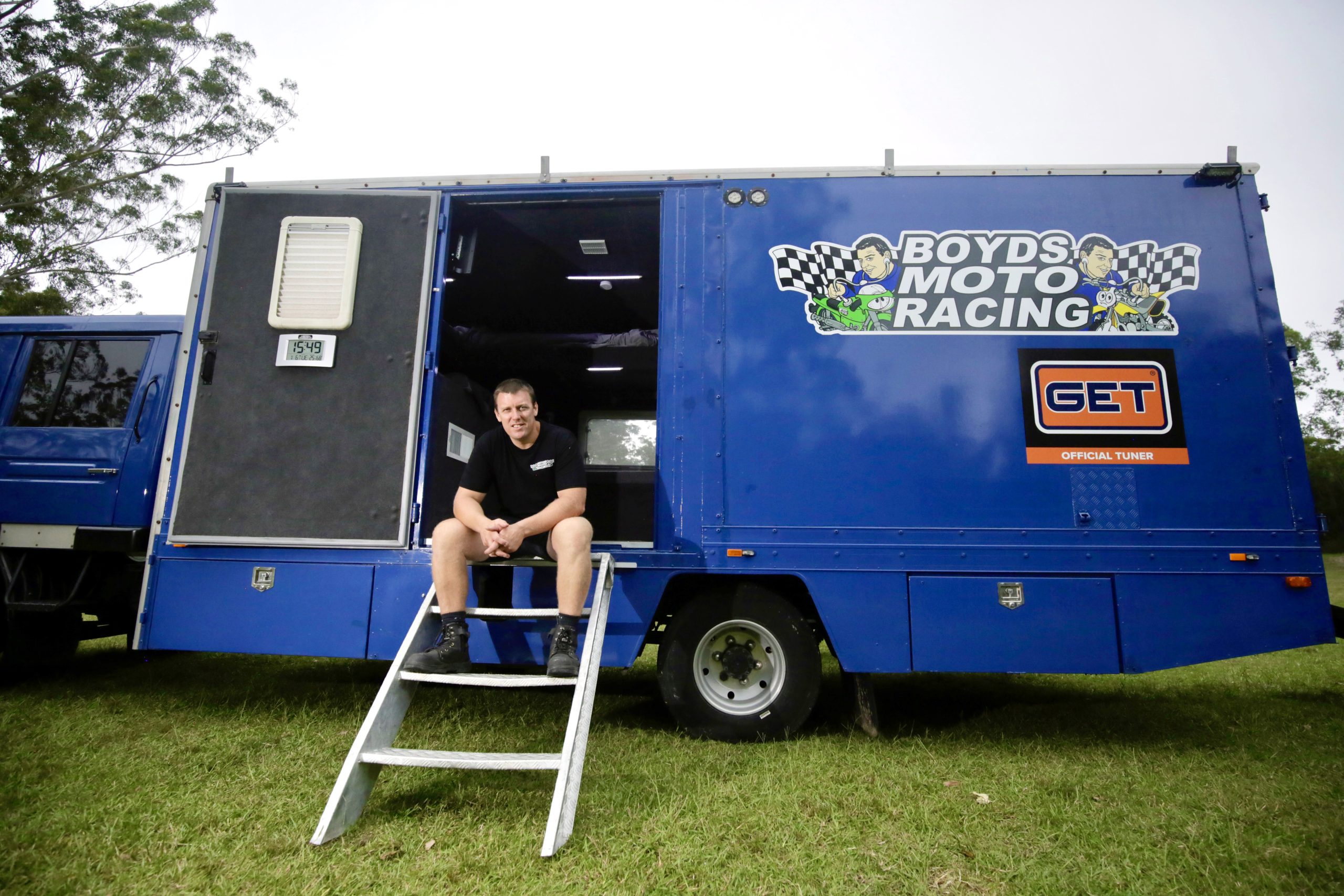
“Mum and Dad, I use their van,” he said when I asked how the whole operation gets north. “I’ve got a few sponsors that help out with a bit of money, fuel money and accommodation and all that.”
Stephens loves it though and he reckons Bowen offers something different.
“I think it’s the best vibe of any race,” he said. “You get there and everyone’s relaxed. All the top guys, we all do it at Finke, but it’s a bit more serious. At Don everyone’s relaxed, we’re talking to each other. It’s nice, it’s hot, you’ve got your shirt off, you’re swimming.”
Then he laughed. “You go into the pub and hang out. It actually feels like a holiday.”
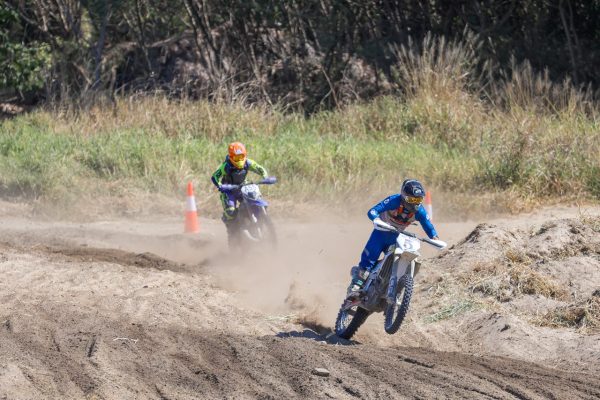
That’s part of what makes the Don such an appealing event. It’s a destination race in the same way Finke is, only instead of heading into the Red Centre you’re travelling north to Bowen and the Whitsundays. For riders and families coming from the southern states in September, swapping the cold for warm Queensland weather, pubs, swimming and two days of race bikes and trophy trucks hammering through a river isn’t the worst way to spend a week.
RAIN LEVELLED THE FIELD
Course knowledge is becoming increasingly important in Australian desert racing. Finke is the obvious example, where the front runners can spend enormous amounts of time pre-running and learning the track. As the Don grows, Stephens expects a similar level of preparation to become increasingly valuable.
“I think so because it’s getting bigger and bigger every year,” he said. “They’re getting more sponsors and they’re putting more money into it. It’s actually a really good race.”
But the rain created an unusual situation in 2026. The river was so wet that even the locals couldn’t spend months learning the race line. According to Stephens, some couldn’t properly pre-run until around two weeks before the event, and that effectively neutralised one of the biggest advantages a local front-runner can possess.
“That’s where I think I came in and got the advantage because they were on the same level as me,” he said. “They knew the track the same as me. Obviously, if you know the track it’s going to help you a lot. I knew they weren’t pre-running the track for months and months beforehand,” he said. “Apparently it was too wet. They couldn’t even go through the puddles until two weeks before.”
NUMBER ONE WILL LOOK BETTER
For the Burdekin Offroaders club, 2026 was another significant step for an event that has now been run eight times. Hundreds of hours went into rebuilding the course after the floods, and club president Michael Marson credited the volunteers, officials, recovery crews, track-preparation teams, sponsors and wider Bowen community with making the weekend possible.
For Stephens, it was the weekend where a runner-up became a winner. Twelve months earlier he’d carried number two away from Bowen. This time he earned the number that matters.
SHARING THE RIVER
The bikes don’t have the Don to themselves. Trophy trucks are a huge part of the spectacle, and their effect on the course is always going to generate debate when two and four wheels share the same patch of river.
Stephens is surprisingly positive about them. “People love the trophy trucks, so it gets more people around it,” he said. “I don’t think they ruin the track as much as they do at Finke. They smash through the sand, kind of.”
There are negatives, particularly around the water, where the trucks can create a sharp edge on the exit after digging through the riverbed. But they can also knock the edge off other obstacles and establish two substantial wheel tracks through rough sections. “On some of the sketchy stuff they take the edge off,” Levi said. “They get their two big ruts going and take the edge off stuff. So I like it.”
BRING ON THE BIG DOGS
Stephens’ victory came without several riders he’d have loved to measure himself against. Australia’s growing presence at events such as Baja means the domestic calendar is now competing with international opportunities, and those clashes inevitably remove some big names from races back home.
“I’d definitely like to see Liam back. I’d like to try and battle with him and a few other people. I wish my brother was up there – that would’ve been good.”
His brother raced the Don in 2025 but crashed, while other established desert specialists have also been absent as overseas opportunities have increased. “
Mens
| Place | Rider | |
| 1st | Levi Stephens | |
| 2nd | Eli Englebrecht | |
| 3rd | Tomas Kruger |
Ladies
| Place | Rider |
| 1st | Georgia Murray |
| 2nd | Susan Koop |
| 3rd | Katie Robinson |