Retirement, for Dean Ferris, has never looked like a bloke putting his feet up and disappearing quietly into the sunset. The first time he stepped away, it was because his body had finally had enough. The second time, it looked more final again. Then he came back in 2023, won another title, drifted out the back door in 2024 without really announcing anything, and most people figured that was probably it. Then, in late 2025, Ferris signed with Penrite Racing Empire Kawasaki for the 2026 ProMX season and did what Dean Ferris has always done best: made the paddock pay attention again.
That’s what makes this latest return so interesting. It isn’t just another rider hanging on too long or chasing one last pay cheque. Ferris had actually gotten comfortable with stepping away. He’d started coaching, bought a two-stroke for fun, dipped his toes back into the grassroots side of riding and, by his own admission, was finally content. Then the phone rang, Kawasaki put something real on the table, and the four-time Aussie motocross champion started looking at the sport through a different lens again.
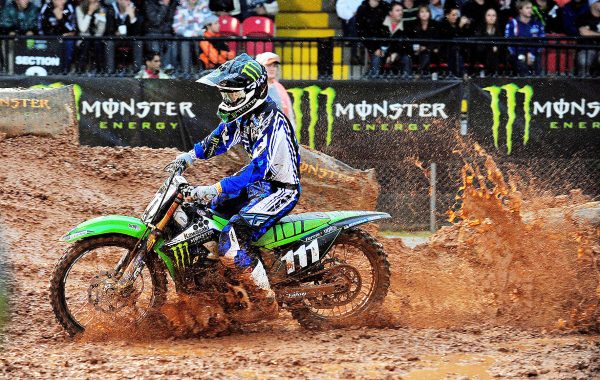
The story matters because Ferris has never had a straight-line career. He’s raced Europe, raced the US, won in Australia, and made enough sliding-door decisions to fill a second life. Some riders are remembered for a title tally. Ferris will be remembered for that too. But there’s something else about him that stands out: every phase of his career seems to have forced a reckoning. He’s had to walk away, come back, own his mistakes, and rebuild more than once.
And now he’s doing it again.
A hard year
Ferris doesn’t dress it up like a fairytale comeback. There wasn’t one perfect moment where the clouds parted and he knew he had unfinished business. If anything, it was the opposite.
He’d stepped away in mid-2024 after injury and a season that was effectively done. “I stepped away probably May, June 2024, had an injury, season was done,” he said. “And I was like, oh well, yeah, I’ll just be on my merry way.”
But walking away from motocross is never just about not racing. It’s about losing the obsession and all the weird little highs that come from riding a dirt bike at a level very few humans ever will. Ferris admits that part hit hard.
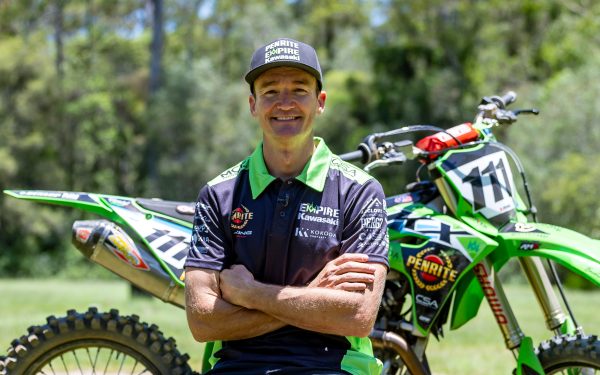
“Honestly, it was hard for about a year trying to step away from the sport. Something that you love, the adrenaline, I don’t know, all the kicks that you get out of riding a bike.”
That’s the bit people forget with retirements. They talk about the decision like it’s a line in the sand. In reality, it’s more like a long detox from the only life you’ve ever really known. Ferris got through that period the way a lot of racers do: by finding another reason to ride. He bought a two-stroke. Not for a title chase, not for a factory deal, just for fun. “I ended up buying myself a two-stroke, literally just for fun,” he said. “And also I was coaching, like, I’ve got a few kids that I coach, and I just wanted to have one to do demos.”
He then signed up for a Transmoto event with his brother, started getting himself into shape for that, and fell back in love with riding from a completely different angle. “I just really, really enjoyed riding a 2-stroke. It was like back to the grassroots, really loved that.”
That wasn’t the same as wanting to race professionally again. In his mind, it was the opposite. He wanted Day in the Dirt, Transmoto, maybe Hattah, maybe some local races, maybe just the fun stuff.
Then Kawasaki called.
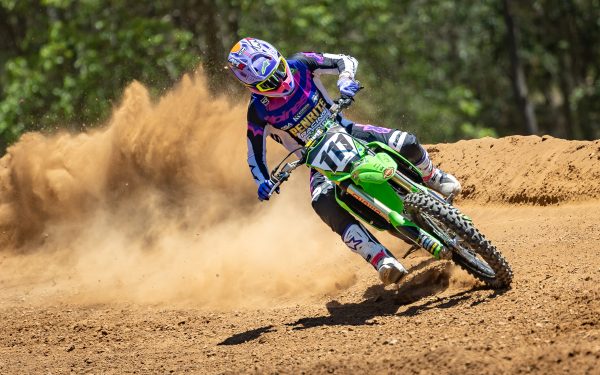
The five things that had to line up
The way Ferris tells it, he didn’t leap at the chance. He actually tried not to.
He’d been ringing around with the idea of doing Hattah and some local races, maybe three Queensland nationals, and when Empire Kawasaki got wind of that, they flipped the whole thing back at him. “They pretty much were like, well, yeah, we’ll definitely do that, but hey, would you want to race for us fulltime?”
That could have been a one-minute yes for a lot of ex-racers. It wasn’t for Ferris. “Honestly I tried to resist it.”
And this is where the third act of Dean Ferris becomes more interesting than the first two. Younger Ferris might have just gone all in and figured it out later. The Ferris of 2026 had conditions.
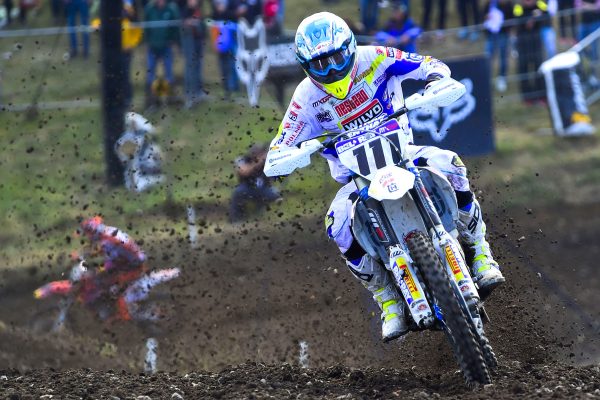
Firstly, the bike had to suit him. Empire Kawasaki sent him a stock KX450, and before any deal got serious he took it to a local track to feel the chassis out. “I’m like, okay, chassis is good. No problem.” The engine had to stack up too, but he already had a good read on that from watching Luke Clout race. “He’s probably been getting the best starts he has in his career. So I’m like, engine’s good.”
Then there was the team environment. Ferris had worked around Brad McAlpine enough to know what he was getting there, and his early interactions with Tyson Cherry were positive. “Environment’s good.”
But the biggest one wasn’t bike-related at all. “The big one was, okay, is this going to work with my family dynamic, you know, and that was the most important.”
That’s not a throwaway line. Ferris is a dad now, with “2 active girls,” and a wife who had to be part of the decision in a real way. He had to sit down, work through the pros and cons, and figure out if the rhythm of a full-time campaign could coexist with the life he’d built away from racing.
And then there was the body. He had to know he could still get himself back to the level he expected. “If I’m going to come back, I need to get it at least to the level that I’d been at.” When he called his trainer, the response was immediate. “He got all excited. He was like, no doubt we can do that. And beyond as well.”
Once all of that lined up, the resistance faded. “With all of those elements lining up and everything felt right, it was like, all right, let’s do it.”
High standards, no entitlement
The easy story would be to write Ferris as the older champion coming back for one last swing, talking big and expecting the old magic to just reappear. But that’s not how he talks.
His expectations are high, but not arrogant. “Look, I’ve won four of them. There’s a chance I could go for another one. For me mainly, it’s all about how I feel on the bike. Get my body to a higher level, get my bike to the highest level I can, enjoy it.”
He also made a point that says a lot about how he’s lasted this long: despite all the winning, he’s never gone to a race believing it should simply happen because he’s Dean Ferris.
“I’ve never been one, even though I’ve done a lot of winning, I’ve never been one to go to the race and expect to win. I go to the race going, there’s some good guys. I need to show up, ride to my ability.”
Owning his own mess
The most revealing part of the whole conversation wasn’t actually about retirement or comeback at all. It was about why Ferris eventually became Ferris.
When asked what turned him from a fast guy running around fourth into one of the winningest riders in the country, he didn’t talk about fitness. He didn’t talk about the right trainer or the perfect team. He said, simply, “Owning all my shit.”
That’s as clean an answer as you’ll ever get. He says he was always disciplined, always worked hard, always wore his heart on his sleeve with training. The problem wasn’t effort. It was racecraft, decision-making, and the mental side. “I wasn’t wise enough with my racing and my racecraft and stuff.”
He says the real turning point came at round one in 2016. He’d won motos, had the speed, had everything under control, and then the start didn’t go to plan. In classic early-career Ferris fashion, he saw red and did what he’d done too many times before. “I just completely wiped myself out in the first 20 seconds of the race, which I’ve been known to do up until that point.”
That was the moment. “I knew it was on me, and that was the moment I just was like, I have to change. No one else did that to me.”
He calls it what it was: impatience. “I was just always mega impatient and just like, I’ve just got this instinct to just seek and destroy. Honestly, and I still have it. I just know how to harness it now.”
That might be the most important Dean Ferris quote of the lot, because it explains his whole career. The instinct never changed. He didn’t become softer, or slower, or less driven. He just learned to point the weapon properly.
Europe, America and the roads not taken
Ferris’ career is loaded with moments where it could have turned into something completely different. He remembers being on the verge of walking away in 2010. Privateer. A few Hondas. Not much money. Good enough to be around the pointy end, but not seeing a future worth all the pain. “There was a point there… I was like, oh, I don’t think I’m gonna do this. This is all way too hard. I’d rather just, I don’t know, get a job, drive a dozer, whatever.”
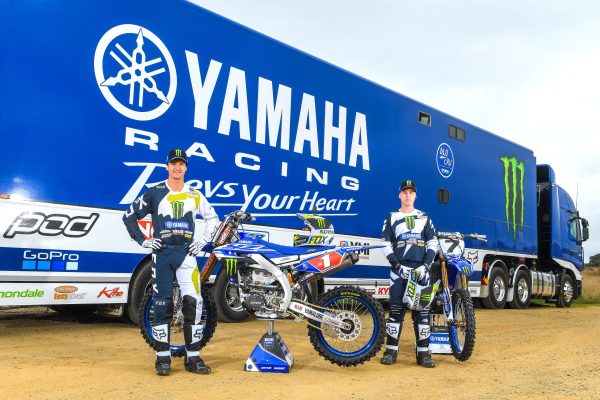
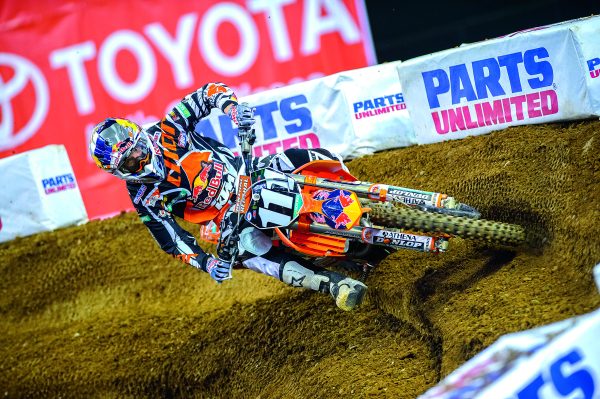
He didn’t. Then Europe happened. Then Red Bull KTM America happened. Then more Europe. He says it still feels surreal in hindsight, especially when he lists the teammates: Marvin Musquin, Ken Roczen and Ryan Dungey. “That was the spinout.”
The big surprise there is that America wasn’t the dream he thought it would be. After the shiny ball effect wore off, he realised motocross, not Supercross, was what he actually wanted. So when the chance came to go back to Europe and fill in for the factory Husky team, he took it. Packed up his apartment in a day and a half, got on a plane to Brussels, and when he landed he felt relief. “I was happy as a pig in shit to be back in Belgium.”
That says a lot too. Ferris never chased the most glamorous answer. He chased the one that felt like him.
Seek and destroy
The obvious angle is that Ferris is back again. But the better angle is why. He isn’t back because he didn’t know who he was without racing. In a weird way, he took the time to figure that out. He coached. He hung with his kids. He got back to the grassroots. He worked on himself. Then a ride came along that ticked the bike box, the team box, the body box and, most importantly, the family box.
“I guess Kawi called when all of that was done.” That line says everything. This isn’t the desperate comeback. It’s the considered one. And that’s why it could work.
Ferris is older now, obviously. But he also sounds clearer. More honest. More accountable. So yes, Dean Ferris retired twice. And yes, now he’s back again.
But the real story isn’t that he came back. It’s that after all the twists, crashes, countries, contracts, titles and near-misses, he finally seems to know exactly why.
Best Bike and teammates?
Ferris’ has ridden enough good machinery to know what works and what doesn’t. He says the best chassis he ever rode was his 2013 Yamaha YZ250F in Europe. Once they ditched the lowered-engine setup and got back to a standard chassis with good Technical Touch air forks, the thing came alive. “That chassis was a standout for sure.”
Best engine? His 2023 title-winning Yamaha, after mid-season head work. The three-speed Cosworth engine was a cracker too.
As for teammates, there are two clear standouts: Mel Pocock and Alexander Tonkov. Pocock because they got along “like a house on fire” and still raced each other hard. Tonkov because the personalities just clicked. “We were just like bros.”
The most intense? Billy Mackenzie. Which will surprise exactly nobody who has ever met Billy Mackenzie.