1 DRAIN THE OIL ON A 50SX
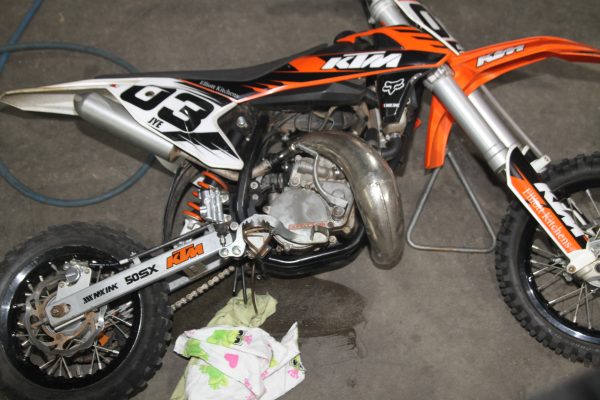
Start by draining the engine oil by removing the sump plug. If the oil has recently been changed and you don’t want to waste it, you can simply lay the bike over on its left side so the oil stays inside the engine when the cover comes off.
2 REMOVE BRAKE PEDAL
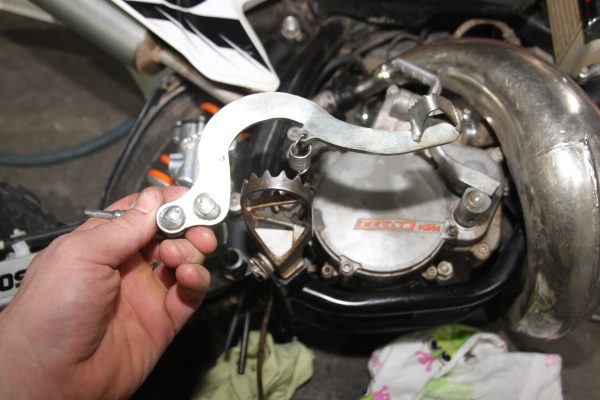
Remove the rear brake pedal and its return spring. This is done by undoing the nut on the back of the brake pedal pivot pin that secures the pedal to the frame.
3 CLUTCH COVER
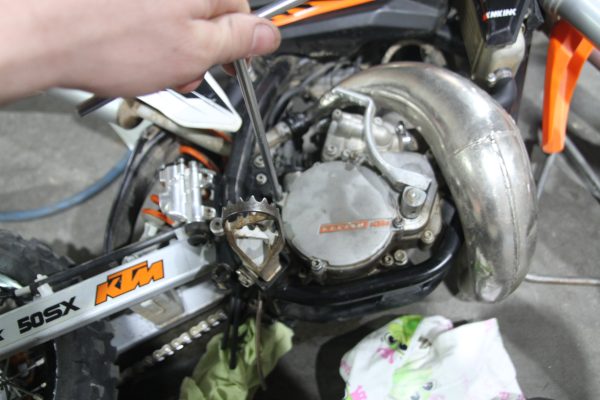
Take off the clutch cover by undoing the 8mm bolts holding it in place. Make note of where each bolt comes from before removing them, as they are not all the same length and need to go back in the correct positions.
4 BASKET CASE
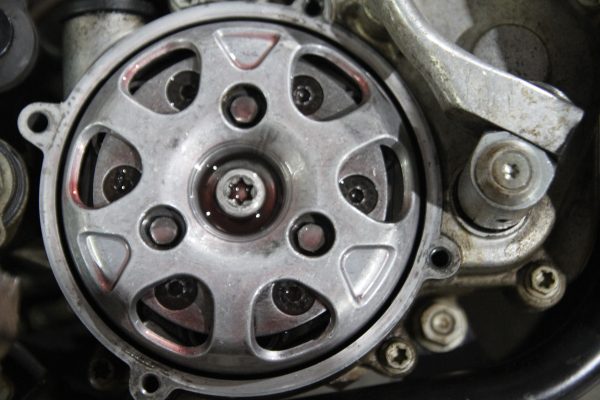
Rotate the outer aluminium clutch basket until the three holes in the centre line up with the adjuster bolts on the inner steel clutch hub.
5 CLICK HEADS
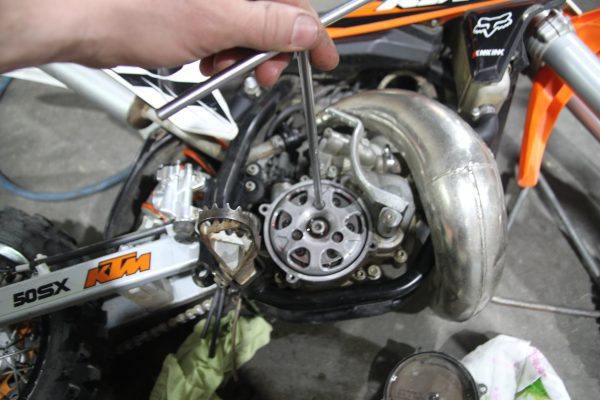
Adjust the three 8mm bolts evenly to your desired setting. Each adjuster must be in the same position, so make sure you turn them the same number of clicks.
6 REFIT COVER
Reinstall the clutch cover. If the rubber gasket shows any signs of damage or wear, replace it before refitting.
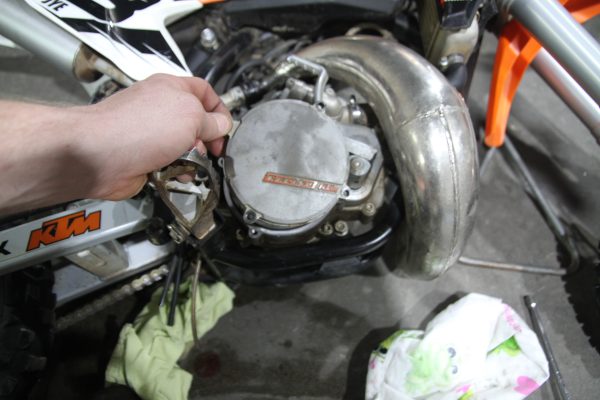
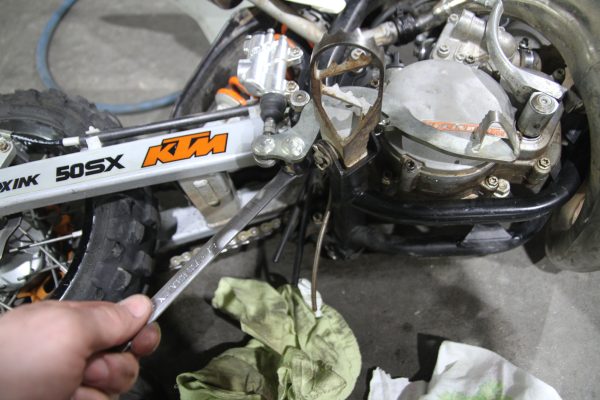
7 GREASE PEDAL
Before reinstalling the brake pedal, apply some waterproof grease to the pivot point. Then refit the pedal and ensure the return spring is installed correctly.
Technical Editor: Mat Boyd
TIPS
DO’S
- Replace the clutch cover gasket if it shows any damage or signs of leaking.
- Apply grease to the brake pedal pivot pin before reinstalling the pedal.
- Ensure all clutch adjustment bolts are set to exactly the same position.
DON’TS
- Don’t apply excessive force when adjusting the clutch bolts.
- Avoid over-tightening the clutch cover bolts as the cover can crack.
- Don’t seal the clutch cover with silicone. If the gasket is damaged, replace it instead.
TOOLS
8mm T-bar or socket, spanners, rags
BEWARE
If the rider is a beginner, still learning, or on the smaller side, avoid adjusting the clutch to a more aggressive setting. Doing so will make the bike much harder for them to ride.
CLUTCH VOODOO
BASIC SETTING
The clutch adjuster bolts operate just like suspension clickers on a fork. Turn each 8mm bolt counter-clockwise until it stops. Then wind them back clockwise nine clicks. This is the standard base setting, which produces a clutch slip speed of roughly 8700–9300rpm.
VARIATIONS
To increase the clutch slip speed, turn the adjusters clockwise. Each click raises the slip speed by roughly 250–350rpm.
To reduce the slip speed, turn the adjusters counter-clockwise. Each click lowers the slip speed by approximately 250–350rpm.
SLIP SPEED
Slip speed refers to the engine rpm at which the clutch stops slipping and begins to fully engage, allowing the bike to move forward. A higher slip speed means the engine revs higher before the clutch hooks up, resulting in a more aggressive launch and quicker access to peak power. A lower slip speed allows the bike to move off more gradually as the revs build more slowly. Higher slip speeds generally suit larger or more experienced riders, while lower settings are better for smaller riders or beginners.