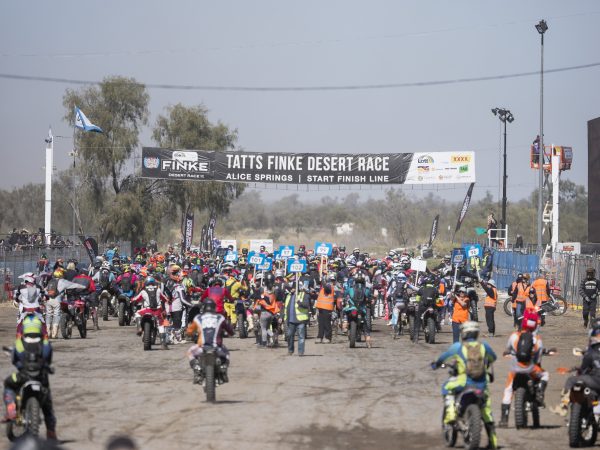
If ever there was a year for the Tatts Finke Desert Race to remind everyone why it remains Australia’s toughest and most iconic off-road event, the 50th anniversary was it. The build-up had been enormous. Riders arrived in Alice Springs from every corner of the country. Former winners returned. Manufacturers poured resources into their programs. Families, volunteers and fans flooded into Central Australia to celebrate half a century of desert racing.
The track itself wasted no time reminding competitors why Finke has earned its reputation. Months of traffic, rainfall and constant use during pre-running had transformed sections of the course into a brutal test of endurance. Deep whoops, hidden holes, square edges and endless bulldust ensured that simply reaching Aputula on Day One would be an achievement for many riders.
The King Returns
When the flag dropped on Sunday morning, David Walsh immediately looked comfortable. The five-time winner immediately looked comfortable. Walsh had qualified second in prologue and carried himself with the calm confidence of a rider who understood exactly what was required. Whilst younger riders attacked the desert, Walsh looked patient. Every line choice, every fuel stop and every high-speed section appeared measured and calculated.
Experience matters at Finke and nobody understands that better than Walsh. As the kilometres ticked away, he slowly established control of the race. Whilst many riders were battling the track, Walsh appeared to float across it. By the time he reached the Finke township, he held a commanding lead and looked every bit like the champion many believed had one more victory left in him.
Behind him, the race was unfolding very differently. Defending champion Corey Hammond entered the event as one of the favourites and was firmly in contention early. Then Finke struck. Approaching Fuel Stop Two, Hammond suffered a flat tyre. The Peter Kittle Honda crew completed a rapid wheel change and sent him back into the desert, but valuable minutes had already been lost.
Even then, the worst was still to come. Only kilometres from the finish line at Finke, Hammond’s chain failed. The reigning King of the Desert suddenly found himself standing beside a broken motorcycle in the middle of the desert. Months of preparation, thousands of dollars and hundreds of hours of work had been reduced to a simple choice.
Quit. Or push?
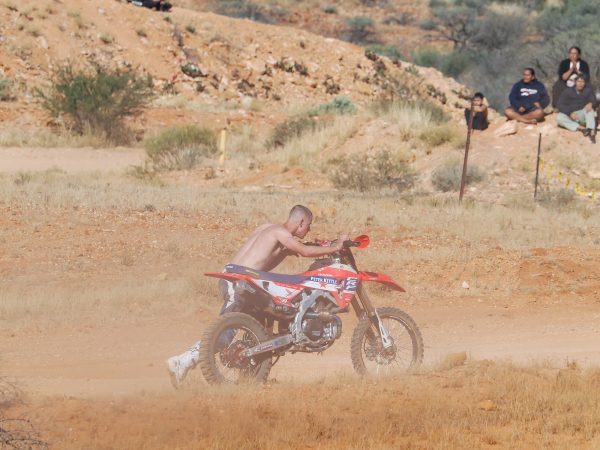
Hammond pushed.
He pushed his motorcycle through sand and over rises. He pushed because after everything invested to get there, quitting wasn’t an option. Eventually he dragged the bike across the finish line and recorded 33rd place on corrected time.
Exhausted and emotional, his response summed up exactly why people love this race.
“Mum didn’t raise no quitter.” It became one of the defining moments of the entire weekend.
Rest and repeat
As riders rested overnight, crews returned to work. Tyres were changed. Suspension was checked. The race may pause overnight, but Finke never truly stops.
Monday morning brought a different challenge. The return trip to Alice Springs is often harder than Day One. Riders are fatigued, the track is rougher and mistakes become more likely. Every competitor left Aputula carrying a different objective.
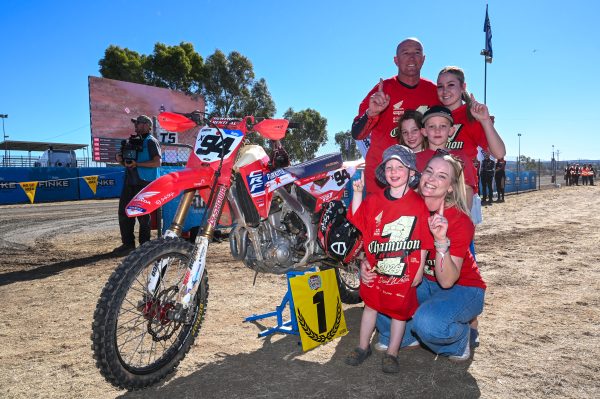
As the kilometres disappeared behind them, history slowly began writing itself. Walsh maintained his advantage and rode a near-perfect race back to Alice Springs. The veteran crossed the line with an overall time of 3 hours, 49 minutes and 27 seconds to secure his sixth Tatts Finke Desert Race victory.
The result tied Toby Price’s all-time record of six outright motorcycle wins. It also delivered Honda its first Finke victory since 2013 and the manufacturer’s 21st outright victory overall.
Campbell Hall again proved he belongs amongst Australia’s elite desert racers. The young privateer pushed hard all day and eventually secured second place for the second consecutive year, finishing just over six minutes behind Walsh.
“It feels good to get second,” Hall said. “I had a few sketchy moments, the whole track is tough but we’re here now.”
Hall remains one of the sport’s brightest young stars and at just 20 years old appears destined to challenge for victories in the years ahead.
Joining Walsh on the podium was cousin Liam Walsh. After missing the 2025 event through injury, Liam produced one of the rides of his career to finish third outright aboard his KTM 500. The emotional result delivered a dream podium alongside his famous cousin.
Brothers Kodi and Levi Stephens completed the top five, whilst Madison Healey successfully defended her Queen of the Desert title to claim a third crown.
For Walsh, however, the victory carried extra significance. At 36 years old he had returned from retirement. He had switched manufacturers. He had accepted one final challenge. And now he stood level with Toby Price as the most successful rider in the history of the event.
The obvious question became: how? How does a builder from Alice Springs spend nearly two decades chasing a race that breaks motorcycles, bodies and hearts before becoming one of the greatest riders the event has ever seen?
The answer begins long before the 2026 victory. It begins with a local kid who grew up camping beside the track. A kid who simply wanted to race Finke.
WORKING CLASS MAN
On a cold June morning, the dust had settled on the 50th running of the Finke Desert Race and Walsh had cemented himself as one of the greatest Finke racers in history. Walsh had just achieved something few thought possible, nearly two decades after his first attempt at the race.
Within days, he was back at work. That has always been the David Walsh story.
While rivals chased racing careers, factory contracts and Dakar dreams, Walsh spent almost twenty years balancing work, family and an obsession with a race that has a habit of breaking both motorcycles and hearts.
Growing up in Alice Springs, Finke was Christmas in June. Like countless local kids, he spent his childhood camped beside the track, watching riders disappear into the desert and dreaming that one day he might join them.
When he finally did in 2007, aged just 17, success seemed a long way off…
Two weeks before the race he had crashed heavily, tearing his ACL and knocking himself unconscious. Bike problems in prologue left him starting 162nd, buried deep in the dust.
By the end of the weekend he had fought through the field to claim a class victory. It was an impressive debut, but nobody could have predicted what would follow. The next decade became a lesson in persistence.
There were crashes, injuries and mechanical failures. There were runner-up finishes and missed opportunities. There were years when he wondered whether he would ever become King of the Desert at all.
As his speed improved, one rival stood above all others. Toby Price.
Price would become both benchmark and roadblock. While Walsh steadily developed through the Honda years, Price seemed to always have the answer. Second places accumulated. Podiums came and went. Yet the top step remained frustratingly out of reach.
Then came 2017. With Price absent, Walsh entered the race as KTM’s lead rider and the overwhelming favourite. Everything finally appeared to be falling into place. He claimed the first prologue pole position of his career and dominated Day One, arriving in Finke with a six-minute lead over close friend Damon Stokie.
After ten years of trying, the dream was within touching distance. Thirty kilometres into Day Two, the motorcycle began to cough and lose power. Moments later it stopped completely.
The race was over.
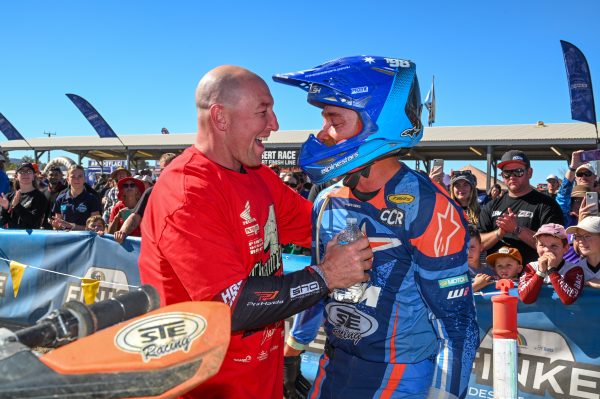
Walsh walked away from the bike, trying to process another crushing setback. Years of sacrifice and preparation had disappeared in an instant.
As he stood beside the track, a young girl approached him. “Do you ride motorbikes? I ride motorbikes.”
The innocence of the moment broke through the disappointment. Walsh handed her his goggles before watching as Stokie rode on to claim the biggest victory of his career.
For Walsh, it remains the most painful moment of his racing life. The following summer brought another tragedy. Only months after winning Finke, Damon Stokie lost his life in a racing accident.
The loss deeply affected the Central Australian riding community. For Walsh, it added another layer of perspective to a sport where success and heartbreak often sit side by side.
By 2019, the pressure had become impossible to ignore. Five times Walsh had stood on the podium. Twice he had entered as favourite. Questions about his ability to win had slowly transformed into questions about whether he ever would.
He carried a five-minute lead into the final day. Every kilometre felt like a battle against history. Years of bad luck and near misses played through his mind as he worked his way back towards Alice Springs.
Only after passing the prologue gates did he finally allow himself to believe it. Twelve years after his debut, David Walsh crossed the finish line and became King of the Desert.
The curse was broken. What followed was one of the most dominant periods in modern Finke history. Back-to-back victories became three. Three became four. Soon Walsh found himself chasing records that once seemed impossible. Yet even success comes at a cost.
The pressure of defending titles, managing teams, balancing family life and maintaining a career outside racing slowly began to wear him down. Eventually, the fire disappeared. Ahead of the 2025 season, Walsh shocked the sport by announcing his retirement. During a pre-run, he pulled over, climbed into the support vehicle and told his family he was done.
For the first time in fifteen years, he watched Finke from the sidelines. Camping beside the track with his children, he experienced the event from a completely different perspective. Watching their faces light up as bikes and buggies thundered past reminded him of his own childhood.
For the first time in years, there was no pressure. Just family. Just the desert. And strangely, that felt enough. Then Honda came calling.
The manufacturer was preparing a full-scale return for the 50th anniversary of the event. For decades Honda had been the dominant force at Finke, claiming twenty outright victories, but it had been more than a decade since a factory-backed Honda effort had contested the race.
They wanted Walsh to be part of it. At first he resisted. His memories of racing 450s against larger KTM machinery were still fresh. But after testing the new bike, he quickly realised how much had changed.
The conversation at home proved equally important. After months of retirement projects and renovations, his wife Kate offered some simple advice. “You need a hobby.” The comeback was on. Few expected what happened next.
At 36 years old, Walsh returned not as the young challenger, but as the veteran. The rider younger competitors had grown up watching. Against reigning King of the Desert Corey Hammond and a field full of hungry contenders, Walsh produced one final masterclass.
When the dust settled, he stood on top of the podium once again. His sixth King of the Desert title tied the all-time record. It also delivered Honda its 21st outright victory and ended a drought stretching back more than a decade.
Whether Walsh races again remains unknown. He told ADB Editor immediately after winning in 2026 he would not be back but we’ve heard that before. What is known is what happened next.
The trophies were packed away. The celebrations ended. Life returned to normal. For nearly twenty years, David Walsh chased a race that broke bikes, bodies and hearts. He lost opportunities, suffered heartbreak and experienced triumphs few riders will ever know.
Yet through it all, he remained exactly who he had always been. A builder from Alice Springs. A husband. A father. A working-class man who just happens to be one of the greatest Finke riders of all time.
2026 Tatts Finke Desert Race Results
- David Walsh(Honda CRF450R)
- Campbell Hall(KTM 500 EXC-F)
- Liam Walsh(KTM 500 SX-F)
- Kodi Stephens(KTM 500 EXC)
- Levi Stephens(KTM 500 EXC)