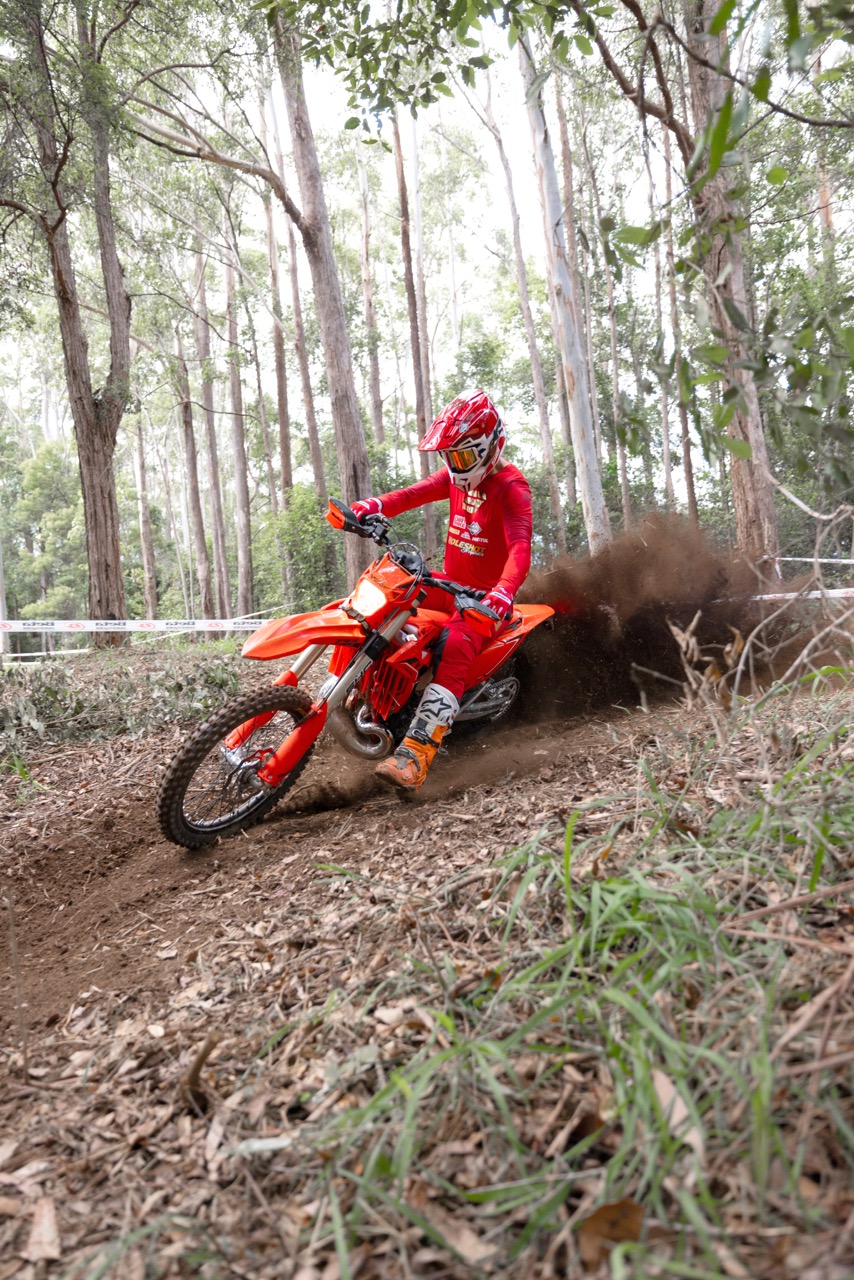
When KTM first announced the 2026 300 EXC, the message sounded pretty familiar: bold new graphics, a few little tweaks, and not a whole lot else to get excited about. At least, that’s what we thought. On paper, it looked like one of those quiet update years where the bike rolls on largely unchanged and everyone just gets on with it. But the more we looked at it, the more we realised there was actually quite a bit going on.
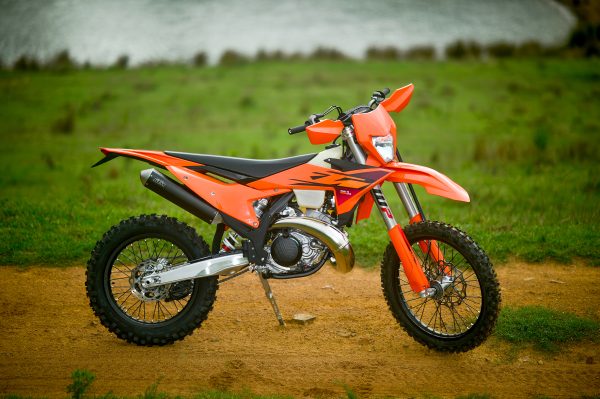
That’s why we ended up back at KTM asking questions. Because once the bike was out of the crate and being prepped for testing for us, there were enough little random differences popping up that we needed someone from the inside to explain what we were actually looking at. So we got Mick Carusi from KTM involved and had him run us through what had changed, what hadn’t, and what the story was with some of the weirder details, like the extra blocked-off port at the back of the cylinder head and the very unexpected gearing change.
That gearing was the big one. The 2026 KTM 300 EXC now comes with a 14/42 final drive, which, if you know anything about 300 two-strokes and hard enduro, sounds like the sort of thing that should absolutely not work. Usually, when we get one of these bikes, we’re telling people to go the other way, gear them down, make first gear shorter, and get them crawling better in nasty terrain.
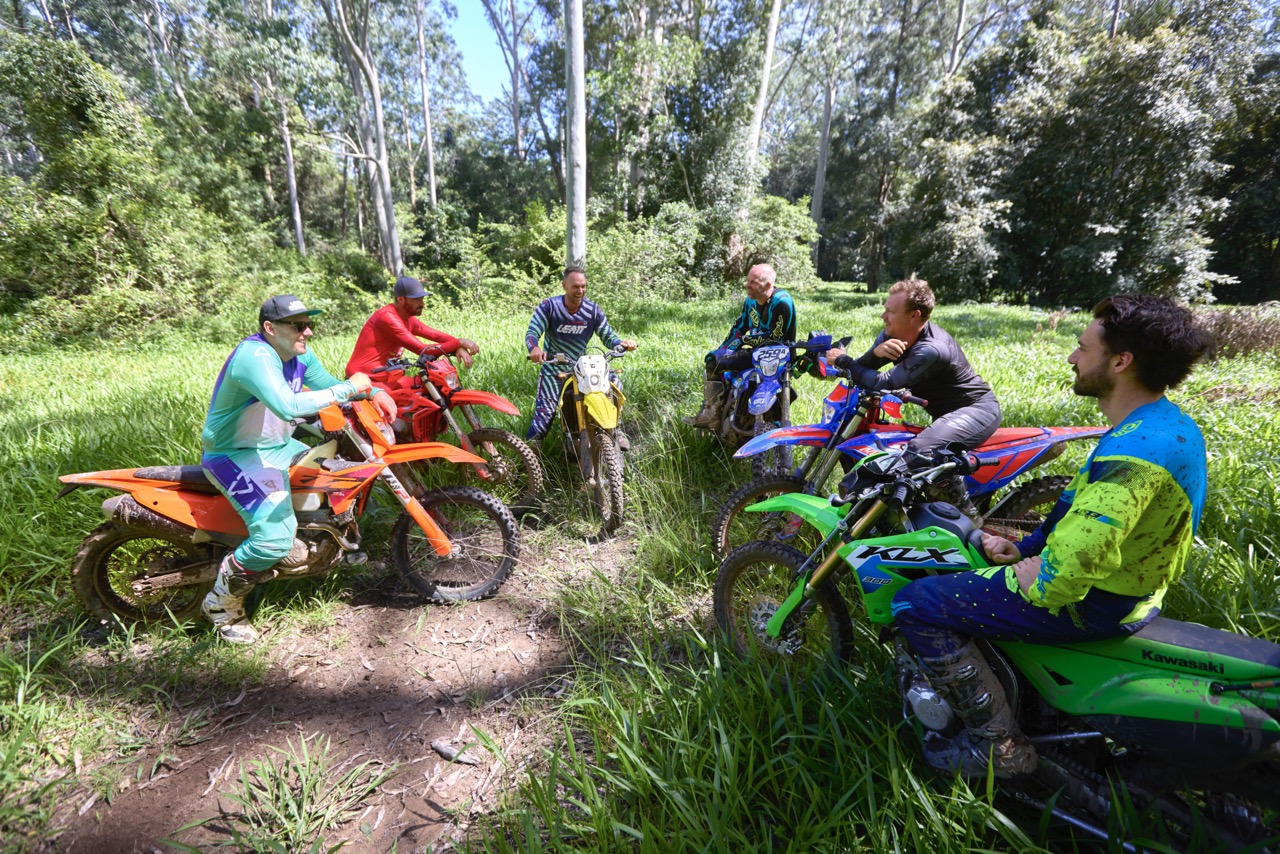
Rather than just trail ride it around and call it done, we wanted to know whether this new setup would still work in real hard enduro terrain, and whether it could still do the more general trail riding and singletrack duties a lot of 300 EXC owners actually use them for. To help sort that out, I brought in Jeremy Cowley from the Dirt Bike Burrito Podcast, a bloke who is absolutely right in the thick of hard enduro and knows straight away when a bike works in the ugly stuff and when it doesn’t.
FIRST IMPRESSIONS
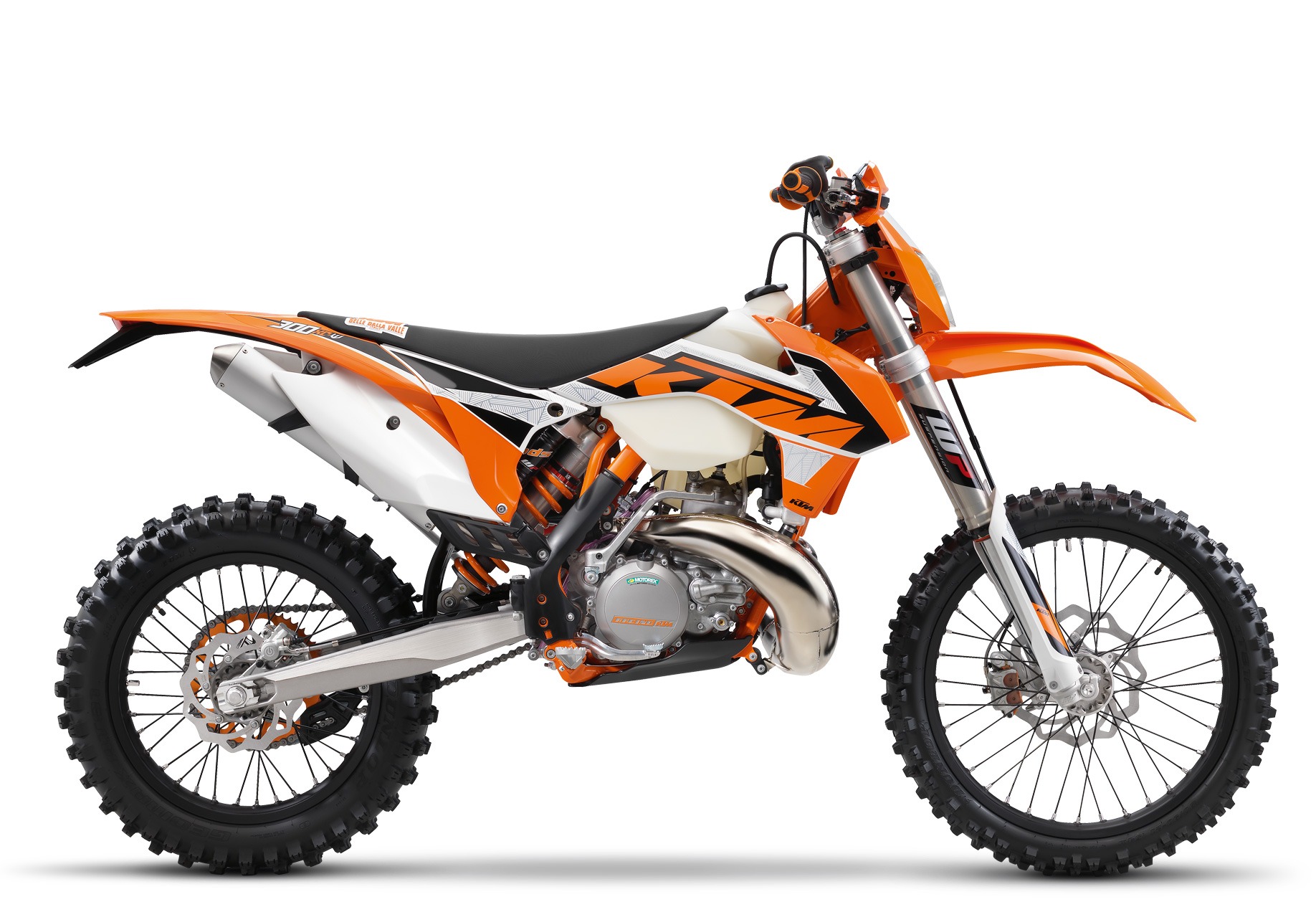
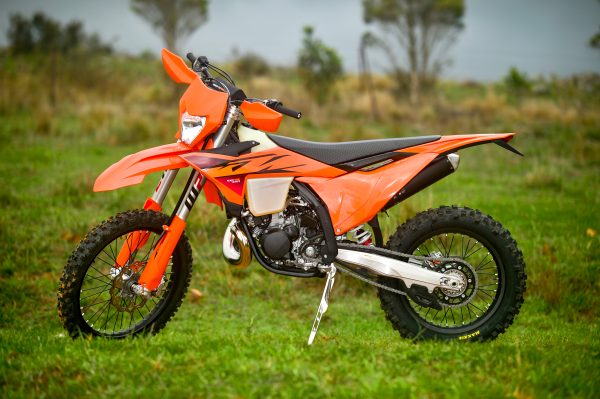
At a glance, the 2026 KTM 300 EXC still looks exactly how you’d expect a modern KTM enduro bike to look. Flat seat, familiar bodywork. Nothing visually jumped out as radical. Jeremy had ridden older 300 EXCs before, but nothing this current, and his first impression was the same as mine: it felt familiar.
The big question was always going to be the gearing. When Jez and I first heard it was running 14/42, we both had the same reaction, first gear was going to be about as useful as a handbrake on a canoe. We were joking that it’d probably do 40km/h in first and be totally hopeless for the sort of tight, snotty valley terrain we had lined up.
So we packed the spare rear sprocket, geared up, and headed into some nasty ground.
Eating humble pie
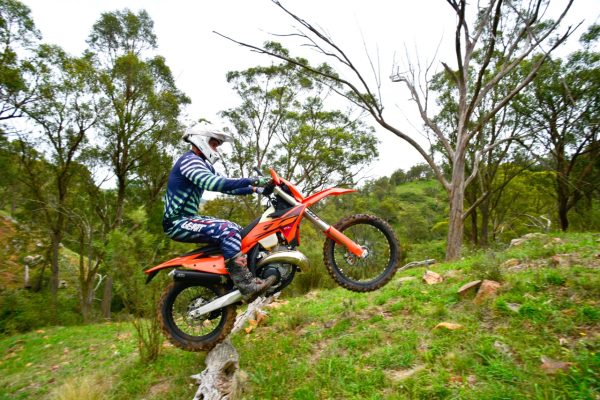
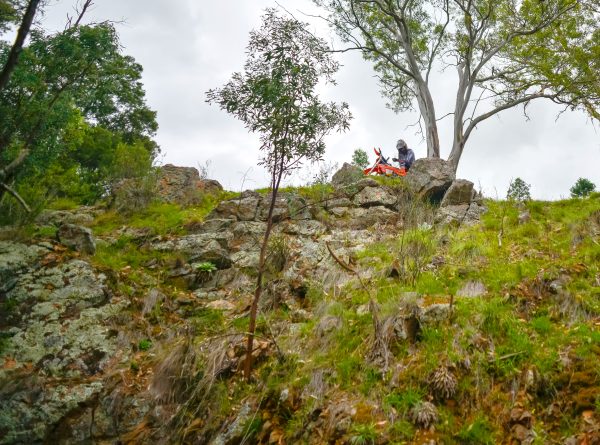
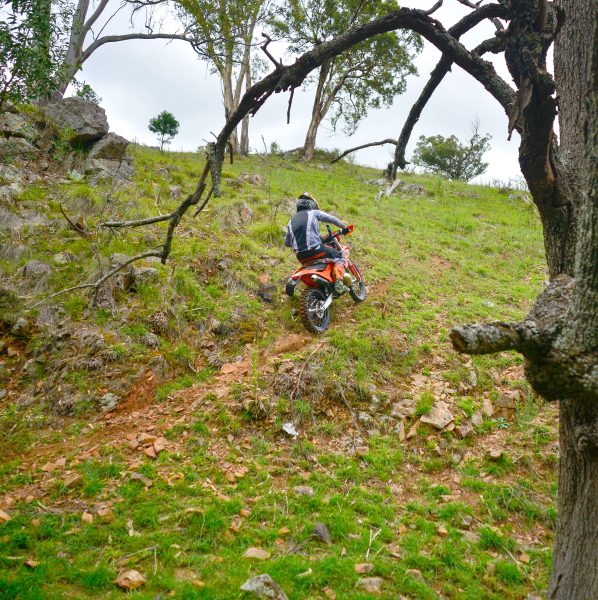
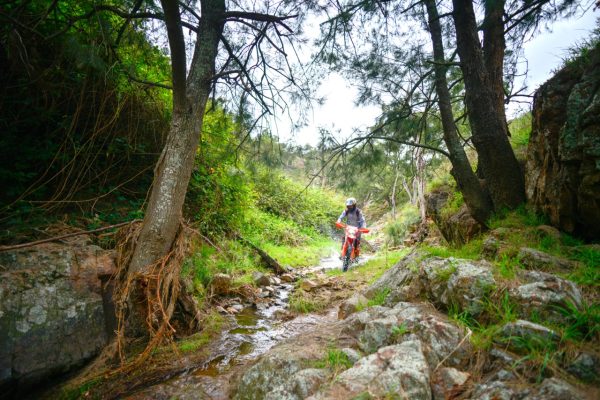
This was the standout talking point of the whole day. All we really rode was hard enduro terrain. Steep hills, rocky creek beds, off-camber climbs and logs. And somehow, this thing worked. I’ll go on record and say I think the 14/42 setup actually works, and probably works better for someone who is entry-level hard enduro and also wants to do a lot of singletrack and regular trail riding.
That is not something I ever thought I’d be saying about a KTM 300 geared that tall. Jez agreed straight away. We both come from the usual mindset with these bikes, which is that a 48 or 49 rear turns up and we tell people to go to a 50, 51 or 52. We have never, ever recommended a 42 before, even with a 14-tooth front. But on this specific model, with whatever KTM has done to the power delivery, it actually makes sense.
The key is that the bike still lugs. It has enough low-end torque and enough smoothness right off the bottom that it doesn’t need crazy short gearing to crawl. You can carry first gear almost everywhere, and instead of feeling too tall, it ends up feeling almost automatic. Once you got moving, it would just keep driving. It didn’t flame out as much as we expected. It didn’t demand constant clutch abuse. And on some of the bigger climbs, once it got rolling, It was easier because you only had to change to second and not third.
There was one hill down in the valley where once it got going, it just kept driving with this beautiful, long, low-end grunt. It wasn’t frantic. It wasn’t peaky. It just carried on. That’s where this bike really surprised us.
And it’s important to note this seems to be specific to the 2026 model. We had the 2025 in our shootout last year, and neither of us thinks you could just bolt a 42 onto that bike and expect the same result. Whatever KTM has changed in the engine characteristics for 2026, it’s what makes this gearing viable.
One of the best examples of how well this setup worked came in a horrible section at the end of a creek. You had to come through some nasty terrain, pivot the bike around, then head up an off-camber rocky climb that needed momentum but also control. Jez hit that section just after I’d ridden the GASGAS 300 GP, and I’ll be honest, I was quietly laughing to myself, thinking the KTM with the tall gearing was going to bog, chug, and make a fool of itself.
Instead, it made me look silly. Once he got moving, the KTM just lugged up through it with barely any fuss. A little clutch, yes, but nowhere near the amount we were expecting. The front didn’t come up unexpectedly, the rear didn’t spin wildly, and the whole thing felt incredibly composed.
Later, when I was back on the KTM and Jez was on a GASGAS with more traditional gearing, I was following Jez up another steep hill with two logs stuck in it and I noticed I was actually able to stay in first gear the whole time, while he was shuffling between gears a bit more. That was the moment it really clicked. With this gearing, and this engine character, first gear becomes this long, useful crawler that still lets you carry decent speed.
For hard enduro riders, especially bronze and silver-level riders, this is actually a really clever setup. Gold riders and the absolute top guys might still want something different depending on terrain and pace, but for the majority of riders who dabble in technical terrain and still spend most of their time trail riding, this setup is far more usable than it sounds.
SMOOTHER and TORQUIER
The 2026 engine is better. That was obvious by the end of the day. It feels like it has more torque, a smoother delivery, and a broader, friendlier spread of power than the previous bike. I only really stalled it once, which says a lot considering the sort of terrain we were in and how sceptical we were at the start.
Jez found that early on he was stalling it more, but mostly because he was trying to ride it too politely. Once he worked out that it needed a bit more aggression and commitment, it worked for him. That’s probably the most important thing about this 2026 setup. The bottom-end torque isn’t this super-lazy tractor motor that does absolutely everything for you. You still need to ride it properly.
The balance is another big strength. The bike is incredibly easy to pivot and move around. Even tight 180s and awkward technical turns feel easy on this thing, and that’s a huge plus in hard enduro.
Fresh rubber
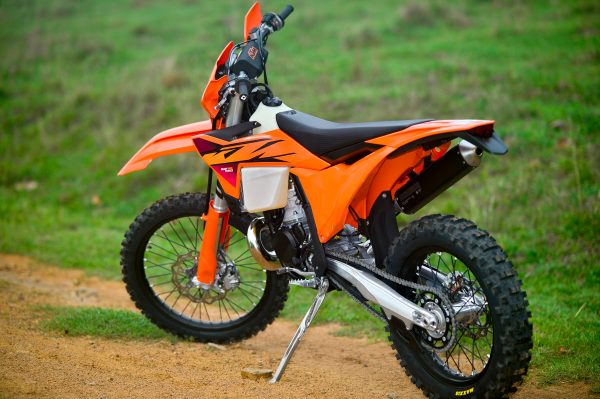
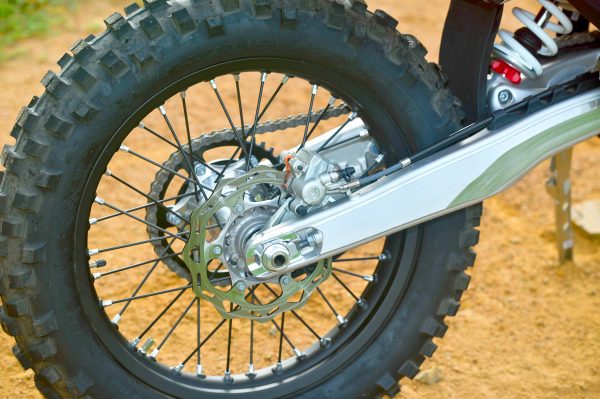
The standard Maxxis FIM tyre deserves a mention because if you’re doing any sort of wet, rocky or nasty terrain, it’s probably the first thing you’ll want to change. In singletrack and maybe on road transfers it’s fine, and it’s obviously built to meet FIM requirements, but in the rocky creek stuff it wasn’t ideal.
That said, Ben Grabham likes the harder FIM-style tyres in desert events like Finke. So it’s not that it’s a bad tyre, it’s just not the best tyre for this specific sort of technical terrain.
Suspension reinvention
We didn’t spend the day hammering through braking bumps or testing this bike at race pace, so it would be unfair to make massive claims about the fork in full enduro-race conditions. Most of what we did was slow-speed, technical, hard enduro-style riding. In that environment, the fork was pretty good.
This is the firmer fork setup KTM introduced a couple of years ago, and in the terrain we rode, it didn’t really put a foot wrong. We were dropping into water holes, smashing through creek sections and loading the front wheel over rocks and logs, and it held up fine.
It does feel like a firm fork overall, though. Even doing little front-end tricks or trying to nose it in, you could feel there was decent hold-up there. The overall chassis balance is excellent..
THE LITTLE STUFF
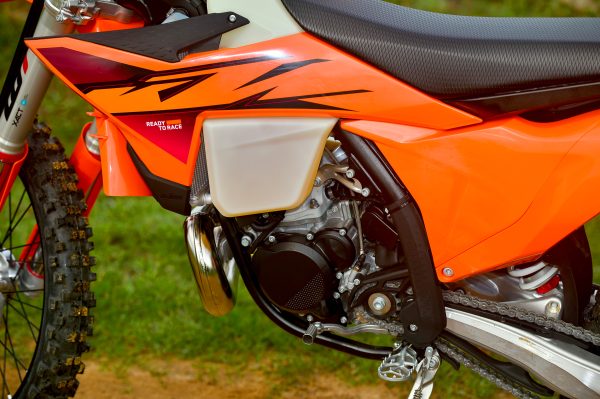
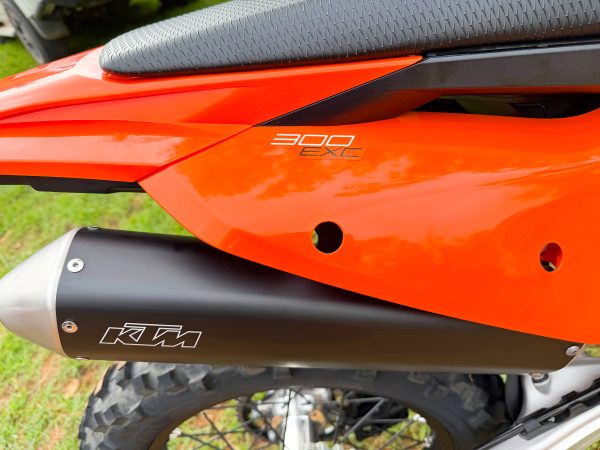
One of the weirder moments of the day came when we clipped a rock in the creek and managed to fold the standard pipe in enough that it actually popped off the manifold. That was unusual. We all know two-stroke pipes get smashed in hard enduro, but to land on a rock and have it pop off like that was a bit odd.
To Jez’s credit, he basically bent it back with brute force and got it seated again, but it did suggest the standard pipe is a little on the softer side. Realistically, anyone serious about this sort of riding is going to run a pipe guard and bash protection anyway, so it’s not a massive drama, but it happened, and it’s worth mentioning.
The standard handguards are a nice touch. It sounds funny to say that in 2026, but plenty of bikes still turn up pretending they’re enduro bikes without handguards, so credit where it’s due. The KTM also sticks with the more basic mapping approach rather than the map-switch setup you get on the Husky. Honestly, I didn’t miss it. I thought the standard mapping was fine.
The brakes are excellent. KTM, Husky and GasGas all now run slightly different setups, and this KTM’s Brembo brakes are very good. The front brake in particular is strong and solid, exactly what you want in technical terrain when you need confidence and feel.
The seat is comfortable, the riding position is neutral, and overall the bike just feels like a very well-sorted package.
Not just BNGs
The 2026 KTM 300 EXC is one of those bikes that teaches you not to judge updates by the press release. We thought it was basically the same bike with stickers. It isn’t.
There are enough little random changes here that this bike deserves proper attention. The biggest shock is the one thing we expected to hate: the 14/42 gearing. In proper hard enduro terrain, on this 2026 engine, it works. For entry-level hard enduro riders, weekend warriors, and trail riders who occasionally like getting themselves into something ugly, this could actually be one of the better stock setups KTM has offered in years.
MICK CARUSI LIFTS THE LID
The first thing was the rear sprocket. As delivered, the bike comes with the now-controversial 42-tooth rear sprocket, but it also includes a 50-tooth rear sprocket in the crate. That tells you KTM knows this gearing change is going to raise eyebrows. They’re basically saying, “Here’s the tall setup, give it a go, but we’re also giving you the parts to go back closer to what you’re used to if you hate it.”
Then there was the odd little detail at the back of the cylinder head. Mick pointed out that there’s a spot there where another injector would normally sit, but on this bike it’s blocked off and plugged by the dealer during setup. So if you buy one of these and notice that strange little blocked port at the back of the engine, don’t panic, it’s meant to be there. It’s one of those things that sparks all sorts of rumours about future injection or emissions changes, but for now it’s just part of how this KTM arrives.
Mick also made it clear that there aren’t any new internal gearbox ratios. The actual transmission is the same as before.
KTM 300 EXC
ENGINE
Type: Single-cylinder, 2-stroke
Displacement: 293.15cc
Fuel System: Keihin EFI, 39mm throttle body
Engine Management: Vitesco Technologies EMS
Clutch: Wet DDS multi-disc with Brembo hydraulics
Transmission: 6-speed
DIMENSIONS & WEIGHT
Seat Height: 963mm
Ground Clearance: 347mm
Fuel Tank: 9L (approx.)
Weight (without fuel): 104.4kg
SUSPENSION
Front: WP XACT USD fork, 48mm, adjustable compression and rebound, 300mm travel
Rear: WP XPLOR PDS shock, adjustable compression and rebound with preload adjuster, 310mm travel
BRAKES & tyres
Front: Brembo Disc Brake
Rear: Brembo Disc brake
Tyres Maxxis MAxEnduro
Warranty: 6 months
RRP: $17,625
Browser: www.ktm.com/en-au