You can be forgiven if you’re scratching your head when you look at the Suzuki Freewind, as it’s a bike that has mostly slipped from collective memory. There was a rush of Paris Dakar look-a-likes available in the 1980s, but Suzuki was a bit late to catch up to the fashion, only bringing the Freewind to Australia after circulating a questionnaire to dealers asking if they wanted it and how many they thought they would sell. The brochure got a bit flowery, describing the XF650 as a “machine of uncommon character” and that the “dynamic lines of the fairing, tank and sidecovers suggest the image of an intrepid adventurer rushing forward through time and space”. Were they selling it to Dr Who?
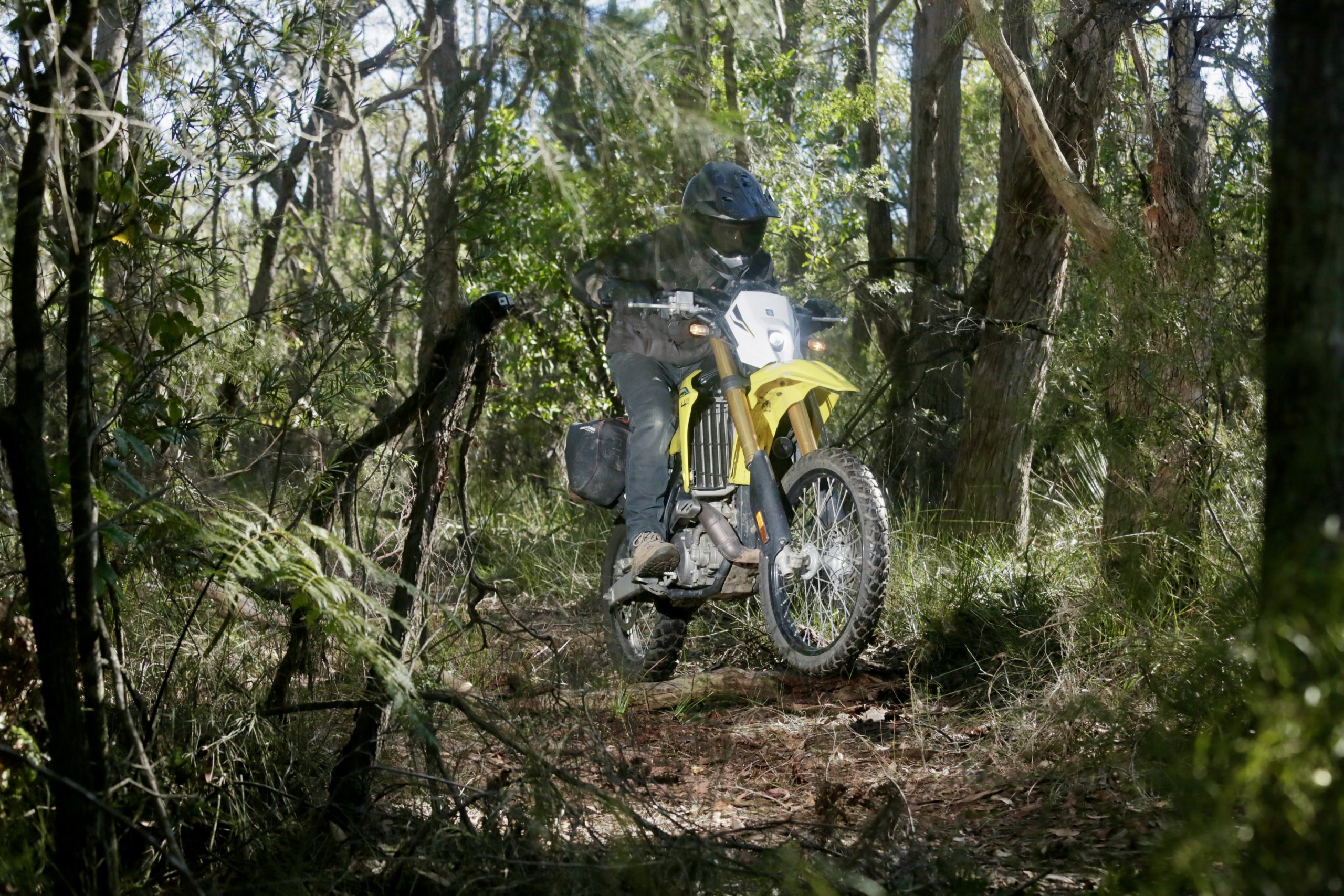
Despite the 650cc single-cylinder, air-cooled, four-stroke engine, the XF650 was not just a tarted-up DR650 with fancy plastics, as the frame was different, the single carb was replaced with two smaller Mikuni BSR32 units, a different fork and shock, an 18.5L steel tank, 19” and 17” wheels and a dry weight of 162kg. The engine was tamer than its DR sibling and pulled away with the torque of a big single, but was geared a little tall, even for the road, making fifth gear little more than an overdrive for freeway use. It was suggested dropping a tooth on the countershaft would make life easier on the engine. It performed quite well if kept up in the revs, but it wasn’t what you would call a hard-hitting, high-revving bike.
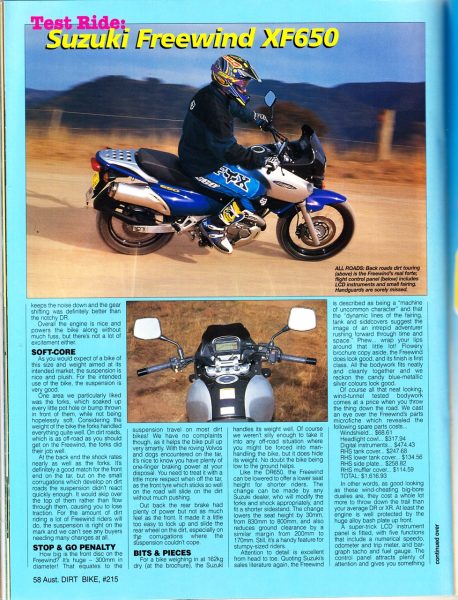
Where it did impress, though, was the broad delivery and smooth, vibration-free way it went about its business on the open road. The fork soaked up potholes and bumps while not being overly soft and handled dirt roads well, which, it was said, was as off-road as you should get on the Freewind. The shock was rated equally as well on the tar, although it tended to skip on the corrugations found on dirt roads and lose traction. The front disc was huge at 300mm and was fine on sealed roads but could easily lock on the dirt, and the rear brake was similarly easy to lock on unsealed surfaces, causing slides. The LCD instrument panel sported a speedo, odometer, trip meter, tacho and fuel gauge, and the wrap-around bash plate gave plenty of protection to the nether regions of the machine, while the rear rack gave some luggage-carrying capacity.
The final opinion of the Freewind was that it was an excellent bike for the market it was aimed at—the bloke who wants to ride to work each day looking flash in the process and then take his girlfriend for a picnic in the local forest on the weekend. As an all-round casual dual-purpose mount to rack up the miles on, it did the job.
THE BASICS
What: Suzuki Freewind XF650
When: August 1997, Issue No. 215
Purpose: Dual purpose tourer
How Much: $8,590