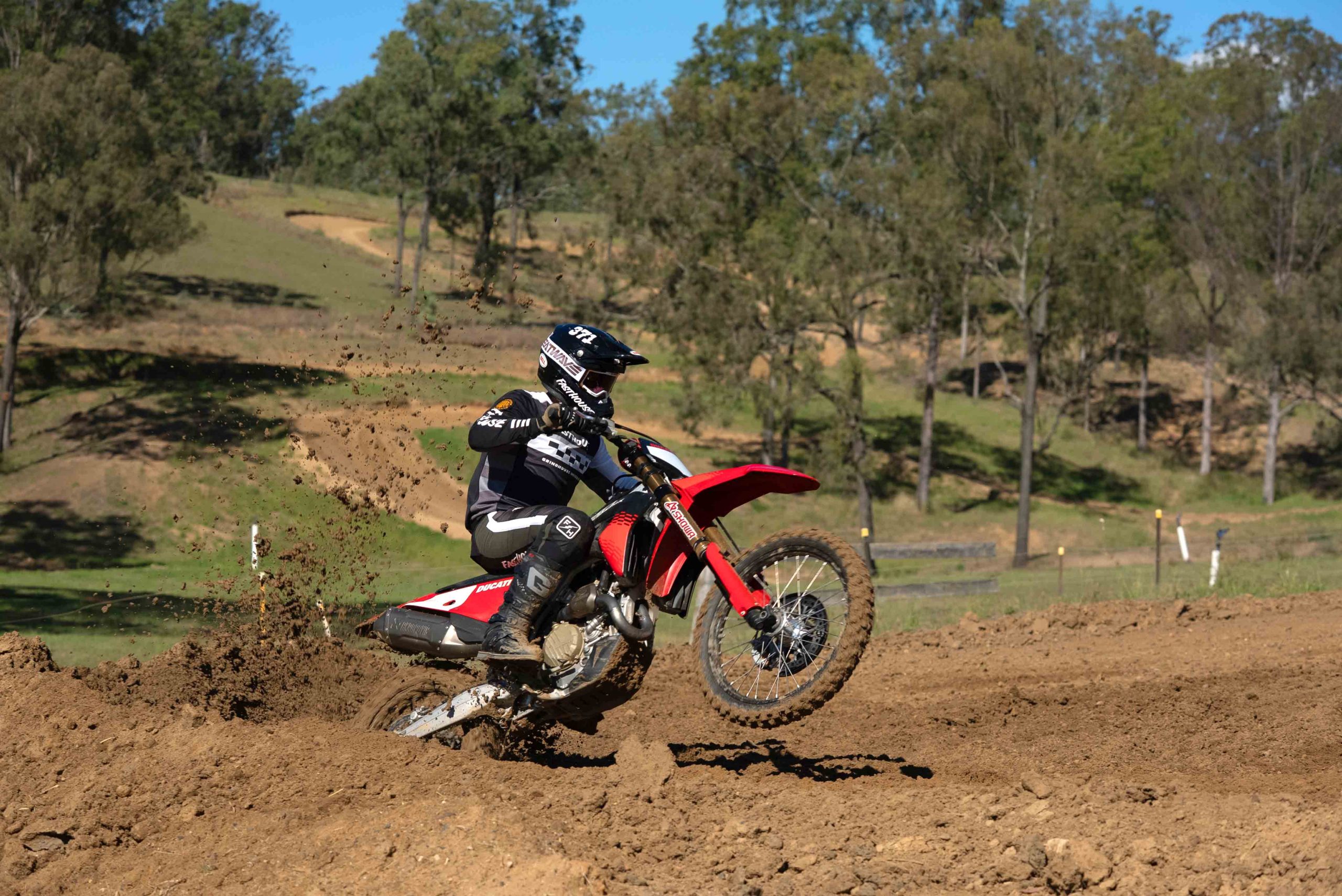
In a race where preparation is everything and experience counts for more than most, Callum Norton has taken one of the biggest risks of his career. Swapping a proven KTM setup for a brand-new Ducati project just months out from the Tatts Finke Desert Race, Norton is stepping into the unknown with a bike barely tested in Australian conditions and a team building from the ground up.
It’s bold. It’s risky. And if it works, it could be one of the biggest stories Finke has seen in years. We caught up with Norton to break down the Ducati deal, the bike, the setup and whether a 450 can take it to the 500s in the desert.
ADB: There were rumours floating around pretty early that you might be on a different bike this year. How did the Ducati deal actually come about?
Callum Norton: Yeah, it’s been, as you say, a new brand, new everything. I honestly didn’t know much about the bike at all until I found out the deal was happening. I looked into it a little bit but didn’t get too excited in case things didn’t come off.
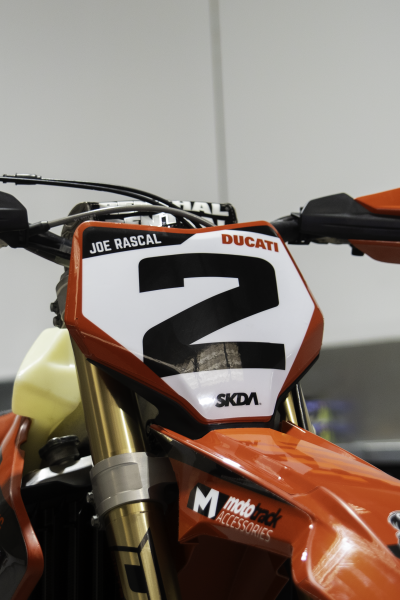
It all kind of started toward the end of last year, just little talks and chats. I was pretty committed to KTM and had been for a while. I was with STE Racing last year, so everything was simple. The bike stayed the same, the team was great, it would have been easy to stay there.
Then I caught up with Brett Metcalfe and started speaking with him. He mentioned the Ducati thing and said they were keen. They weren’t sure what racing they wanted to get into first, but Finke came up. Obviously, that’s a big ask straight away, so initially the plan was more Supercross later in 2026 and then racing properly in 2027.
But over Christmas we kept chatting, and I hadn’t signed anything with KTM or Ducati. KTM was the safe option, but something about Ducati, the brand, the people, especially Metty, just drew me in. My mechanic was also someone I’d worked with before, so that helped a lot.
I actually signed the deal before I even rode the bike, which was pretty ballsy. But once I got on it, I thought, wow, this is impressive. That’s when I knew we had a shot.
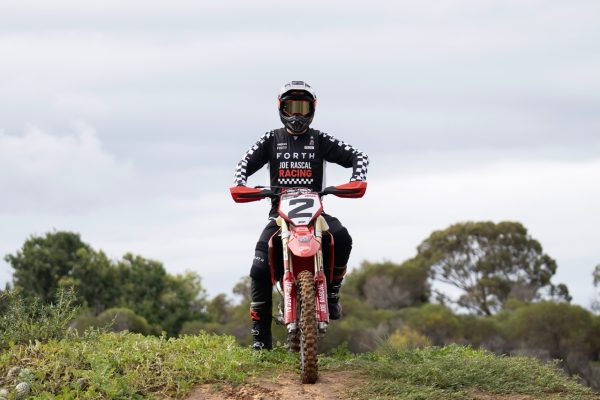
ADB: It’s a big call leaving a proven KTM setup for something completely new. How tough was that decision?
CN: Yeah, definitely tough. KTM was the safe place to stay. We knew the bike worked, we knew the setup, and I’d been competitive.
But something about Ducati just attracted me. The opportunity to be the first guy here to do well on one, that was a big draw. At the same time, you could be the first guy to fail on one too.
I just thought, you’ve got to take those chances. You only get one go at it, really.
ADB: The Joe Rascal Ducati team is coming out of a road-based background, yeah? How does a dealership like that build an off-road race team?
CN: It’s pretty wild when you think about it. They’re based in South Melbourne, so yeah, very road-focused. Ducati, Harley-Davidson, that’s their background.
But the guy behind Joe Rascal really liked the idea of Finke. He probably didn’t fully understand how much goes into it development-wise, so he put it to Metty to handle the racing side and see if it was possible.
Metty’s basically running the off-road program. He’s done a lot of the work like organising sponsors, building the team, making it all happen. Without him, it would have been tough.
The dealership guys are keen, though. They’re into it, they want to learn, and they’re excited to be part of something new.
ADB: You mentioned your mechanic—who’s spinning the spanners and how important was that piece of the puzzle?
CN: Massive. My mechanic is Scott Watts from Dirt Bike Services. He’s worked with KTM, Honda, and also with Metty before.
I first worked with him in 2019 with the KTM desert team. He knows Finke, he knows what works, and he also does my suspension, so that’s a huge bonus.
When we were putting this deal together, I said we needed someone who’s been there and done it. You can’t just throw a road mechanic into Finke and expect it to work. So it’s a small crew, just me, Metty and Scott, but we’ve got good experience there.
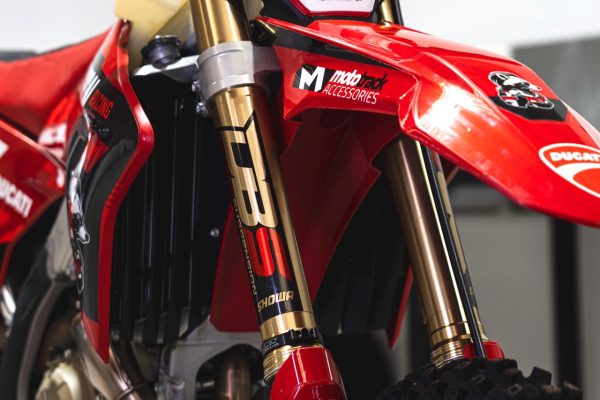
ADB: Let’s talk about the bike. Ducati is brand new to this space so how hard has it been to get it ready for Finke?
CN: Honestly, it’s been a massive job. We only just finished the bike about a a few months before the race. It’s taken about three months of work.
The engine is completely standard, which is a big positive. The exhaust is standard for now, but we’ll run an Akrapovič system for racing. Wheels, sprockets, those kinds of things we can get.
But all the bolt-on stuff like steering dampers and footpegs, we’ve had to custom-make everything. We’ve been machining parts from scratch. We took the bike to a machine shop in Mildura and basically built everything we needed. Eventually, those parts will probably be available, but right now we’re figuring it out ourselves.
Even getting a fuel tank was a mission. We saw one in the background of an Instagram post from IMS in the US, chased it up, and got one sent out. That was a big win.
ADB: That sounds like a serious development process. Was there ever a concern you wouldn’t get the bike ready in time?
CN: Yeah, definitely. That was always in the back of my mind. Simple things like tyres were a worry, even fitting a 140 rear desert tyre, we didn’t know if the bike would handle it properly. Would it pull the gearing? Would it be stable at speed?
There were a lot of unknowns. But once we got a few key pieces sorted, like the tank, we knew we could make it work.
ADB: How does the Ducati engine compare to the 500s you’ve raced in the past?
CN: It’s definitely different. The 500s are super torquey, they’ll pull you out of anything. The Ducati 450 is smoother off the bottom but still really strong. The mid to top-end is really impressive and it revs out quite a long way.
We geared it up straight away and went from a 13 to a 14 front sprocket. That made a big difference.
From zero to 100, it’s awesome. From 100 to 140, it actually gets there really quickly, which is a big positive. Over long distances, the 500 will probably still have an advantage, but this thing is fast. It surprised me.
ADB: Setup-wise, how different is the Ducati compared to what you’ve run before?
CN: There are similarities, but it’s definitely different. I’ve been on PDS for the last few years, so going back to linkage is a change. We’re running the Ducati a bit higher in the rear compared to what I’d normally run on a KTM.
We’ve also been playing a lot with wheelbase. You’d think longer is better for Finke, but we’ve found something in the middle works best. Even small changes, like a couple of millimetres, can completely change how the bike feels.
The Ducati is more sensitive to setup than the KTM, but it also does some things better. It’s about finding the balance.
ADB: With all that development, is this year more about results or building something for the future?
CN: I think it’s a bit of both, but definitely leaning towards development. We want to do well, obviously, but it’s a new bike and a new team. We’ve got to take our time and make sure everything works properly.
If we can finish and get a solid result, that’s a big win for the first year. Then we build towards 2027.
ADB: What are your expectations for Finke this year?
CN: For the team, honestly, they just want to finish. That’s the main goal. For me, I want to be on the podium. That’s where I feel like I belong, and I think the bike is capable of it.
But I’ve got to be smart. Keep it simple, ride solid, and see where we end up.
ADB: Finally, what does the Ducati presence look like at Finke this year?
CN: We’ll have a pretty solid setup. A big trailer for Alice Springs, then vans and utes down at Finke. It’ll be a smaller crew, but we’ll have everything we need like fuel stops, setup, all that.
It’s going to look a bit different, that’s for sure. Not many people have seen these bikes yet, so it should stand out. Come and say hello!