There are plenty of fast riders. Plenty of champions too. But every now and then someone comes along who changes the way people think about riding motorcycles. Chris Birch isn’t just remembered for winning some of the toughest races on Earth. He’s remembered because of how he rode them. Smooth. Calculated. Effortless. While others wrestled motorcycles through impossible terrain, Birch seemed to dance across it.
Ironically, none of it was really part of some master plan. He nearly quit motorcycles altogether. He never dreamed of racing Dakar. He certainly didn’t expect to make a career coaching riders across the globe. Yet somehow the New Zealander has done all three.
Speaking to ADB, Birch reflected on the journey that has taken him from a kid growing up around trials bikes to becoming one of KTM’s most recognised ambassadors, one of adventure riding’s biggest names and arguably one of the most influential riding coaches in the world.
And as you’d expect, the story is anything but ordinary. It all started before he was even born.
“I grew up in a motorbike riding family,” Birch says. “My mum went to all the antenatal classes on a trials bike. Dad’s ridden trials, enduro, the ITE, that sort of thing. It was actually, he was racing the ITE for Team Scotland on the day I was born.”
If there was ever a rider destined to grow up around motorcycles, it was Birch.
Where it started
Birch grew up riding trials. That technical background would later become one of the defining features of his riding style, but at the time it was simply what everyone around him did. Eventually the lure of enduro proved too strong.
“Then I got into enduros, raced normal enduros for many, many years.”
But something was changing. Traditional enduro racing was becoming increasingly focused on outright speed through special tests rather than simply surviving impossible terrain. For Birch, whose strengths lay in precision and technical riding, the sport was moving away from him.
“I kind of got a bit disillusioned with that, as enduros became more about special test speed rather than being able to get to the finish and that sort of thing. So it kind of felt like my skillset wasn’t really too relevant to the sport, where the sport was at that time.”
He’d reached the point where he was almost ready to walk away from motorcycles altogether. “I was pretty much ready to give up riding motorbikes and just go and race mountain bikes, which I was doing a fair bit of at the same time.”
Then everything changed. “And then I discovered hard enduro. I didn’t realise that was a sport up until then.”
Looking back now, it’s hard to imagine the discipline without Birch’s name attached to it, but at the time Hard Enduro was still in its infancy.
The big break
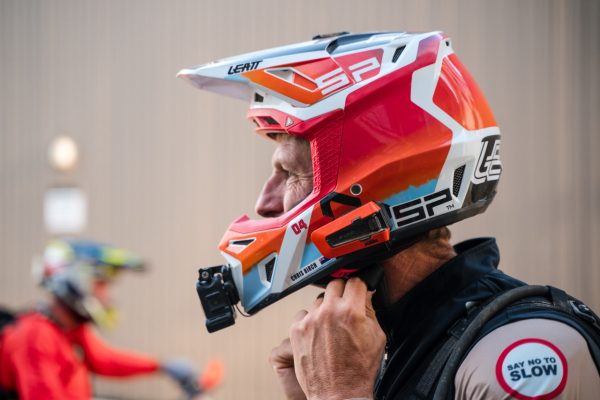
“I saved up as much money as I could and spent all the money I had and went and raced Romaniacs for the first time.”
That decision changed his life. “I ended up getting on the podium. I came third.”
The timing couldn’t have been better. Hard Enduro was exploding, but it hadn’t yet become the ultra-professional world championship it is today. Birch was arriving just as the discipline was finding its feet.
“It wasn’t super professional. No one had any special gear or anything like that. It was all basically stock bikes, so it was quite possible for someone like myself from New Zealand to show up with no money and still be competitive.”
He laughs when comparing it to today’s scene. “Now the level’s got so much higher, it’s not really like that anymore.”
Like so many careers, one of the biggest opportunities came completely by accident. Birch had travelled to Austria to race Erzberg Rodeo when he met a South African rider standing in the reception area at KTM headquarters. The rider was frustrated about how much it would cost to get back into Salzburg. Birch had an idea.
“I said, ‘I’ve got no money, but I’ve got a rental car. You fill it up with gas and buy me lunch and I’ll give you a lift back into town.'”
It changed the next chapter of his career. The two stayed in contact. Eventually the South African put together what Birch describes as one of the more unusual sponsorship packages in off-road racing history.
“He ended up putting a sponsorship package together for me with his mates in South Africa. A bearing shop, a bottle store, a pet supply company, all that sort of stuff.”
It wasn’t exactly Red Bull or Monster Energy but it got Birch to South Africa. “We went and raced the Roof of Africa and I ended up winning that the first time.”
One win became two. Then three. “I won it three years in a row.”
Suddenly Birch wasn’t just an up-and-coming Hard Enduro rider anymore. He was one of the biggest names in technical off-road racing.
Winning Roof of Africa opened another unexpected door. “I got offered to go and live and race in South Africa for two years.”
That opportunity also led to something Birch had never planned on doing. The Dakar Rally.
Learning speed
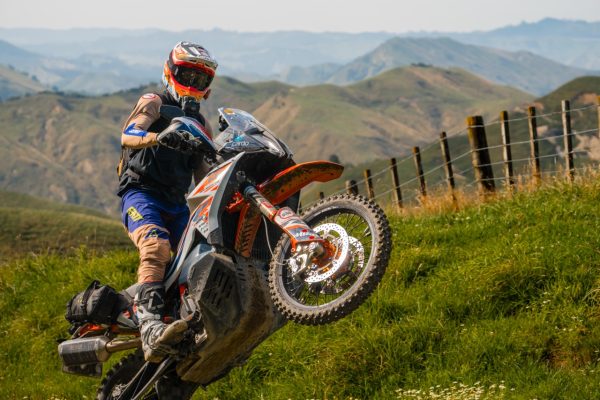
“The guy that owned the team really wanted to race Dakar and he basically just wanted someone to do it with. So I managed to be that guy.”
It’s difficult to imagine one of the world’s best technical riders arriving at Dakar completely unprepared. Yet that’s exactly what happened.
“On the start line of Dakar, I’d never ridden a rally bike more than about a hundred metres. I’d never really been in a desert. I’d never used a road book.”
Most riders spend years preparing. Birch spent the opening liaison learning how the navigation equipment worked. “Luckily the first liaison was nearly 200 kilometres long, so I was just playing around with it the whole time trying to get my head around it.”
Birch finished the Dakar Rally on his very first attempt but it was something he never wanted to do again.
Unlike lifelong desert racers who spend years planning and fundraising for a single start, he found himself almost dragged into the event.
“I didn’t really want to do Dakar,” he admits. “I tried to get out of it several times. Like, ‘Nah, it’s too much money. I’m not really into this. It’s not really for me.’
By halfway through the rally Birch had made a promise.
“I rang my wife up and said, ‘One thing I can promise you is you never have to worry about me doing this race again. I’m never doing this again.’
“The prime motivation was, make sure you finish so you don’t ever have to come back.”
It’s not exactly the glowing endorsement most Dakar finishers give. Yet years later, Birch still watches the rally every January.
The problem with Dakar for Birch wasn’t exhaustion. It was boredom.
“I try not to talk about Dakar too much because my story is not the story you’re supposed to tell. But honestly, dude, I was bored out of my brain.”
He laughs as he remembers endless rocky stages stretching into the horizon.
The Master Coach
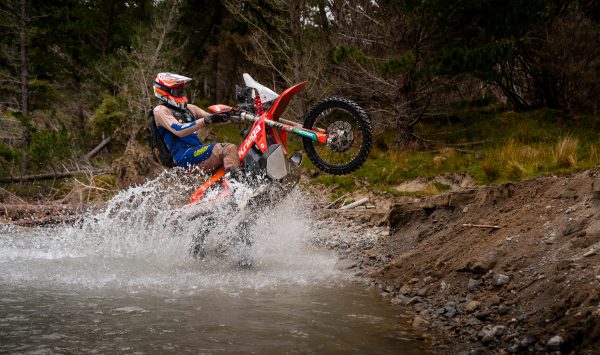
Today, Birch is arguably even better known as a coach than he is as a racer. Adventure riders from every corner of the world travel to New Zealand hoping to spend a day learning from him.
Online, his “Say No To Slow” coaching series has become one of the most respected rider training platforms available. Ironically, coaching never started as a career plan. It started because Birch needed money.
“The initial motivation for starting the coaching was to go to Romaniacs the first time.”
At the time he was already working full-time as a mechanical engineer. “I was working in engineering, already doing all the hours I possibly could.”
What Birch didn’t realise was that he’d actually been preparing to become a coach for almost his entire life. Long before YouTube tutorials existed, he taught himself by studying the world’s best riders frame by frame.
Despite decades at the highest level, Birch still doesn’t believe anyone has all the answers.
“You never want to be the guy that goes, ‘I know how to do this.’ Because there’s guys constantly reinventing it”.
He points to modern motocross as the perfect example. “You look at what Jett Lawrence has done over the last few years. He’s completely rewriting the book of how you ride a motocross bike.”
Birch’s coaching philosophy has always centred around efficiency rather than aggression.
Growing up small meant brute strength was never an option. “I had to adapt and create a riding technique that didn’t involve fighting the bike. It was about working with the bike.”
That philosophy translated perfectly when adventure motorcycles exploded in popularity.
“No one’s muscling an 890 around. No one’s muscling a 1290 around. You’ve got to work with it.”
Towards the end of our conversation, Birch reflects on something many people misunderstand about professional racing.
From the outside it can look glamorous. The reality was often very different. “We live in a pretty small town and people think I’m out to lunch on all the money I made racing.”
He laughs. “I’m still trying to catch up on the money I should have been making while I was racing.
“I spent 10 years basically doing the financial equivalent of barely keeping up and just goofing off, having a freaking great time.”
Would he change it? “Zero regrets.”
Birch believes those difficult years actually became one of his biggest strengths. When he arrived at races like Dakar, living rough wasn’t something new. “I think for some Dakar racers they’re already wealthy. They’re not used to hardship. They’re not used to sleeping in the back of vans.” Birch was.
The Gift
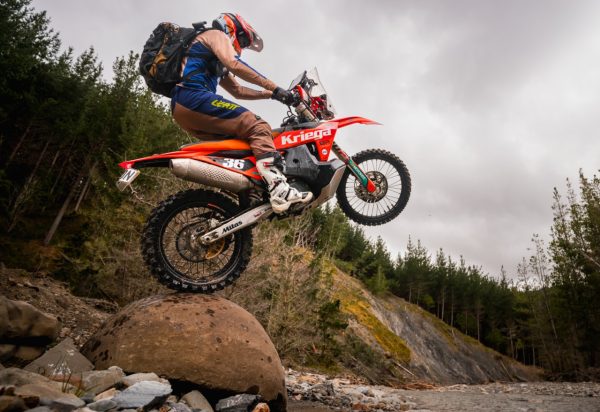
He quickly dismisses any suggestion of natural talent. “I’m by no means a gifted athlete. If you ask me to catch a ball… I ain’t catching it.”
That’s probably the biggest lesson Chris Birch leaves behind. His success came from curiosity. From constantly trying to understand why someone else was better and then adapting those lessons into his own riding.
It all started with a skinny kid in New Zealand sitting in front of a television, watching trials DVDs frame by frame and then riding outside to see if he could make himself just a little bit better than yesterday.