WHY’D YA BUY IT?
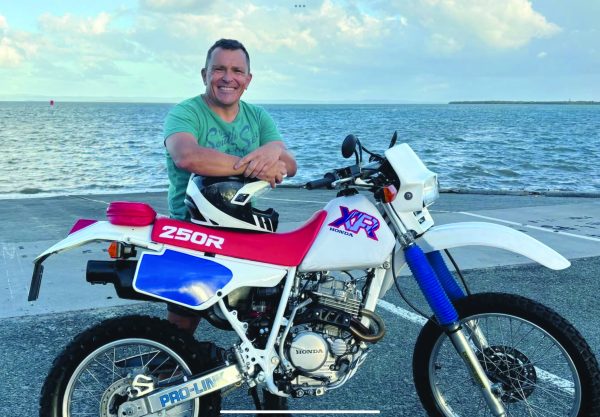
The Honda XR250R was the first motorcycle I ever owned and basically the bike I learned to ride on. I wanted to immortalise that experience and eventually pass it on to my daughter, not only as a bike to ride but also as something worthy of sitting in the living room as a display piece.
WHAT YA DONE TO IT?
I started by completely stripping all the peripheral components off the bike, including the carby, brakes, electrics, brackets and front and rear suspension. Everything was rebuilt, restored and stored away. Once that was done, I stripped the bike right down to the bare frame, which was then sandblasted and powder-coated.
The wheels were completely disassembled, the hubs were sandblasted and powder-coated, the rims polished and everything re-laced using stainless steel spokes.
Next came the engine. It was completely torn down and rebuilt with all new bearings and chains. The engine cases and components were cleaned, sandblasted and clear-coated, while some parts were polished to freshen everything up.
Once all the individual components were restored, I started reassembling the bike. The wheels went back in first so I had a rolling chassis to work with, then all of the restored peripheral components were fitted.
The engine was stripped to every last nut and bolt. Every bearing and seal was replaced, all components were checked against factory specifications, the valve seats were resurfaced, the cylinder honed, a new piston fitted and the cylinder head resurfaced.
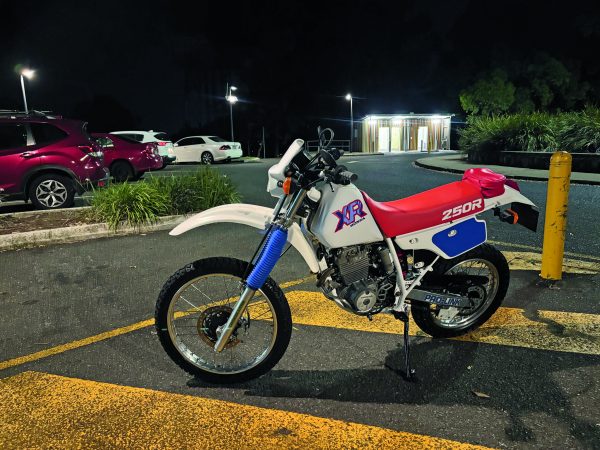
All of the bolts on the bike were sandblasted and electroplated in my workshop before the bike was reassembled with new plastics. I also had all the original decals reproduced locally and fitted to the bike.
HOW DOES IT GO?
The bike is great to ride. Because all the bearings, seals and drivetrain components have been replaced, it honestly feels like a brand-new bike straight off the showroom floor. It starts easily and rides beautifully.
Being a 250, you need to rev it to get the best out of it, but it’s still a heap of fun to ride. It also feels incredibly light compared to the adventure bikes I normally ride on the road. It’s fitted with road-legal dirt bike tyres, which make it very smooth and enjoyable to ride. I just love it.
WOULD YOU RECOMMEND IT?
Most definitely. I restored this bike because I wanted to remember exactly what the first bike I ever owned was like to ride. I also wanted something old school that I could completely rebuild and, if necessary, manufacture parts for myself using my workshop and metalworking equipment.
Sourcing parts is a really rewarding part of the process and teaches you a lot about shopping around. Some parts can be a quarter of the price if you know where to look. A lot of that comes down to cross-referencing part numbers from service manuals and finding alternative suppliers. In some cases, I was able to track down people sitting on genuine new old stock, which is where a few of the harder-to-find parts came from.
5 THINGS WE DIDN’T KNOW ABOUT YOUR BIKE
- Sourcing plastics can be surprisingly difficult. Some parts are available through AliExpress, while others seem impossible to find anywhere in the world. If you keep searching long enough, though, they eventually pop up.
- Rebuilding the gearbox was the most challenging part of the entire restoration. The workshop manual is pretty vague and there are lots of small spacers and washers that can easily get mixed up when the cases are separated. The parts diagrams helped a lot, but there was still plenty of trial and error involved.
- The swingarm bolt is notorious for seizing in XRs and this bike was no exception. Water gets between the bolt and the bearing sleeve, causing corrosion that effectively welds everything together. In many cases the bolt has to be cut out. Fortunately, I was able to machine a new bolt on my lathe because replacements are very difficult to find.
- The cartridge-style front forks are quite complicated. They can be serviced relatively easily, but modifying them is a specialised job that would be best left to an experienced suspension technician.
- Even though the bike is now around 35 years old, it was fitted with an electronic ignition system rather than points ignition, which was pretty advanced for its time.