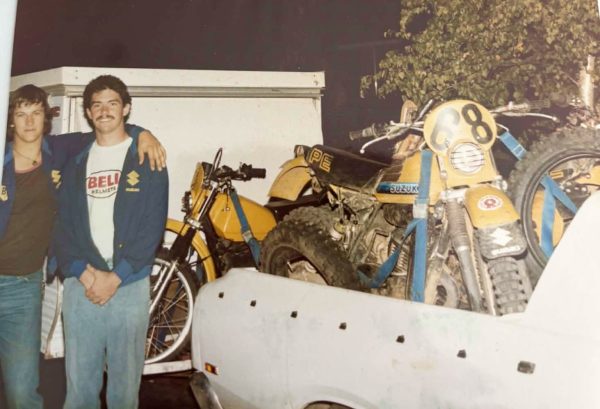
The Orange Sports Motorcycle Club (OSMCC) reunion all started with a few beers at Pittsy’s 60th birthday. Sitting around with a few old racing mates, the idea came up to get the boys back together for a BBQ and a few drinks, something that hadn’t happened in over 40 years.
A feeler was put out on the Old Orange Crew Facebook page, and the response was far bigger than expected, with plenty of people keen to make it happen. Social media proved to be a powerful tool for reconnecting lost contacts, and with the help of Julieanne “Stump” Milne setting up a group page, a time and place were locked in last November. The result was a turnout of around 90 former members and their spouses for the evening.
The months leading up to the reunion involved tracking down former members, gathering photos and putting everything together which is no small task. It all came to a head on the night, bringing a mix of emotions, particularly when reflecting on our mate Jimmy Featon, who is no longer with us. His daughter Bridgett was there on the night and gave her support as I addressed the crowd.
Alongside the former members, we also welcomed five VIP guests. Allan Cunningham, who I knew from his time as a mechanic at Sargent’s Orange Yamaha dealership, was quick to get on board and helped round up some of his old race mates like Rob Haskins, Chris Cater and Laurie Alderton, along with their wives.
The oldest racer in attendance was 95-year-old “Rocket” Roy Riley, who still rides every Saturday. OSMCC ISDE representative Mick Ford, who is deaf, had the whole room engaged as he shared stories from his time competing in Europe through interpreters. His excitement for the reunion was infectious.
Also in attendance were fellow ISDE representative Mick Roberts and former club presidents from the two-day era: Rob Williams and Bob Carpenter.
OSMCC History
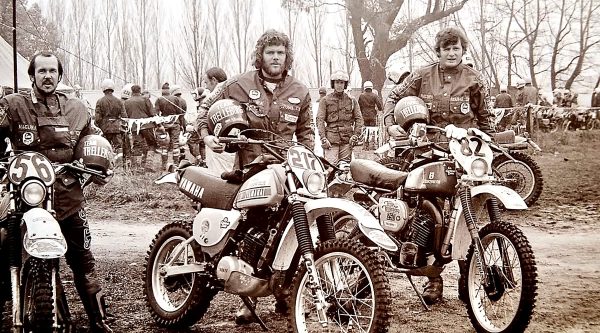
The OSMCC traces its roots back to the early 1930s, when it was originally formed as the Orange Motorcycle Club. In 1953, Wentworth Park Speedway became a key venue for racing until the land was redeveloped into a golf course in 1962.
Following that era, the “Stonecliff” short circuit track was established, and the club evolved into the OSMCC. One of the standout traditions was the Easter Long Weekend, where riders would race at Mt Panorama before switching setups and heading to Stonecliff for the Western Districts Short Circuit Championships. It attracted some of the best riders in the country.
This period also saw a shift in machinery, with riders transitioning from road frames to Hagon slider frames fitted with speedway engines. The club became a breeding ground for top talent, producing riders like Terry Morris, Chris Roberts, Rob Williams, Peter Morris, Barry Collier and Chris and Clive Bennett.
When Stonecliff closed in 1972, motocross began to surge in popularity. A new track at White Rocks, along with increased support from three local motorcycle dealerships, saw club numbers grow. OSMCC teams competed in major events like the Castrol 6 Hour and the Nepean 6 Hour.
Members were active across all disciplines, competing at local, state and national levels. Private properties were developed into tracks for MX, trials and enduro events between 1972 and 1984, helping riders progress to higher levels—including representing Australia internationally.
Off the track, the club thrived socially. Road rides, rallies, fundraisers and working bees built a strong sense of community, with the Hotel Canobolas and Victoria Hotel becoming regular meeting spots to plan the next ride or race.
The Two-Day Era
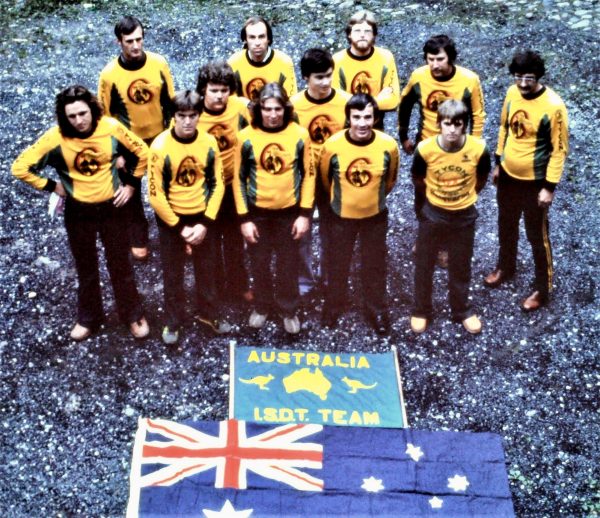
The club reached its peak during the rise of two-day reliability trials in the 1970s. The OSMCC ran its first two-day event in 1973 and continued to host them for over a decade. For several years, the event became a selection round for the Australian Six-Day Team, with QANTAS even offering flights to selected riders as part of its sponsorship.
Top international riders lined up alongside Australia’s best, including UK world champion Graeme Smith and US champions Dick Burleson, Jack Penton and Kevin Lavoie. For young riders, it was an incredible experience—learning by setting and sweeping sections, running controls and watching elite riders tackle the challenging terrain of the Canobolas and Mullion State Forests.
The success of the event relied on a massive team effort, with support from other local clubs and countless volunteers. Leadership from figures like Chris Roberts, Max Conley, Rob Williams and Bob Carpenter, along with secretaries Joan Roberts and Dennis Gregory, played a crucial role.
The event earned a reputation as “The One To Win”, though heavy rain in some years saw it nicknamed “The One To Finish”. Completing the event became a badge of honour, with only the toughest riders making it through. By the early ’80s, club riders were also competing in the event, adding to its significance. At its peak, the OSMCC was one of the largest regional motorcycle clubs in NSW, with membership exceeding 600.
A New Era of Rules and Controls
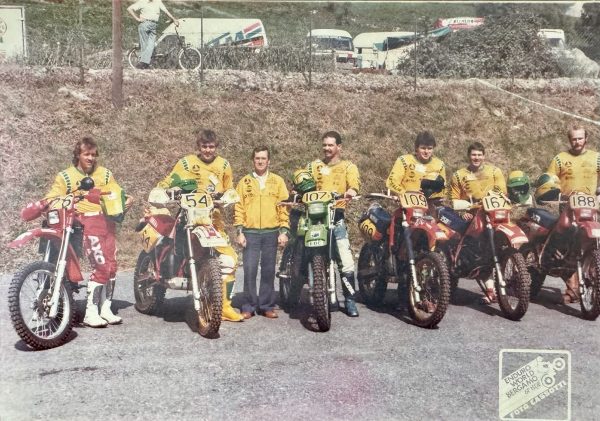
The 1980s brought new regulations around licensing and track approvals, which contributed to a gradual decline in club numbers. Despite this, a dedicated group kept things alive, securing access to the “Echo” property and creating a 40km enduro loop. In 1984, it hosted one of the first legal enduro race meetings, raising funds to support Mick Ford’s ISDE campaign.
“Echo” remained a key venue until the late 2000s, while “Newhaven Park” was developed into an MX track with input from Phil Sargent. During this time, riders like Greg Elliott achieved strong results nationally, and others continued racing for decades. The Sargent family also played a major role in promoting Supercross events across Australia.
In 1990, the OSMCC transitioned into the Canobolas Motorcycle Club, which continues to run MX events today, with the next generation now carrying the torch.
My journey
For me, racing came to an end in 2023 at the age of 62, finishing at the Australian Dirt Track Championships after a successful 12-year comeback in sidecars. Alongside my passenger Tim Jones, we stepped away as one of the top teams in the country.
After 44 years in the sport, including a decade as a photojournalist, it’s been a rewarding journey, one that all started with the OSMCC. The club shaped so many of us. It gave us opportunities, friendships and experiences that have lasted a lifetime.
We had something special and judging by the reunion, we still do.